

In the tropey world of horror, few have it worse off than the bumbling, buxom straight ladies literally tripping over themselves while attempting to escape a slowly approaching killer. But if you pause those scenes and look to the moonlit lake at the back of the frame, you may notice a rising contender, the situationally queer women written into the script to make out just once, and real quick, before something violent and horrific happens right as things are about to get good.
It’s already been well-established in horror that if two characters are romantically connected, and those characters are shown engaging in anything more than a brisk kiss on the lips, one or both of those characters will end up being an insane murderer, or hacked into pieces before the credits roll. Now, snap your fingers and turn both of those characters into women and, though the established trope may remain the same, the twist of the knife will now be that the duration of their romantic connection need only last as long as it takes Steven Handsy in AMC seat D8 to pull at the fly of his jeans before the blood starts flying — making way for one of the women to resume her role in her real relationship, back at the side of an inevitable man as they run for their socially acceptable lives to the tune of a Radiohead song.
Of all the predictabilities in the horror genre, one is increasingly and irritatingly disappointing: “Girl stuff” seems to just simply not count.
In film and television, examples of female characters randomly making out and it never being mentioned or shown again are too numerous to even list, but, as I sit here typing, the only example of men doing something similar on screen to come to mind is Tom Schwartz and Tom Sandoval bumping facial fuzz on “Vanderpump Rules” — and that, much in the theme of this whole thing I’m getting into right now, is nothing more than trviality. And reality TV triviality, no less. If there’s a fictional film or television show where, in the midst of mortal crisis, two men pause their terror to cling to each other in a brief, intimate physical exchange that, later, their girlfriends or wives aren’t troubled by in the slightest, I’d like to hear about it. I’ll wait.
Of all the predictabilities in the horror genre, one is increasingly and irritatingly disappointing: “Girl stuff” seems to just simply not count.
The earliest example I can recall of two women having relations with each other being given the same weight and importance as a grape falling off a cheese platter is “Bram Stoker’s Dracula,” which hit American theaters and my own starving, teenage eyeballs in 1992.
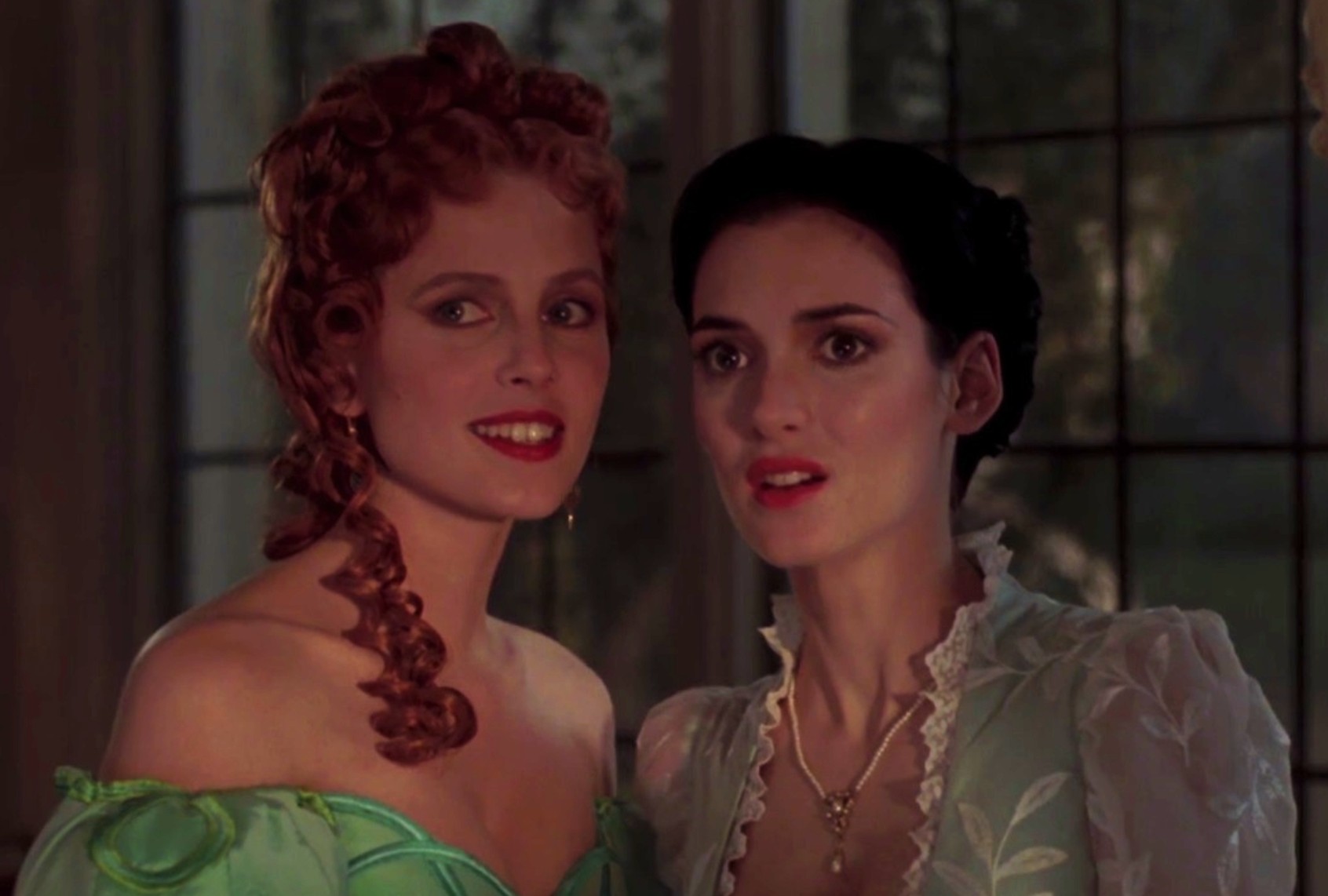
(Columbia Pictures) Sadie Frost and Winona Ryder in “Bram Stoker’s Dracula”
In Francis Ford Coppola’s adaptation of Stoker’s 1897 novel, Winona Ryder as Mina Harker and Sadie Frost as Lucy Westenra share a tender kiss in the rain during and near the events of Dracula, in the form of a wolf-beast, having his way with Lucy and exploding into a clump of rats while attempting to convince Mina that it would be cool and good to drink his blood and be his immortal bride. Just normal stuff.
Watching that scene at the time, and having seen it dozens of times since, It’s hard to push past the “hell yeah” of it all to question if, you know, in a non-fictional vampy scenario a dreamy kiss like that would have led to a conversation that resulted in Mina ditching her fiancé — Jonathan Harker, played by Keanu Reeves, and with the best/worst accent ever to make it to film — and her seductive though messy and probably stinky option B, Dracula, to run off with Lucy and open a flower shop in the countryside with a quaint apartment on the second floor that they could decorate together, free of the burden of blood burps and having to wash anyone’s suspenders. But we’ll never know, and it wasn’t the point. It never is.
Want more from culture than just the latest trend? The Swell highlights art made to last.
Sign up here
Another example of a similar “LOL, let’s kiss” narrative throw-away would be “Jennifer’s Body,” released in 2009. Despite being directed by Karyn Kusama (“Destroyer, “Girlfight,” “Yellowjackets“) and written by Diablo Cody (“Lisa Frankenstein,” “Juno,” “Tully”), all the feminist power in the world couldn’t hold back an opportunity for Megan Fox as Jennifer Check and Amanda Seyfried as her best friend, Anita “Needy” Lesnicki, to have a boob to boob, on the bed, full tongue makeout in the midst of an argument over Jennifer losing her soul to the devil for a hot satanist musician, damning her to subsist on the flesh of boys.
It does feel like a bit of a booby prize (I did that on purpose) when most of these offerings are within the horror genre, and most of the women in the scenes are put on display for their sexuality and then killed or written to be killers. This is an old gripe. And it’s getting older.
In my horniest of years, I struggle to imagine myself wanting to get freaky with someone who I know has a belly full of human. And while my lizard brain cannot deny that seeing Jennifer and Needy kiss was and will forever be amazing, my cold shower rational self can’t help but think about how such scenes cheapen — make a joke of, even — something that’s very special for a large community of queer people.
We need your help to stay independent
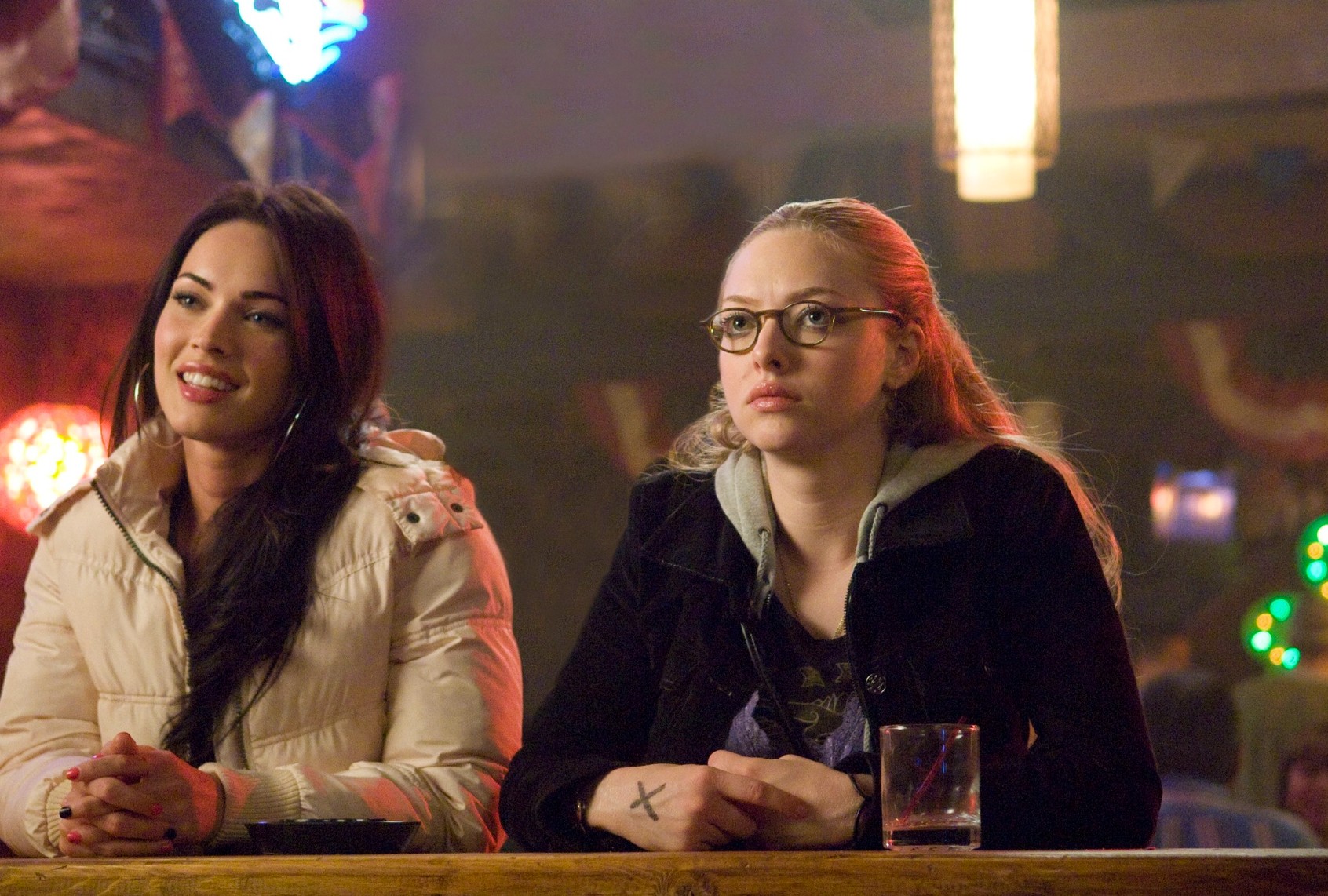
(20th Century Fox) Megan Fox and Amanda Seyfried in “Jennifer’s Body”
It’s been nice to witness an uptick in sapphic representation in recent years because, as I’ve written before, we’re used to taking what we can get, but it does feel like a bit of a booby prize (I did that on purpose) when most of these offerings are within the horror genre, and most of the women in the scenes are put on display for their sexuality and then killed or written to be killers. This is an old gripe. And it’s getting older.
It’s also getting more gruesome, and therefore less fun.
At the 2024 Overlook Film Festival, which takes place in New Orleans every year and showcases the best and most innovative new horror from around the world, I squirmed in my seat for not pleasant reasons watching Chris Nash’s “In a Violent Nature,” an otherwise fun slasher shown from the killer’s perspective which contains one of the grossest, saddest murders of a queer female character I’ve ever seen. Clips of the scene have been widely shared, so are easy to find, but let’s just say it revolves around a swim in a lake and a woman referred to often online as “yoga lesbian” being badly (like really badly) mutilated and then shoved off a ravine.
“RIP to you, yoga lesbian (Charlotte Creaghan), but your death absolutely slapped,” one reviewer wrote of the scene.
I’m not a big fan of gore, but I do appreciate a good kill scene. Still, it’s interesting that this one received mostly resounding praise (from male critics), but a scene in which two gay men are brutalized in “IT: Chapter 2” was highly written about and commented on in reference to it being a “cheap shock” and “homophobic.”
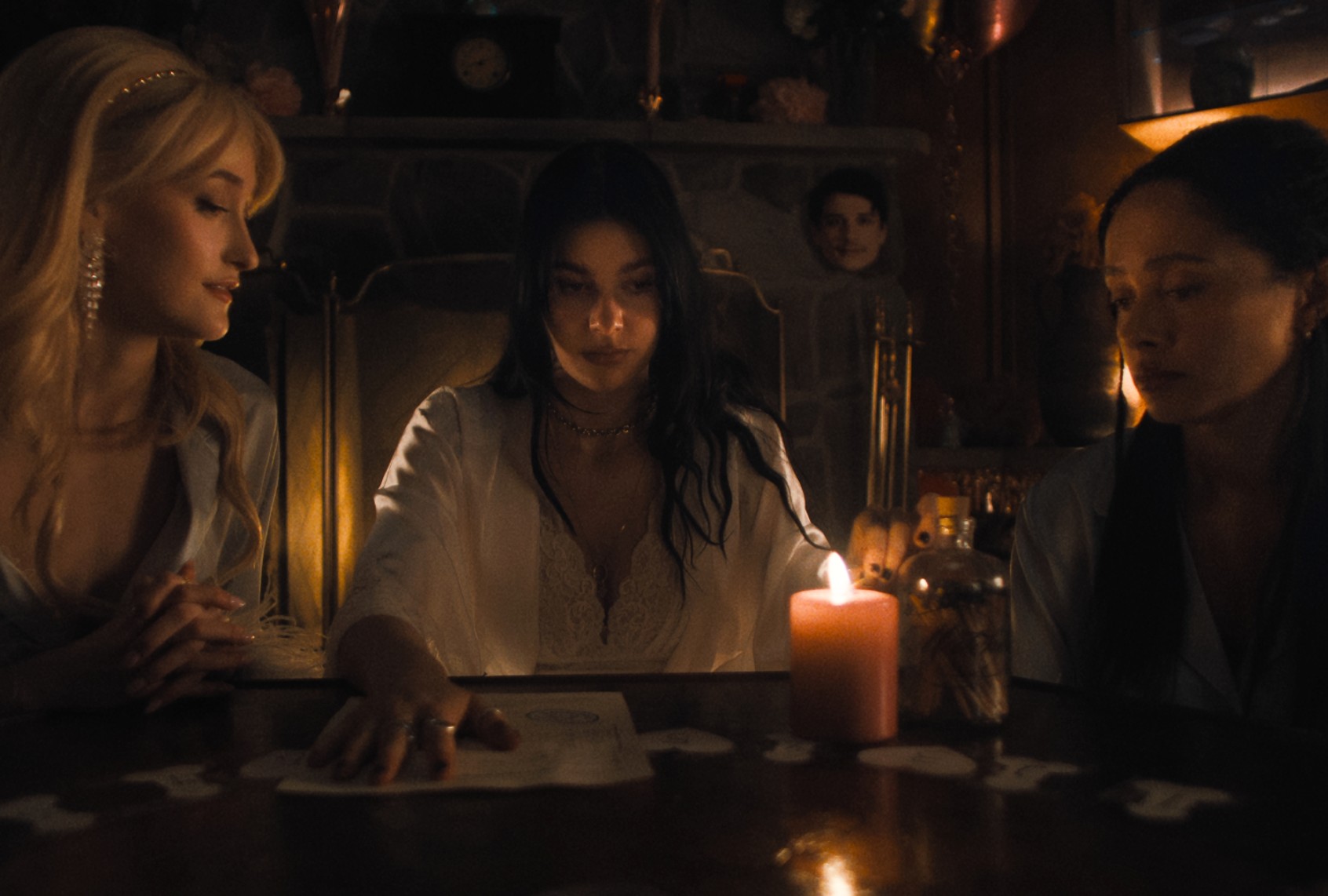
(Netflix) Gus Birney, Camila Morrone and Karla Crome in “Something Very Bad Is Going to Happen”
Horror has been having its moment on the big screen just as much as the small screen these past few years, and with that broadening, more examples of sapphic love being treated like a game of spooky spin-the-bottle.
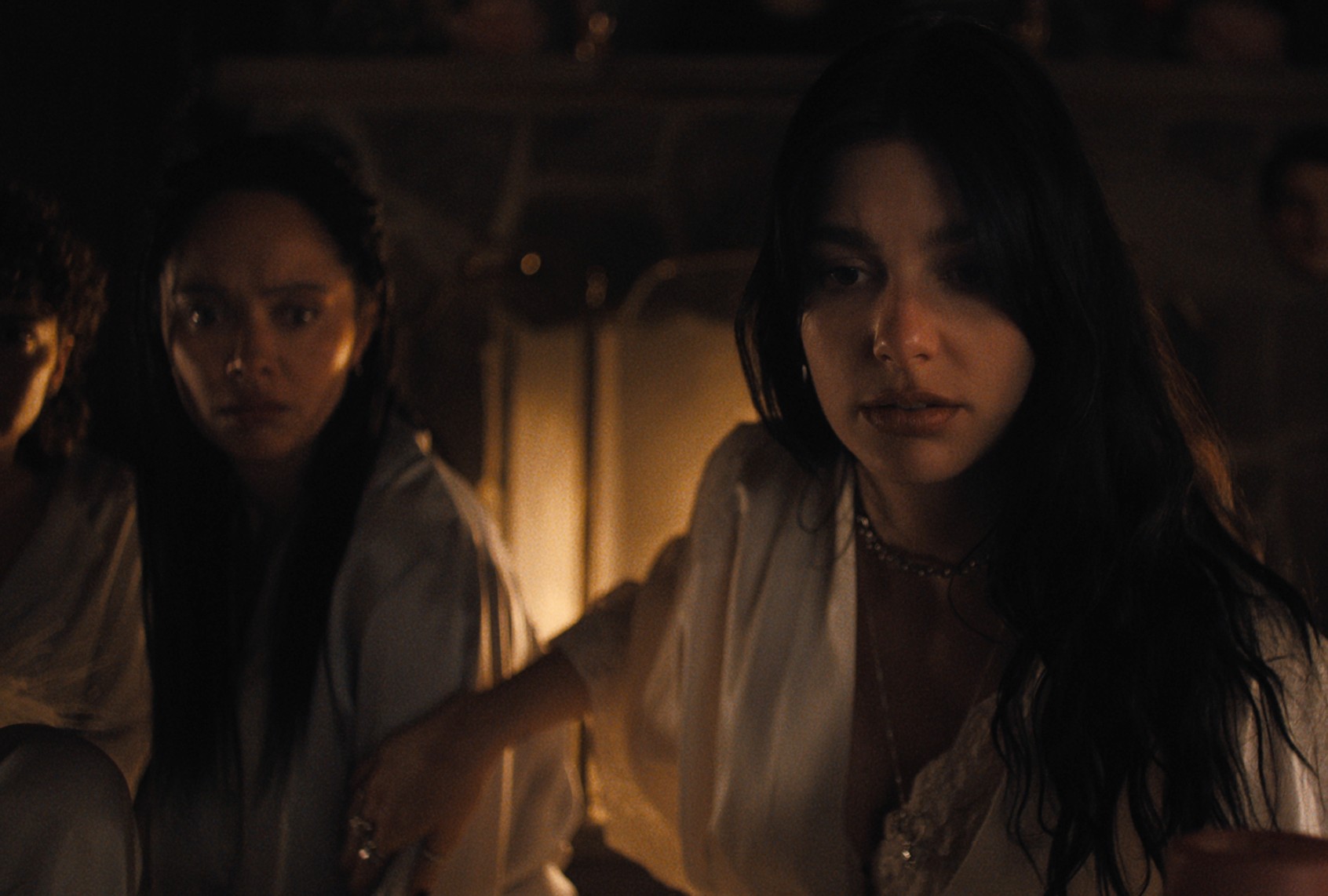
In Netflix’s buzzy horror miniseries, “Something Very Bad Is Going to Happen,” Rachel Harkin (Camila Morrone) is soon to be married to a man named Nicky (Adam DiMarco), but comes to learn about a curse on her bloodline that will result in her dying on her wedding day if it turns out that Nicky is not her soulmate. The show is wonderful, and terrifying. And Rachel, who looks like every hot bisexual on Hinge, lying in wait to break a queer girl’s heart, is constantly shaking in fear and sick from the stress of this ordeal. But not so much that she doesn’t randomly make out with Nell Cunningham (Karla Crome), the wife of her fiancé’s brother, shortly before she’s meant to walk down the aisle.
Feeling guilty about this, Rachel comes clean about the makeout session to Nicky, but he laughs it off. He already knew. His brother knows too, and is the one who told him about it.
Is he mad that his wife-to-be cheated on him before their nuptials? No, why would he be? It’s not like Rachel kissed another man.
In an earlier episode, I could swear that there’s a scene in which Rachel and Nicky are talking about Rachel’s ex, who tried to burn their home down, and that the word “she” comes up in that conversation, but I scrubbed through the episodes again to find it, and even Googled it, but couldn’t come upon the scene, or any mention of it, again.
Doesn’t matter.
It’s bad enough that, if pressed to chime in on the subject, most straight men would say that if their wife or girlfriend made out (or had sex even) with another woman, they wouldn’t consider it cheating, or a big deal of any kind — and that most straight women would agree. To see this served up over and over again in a genre that an expanse of queer women enjoy, and spend money on to support, is just overkill.
Read more
about women in horror
