
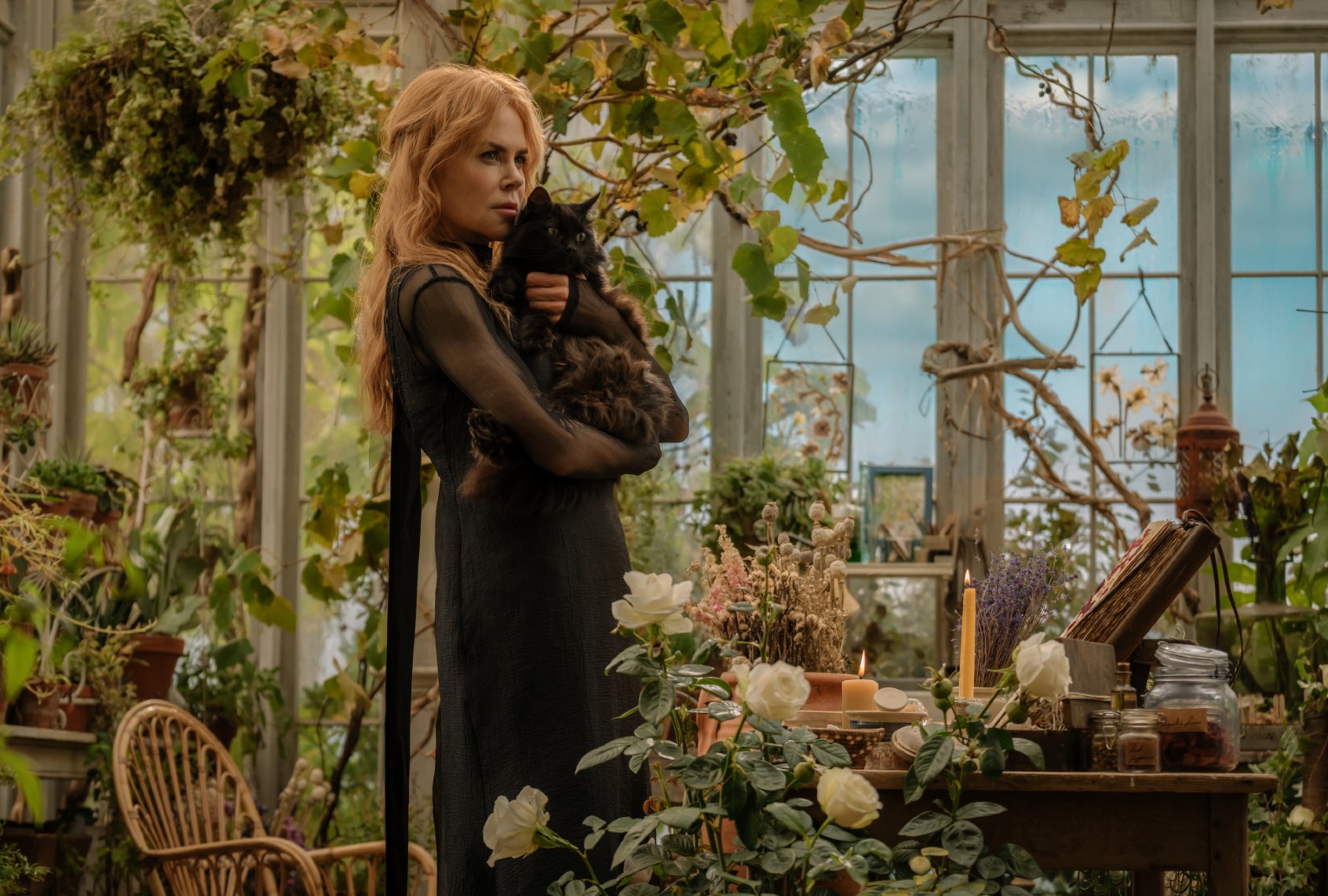

“Practical Magic,” the 1998 film adaptation of Alice Hoffman’s 1995 bestseller, is not a movie that needed a sequel, and definitely isn’t the kind that usually gets one. Sandra Bullock and Nicole Kidman star as Sally and Gillian Owens, two orphaned sisters determined to break the curse that has haunted the women of their family for generations: The man unlucky enough to love any one of the Owens women met an early death. There are two young daughters, a bad boyfriend, a dreamy boyfriend, and a murderer’s row of character actresses, including Dianne Wiest, Stockard Channing, Margo Martindale and Chloe Webb.
Witches are a pop-culture constant that can no longer be treated like a passing trend. Which does make sense, given the political landscape: If the government is dead set on turning back the clock on civil rights and bodily autonomy, there’s no bad time to embrace the witch label and make with the hexing.
Visually, it’s a feast of jewel-toned dresses, shabby-chic textures and yards of shiny hair; tonally, it’s unable to commit to being a romance, or a thriller or a comedy. (Roger Ebert noted at the time that the movie was “too scary for children and too childish for adults.”) Part of the late-1990s boomlet of stylishly paranormal movies and TV that included “The Craft,” “Charmed,” “Sabrina the Teenage Witch” and “Buffy the Vampire Slayer,” “Practical Magic” looked like a winner. Instead, after a disappointing box-office performance, it seemed destined for obscurity. But in the decades since, the movie has gained cult status among Millennial and Gen Z women who imprinted on the rambling, seaside Owens home (that greenhouse! that garden! that Nancy Meyers kitchen!) and the believably irascible sister dynamic and pastel-goth style served up by Bullock and Kidman, who brought the Owens women memeably into the Instagram era.
Hoffman never intended to write a sequel to “Practical Magic,” but has said that she received so many letters and emails from readers fiending for further Owens lore that, more than 20 years after the book came out, she went all in, writing 2018’s “The Rules of Magic” and following that up with two more, “Magic Lessons” and “The Book of Magic.” Suddenly, the onetime flop was covetable IP: WarnerMedia’s plan for a 10-episode streaming series on HBO Max never materialized, but the announcement that “Practical Magic 2” would open in September 2026 made up for it.
The trailer that dropped last week offers very little in the way of plot detail. Much of the media coverage of it focuses on who didn’t return for the sequel, while social-media chatter is lamenting its Netflix lighting and alarming whimsy deficit. But who are any of us kidding? We’re already all but seated for “Practical Magic 2.” This fall’s return of Ryan Murphy’s “American Horror Story: Coven” and rumors of more output from the “Wicked” universe suggest that witches are a pop-culture constant that can no longer be treated like a passing trend. Which does make sense, given the political landscape: If the government is dead set on turning back the clock on civil rights and bodily autonomy, there’s no bad time to embrace the witch label and make with the hexing.
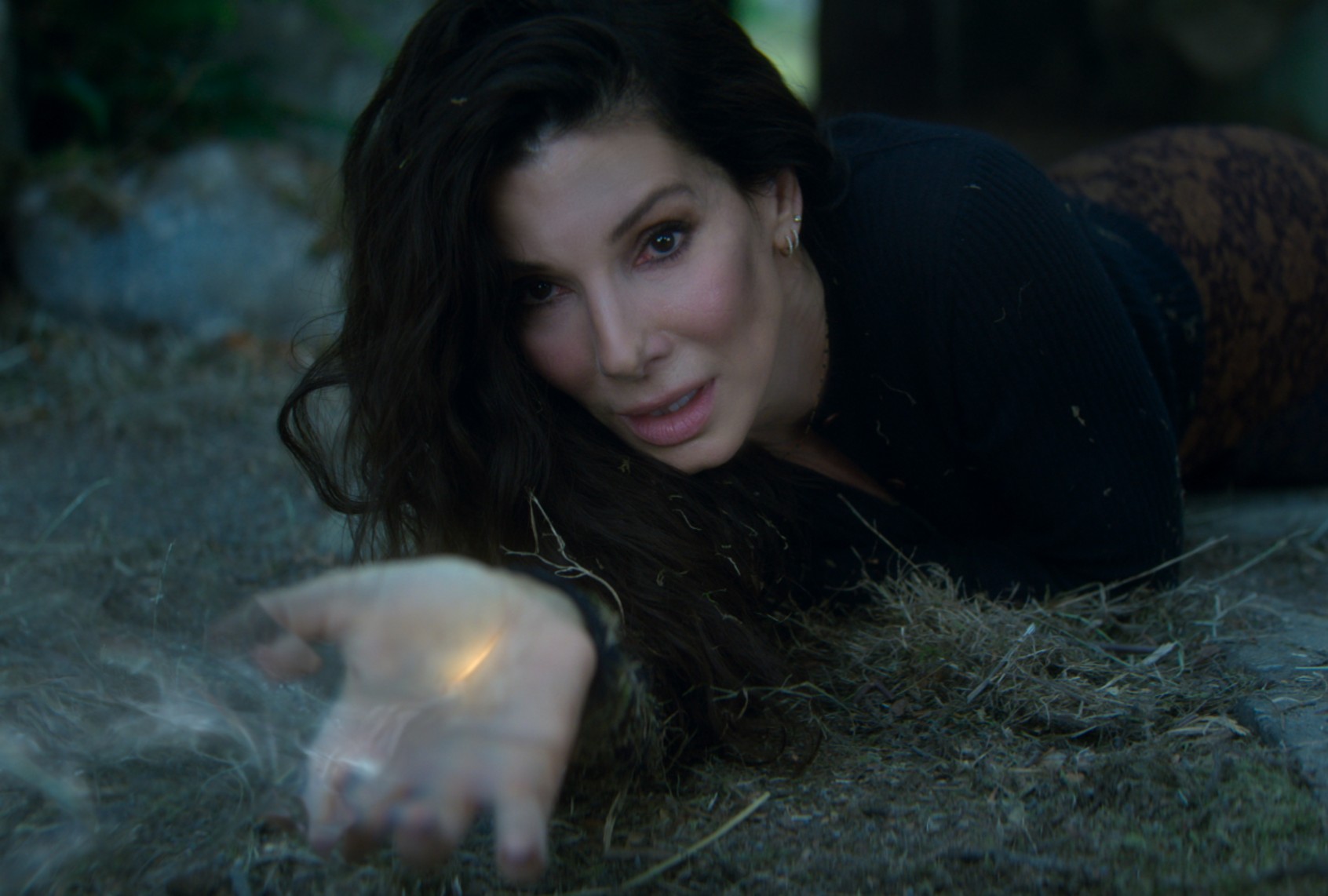
(Warner Bros. Pictures) Sandra Bullock as Sally Owens in “Practical Magic 2”
Witch hunts never truly ended. In the decade between 2009 and 2019, according to a 2023 U.N. report, at least 20,000 people were killed after being accused of witchcraft in India, Nepal, Peru, Ghana, Tanzania, Papua New Guinea, the Democratic Republic of Congo and more than 50 other countries; there have been thousands more since. Women accused of witchcraft are often elderly, widowed, ill or disabled; there has also been a rise in accusations against women and children with albinism. In Tanzania, reported Reuters in 2017, “thousands of elderly women have been strangled, knifed to death and burned alive over the last two decades after being denounced as witches.” Children accused of being witches, often by their own families, are shunned (“Everyone said that I was a witch. They said I ate someone, but they wouldn’t tell me who I ate,” one 13-year-old Beninese girl was quoted in an African Child Policy Forum report.) Not all who are accused of witchcraft are killed; in Ghana, they are sent to live in so-called witch camps under the watchful eye of resident priests.
Want more from culture than just the latest trend? The Swell highlights art made to last.
Sign up here
As with the estimated 60,0000 people killed in the witch trials that began in Europe in the 15th century and eventually crossed the Atlantic to the New England colonies, no evidence is required to banish, beat or murder a woman accused of witchcraft. An illness or death in their families or their neighbors’ is often cause for accusation, as is crop failure, sickness and malnutrition. Superstition plays the main role in accusations, but — again, as with earlier persecutions — suspected witches are often women who happen to own land, live independently and challenge the patriarchal order. Sometimes, the violence is just a thin pretext giving men an outlet for frustration and anger that can’t be levied against the systems that disempower them.
Belief in the supernatural has always swelled in eras of political, social, and religious unrest.
Things are very different on #WitchTok, the global community whose videos have collectively garnered more than 40 billion views, and where witches host ceremonies, do spells and share knowledge. Accuracy and quality vary, and Reddit witchcraft forums often warn newcomers that what their algorithm pushes on them may be more style than substance. Elsewhere, the real-life witchcraft renaissance sees the community’s guidebooks, podcasts and personalities get covered in The Atlantic and The New York Times. And in the booming consumer economy of witchcraft, spells, esoteric herbs, handbags in the shape of the “Practical Magic” house, and a glut of witch-adjacent cosmetics, skincare, clothing, jewelry, home decor and other ephemera is plentiful.
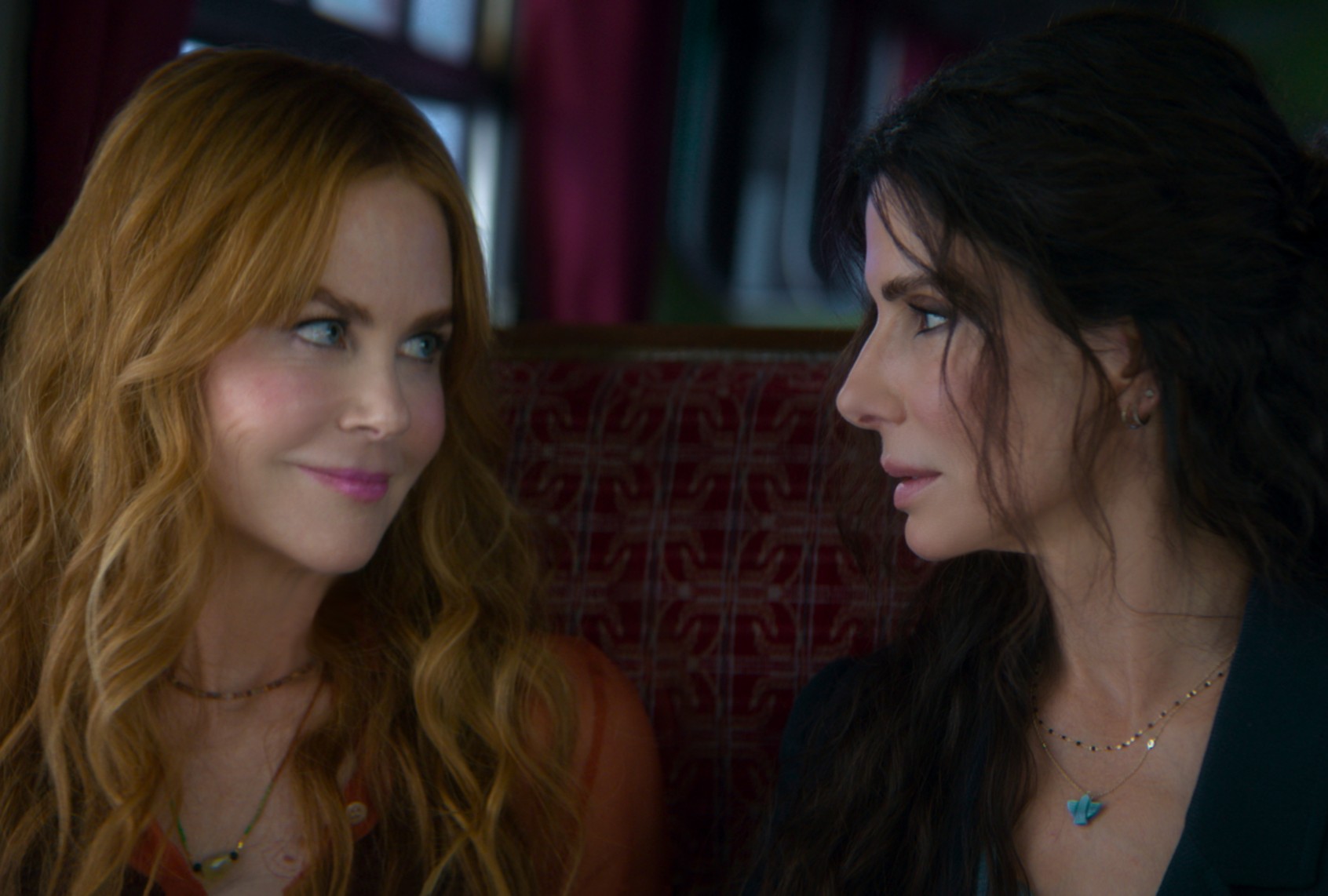
(Warner Bros. Pictures) Nicole Kidman as Gillian Owens and Sandra Bullock as Sally Owens in “Practical Magic 2”
There is no shared ground among the marginalized women scapegoated in and cast out of their communities for alleged witchery and the women — though many are marginalized in other ways — who use practices like spellcasting, divination, and manifestation to build strength, self-knowledge and confidence. What they do have in common is that they exist in a world that in many ways has held fast to centuries-old beliefs and fears about the darkness within women.
Demons, superstitions and curses are somewhere within the belief systems of most cultures, but belief in the supernatural has always swelled in eras of political, social, and religious unrest. Many of Europe’s witch hunts coincided with the Protestant Reformation and subsequent Catholic Counter-Reformation, when two churches were in intense competition for the title of Europe’s Most Godly Christians. The invention of the printing press, meanwhile, was a boon to zealots like Catholic friar and inquisitor Heinrich Kramer, who authored the infamous witch-hunting manual “Malleus Maleficarum” (“Hammer of the Witches”), in which his misogyny largely took the form of demented proclamations about female carnality, reproduction and midwifery. (Among other things, Kramer believed that witches were sexual deviants who cavorted with the devil, caused sterility, and stole the penises of godly men, keeping them as pets and feeding them oats.)
We need your help to stay independent.
The current attempt to remake the United States into a Christofascist nation in which women no longer have a voice or a vote and are reduced to sex chattel and infant incubators makes this feel like the most “Malleus Maleficarum”–coded era in a century, lorded over by pale, doughy leaders whose fear and hostility make their rhetoric ever more corrosive.
Some historians have argued that the cartoonishly lurid hostility of Kramer’s text wasn’t present in all witch-hunting guidance; Kramer, unfortunately, had the ear of Pope Innocent VIII and, consequently, was an outsized voice in the formalization of witch-hunting protocol. The paranoia that radiated from his weird little burn book, with its bottomless contentions about women’s bodies as conduits for the devil, never fully waned, It echoed through early eras of medical advancement, for instance, in which women’s bodies were rarely considered worthy of study, leaving them marooned in a purgatory of wild assumptions of disease-bearing menstrual blood, uteri that roamed around a woman’s insides heedlessly wrecking shop and education and knowledge acquisition that caused reproductive organs to atrophy.
The “Malleus Maleficarum” reverberated in Pat Robertson’s famous assertion that feminism is “a socialist, anti-family political movement that encourages women to leave their husbands, kill their children, practice witchcraft, destroy capitalism and become lesbians.” It infiltrated the Satanic Panic of the 1980s, the recurring crises of masculinity that have allegedly lowered men’s rates of college graduation and prevented them from finding happiness, and reverberated through Planned Parenthood’s mythical Abortionplex, where women popped in to abort a fetus and then eat it for lunch.
The current attempt to remake the United States into a Christofascist nation in which women no longer have a voice or a vote and are reduced to sex chattel and infant incubators makes this feel like the most “Malleus Maleficarum”–coded era in a century, lorded over by pale, doughy leaders whose fear and hostility make their rhetoric ever more corrosive. Is it any wonder so many women are embracing witchcraft practices and aesthetics, hexing the patriarchy, and building self-sustaining networks and communities? Is it surprising that even relatively anodyne (and, let’s be real, shamelessly cash-grabby) witch narratives are cause for celebratory anticipation?
Alice Hoffman, when asked in 2021 what she hoped readers would take away from the books, said, “I think what I would have wished for has already happened, which is that women tend to share these stories with each other — grandmothers and granddaughters and sisters share the books, and it’s a way to connect with other women and with your own story in history. Women do identify with the story of a witch, and the story of an outcast, and the story of a woman who’s powerful and strong who isn’t appreciated for those things, who’s feared for those things.”
Read more
about witchcraft and history
