
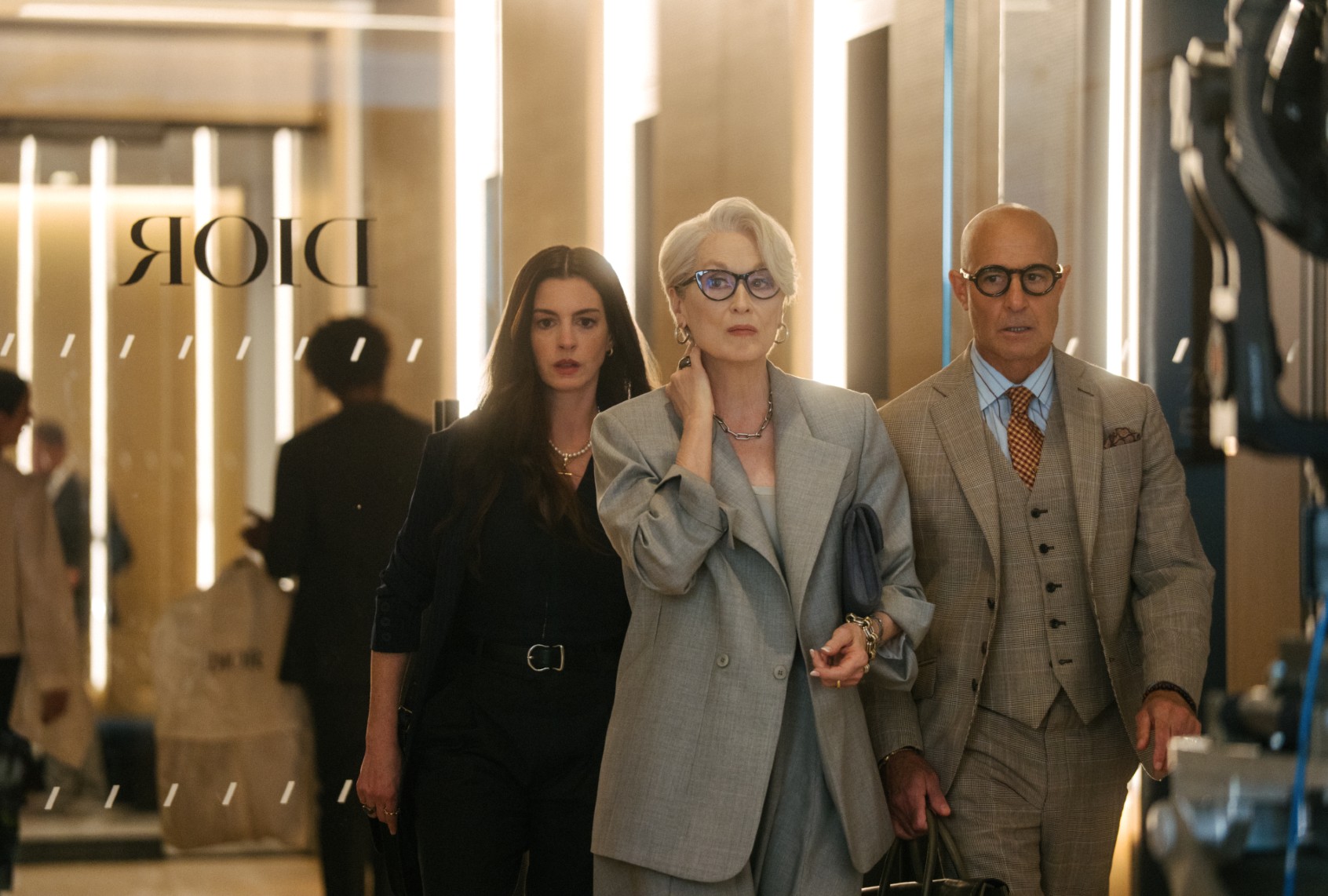

“The Devil Wears Prada” was never meant to be a franchise. Despite its pivotal role in the 2006 summer blockbuster season, where it raked in enough cash and glowing word-of-mouth praise to become the 10th most successful film of the season — the only title in the top 10 with a woman at top billing — the movie’s ending didn’t exactly scream sequel. “The Devil Wears Prada” was and is the perfect example of a self-contained story, built by the studio machine but never intended to keep the apparatus running. It’s economical and clever, with deceptively intricate character writing, striking costume design, a uniquely memorable score and soundtrack, loads of witty banter, a distinctly sleek aesthetic, and it’s one of the only films that has ever made multiple montage sequences feel earned.
But look past all that technical prowess, and you’ll find a remarkably introspective story about the complexities of integrity, examining the choices we make and the sacrifices we endure to become truer versions of ourselves. The film is lightning in a bottle, magic that only stands to have its smoke dispersed and mirrors cracked by the unnecessary impositions of the dreaded Hollywood sequel.
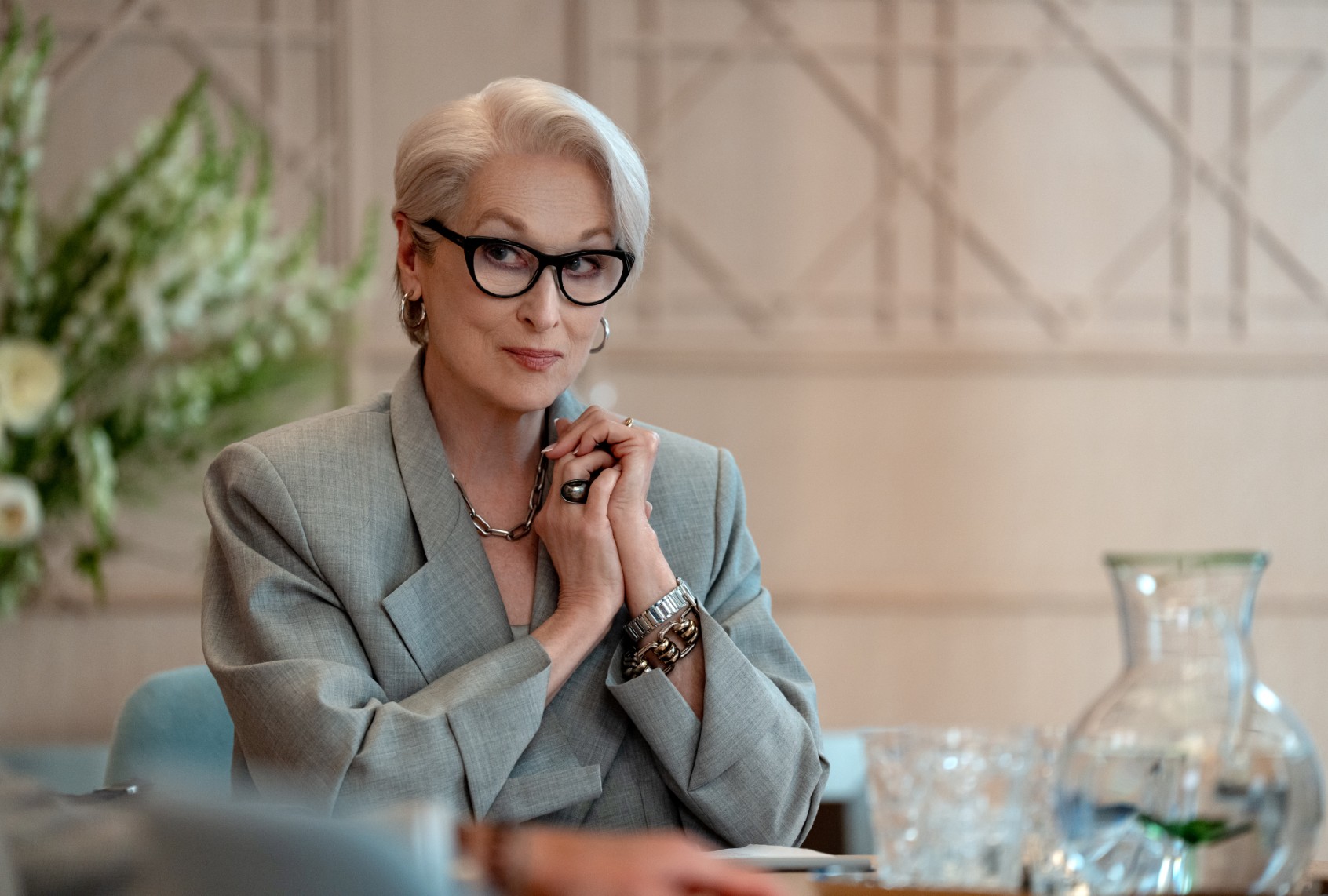
(Macall Polay/20th Century Studios) Meryl Streep as Miranda Priestly in “The Devil Wears Prada 2”
“The Devil Wears Prada 2” isn’t here just to make easy money by force-feeding audiences IP slop in the form of Miranda Priestly one-liners; it uses its existence to issue a mass-scale warning about the future, stressing the worth in fighting tooth and nail to preserve what we hold dear — in cinema, in publishing, in every element of life being disemboweled by rapacious tech bros in fleece vests. It is an original blockbuster drama with something important to say.
How refreshingly meta, then, that “The Devil Wears Prada 2” — a film that seemingly had no discernible reason to exist other than to make money — directly addresses its own superfluity. Plenty has changed in book and magazine publishing in the years since Lauren Weisberger released her scathing roman à clef source novel in 2003, based on her time as Anna Wintour’s assistant; likewise for the film industry. Print and cinema’s strings are being pulled by the grubby, greedy hands of executives who care far more about money and expediency than art and process. That’s not a new concept, but it’s become all the more pernicious. Every week, layoffs and mergers weaken these once-sturdy businesses. Even the distributor behind this very sequel, 20th Century Studios, was bought, chopped up and consolidated, now functioning as one of Disney’s many appendages.
So when Anne Hathaway’s intrepid-as-ever Andy Sachs, newly axed from her beloved reporting job, laments early in the film that everything these days “has its soul sucked out, gutted and repackaged,” her words land like a cold, clean smack across the face. The same fate could’ve easily befallen this movie, too. (And, granted, its flat, digital cinematography leaves much to be desired compared to the first.) But “The Devil Wears Prada 2” isn’t here just to make easy money by force-feeding audiences IP slop in the form of Miranda Priestly one-liners; it’s using its existence to issue a mass-scale warning about the future, stressing the worth in fighting tooth and nail to preserve what we hold dear — in cinema, in publishing, in every element of life being disemboweled by rapacious tech bros in fleece vests. It is an original blockbuster drama with something important to say. (Remember those?) And as enjoyable as it is, if we don’t wake up and heed its word, “The Devil Wears Prada 2” could be the last of its kind.
Even with all four main players from the original cast reprising their roles, and Aline Brosh McKenna and David Frankel returning to write and direct, respectively, none of this merit was guaranteed. A mere 10 years ago, Meryl Streep had never done a sequel and expressed no interest in telling the story of what Miranda might be up to now. The same year, Hathaway told Variety, “It’s good to leave [the film] as is.”
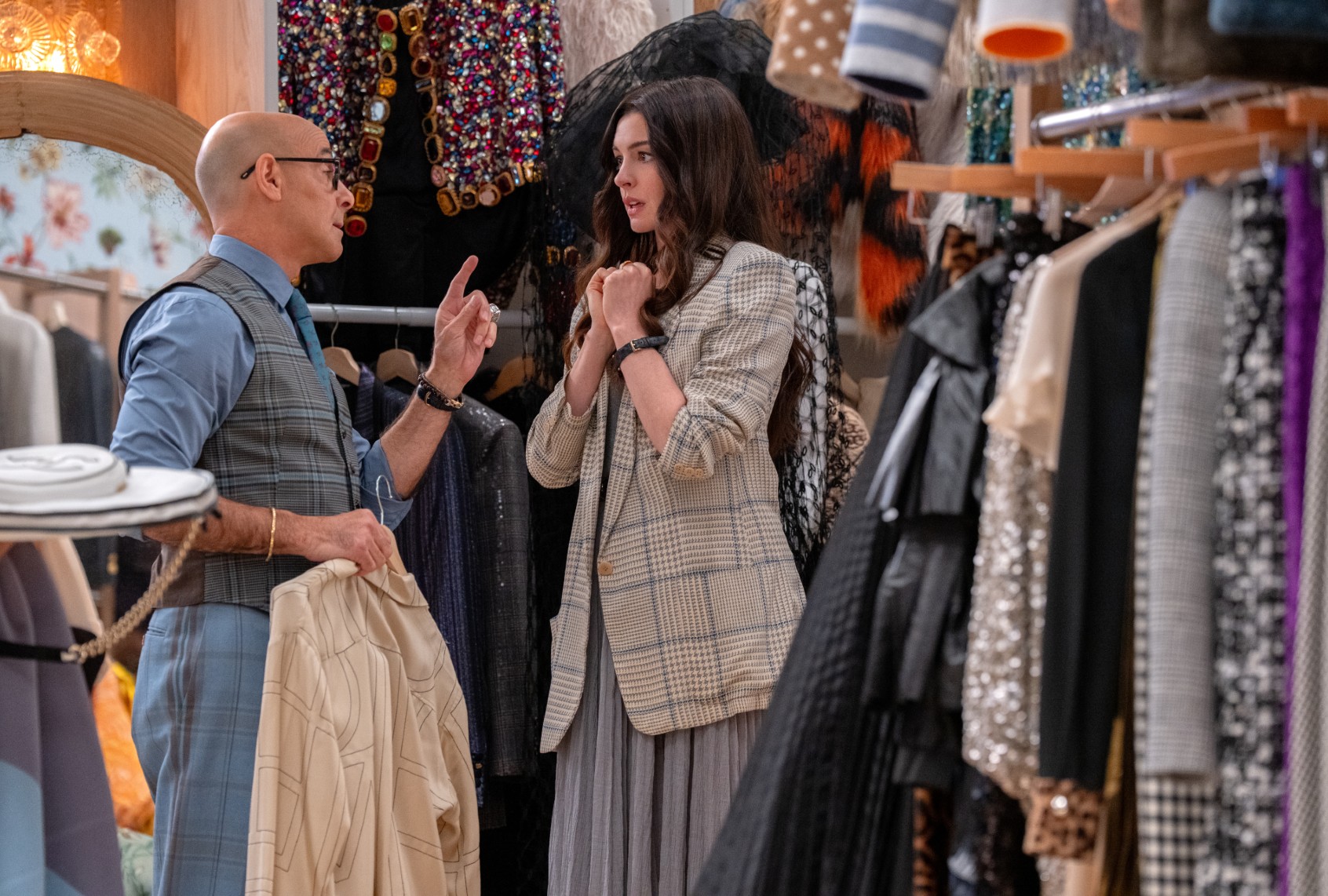
(Macall Polay/20th Century Studios) Stanley Tucci as Nigel Kipling and Anne Hathaway as Andy Sachs in “The Devil Wears Prada 2”
All that was fine by me. I’d spent my youth defending “The Devil Wears Prada” with my life, trying to convince detractors weaponizing the words “chick flick” about its brilliance since the wise, old age of 12. In many ways, it was the first film I ever felt like I understood in ways others might’ve overlooked — one that meant something special to me, crafted with such concerted artistry and affection that I couldn’t help but notice some new detail to admire with every single viewing. “The Devil Wears Prada” taught me to appreciate film in a profound, scholarly way that would later become my life’s driving force. Hundreds of watches, an encyclopedic knowledge of the movie and its production, a worn-out DVD copy hanging on by a thread, and a whole career later, I still owe it everything. It is my favorite film of all time.
That’s precisely why I never wanted a sequel, and why I ask that you trust me here, even though I’ve admitted to you that I’m grading on a curve. Seeing these beloved characters together again was always going to be a delight for anyone who enjoyed the first film. But quality and emotional resonance were never guaranteed. Thousands of things can go wrong when you try to capitalize on a good thing, especially 20 years on, when expectations have never been higher. The fact that the sequel comes now, when filmmaking is in such a dire state, only raised crimson-red flags. Never mind that this is my work. There are innumerable people out there who hold “The Devil Wears Prada” as dearly as I do. It’s a film that’s woven itself into the fabric of countless lives. After all this time, and all of those years of “thanks, but no thanks” from the cast, a poor sequel wouldn’t just be a letdown; it would be a heartwrenching example of where cinema is at and where it’s headed — irrefutable proof that nothing gold can stay. It might sound extreme, but my heart couldn’t take that. I’m not sure our culture could, either.
Want more from culture than just the latest trend? The Swell highlights art made to last.
Sign up here
But once things get going, and Frankel’s assured camera glides along the streets of New York, tracking Andy Sachs as she trots across the street at a pace far more leisurely than she ever could under Miranda’s thumb, “The Devil Wears Prada 2” feels like a homecoming. McKenna’s screenplay confidently moves the pieces back into place, positioning all the characters in proximity before expanding them naturally so their lives can intersect once more. Everyone has been lovingly shaded in with texture and authenticity — two things that aren’t always pretty.
Still the editor-in-chief of Runway, Miranda is working to smooth her edges to avoid causing a stir in an industry that no longer excuses mistreatment, even though her employees remain timid in her midst. Nigel (Stanley Tucci) has maintained his spot as Miranda’s right-hand, shaping the magazine while guiding her through crisis, including Runway’s latest gaffe: publishing a glowing, underreported story about a fast-fashion company with sweatshop conditions. The magazine and its more successful website risk losing advertisers, including Dior, where Miranda’s former first assistant, Emily (Emily Blunt), wound up after foreseeing trouble in the print industry.
And, of course, there’s Andy, whose sunny disposition is quickly dampened when, moments before accepting an award for her work, she finds out via push notification that she and several other colleagues have been unceremoniously laid off. It’s a hard blow, and rarely does anyone in Andy’s position get the chance to use that pain as she does, receiving her award with a viral speech about how “journalism still f*cking matters” that clearly comes from Hathaway’s heart. But without a job and with Runway in desperate need of an editor who can steer the publication through scandal, the opportunity to walk away from a closed door and shimmy through an open window looks all too enticing, even if it means coming face to face with her former nemesis.
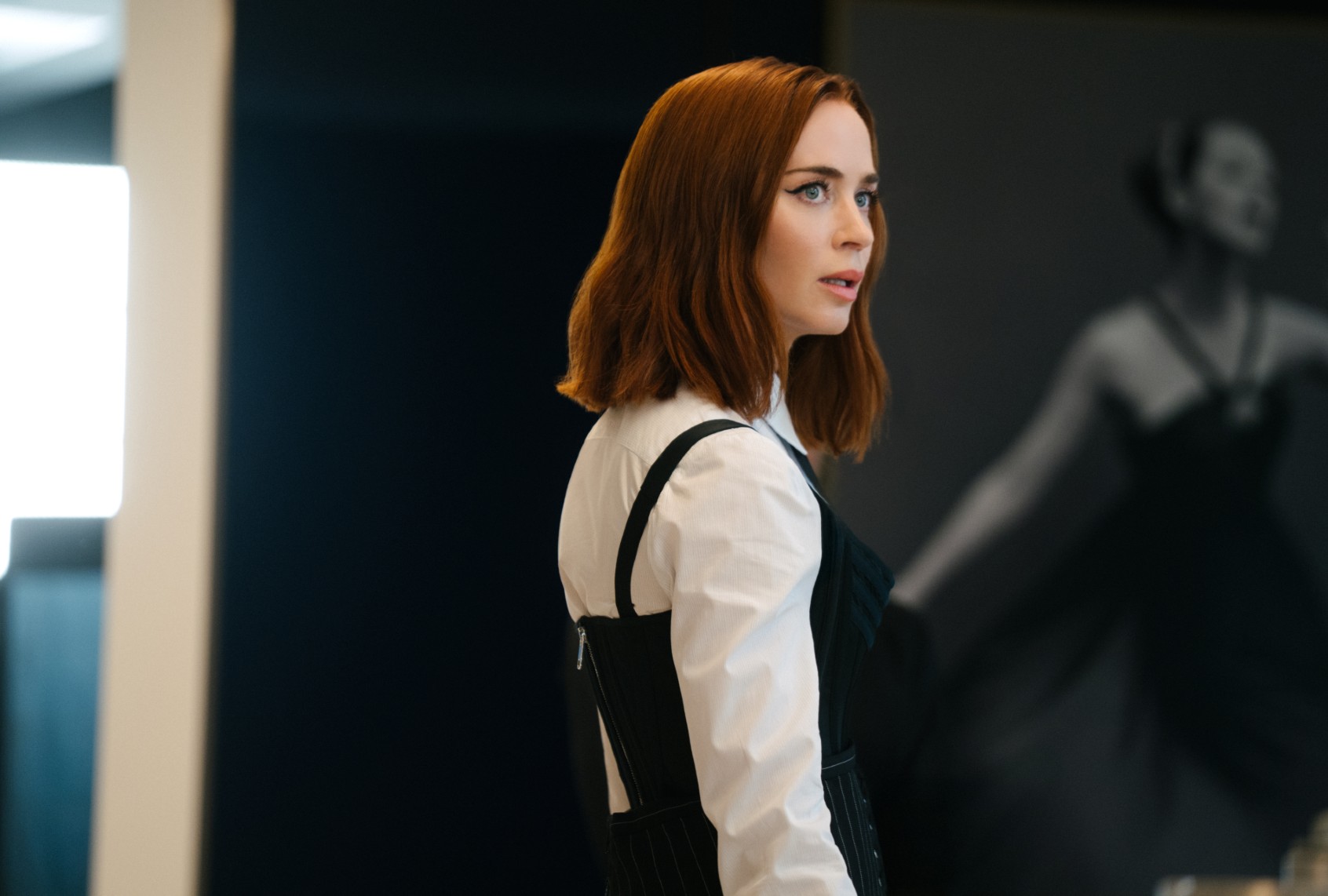
(Macall Polay/20th Century Studios) Emily Blunt as Emily Charlton in “The Devil Wears Prada 2”
Opening with a hard left turn toward the fatalistic is a bold statement for the sequel to a mostly pithy film about the glamorous world of fashion publishing. As amiable as the movie is from the jump, it wastes no time thrusting viewers into a world in complete peril, refusing to sugarcoat the modern realities of a once-robust industry. Jobs are sparse. Layoffs are frequent. AI is a real threat. And getting readers to care about journalism in a time when tech execs actively ensure real writing is buried under mountains of digital clutter, all fighting for your attention, can be next to impossible. “The Devil Wears Prada 2” addresses the existential worries of journalists and everyone working across multimedia with bracing honesty.
All that might come as a surprise to those looking for a simple popcorn movie, but McKenna’s screenplay shrewdly reminds audiences that these crises affect everyone, not just the people working in media. If the articles you’re reading, the videos you’re watching, the films you’re seeing and the technology you’re using are all taken over by executives who want nothing more than to use your data and your money to make the world a crueler place, it’s a collective loss for us all. Here, the big-budget sequel functions as bait: reel the people in, make them laugh, open their hearts and minds, then punch them in the gut.
We need your help to stay independent.
But it’s not all doom and gloom, either. “The Devil Wears Prada 2” boasts even more luxury and sparkling opulence than its predecessor. Unlike the first film, where a smaller budget and the fear of incurring Anna Wintour’s wrath kept many fashion figures from appearing on-camera, the sequel goes all-out. Shooting on-location in Milan and New York! Throngs of cameos from the glitterati! Three original songs and a mesmerizing live performance from Lady Gaga! It’s all here, only with the persistent caveat that none of this could exist in the future, and it’s that facet that will be lingering at the top of the audience’s minds long after the film is over. (Alright, fine, so will the outfits, songs and score, the last of which has once again been brilliantly composed by Theodore Shapiro, playing off his unforgettable themes from the first film.)
It frightens me how painfully ironic it feels to cover a film about my industry’s demise when it was “The Devil Wears Prada” that pointed me here in the first place. Twenty years ago, I never expected I’d endure layoffs or choose to leave a dream job, much less be forced to measure my affection for writing against the forces that unanimously try to negate its worth in favor of LLMs and GPTs with no mind or soul.
Though perhaps the most universally satisfying aspect — separate but not too distant from the gorgeous couture and the daring themes explored in the screenplay — is how the film fills out its celebrated characters, the people who kept viewers coming back to the original time and again. Andy is still the “wide-eyed girl, peddling her earnest newspaper stories,” but she understands herself in a way that naive youth prevented her from when she was fresh out of college, landing the job a million girls would kill for. Andy’s world and Runway’s world were once completely separate. There wasn’t room for her at the magazine, not in the way that she wanted. The price was too steep. Now, she’s created a life where these worlds could collide without catastrophic results. She and Miranda align in a way that neither of them ever thought possible. Suddenly, their missions are the same — maybe they always were, and they were both too stubborn to understand it until now. Their reunion has as much to teach both of them as it does the audience, bringing this story a strikingly beautiful new resonance that it could only incur with time.
These are, after all, not simply characters; they’re people we’ve let into our lives, figures that we’ve taken with us over two decades and revisited every time we need whatever kind of pick-me-up it is that “The Devil Wears Prada” offers you, specifically. That they’re examined, scrutinized, critiqued and celebrated with such richness and depth is a true treat that few legacy sequels ever provide. And while Andy, Miranda, Nigel and Emily are written and performed with as much profundity as they are in the first film, each of their arcs feels like a progression, rather than simple repetition. They’re human; they want and need, betray and boast, and persevere against the unknown in ways that we all are right now.
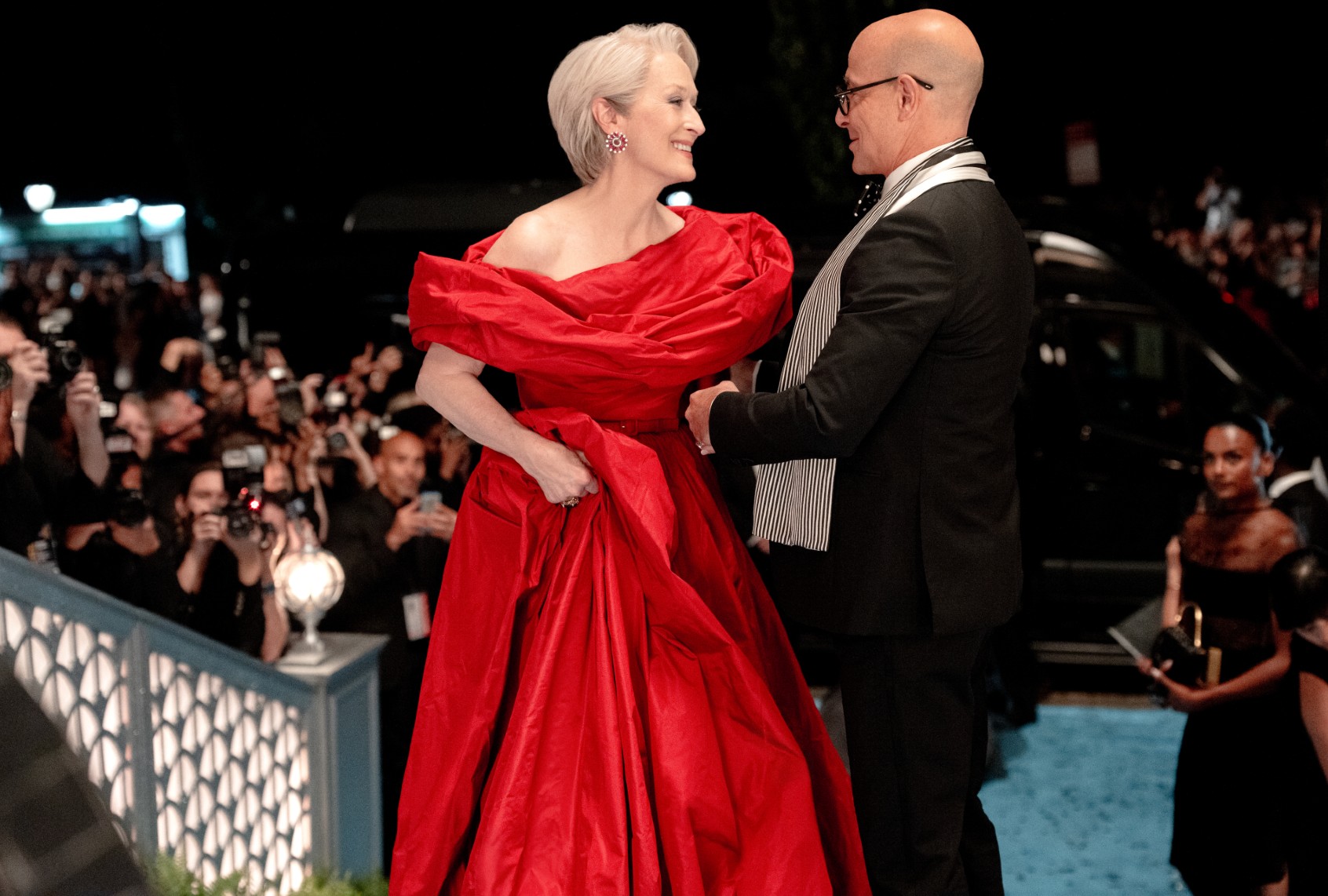
(Macall Polay/20th Century Studios) Meryl Streep as Miranda Priestly and Stanley Tucci as Nigel Kipling in “The Devil Wears Prada 2”
If a sequel that is still very much about a specific industry can feel this relevant to the larger experience of trying to keep up with a world changing faster than we can, we ought to sit up and take notice. “The Devil Wears Prada 2” isn’t a happy accident; it’s a vital reminder of the immense value of human art and creativity, exemplified by this movie’s prudence. No machine or predatory venture capitalist can understand that truth, much less turn it into a film. These are matters of the heart that can only be felt in the dark of the theater, watching such wonderfully realized characters weigh the cost of loving their work in a world that scarcely reciprocates.
It frightens me how much I can relate to that, and how painfully ironic it feels to cover a film about my industry’s sometimes-slow, sometimes-fast demise when it was “The Devil Wears Prada” that pointed me here in the first place. Twenty years ago, I never expected I’d endure layoffs or choose to leave a dream job, much less be forced to measure my affection for writing against the forces that unanimously try to negate its worth in favor of LLMs and GPTs with no mind or soul. Those are just the cards that were dealt. Fate comes full circle, and we can either ride its wave or struggle against it.
But as “The Devil Wears Prada 2” reminds viewers, there is still a choice in the matter, a third option that finds us clinging to our integrity and molding it into something sustainable, rather than selling it off. As this film so deftly proves, beauty and artistry have survived. There are still powerful ways to tell stories, even amid mergers and changes that seem insurmountable. Art will never die, but it will change. As Miranda tells Andy in one pivotal scene, “People should know there is a cost.” And with “The Devil Wears Prada 2” — a brutally honest, important film that uses its blockbuster status to convey the timelessness of journalism, cinema and human creativity — they will.
Read more
about sequels
