
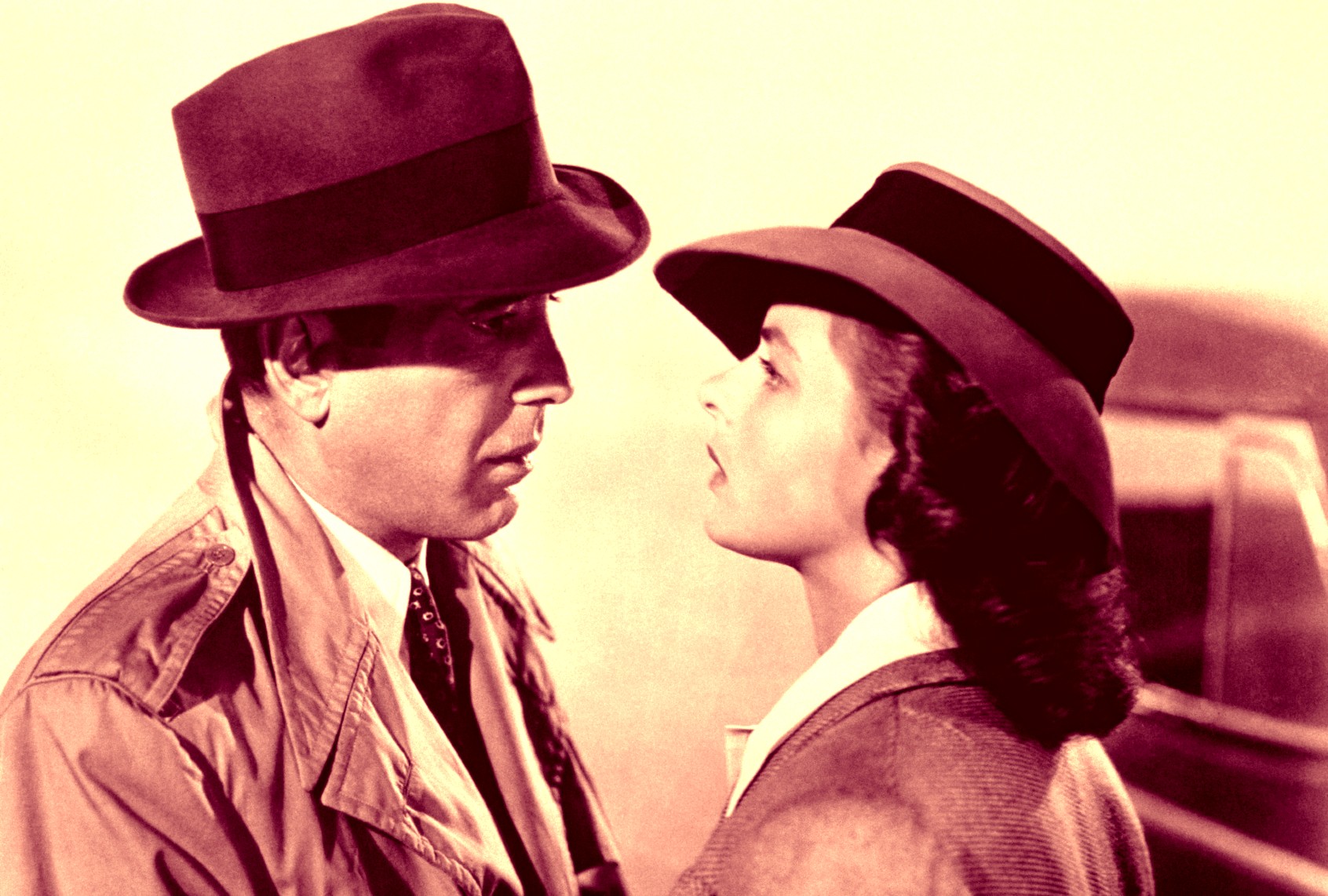

In 1986, Gene Siskel and Roger Ebert dedicated a full episode of their syndicated series “At the Movies” to sounding the alarm about the industry’s fascination with colorizing black-and-white films. “Hollywood’s New Vandalism,” they called it, placing the blame for this creative abomination on two of the main companies leading the charge — and one man, Ted Turner.
During the prior year, Turner had acquired the MGM studio’s library of more than 3,500 films for $1.25 billion, in a deal that made him the owner of cinematic gems like “Gone with the Wind,” “The Wizard of Oz” and “Casablanca.” Two of those films were originally presented in color, including “Gone with the Wind,” which launched Turner Network Television in 1988. The third, “Casablanca,” was not.
America’s foremost film critics ridiculed the colorized version of the 1942 film “Yankee Doodle Dandy” that Turner had recently broadcast on what was then known as SuperStation WTBS and warned that a colorized version of 1941’s “The Maltese Falcon” was on the way.
That film’s director, John Huston, joined Jimmy Stewart and fellow Directors Guild of America members, including George Lucas, in accusing Turner and other colorizers of cultural butchery. But Turner wasn’t just undeterred. He was emboldened.
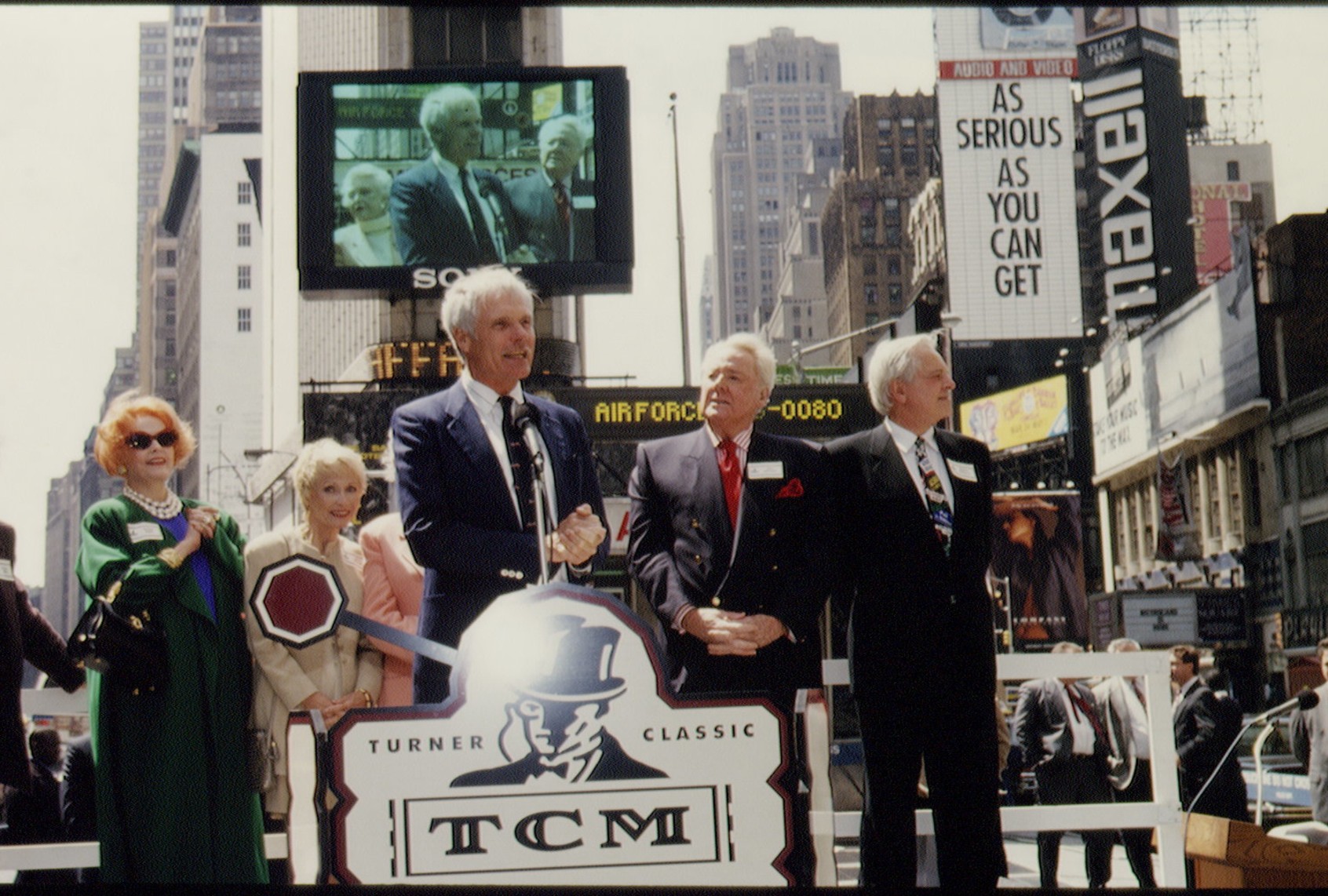
(Rick Maiman/Sygma via Getty Images) Ted Turner launches Turner Classic Movies
“I personally don’t think it makes that much difference in the end,” he told The Los Angeles Times a couple of weeks after Siskel and Ebert called him out. “I think editing these movies makes a hell of a lot more difference in how they look . . . Why aren’t people making a fuss about that?”
By the time he’d aired a colorized version of “Casablanca” on his channel, Turner set his sights on what many viewed as the ultimate sacrilege – pigmenting Orson Welles’ “Citizen Kane.” Colorizing old “Popeye” shorts, which Turner also gained in the MGM deal, drew fewer objections.
Turner, who died Wednesday at age 87, elbowed his way to the forefront of modern television by prioritizing profit over deeper questions about whether certain cultural totems should be held sacrosanct. Yet it is largely because of the way he built his media empire that the TV landscape as we know it looks and functions the way it does, and young generations of cinephiles were exposed to a breadth of Golden Age and New Hollywood films.
Turner’s signature achievement was launching the 24-hour news era in 1980 with CNN. Initially, the Cable News Network struggled to draw viewers, but that changed with the Persian Gulf War, when Turner’s investment in international journalism paid off. Its coverage established CNN as a global player in breaking news.
Leading up to that, he was one of the earliest entrepreneurs to plant his flag in the basic cable realm with the Atlanta-based “superstation” we’d eventually come to know as TBS. But in founding Turner Classic Movies in 1994, Turner’s brand became a bridge spanning screen entertainment’s past with its future.
Out of all the cable channels Turner launched, TCM is held in the highest regard as a living repository of America’s film heritage, having since been joined in that role by The Criterion Collection and other smaller entities. In TCM, Turner created a viewing experience that wasn’t simply passive but curated, designed to educate and cultivate appreciation for bygone eras of filmmaking. And in an age where cinematic tastes are shaped by algorithms, TCM is one of the few surviving cable outlets still dedicated to fostering discovery.
When Turner acquired MGM’s library, along with Warner Bros.’ pre-1948 titles, he also became a custodian of American cinematic history, whether he intended to or not. (Turner Broadcasting System’s 1996 merger with Time Warner eventually added Warner Bros.’ post-1950 library to TCM’s shelves.)
For a long time, film lovers were right to wonder if he wanted the job.
Turner, who died Wednesday at age 87, elbowed his way to the forefront of modern television by prioritizing profit over deeper questions about whether certain cultural totems should be held sacrosanct.
TBS and TNT were the original portals to Turner’s film library, but they utilized most of its features as schedule filler. In its earliest days, TBS aired old movies and comedy reruns, and was also the home of “Captain Planet and the Planeteers,” Turner’s effort to blend his passion for ecological conservation with educational programming. Its sequel, “The New Adventures of Captain Planet,” aired on Cartoon Network, which launched in 1992.
Cartoon Network evolved more gracefully from a retro-animation platform into a cultural tastemaker by way of Adult Swim. The adult-targeted block played a major role in mainstreaming anime, launched live-action comedy performers like Eric Andre, Tim Heidecker and Eric Wareheim, and resurrected old cartoon characters and titles with an absurdist twist. Sixties-era heroes like Space Ghost and Birdman were revived for a new generation — as a talk show host and an attorney, respectively.
But you must remember this: Cartoon Network exists in part because Turner acquired the rights to Looney Tunes and Merrie Melodies in the MGM deal, swooped up Hanna-Barbera’s catalog in 1991, and saw an opening in the family TV space. When Turner founded CNN, the only other major cable players were ESPN and Nickelodeon.
Relatedly, as of early 2026, 750 Merrie Melodies and Looney Tunes cartoons are now exclusive to TCM.
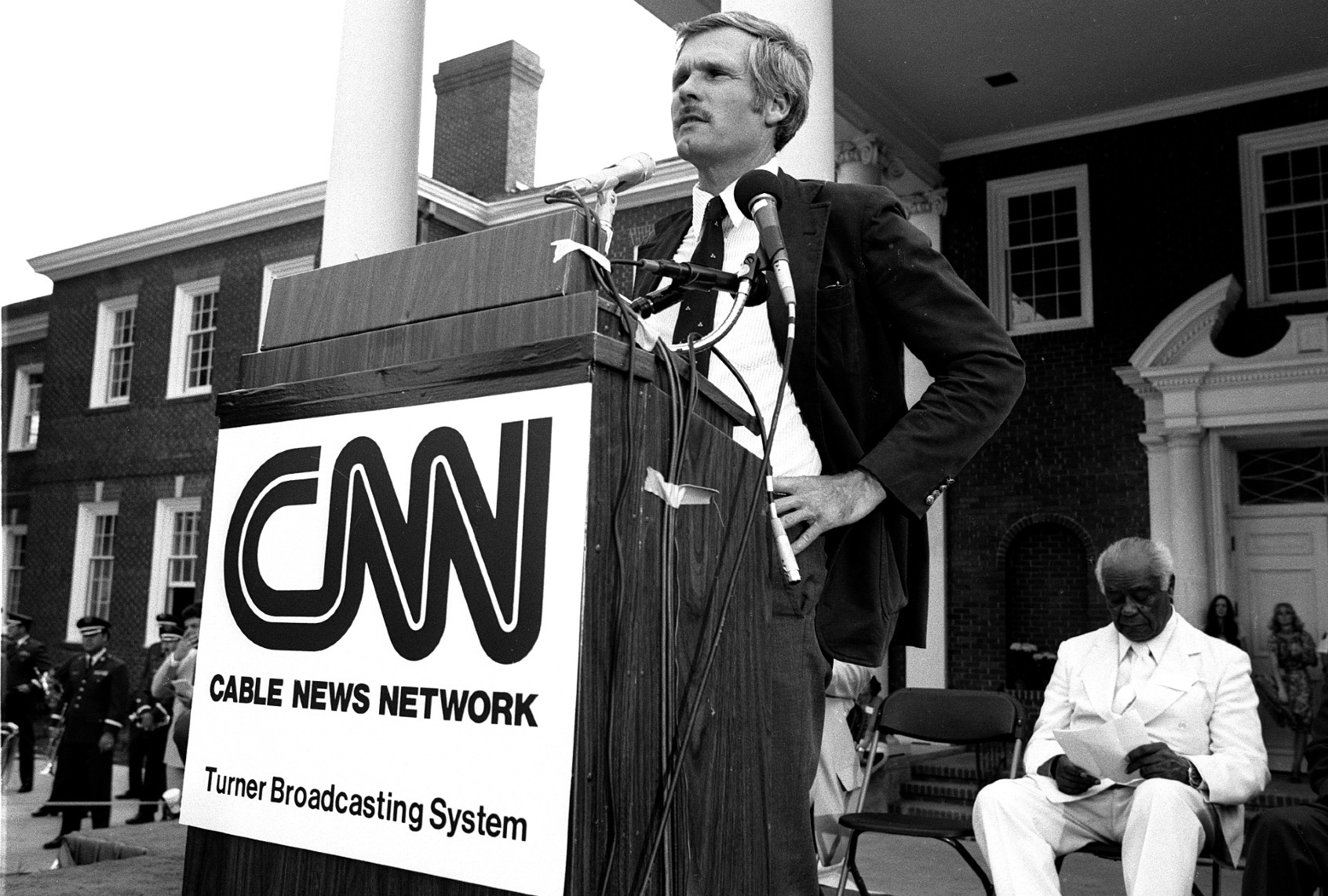
(Rick Diamond/Getty Images) Ted Turner attends official CNN Launch event
Turner’s personal legacy includes a decade-long marriage to Jane Fonda, his third, and a late-in-life shift to philanthropy and advocacy. In 1997, he gave $1 billion to the United Nations, establishing the United Nations Foundation a year later, and co-founded the Nuclear Threat Initiative in 2001. During his lifetime, he amassed two million acres of land across nine states, most of which he maintained for ecological preservation, including resurrecting bison populations from the brink of extinction. At the time of his death, Turner had the largest private herd in the world, numbering around 45,000 head, according to Turner Ranch Outfitting‘s official website.
But in his heyday, Turner understood the value of shaping and marketing sentiment, whether through news coverage or by accommodating our collective appetite for sentimental yearning.
We need your help to stay independent.
He was a capitalist above all, describing himself in a 1995 New York Times story as more of an adventurer than a businessman. He said this as Turner Broadcasting System merged with Time Warner Inc., so consider the context. The man nicknamed “the Mouth of the South” probably suspected he was better served in that moment by his reputation as an unpredictable swashbuckler and a loose cannon than a dull, calculating suit.
That is to say, film appreciation played less of a role in his numerous media adventures than profit potential. By 1982, his “superstation” was reaching an estimated 22.5 million cable viewers nationwide — many more American homes beyond the Atlanta metropolitan area than WTBS initially served. But to sustain that expansion, it required more advertising revenue.
Therefore, in his view, it was worth risking Hollywood’s ire by tinting Humphrey Bogart and James Cagney if it meant more people tuning in, whether out of curiosity or in horror.
In defending the inviolable status of Hollywood classics, Siskel and Ebert were taking a stand against messing with cultural artifacts. But that crusade was also fueled by nostalgia.
“Apparently [Turner] has never sat in the darkness of a movie theater and felt in his bones the perfection of black and white photography, its absolute appropriateness for stories like ‘Casablanca,’” Ebert eloquently wrote, arguing that if a person’s first viewing of that film is colorized, they would never be able to experience the full impact of its original visuals.
In Turner’s view, it was worth risking Hollywood’s ire by tinting Humphrey Bogart and James Cagney if it meant more people tuning in, whether out of curiosity or in horror.
He was right. But from a cold financial perspective, Turner knew what he was doing. He claimed that black-and-white movies commanded lower advertising rates than movies in color, and backed that up, as Mental Floss reported, when his first 12 colorized movies earned an average of $900,000 for a one-year broadcast licensing term from stations.
“The colorization battle is essentially over,” declared The Los Angeles Times in 1988, marking the time of death at 5:05 p.m., when Ingrid Bergman’s Ilsa and Bogart’s Rick made their TBS debut in vivid Easter Egg shades.
Defenders of the black-and-white aesthetic eventually won the war, though, as the public’s excitement for this supposed innovation waned. One silver lining is that the tumult moved Congress to establish the National Film Registry, dedicated to ensuring “the survival, conservation and increased public availability of America’s film heritage.
By the time early methods of colorizing fell out of vogue, Turner had already turned a corner with the filmmaking community with his investment in TCM. But as he told Variety in 2019, part of Turner’s colorizing efforts also involved restoring those films’ aged prints. “It’s important to note that we never permanently altered the original black and whites,” he said, adding that he never thought colorizing those old movies was wrong.
Maybe it wasn’t. Another 1988 L.A. Times story cited that 80,000 VHS of the colorized versions of Frank Capra’s “It’s a Wonderful Life” (which Turner did not own) had sold since it was introduced three years prior, versus the 5,000 that sold over the first five years it was available. And a 1997 report from the outlet quoted a VideoScan stat indicating 20th Century Fox Home Entertainment’s colorized version of Shirley Temple’s “Heidi” sold 1.2 million copies versus 46,000 of its black-and-white version. In the digital age, encountering color versions of movies originally filmed in black-and-white is commonplace. Both the original and chromatic versions of “It’s a Wonderful Life,” for example, are available on demand.
Technology has evolved to a point where recently colorized films look, if not ideal, then at least passable on high-definition televisions. Mind you, this comes from the perspective of a cinephile who agrees with everything Ebert observed about the lighting and language of the greatest black-and-white films. I adore those old movies because I grew up watching them presented in their original glory. I’ve also seen much younger viewers cringe at the suggestion of staring at anything rendered in gray scale that has a running time longer than a “Twilight Zone” episode.
Want more from culture than just the latest trend? The Swell highlights art made to last.
Sign up here
Turner’s time as an independent media mogul largely ended three decades ago, when the cable channels he founded were absorbed by Time Warner, an earlier version of the behemoth that, following subsequent mergers and sell-offs, is currently known as Warner Bros. Discovery.
And sometime soon, Warner Bros. Discovery is expected to come under Paramount Skydance’s ownership, placing TCM under the stewardship of David Ellison, a man who many in Hollywood also consider to be a cultural philistine. Ellison’s CBS takeover crumbled the once-sterling reputation of that network’s news organization. Because of this, many are right to be fearful of what may happen to CNN.
Less concern has been expressed for the fate of the cinematic legacy Turner established and preserved with Turner Classic Movies. Even in cable’s heyday, it was never a moneymaker. But its founder and generations of devoted viewers saw its enduring value nevertheless.
Placed against other modern threats posed by media consolidation, the notion of whether dyeing iconic black-and-white movies heralded the beginning of cinema’s end seems quaint. But as Turner proved, the audience’s response showed how much we would miss these films, in any form, if they were to vanish from our lives.
Read more
about this topic
