

The nationwide Canvas outage that disrupted colleges and universities during finals week forced campuses across the country to improvise as faculty and students suddenly lost access to exams, assignments, grades and other course materials. Canvas is the online learning platform used by over 8,000 schools districts and universities, including all eight “Ivy League” schools. It is the central hub for each course, connecting teachers and students through course materials like discussion groups, assignments, grades, class files and an internal email system.
Canvas parent company Instructure confirmed this week that it was responding to a “security incident” affecting the platform, which is used by thousands of schools and universities nationwide. On its public status page, the company acknowledged that “Canvas is currently unavailable for some users” while teams worked to investigate and restore service.
The outage affected major institutions including Columbia University, Princeton University, Rutgers University and the University of California network, according to reporting from multiple university statements.
At The University of Tampa, administrators told faculty the outage was disrupting “final exams, paper submissions, and grading at a critical point in the semester,” while encouraging professors to consider alternatives including email submissions, in-person testing and assignment extensions.
Faculty were instructed to “exercise flexibility and good judgment” as the university worked through the disruption. In some cases, professors were told they could adjust grading approaches if students could no longer adequately prepare for exams without access to Canvas materials.
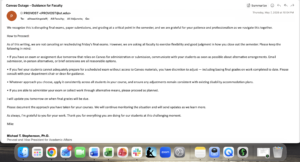
(Screenshot / Outlook) An email obtained by Salon with direction to faculty on how to handle the Canvas outage during and up to finals week.
Meanwhile, The New School urged students and faculty to back up Canvas content while warning that the “global cybersecurity-related incident” was affecting schools worldwide.
Rutgers similarly warned users to remain alert for phishing attempts following the breach, while student reporting from Princeton described mounting anxiety during the university’s finals period.
Start your day with essential news from Salon.
Sign up for our free morning newsletter, Crash Course.
A ransomware company and cybercriminal group called ShinyHunters claimed responsibility for the attack.
The disruption underscored how dependent higher education has become on centralized digital platforms that now manage nearly every aspect of academic life, from assignments and testing to communication and grading. What once functioned as supplemental classroom software has effectively become critical educational infrastructure.
Universities spent years building digital campuses. This week, many were forced to confront what happens when those campuses suddenly go offline.
