

If I were to make a list of all of the internet slang terms I’d like to see retired for a minimum of five years, the result would sound something like the “Cell Block Tango” number from “Chicago”: Bop! Slop! Banger! Wig! Cicero! Lipschitz! And frankly, the song fits perfectly. They (being the innumerable social media users who participate in superfan, or “stan,” culture) had it (the kibosh on overused, obnoxious stan jargon) comin’. They only had themselves to blame.
As a writer who is both gay and old enough to have watched the internet explode into the nefarious monster it’s become, the way language transforms online both irks and fascinates me. I was an early adopter of “bop” back when we were still using the word to classify the singular bounciness of Carly Rae Jepsen songs in 2015. As these things go, the adjective’s chosen definition soon twisted shape. The qualities that defined a “bop” quickly became less specific when they trickled down through social media. Soon, the word became a stand-in for “catchy,” shorthand that could be used to categorize just about any song with a single word. That’s when all the fun started melting away, and before long, Meghan Trainor’s PR team issued an unforgettably batty press release for her Valentine’s Day-themed EP, where the word “bop” appeared twice in the copy. “Meghan’s serving your insatiable thirst for dance-ready bops with the upbeat banger that is ‘Foolish,’” the release stated, cramming two bits of gay slang into one sentence. “It slaps so hard you’ll be stanning for days.” As diet maven Susan Powter proclaimed in the ’90s: Stop the insanity!
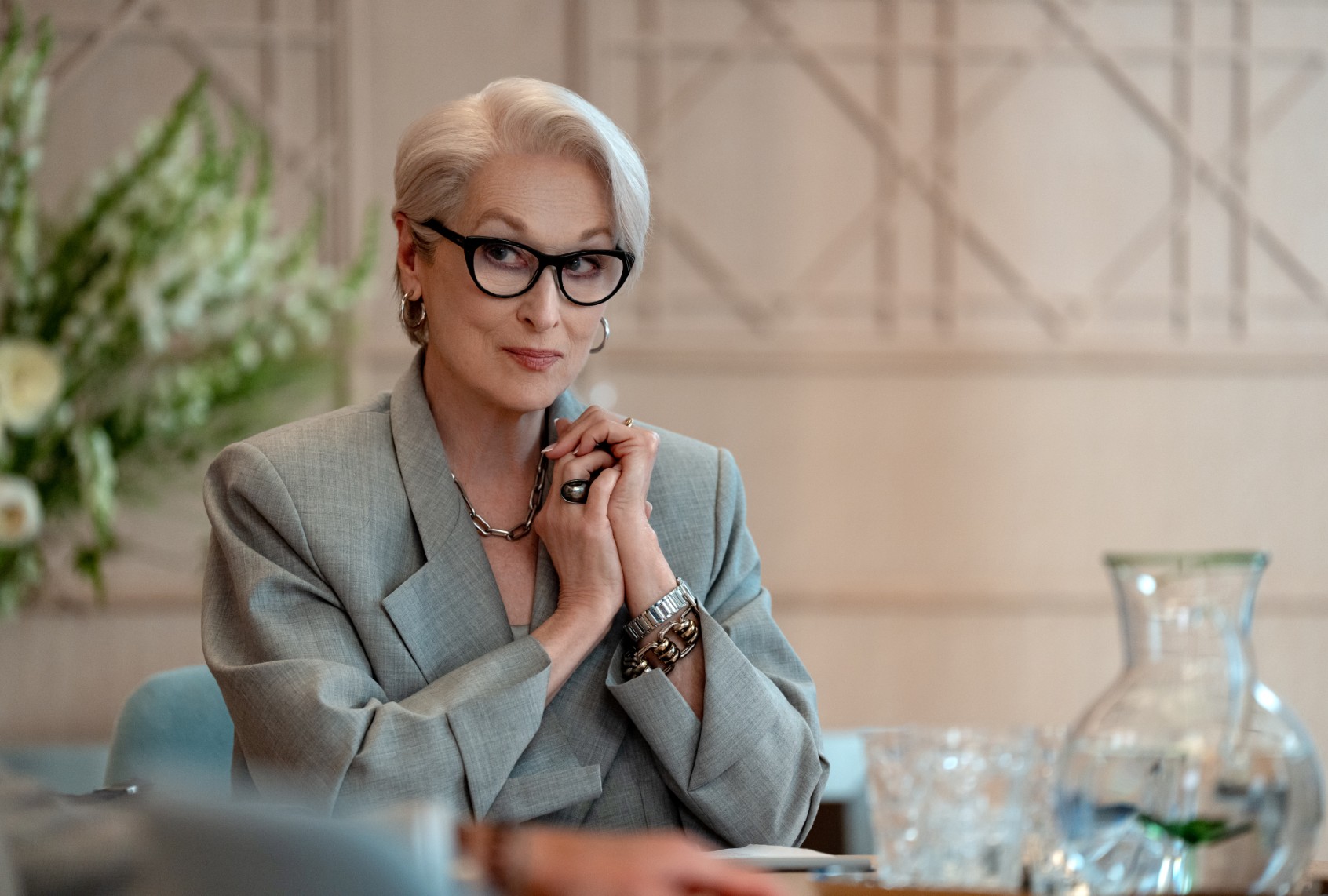
(Macall Polay/20th Century Studios) Meryl Streep as Miranda Priestly in “The Devil Wears Prada 2”
Language is malleable, but it has to retain some meaning. With “mother,” the etymology is just as important as its applied use. Without these considerations, no one can be mother. And the last thing we need is a world without mothers — literal or figurative.
Most of the time, I can overlook diluted queer vernacular popping up in the most random places. In almost all cases, it’s harmless — as much as brainrot can be harmless, I suppose. But every year, when Mother’s Day rolls around, I know I can look forward to seeing someone post an actress to their Instagram story with a “Happy Mother’s Day” caption. Witnessing a friend of a friend’s cousin credit a famous woman for her maternal nature, side by side with the person who literally gave birth to them, is a unique reality of our modern madness.
Innocuous as using the term “mother” to describe an actress may ultimately be, it has been proliferated in such an extreme and exaggerated way that the expression has sprinted past “bop” in terms of misuse. The problem is that not everyone can be mother, and it takes a certain style of cinematic performance to earn such an honorific distinction. Language is malleable, but it has to retain some meaning, or the boundaries of our society will disintegrate more than they already have. With “mother,” the etymology is just as important as its applied use. Without these considerations, no one can be mother. And the last thing we need is a world without mothers — literal or figurative.
But to determine a mother-worthy performance, one must first understand how the title was originally doled out. The current form of its usage dates back to the late ’70s and ’80s ballroom and drag culture, where “mother” was a term of veneration, designated to mothers of a “house,” a term used to classify members of a chosen family. Houses were (and are) typically comprised of Black and Latino queer people — “children” to the house’s mother or father. A house mother provides the kind of love, care and parental support that so many of the house’s children weren’t fortunate enough to receive from their biological parents. The house allows its children to flourish, with a mother guiding her children to greatness in ballroom competitions and beyond. “Paris Is Burning” remains the greatest crash course in this terminology and is essential watching for every human, not just queer people. And although I don’t imagine a large percentage of those frequently throwing around the contemporary iteration of “mother” online have spent the 78 minutes it takes to watch Jennie Livingston’s revolutionary documentary, the term’s roots shouldn’t be brushed off so easily.
“Mother” maintained its grip in queer spaces as the decades rolled on, but came into mainstream notoriety around the same time “RuPaul’s Drag Race” jumped from its original home on Logo over to VH1, where broader accessibility gave the show a fervent new audience. “Drag Race” is the source of quite a bit of modern slang terminology, lifted from decades of African American Vernacular English, posted online, and co-opted to fit just about anything. I might’ve enjoyed “The Devil Wears Prada 2,” but no part of me needed to hear Stanley Tucci say the word “slayed.”
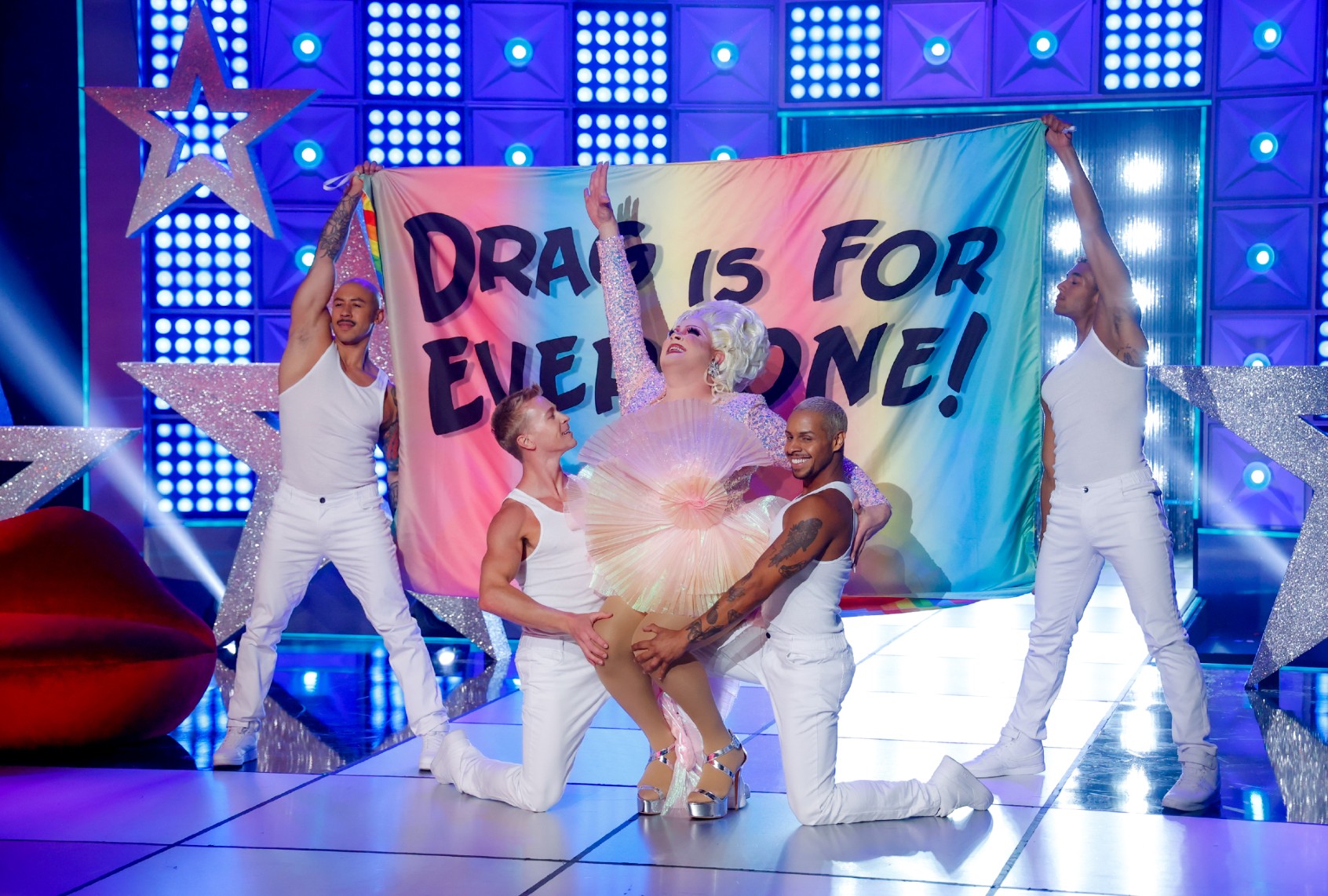
(World of Wonder Productions, Inc./Paramount+) Nina West in “RuPaul’s Drag Race All Stars”
Want more from culture than just the latest trend? The Swell highlights art made to last.
Sign up here
Nevertheless, there’s just no getting around some uses of queer phrasing, at least not when so much of our current modern lives are spent online. That’s where “mother” has come home to roost, now applied as liberally to pop stars as it is screen sirens, influencers and Food Network hosts. When Ina Garten says that a viewer can use fresh tomatoes, but store-bought tomatoes are fine too, she’s just Ina Garten. But when Ina Garten says that you simply must use the good olive oil for a recipe, and not the bottom-shelf brand that comes in a plastic bottle, she’s mother. Get the picture? If not, that’s fine too. The wanton use of the term is part of the fun, but also what makes it irksome. “Mother” should have meaning to it. There are specific times when it’s a genuinely appropriate word to use, one that covers ground no other adjective can. We may live in an increasingly lawless society, but that doesn’t mean all significance should be abandoned at will.
The trouble is that “mother,” in its present use, is often more of a feeling than a fact. It’s been quite a long time since I used it myself, but if I were to apply it to an actress’ performance I adored, certain criteria would need to be met. The role should evoke the word’s maternal roots, the sense of comfort and care that a house mother elicits. But what form that solace takes is up to the individual viewer. A performer worthy of this designation should also be commanding, an expert in her craft, but she doesn’t necessarily need to be the overall best in technique or have the institutional esteem behind her to back it up.
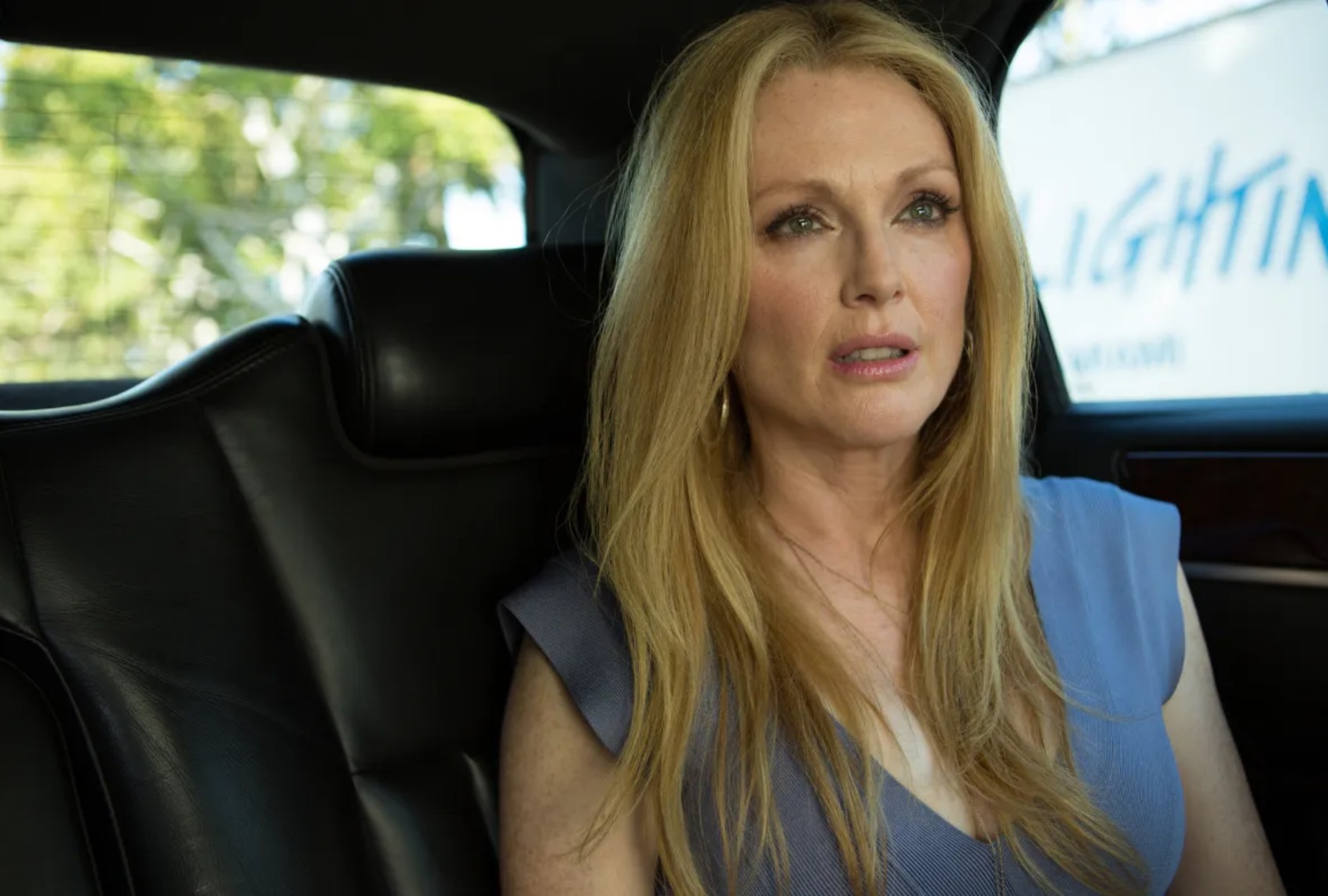
Playing a vain, pitch-perfect vision of Los Angeles’ wickedness in “Maps to the Stars,” Julianne Moore mothered so hard she almost separated California right down the San Andreas fault line. “She gave a remarkable turn as a picture of Tinseltown’s innate immorality,” would also work. But you’re less likely to find that kind of thoughtful observation online.
For example, if we were to put Meryl Streep against Julianne Moore, only one of these women is going to be mother, and it’s not the one in “Mamma Mia!” Streep might have the preternatural prowess of a woman born to embody characters and perform them before a camera. But more often, Moore has the grit and tenacious determination that it takes to deserve the mother title. “But Meryl Streep’s work is dependable,” you might say. “She has the kind of consistency that anyone would want in a maternal figure. You know what to expect from her.” And while that’s a solid point, I’d argue that Moore is better at building the rich interior life of her characters behind her eyes. She implies the kind of complex personhood that all women have, in a way that slightly edges out Streep’s reliability.
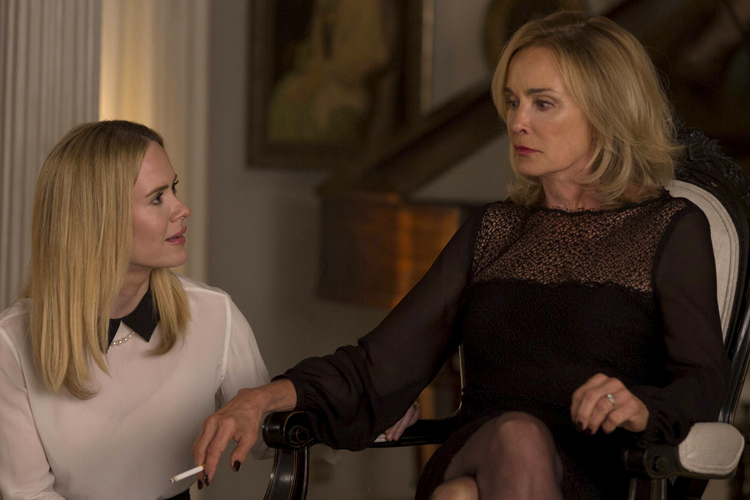
(Michele K. Short/FX) Sarah Paulson and Jessica Lange in “American Horror Story: Coven”
Look at it this way: Meryl Streep is mother in the sense that her performances conjure maternal comfort. She’s literal with it. If she’s mother, she’s mother in the same sense that we think of mothers when we’re kids. Julianne Moore, on the other hand, brings a less polished intricacy to her roles. She’s less predictable; warm and funny in some films, and completely calculated evil in others. She’s mother in a more honest sense, like growing up and becoming less preoccupied with yourself, realizing that your parents are very much their own people, with their own unique histories. None of this has anything to do with whether or not their characters have children. Playing a childless, vain, pitch-perfect vision of Los Angeles’ wickedness in “Maps to the Stars,” Julianne Moore mothered so hard she almost separated California right down the San Andreas fault line. “Her performance was spectacular,” or “She gave a remarkable turn as a picture of Tinseltown’s innate immorality,” would also work. But you’re less likely to find that kind of thoughtful observation online. And that’s part of the larger issue.
When a term like “mother” is employed so generously, it loses all substantive heft. Is Lauren Graham “mother” just because she played a mom on “Gilmore Girls”? I’m not so sure, and judging by her confusion talking about it on Drew Barrymore’s talk show a couple of years ago, neither is she. Other stars have accepted it with a bit more tongue-in-cheek grace. Sarah Paulson was briefly flabbergasted by the word following her around, but now jokes about it and embraces it. But “mother” isn’t a catch-all, and it can’t be consistently used for anything. Paulson was not mothering one single bit, delivering marble-mouthed, bottom-of-the-Ryan-Murphy barrel insults on “All’s Fair.” And although the phrase was thrown at Ariana Grande before a screening of “Wicked,” her work as Glinda was big sister at best.
We need your help to stay independent.
Just like there can be variations on any form, the same is true for “mother.” Many actresses warrant other titles, and there should be spaces for those, too. Jennifer Lopez may have starred in a recent Netflix action film called “The Mother,” but to me, her filmography is much more aligned with “aunt.” She pops in and out of my life, but it’s always a pleasure to see her. Her performances feel almost festive. I can see us sipping eggnog together over the holidays and having a grand ol’ time, but I’m not exactly dying to hang out with her outside of that, listening to her complaints about lost love and the men that got away.
Someone like Sharon Stone carries a similar yet unique on-screen aunt aura — the libertine, cigarette-smoking relative, with enough stories to tell in a single sitting to keep a family talking for generations. Halle Berry feels like a big sister, always imbuing a bit of sagacity but distinct youthfulness into every film she does. And Lady Gaga, Mother Monster though she is, has spent her short but promising acting career channeling grandma, which I mean with the utmost respect and adoration. She’s got an intelligence well beyond her years, the ability to call upon a distant past that she hasn’t even experienced, which she uses to round out her characters with the judicious finesse of someone who has truly lived.
And yet, every one of these women could dip into mother territory at any time. That pliancy is part of what makes the term fun to use, and also why applying it to anyone so freely is a futile exercise. “Mother,” in this form, is a fake designation that the internet has twisted into something trivial. It might be a joke, but it can be deadly serious, too. There should be some weight and intention behind it, some larger explanation that can be used to justify the term’s use. Without that interpretation, everyone can be mother, which means no one can truly be mother. And if we deprive gay guys of their annual chance to make Mother’s Day about their personal taste in actresses, God help us all. There are few things more universally powerful than a mama’s boy scorned.
Read more
about how “It’s giving mother”
