
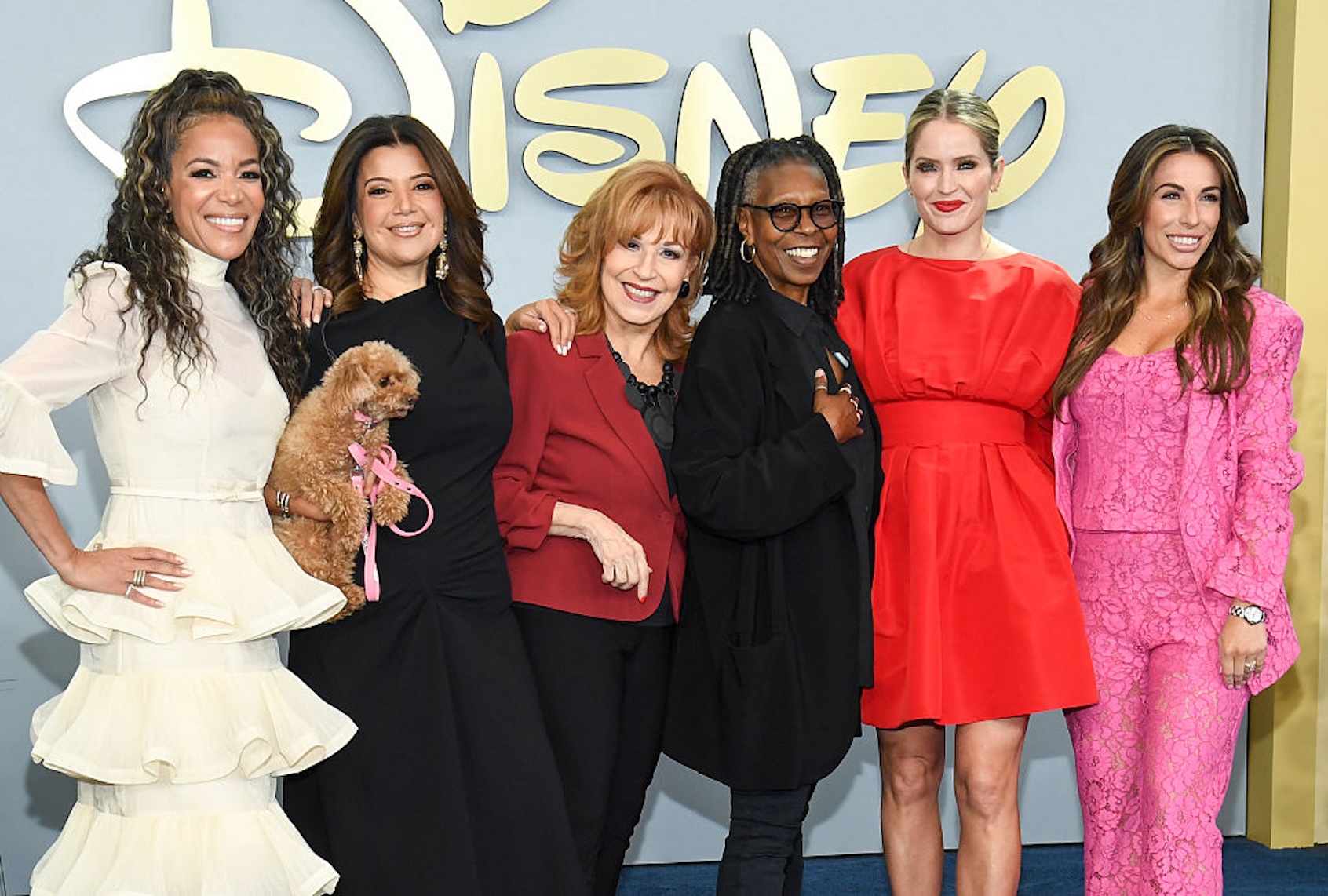

ABC’s entry into the media’s ongoing era of corporate capitulation under Donald Trump was not promising. In December 2024, just one day after a judge ordered both Trump and network anchor George Stephanopoulos to sit for depositions in a defamation suit legal observers widely considered frivolous, the network’s parent company Disney folded. ABC paid Trump $15 million for his presidential foundation, covered another million in his legal fees and published an editor’s note in which ABC News and Stephanopoulos declared they regretted past statements about the president-elect. Now the network may finally end Trump’s one-sided war against the media with a declaration that at least one major American media company has looked down the road of endless appeasement and understands where it leads: Nowhere that resembles a free press in a functioning democracy.
The pattern that emerges from all of this submission is ugly and familiar. You pay once, and the demands come back. Blackmailers always come back for more.
Brendan Carr, the co-author of Project 2025’s communications chapter who Trump installed as Federal Communications Commission chairman, has revived complaints against ABC, NBC and CBS that previous commissioners dismissed as obvious abuses of regulatory authority. He has threatened broadcasters over coverage Trump disliked. He investigated “60 Minutes” while Paramount was seeking merger approval, so Paramount settled Trump’s CBS lawsuit — centered on a routine edit of an October 2024 interview with Kamala Harris that TV networks perform every day — for $16 million, money that went to Trump’s presidential library. Rather than sign off on the deal, both the show’s executive producer and CBS News’ CEO resigned.
In perhaps the clearest example yet of how Trumpism weaponizes the administrative state against political enemies, one day after ABC signaled in September 2025 it would not fire late-night host Jimmy Kimmel over a joke that displeased the president, Carr launched a review of all eight of the local stations owned by ABC — years ahead of their scheduled renewal dates. But it appears the network has had enough. ABC has mounted the most aggressive defense from any television network since Trump launched his extended campaign to bring media organizations to heel.
The unlikely vehicle is not some glamorous investigative exposé or Pulitzer-winning newsroom crusade. It is “The View,” the daytime talk show conservatives have spent years dismissing as unserious television. On Friday, ABC filed a 52-page petition with the FCC challenging the agency’s abrupt decision to limit the longstanding interpretation of the equal-time exemption for bona fide news programming — the provision that has shielded shows like “The View” and, by extension, the entire concept of editorial independence in broadcast news — for decades. Conveniently, this reinterpretation seems aimed almost entirely at programs Trump openly despises: daytime and late-night shows featuring his critics.
Under federal “equal time” rules, broadcasters generally must provide comparable airtime to competing candidates. But for decades there has been a broad exemption for legitimate news programming. Without that exemption, political journalism would become nearly impossible. Booking one candidate could legally obligate a station to offer time to dozens more. The FCC formally recognized “The View” as qualifying for that exemption back in 2002. No serious challenge emerged for more than two decades until a complaint was filed against KTRK-TV in Houston for an appearance by Texas Democratic Senate candidate James Talarico on the program, which the local station aired.
Want more sharp takes on politics? Sign up for our free newsletter, Standing Room Only, written by Amanda Marcotte, now also a weekly show on YouTube or wherever you get your podcasts.
At the same time, conservative talk radio hosts interviewing Republican candidates faced no scrutiny whatsoever. “The Guy Benson Show” featured an interview with Texas Rep. Chip Roy, a Republican, on Feb. 11. Five days later, “The Mark Levin Show” ran a conversation with Dan Patrick, the state’s lieutenant governor. “The Glenn Beck Program” aired a chat with Roy on Feb. 18. The same rule, the same election cycle, the same conduct — and complete silence from Carr’s FCC, because those shows book conservatives. Even Beck called out the double standard.
“I can’t believe I’m saying this, but ABC may actually be right that ‘The View’ should keep its equal-time rule exemption,” Beck said on his show Monday. “As I understand ‘The View,’ which I despise, that’s what they do. They see what’s in the news and they talk about it.” That even longtime right-wing media figures are beginning to recoil from Carr’s campaign reveals how far beyond normal regulatory disputes this fight has moved.
ABC’s petition, signed by Paul Clement — the nation’s former solicitor general under George W. Bush and one of the most renowned conservative litigators in private practice — argues that the equal-time regime cannot survive First Amendment scrutiny in the modern media landscape with the likes of YouTube and TikTok. The FCC’s actions, the filing warns, “threaten to limit news coverage of political candidates and chill core First Amendment-protected speech for years and potentially decades to come.”
ABC is threatening to take a wrecking ball to the legal architecture enabling Carr’s campaign by essentially inviting the Supreme Court to revisit Red Lion Broadcasting Co. v. FCC, the landmark 1969 decision upholding broad federal authority over broadcast fairness rules based on spectrum scarcity.
Carr appears to have assumed broadcasters would continue behaving as they did earlier in Trump’s second term — by quietly complying. Instead, ABC is threatening to take a wrecking ball to the legal architecture enabling Carr’s campaign by essentially inviting the Supreme Court to revisit Red Lion Broadcasting Co. v. FCC, the landmark 1969 decision upholding broad federal authority over broadcast fairness rules based on spectrum scarcity. The thinking goes that if the FCC is going to weaponize equal-time rules against disfavored viewpoints, then perhaps the courts should reconsider whether those powers should exist at all.
As FCC Commissioner Anna Gomez, the lone Democrat on a three-person panel, said after the filing, “Disney is choosing courage over capitulation.” What the public will remember, she said, is who complied in advance and who fought back. In this case, you don’t hire Paul Clement to file a routine regulatory response. You hire him when you’ve decided to go to war, and prepare to fight all the way to the Supreme Court.
For years, media companies treated Trump’s attacks as isolated nuisances to be managed with settled lawsuits. But authoritarian pressure campaigns work cumulatively. ABC spent $15 million learning that tribute invites more tribute. CBS News lost two of its most respected executives — and viewers — on the altar of a merger. The Washington Post’s editorial leadership bent under pressure. The lesson of the past 16 months is that retreat makes Trump’s aggression worse.
We need your help to stay independent.
Meanwhile, the threat is metastasizing beyond the FCC. Trump has reportedly handed Acting Attorney General Todd Blanche a stack of news articles with a sticky note reading “treason,” and the Wall Street Journal has received grand jury subpoenas for its reporters’ records as part of a leak investigation. The home of Washington Post reporter Hannah Natanson was searched and her phones seized after the Justice Department rescinded a Biden-era policy that restricted the use of subpoenas to email and phone providers seeking source information. (She later won a Pulitzer for her reporting as part of a team covering the Department of Government Efficiency and Trump’s efforts to cut the federal workforce.)
These actions are not happening in isolation. They are part of a broader attempt to redefine journalism itself as a form of disloyalty. That’s why there is something clarifying about Glenn Beck defending “The View.” It strips away any pretense that this is a debate between liberal and conservative media bias, revealing that the dispute is between people who believe the government should be able to punish speech it dislikes, and people who understand that such a power, once established, does not stay pointed in one direction.
ABC found its spine late in the game. The $15 million lesson was expensive, and the suspension of Kimmel was a stain that won’t wash out easily. But the Clement filing is genuinely consequential, and not just because it might disarm Carr’s primary regulatory weapon if it survives judicial review. It matters because of what it signals to every other newsroom watching — every executive calculating the cost of compliance versus resistance, every journalist wondering whether their employer will protect them. The ladies of “The View” finally decided that a free press is worth defending.
Read more
about the media
