
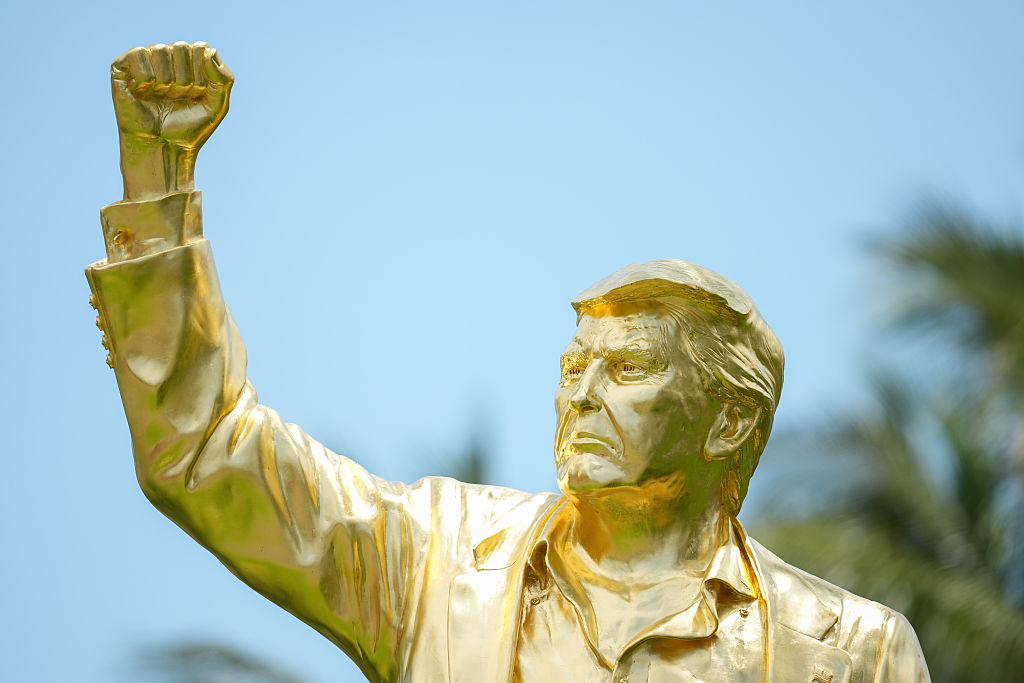

The sculptor behind the giant gold Trump statue at Trump Doral says the project involved crypto financiers, delayed payments, demands to slim down Donald Trump’s appearance and an internal nickname: “the golden calf.”
In a surreal interview with independent journalist Jim Acosta, Ohio artist Alan Cottrill described the chaotic process behind one of the strangest pieces of political iconography to emerge from Trumpworld in years.
The 22-foot monument — dubbed “Don Colossus” by some online commentators — was commissioned by cryptocurrency investors connected to a memecoin project and installed at Trump’s Florida golf resort earlier this month. The statue depicts Trump with his fist raised in the air following the 2024 assassination attempt in Butler, Pennsylvania.
But it is the sculptor’s description of the process that has drawn attention online.
In the interview, Ohio-based artist Alan Cottrill describes being approached by what he repeatedly calls “crypto bros,” many of whom he says he barely knew beyond first names during the early stages of the commission. According to Cottrill, the group pushed for repeated aesthetic changes to make Trump appear slimmer and more idealized than the photographic references he was initially using. At one point, he recounts being instructed to reduce what the clients called Trump’s “turkey neck,” eventually describing the final version as an intentionally “idealized representation.”
The project reportedly evolved further when the backers decided the bronze sculpture should be covered in gold leaf — a shift Cottrill says emerged partly from internal discussions about making the statue look more extravagant and visually aligned with Trump’s public image. He claims his studio jokingly referred to the piece internally as the “golden calf” from the beginning, a reference critics online quickly seized upon after the statue’s unveiling.
Cottrill also describes delayed payments, frantic installation deadlines, and communication involving political intermediaries and Trump allies connected to the project. At one stage, he says, he hid the statue in an undisclosed location in Ohio until final payments arrived.
Start your day with essential news from Salon.
Sign up for our free morning newsletter, Crash Course.
What emerges from the interview is less a conventional story about public art than an unusually candid glimpse into the machinery of modern political iconography, one built through cryptocurrency money, celebrity branding, religious symbolism and a constant negotiation between sincerity and satire.
And perhaps most revealingly, the sculptor himself appears fully aware of the absurdity. “How can we make it even more garish and hideous?” he recalls thinking during the gold-leaf process. Even so, he completed the commission the same way he says he approaches every large public monument: professionally, pragmatically, and with an understanding that spectacle itself has become part of the business model.
