
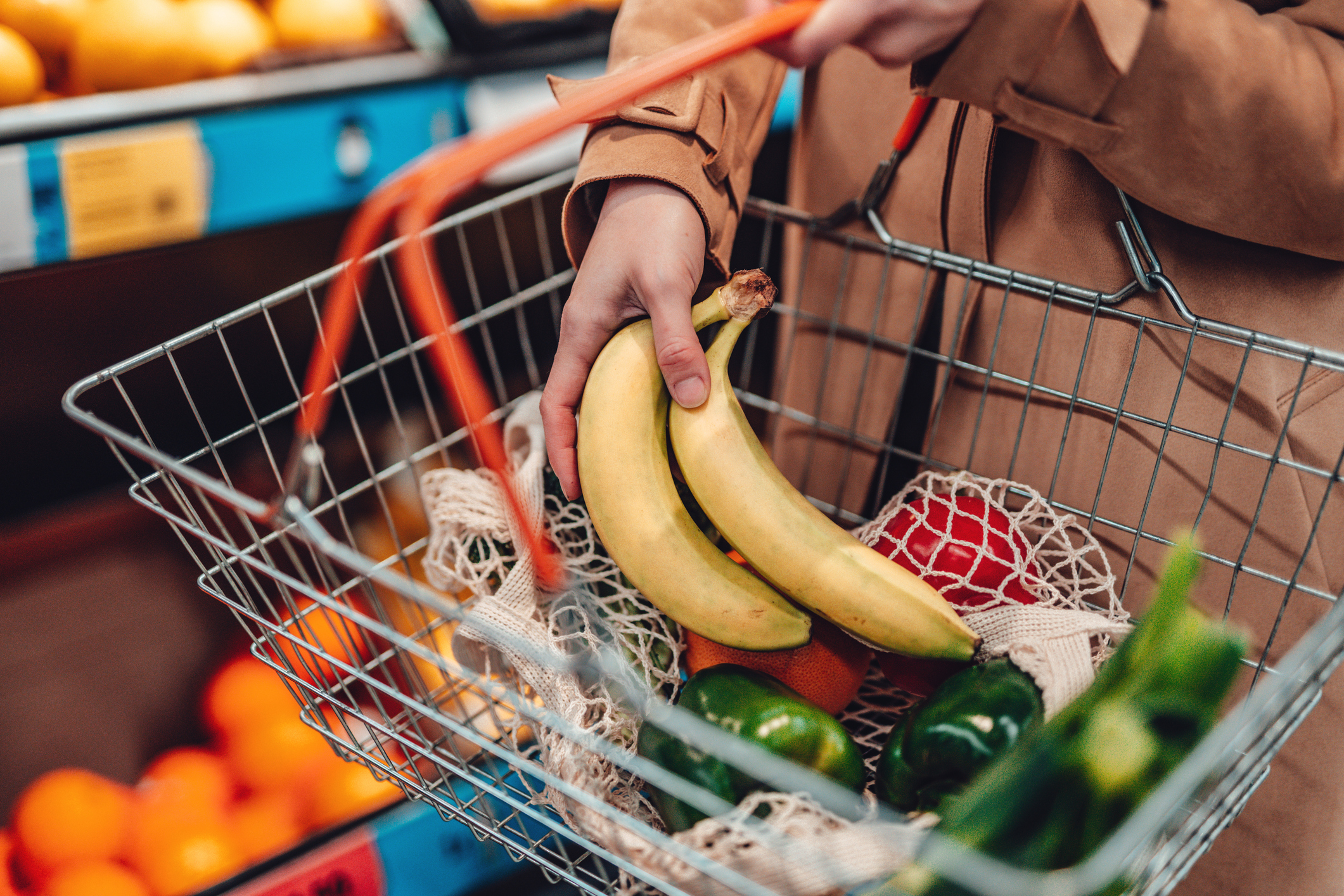

I think a lot of people assume food writers and recipe developers cook in a state of endless abundance: casually tossing expensive cheeses into their carts, buying armfuls of herbs without checking the price, somehow always having fancy citrus in a handmade bowl on the counter.
In reality, most of us are trying to answer the same question everyone else is: How do you feed yourself well without financially spiraling in the produce aisle?
Over time, I’ve realized that grocery budgeting is less about militant restriction and more about paying attention. Paying attention to what ingredients you actually use. Paying attention to which corners of the supermarket hold hidden deals. Paying attention to what your neighborhood’s international markets do better — and cheaper — than the big chains.
Little by little, I’ve built a style of grocery shopping that allows me to cook the foods I genuinely crave while staying within my means. These are the habits, tricks and anchor ingredients that help me do it.
Choose your anchor ingredients
One of the most useful shifts I’ve made in my kitchen came from reading Ali Slagle’s “40 Ingredients Forever” philosophy, which encourages people to build a kitchen around a personalized roster of ingredients they genuinely love and use constantly. Not aspirational ingredients. Not fantasy-self ingredients. Actual, real-life ingredients.
Because the truth is, most of us cook from a much smaller constellation of foods than we think we do.
Thankfully, many of my own anchor ingredients happen to be fairly budget-friendly: rice, greens, sweet potatoes, carrots, onions, lemons, tortillas, cabbage, beans, eggs, chicken thighs, coconut milk, good olive oil and sourdough. Add scallions and sparkling water and, honestly, you have a fairly accurate snapshot of my emotional ecosystem.
I’m obviously not restricted to only these ingredients, just as Slagle herself isn’t living under some kind of self-imposed 40-item pantry oath. The point is not limitation. The point is familiarity. Flexibility. Ease.
When I keep these ingredients around, I can make — or at least begin — many of the meals I crave most. Coconut milk, chickpeas and sweet potatoes become a quick curry spooned over rice and showered with scallions. Rice and eggs turn into deeply comforting bowls with chili crisp and greens. Chicken thighs become skillet chili topped with avocado and lime. Cabbage becomes slaw, stir-fry, soup or salad depending on the mood and the state of the week.
The more I embraced my anchor ingredients, the less I felt like I was standing in front of the fridge waiting for divine inspiration to strike. My kitchen started feeling stocked instead of random.
And if you’re trying to identify your own anchor ingredients, I highly recommend giving Slagle’s newsletter a read. But I also discovered a surprisingly simple trick in my own kitchen: pay attention to what you keep replacing.
Over the course of a month, notice which ingredients disappear almost embarrassingly fast and which ones slowly expire in the back of your crisper drawer while radiating guilt. Your anchors will reveal themselves.
Want more great food writing and recipes? Sign up for Salon’s free food newsletter, The Bite.
Mine, it turns out, are lemons and chicken thighs. Apparently I am spiritually powered by acid and rendered poultry fat.
Search for secret savings zones
There are secret savings zones tucked inside almost every supermarket — little pockets of abundance that reward the curious, the observant and the mildly nosy. Before I shop for my anchor ingredients (and whatever else I need to pull a week of meals into focus), I always make a pilgrimage through three specific corners of my local grocery store. They feel less like departments and more like insider information.
First: the “Oops! We Baked Too Much” rack. Yes, that is genuinely what the sign says. It’s usually just a humble baker’s rack pushed near the bakery section, but to me, it has the energy of a sample sale. What you find there changes wildly from day to day. Sometimes it’s a crinkly cellophane bag full of bolillos still faintly warm from the oven. Sometimes it’s a box of cinnamon-sugar doughnuts that are technically a day old but spiritually perfect. And sometimes — the true jackpot — there’s a crusty half-loaf of sourdough, which instantly checks off one of my weekly anchor ingredients for just a few dollars.
The second stop is the surplus meat section, tucked in an unassuming refrigerator beside the butcher counter. This is where cuts that are a few days shy of their sell-by date go to await a second act. They may not be glamorous enough for the brightly lit butcher’s case anymore, but they are still deeply useful — especially if you cook the way many home cooks actually cook: improvisationally, hungrily, with a skillet already heating on the stove.
We need your help to stay independent.
You’re probably not going to stumble upon pristine ribeyes here. What you will find are the lovable supporting actors of the meat world: skirt steak, pork riblets, chuck roast, spicy sausage, the occasional coil of chorizo. The kinds of things that become transcendent with a little attention. These are ideal for weeknight stir-fries, skillet chilis or brothy pots of beans where small, scrappy bits of protein can stretch themselves beautifully. If something catches my eye, I either build a meal around it that week or tuck it into the freezer like a tiny gift to my future self.
Finally, I always linger by the discount produce section, where mesh bags of slightly bruised or cosmetically wonky fruits and vegetables wait in cheerful little piles. Nothing spoiled. Nothing tragic. Just produce that isn’t conventionally beautiful enough to command full price. The bags are usually $1.49 or 99 cents, which feels almost illicit in this economy.
This is where I often find my weekly anchors: onions, lemons, sweet potatoes, greens. But it’s also where delight sneaks in. Last week, I found a bag of crisp apples destined for turnovers. This week, a pile of sumo oranges that practically begged to be eaten on a blanket by the lake.
So go wander your supermarket a little differently this week. Drift toward the odd corners. Peer into the strange little refrigerators. Treat the grocery store less like a checklist errand and more like a treasure hunt. You may be surprised by how much abundance is quietly waiting for you there.
Coupon, coupon, coupon
I am not asking you to become a full-time coupon strategist with a three-ring binder and a minor reality television aura. This is not “Extreme Couponing.” We are not clearing out an entire CVS at 7 a.m. But I am asking you to stop ignoring the very real, very unglamorous savings quietly sitting inside your grocery store’s app each week.
When I sit down to meal plan, I open my grocery list in one tab and my supermarket’s app in another and let them flirt with each other for a few minutes. As I scroll through the weekly deals, I ask myself a handful of practical little questions: What’s already on sale? Is there anything shelf-stable worth stocking up on while it’s cheap? Are there digital coupons I should clip before I head to the store?
(For the record, I like to do this at home on the couch with a beverage and low stakes. Some people prefer clipping coupons while they shop. Follow your bliss.)
The deals I gravitate toward most are rarely flashy. They are the deeply useful, quietly stabilizing sales that make future meals easier. My supermarket frequently runs 10-for-$10 deals on canned goods, which is essentially my signal to replenish the pantry backbone: black beans, chickpeas, navy beans, diced tomatoes. Suddenly, dinner feels possible again.
I feel similarly evangelical about frozen vegetable sales. Ten bags for $10? Wonderful. Into the cart go peas, spinach, chopped onions and corn — the humble supporting cast of countless weeknight meals. Frozen vegetables are one of the least glamorous but most reliable forms of kitchen insurance I know. They wait patiently. They do not wilt accusingly in your crisper drawer. They simply arrive, ready to help you make fried rice or soup or pasta or a skillet full of something warm after a long day.
Expand your grocery universe
I understand that the idea of going to multiple grocery stores in a single week may sound like the kind of advice given by someone who has never experienced modern exhaustion. Believe me: I get it. There are absolutely weeks where I can barely make it through one fluorescent-lit supermarket run without feeling emotionally frayed and financially humbled by the price of olive oil.
But on the weeks when I have a little more energy — a little more calendar wiggle room, a little more curiosity — I try to widen my grocery orbit. And almost every time, it pays off.
For me, that often means stopping by my local Vietnamese grocery store specifically for produce. The savings are immediate and slightly thrilling. Gorgeous sweet potatoes. Fragrant bunches of green onions. Carrots the size of a baby’s arm. All for dramatically less than what I’d pay at a big-box supermarket. And because I’ve saved money on the practical things, I can justify tossing a bag of frozen dumplings into my basket for fun — a tiny luxury subsidized by scallions.
One of the best things you can do for your future self is explore these markets before you urgently need them. Wander through your neighborhood’s international groceries or locally owned shops on a low-pressure afternoon when you’re not racing a shopping list or trying to get dinner on the table in 45 minutes. Let yourself notice things. Compare prices. Learn where the bargains live.
Over time, you start building a mental map of your neighborhood’s strengths. The Pakistani market near me has the best spice prices by a mile. The Ghanaian-owned butcher shop down the street is where I go for halal chicken wings and thighs. Another small market has incredible herbs for pennies. Piece by piece, your city starts revealing itself to you through its ingredients.
And no, this doesn’t mean every grocery trip needs to become a four-stop odyssey worthy of a logistics manager. Sometimes convenience wins. Sometimes exhaustion wins. But when you’re meal planning, it’s worth asking yourself: would one extra stop save me enough money — or bring me enough joy — to make it worthwhile this week?
Sometimes, surprisingly, the answer is yes.
Read more
about this topic
