
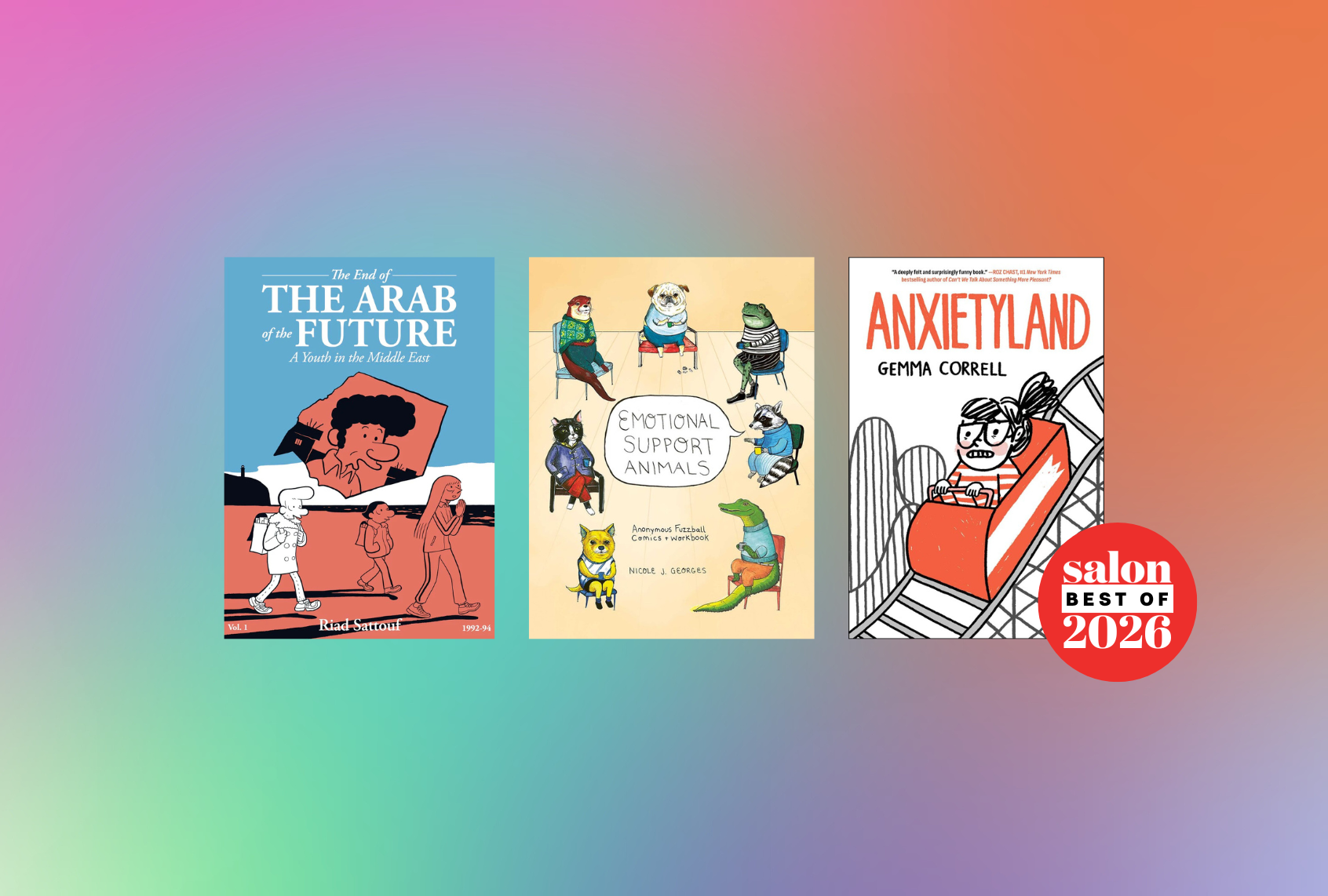

Earlier this year, my favorite place to buy graphic novels didn’t have the book I was looking for, and I thought, No worries, I’ll see if my second-favorite place to buy graphic novels has it. And then I got a little verklempt: We have never been this spoiled for choice. Though they are now the third best-selling genre in North America (behind general fiction and romance), the legitimization of the nonfiction graphic novel as a literary form is relatively new. Beyond the brisk sales, they’re among the most popular titles in elementary-school libraries, they win Pulitzer Prizes and National Book Awards, and they get adapted into movies and streaming shows.
The now–expansive embrace of graphic novels makes the recent death of “Persepolis” creator Marjane Satrapi earlier this month feel like even more of a blow. Satrapi’s 2003 memoir of growing up in Iran during and after the country’s 1979 revolution became one of the genre’s first blockbuster hits, one of the most widely read (and widely challenged) graphic novels of all time. Earlier this year, “Persepolis” became a metanarrative as well, with the publication of “Wake Now in the Fire,” an account of an attempt to pull the book from Chicago public schools and the student uprising that followed.
The one downside of this abundance, of course, is that I can only read so many of them. In the first half of 2026, these five have stayed with me.
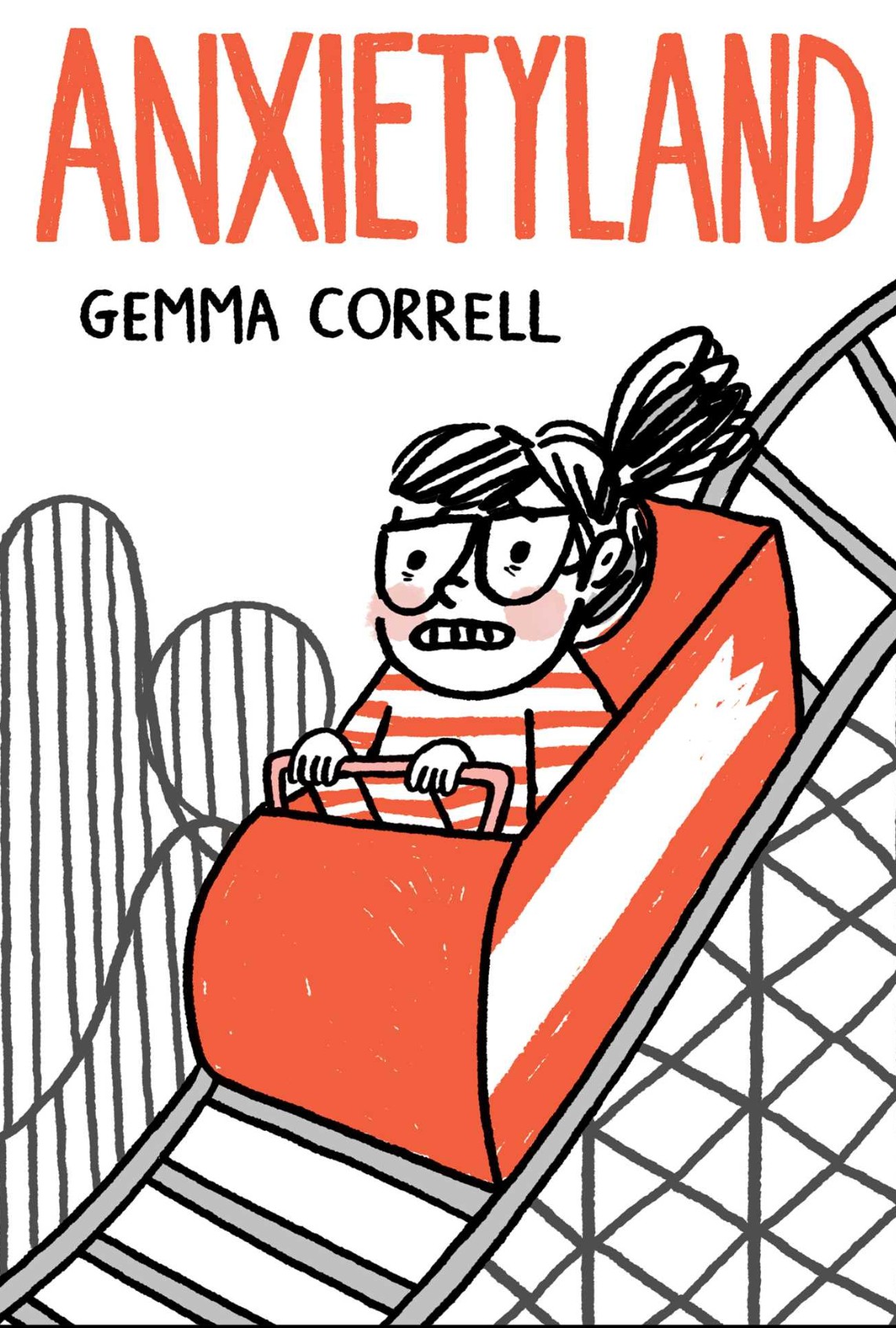
(Gallery Books) “Anxietyland”
“Anxietyland” by Gemma Correll
British comic artist Gemma Correll, whose work has appeared everywhere from The New Yorker to tote bags bearing the legend “Pugs Not Drugs,” had a very rough 2018. Her days, normally full of project deadlines, began splintering into insomnia, panic attacks and alcohol-intensive self-medication. When she eventually checks herself into a hospital for treatment, her experience of life in Anxietyland, the world’s most unpleasant theme park, casts the reader back into a time before people addressed (or even acknowledged) mental health — when we took the ride and held on tight.
“Anxietyland” takes readers through a childhood in which Correll’s shyness and introversion were treated like machinery malfunctions; a young adulthood that introduced her to alcohol as an all-purpose balm; and an adulthood in which years of bottled-up dysregulation finally explodes. Each chapter ventures a little deeper into Anxietyland, where the harrowing attractions include the Emotional Rollercoaster, the Worry-Go-Round, the Magical Thinking Show and Hangxiety Falls. Correll’s tidy writing and illustrations pop off the two-color pages — blue to denote the past, red as Correll finds her way out of Anxietyland with the help of outpatient talk therapy, mental health walks, and two needy pugs. The book’s 400 pages of honest, funny and absurd storytelling seem to fly by.
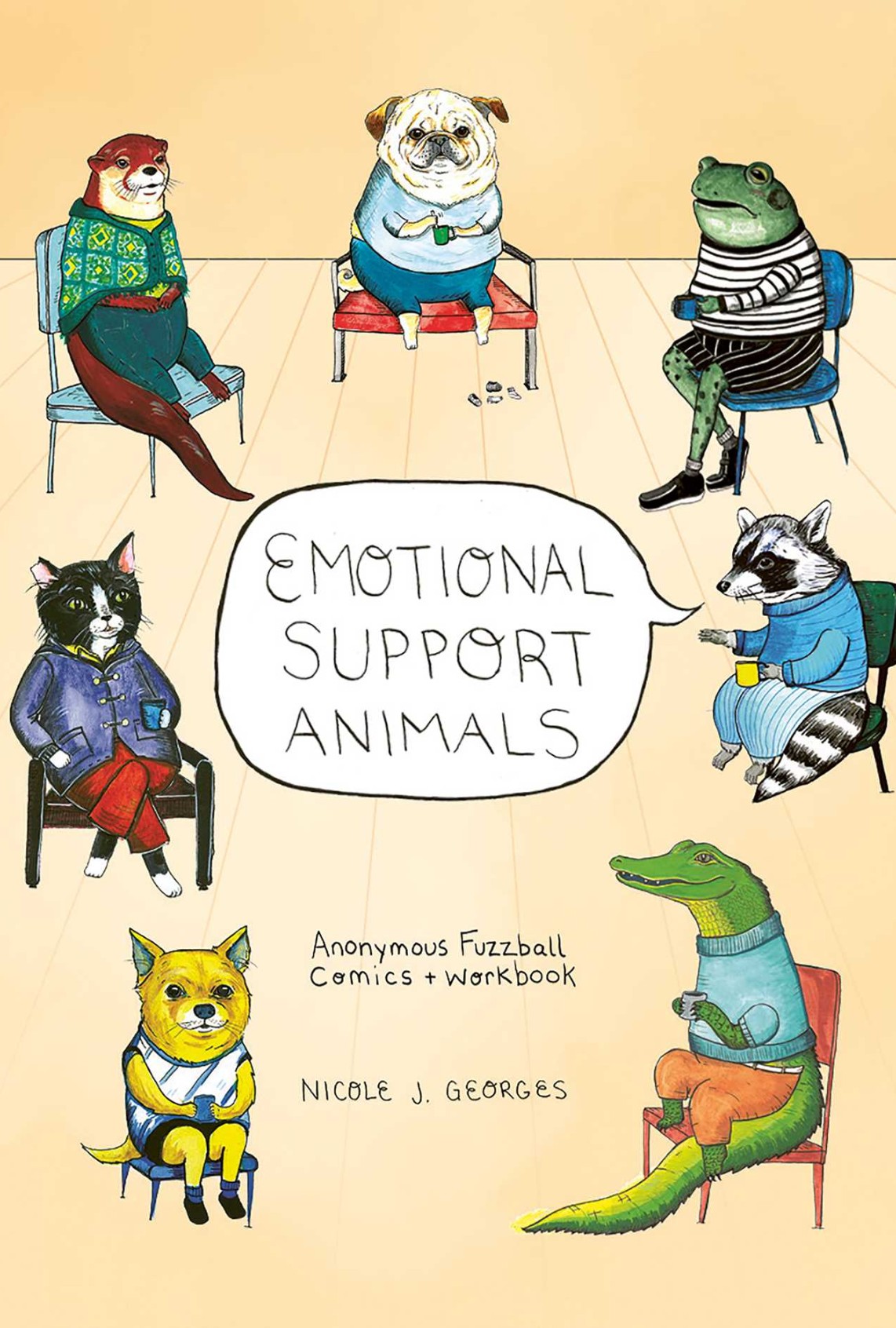
(Andrews McMeel Publishing) “Emotional Support Animals”
“Emotional Support Animals: Anonymous Fuzzball Comics + Workbook” by Nicole J. Georges
“Emotional Support Animals” is a departure from Georges’ previous narrative books like 2103’s “Calling Dr. Laura: A Graphic Memoir” and 2017’s “Fetch: How a Bad Dog Brought Me Home,” in that it’s pulled from her life, but she doesn’t depict herself in the beehived, horn-rimmed, vintage-dressed way fans are familiar with. Rather, the book shares lessons she’s taken from years of therapy in the form of well-dressed animals dropping pearls of compassionate wisdom. A beagle in a bandana muses, “Disappointing someone is not the same as hurting them.” A cat in a sharp green suit says, “You don’t forgive someone because they deserve forgiveness. You forgive them because you need peace.” A walrus with a mug of tea recalls, “I used to be pathologically accommodating. I’d make other people a priority and myself optional.”
Want more from culture than just the latest trend? The Swell highlights art made to last.
Sign up here
The project originally began as a daily exercise for Georges: Draw a favorite animal and have it deliver an insight gleaned from individual therapy, grief support groups, and other spaces where reframing unhelpful patterns and negative self-talk with a clarifying sentence or reminder can make all the difference. Each of its 10 chapters — among them “Boundaries,” “Grief,” “Self-Worth” and “Fear and Anxiety” — includes worksheets (based on the ones Georges drew for herself daily during pandemic isolation) meant to prompt readers to slow down, identify stressors, and take notice of the world around them. (“What is out of your control today?” “What is in your control today?”), along with encouragement to treat self-portraiture as an emotional exercise rather than a static rendering. (“Draw a self-portrait that reflects your emotion. Note: You do not have to be human.”)
There’s a Lynda Barry-esque generosity to the book, a desire to help others understand themselves and rewrite longstanding scripts that are no longer helpful. (Raise your hand if you feel personally attacked by the affirmation: “I don’t need to achieve anything to be lovable.”) Therapeutic language — even the occasional platitude — can sound a lot less judgemental when it comes from a turtlenecked alligator or a frog in stripes rather than a stranger taking notes on a legal pad, and Georges’ community-minded spirit comes through in every image.
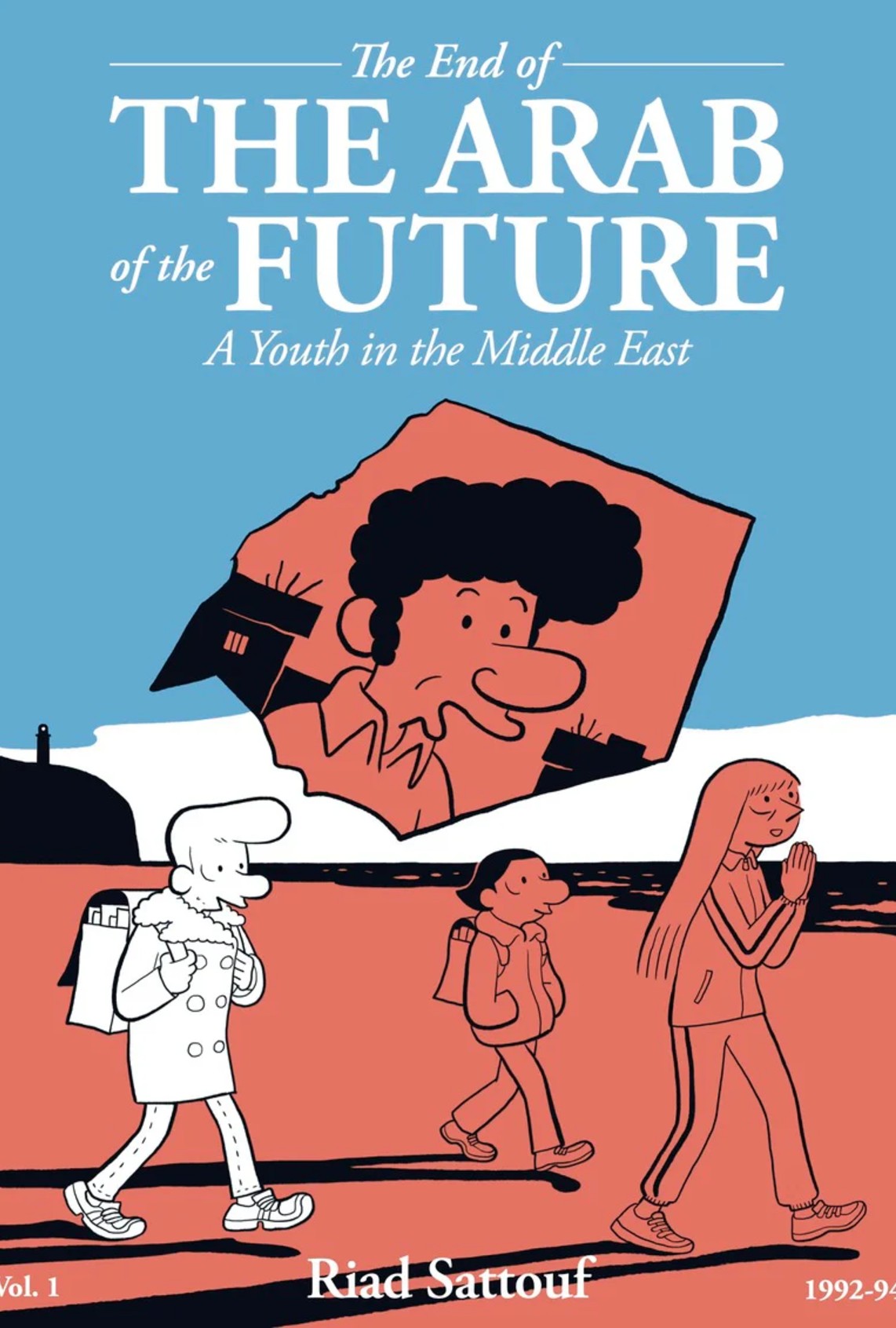
(Fantagraphics) “The End of the Arab of the Future”
“The End of the Arab of the Future” by Riad Sattouf
If you’re a French-language reader of Riad Sattouf’s award-winning series “The Arab of the Future,” there are 6 volumes. Its English-language publication stalled after the series was dropped by its original publisher, which means it’s been a wait for readers since the last book’s nail-biting final panels. The first volume of the final two books, repackaged by Fantagraphics as “The End of the Arab of the Future,” was published last month.
Confusing? A little: Those who haven’t read the first 4 will open “The End of the Arab of the Future” and find themselves hurled directly into an unfolding family emergency: Vol. 4 closed with Sattouf’s Syrian father and French mother ending their marriage — and his father absconding to Syria with the family’s savings and his baby brother, Fadi. As his mother’s grief and legal battles to get Fadi home worsen her mental health, Sattouf’s own life is upended by high school, hormones, heartbreak — and a nagging uncertainty. The latter is the hangover from a peripatetic childhood defined and dominated by his charismatic father, a once-idealistic scholar whose dreams of a Arab utopia soured into authoritarian megalomania. And though the elder Sattouf is minimally present in the book, his shadow looms over the narrative.
As an artist, Sattouf relishes dark absurdity; as a character, Riad is irresistible even when he’s prickly and judgmental, which is often. But the writer/artist’s flair for dark absurdity and self-referential flourishes makes watching him go through the stages of a disaffected adolescence in the early 1990s — exploring weird art, having crushes, listening to Nirvana’s “Nevermind” over and over — the best kind of teenage flashback.
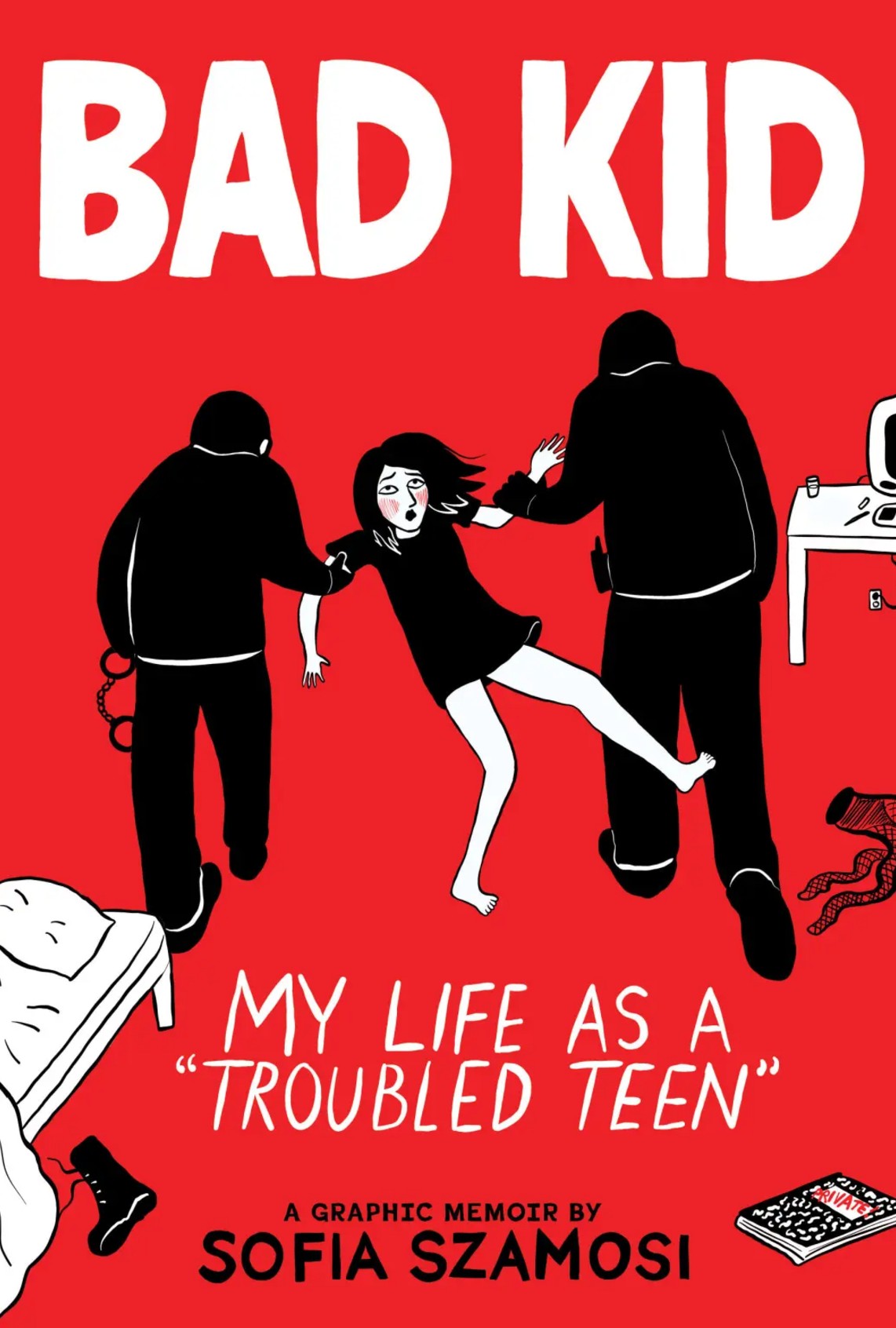
(Little, Brown Ink) “Bad Kid”
“Bad Kid: My Life As a ‘Troubled Teen'” by Sofia Szamosi
Before the horror stories began leaking out of the billion-dollar troubled-teen industry, many parents truly thought they were doing the right thing by letting grown men abduct their teenagers in the wee hours of the morning and drive them hours away from their homes and families into the wilderness. Before Paris Hilton came forward to testify on Capitol Hill about the sadistic conditions of these ostensibly corrective facilities, many parents believed they were sending their unruly children to the civilian version of military school — places that would toughen them up and put them on the right path via “Scared Straight” style tactics.
Sofia Szamosi was 13 the first time she was sent to one of these places, 16 the second, and the experiences were the same: They stripped her of autonomy and dignity, encouraged her to narc on her fellow “classmates” to curry favor with staff, and left her unable to trust anyone who claimed to have her best interests in mind. “Bad Kid” renders the punitive harshness and raw despair of these facilities in tones of black, white and red, and depicts the lives of its young captives as a learned pantomime of penitence: “Eat. Sleep. Pretend to be fixed. Repeat,” reads one panel.
We need your help to stay independent.
What did Szamosi do to deserve the label of “bad kid”? Not much: Like so many adolescents written off as intractable, Szamosi grew up with a parent who saw their own unresolved trauma in standard rebellious experimentation with alcohol, drugs, ditching school and resisting authority. Her hard-won understanding that breaking and bullying kids has nothing to do with healing them makes the message on which she ends the book both powerful and bittersweet: “We are all so much more than what we’ve done . . . those things are part of our stories, but they do not define us.”
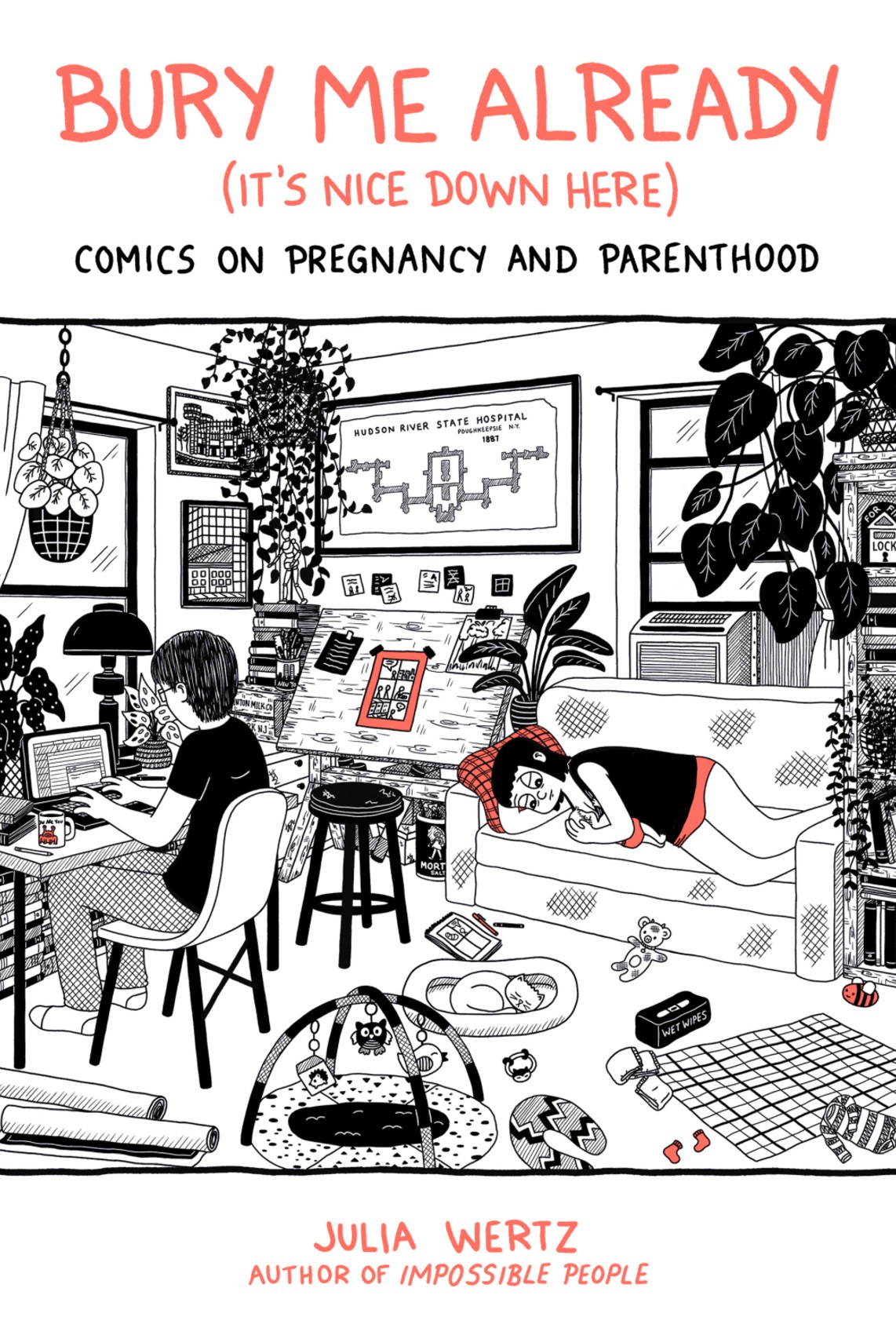
(Black Dog & Leventhal) “Bury Me Already (It’s Nice Down Here)”
“Bury Me Already (It’s Nice Down Here)” by Julia Wertz
Julia Wertz has been chronicling her life, her passions, her family and her coping mechanisms in busy, emotionally complex comics for two decades — first in her serial comic “The Fart Party,” and later in full-length, Eisner-nominated books like “Drinking at the Movies” and “The Infinite Wait.” “Bury Me Already” throws a sudden cross-country move, a pregnancy, a pandemic and a few other life-changing events into the mix in her latest compendium of long-form stories, stick-figure sketches, and three-panel gags.
Wrestling with the impacts of motherhood on a creative life is always a rich vein to tap for women writers and artists, and though Wertz never felt she was in danger of losing her identity or her drive to create comics, she navigated the first, COVID-constrained year with her husband and newborn son with frazzled epiphanies about her body, her capacity for love and her frequent need to just lie down. “I get feedback sometimes like, ‘Oh, her work is just about having a kid now.’ Well, a.) Of course it is. I just birthed a human being. I’m not going to pretend I didn’t do the craziest thing that humans do. But, b.) I make art about my life. So it’s just a natural progression of things,” she said in a recent interview with Salon.
The diary comics of interactions between stick-figure depictions of Wertz and her son, Felix, will resonate with anyone who has ever drowsed through days with a newborn. The loop of nursing and diaper changes and sleeping and bolting awake to do it all again. The frequent pantslessness. The nerve-shredding sense of being half-asleep yet constantly alert. The displaced feeling that a process we’ve always been told is natural and instinctual is anything but.
In Wertz’s case, everything unfamiliar about new parenthood was amplified by no longer living in her beloved New York City, the source of her inspiration (and some of her funniest stories) for more than a decade. Northern California, where she grew up, offers less hectic living, with family nearby and a proper house rather than an illegal basement sublet. (“Every day I wake up, and I’m like, I would just love to go for a walk in the city. That’s all I want to do. And then I have to go for a walk in nature, in the trees, and it’s so boring.”) “Bury Me Already” is Wertz at her best, with immersive panels and unbeatable comic timing.
Read more
about comics and graphic novels
