
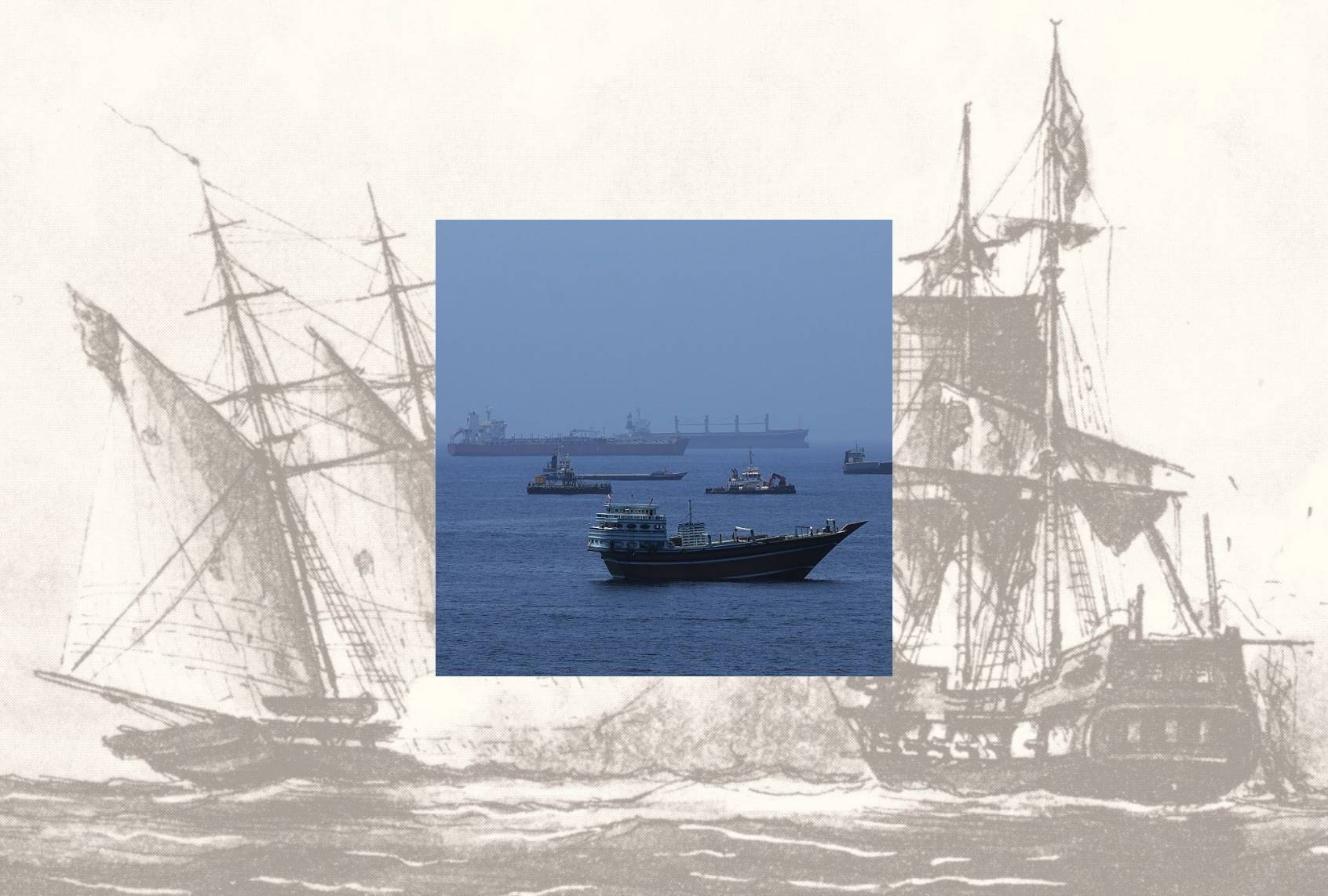

A recent thrift store find has enraptured me and given me insight into the history of America, which feels especially poignant and overlooked as we approach the 250th anniversary of this bizarre, wonderful, terrible country. For a quarter, I picked up a copy of “Atlas of American Wars,” printed in the Year of Our Lord 1986, just a few years before I was born — which means its contents are missing a lot of the American misadventures and atrocities that have spanned my lifetime. Nevertheless, it’s an enlightening read in light of how dramatically war has changed in the last two-and-a-half centuries.
The book serves as an excellent way of looking back at the bloodshed inside and outside the U.S. because it is, as an atlas should be, almost entirely filled with battlefield maps that cover virtually every campaign, large and small, many of which have been largely forgotten. Collectively, they stand as a blunt reminder that war, the dumbest and most vicious human invention, occurs in time and space. I mean, of course it does. But when you see every major turning point in American history spread out like a bloody centerfold, it reduces everything to ant trails, underscoring how pathetic and sad warfare really is, even when we think it’s justified.
Authored by Richard Natkiel, one of Britain’s top historical cartographers at the time who was employed by The Economist for his map-making prowess, “Atlas” of course begins with the so-called French and Indian Wars and follows closely with the Revolutionary War. These are the cluster of conflicts that broke these stolen North American territories out of their colonialist shell and spawned the United States, a nation ostensibly founded on principles of freedom and justice that also became the very imperialist engine it was trying to escape.
Or maybe it never meant to escape at all. No need to untangle the complex hypocrisy here — it’s all laid out in arrows and diagrams. Here is where armies marched and met and killed one another. Here is where the ships spewed their cannons at one another. Here is where the airplanes dropped their bombs. Some of it, probably, was warranted or in the spirited mission of liberty, as some will undoubtedly argue, but far from all of it.
This is American history at its most blunt and abstract, that doesn’t depict the war crimes and barbarism that have colored events like the invasions of Korea and Vietnam, which receive only five and seven pages each of dedication. Centuries of Indigenous genocide are squished into eight pages. Meanwhile, World War II encompasses 69 pages, but to be fair, it covers pretty much everything from the Battle of Midway to lesser-known theaters in Tunisia and the Marshall Islands. The book ends with a few skirmishes during the Reagan administration, including when U.S. Marines were dropped into Beirut and Grenada, and finally, details how the U.S. launched air raid attacks on Libya in 1986.
But one conflict in particular stands out among all the rest because of it was one of the very first a young United States engaged in: the first of the Barbary Wars.
What school doesn’t teach you
My middle-school civics textbook barely dedicated a paragraph to this 1801 war between the U.S and a group of North African states, which has been described as “America’s first war on terrorism.” That’s retconning more than a little, as the concept of terrorism as we know it today wasn’t really a thing yet. No, these were good old-fashioned pirates, sponsored by the Barbary states: the kingdom of Morocco was independent, while Algiers, Tripoli and Tunis owed a loose allegiance to the Ottoman Empire. Each nation had their own complex relationship with the U.S., which history books tend to gloss over. Other facts are prominent. For centuries, the pirates had a reputation for attacking ships from North America and Europe, enslaving and ransoming captives, or extracting heavy fees from anyone who wished to avoid such a fate. The corsairs, sometimes defining themselves as a naval mujahideen, also acted as mercenaries or proxies. European nations had a habit of hiring the pirates to attack other countries’ boats.
It was extremely hypocritical of the U.S. to condemn the Barbary states for enslaving a few hundred Americans given, you know, the extensive enslavement of hundreds of thousands of Africans on American soil.
The end of the Revolutionary War meant the fledgling U.S. no longer had the protection of Great Britain’s Royal Navy, the largest fleet in the world. For any vessels not flying the Union Jack, it was like a dinner bell for pirates — in fact, British diplomats wasted no time alerting the Barbary states that American ships were fair game, the sorts of anti-Yank antagonism that would blossom into the War of 1812. That meant the 16 states that made up the Union were forced to pay up. President Thomas Jefferson wasn’t a fan of this, but the economic pressure may have been paramount.
The hostage situation was dire, no doubt, as the 18th-century slave trade was especially brutal. But it was extremely hypocritical of the U.S. to condemn the Barbary states for enslaving a few hundred Americans given, you know, the extensive enslavement of hundreds of thousands of Africans on American soil. (It wasn’t until 1808 that the U.S. officially banned the import of enslaved people, but of course slavery itself wasn’t abolished until the Civil War roughly six decades later.)
Still, the idea of American prisoners was deeply egregious to many. False rumors that Benjamin Franklin, en route from France to Philadelphia, had been captured by Barbary pirates caused a sensation. But the country’s embarrassing economic standing, not to mention the cost of tribute, was of equal if not greater import. It was definitely not cheap paying off these pirates, whether it was ransoms or tariffs. The price was approximately $1.25 million, or roughly a fifth of the annual federal budget. As historian Gregory Fremont-Barnes noted, “Such largesse stood as a testament both to America’s weakness and servility, and to its determination, at apparently any cost, to pursue the lucrative trade for which the Mediterranean had been known since antiquity.”
Start your day with essential news from Salon.
Sign up for our free morning newsletter, Crash Course.
“Their poor ability to liberate the American hostages in a timely fashion hurt the image of the United States and allowed the Barbary states to view the new nation as one they could easily control, in terms of trade and beyond,” Kathleen J. Brett of James Madison University wrote in a 2022 thesis on the Barbary wars. “These wars served as springboard for the United States to engage in widespread global diplomatic endeavors and allowed them to become a stronger nation as a whole.”
“They are a great hurt to our Trade insomuch that no American Bottom can procure a freight in Europe,” an individual known as Samuel House wrote in a 1785 letter to Jefferson, expressing the hope that he would take action against the pirates. “The difference of Insurance is such that every Merchant Orders their Goods shipped in British Bottoms.” (These painful, random capitalizations may echo a certain someone else’s “unique” grammar. There truly is nothing new under the sun.)
Not to be outdone by British bottoms (which refers to the hulls of ships where cargo is stored — what do you think it meant?), Jefferson stopped paying tributes and launched warships in anticipation of war, which was never officially declared by Congress. But using the 1798 to 1800 Quasi-War against the French as precedent, in which no war was officially declared either, it apparently didn’t matter. Only later would Jefferson realize that Yusuf Karamanli, the Pasha of Ottoman Tripolitania (present day Libya), had already declared war on the U.S. on May 10, 1801, following years of frustration and Jefferson’s refusal to pay his dues.
Yes, news traveled a little more slowly back then. But this wasn’t entirely some arbitrary shakedown by a bunch of rogue Muslim nations, as it is usually depicted. As Nigerian author Kola Folayan noted, “it was America and not Tripoli that failed to honor its international commitment.”
Karamanli had demanded an increase in the tribute the U.S. was paying, Folayan argued, because the Americans were paying much higher sums to other Barbary nations. Tripoli wanted to be viewed as independent, but the U.S. had instead lumped all these nations together ideologically and diplomatically, then decided to ignore Tripoli entirely for several years. Acts of piracy by Tripoli, Jefferson’s main excuse for fighting, were overblown as well.
“According to some of the American published sources, the cause of the conflict was put down to Tripoli’s piracy and America’s determination to suppress it,” Folayan wrote. “But according to Tripoli, what brought America to war was its failure to assess correctly the political relationship between Algiers and Tripoli.”
In other words, Folayan concludes, the Pasha’s reaction was logical: Since the Americans had not fulfilled their contract, he did not consider himself obligated to fulfill his. Was it ethical? Well, there are numerous contemporaneous examples of reparation payments exacted by European states, so you tell me. At any rate, that year, one of Jefferson’s warships, the Enterprize, got into a fight with a Tripolitan ship and won. The victory galvanized American forces, who instituted a naval blockade that resulted in a debilitating food shortage in Tripoli. But the war was already costing the U.S. a fortune, even as the young nation remained deeply in debt from the Revolution. So by 1803, Secretary of State James Madison was working diligently to secure peace between the U.S. and Tripoli as quickly as possible.
A significant — and prophetic — footnote
“Perhaps its real significance lay in the fact that it was the first of many historic occasion in which the United States would undertake to project her military power far beyond her own borders.”
The Americans weren’t exactly winning anyway, but Jefferson doubled-down and sent more war frigates. In one dramatic episode, an American ship, the Philadelphia, was grounded on a reef and captured, but in 1804, the Americans launched a successful mission to rescue her with no casualties. Upon sailing into the harbor, they realized the frigate was too damaged to sail, so rather than leave it in enemy hands, they burned it to the waterline. One of Britain’s admirals described it as “the most bold and daring act of the age.” I’ll just say it reminds me of a 19th-century version of “Black Hawk Down.” In both instances, I find myself asking “Why was the U.S. there in the first place?”
We’re told Jefferson’s efforts paid off, as ships bombarded coastal cities, culminating in the 1805 Battle of Derna, in which U.S. forces set off from Alexandria, Egypt, on a two-month, 600-mile march across the Libyan desert and lay siege to the Tripolitan city via a joint land and sea attack. Karamanli surrendered on June 4, 1805, but remained in power. A treaty was signed, followed by a prisoner exchange, and the U.S. eventually withdrew its navy. Because the country had far less captives, they paid Karamanli $60,000, worth roughly $1.7 million today, but the yearly duties did stop, so there’s that.
Other than that, this wasn’t the decisive victory that some depict it as. As Folayan observed, it’s quite impressive that Tripoli was able to repel the U.S. for as long as it did — and if Tripoli hadn’t held them off, he writes, it’s likely “America would have preceded France by over two decades as a colonial power in North Africa.”
It seemed the new United States might enjoy some peace and prosperity for a few years — but these hopes were dashed by the War of 1812. As the U.S. Navy engaged with the British yet again, it also once more exposed American ships traveling Mediterranean to plunder from Barbary pirates, later resulting in the Second Barbary War.
In “Atlas,” Natkiel skips that sequel, and devotes only two small maps to the whole first affair, due to its perceived insignificance and limited gains. On the page, the mighty ships are reduced to stray dots like mouse turds. To most people, the wars are little more than a footnote today. As Natkiel’s co-authors John Kirk and John Westwood conclude, “But perhaps its real significance lay in the fact that it was the first of many historic occasion in which the United States would undertake to project her military power far beyond her own borders.”
A dozen Barbary wars at once
That brings us to today and the wars of choice our country has been engaged in lately. The parallels between the First Barbary War and the U.S.-Israel war against Iran are deeply apparent. There’s the coalition warfare, the mercenaries and the overseas adventurism. There’s a U.S. president getting involved in something he didn’t fully anticipate — and becoming desperate when the cost becomes enormous. There’s the overwhelming preoccupation with maritime trade, as demonstrated by U.S. naval blockades and Iran’s revolving door policy in the Strait of Hormuz, which is now used to exact tolls from passing ships.
There are many important differences as well. The Islamabad Memorandum of Understanding — the recently agreed to truce that has already been violated multiple times on all sides — puts Iran in a more powerful position than it was in before, unlike Tripoli in 1805. Much like Jefferson, this owes to Trump not understanding the region, ignoring attempts to negotiate, violating agreements and overplaying his hand. Though Jefferson did get lucky in the end, the gains he made didn’t last. Merely a week after the War of 1812 ended, the U.S. was at war with Algiers.
But the DNA of the Barbary wars exists throughout American military history, a cocktail of entitlement, bravado and hypocrisy flavored with desperate violence. As soon as one war ends, the next begins. It’s echoed in the ways that profits from war are inevitably put above people, or as Madison put it, “It is a principle incorporated into the settled policy of America, that as peace is better than war, war is better than tribute.”
We need your help to stay independent.
Sure, many other countries go to war with similar motives, fantasizing the conflicts are about freedom or religion or whatever. But the U.S. is unique in many regards. We have perfected the military-industrial complex in a way that no other nation in history has. The Cold War has long ended, but we never stopped spending like an invasion by the Soviet Union was imminent. Since then, our military budget has exceeded those of every other nation on Earth by astronomical amounts; we have spent more than everyone else combined.
That gap just keeps growing. America’s current military budget is $961 billion, an amount that should make any sane person nauseous. But it’s only getting more obscene. Trump is now begging for an unprecedented $1.5 trillion defense appropriation while simultaneously amping up the nuclear arms race that could end human existence as we know it.
Aside from the cancerous growth, not much of this is new. On America’s 250th anniversary, what the Barbary wars tell us is that the U.S. has always been captured by its military-industrial complex, that it has always needed to wage war to justify its existence on stolen land and that even if it sometimes comes out the victor, in the end, the rest of the world mostly views us as clumsy, violent bullies.
Trump’s numerous affronts to world peace are like a dozen Barbary wars at once. Not only has he invented a fake Board of Peace, but he has also directed the bombing of Iran, Nigeria, Syria and Somalia; invaded Venezuela; continues to blockade and starve Cuba; and is aiding and abetting Israel’s genocidal campaign against Gaza — and that’s just this year!
Even the MAGA crowd feels tired and betrayed by Trump’s endless war, which means we can still derail this out-of-control system. If peace is the one thing we can agree on, let’s start there. I’d argue it helps to look back to see where we’re going.
Read more
from Troy Farah
