
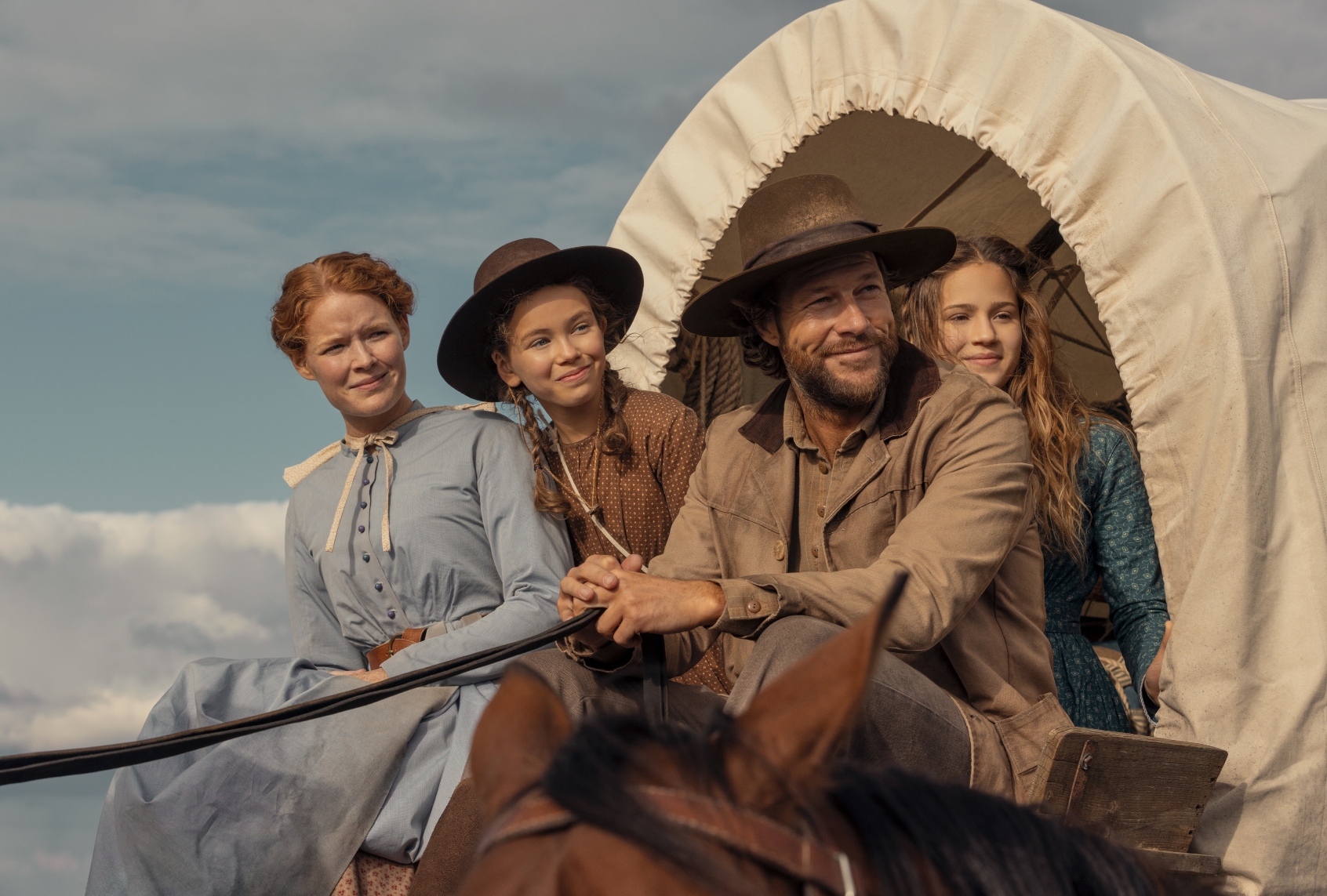

In Netflix’s new “Little House on the Prairie” adaptation, the first person that the Ingalls family encounters on their journey to Independence, Kansas, is a Black man.
Dr. George Tann (Jocko Sims) happens upon the family moments after they barely made it across the river with their lives. While they escaped drowning, their dog Jack may not have been as lucky. Caroline Ingalls (Crosby Fitzgerald) doesn’t seem to be thinking about that when Dr. Tann gently walks up to her and offers aid. She looks afraid.
Few works of American literature are as extensively analyzed and critiqued for their impact, for good or ill, on our cultural mythmaking.
Whether that fear is a hangover from her recent brush with death or her anxiety at the sight of a non-white man showing up when she’s vulnerable is left open to interpretation. But she’s bleeding; he is a doctor, and they’re in a place where no other help is available. Dr. Tann tends to Caroline’s wounds, soothes the ego of Charles Ingalls (Luke Bracey) and reassures them that they’re close to their journey’s end.
With that encounter, the Ingalls make their first true friend, and one of many who help them survive a year in a place that is in many ways magical and in others unforgiving.
For millions of readers, Laura Ingalls Wilder’s “Little House on the Prairie” books are among the first literary works to bring history alive for kids. That is not without its problems, as many historians and academics have recognized. Few works of American literature are as extensively analyzed and critiqued for their impact, for good or ill, on our cultural mythmaking. When she was alive, Wilder herself admitted that her novels were extensively embellished, mainly by her daughter Rose Wilder Lane.
The book’s depictions of people who Wilder labeled savages or Pa’s participation in a minstrel show were not a product of the 1800s, as author Lizzie Skurnick observed in an analysis for PBS. “They were the creation of two adult women living in New Deal America,” Skurnick said, which meant appealing to a white, segregationist audience.
In contrast, Netflix’s considerately reverent new series suggests these stories might be best viewed as nostalgia-colored American landscape paintings that can benefit from modern touch-ups.
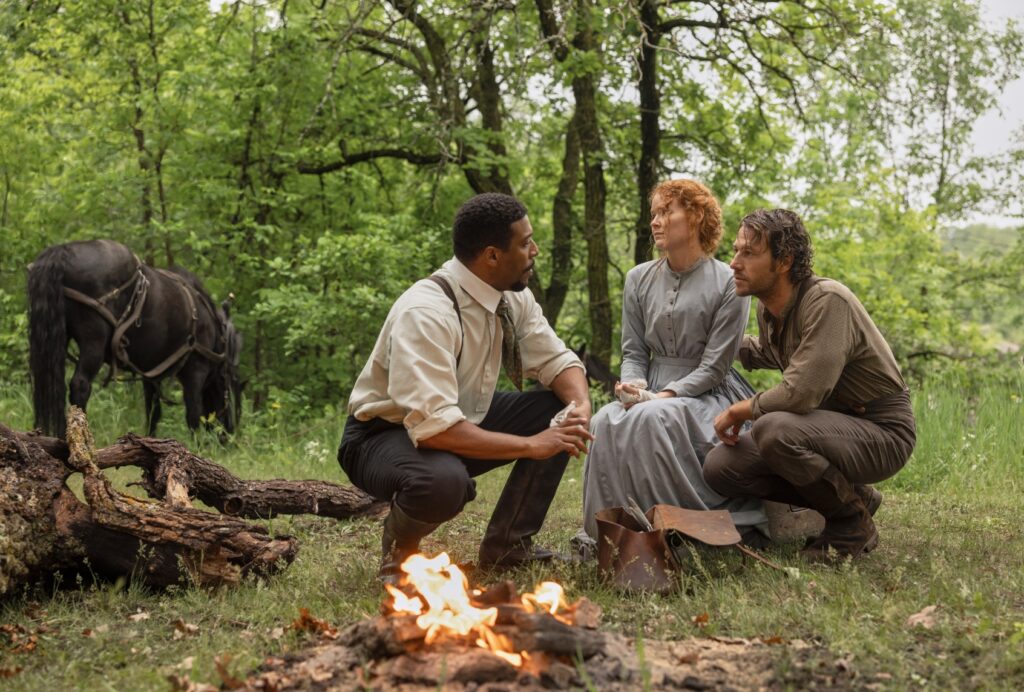
(Eric Zachanowich/Netflix © 2026) Jocko Sims as Dr. George Tann, Crosby Fitzgerald as Caroline Ingalls, Luke Bracey as Charles Ingalls in “Little House on the Prairie.”
To those who see Wilder’s stories as true examples of American self-determination and singular grit, that may read as sacrilege. Case in point: When Netflix’s “Little House” revival was announced in January 2025, right-wing podcaster Megyn Kelly promptly posted on X, “[If] you wokeify Little House on the Prairie I will make it my singular mission to absolutely ruin your project.”
But audiences already recognized the stories’ malleability by embracing NBC’s “Little House on the Prairie,” a modern TV classic. And as the original TV version of Laura, Melissa Gilbert, replied on Instagram, “TV doesn’t get too much more ‘woke’ than we did. We tackled: racism, addiction, nativism, antisemitism, misogyny, rape, spousal abuse and every other ‘woke’ topic you can think of. Thank you very much.”
Showrunner Rebecca Sonnenshine builds this new “Little House” on a foundation of restored and reconsidered history. The eight-episode result maintains the gentle nostalgia we’ve wrapped “Little House” in: Laura (Alice Halsey) remains an adventurous optimist, while Mary (Skywalker Hughes) struggles with the burden of being the responsible eldest child. Charles and Caroline are a handsome couple, with Pa hewn in the rugged spirit immortalized by Michael Landon in the 1970s TV classic.
We need your help to stay independent.
But it also suggests that viewers are mature enough to absorb the tougher truths omitted from Wilder’s original vision, as well as the roles of others who were minimized, like Sims’ good doctor. Where his character appears briefly in “Little House on the Prairie” to treat the Ingalls when they fall sick with what Laura describes as “fever ‘n’ ague,” the show makes him as central to life in Independence as the real George Tann was. The same goes for the Osage people on whose land the Ingalls settle illegally and whose logs Charles uses to build his cabin.
As pointed as modern criticisms of the books’ cultural whitewashing are, the old TV show was only progressive to a point.
Sonnenshine and the “Little House” writers walk a fine line between the harsher recent revelations concerning the ways the Ingalls’ bootstrapping mythology doesn’t square with history or reality. One of the family’s first realizations is that they can’t build their little house alone.
But as the season evolves, the drama deals out harder truths, too. Laura befriends an Osage girl close to her age, Good Eagle (Wren Zhawenim Gotts), who is the daughter of another kind neighbor, William Mitchell (Meegwun Fairbrother), who also helps the Ingalls get established.
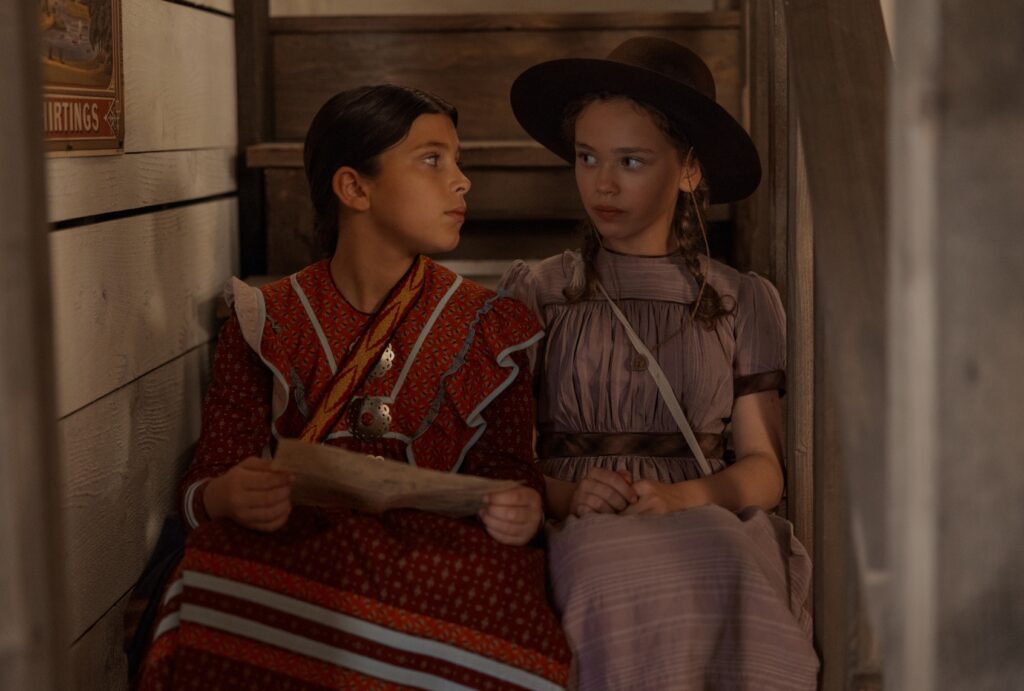
(Eric Zachanowich/Netflix © 2026) Wren Zhawenim Gotts as Good Eagle, Alice Halsey as Laura Ingalls in “Little House on the Prairie.”
Even so, Mitchell and his wife, White Sun (Alyssa Wapanatâhk), never sidestep the fact that this nice family and every other settler lured to Kansas on the false promise of free land are displacing his people from the territory that has been theirs for centuries. Charles and Caroline mourn their part in that displacement; they set out for Kansas with the best of intentions, lured by false advertisements of “free” land that never was. Soon enough, the same ruling class that drove away their neighbors tears down their homesteading dreams too.
In its way, the new “Little House” acknowledges that Wilder’s mythology is one of the most potent in our literary canon. Certainly many “Little House” fans cherish the novels’ central role in their childhood, too; the book series has sold more than 60 million copies since they were first published in the 1930s and ’40s.
But the original TV show’s popularity in the mid ‘70s and early ’80s was likely what sent that era’s young readers to seek them out in the first place, establishing Gilbert’s Laura as the classic American Girl long before the namesake doll empire became a thought.
As pointed as modern criticisms of the books’ cultural whitewashing are, the old TV show was only progressive to a point. The Ingalls had few interactions with Black characters aside from notable guest star appearances from actors like Lou Gossett Jr. and Todd Bridges, and what Indigenous representation it had was done with actors in brownface.
The “Little House” devotees who prefer to write off the books’ dips into racism by accepting them as a reflection of a time in America may also have been influenced by the TV show’s filter. Landon’s “Little House on the Prairie” arrived precisely when America struggled to reconcile the gains won during the Civil Rights era with Ronald Reagan’s brand of right-wing nativism. It debuted two seasons after “The Waltons” became a hit for CBS and aired during the same period as “Good Times,” “Happy Days,” “Maude” and “The Mary Tyler Moore Show.”
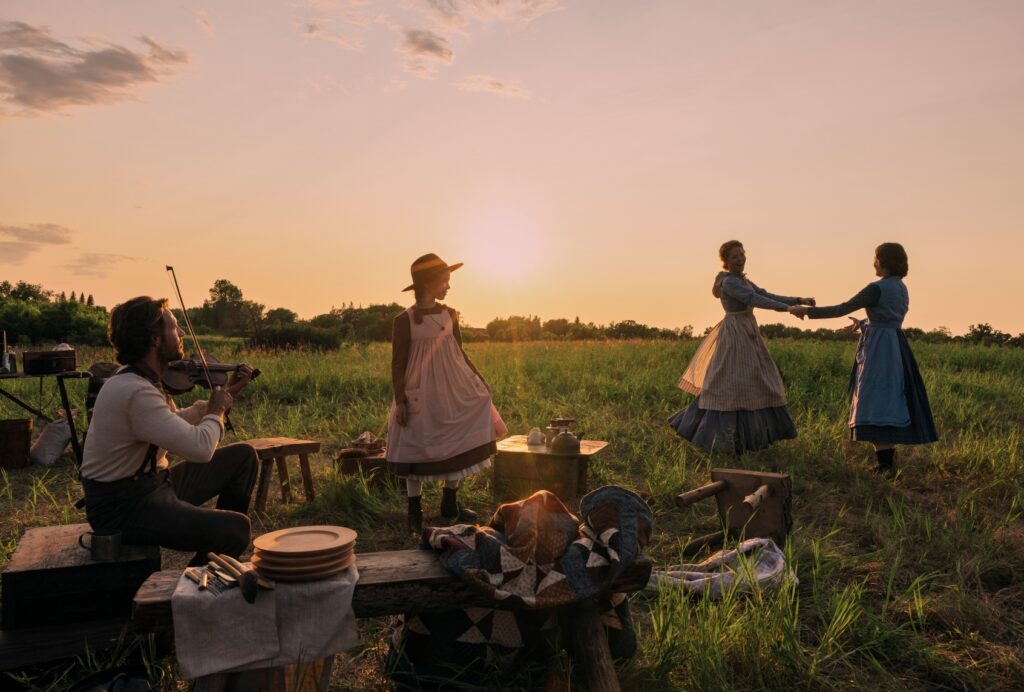
(Eric Zachanowich/Netflix © 2026) Luke Bracey as Charles Ingalls, Alice Halsey as Laura Ingalls, Crosby Fitzgerald as Caroline Ingalls, Skywalker Hughes as Mary Ingalls in “Little House on the Prairie.”
That era’s prime-time schedules illustrate the tension between insistent progress and a yearning for supposedly simpler times – a feeling similar to what we’re experiencing now. Only today’s would-be homesteaders look to TikTok stars like Ballerina Farm’s Hannah Neeleman for inspiration or don Gunne Sax-style prairie dresses and call the look cottagecore.
Want more from culture than just the latest trend? The Swell highlights art made to last.
Sign up here
But this makes the “Little House on the Prairie” reboot look all the more admirable even with its soft edges. It is still a family-friendly story, but one that reframes the juvenilized sales pitch of self-sufficiency with a more honest moral that progress is a force, often a ruthless one, and when it is based on a capitalist lie, it needs an enemy.
At the same time, the new “Little House on the Prairie” counsels that independence is more of a tall tale than a reality for a nation healing from the wounds of conflict. Even if ultimately the Ingalls and their neighbors can only slow down the inevitable, they learn to see each other clearly and value what the many hands of many peoples can make. The Ingalls take that with them – and perhaps just as importantly, so can we.
Netflix’s “Little House on the Prairie” is now streaming. The original “Little House on the Prairie” streams on Peacock.
Read more
about the “Little House” legacy
