
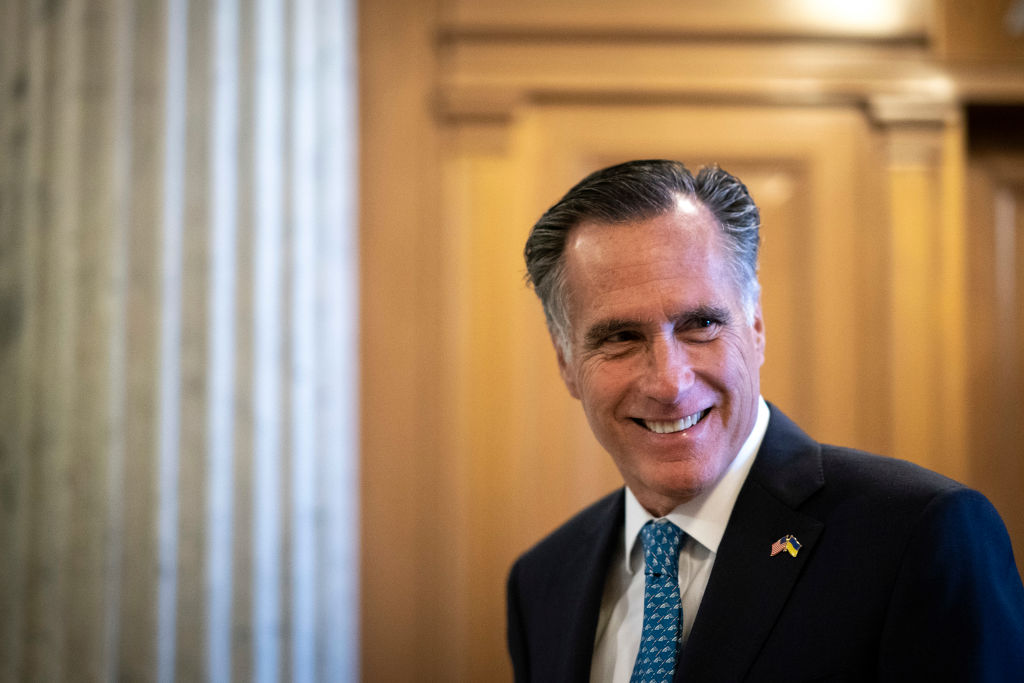

Mitt Romney has reignited a debate that has followed American politics for years: When does experience become a liability?
The former Utah senator and 2012 Republican presidential nominee said this week that people in their 80s should not hold the country’s most powerful positions, arguing that the demands of modern leadership require a level of physical and cognitive ability that can become more difficult to maintain with age.
“I basically think people who are 80 and above really should not be running the world or running the country,” a 79-year-old Romney said in an interview with “Deseret Voices” while discussing the future of Republican leadership and the 2028 presidential race.
The comments were widely viewed as a criticism of President Donald Trump, who turned 80 this year, but Romney’s argument was broader. He has repeatedly called for a generational transition in American politics, announcing in 2023 that he would not seek another Senate term because he believed the country needed younger leaders to step forward.
Trump responded to the broader conversation about age and fitness by highlighting his own health. Writing a rambling post on Truth Social, he used a rant about a new book about him by journalists to add on that he had completed a “perfect physical” this week and requested another cognitive test, which he said he “aced.”
The debate took on another dimension with the sudden death of Lindsey Graham at 71 after what his office described as a brief illness. Graham’s death was a reminder that age alone does not determine health or longevity; he was younger than many current members of Congress and remained active in one of Washington’s most demanding jobs.
In comparison, the average age of a American CEO is 61, with a tenure of about 7 years. Two-thirds of the Senate is over age 60, as 42% of the House. This is also not a partisan issue as both sides of the aisle are about equal in age ranges.
But the questions surrounding aging leaders did not begin with Romney’s comments. President Joe Biden‘s age and fitness became central issues during the 2024 election, while Senate Republican Leader Mitch McConnell faced repeated scrutiny after public health episodes raised questions about whether he could continue serving in one of the country’s most powerful political positions.
McConnell’s career reflects the central tension in the debate. His decades in Washington gave him unmatched institutional knowledge and influence, but his health concerns also raised questions about whether political institutions have adequate ways to evaluate when leaders should step aside.
Start your day with essential news from Salon.
Sign up for our free morning newsletter, Crash Course.
The challenge is that there is no simple age cutoff. Experience can be an asset, and younger leaders are not immune from health challenges. But a democracy also depends on making room for new voices and ensuring that those in positions of immense responsibility remain capable of carrying out the demands of the job.
While there is a constitutional minimum age for public service — 30 for the Senate, 25 for the House and 35 for President, there is not a maximum age. Eighty percent of Americans believe there should be a maximum age to hold office.
Romney’s comments ultimately raise a larger question than whether any individual politician is too old: How does America balance the wisdom of experience with the need for generational change?
