

If you remember anything at all, you remember the skeletons.
Though Jason and his Argonauts get top billing in the 1963 B-movie classic, it’s Ray Harryhausen’s sword-wielding troop of the undead that steal the show. Watching the stop-motion monsters climb over ruined walls to poke at Greece’s elite soldiers, it’s easy to forgive the movie for its less-than-stellar dubbing or borderline nonsensical love story. Unless you’re a stickler or an obsessive, you won’t recall the brief moment where the skeleton warriors follow Jason into the Aegean Sea, where a crew member clearly just tossed a pile of prop bones off a cliff. The herky-jerky, unceasing Children of the Hydra’s Teeth are all memorable menace, their details etched deep into the film stock by the punishing midday sun of the Mediterranean.
More than 60 years on, the scene still startles. I caught the film at a recent matinee in New Orleans, and children and adults alike gasped at Harryhausen’s movie monsters – from the looming metal colossus of Telos to the hissing and slithering Hydra. After the tell-don’t-show workarounds of “Jaws” and 20-some-odd years of CGI spectacles hidden in gloom and murk, the visual effects master’s obvious pride in his work, brightly lit even in scenes meant to take place in the dead of night, was as jarring as the skeletons’ coordinated bum rush.
Harryhausen’s influence on later filmmakers, from George Lucas to Tim Burton and on through Wes Anderson, can’t be understated. He famously worked alone, content to toil away on his own singular vision, but the innovations he made in visual effects spread well beyond his studio. His singular belief in his skills, that the special effects were the movie, made sense given how personally he took his work. He told interviewers in later years that animation that you don’t inject your personality into was “movement for the sake of movement” and still bristled decades later at contemporary reviewers who didn’t understand his artistic choices, like the creaking motion of the all-iron Telos. If the centrality of his creations in films like “The 7th Voyage of Sinbad” and “The Beast from 20,000 Fathoms” didn’t prove that he was proud of his work, Harryhausen would gladly tell you himself.
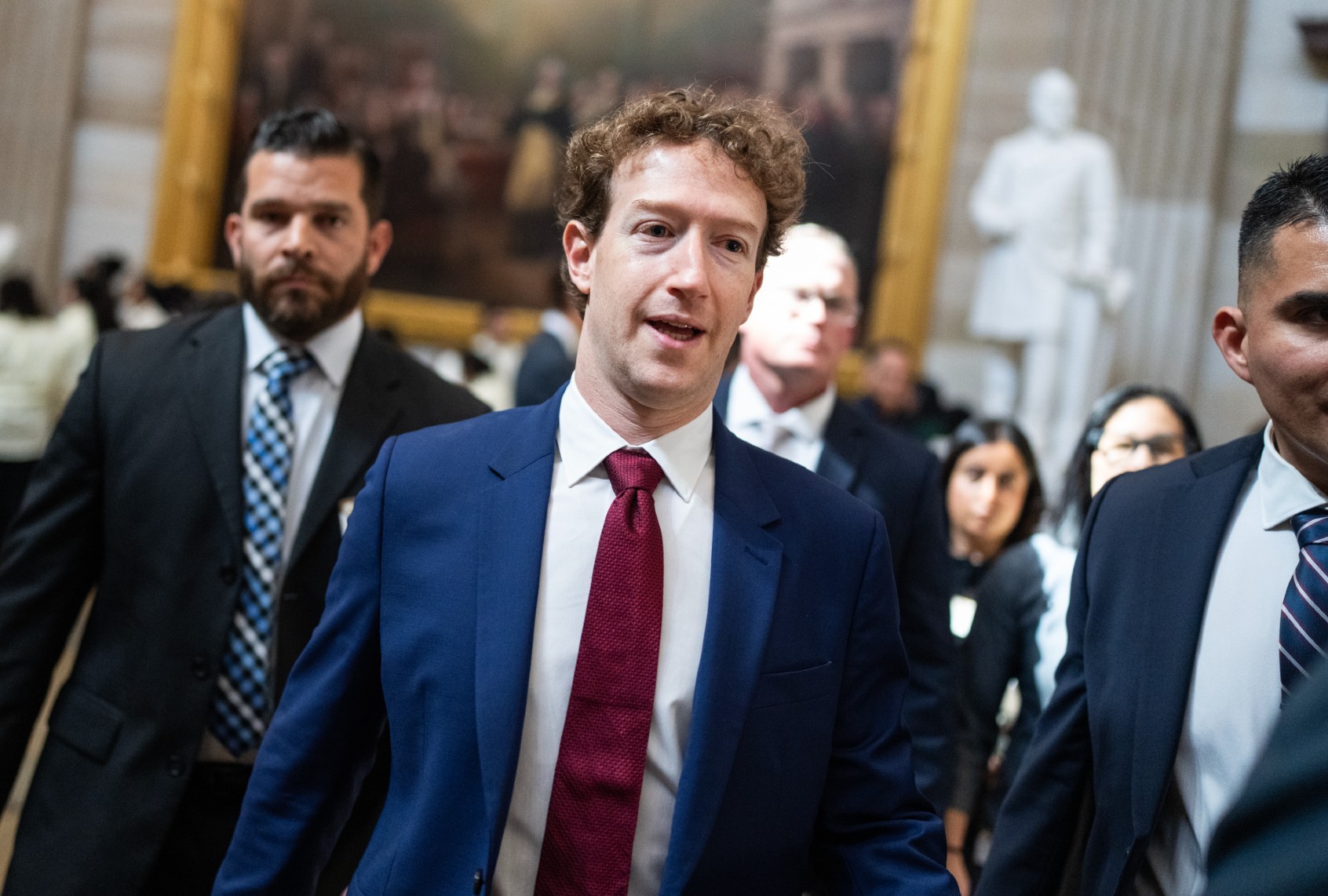
Compare that to Mark Zuckerberg, a similarly self-aggrandizing figure who claims to be working on a project that will revolutionize art, commerce and the way that the average person engages with the world. In a recent manifesto that ran over 6,000 words, the Meta chief claimed that artificial intelligence was “among the most important technologies in history.” He advocated for a balance between progress and democracy, calling for more open-source AI agents. He argued for an AI “for everyone” and pictured a future where the artificial intelligence tools his company was helping to create were integrated into the everyday functions of every single person on Earth.
“Your agent will work 24/7 on your behalf to improve your relationships, health, career, finances, home management, hobbies and more,” he wrote. ”If these efforts succeed, then the future will bring an abundance of personal agency, expression of ideas, deepening of relationships, economic and financial prosperity, improved health, and inventions we cannot imagine today.”
It’s hard to say that the post is entirely marketing. Meta has sort of walked the walk around transparent AIs. Meta has released several open-source AI models, rolled out private features and released an AI agent that can run locally (that is, without being connected to the internet). However, Zuckerberg’s boosterism of democracy and full transparency falls flat when you take a look at what Meta’s been doing to grow its AI project.
Want more from culture than just the latest trend? The Swell highlights art made to last.
Sign up here
Meta is currently building a $50 billion data center in Richland Parish, Louisiana. The project is expected to cover nearly six square miles and potentially use seven times as much energy as the city of New Orleans. The deal to build the massive project in the poor, rural corner of Northeast Louisiana was ushered through the state legislature over nine months, clouded by a raft of non-disclosure agreements signed by local officials, top brass at state utilities and employees in the governor’s office. The deal ultimately handed Meta billions in estimated tax breaks and the use of large swaths of public land to build a data center called Hyperion without troubling them with the local backlash other data centers have encountered.
Zuckerberg’s boosterism of democracy and full transparency falls flat when you take a look at what Meta’s been doing to grow its AI project.
The New York Times broke the news of the backroom deals that allowed Gov. Jeff Landry to sidestep public meetings and avoid suspicion prior to his announcement of the done deal. An existing bill offering tax rebates on fiber-optic equipment was hastily rewritten to provide tax breaks on data center gear. The project moved quickly through closed-door commissioners’ meetings, skipping administrative hearings wherever legally possible. The deal never leaked, with Landry’s announcement in December 2024 being the first time the majority of Louisianans had heard that Meta was building their largest data center in the state.
Meta pushed back at the Times characterization of the deal, noting through a spokesperson that it “went through established state and local economic development processes and approvals.” Landry, for his part, seemed proud of his office’s ability to keep a secret. He noted that Zuckerberg didn’t “go out there telling everybody what he was doing” when he first launched Meta.
“Transparency is a very interesting word,” the governor told the Times. “Because what we’ve seen is people have used the word transparency to basically kill deals like this.”
We need your help to stay independent.
To be fair to Meta and Zuckerberg, NDAs and backroom deals are par for the course in the data center boom. Meta is far from the only company trying to build quickly without inspiring too much input from the rabble. OpenAI has made similarly occluded agreements with Georgia officials. A University of Mary Washington professor researching data centers in Virginia found that 25 of the 31 data center projects in the state made use of NDAs.
Even pro-AI residents have objected to the furtive maneuvering around data centers. Shannon McManus, a resident of another rural Louisiana parish with a data center in the works, told NPR that he’s all for progress, but just asks for honesty from tech giants.
“I understand that we’re moving into the future and that we have to have these things,” McManus said. “And it’s good that we’re gonna have jobs locally; hopefully that happens. But it’s still about not being transparent with the people.”
Zuckerberg’s screed stresses the need to “build trust and alignment with communities across the country” to better “accelerate the ability to build infrastructure.” But Americans can’t trust what they can’t see. If Zuckerberg really wants buy-in from the communities he’s plopping data centers down in, if he wants them to suspend their disbelief that AI will create a better, more equal world, he needs to act proud of what he’s creating. Take a lesson from Harryhausen’s terrible, incredible monsters; bring it all out into the light of day.
Read more
about this topic
