
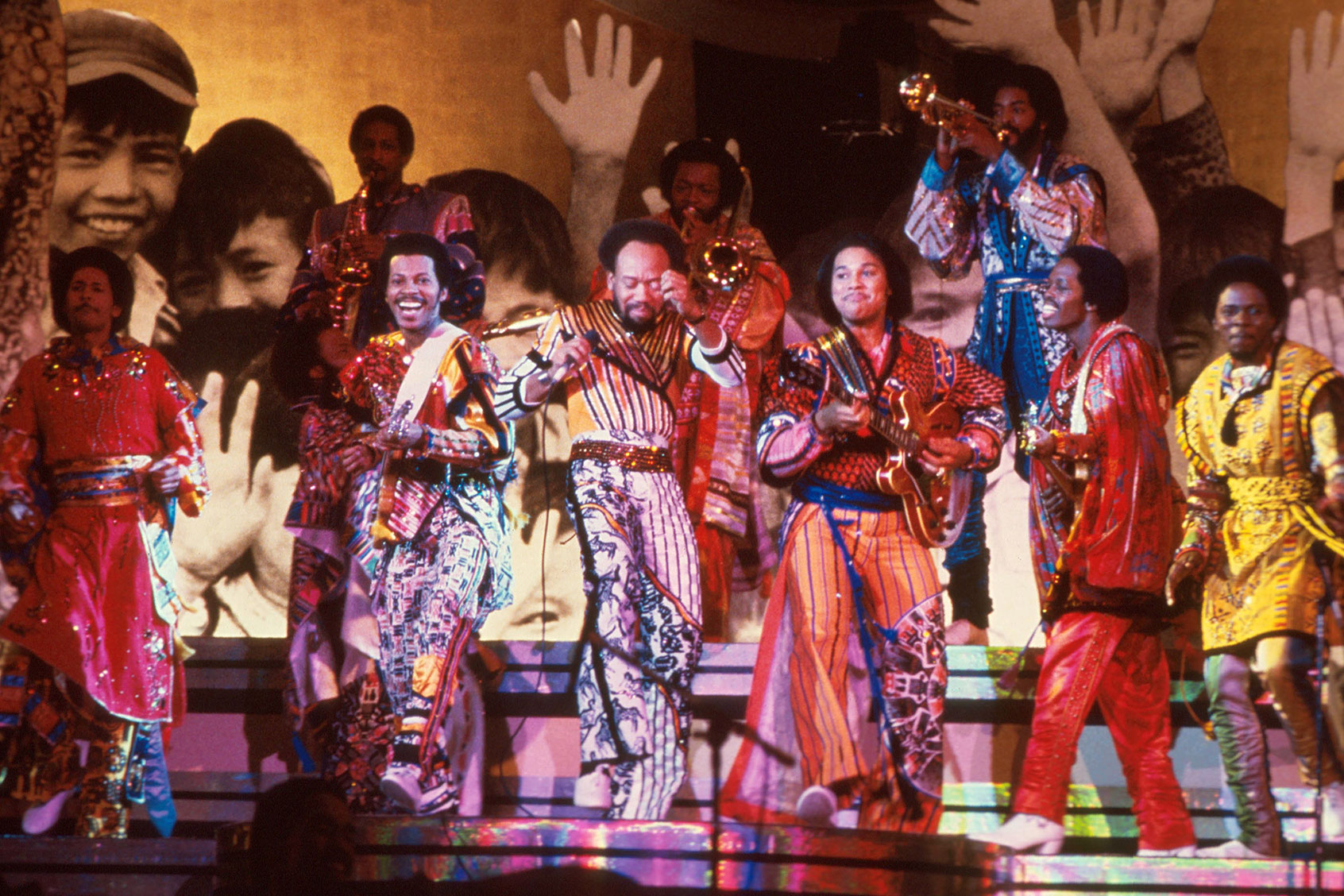

A few weeks ago at the end of a dispiriting workday, I dragged my husband to an outdoor show headlined by The Breeders. I nearly talked us out of going, but the effort was worth it for the communal experience. It was, in a word, healing. And that gave me plenty to contemplate.
The Breeders’ catalog is full of singalong possibilities thanks to their fondness for lyrics that aren’t words. For example, you might not know every line to “Cannonball,” but you can probably vocalize with Kim Deal’s track-topping soundcheck ( “Ah-OOO-uh, ah-OOO-uh”), or the ethereal “ahs” forming the spine of “Safari,” or the syncopated “ba-ba-ba-ba” of “Fortunately Gone.”
You might not know anything about The Breeders, in fact. But if you were in that meadow with hundreds of happy people sighing out every “ah-ah” in unison, you would have quickly picked up that refrain and maybe even joined the chorus.
There are catchy songs, and then there are melodic arrangements that capture a feeling. You may sense what I’m talking about whenever you’re compelled to answer the “ba-dee-ya” call in Earth Wind & Fire’s “September.” Or the repeating, joyous escalator of “na, na, na, na-na-na-na!” at the end of The Beatles‘ “Hey Jude.” Or, really, any other song made timeless in part by simple syllabic lyrics that are officially known as non-lexical vocables.
If an onomatopoeia names a sound, non-lexical vocables create a linguistic expression of somatic emotion without using actual language. And singing along with them can be one of the more effective natural and entirely free antidepressants around.
Every veteran touring musician knows that the best way to snap the audience to attention is to stop singing during their biggest hit and invite the audience to take up the slack. That was Maurice White’s schtick whenever Earth, Wind & Fire performed “September.” He would lead the crowd into the vibe the band created, and then…“When he turned the microphone to the audience,” said Lionel Richie in Questlove’s recent documentary, “they knew exactly what to sing.”
So do you, probably: “Ba-dee-ya!”
Earth, Wind & Fire percussionist Ralph Johnson says “ba-dee-ya” can mean whatever you want it to mean. When the song’s co-writer Allee Willis asked White for an explanation, she told NPR in a 2014 interview that he replied, “Who the (bleep) cares?” It just sounded right. Nearly 48 years later, it still does because it still feels good.
My inner choir nerd is compelled to share the science behind the euphoric experience of live show singalongs: A Chorus America article cites a theory from University of Manchester researchers that when we sing, a tiny organ in our inner ear, the sacculus, responds by bridging the music we hear and make to our brain’s pleasure center.
In another 2013 study, Swedish researchers found that singing has a biologically soothing effect, especially on cardiovascular function. “Unison singing of regular song structures makes the hearts of the singers accelerate and decelerate simultaneously,” it states.
Spontaneous musical participation at a show is not quite the same as a choral performance, I’ll grant you. But considering what composer Randall Thompson believed about the best choral works might shift your thinking: “If a piece is too difficult for amateurs to sing,” he said, “the chances are that it is not good enough.”
Hence, the reason we associate “Hey Jude” with a soaring spirit of optimism is because of that repeating “na-na-na” chorus. There may be no simpler lyrics in all of popular music except, maybe, “la-la,” the classic singsong about nothing that, according to the Delfonics, can also mean “I love you.”
We need your help to stay independent.
Rearrange and recontextualize a few “na-na-na-nas,” as Steam did with “Na Na Hey Hey Kiss Him Goodbye,” and you get a more aggressive tune known to every Chicago South Sider as the White Sox’s anthem to taunt the visiting team.
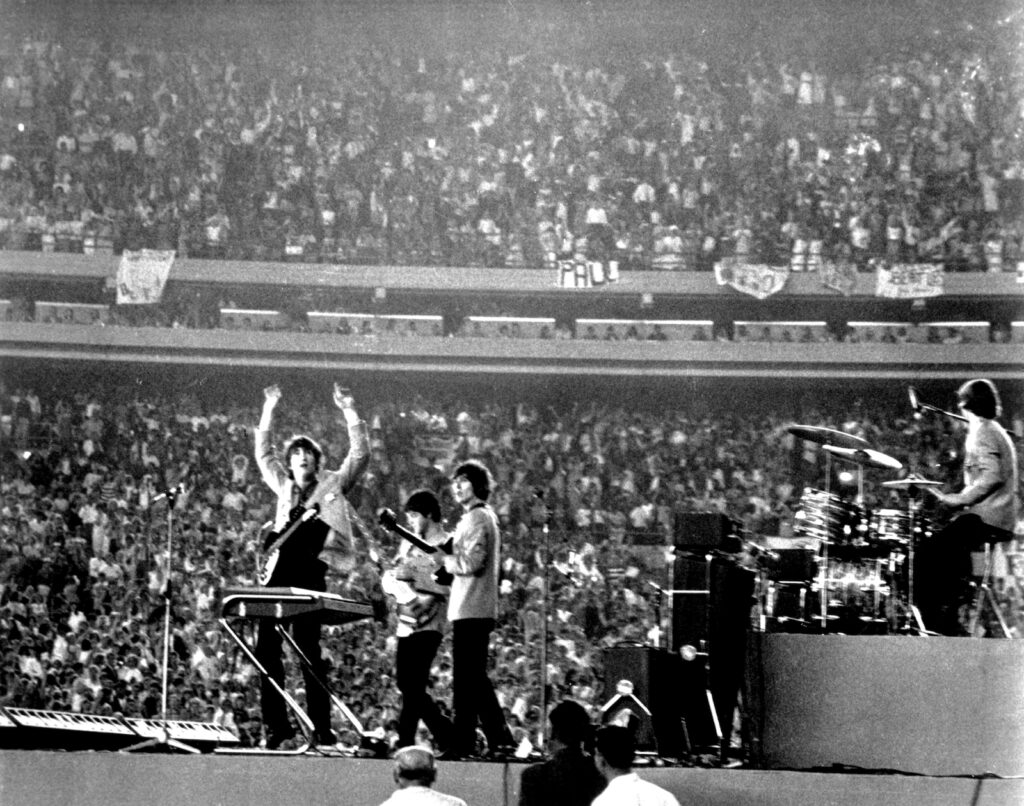
(Michael Ochs Archives/Getty Images) The Beatles perform at Shea Stadium, New York on 15th August 1965.
Since Steam’s 1969 hit and “Hey Jude” both employ a common non-lexical vocable, it follows that sports fans in their home countries have adopted each for their own purposes. As my former Salon colleague Alison Stine described it in her story about the history of “Hey Jude” as a British football chant, it sounds great when it reverberates through a huge stadium. That’s the benefit of employing the easiest lyrics in the world to blast an emotional message into the sky. Everyone can play along, whether by singing or simply riding the hum. Sometimes the energy of all that “na-na-nah”-ing is infectious enough to unify rivals, if only for a few measures of music.
In “Hey Jude,” a cycle of syllables describes taking a sad song and making it better. Stevie Wonder says “September” and its “ba-dee-yas” resonate with every kind of audience because they’re jubilant in a way that transcends language and cultural barriers. “You feel good celebrating that spirit,” he said.
Want more from culture than just the latest trend? The Swell highlights art made to last.
Sign up here
Whether it’s “ba-dee-yah” or “ah-OOO-uh” or “na-na-na,” melding your voice with your neighbors’ can be the loveliest, most human experience around. There are no lyrics to bungle or judgments about pitch, just the sensation of instantly getting on the same page with dozens of strangers and sensing the powerful community in that moment.
Next time you’re at a show — perhaps on the 21st night of September? — don’t be shy about joining in. We can all use more joyous nonsense, including musicians who simply want to add more harmony to the world.
Read more
from Salon’s Culture newsletter, The Swell
