
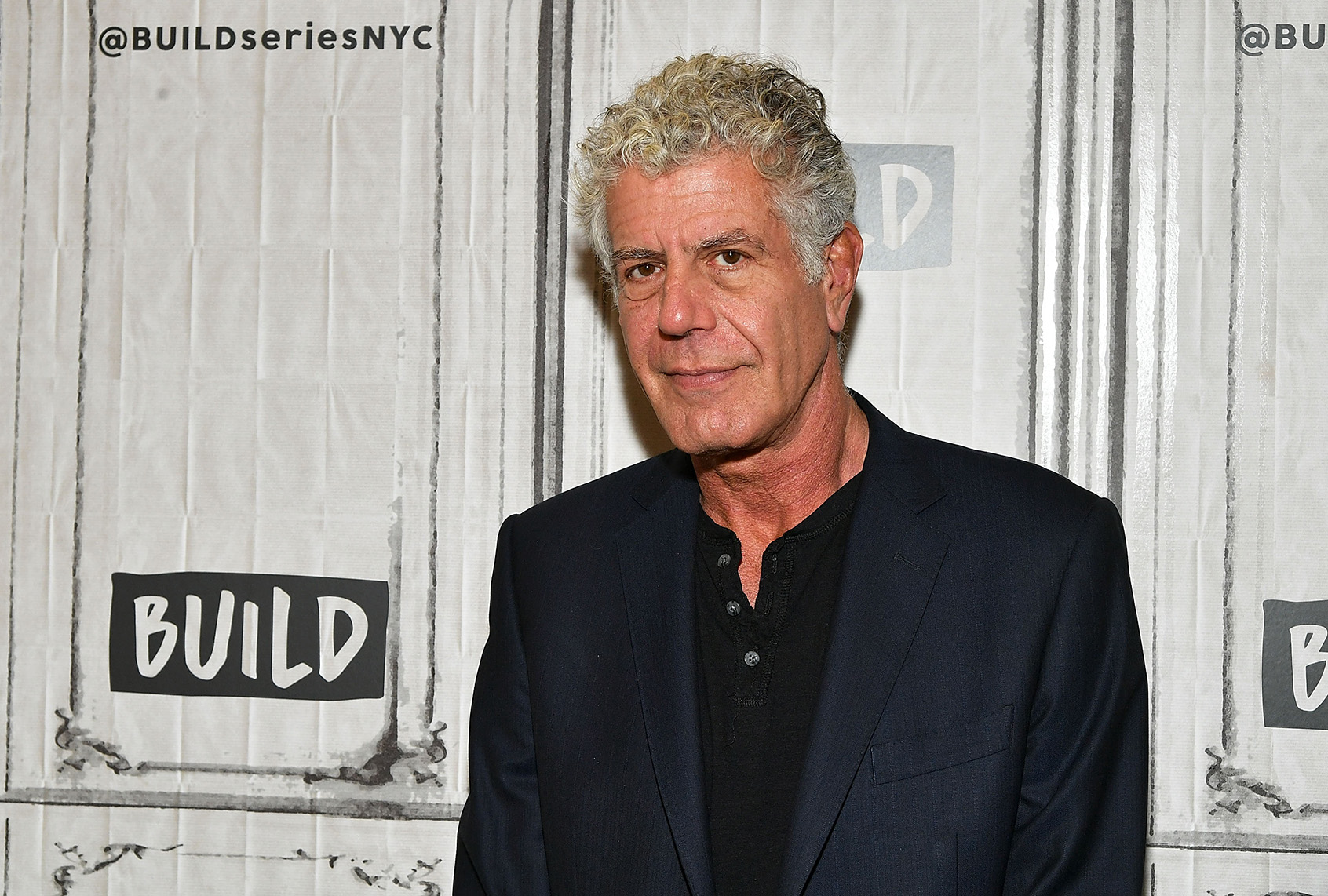

Before Anthony Bourdain became Anthony Bourdain, he was writing crime novels about cooks.
That’s the strange pleasure of “Three Crime Novels,” a new collection of “Bone in the Throat” (1995), “Gone Bamboo” (1997) and “The Bobby Gold Stories” (2002), re-released this summer alongside the biopic “TONY.” I haven’t seen the movie, and I’m not particularly interested in reviewing it. What interested me was returning to these books and realizing how much of the Bourdain we came to know was already there.
Bourdain was always a writer, and he understood early that food was one of the best ways to reveal people.
The crimes in these books are often the machinery of the plot. But the restaurants, kitchens and meals are where Bourdain seems most interested in his characters. Food becomes a way to write about ambition, class, masculinity, addiction, resentment and tenderness without having to announce that’s what he’s doing.
Tommy Pagano, the chef at the center of “Bone in the Throat,” might be the clearest example. Tommy is a good kid caught up in a mess: surrounded by criminals, nursing a minor cocaine habit, capable of making spectacularly bad decisions and incapable of saying no to family. But he also genuinely cares about cooking. His first restaurant job is at a mediocre seafood place drowning in fried food, until a new chef arrives and teaches him that food can be something worth taking seriously. The lesson sticks. Tommy comes to believe that a cook should demand something better from the plate, even when that idealism is economically disastrous.
That makes Tommy’s later dream of opening his own restaurant in “Gone Bamboo” both funny and strangely moving. He is convinced Tommy’s Tropical is going to work. Henry Denard, world-class hitman, knows better. When Henry lies to him and tells him it’s going to be a great success, Tommy lights up. It’s not just that Tommy is gullible. He needs to believe in the thing he has built.
If Tommy is Bourdain’s believer, Henry is almost his opposite: the fantasy of not needing to care. Henry is all cigarettes, sex, beer, boats and danger—a James Dean-in-the-tropics version of the man who can walk away from everything. Bourdain describes “Gone Bamboo” as the “boozy romanticism” that comes from being sunburned, half-drunk and barefoot in the Caribbean, and says he wanted its hero and heroine to be as “lazy, mercenary, lustful” as the parts of himself he recognized.
Then there’s Bobby Gold, the protagonist of “The Bobby Gold Stories,” who feels like a collision between the two. Bobby performs toughness because toughness is his job. But he is terrible at actually being hard-hearted. He breaks an old man’s arm and then immediately wants to comfort him, offer him a ride to the hospital and worry about the rain. The old man eventually identifies Bobby’s central problem: “You are sorry.”
And Bobby has another tell. He eats bone marrow on toast with sea salt at Blue Ribbon Bakery, alone, treating it as a secret pleasure. When a cop interrupts him, Bobby simply says, “It’s wonderful.”
We need your help to stay independent.
That may be the Bourdain character in miniature: the tough guy who cares deeply about something and would rather die than admit how much.
That tension became central to Bourdain’s own public persona. He cultivated the image of the cynical, cigarette-smoking, hard-living traveler who had seen everything. But the work kept giving him away. Underneath the swagger was a person intensely interested in other people—in what they ate, how they lived, what they valued and what food could reveal about all of it.
Which is why I’ve found the arguments around “TONY” oddly refreshing. Some people loved it; others thought it was overdone, underdone, too narrow, too broad, insufficiently interested in food. Good. I miss when people could watch the same piece of art and actually disagree about it. Even if that discourse comes in the form of 20- and 30-something men on the internet solemnly typing “Tony would hate this” in the comments, when the closest they’ll ever get to being Bourdain is a road trip from Bergen County to the Catskills.
Bourdain’s work was always meant to provoke conversation. His novels use crime to get at food; his food writing gets at people. And now, years after his death, a movie about him is doing the same thing.
When I started “Gone Bamboo,” I couldn’t help but laugh at Bourdain’s instruction in the introduction: read the book on the beach. Have a beer. Take a dip. And, most importantly, “Get sand between the pages.”
As it happened, I could.
I reclined in my rusted beach chair, dug my feet a few inches into the sand and turned the page. For once, I thought, I was doing exactly what Bourdain would have wanted.
Read more
about and by Anthony Bourdain
