

I am a recovering people-pleaser, though I admit most of the recovering still takes place in private. I rehearse difficult conversations for weeks — on walks by the lake, in the shower, in the mirror — before actually having them. I’ve let subscriptions renew rather than endure the discomfort of calling to cancel. I once managed to pay extra for one of the worst haircuts of my life. And then there was the onyx. At a metaphysical shop, a cashier with impeccable black nails and at least six rings that looked like they had their own elaborate backstories silently turned a touchscreen toward me. It asked whether I’d like to leave a tip. Now, I’d never considered the etiquette of tipping for a rock, but something about the setting made pressing “No Tip” feel like tempting fate. I selected 15%, unwilling to risk the karmic consequences.
It took a blueberry muffin to break me.
At an airport coffee shop, I’d retrieved a bottled juice from the refrigerator and selected a muffin, mummy-wrapped in plastic cling wrap. The cashier scanned my items, and the tablet swung around. Would I like to leave a tip? My suggested options were 20%, 23% and 25%.
For once in my life, I declined. The muffin, I reasoned, could hardly take it personally.
For all the complaints about tipping culture, however, Americans appear remarkably reluctant to abandon the practice where it’s traditionally been expected. According to new data from restaurant technology company Toast, highlighted in an October 10 Food & Wine report, the average tip at full-service restaurants was 19.1% in the second quarter of 2026, while quick-service restaurants averaged 15.8%. Those figures, drawn from card and digital transactions that included gratuities, have barely budged over the last two years. Meanwhile, a 2025 Bankrate survey found that 63% of American adults held at least one negative view about tipping, including 41% who believed tipping culture had gotten out of control. Yet 70% of respondents who ate at sit-down restaurants said they always tipped their servers.
In other words, Americans have developed a fairly robust appetite for complaining about tipping, but considerably less enthusiasm for actually stopping.
The phenomenon has acquired its own name: “tipflation.” According to Google Trends, searches for the term were virtually nonexistent before November 2022, only to peak in popularity the following summer. The timing was hardly coincidental. Americans had spent much of the preceding year grappling with soaring prices on everything from groceries to gasoline. Now, just as they were adjusting to the fact that seemingly everything cost more, they were being asked to leave gratuities on transactions that had never previously seemed to require them.
Digital payment systems have made this negotiation both more ubiquitous and, somehow, more awkward. “The screen is just going to ask you a few questions,” a cashier might say, employing a euphemism now familiar to anyone who has purchased a coffee in the last several years. What might once have been a couple dollars dropped into a jar has become an additional decision at checkout, complete with suggested percentages and the opportunity to feel vaguely terrible about selecting none of them.
Want more great food writing and recipes? Sign up for Salon’s free food newsletter, The Bite.
And the irritation isn’t entirely financial. The same screen might appear whether someone has prepared six elaborate espresso drinks or simply scanned a packaged muffin, leaving customers to make impromptu judgments about the value of someone else’s labor. Is the employee earning a tipped wage? Does the gratuity go directly to them? These are rather complicated questions to consider while standing in line for coffee, particularly when the person behind you is waiting to order. What was once an opportunity to offer something extra has become a request customers must actively decline.
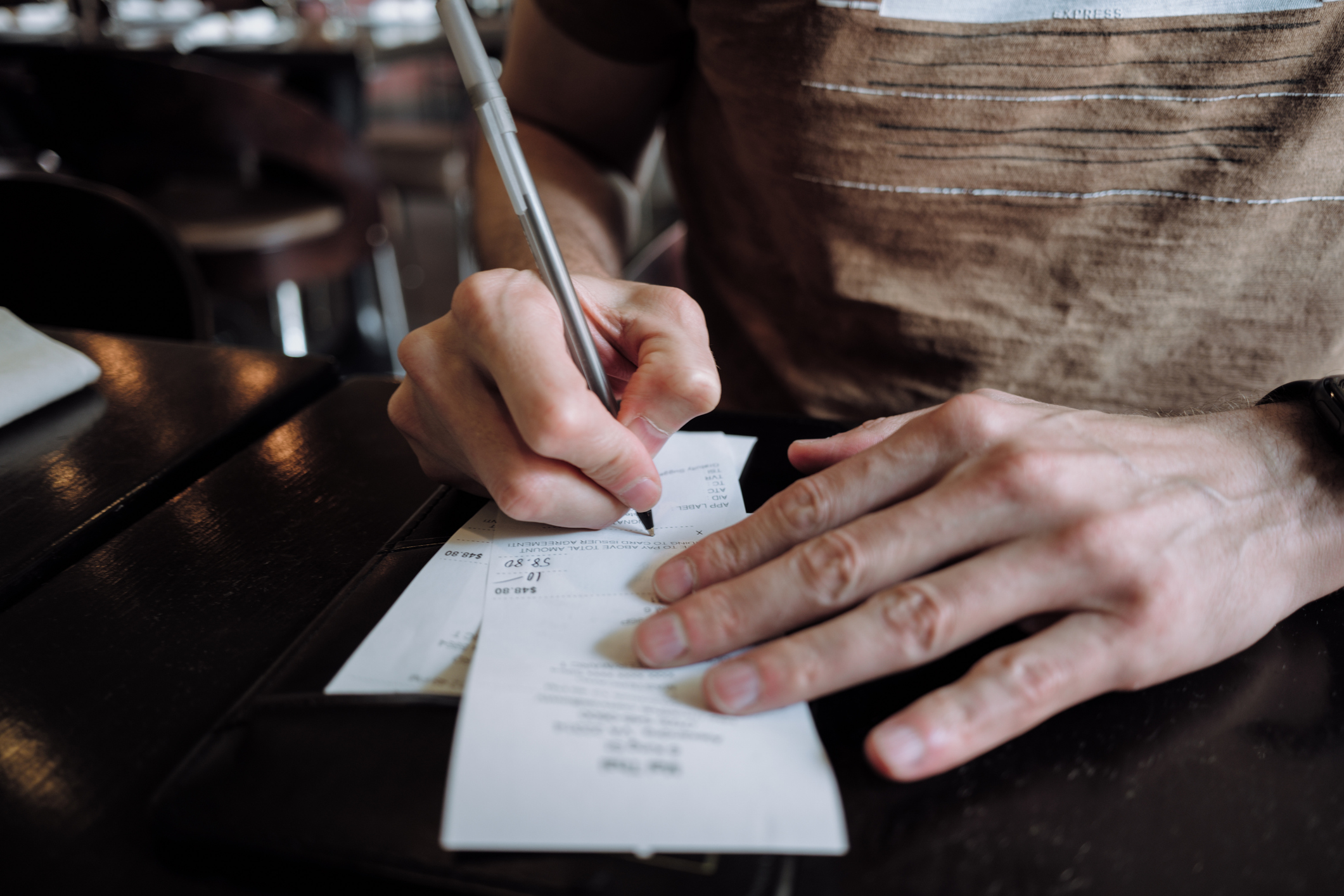
There is, however, an important distinction between resenting a tip request at an airport kiosk and deciding not to tip the person who has spent the last hour bringing you dinner. In most of the country, restaurant servers work under a compensation structure that explicitly assumes gratuities will make up a substantial portion of their earnings. Even where employers are required to pay the full minimum wage before tips, gratuities can remain an important part of a server’s income.
Over time, this economic arrangement has also hardened into a remarkably durable social contract. Americans may disagree about whether to tip someone who pours an iced coffee from a jug, but at a full-service restaurant, the expectations are considerably clearer. The bill arrives, you calculate a gratuity and, assuming nothing has gone terribly wrong, you leave something in the neighborhood of 20%. For many diners, myself included, it’s simply part of the cost of eating out, as much as the entrée or the glass of wine.
Of course, the trouble with calling tipping a social contract is that it makes it sound as though we all sat down and agreed on the terms. We didn’t. The practice, imported from European aristocratic traditions, took hold in America after the Civil War, when white employers found in gratuities a convenient excuse to pay newly emancipated Black workers little or nothing. It became especially entrenched in the service industry, and when Franklin Roosevelt signed the Fair Labor Standards Act in 1938, restaurant workers were among those excluded from its original minimum-wage protections. The federal tip credit, formally introduced in 1966, further institutionalized the notion that customers could be responsible for supplying a portion of workers’ wages.
There’s a reasonable argument, then, that this is a social contract overdue for renegotiation. But changing it requires more than convincing diners to stop leaving an extra $20 on the table. Restaurants operate on notoriously narrow margins, and even when price increases are necessary, customers don’t always greet them enthusiastically.
During the recent egg-price spikes, I watched some of my favorite breakfast spots paste new prices over old ones, often with apologetic little notes explaining the change. That was just the cost of one ingredient; imagine trying to explain an entirely different system of paying the people who prepare and serve the meal.
Still, some restaurants have been experimenting with precisely that. In a 2022 interview with Salon’s Maggie Hennessy, Ron Hsu, chef-owner of Atlanta’s Lazy Betty, described his decision to move away from the traditional tipped-wage model in favor of paying employees at least the federal minimum wage and using service charges to distribute compensation more equitably between front- and back-of-house workers.
Interestingly, Hsu’s restaurants were experimenting with different versions of that arrangement. At the higher-end Lazy Betty, the service charge was incorporated into menu prices; at the more casual (and now-closed) Juniper Cafe, customers saw an additional 20% on their bills. Hsu said the second approach met with more resistance, in part because staff were uncomfortable explaining the unfamiliar model to customers. Even when the money was ultimately going toward the same purpose, how it appeared on the bill mattered.
We need your help to stay independent.
“One good thing Covid did is make everyone more aware of how difficult working in restaurants is,” Hsu told Hennessy. “You can’t work remotely if you’re cooking or serving food. Because so many restaurants rely on face-to-face interaction to put forth their product, a lot of our customers were like, ‘they’re working during a pandemic. We’re going out as entertainment, they’re working to survive.’ Everyone’s awareness and empathy increased.”
Still, he wasn’t under any illusions about the difficulty of changing the system.
“Of course, there’s still a lot of pushback. Not everyone that comes in likes it,” he acknowledged.
“But it’s gotta start somewhere. Danny Meyer tried implementing it in his restaurants [Union Square Hospitality Group] in New York in 2015, but it didn’t work. I think we’re decades away from truly seeing a different model. It is happening; we just have to do a little at a time and keep chipping away.”
And perhaps that’s what makes the online backlash against tipping more interesting than its angriest manifestations suggest. Consider r/EndTipping, a Reddit community whose name sounds like a call to arms against the gratuity line. Its stated mission, however, is to advocate for a system in which workers aren’t dependent on tips, with labor costs folded into the prices customers see upfront. Members disagree about how to get there — including whether refusing to tip under the current system advances that goal or simply punishes workers — but the distinction matters.
Perhaps the more productive conversation isn’t about whether Americans should tip more or less, but about how we build a hospitality industry in which workers are fairly compensated and diners understand what they’re paying for. That will require experimentation, transparency and a willingness to accept that the true cost of a restaurant meal may look a little different than we’re accustomed to.
In the meantime, refusing to tip your server isn’t going to dismantle the system. It’s just going to leave your server with less money.
But the next time a touchscreen asks you to leave a gratuity on a piece of onyx? Feel free to decline. I suspect the universe will understand.
Read more
from Ashlie D. Stevens
