Green Lantern

“Green Lantern” sequel and the pain of the “super”-franchise

With DC/Warner Bros. in a race to the bottom with Marvel Studios, it's the audience that needs saving

  • more
    • All Share Services

"Wait, I'm getting another movie?"

This is what happens when you put studio executives in charge of making movies: Despite being a truly middling summer blockbuster (and doing pretty terrible in the international market), Warner Bros. studios is convinced that it can squeeze some money out of a “Green Lantern” sequel.

In fact, the studio’s president Jeff Robinov — not the screenwriters, and not director Martin Campbell, who may or may not be fired anyway — has already promised us an “edgier,” “darker” movie:

“To go forward we need to make it a little edgier and darker with more emphasis on action … And we have to find a way to balance the time the movie spends in space versus on Earth.”

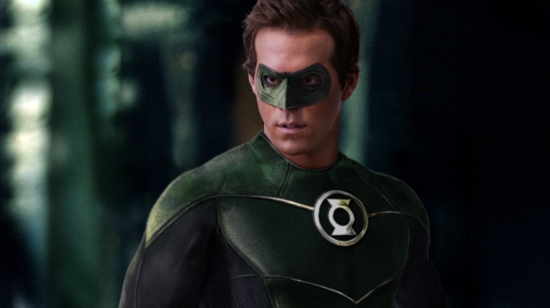
I somehow doubt that the Earth-space ratio is what killed this movie. Perhaps Ryan Reynolds’ face just doesn’t translate well in foreign countries. Or maybe part of the issue can be found by looking at the huge push by DC Comics and Warner Bros. to remind their audiences who the Green Lantern is. (As long as you put it on a Subway cup, they will come.)

I could even go out on a limb here and say that maybe everyone, barring studio heads at Warner Bros. and Marvel, is suffering from immense Superhero Fatigue Syndrome (SFS). With “Thor’s” rainbow bridge starting off the summer, followed by “X-Men: First Class,” “Green Lantern” and “Captain America” (not to mention the upcoming release of “The Avengers,” “The Amazing Spider-Man,” Christopher Nolan’s “Dark Knight” and Zac Snyder’s “Man of Steel“), our movie theaters are filled with more colorful bodysuits than a Blue Man Group show in Vegas. Roger Ebert noted earlier this year, “As the leadership of many studios is taken from creators and assigned to marketers, nothing is harder to get financed than an original idea, or easier than a retread.”

This is not to say that some of our super-friends can’t bring in an audience on their own merits, only that the genre is now flooded with too many sequels and reboots. “Green Lantern” is still in theaters, and we’re already hearing about the next one. And with Warner Bros. picking up every forgotten DC Comic in an effort to match Marvel Studios and make up for the loss of its cash chow “Harry Potter” franchise, it’s going to be a race to the bottom as even piddling heroes get a three-movie deal. The thing about comics after all is that they don’t have to be original; in fact, bringing back a Silver Age hero can be worth its weight in gold come box office time. Warner Bros. is already talking about “The Flash” for 2014, which is odd, since so far all the studio has is a script for the man who can run really fast. No celebrity names attached, no directors … just a script, by the same guys who wrote “The Green Lantern.” Well, a script and the idea that people will turn out for any movie about a guy with superpowers.

But like Hal Jordan, (Flash alter-ego) Barry Allen isn’t a name that will immediately draw in viewers. These two are no Bruce Wayne, Peter Parker or Kal-El from Krypton. One could argue that Tony Stark was one of Marvel Comics’ lesser accomplishments until Robert Downey Jr. got ahold of him, but for every Iron Man there are two Ant-Men. Literally: There will be two Ant-Men characters — Henry Pym  and Scott Lang – sharing the same super-shrinking skills for a film Edgar Wright has been intermittently working on since 2006.

So it’s not as if Marvel or DC will ever run out of lesser-known characters to create a franchise around. But the “throwing the spaghetti at the wall and seeing what sticks” formula isn’t working, and neither is rebooting “Spider-Man” every couple of years. Combine those two elements, and you have the “Green Lantern” problem summed up perfectly: When a hero fails to inspire awe and wonder (and dollars), why would anyone pay money to see a super sequel?

Drew Grant is a staff writer for Salon. Follow her on Twitter at @videodrew.

Why is bland, boring Ryan Reynolds a star?

Against all odds, the "Green Lantern" actor has managed to become a marquee name. We try to explain how

  • more
    • All Share Services

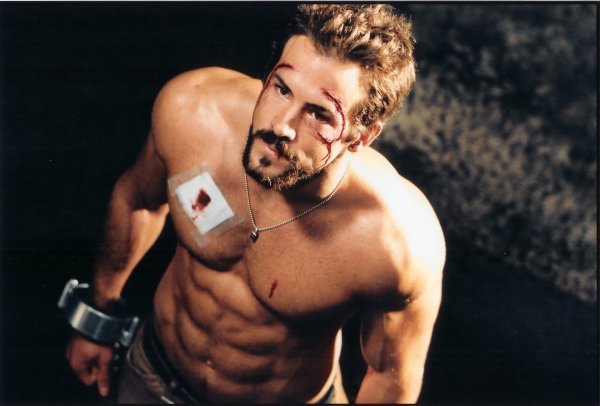
Why is bland, boring Ryan Reynolds a star?Ryan Reynold's big break (and big abs) in "Blade Trinity."

Ryan Reynolds … where did he come from? It seems just yesterday that the most this Canuck was known for was playing Van Wilder in a National Lampoon movie and being engaged to Alanis Morissette, and suddenly he’s the buff, wisecracking superguy from both the “Wolverine” movie and “Green Lantern,” as well as the ex-Mr. Scarlett Johansson. For a guy whose major talent seems to be light banter and non-threatening, bland sexuality, he’s certainly managed to make it far past the other Zach Morrises of this world

So you may be wondering, as we are: Why did Ryan get A-listed over his arguably more talented costars? What gives him that extra spark when he can be, at times, little more than barely, pleasantly watchable. And when did this no-name pretty boy get on the track to becoming the Sexiest Man of the Year?

In order to properly assess the Ken Doll from up north’s rise to unlikely action hero fame, we have to go back to his somewhat humble beginnings. He’s been acting since he was a kid, most notably on Nickelodeon’s teen drama series “Hillside” — or, as it was called in the states, “Fifteen” — which was like “90210″ but minus the sex, drugs and valley girl accents:

As you can see, Ryan’s talent didn’t come from being a childhood thespian. He was good, but he didn’t pop off the screen. He was more, well, “adequate” is the word that comes to mind.

As recently as seven years ago, I remember being unable to distinguish the blandly handsome and pithy Reynolds from Michael Rosenbaum (who played Lex Luthor on “Smallville”), or Dane Cook. (Hey, they both were in that “Waiting” movie!) Ryan had cut out a niche for himself playing the smarmy “Saved by the Bell” types, like on ABC’s short-lived series “Two Guys, a Girl, and a Pizza Place,” or “Van Wilder,” a role that led to an odd reprise in “Harold and Kumar Go to White Castle.“ 

Though the role wasn’t supposed to be Van Wilder, per se, many people associated the cameo with Reynold’s only title character to date, mainly because Kal Penn’s first film happened to be the National Lampoon film.

Then in 2004, something funny happened. “Blade Trinity” came out, and even though it wasn’t even the best of the “Blade” franchise, something about Ryan’s embodiment of the vampire/vampire hunter Hannibal King struck a chord with audiences. Emphasis on the “body”: Reynold’s abs nearly stole the film. According to his interview in People for the 2010 Sexiest Man cover:

“My body naturally wants to look like Dick Van Dyke,” says the 6’2″ actor …. “When I stop training, I turn into a skin-colored whisper.”

Never before has an actor’s shirtless transformation so entranced audiences with his less-than-stellar performance. After “Trinity” Ryan went back to doing those passable rom-coms, like “Just Friends” and “Definitely, Maybe,” but it wasn’t till he was shirtless (and pants-less) with Sandra Bullock in “The Proposal” in 2009 that he once again garnered more attention. It was also the year that Reynold’s was announced to be getting his own “Deadpool” spin-off based on his other action role to date at the time: a toss-away character in “X-Men Origins: Wolverine,” whose quippy one-liners and flippant attitude regarding good and evil — along with some totally sweet guns — seemed to have been tailor-made for the actor.

And then there was his marriage to Scarlett Johansson. It’d be a mistake to underplay what this romance did for Ryan’s career; his previous public relationship announced as an engagement in 2004 (the year of “Blade Trinity) to Canadian singer Alanis Morissette, in a move that made us all go, “Who? Oh, that guy? Cool … glad she’s not with Dave Coulier anymore.” At the time of his first engagement, Ryan was still being referred to as “‘Van Wilder’ star.” Five years later, he and his wife were being named (independently) the sexiest people on earth.

When the couple separated late in 2010, I wondered if Ryan would just fade away. Now, about his former marriage, Reynolds will only say that the media wasn’t invited into his relationship, and “I’m a different person than I was six months ago.”  And that’s more than apparent: for maybe the first time in his career, Ryan is headlining a blockbuster summer action film. He’s more famous than his costars, and for more than just his good jawline, quick wit and jaw-dropping body. Ryan has finally obtained the unsinkable air of someone with “star power,” despite his seemingly lack of any, and it will be up to his next several career choices to see whether he can keep his momentum. And let’s hope his metabolism holds up too.

Continue Reading Close

Drew Grant is a staff writer for Salon. Follow her on Twitter at @videodrew.

The surprising summer fun of “Green Lantern”

Ryan Reynolds and Blake Lively star in a lively CGI space opera with unexpected references to Nazism

  • more
    • All Share Services

The surprising summer fun of Blake Lively and Ryan Reynolds

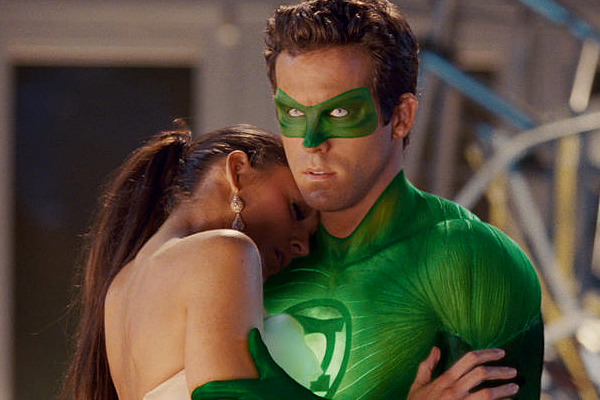
And so the summer of Anonymous Hunks and wall-to-wall superhero movies continues with Ryan Reynolds as the DC Comics legend “Green Lantern,” which rates about a B-plus in both departments. As to Reynolds, who has become a sex god based, I guess, on his physique and his status as the soon-to-be-former Mr. Scarlett Johansson (since it’s definitely not about his undistinguished acting career), well, I sort of get it, ladies (and interested gentlemen). He has a puppyish cheerfulness; you want to take him home and rumple his fur. Each of his abdominal muscles has its own pet name, and his torso, often seen here enshrouded with webby green latex, resembles a relief map of the Russian subcontinent, complete with steppes and taiga and ridgy, mountainous regions.

That said, movies like “Green Lantern” really aren’t aimed at girls, and you have to see Reynolds’ role as hotheaded flyboy Hal Jordan — who, no, isn’t the Green Lantern but the first human member of the intergalactic mind-over-matter strike force called the Green Lantern Corps — as an aspirational model for tween and teenage boys. Which could be viewed as depressing since, for all his gym-hardened abs, Hal is a dim and unfocused character who always looks as if he just thought of something he’s never thought of before, or else as if he’s wondering at which girl’s house he left the Camaro keys. I halfway wonder whether director Martin Campbell, an accomplished action-suspense stylist (“Casino Royale,” “The Mask of Zorro,” etc.), is using Reynolds’ lack of reactivity on purpose, to recall the lummox leading men of old-fashioned space operas.

For all the CGI action sequences and butt-rocking Dolby sound effects, in fact, “Green Lantern” is most satisfying when it sticks close to stodgy comic-book archetype (or myth, for that matter): A callow hero, granted inordinate power; a beautiful girl who doesn’t trust him; a mystical, universal order humans can barely comprehend; the unleashing of a great evil. This wouldn’t necessarily have been a worse movie if it had been made in Italy in 1977, with a bunch of people in tights and sets made of aluminum foil. As things end up, though, Campbell’s “Green Lantern” is much better entertainment than I was expecting. I enjoyed it more than “X-Men: First Class,” which has superior acting and production values but also feels rambling and pretentious. “Green Lantern” is purely a popcorn movie for 12-year-olds, who won’t be disappointed. (In fact, the PG-13 rating, while necessary for marketing reasons, feels forced; this movie doesn’t need or want its occasional cuss words or vague sexual references.)

I’m not sure what purpose plot summary serves with a movie like this: You either know it better than I do or you don’t care. Anyway, Hal is supposed to be a hot-stuff test pilot who’s a complete screw-up in every other area of his life, including his botched romance with Carol Ferris (Blake Lively), who looks good in her own test-pilot gear and in corporate-exec drag and in a leather jacket, without ever resembling a human being. Lively and Reynolds are well matched — they’re beautiful (in a narrow and technical sense of the word) and you can project onto them whatever you want. It’s startling, though, to realize there’s more than a decade of age difference between them; Reynolds is 34 and Lively 23, and can you even imagine a movie in which those numbers would be reversed, unless that was the whole point? (Insert rant about the ingrained institutional sexism of Hollywood here.)

Shortly after Hal has some kind of flashback-freakout and crashes an expensive jet fighter in the desert, a ball of green lightning scoops him off the street and takes him off to meet Abin Sur (Temuera Morrison), a dying alien Lanternoid who has crash-landed on Earth and recruited Hal as his successor. (OK, yeah, it’s the Power Ring, infused with the will of all the sentient beings in the universe, that does the choosing. Better?) Meanwhile, way out in deep space, the imperious leader of the Green Lantern Corps, purple-skinned Sinestro (Mark Strong), has a big problem to face. Some kind of ancient Sauron-Satan-Cthulhu entity called the Parallax, which looks like a giant Rastafarian hairdo surrounding a bulbous Dracula head, has escaped from its prison on the Lost Planet of Whatever and has embarked on a campaign to eat the universe.

I kid, but the Parallax is one of the best things about “Green Lantern,” an amorphous, soul-sucking and profoundly evil CGI beast with more personality than either of the human leads. Also terrific is Peter Sarsgaard as a wormy, balding scientist named Hector Hammond, who’s brought into a secret government facility to examine the corpse of Abin Sur, only to be infected by Parallax fear-juice or something and turned into a cackling mutant toady of doom. I’ve always enjoyed Sarsgaard’s acting, while also feeling that at every moment he’s asking himself, “Now, what would John Malkovich do here? I’m going to take that and dial it up a notch.” Fortunately, that’s exactly the right approach for this character.

So Hal’s got to be tested by the Lantern Corps on their distant planet of rocky outcroppings and stony pillars, where a posse of Yoda-like overlords called the Guardians manage all of creation. He’s got to fail and go back to Earth in disgrace and battle Hector and the Parallax and learn some life lessons and get the girl and set up a sequel, the end. (And please do not accuse me of “spoiling” anything with that sentence; what the Sam Hill did you think was going to happen?) Along the way, I think Campbell gets bored with the formula and sticks in some undertones that aren’t exactly in the script, which is one of those Hollywood mash-ups that results in a screenwriting credit containing both ampersands and “ands.” I mean, Sinestro looks like a combination of Hitler and Mephistopheles on purpose, and there’s something more than a little Nurembergian about the whole business with the Guardians and the Lantern Corps and the power of the universal will, and you almost wonder whether the Parallax has a nihilistic, Lars von Trier point to make about destroying all this boringness and starting over. John Milton faced the same problem when he tackled this material too.

Continue Reading Close