Chris Mooney
Republicans: Wired for homophobia
New research sheds light on why conservatives are so eager to embrace anti-gay pseudoscience
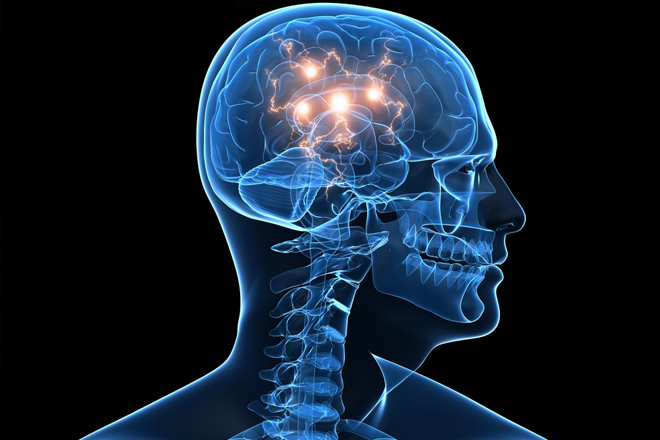
(Credit: Sebastian Kaulitzki via Shutterstock) On May 8, North Carolinians will vote on a constitutional amendment that defines a marriage between a man and a woman as the “only domestic legal union” the state will recognize — thereby barring LGBT marriage equality. The amendment would also ban civil unions and end domestic partner benefits like prescription drug and health care coverage for the partners and children of public employees. At its deepest level, this issue is about fairness for everyone under the law. But less mentioned is that it is also about science, and about what’s factually true.
Many voters who go to the polls to support Amendment One will do so believing outright falsehoods about same-sex marriages and civil unions. In particular, they hold the belief that such partnerships are damaging to the health and well-being of the children raised in them. That is, after all, one of the chief justifications for the amendment.
According to the pro-Amendment One group Vote for Marriage NC, for instance, “the overwhelming body of social science evidence establishes that children do best when raised by their married mother and father.” If marriage is defined as anything other than the union between man and woman, the group adds, we will see “a higher incidence of all the documented social ills associated with children being raised in a home without their married biological parents.”
“Overwhelming body of social science evidence”? “Documented social ills”? Is this really true? Are same-sex marriages and civil unions bad for kids?
Well, no. Indeed, as I report in my new book ”The Republican Brain: The Science of Why They Deny Science — and Reality,” the claim that the kids won’t be all right in same sex marriages or partnerships now rates up there with a number of other hoary old falsehoods about homosexuality: the assertion that people can “choose” whether to be gay; the notion that homosexuality is a type of disorder; and the wrong idea that it can be cured through “reparative” therapy. All of these claims are explicitly disavowed by the American Psychological Association (APA).
In a moment, I want to explore the underlying psychology behind how conservatives, especially religious ones, can believe such falsehoods. But first, let’s dismantle, on a substantive level, the idea that research shows that kids fare worse when raised by two parents who are of the same gender.
According to the APA, the relevant science shows nothing of the kind. “Beliefs that lesbian and gay adults are not fit parents … have no empirical foundation,” concludes a recent publication from the organization. To the contrary, the association states, the “development, adjustment, and well-being of children with lesbian and gay parents do not differ markedly from that of children with heterosexual parents.”
So how can Christian conservatives possibly claim otherwise?
Well, one favored approach is literally citing the wrong studies. There is, after all, a vast amount of research on kids in heterosexual two-parent families, and mostly these kids do quite well — certainly better than kids in single-parent families (for obvious reasons). Christian conservatives cite these studies to argue that heterosexual families are best for kids, but there’s just one glaring problem. In the studies of heterosexual two-parent families where children fare well, the comparison group is families with one mother or one father — not two mothers or two fathers. So to leap from these studies to conclusions about same-sex parenting, explains University of Virginia social scientist Charlotte Patterson, is “what we call in the trade bad sampling techniques.”
But wait: Don’t Christian conservatives want to be factually right and to believe what’s true about the world? And shouldn’t a proper reading of this research actually come as a relief to them and help to assuage their concerns about dangerous social consequences of same-sex marriage or civil unions? If only it were that simple. We all want to be right and to believe that our views are based on the best available information. But in this case, Christian conservatives utterly fail to get past their emotions, which powerfully bias their reasoning. Indeed, science doesn’t just demonstrate that the kids are all right in same-sex unions. It also shows how and why some people reason poorly in highly politicized cases like this one — and, in the case of the anti-gay views of Christian conservatives, rely on their gut emotions to come up with wrong beliefs. Here’s how it works.
There are a small number of Christian right researchers and intellectuals who have tried to make a scientific case against same-sex marriages and unions by citing alleged harms to children. This stuff isn’t mainstream or scientifically accepted — witness the APA’s statements on the matter. But from the perspective of the Christian right, that doesn’t really matter. When people are looking for evidence to support their deeply held views, the science suggests that people engage in “motivated reasoning.” Their deep emotional convictions guide the retrieval of self-supporting information that they then use to argue with, and to prop themselves up. It isn’t about truth, it’s about feeling that you’re right — righteous, even.
And where, in turn, do these emotions come from? Well, there’s the crux. A growing body of research shows that liberals and conservatives, on average, have different moral intuitions, impulses that bias us in different directions before we’re even consciously thinking about situations or issues. Indeed, this research suggests that liberals and conservatives even have different bodily responses to stimuli, of a sort that they cannot control. And one of the strongest areas of difference involves one’s sensitivity to the feeling of disgust.
A recent study, for instance, found that “individuals with marked involuntary physiological responses to disgusting images, such as of a man eating a large mouthful of writhing worms, are more likely to self-identify as conservative and, especially, to oppose gay marriage than are individuals with more muted physiological responses to the same images.” In other words, there’s now data to back up what we’ve always kind of known: The average conservative, much more than the average liberal, is having visceral feelings of disgust toward same-sex marriage. And then, when these conservatives try to consciously reason about the matter, they seize on any information to support or justify their deep-seated and uncontrolled response — which pushes them in the direction of believing and embracing information that appears to justify and ratify the emotional impulse.
And voila. Suddenly same-sex marriages and civil unions are bad for kids. How’s that for the power of human reason?
All people engage in emotion-guided or -motivated reasoning, to be sure. But mounting evidence suggests that the Left and Right may do so differently. And they definitely do so for different reasons — as the present case so strongly demonstrates.
Does this mean we should be more tolerant of the intolerant, or less disgusted by those who may consider us disgusting? Maybe. After all, people may not have much control over these impulses. They may not even be aware of them. At the very least, such knowledge should increase our level of understanding of those who disagree with us.
In the end, however, facts are facts — and emotions and gut instincts are an utterly unreliable way of identifying them. We can try to be understanding of people different from us — even when they’re manifestly failing at the same task. But the latest research makes it more untenable than ever to base public policy on gut-driven misinformation.
Fox’s misinformation effect
It's not just the programming. Conservatives are more likely to seek out outlets that affirm their views
Bill O'Reilly (Credit: AP/Charles Sykes) In June of last year, Jon Stewart went on air with Fox News’ Chris Wallace and started a major media controversy over the channel’s misinforming of its viewers. “Who are the most consistently misinformed media viewers?” Stewart asked Wallace. “The most consistently misinformed? Fox, Fox viewers, consistently, every poll.”
Stewart’s statement was factually accurate, as we’ll see. The next day, however, the fact-checking site PolitiFact weighed in and rated it “false.”In claiming to check Stewart’s “facts,” PolitiFact ironically committed a serious error—and later, doubly ironically, failed to correct it. How’s that for the power of fact checking?
Why the GOP distrusts science
It's not just evolution and climate change -- conservatives' trust in science is plummeting across the board
(Credit: Reuters/Salon) For a long time, those of us who monitor the troubled relationship between science and the American public had at least one thing we could feel good about. And that was knowing that while we might argue endlessly over global warming or the teaching of evolution, at the end of the day Americans in general still expressed strong confidence — strong trust — in the institution of science and its leaders. Spats over a handful of divisive issues didn’t seem to have soured them on science across the board.
Continue Reading CloseThe ugly delusions of the educated conservative
Better-educated Republicans are more likely to doubt global warming and believe Obama's a Muslim. Here's why
(Credit: AP Photo/Ross D. Franklin) I can still remember when I first realized how naïve I was in thinking—hoping—that laying out the “facts” would suffice to change politicized minds, and especially Republican ones. It was a typically wonkish, liberal revelation: One based on statistics and data. Only this time, the data were showing, rather awkwardly, that people ignore data and evidence—and often, knowledge and education only make the problem worse.
Someone had sent me a 2008 Pew report documenting the intense partisan divide in the U.S. over the reality of global warming.. It’s a divide that, maddeningly for scientists, has shown a paradoxical tendency to widen even as the basic facts about global warming have become more firmly established.
Why America is flunking science
Don't just blame poor education for our nation's scientific illiteracy -- but our politics and pop culture
In the recent Tom Hanks/Ron Howard film “Angels & Demons,” science sets the stage for destruction and chaos. A canister of antimatter has been stolen from CERN — the European Organization for Nuclear Research — and hidden in the Vatican, set to explode right as a new pope is about to be selected.
Striving to make these details as realistic as possible on screen, Howard and his film crew visited CERN, used one of its physicists as a science consultant, and devoted meticulous care to designing the antimatter canister that Hanks’ character, Robert Langdon, and his sexy scientist colleague, Vittoria Vetra (Ayelet Zurer), wind up searching for.
Continue Reading CloseBill Clinton’s questionable clemencies
The former president's decision to release Puerto Rican terrorists in 1999 prompted outrage from Congress and his wife. Now it also bolsters claims that he was "soft on terrorism."
On Dec. 13, the New York Times metro section printed the bleak story of Patricia Flounders, whose husband Joseph died at the World Trade Center, and who herself committed suicide three months later in the couple’s “just-finished dream house.” It’s hard to think of a single personal narrative that better captures the devastation wrought by al-Qaida on Sept. 11. Near its end, however, the article contained a curious anecdote:
“At her husband’s memorial service, Mrs. Flounders stood in black at the head of the receiving line … and asked people to attend a reception at Fraunces Tavern, in the financial district.
Continue Reading ClosePage 1 of 2 in Chris Mooney