Emily Jenkins

Best of Bond

Ian Fleming's 007 is often most memorable when he's most offensive.

  • more
    • All Share Services

Some of James Bond’s better moments are his worst. That is, he’s at his most memorable — providing that pleasant shiver that comes with scandal — when Ian Fleming is objectifying women or demonizing nonwhites and people with nonnormative bodies. For example, “Doctor No” begins with a thrilling scene in which a representative of the British Secret Service is murdered by three “Chinese Negros” pretending to be blind men. As the agent puts a coin into their beggars’ cup, they say “Bless You, Master,” then shoot him from behind: “one between the shoulders, one in the small of the back, and one at the pelvis.” They shove him in a hearse, remove their blind-man sunglasses, don top hats and drive away with their arms crossed respectfully over their hearts. Racist, ugly, violent and possibly offensive to blind people as well, but just the sort of thing to make an adolescent — all right, let’s face it, your average grown-up; OK, honestly, me — chuckle, “Heh heh heh. That’s pretty cool.”

Here are five of my favorite Fleming Bondian moments that don’t involve anyone’s degradation — unless you care about the giant squid.

Most frightening

From “You Only Live Twice”

Infiltrating the castle of evil Doctor Shatterhand, whose garden of poisonous plants is legendary, Bond hides behind a tree when he hears a noise: “The distant crashing in the shrubbery sounded like a wounded animal, but then, down the path, came staggering a man, or what had once been a man. The brilliant moonlight showed a head swollen to the size of a football [soccer ball], and only small slits remained where the eyes and mouth had been. The man moaned softly as he zigzagged along, and Bond could see that his hands were up to his puffed face and that he was trying to prise apart the swollen skin around his eyes so that he could see out. Every now and then he stopped and let out one word in an agonizing howl to the moon. It was not a howl of fear or of pain, but of dreadful supplication. Suddenly he stopped. He seemed to see the lake for the first time. With a terrible cry, and holding out his arms as if to meet a loved one, he made a quick run to the edge and threw himself in.” The lake is stocked with piranhas, which make short work of the victim.

Most poetic

From “Thunderball”

After being hunted by a hungry barracuda while spying on Emilio Largo’s SPECTRE-owned ship, Bond is actually rescued by the animal when it eats a big bite out of his human opponent. Enemies begin throwing grenades into the water, and as he swims out of their range, Bond witnesses the fate of his antagonist: “Wild commotion at the edge of his field of vision shocked him out of the semi-trance. A giant fish, the barracuda, was passing him. It seemed to have gone mad. It was snaking wildly along, biting at its tail, its long body curling and snapping back in a jack-knife motion, its mouth opening wide and shutting again in spasms. Bond watched it hurtle away into the grey mist. He felt somehow sorry to see the wonderful king of the sea reduced to this hideous jiggling automaton. There was something obscene about it, like the blind weaving of a punchy boxer before he finally crashes to the canvas. One of the explosions must have crushed a nerve centre, wrecked some delicate balance mechanism in the fish’s brain. It wouldn’t last long. A greater predator than itself, a shark, would note the signs, the loss of symmetry that is suicide in the sea.”

Most surreal

From “On Her Majesty’s Secret Service”

After an erotic encounter with a female allergy patient at the nefarious Blofeld’s Alpine clinic, Bond is drifting toward sleep in her bed when a bell chimes and a metronome begins to tick. A hypnotic voice intones, “Your bed is as soft and downy as a nest. You are as soft and sleepy as a chicken in a nest. A dear little chicken, fluffy and cuddly … You love them dearly, dearly, dearly. You love all chickens. You would like to make pets of them all. You would like them to grow up beautiful and strong. You would like no harm to come to them … Soon you will be able to help all the chickens of England … You will say nothing of your methods. They will be your own secret, your very own secret.”

Coolest gadgets

From “From Russia With Love”

Searching for Rosa Klebb, head of SMERSH, Bond opens her hotel door to find a little old woman instead. “She looked so exactly like the sort of respectable rich widow one would expect to find sitting by herself in the Ritz, whiling the time away with her knitting. The sort of woman who would have her own table, and her favourite waiter, in a corner of the restaurant downstairs — not, of course, in the grill room.” He sweats, examines her sensible shoes and old-fashioned dress, speaks to her politely — until he notices her nicotine-stained mustache. “Nicotine? Where were her cigarettes? There was no ashtray — no smell of smoke in the room.” He accuses her, and she attacks him with the telephone — actually a gun — and with her knitting needles, aiming at his legs with German nerve poison. Bond loses.

Best villain

From “Doctor No”

Doctor No has put Bond through an obstacle course designed to test his capacity for pain, then kill him. At the end of it, Bond plummets into an enclosed bit of bay, and quickly scrambles out of the water onto a wire fence. “Below him the water quivered. Something was stirring in the depths, something huge. A great length of luminescent greyness showed, poised far down in the darkness. Something snaked up from it, a whiplash as thick as Bond’s arm. The tip of the thong was swollen to a narrow oval, with regular budlike markings. It swirled through the water where the fish had been and was withdrawn. Now there was nothing but the huge grey shadow. What was it doing? Was it …? Was it tasting the blood? As if in answer, two eyes as big as footballs slowly swam up and into Bond’s vision. They stopped, twenty feet below his own, and stared up through the quiet water at his face … So this was the giant squid, the mythical kraken that could pull ships beneath the waves, the fifty-foot-long monster that battled with whales, that weighed a ton or more.” Bond finally makes it back off by poking its eye out with a wire spear he has been carrying down his pant leg, but not before getting a series of tentacle marks suckered across his stomach.

Mini-Shakespeares and kitty-cat bookends

What the strange, cutesy world of book kitsch says about our reading lives.

  • more
    • All Share Services

Mini-Shakespeares and kitty-cat bookends

Possibly because I make purchases at online bookstores, or because I am on mailing lists for countless publishers’ catalogs, or more likely because nearly everyone fits the definition as they see it, the proprietors of the 12-year-old Levenger catalog have identified me as a “serious reader.” That’s what they do — sell “tools for serious readers” — and I can buy into this notion of myself by purchasing a leather case for my Palm Pilot, “the pen of the year,” a portable chess set, a coin purse, an Old-Time Paddle Ball game or a calendar of photographs of 20th century globes.

“Our customers love learning — and the written word,” say founders Steve and Lori Leveen in their introduction to the holiday catalog. That congratulatory message (on the order of “you are a reader, you special smart person, you”) explains a kind of tchotchke that has existed for years and currently makes its home in the Levenger catalog and in bookstore gift departments. In an age when our media is constantly saturated with dire reports on how the average American watches four hours of television daily or on how pornographers might show your children dirty pictures on the Internet, the market for paraphernalia that identify their owner as literate and interested in books appears to be slowly and steadily expanding.

Items like Levenger’s paddle-ball game and coin purse cater to nostalgia for the days when pleasures were simple and products were made with care. Since buying them wouldn’t identify me as a “serious reader” to anyone but myself, presumably I purchase this kind of thing from Levenger rather than from Restoration Hardware or the Sundance catalog because I like the idea of myself as Reader more than the idea of myself as Ms. Fix-it or New Age Woman Sensitive to Native American Culture. Items like the chess set or the calendar of globes, however, offer the purchaser an opportunity to publicly demonstrate interest in the enjoyments of the intelligentsia. There are lots of these available from Levenger: wordsmith games, cases for special pens, collectible editions of books by Charles Dickens or Lewis Carroll.

More practical products make up maybe 20 percent of the catalog. The “serious desk for the bed” and the pillow “designed for reading, not sleeping” appeal to someone who not only reads “seriously” but thinks of himself as doing so. In a similar vein, there are several boxes that organize multiple colors of Post-it notes, CDs of classical and instrumental music “for the reader” and a lamp that allows the owner to read in bed without disturbing her spouse.

Perhaps the growth of chain bookstores as public spaces has gotten people interested in the idea of being a reader — at least, a reader as imagined and promoted by the corporate wizards of places like Barnes & Noble. At my local B&N, the reading tchotchke shelves have an entire area unto themselves. As reading becomes linked to a particular kind of social activity (browsing, flirting, coffee drinking), and places to do it can be found in any local mall, “a reader” is becoming something that it wasn’t before: a person affiliated with the products of a large commercial enterprise. That person needs to be encouraged to become a regular customer, and one way to do that is to provide him with self-congratulatory items like bookmarks, special pillows and itty-bitty bookmarks that celebrate his identification with the company’s merchandise.

Like the products in the Levenger catalog, most of the things for sale at B&N give their owners a self-image as a reader that is apparently inadequately supported by ownership of actual books. The big-ticket items are bookends, ranging in price from $29.95 to $69.95, and they are displayed holding up the sort of tomes that almost no one but a graduate student owns for any purpose but a middlebrow display of cultivation: Everyman library editions of Anton Chekhov, Thomas Hardy, Wilkie Collins, Daniel Defoe. They have been relieved of their shiny white jackets so the volumes look older, more official.

The bookends themselves feature a pint-size bust of Shakespeare or a “studious gargoyle.” “This inquisitive medieval gargoyle is catching up on his reading as he protects your library from demons, bjtes noires, etc.,” says the promotional copy. The “literary cat” has miniature bookshelves topped by a curious feline and the “world scholar” ends feature a ceramic stack of “well-read” books and a sepia-colored globe: “We consider this a perfect gift for the worldly reader.”

Clearly, the consumer targeted by these reading tchotchkes is not actually a world scholar. It’s safe to say that members of the intelligentsia will by and large turn up their noses at minibusts of Shakespeare. The tchotchke makers seem to be selling a fantasy of readerliness to people who either strive for the cachet of intellectualism or feel nostalgic for the good old days of the 19th century, when country houses had libraries and novels came in three volumes.

The shelf called “Unique Gifts for the Reader” in B&N is mostly stocked with items that are impractical or have nothing to do with reading: a snow globe with Santa inside, photo albums, rubber stamps, glorified blank books (“Millennium Notebook”), kitty-cat photos you can display on your computer, a Shakespeare paperweight in a package that explains, for those serious readers who may not know, who Shakespeare was. An author friend of mine was recently given a rubber stamp reading, “Outside of a dog, a book is a woman’s best friend. Inside of a dog, it’s too dark to read.” Other gifts are ostentatiously useful for some all-but-unnecessary purpose: Book Gear USA makes an eyeglass case that straps to your book and a protective cover so you can “take your reading with you” — as if such a thing would be impossible without this special product. The covers also provide “reading privacy,” which of course you need only if you’re reading something of which you are ashamed. There are jumbo-size Book Gear covers for the Bible.

A display case labeled “Gifts for Readers Collection” includes bookmarks of all kinds, many of them storybook or television tie-ins. Wishbone the television dog has a bookmark on which he poses atop a stack of classics: He has chosen “Oliver Twist,” “Don Quixote,” “The Prince and the Pauper,” “The Odyssey” and “Joan of Arc” — all tales of adventure, with the odd exception of “Silas Marner,” a book that has doubtless made generations of children hate George Eliot. “Wishbone wants you to know that dogs and books are everyone’s best friends,” says the back.

These bookmarks are clearly intended for children, and it’s natural to want to buy readerly paraphernalia as a way of encouraging children to read — they’re rewards for and enticements to reading for people who are just learning to do it. If Bugs Bunny enjoys it, it’s probably pretty cool, and a neato Wishbone bookmark can’t be used unless you’ve got a book to mark your place in.

But what, then, are we to make of the bookmarks featuring Anne Geddes’ famous baby photographs, sunset seascapes or sexy pictures of Elvis Presley? They have neither the nostalgic intellectual cachet of the inquisitive gargoyle bookends nor the childish appeal of Bugs. And in the age of paperbacks, now that people own books more than borrow them from libraries and are free to dog-ear the pages, the bookmark has hardly any purpose. Plus, a Post-it note works better anyway, because it doesn’t fall out. Why do people buy bookmarks? It must be for their symbolic representation of readerliness, construed in this case not as “worldly” and “serious” but as cute (Geddes), romantic (sunset) or hip (Elvis). The bookmark suggests not only a desire to identify as a reader but also a reverence for books, a respect for their totemic power. Odd as it may be to convey that reverence by means of a photo of a baby dressed as a giant cabbage, people are doing it.

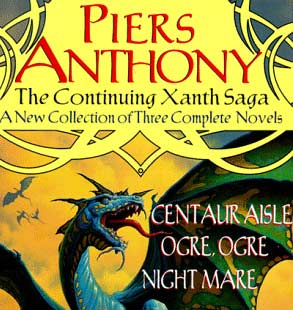
But even though readerly reverence can explain most of the kitsch I’ve come across, there’s still a problem here: Many of the products seem to be about pretending you read a kind of book that you very likely do not (Shakespeare, Chekhov) instead of relishing whatever genuinely thrills you. Celebrating reading is good. Taking pride in doing something you love is good, whether it’s through a cabbage-baby bookmark or the Oxford English Dictionary. But if you read Piers Anthony or Georgette Heyer, and you’re buying Shakespeare busts, old-globe calendars and Lewis Carroll collectibles as a way of showing your pride in reading, then there’s a lot of shame mixed in with that pride. There’s an idea that reading Chekhov shows you are serious and worldly and that that’s more valid than being romantic, or fantastical, or quick to laugh — that only one kind of academy-sanctioned taste is worth celebrating.

Books are usually perceived as benevolent and harmless compared with the terrors of gangsta rap lyrics, Internet bomb recipes and television sitcoms, so the “serious reader” conceives herself as rejecting the media blitz in favor of old-fashioned aesthetics, if not values. But books, too, can provide vapid entertainment, corrupt young minds and perpetuate short attention spans and stereotypes. In short, although nostalgic reading paraphernalia paint books as the last gasp of a pre-media-saturated world, books have always been the media, and they always will be.

Reading kitsch is very often useless. It can perpetuate shame in its idealization of “worldly” and canonical taste, and it belies the book industry’s complicity in our media glut. Nonetheless, as I was working on this essay my mother bought me little copper-colored “page points” from Levenger (to mark my place in things I read), and I was forced to admit that I like them. They are pleasing, and they allow me to demonstrate care for books I might ordinarily underline or dog-ear. And they go nicely with my old-fashioned letter box, which has special drawers for envelopes and stamps and makes me feel nostalgic for the good old days of letter writing. I admit, I have a framed poster advertising a rare edition of “Frankenstein” on my study wall, and a picture by noted illustrator Arthur Rackham — both “collectibles,” and symbols of my reading tastes. But I also have a page from a “Catwoman” comic, a business card ostensibly signed by Sherlock Holmes, a magazine photo of a porcupine fish and another of Deborah Harry.

I’ve kitsched up my office not only with symbols of my academy-sanctioned interest in 19th century novelists and early 20th century illustrators, but also with emblems of the other things I read: detective stories, comics, magazines about beautiful women and wildlife. My monthly copy of Vogue gets read long before Lingua Franca, and I am not ashamed. I am a Conan Doyle fan, hear me roar. And Cynthia Heimel has made me giggle since I was 16 years old — where is my Heimel paperweight?

When they make tchotchkes for her — not just for Chekhov and Shakespeare, but kitsch for readers of Heimel, Heyer, Anthony and Doyle — then maybe we’ll truly be celebrating reading, rather than some exalted idea of a virtuous, scholarly hobby. A reading life deserves representation in all its complexity — its commercialism as well as its intellectualism, its shallowness as well as its depth, its entertainment value as well as its profundity.

Continue Reading Close

A shot of the needful

In which the P.G. Wodehouse newsgroup and its online version of Blandings Castle teaches me to play again.

  • more
    • All Share Services

A shot of the needful

As a child, I was never a fan of anything. I didn’t write letters to the Bay City Rollers. I was never a Trekkie or a Deadhead or a collector of Shaun Cassidy posters. But since that morning a couple years ago when, after reading P.G. Wodehouse’s “Jeeves and the Tie That Binds,” I first logged onto alt.fan.wodehouse (AFW), I’ve been hooked. As Bertie Wooster, “the master’s” most effervescent creation, might say, “the L. has dawned, what?” I am a fan.

Pronounce him “Woodhouse,” thank you kindly. He is a humorist without peer. In 92 books (including 11 novels and countless short stories about the inimitable valet Jeeves), not to mention musical comedies galore, his verbal pyrotechnics made me appreciate the possibilities of language long before I ever considered going to graduate school for English literature. At the core of his appeal is the Wodehousean prose style: a mixture of mangled literary references, Edwardian slang, invented slang, ludicrous formality and remarkable joie de vivre.

Here is Bertie on the subject of his friend Boko’s troubled love affair:

Love’s silken bonds are not broken just because the female half of the sketch takes umbrage at the loony behavior of the male partner and slips it across him in a series of impassioned speeches. However devoutly a girl may worship the man of her choice, there always comes a time when she feels an irresistible urge to haul off and let him have it in the neck. I suppose if the young lovers I’ve known in my time were placed end to end … they would reach half-way down Piccadilly. And I couldn’t think of a single dashed one who hadn’t been through what Boko had been through to-night.

The ecstatic, cooing sort of mirth such passages invoke in me is certainly well and good. I’m all for it. But truth be told, the books are not really the point. What I really love is the newsgroup.

AFW is a mix of role-playing, hobbyism and scholarly inquiry. Whereas newsgroups devoted to canonical authors like Joyce or Kafka tend to maintain an intellectual focus, AFW recreates Blandings Castle, the setting for 10 Wodehouse novels and several short stories. Enter the online community, and you arrive at the Shropshire seat of the dotty Lord Emsworth, his faithful butler Beach and his prize-winning pig. Gone are the trials and tribulations of modern life: On AFW, we concern ourselves with acquiring the recipe for Jeeves’ famous hangover cure, musing upon the meaning of “boomps-a-daisy” (something like “very well, indeed”) and placing virtual bets on whether Boko Fittleworth’s forthcoming infant progeny will look more like Winston Churchill — or a squashed prune.

How do you pronounce “Featherstoneaugh”? The answer is “Fanshaw.” We mire ourselves in Wodehouse trivia, along with bibliography, dramatic adaptations of various sorts and musical theater. Since I logged on to AFW, members have also conducted a pumpkin-growing contest online, polled one another to determine favorite cocktails and puddings and written a large collection of clerihews, most of questionable merit. Together, by submitting numerous nominations via the Web, we briefly managed to put “Only a Factory Girl” — a bestseller written by the entirely fictional novelist Rosie M. Banks, who appears in several Wodehouse stories — on Random House’s controversial list of the 100 best novels ever written. It wasn’t long, however, before the official chappies caught on, and Banks was replaced by Tolkien.

Each member has a “nom de Plum” (Plum was Pelham Grenville Wodehouse’s nickname), and behaves accordingly — breaking character often, but always infusing every exchange with Plum’s signature verbal style. I love playing my part, immersing myself in this fictional world. It’s different from the experience of reading a book, both because I become a participant in the fiction-making process rather than a passive reader, and because the fantasy is collaborative rather than experienced in isolation. We are all in it together. “What Ho!” I cry to Beach the Butler, who chose his nom because “there is a certain similarity in build: like Beach I am not fat, but far from svelte. I also have rather a fruity English accent … And I wanted to be in Blandings, or ‘heaven’ as I tend to think of it.” He is likely to respond with typical portly gravity that he trusts my weekend was satisfactory, Madam, and would I care for a cocktail?

The role-playing began in November 1994, according to longtime member Gussie Fink-Nottle, newt fancier and Drones Club member. “Aunt Diana (then writing as Stiffy) and I started a little in-character cross talk about the proper way to nab [policemen's] helmets,” Gussie writes. (Pinching helmets is a popular sport of Wodehousean heroes when inebriated.) “That was a grand time indeed. There were ferrets about the place … newts got painted orange and thrown into moats, people got potted, darning needles were bought [for puncturing the hot-water bottles of unsuspecting persons] … in fact, everything that could happen in a PGW story happened.”

All that was before my time. It was only about three years ago that I became Lotus Blossom, the impetuous redheaded American film star. “On the screen she seemed a wistful, pathetic little thing,” wrote Plum in 1935′s “The Luck of the Bodkins,” “while off it ‘dynamic’ was more the word. In private life, Lottie Blossom tended to substitute for wistfulness and pathos a sort of Passed for Adults Only joviality which expressed itself outwardly in a brilliant and challenging smile and inwardly and spiritually in her practice of keeping alligators in wicker-work baskets and asking unsuspecting strangers to lift the lid.”

Lottie maintains, in fact, that she has learned virtually all she knows about registering emotion on film by watching people’s faces as they first encounter her pet. In my online incarnation, then, I let my alligator loose on occasion (Beach the Butler, if memory serves, had a nasty encounter with him, and the Dog MacIntosh was in serious danger). I throw back “shots of the needful” with admirable equanimity, and shrink not from the more controversial questions, such as whether soupy Madeline Bassett believed stars were God’s daisy chain or the wee sneezes of fairies.

Now, I do not claim the AFW in-character posts are unique. Very likely Dune-fanciers, Trekkies and even Shakespearians are boldly beaming each other up and wherefore-art-ing each other across the Internet. I certainly wouldn’t put it past them. And I know from my ’80s experiments with Dungeons and Dragons that role-playing is nothing new. I merely claim that I am playing in a way that I haven’t done since my Barbie dolls were packed off to the Salvation Army, or since my friend Becca and I spent one happy summer in Narnia.

This kind of play was a continuous part of my reading life from my first encounter with “Pat the Bunny” until sometime around puberty. I was Oliver Twist the pickpocket, I was Jo in “Little Women,” I was Peter Pan and Pippi Longstocking and some little witch whose name I don’t remember. With my friends and alone in my bedroom, I made up fresh stories and fantasies based in the fictions I had first encountered on the page. And then, somehow, I stopped. My life as a reader changed. I wasn’t Holden Caulfield, Owen Meany or Lily Bart. I was never anyone again — until I became Lottie Blossom.

What had changed? With no fellow Peter Pans to urge me not to grow up, I had become concerned with my adolescent sense of dignity. I abandoned my series of imaginary characters in favor of fashioning my own identity in the real world. Then came college and graduate school — where reading became a profession. Playing at it became unthinkable.

What ho, Plummies! They came to my rescue when I was mired in the depths of my dissertation, saving me from a life devoted to reading “Types of Ethical Theory” and Spinoza. The newsgroup gave me a sense of membership. They were a supportive group of completely invisible like-minded souls, unconcerned with dignity — just looking about in search of a cocktail or a lost pig. In the safety of the Internet’s anonymity, and in the jolly comfort of a shared language, I started playing again.

Offline, I’m not hopping about the apartment in search of my alligator or crying “What ho!” at my husband when he comes home, but Wodehouse’s world infiltrates my life in pleasing and comical ways. For example, I prepared mind, body and soul for writing this essay by eating large gobs of English country lemon curd on toast and drinking tea. To get me in the M., don’t you know. Later this evening, perhaps, I will restore the tissues with a drop or two of the needful. A boy who yells loudly in my building’s hallway at all hours and then asks me to donate money to his scout troop is no longer an annoyance; he is an excrescence — “as pestilential a stripling as ever wore khaki shorts and went spooring or whatever it is that these Boy Scouts do.” Unlike Lotus, I am apt to be quiet in crowds, and to dress more like a janitor than a film star — but something like Lottie’s oomph has revealed itself in my recent purchase of some zebra-print shoes and a dress trimmed in feathers.

I probably won’t ever become Holden Caulfield or Lily Bart. (Well, who would want to?) But being a fan has changed the way I read. I’ve shifted from my adult, over-trained intellectualism back to my youthful preoccupation and playfulness. And this way, I think, is better. Or as Plum would say, here I am — all boomps-a-daisy.

Continue Reading Close

Eloise has a ball — and snubs her guests

A year after her creator's death, Eloise plays hard to get at the Plaza.

  • more
    • All Share Services

Eloise, the unruly heroine of Kay Thompson and Hilary Knight’s 1955
children’s book, behaved very badly on Tuesday night. It was billed as her
“Introduction to Society,” a lavish “Pink and Black Ball” on three floors
of New York’s Plaza Hotel. Harpists twiddled, feather boas were tossed, mountains
of shrimp were consumed and Joan Rivers skittered about interviewing
everyone from Mister Adrian, the hotel manager (he confirmed that Eloise’s
Nanny takes a little drop of something just to keep the cold out), to female
impersonator Lypsinka (“It was the only book for a recherchi 8-year-old
– and that was me!” she cried).

But where was Eloise?

The partyers were celebrating Simon & Schuster’s relaunch of Thompson and
Knight’s long-out-of-print sequels. “Eloise at Christmastime” hits
bookstores this month, and “Eloise in Paris” has been on children’s
bestseller lists all fall. Guests were also tilting back pink cocktails to cheer the 6-year-old hooligan’s movie deal with the itsy bitsy Entertainment Co. The film will be scripted by J. David Stem and David Weiss, perpetrators of the “Rugrats” movie, and produced by Denise Di Novi (“Heathers,” “Little Women,” “Edward Scissorhands,” “Batman Returns”). Women wore pink hats, pink gowns and pink flowers; the male staff of itsy
bitsy wore pink shirts, and acted embarrassed by them. While Di Novi
retained her dignity, itsy bitsy executives decked the screenwriters in
glittery pink feather boas and fake noses, after which they all sprayed
each other with silly string.

Author Thompson, who died in 1998, had blocked the sequels from being reprinted during her lifetime. Illustrator Knight, however, was present at the party. He received a statuette and spoke not a word, though earlier he told Rivers, “I gave Eloise life … and a little stomach.”

In honor of the occasion, the Plaza, where the fictional Eloise lives with Nanny, Weenie the pug and Skipperdee the turtle (“the Plaza is the only hotel in New York that will allow you to have a turtle,” Eloise informs us in her first book) exploded with pink
roses. It was the perfect setting to attract our heroine, an
unabashed party girl: Eloise often scampers to the Terrace Room “where
those debutantes are prancing around,” goes to wedding receptions in the
White and Gold room and claims she has “been to 56 affairs including
Halloween.” Nevertheless, when Kenn Viselman, chairman of the itsy bitsy board and the marketing mastermind behind TeleTubbbies, presented “the debutante of all debutantes” — Eloise was nowhere to be found.

A frazzled Nanny appeared in the spotlight to explain: “She was here,
but … she can be rather unpredictable.” TV monitors around the reception
hall then switched over to “concierge cam,” where a jolly Plaza employee
explained that Eloise had just scooted into the elevator. A chase ensued,
involving a French waiter carting around a single raisin for Skipperdee, a
much-harassed maid wiping Eloise’s lipstick drawings off the mirrors, and
Joan Rivers crying, “We’ve got to find Eloise. Where are you, you little
bitch?”

Needless to say, the tiny terror never made her formal debut, though a
small blond girl wearing Eloise’s signature black pleated skirt and a
strange pink party mask was briefly seen running past the cheese table and
ducking into a back room. Sad as her absence made them, guests took home a
piece of her nonetheless: The “Eloise Emergency Hotel Kit,” a modern
knock-off of a 1950s promotional item, contains a copy of her first book,
raisins for a pet turtle, cat-eye sunglasses, a comb, Post-it notes that say, “Charge it please!” and an Eloise lipstick for writing on mirrors. All in pink, of course.

Continue Reading Close

Page 3 of 3 in Emily Jenkins