Katherine Don

“Spiritual Doorway in the Brain”: The science of near-death experiences

Do animals have them, too? Why the white light? Can you really "return" from the dead? An expert explains

  • more
    • All Share Services

We’ve all heard about the bright white light at the end of the tunnel, but what’s really going on in a “near-death experience”? That’s what neurologist and medical doctor Kevin Nelson tries to uncover in his first book, “The Spiritual Doorway in the Brain: A Neurologist’s Search for the God Experience.”

Dr. Nelson is one of the world’s leading researchers in the biology of near-death and other mystical experiences, and his fascinating book takes the reader from investigations of MRI studies of the brain to historical anecdotes and philosophical inquiry. Three decades of research led Dr. Nelson to a unique and unexpected conclusion about near-death experiences — rather than arising from parts of the brain that are unique to higher cognitive functions, they actually involve the oldest, most primitive parts of our brain, and might also relate to having dreams while still awake.

What happens near death, and what does it have to do with God? To find out, Salon spoke on the phone with Dr. Nelson from the University of Kentucky Medical Center in Lexington.

First things first: What’s the deal with the tunnel and the light?

The tunnel is easy to explain. Much of the near-death experience is caused by low blood flow to the brain and to the head. When this happens, the eye fails before the brain fails. The outside field of vision goes first, but the center is preserved until the very end, so you develop a tunnel-like sensation. This sensation is also common in people who are about to faint.

As for the light, when your eye loses blood flow, light might become all that you’re capable of seeing. Another reason for the light is the REM system, which is the “rapid eye movement” state of sleep. When the eye and the retina shut down, the remaining control system for vision is the REM system — this is why you can see things when you’re dreaming, and this type of vision might be activated during a near-death experience and cause a person to see light.

U.S. News and World Report found that as many as 18 million Americans have had a near-death experience. Must you be on the actual verge of death for this to happen?

People don’t realize that fainting — a common experience — produces symptoms very similar to a near-death experience. Most people who say they had a “near-death experience” were not actually near death, but their experience was the same as those who were. In one experiment, scientists actually induced fainting episodes in the test subjects, and many of them had an out-of-body experience while they fainted, which also commonly occurs during real near-death experiences. So in fact, many individuals know what it’s like to have a near-death experience.

Some people who were close to death recall having a mystical experience — they feel peace, love and unity with the world, or have pleasant encounters with deceased relatives. What accounts for these occurrences?

A near-death experience varies greatly from person to person. Some people experience rich narratives in which they meet spiritual beings and are given messages. Not everybody sees light, not everybody has a sense of euphoria — some people actually have an unpleasant emotional response during the near-death experience. But what generally happens is the pleasure system of the brain is engaged. This happens with spiritual experiences in general. When the Russian novelist Dostoevsky faced execution and lived to tell about it, he related a story of ecstasy and spiritual awakening. The dopamine reward system seems to be activated when a person believes they are near death, and the REM system, counterintuitively, is also activated. Experiments have shown that if you destroy parts of the brain that support REM sleep, you also take away the effectiveness of the dopamine reward system. Many pieces of the puzzle are missing, but we know there’s a connection. 

Your own research has led to a unique explanation for near-death experiences that you call the “REM intrusion hypothesis.” Can you explain that?

When a person is in crisis, their body reacts to the threat, and the brain must be in the correct state of consciousness. When a primate on the savannas of Africa hears a lion’s roar, it’s very important to stay awake. This is so obvious that most people overlook how important it is for the brain to know when to be asleep or awake. This necessity is coupled with fight or flight survival reflexes. There’s a switch in the primitive part of the brain that moves us from REM sleep to waking. The majority of the time, this switch works well. But it works better in some people than in others. If you have narcolepsy, it works poorly and you move quickly between the different states.

During REM sleep, the body is actually paralyzed. If a person wakes up and their brain doesn’t move out of REM, they might be still paralyzed. This is called sleep paralysis. Hallucinations, activation of the visual system, out-of-body experiences and dreamlike images while a person is awake are probably all related to activation of the REM system when someone’s awake. Now why does this happen when a person has very low blood pressure — which occurs near-death — or when someone is fainting? As it turns out, the body systems that regulate the transition between REM and wakefulness are also responsible for the body’s reaction to low blood pressure. Why this happens is not clear, but it’s deeply wired in the oldest part of our brains, so the connection must be doing something good for survival, and it must be important.

You described one patient, Jan, who had doctors operating on her liver, intestines and heart. She was near death, and though she was given drugs to put her to sleep, she was fully awake and felt the pain. Shortly before passing out, she saw a white light and her dead mother spoke to her. What was happening to her?

When a brain isn’t getting enough blood flow, we move between consciousness and unconsciousness, and the transitions are not necessarily abrupt. The borders become fuzzy, especially if the rate of blood flow to the brain is changing a lot. So people can actually stay in that borderland for a long time. They might be on the gurney with their eyes closed, but they’re actually awake. With REM intrusion, the REM state might be triggered when a person is awake, so while a person is in a borderland state caused by reduced blood flow, they also experience a second borderland state where the experiences of REM are transposed onto an awake state of consciousness. These dual borderland states might explain why there are so many aspects to the near-death experiences, like paralysis coupled with seeing light and experiencing strange narratives.

What’s the difference between near-death and returning from death? What about people who are frozen for hours and then recover?

Returning from death is not something that people do. When a person drowns in ice water, the brain cells shut down and stop functioning, but they don’t die. But when a person’s heart stops, their brain cells burst after about five minutes. When the cells burst, they’re dead and don’t come back. If the cells are frozen instead, they don’t burst, and when they warm up, they start functioning again.

Research shows that mystical experiences involve the most ancient parts of our brain, which implies that spirituality is not limited to humans. Do you think apes, dogs and other mammals are capable of spirituality?

I think they’re capable of having the experiences that form human spirituality, which I’ll define as the sense that you’ve touched some kind of divine. I’m not sure if an animal experiences this type of connection, and of course an animal can’t communicate this to us, so the question will remain unanswered. But mammals do have the same parts of the brain that are triggered in human out-of-body experiences. If the temporal parietal lobe is activated in a monkey or dog or cat, there’s no reason to believe that they don’t experience something similar to what we experience. They most probably don’t convert these sensations into a connection with something outside of themselves, because they probably don’t have concepts or ideas like the ones that humans have. But might they experience tunnels and light? They probably do. Do memories come to them? I think they might. Can animals experience that mystical sense of oneness? That’s intriguing to think about. We know that the sense of oneness comes through the limbic system, which is the emotional system of the brain that we share with other mammals. So it’s possible.

How has the split between neurology and psychology affected research into near-death and out-of-body experiences?

For many years, neurologists and neuroscientists have scoffed at anything that has to do with subjective experiences. They’re much more interested in looking at a cell under a microscope, but they’re not interested in the experience of the mind. The psychiatric fields dealt with the mind, and the neurologists dealt with the brain. In recent years, this divide has changed, mostly because of new technologies that allow researchers in psychology to record what’s going on in the brain, and then correlate these records with what a person describes about the subjective experience. I rely on well-established knowledge about mechanisms of the brain, but my understanding of the brain is more of a “systems” approach. Many disciplines think about the brain in terms of specific regions or particular chemicals, but to really understand the brain, you have to try to understand how everything interacts.

In your book, you say that you want to “explain the nature of spiritual experience, not explain it away.” What do you mean?

The experiences that I write about are very powerful and have deep emotional and personal value, and I don’t think they should be dismissed. I’m interested in a nonjudgmental inquiry into near-death or spiritual experiences, and because of this, people have told me things that they generally wouldn’t confide to other kinds of researchers. I understand spiritual experiences in biological terms, but no matter how much we understand about how the brain is working, we won’t know why it works in this way. There will always be a mystery to that. I’m interested in discovering the how, but ultimately the why is a much more interesting question.

Taking some types of drugs can initiate experiences that are very similar to what people experience near death. Are drug-induced feelings less genuine that those that occur spontaneously?

The experiences are nearly identical. If these drugs produce hallucinations or out-of-body experiences or profound spiritual insights, is it genuine? I have to fall back on the philosopher and psychologist William James, who said to judge experiences by their fruits, and not their roots. So the effects, not the causes, are what’s important. Drugs produce spiritual experiences, and it’s not for us to judge how genuine or real they are for the person who experienced them.

How do the culture wars about religion affect scientific research into spirituality?

You don’t need to know how the brain is working in order to dismiss God, and knowing how the brain works doesn’t prove or disprove a God. These are separate questions. Does evolution prove that God doesn’t exist? I don’t think so. Does it make it easier to explain consciousness in a Godless universe? Yes, but you can also conclude that there is no God without knowing anything about evolution or how the brain works. So my work is not on either side of that war. But on the other hand, I live in a state that has a creationist museum and that’s about to erect a creationist theme park, and I don’t expect to find my book on those bookshelves.

Authors choose their favorite books of 2010

Dave Eggers, Wes Moore, Tao Lin and 15 others make their picks for the year -- and none of them is "Freedom"

  • more
    • All Share Services

Authors choose their favorite books of 2010

View the slide show

Over the last two days, Salon’s Laura Miller has revealed her list of the most memorable fiction and nonfiction books of the year. (Her picks included Jonathan Franzen’s “Freedom,” Rebecca Skloot’s “The Immortal Life of Henrietta Lacks”  and Emma Donoghue’s “Room.”) But everybody has their own opinion, especially people who write for a living. That’s why we turned to 18 of our favorite writers — from McSweeney’s founder Dave Eggers to “Unbroken” author Laura Hillenbrand and literary bad-boy Tao Lin — to find out their favorites.

Chime in with your own picks in the letters section.

Click below to get started.

View the slide show

“Armageddon Science”: Our coming apocalypse, explained

Nuclear war, bioterrorism, nanorobots: What poses the greatest threat to our planet? An expert explains the facts

  • more
    • All Share Services

Human in gas mask outdoors and industrial factory on a background(Credit: Arman Zhenikeyev)

We are fascinated by the end of the world. Every summer, Hollywood rolls out a slate of foreboding disaster films, like “Armageddon,” “The Terminator” or “The Day the Earth Stood Still,” that capitalize on our desire to see our planet get obliterated. This coming weekend, moviegoers can watch aliens trample Los Angeles in “Skyline.” Books like Cormac McCarthy’s “The Road,” with its dystopian vision of a plantless future, become cultural phenomena by feeding our anxieties about mortality and our own global expiration date. But how grounded are these fears in reality?

In “Armageddon Science: The Science of Mass Destruction,” English science writer Brian Clegg, who has an advanced degree in physics from Cambridge University, considers the threats, both real and theoretical, that science and technology pose to the world. He searches beyond the obvious examples of nuclear warfare and global warming and introduces such strange concepts as antimatter bombs, nanorobots and cyberterrorist war. Despite the unnerving title and the alarming cover art of a post-apocalyptic city, Clegg’s book presents a sober and rational analysis of the threats — or lack thereof — that we face. He dismisses several Armageddon scenarios, such as dark matter explosions or world-dominating robots, as unlikely. But he’s less cavalier about other doomsday possibilities.

To find out if we should start building shuttles to Mars, Salon spoke to Clegg over the phone, from the U.K.

Let’s cut to the chase. What product of science and technology is the most likely to wipe out the human race?

As long as we still have nuclear arsenals, in the end I have to go down that line. The other biggest danger to humanity is natural disasters, though they’re not the main theme of my book. People talk about how humans will destroy the planet, but there’s actually nothing we can do to destroy the planet. We can destroy ourselves, and the planet can destroy us.

Deep underground in Switzerland, an international group of scientists built what you call “the biggest machine ever envisaged by human beings,” the Large Hadron Collider (LHC), which is a high-tech particle accelerator. There have been concerns it could lead to destruction. Is the machine dangerous?

The real worries are that the machine will produce tiny black holes or these [hypothetical particles] called strangelets. Neither of these possibilities should cause much worry. There’s a popular image of a black hole that eats everything around it, but in reality the holes that could be produced by the LHC would disappear before you could even see them.

You refer to the practice of experimental particle physics as “childish.” What do you mean by that?

It’s more “childlike” than “childish.” What we’re doing with particle physics is the scientific equivalent of hitting something with a large hammer to see what happens. It’s the only way to find out what’s going on. In some ways, this is better than observation-based science. In a field like psychology, you can’t experiment on human beings to look at everything that’s going on, whereas in physics you can. Experimental physics also has this advantage over cosmology. You can’t experiment with the galaxy and the stars; you can only observe.

What do you think of Dan Brown’s ill-informed account of antimatter technology that can be used to blow up the Vatican in “Angels and Demons”?

I have no problem with Dan Brown getting the science wrong, but he structured the book in a way that presented this stuff as factual, which is pushing it a little bit.

You discuss the fact that scientists are more likely to be on the autism spectrum. Do you think this hinders their ability to contemplate how their findings might affect people?

I don’t think that’s an issue. People on the autism spectrum have difficulty with aspects of social relations and dealing with people, but this doesn’t mean they don’t understand the dangers of science and technology, and it doesn’t mean they aren’t concerned about other people.

To some extent, I think this explains the stereotypical view of the scientist as someone who is cold and impersonal. It’s definitely not true that every scientist is on the spectrum — there’s just a higher prevalence of autistic disorders than in the general population. This might also partially explain why men are still so much more likely to be scientists than women, since men are more likely to be on the autism spectrum.

Bioterrorism versus cyberterrorism: Which is scarier?

Cyberterrorism. In the U.K., the government just completed a new assessment of the requirements of the military, and cyberterrorism was one of the top three threats. Cyberterrorism is relatively easy to accomplish, and relatively easy to do remotely, in terms of hacking into the Internet.

Bioterrorism is much easier than a terrorist nuclear attack, but it’s not that easy. For the terrorists, the difficulty is in making a large impact. The anthrax attack after 9/11 had an effect, but it killed a very small number of people. It’s actually quite difficult to deliver biological weapons that will infect people properly.

How concerned should we be about the dangers of nuclear terrorism?

I don’t think it’s the most dangerous possibility in the sense of all-out mass destruction. A nuclear terrorist event would be small compared to what a superpower can do, but I think it has a larger probability of actually happening. A dirty bomb, which is a regular bomb that spreads radioactive material, is the most likely scenario. An actual nuclear bomb would be very difficult for a terrorist organization to construct. Their best bet would be getting one from a nuclear nation.

The U.S. government convened the Committee on Medical Preparedness for a Terrorist Nuclear Event in July 2009. It almost seems like a throwback to the Cold War. What was it?

It’s a committee put together by the Institute of Medicine at the government’s request. The purpose is to increase awareness of the possibility of some form of terrorist nuclear event. The approach reminds me of the publications that were produced as information leaflets for the general public during the Cold War. It all seemed trivial back then — stuff like “stay away from the windows, put your back against the walls.” The Committee on Medical Preparedness suggests stuff like getting into a basement or the central core of a building, because a lot of radiation is actually stopped by simple things like bricks.

During the Manhattan Project, physicist Niels Bohr argued that all nations should share their knowledge of nuclear technology. After the bombs were dropped in Hiroshima and Nagasaki, a proposed U.N. committee would share and guard nuclear technology. This never happened. Is international oversight of this kind still possible?

What Bohr had in mind wasn’t that every nation should have a nuclear bomb, but that everyone should have the knowledge of what’s involved in making one. This form of deterrence might have prevented nations from ever building the bomb, because each nation would know that if they started to build, every other nation might build as well. It’s a different approach to deterrence. Unfortunately, nations did build bombs, so I’m not sure how realistic such a scenario is now, but it would have been nice.

The United States has the largest nuclear arsenal. It also has a national memory that doesn’t include mass death and genocide: The majority of victims from the World Wars, for example, were not American. Do you think this makes Americans psychologically naive to the true costs of warfare?

If you look at the American reaction to 9/11, which in a sense was one of the very few attacks on the United States from the outside, the response was huge. This could have been influenced by the lack of experience of massive death tolls from outside attack. Back in the early days of nuclear weapons, people in the United States military were seriously suggesting an all-out nuclear attack on Russia. That certainly demonstrates the kind of naiveté you’re mentioning. The Cuban missile crisis might have been a coming-of-age for the United States. There was a realization that America is not invulnerable, and this brought the government past their naiveté.

You devote a good deal of the book to global warming. Higher temperatures and rising sea levels cause natural disasters and drought, but why is it so difficult to pinpoint a timeframe for these events?

Arguably, these events are happening already. One of the problems with the public’s understanding of climate change is that the numbers coming from the scientists represent worldwide averages. In a particular place, you might experience an extreme. Scientists are wary to say, for example, that Hurricane Katrina was caused by climate change, but there is a reasonable feeling that problems during the past 10 years have actually been caused by global warming. Scientific predictions for the near future regarding increases in average temperatures, rising sea levels, the melting of the ice — so far the results have actually proven to be worse and more extreme than the scientists predicted.

What do we do about it?

Large-scale solutions include ideas like seeding the sea with iron — which encourages algae growth, which then eats up carbon — or putting up big sunshades in space. There’s no doubt that these solutions could have an impact, but introducing such a large change into earth’s extremely complicated system has risks. We need to really understand these ideas before we use them. Reducing our carbon emissions doesn’t have a risk, so this seems safer to me.

Thirty-five thousand Europeans died in the summer heat wave of 2003, particularly in cities. Why is heat more dangerous in urban areas?

The problem is what’s called the urban heat island effect. A city stores up heat during the day, and then gives that heat out at night, so individuals in cities are exposed to constant heat. In 1995, hundreds of people died in Chicago. Another problem is that heat rises, and many people live in tall buildings in cities. We have to start learning lessons from countries that experience this kind of heat on a regular basis. In some areas of India, people go up to the hills during the summer. Perhaps we will get to the point where cities are evacuated during the summer.

What are nanobots? How do they relate to your claim that “perhaps the most subtle peril the human race faces is that we could cease to be human beings at all”?

A nanobot is an incredibly small robot. On the medical side, you could theoretically use these things to attack viruses and bacteria, to repair problems with the heart, or to replace organs. Some think this is the way humanity will go: Nanobots will be part of our bodies, and they can keep us alive forever. The “Star Trek” idea is that a nanotechnology device will produce whatever food you want immediately. Nanotechnology is built up atom by atom, so we could program nanobots to build things in this way.

The downside is what happens if these things go wrong. There are two scenarios. One is that since nanobots need energy, there’s no reason why they wouldn’t eat us, especially if we’re injecting them into the body. The other possibility is the reverse of the nanobot-as-assembler. Nanobots could take things apart atom by atom. But I think the whole thing is a very long-term concern. Just having a robot that works is difficult enough.

You discuss famed theorist Ray Kurzeil and his idea of the Singularity — a point at which technology becomes superintelligent, which he believes will occur in 2040. You conclude that “Those who predict the Singularity have a false picture of the nature of humanity.” Why do you think the idea of the Singularity is so popular?

The Singularity came from the ideas of science-fiction writer Vernor Vinge. It’s like the Borg in “Star Trek”: something that is a combination of living creature and machine. Followers of the Singularity believe the machine will become more and more intelligent, and that this new creature will be the next step. Homo sapiens will either be subjugated or wiped out.

Frankly, I think the time scales are unrealistic. There is no doubt that technology is going to be used to enhance human beings. We’ve been doing this for a long time. You could say that the dog enhanced human ability; we created dogs from the wolf and used them for our benefit. In the modern sense, we use technology inside our bodies. But technology always jumps in a different direction than you might expect. The people who talk about the Singularity look at computer technology and medical technology that puts stuff in our bodies and assume the technology will continue to progress in the exact same direction. I think we’re much more likely to end up with technology that interacts with us rather than becoming a part of us.

The Singularity is a rather crude idea, and the 2040 prediction is ridiculous, especially if you look at how little cybertechnology has actually developed. Ray Kurzeil has this idea of wanting to live forever, and hoped to keep himself going until the technology developed, so the Singularity is a kind of wish fulfillment. Most of the scientific community, frankly, views him as an eccentric. He gives himself blood transfusions and eats vast numbers of supplements every day, and these are things that actually have very little scientific basis for prolonging life. The Singularity is popular because everyone wants to live forever. It’s a very appealing idea.

What should we do about Armageddon scenarios, other than just be freaked out?

We should encourage people to get a better education in science. In the end, decisions that relate to scientific discoveries are in the hands of politicians, and a lot of decisions are made with very little scientific knowledge. If everyone had a better understanding of the possible dangers in the application of science, we will realize, “OK, we can influence the politicians, so we ought to understand what’s going on here at a more fundamental level.”

I try to end on a cautiously optimistic note. We have gained so much from science. Like anything else, it can be misused. And we still face major risks from natural disasters. But we do now have the capacity for mass destruction, and we have to be more careful, more thoughtful and hopefully more knowledgeable about how we deal with science and technology.

Continue Reading Close

“The Moral Landscape”: Why science should shape morality

Sam Harris, the notorious atheist, explains his controversial stance on religion -- and his provocative new book

  • more
    • All Share Services

To call Sam Harris a divisive figure is to put it mildly. Harris — along with Richard Dawkins, Daniel Dennett and Christopher Hitchens — is considered one of the most influential members of the so-called New Atheism movement, a term that generally refers to nonbelievers who seek a true separation of church and state, civil rights for atheists, and the freedom to openly criticize religious belief.

In his previous book, “Letter to a Christian Nation,” Harris aimed to “demolish the intellectual and moral pretensions of Christianity in its most committed forms.” In the wake of the book, theologist Madeleine Bunting wrote an article in the Guardian comparing Harris’ arguments about Islam to “the kind of argument put forward by those who ran the Inquisition.” In a debate about religion on Beliefnet, an exasperated Andrew Sullivan called one of Harris’ arguments “a form of intolerance that reminds me of some of the worst aspects of fundamentalism.”

His long-awaited new book, “The Moral Landscape: How Science Can Determine Human Values,” deals head-on with issues that many atheistic thinkers have been skirting for years. If religion is so bad, where should humans look for a moral authority? The answer, for Harris, is science. Harris defines morality as anything related to the “well-being of conscious creatures.” Since many scientific findings have implications for how to maximize well-being, Harris believes scientists should be authorities on moral issues. As Harris sees it, scientists not only have every right to make moral arguments, but should be authorities of the moral realm.

Salon spoke to Harris over the phone about suicide bombers, our hard-wired need for religious faith, and which religions are more objectionable than others.

In this book and others, you are particularly critical of Judaism, Christianity and Islam. But what about Eastern religions, such as Buddhism or Hinduism?

I do criticize all religion, but I point out that “religion” is just a word, like “sports.” There are many different types of sports, and they don’t necessarily have anything in common. And this same spectrum can be seen among religions. There are religions that are intrinsically peaceful. The greatest example is Jainism, which really is a religion of peace. Nonviolence is its central precept. Then there’s Islam, which is not even remotely a religion of peace, though many people insist that it is. There’s a reason why none of us are lying awake at night worrying about the Jains.

Our discussion of religion often glosses over the very real differences between these systems of belief and the consequences of specific doctrines. I’m really worried about the behavioral consequences of specific ideas. It just so happens that religion traffics in ideas that are intrinsically divisive, intrinsically insensitive to the actual details of human and animal suffering, and in many cases purposed toward an afterlife that doesn’t exist. That combination of traits leads to a kind of callous disregard for the sane purposes that we would otherwise form for collaboration in this world.

You argue that science is better equipped to illuminate questions of morality than religion. Why?

Religion fails because it separates questions of right and wrong and good and evil from the actual reality of human and animal suffering. The Catholic Church is more concerned about preventing contraception than preventing child rape; it’s more concerned about preventing gay marriage than genocide. This is a real inversion of priorities that completely falsifies any discussion of morality in the church. The moment you’ve linked morality to the well-being of conscious creatures, you see that the practices of the church don’t maximize human well-being. The church is as confused in talking about morality as it would be in the physics of the transubstantiation. They could use the word “physics” over and over again, the same way they use the words “morality” and “values,” but no physicist would be obligated to take them seriously, and I’m arguing that no serious conversation about morality can include the priorities of the church.

Why do you think moral relativism is so dangerous?

Many people seem to believe that something in the last 200 years of intellectual progress has made it impossible to speak about moral truth, and that morality is just something that’s drummed into us by culture, or a combination of culture and apish urges that were drummed into us by evolution. Whatever mix of these two variables you fancy, you come out thinking that one way of life can’t be better in an objective sense. Well-educated, liberal, secular people in the West think you should withhold judgment on certain practices. You look at female genital mutilation in a country like Somalia, and you have to say things like “Well, of course this has to be understood in context. Who are we to say that this is evil in any deep sense?” But my argument is that withholding judgment is tantamount to saying that we know absolutely nothing about human well-being. Maybe cutting off a girl’s genitalia with a septic blade at age 8 is just as good as any other practice in terms of raising them to be happy and well-adjusted people. We know that’s not true. And that’s a scientific claim. Without getting into the details of psychology, we know female genital mutilation is a bad practice, and we should act like we know it.

Many evolutionary scientists, like Scott Atran or Pascal Boyer, believe that humans are naturally wired to be religious. Even in the absence of organized religion, they will be spiritual . How can you seek to break down something that is natural to human existence?

It’s very easy to overestimate just how incorrigible religion is, based on its history or possible evolutionary roots. You could say the same thing about witchcraft, which has been completely eradicated in the developed world. Witchcraft had been a cultural universal. Belief in the power of magic, spells, the work of invisible spirits…

But isn’t witchcraft just one example of the infinite practices that relate to the human tendency to be religious or believe in things that aren’t there? And don’t forms of witchcraft still exist in the developed world?

Well, you might think so, but in any case, it’s rampant in Africa, and it looks absolutely bizarre from our point of view to believe that hunting albinos and weaving their hair into your nets is likely to catch you more fish, as some African fishermen apparently believe. This is just the most macabre misuse of human life and energy. And yet it was something that was more or less universal. The way to get rid of it is to understand medicine and to understand the way the world works in greater detail.

I question whether faith-based religion per se has any strong evolutionary roots. There are many other variables that are not in principle religious that are often included with religion, like wanting to build strong communities, the usefulness of ritual, and the imperative of forming beliefs about the way the world works. We notice causal patterns in the word, and we tell ourselves stories about these patterns. We do this in science and in religion. Religion just amounts to bad science, in the end. It’s our most primitive effort to describe our origins and the reasons for why things happen. When you don’t understand the weather, when you don’t understand why crops fail, when you don’t understand the origins of disease, you make up explanations. And this is religion. When you develop a methodology by which these things can be understood, you rely on honest observation and clear reasoning, and this is science.

You suggest that science may enable us to transcend our current biology. You mention that psychotropic drugs are already doing this and that we “are now poised to consciously engineer our further evolution.” Do you think our biology needs to be altered in order for us to behave in a morally acceptable manner?

There’s a lot there. Obviously we should be cautious in changing anything about ourselves at the level of the genome. That’s a policy that anyone thinking about genetic engineering seriously is liable to agree on. And yet we are changing. We have changed over the course of hundreds of thousands of years, so there’s nothing actually stable about the human condition. If we ever understood our biology fully enough to introduce changes, the basis on which to decide if we should implement these changes would be whether they were conducive to human well-being. If we could meddle with our genomes and introduce resistance to certain diseases, that would be clearly good. We would need to be confident that what we’re doing isn’t going to be harmful in the end. That’s the guiding principle of medicine, and it would be the guiding principle of the science of human well-being.

What’s a concrete example of how science can answer a moral dilemma?

Many of the basic facts we understand about human well-being don’t even require scientific data at this point. Given that we know that there must be better and worse ways for humans to flourish, we also know that all cultural strategies and personal opinions aren’t on the same plain. We don’t need to run any scientific experiments to know that life in Congo right now is not perfectly tuned to maximize human well-being. You’ve got people being raped by the tens of thousands and hunted with machetes.

Let’s say scientists do end up discovering moral truths. How are they supposed to enforce their findings? Would they become something like policemen or priests?

They wouldn’t necessarily enforce them any more than they enforce their knowledge about human health. What are scientists doing with the knowledge that smoking causes cancer or obesity is bad for your health, or that the common cold is spread by not washing your hands? We’re not living in some Orwellian world where we have scientists in lab coats at every door. Imagine we discovered that there is a best way to teach your children to be compassionate, or to defer short-term gratification in the service of a long-term goal. What if it turns out to be true that calcium intake in the first two years of life has a significant effect on a child’s emotional life? If we learn that, what parent wouldn’t want that knowledge? The fear of a “Brave New World” component to this argument is unfounded.

In the book, you write about advances in lie-detecting technology and argue that “the development of mind-reading technology is just beginning.” Do you think such technologies might be dangerous for individual liberties and privacy?

Yes, but no more so than DNA screening. The fact that we can now get people off death row because we can test samples of blood and saliva and crime-scene data is a huge boon to the justice system. Lie-detection technology would be an even greater boon. We suffer an immense social cost by not being able to tell when somebody is lying. People are locked away forever or killed because we couldn’t tell they were telling the truth. If we could find a technology that would allow us to differentiate truth telling from lying, it would be hugely beneficial.

But what if people outside the criminal justice system have access to this technology? Wouldn’t that profoundly alter human relations?

When it counts, I don’t think people have a right to lie. Does a CEO of a major corporation have a right to lie about what his corporation is actually doing? We should be biased toward the truth, and if we could create a technology that made it difficult to lie, I think the feeling of relief that would come over us would be enormous.

In your book, you mention a “global civilization” several times. You also wrote, “Human beings should eventually converge in their moral judgments.” What do you mean by a global civilization?

I think we must form a global civilization. We have no choice. We have a global economy, we have a single environment, we have infectious disease that spreads with every airplane flight. The question is, How do we create a civilization in which the greatest proportion of people can thrive, and in which the causes for war become distant memories? Within a nation-state, wars can be a distant memory. The likelihood of a war between Vermont and Florida seems incredibly remote. Why is that? We understand the stability of a single state. We need to engineer a similar degree of stability at the international level. There has to be a way to enforce international law. The question is how to do that, and how helpful is it that 1.5 billion Muslims and 2 billion Christians both think they have the perfect revelation of the creator of the universe, and that the world will end, ushering in the fulfillment of their eschatology. This isn’t helpful at all, and should be terrifying to every rational person.

But what about wars that don’t seem to have been caused by religion, such as the Soviet wars under Stalin, or Hitler’s nationalist aggression in World War II?

Religion isn’t the only problem. It’s all the forms of tribalism: nationalism, racism, et cetera. But religious tribalism is the most difficult, because it’s the only one that comes with an ideology that is transcendental. It’s the only one that gets people, for the most part, to celebrate the deaths of their children, because the belief in paradise actually removes the last barrier that sane people have to doing horrendous things and making huge sacrifices for idiotic reasons.

I mean, if you really believe in paradise, you believe that nothing can possibly go wrong, in the end. A suicide bomber who blows himself up in a crowd of people believes that he’s going to paradise. He also believes that all the good people he’s blowing up are also going to go to paradise and that they’ll thank him, and all the bad people are going to hell, where they belong. So it’s actually impossible to blow up the wrong people. It’s the most amazing and yet — if you believe the premises of the religion — totally logical worldview. It’s clearly believed by some significant number of people, because we apparently have an endless supply of suicide bombers in the Muslim world. When you have an ideology that makes you believe that no matter how bad things are, they’re actually good, that’s scary.

Continue Reading Close

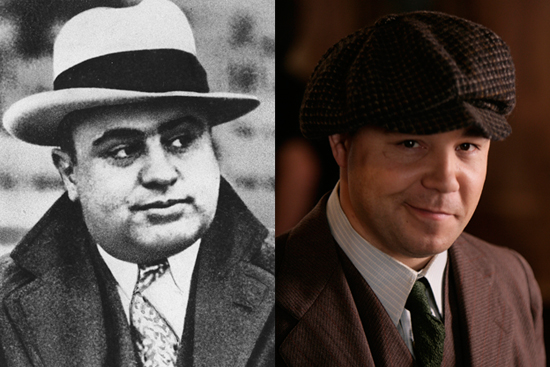
How real is “Boardwalk Empire’s” Al Capone?

HBO depicts the crime boss as a murderous, charming thug. An expert explains why he's the best portrayal yet

  • more
    • All Share Services

How real is Left: Chicago mobster Al Capone. Right: Stephen Graham as Al Capone in "Boardwalk Empire"

“Boardwalk Empire,” HBO’s stunning period drama, tells a tale that’s largely true. Some of the show’s characters are fictional, but many are based on real gangsters and politicians from the Prohibition era, the most recognizable being Al Capone.

Capone, played by English actor Stephen Graham, is introduced in the first episode, though for an epically violent gangster, he sure makes a casual entrance. Jimmy Darmody, the up-and-coming lackey of Atlantic City treasurer “Nucky” Thompson, strolls up to a short guy leaning against a dark car in the nighttime. They strike up a conversation about their time in the war. “What’s your name?” Darmody asks. “Al,” the short guy replies. “Al Capone.”

It’s a jarring moment. The series is about Prohibition-era Atlantic City, and Capone’s a Chicago guy. Yet the real-life Capone, just like the myriad characters in “Boardwalk Empire,” owes his ascendancy to Prohibition and the boundless profits of bootlegging, a national business that introduced a new sophistication to organized crime. Capone is the paradigm of the small-time gangster who made it big on illegal liquor. When Prohibition began in 1920, he was a small fish, just one of Johnny Torrio’s many employees. But by 1925, Torrio would retire and leave Capone in charge of the Chicago Outfit, a criminal empire built on Prohibition money.

Creator Terence Winter (of “Sopranos” fame) adapted the screenplay from Nelson Johnson’s book “Boardwalk Empire: The Birth, High Times, and Corruption of Atlantic City.” It argues that Prohibition created Atlantic City; it created rich mobsters and two-faced politicians and unpredictable criminal masterminds like Al Capone. As played by the rambunctious Graham, Capone is volatile and menacing; he bursts Darmody’s eardrum just for fun (and Darmody’s his friend — don’t ask what he does to snooping journalists). But we also see Capone as we’ve never seen him before: a jocular little guy who’s just trying to get his foot in the door.

Is HBO’s portrayal of the famed gangster accurate? To find out, we consulted Jonathan Eig, author of this year’s new biography “Get Capone: the True Story of Al Capone.” Eig spoke with us over the phone from his home in Chicago.

What’s your overall impression? Was Stephen Graham a good choice for the role?

He’s great. I think he’s maybe the best Capone I’ve ever seen. And that’s including De Niro, obviously. De Niro was over the top in “The Untouchables.” Stephen Graham looks like Capone a little bit, and he has the energy and the charisma. Most people don’t portray Capone as being charismatic or likable in any way, but Stephen Graham is fun and funny. He’s a little scary, too, but he’s funny on purpose sometimes, which was true of Capone. Capone was somebody you could actually pal around with if you’re on his good side, and all that comes across really nicely.

What did they get wrong?

My one complaint is that Stephen Graham is too short. He’s way too short. I really have a hard time with that. Graham does have a nice physical presence, and you get the impression that he can be tough. Certainly Graham’s Capone is capable of violence and acts out really savagely. But Capone was a big guy. Just him standing in the front door of the Four Deuces [the nightclub where "Boardwalk's" Capone works] was an intimidation, and I don’t get that with Stephen Graham.

How tall was Capone? IMDB lists Graham at 5-foot-5.

Capone was about 5-foot-10.

In the series premiere, Capone is part of a big shoot-out in the forest. Did anything like that really happen near Atlantic City?

That scene in the woods, as far as I can tell, was completely fictional. I don’t even think Capone went to Atlantic City at all during that point in his career, so they took artistic license with that. On the other hand, the murder of Jim Colosimo in the restaurant, at the very end of the first episode, they show the blood spilling out on the white tiles, and that part is accurate. It’s not proven, but there’s a very good chance that Frankie Yale killed Colosimo, and it went down just like they showed it. It’s great the way they mix real events and invented ones. This makes the invented events feel more authentic, and the series doesn’t make any claims of historical accuracy, so I have no problem with it at all. For the aficionados, it must be fun to see these real-life events portrayed so accurately, and then coupled with this are these entirely fictionalized events. To me that makes the story more compelling.

Capone is introduced in the show as being a driver. The year is 1920, and by the end of the episode Capone is seizing opportunities for power. Does the timing of this match up?

It’s pretty close. In 1920 Capone was nothing more than a driver, a bodyguard and a bouncer. I would guess he was still even washing dishes at that point. He was very low on the totem pole, but he was attached to the right guy, and that was Johnny Torrio. It’s clear that Capone was working for Torrio and had a great opportunity to make money along with Torrio, but it’s not clear if Capone really had ambitions to take over. “Boardwalk Empire” does a pretty good job of showing that Capone is not necessarily cut out to be the boss. He’s hot-headed, he’s immature, and he’s not exactly Machiavellian in his planning. Capone is flying by the seat of his pants, and you can make a good case, both in the show and in reality, that Capone wasn’t cut out for leadership. He gets to his position of power almost accidentally.

In “Boardwalk Empire,” Capone is involved in a lot of random acts of violence. Would he really have gotten away with this stuff so early on in his career?

He did get away with killing some people early in his career, in a rage. There’s good evidence of this, and it seems plausible, because he wasn’t on the public radar yet, so he could get away with these rage-fueled acts of violence. In 1920, and even by ’23 or ’24, he’s not really well known in Chicago, so he was able to commit crimes and then disappear back into the mist of the underworld.

Capone’s mentor, Johnny Torrio, is represented in the show as an aging guy who’s ready to let Capone take control. Is this accurate?

I don’t think they quite captured Torrio’s character. He was more sophisticated than the character in the show. He was more careful about his image. But that’s quibbling. Overall, they got him right. Torrio was the guy who needs to bump off Colosimo in order to take over in Chicago, and he’s torn between wanting to make peace with the other gangs and realizing that there’s enough money for everybody. Torrio was more of a pacifist than Capone. He was always trying to teach Capone to be a diplomat. But you don’t get the sense of Torrio as a mentor in the show.

In “Boardwalk Empire,” Capone bartends at a place called the Four Deuces in Chicago. Was that a real bar?

It was. They got the feel of the Four Deuces right. It had a brothel upstairs and drinking downstairs. In general, the show captures the bars and the brothels really nicely. There were a couple of things that weren’t correct in the Chicago scenes. [SPOILER ALERT] In Episode 6, they show Capone in an apartment with his wife and son and mother. His mother was not yet living in Chicago at that time, and they didn’t get his wife’s personality right at all, but it was still a neat scene.

Why are you so interested in Capone? Why is he the most famous of all gangsters?

In large part it’s because he loved publicity. The other gangsters, even the ones you see in the show, like Lucky Luciano and Arnold Rothstein, they didn’t embrace the celebrity, which seems obvious if you’re involved in all this illegal activity. You should probably keep quiet about it. But Capone couldn’t do it. He was a gabber. He was such a gregarious guy that when the reporters came around, he just wouldn’t shut up. So he became a celebrity, and he really believed he could get away with it. I love the scene in “Boardwalk Empire” when he gets his first fancy suit. You can see that he begins to think highly of himself. Only during Prohibition could somebody doing this work begin to think of themselves as being high-class and having a high profile. That’s really the key for Capone, and that’s why we’re so fascinated with him today. He wasn’t shy about his illegal activities. He bragged about them.

How do you think other biographers have misrepresented Capone? Why did you write your book?

I felt like the Capone story needed more context. He was becoming like a mythological figure. The movie image had taken over, and people really believed that he was De Niro, that he was this psychopath. People lost sight of the fact that he was created by Prohibition. He would have been nothing but a two-bit thug if not for Prohibition. I wanted to explain how he got to this position of power, and I wanted to put this within the context of the ’20s, and how the ’20s made people like Capone possible. “Boardwalk Empire” very quickly and precisely illustrated the effects of Prohibition, and that’s what I wanted to do with the book. That’s why I thought the Capone story was worth telling again. Prohibition completely changed the fabric of our country. You had these criminals who were base characters, horrible men, but they provided a service that even stand-up citizens were interested in. All the moral values got turned inside out, and that’s what made Prohibition so fascinating.

Continue Reading Close

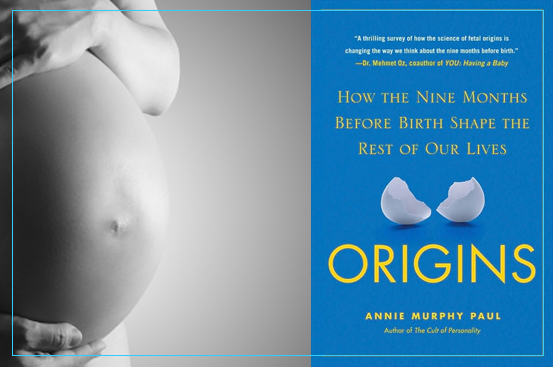
“Origins”: The explosive new science of pregnancy

From obesity to diabetes, how startling discoveries about the womb are changing the way we think about health

  • more
    • All Share Services

Type II diabetes, teenage obesity, chronic depression and heart disease: What do these ailments have in common? According to Annie Murphy Paul’s explosive new book, “Origins: How the Nine Months Before Birth Shape the Rest of Our Lives,” these conditions all originate, at least partially, in the womb.

We’ve all heard about thalidomide exposure and fetal alcohol syndrome, but in recent years, the burgeoning science of “fetal origins” has made some surprising discoveries about how conditions in the uterus can affect a grown person’s health.

Veteran science writer Murphy Paul offers compelling examples. Pregnant women who were close to the Twin Towers on 9/11 and developed post traumatic stress disorder, for example, gave birth to babies with low levels of cortisol, a hormone that regulates stress. Women who are depressed while pregnant are likelier to deliver premature babies with low birth weights. These scientific discoveries reinforce the notion that, while a person’s genetic code offers a template for development, the conditions in the womb fine-tune the expression of those genes. It is the perfect welding of nature and nurture.

Salon spoke to Murphy Paul from her home in Connecticut about the science of the womb — and the risk factors you probably didn’t know about.

Why is this research into fetal development so important?

The field of “fetal origins” investigates the consequences that our nine months of gestation have for infancy, childhood, adulthood and even old age. We get our DNA at the moment of conception, but the way our genes behave, the way they’re expressed, can still be influenced by the environment, and now we’re learning that this kind of epigenetic modification, as it’s known, happens most consequentially in the uterus.

The idea that people are shaped by experiences in the womb has a long history. It’s not a new or necessarily a radical idea. In fact, it’s an idea that has been shared in most cultures and most places and most times. It’s really the mid-20th century medical and scientific establishment that was the anomaly in thinking that the fetus was sealed in its placenta; that it was developing programmatically without input from the environment. And it turned out to be wrong in many ways. There’s value and wisdom in the notion that woman and fetus are engaged in an intimate, reciprocal relationship, and we forget that at our own peril.

Based on your research, what can a pregnant woman do to increase her likelihood of having a healthy child?

Eat a lot of fish, but make sure it’s low in mercury. Eat chocolate, because that is associated with the reduced risk of preeclampsia [hypertension and related problems during pregnancy]. Exercise, because that gives your fetus a workout as well. Maintain a moderate level of stress in your life, because that actually accelerates fetal brain development. But the bigger message is that there are a lot of things wrong with the way we think about pregnancy. When there’s a new scientific finding, people either freak out or dismiss the finding as a scare tactic for women. Both of these reactions are unsatisfactory. The first makes pregnancy a miserable experience, and the second overlooks the nuances of research.

What illnesses are most closely affected by fetal development?

We can make the strongest case for diabetes and obesity. When a diabetic woman has uncontrolled high blood sugar, it has been shown to raise the risk that her child will have high blood sugar and obesity and, potentially, diabetes. The Pima Indians in Arizona have the highest incidence of type II diabetes in the world, and for years it was believed to be entirely genetic. But recent research suggests the prenatal environment provided by a diabetic woman has a big role to play in promoting diabetes in her offspring. So if we can control the blood sugar level of the pregnant woman for nine months, we can give her children a better shot at a healthy life.

And the obesity epidemic relates not only to eating too much or to a sedentary lifestyle, but also to the pregnant woman’s weight when she goes into pregnancy, and how much weight she gains while pregnant. I talk in the book, though, about the danger of fetal determinism, which is the idea that whatever happened in the womb sets the course for the rest of your life. Prenatal influences can predispose us in one direction or another, but they are by no means determinative.

You wrote this book while you were pregnant with your second son. How did your research impact your pregnancy?

I deal with things that worry me by learning more about them. Learning about this research and putting it in context is better than the constant drip, drip, drip of negative messages, or the sensationalist messages that you get from newspaper headlines. People have this idea that prenatal influence is something frivolous, like playing music on your belly, but they are actually visceral and consequential. The fetus is responding and adapting to cues that it gathers from the mother: what she eats, drinks, the air she breathes, the world she lives in, all impact the fetus before birth. It’s easy to imagine how this might put more guilt and responsibility on pregnant women, who are already burdened with a lot of worry.

I want to make clear that while there are decisions a pregnant woman can make that will benefit her future children, we shouldn’t lay all the responsibility at her feet. So many of the conditions that affect a fetus, like air quality, water quality, food safety, natural disasters, or exposure to chemicals, are not things that any individual pregnant woman can rectify on her own. If we take this research seriously — and I think we should — we need to think about how, as a society, we’re going to create a sounder environment for developing fetuses. And I think an effort to do that would really pay off in terms of improved public health and well-being.

As you point out in the book, this research actually illuminates some of the health problems in the rapidly urbanizing developing world.

We think of obesity and heart disease in developing countries as being the result of a McDonald’s diet — which happens when individuals move from small villages to large cities and suddenly have access to a Western diet. But the reality is a lot more complicated. If a pregnant woman lives in a rural environment, and her children then move to an urban environment, she becomes an unreliable narrator. The gestational period had primed the child for a different world than the one he or she ends up living in, and this mismatch causes a lot of the health problems that we’re seeing today.

A lot of women feel a tremendous amount of pressure to carry on during their pregnancy like nothing has changed — to go to work for the same number of hours, and maintain all of their pre-pregnancy responsibilities. What’s the downside of being a “pregnant superwoman,” as you call it?

These pressures come from the social convention that you can show how well you’re handling pregnancy by not slowing down even a little bit. In the Victorian era, women were not supposed to exert themselves. They were told to rest, and even confine themselves to the home. Now we have conventions that in their own way are just as oppressive as the Victorian conventions.

We don’t allow for any accommodation to the changes — emotional and physical — that women experience during pregnancy. We need to rethink how we treat pregnant women, and pregnant women themselves need to take a look at whether current practices are serving them well. I want the emphasis always to be on offering help to pregnant women, but not coercing or forcing or requiring pregnant women to do anything. There’s been a tendency to think that because a woman is pregnant, she loses some rights as a citizen or as a thinking person who is an agent in her own life, and obviously that’s not at all the case.

Any talk about fetuses brings up the abortion issue. How do you think these new discoveries are going to impact the debate?

Fetal origins research includes material that might unsettle both sides. The pro-life side has at times viewed the pregnant woman as an incubator for the fetus. Fetal origins research is showing that the pregnant woman and the fetus are intimately intertwined. The woman is actively shaping and molding her fetus.

On the pro-choice side of the debate, the fetus is sometimes viewed as a blob of tissue, as an inert being. Fetal origins shows that the fetus is a dynamic creature that is responding and adapting to conditions within the mother’s body. The science of fetal origins doesn’t favor one side of the debate or the other, but there’s plenty to complicate the debate on both sides.

Continue Reading Close

Page 1 of 2 in Katherine Don