The plug is pulled on Circuit City
The big red-and-white box in the mall parking lot is empty. An electronics giant goes under.
By Mark Schone
Flickr/Ed Yourdon
In 1949, at the beginning of the television era, a guy from the Jersey Shore started a little electronics store in downtown Richmond, Va. Sixty years later, the recession, a questionable labor decision and the flat-screen TV teamed up to kill what had become the second largest consumer electronics chain in the United States.
By the time founder Sam Wurtzel died in 1986, Ward’s TV had morphed into Circuit City, a big-box retailer. In 1996, the Wurtzel family gave up day-to-day control of Circuit City, which had grown to 400 stores nationally and $7 billion in sales annually, and had launched a side business in used cars called CarMax. America was soon lousy with 20,000-square-foot superstores topped by a bright red-and-white logo. The stores became famous for ugly entranceways designed to look like giant electric plugs.
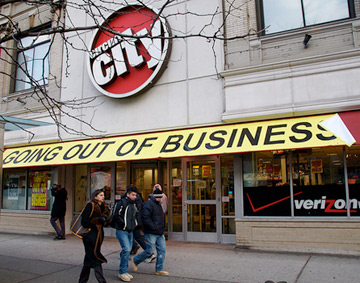
But in November of 2008, facing its third full year in the red, Circuit City filed for Chapter 11 bankruptcy. It began to close some of its 700 stores in 155 markets. On Jan. 15, unable to find a buyer or refinancing, the chain announced it was done. More than 34,000 people are already unemployed. The going-out-of-business sales will last through March.
What happened? Several years ago, the company opted to end sales commissions and lay off its most experienced, knowledgeable sales personnel. As sales of expensive flat-screen televisions boomed, Circuit City found itself using clueless clerks to sell big-ticket items to people who could just as easily take their business to the next box store down the street — Wal-Mart. Which they did. Research shows that 72 percent of Circuit City shoppers were also Wal-Mart shoppers.
Analysts gave Circuit City a chance to survive 2008 if the chain had a decent Christmas — which would depend, in part, on competitors like Wal-Mart showing mercy and not offering deep discounts on flat-screens. You know what happened instead. The chain will be missed by its newly pink-slipped employees and by strip-mall landlords, but maybe not by many others. A random survey of Salon staffers yielded no pleasant memories, only bitter tales of pushy salesmen, plug-ugly store design and dashboard-destroying car-stereo installation worthy of Civil War surgeons.
States of panic
There's fiscal chaos in capitals coast to coast and the stimulus didn't stop it. A tour of the mayhem, from the nearly bankrupt, like California, to the flush.
By Mark Schone
On Monday, during a White House meeting with the nation’s governors, President Obama told his listeners that the check was in the mail. Fifteen billion in Medicaid money from the stimulus bill was distributed beginning Wednesday. “That means,” he said, “that by the time most of you get home, money will be waiting to help 20 million vulnerable Americans in your states keep their healthcare coverage.”
Perhaps no part of Obama’s economic stimulus package is as important as the billions of dollars in aid it will provide to state governments. The National Governors Association said in December that state budgets have not looked so bad for 25 years. But the stimulus package will not plug all the holes. Most of the money that can be applied to state budget shortfalls is contained in the Medicaid and “Fiscal Stabilization Fund” portions of the package, which amount to $87 billion and $54 billion, respectively. According to a report released Friday by the Center on Budget and Policy Priorities (CBPP), projected state deficits over the next 30 months will total about $350 billion. “The amount of funding that will go to states to help them maintain current activities,” says the report, “is approximately $135 billion to $145 billion — or about 40 percent of projected state deficits.”
With sales tax revenues plunging in the recession, an earlier CBPP study had revealed that after the first half of fiscal year 2009, more than 40 states faced significant gaps between projected revenues and projected expenditures, with more than 30 states already projected to come up short in FY 2010 as well. Prior to the stimulus, most states were considering some combination of cuts to healthcare, public education, higher education and state payrolls. According to the CBPP, 32 states were cutting or planned to cut higher education, and 26 were weighing or had begun cuts to K-12 and early education. California, with a projected budget deficit of $42 billion, the largest of any state in history, had to force 200,000 state workers to take an unpaid day off and also shut down DMV offices two days each month. The federal money allows most states to forgo, delay or downsize deep cuts in healthcare spending and K-12 education (about $40 billion of the fiscal stabilization fund is for ongoing education costs), but in many cases there will still be furloughs for state employees, cuts to university budgets and higher taxes and fees. And that’s before the states raid their rainy-day funds.
How much pain remains? In the chart below, Salon groups the 50 states loosely by relative levels of distress, and then uses figures from the CBPP and the National Conference of State Legislatures to show the amount of red ink for each state and the amount of stimulus cash expected. Stimulus numbers are from the NCSL, and include estimates of the total amount of money the state will receive, and then the subtotals from the two categories of cash that can be applied most directly to state budgets: the Fiscal Stabilization Fund and Medicaid money. Except where noted by asterisk, shortfall numbers come from the CBPP; asterisked estimates for FY2010 come from various sources, including published remarks of state officials. CBPP calculated its shortfall numbers using data from state officials and state public policy centers. The FY2010 figures are projections, while each FY2009 figure incorporates the deficit with which the state began fiscal 2009 and any additional difference between spending and revenue that has occurred during the fiscal year. (These shortfall numbers may differ from other published estimates or projections of state deficits; those figures may be fresher and reflect further declines in revenue collection.)
Feeling the most pain
California
FY2009 shortfall: $35.9 billion
FY2010 shortfall: $25.9 billion
California’s projected budget deficit for 2010, which had ballooned in state estimates to $42 billion, was the worst in American history, and even a month ago it was estimated that stimulus funds would cover less than half of it. The just-signed budget deal cuts enrollment at the Cal State university system by 10,000, carves $400 million from the state’s famously massive corrections department, and hikes taxes $12.8 billion. Even the lieutenant governor has to fire half his staff. Before the deal, Gov. Arnold Schwarzenegger had already ordered work to stop on 275 public works projects, had furloughed 200,000 state employees and ordered some state agencies to shut two days a month.
Total projected stimulus funding to state: $26 billion
Fiscal Stabilization Fund: $4 billion
Medicaid funds: $11 billion
New York
FY2009 shortfall: $6.4 billion
FY2010 shortfall: $13.7 billion
The state has raised an additional $359 million in taxes and fees, including a 14 percent tuition hike at state universities and a higher state income tax on residents earning more than $250,000, as well as another $817 million in new revenue from other sources. But New York will still need to come up with more money before April 1 to close a gap for the next fiscal year that may be $14 billion. Cuts to retirement benefits for state employees may be necessary. Gov. David Paterson has warned that the stimulus will not be “a silver bullet,” and that the state must reform its healthcare system. He has hit back at a group that has bought ads criticizing him for anticipated cuts in healthcare. “The ads say this is the worst cut ever. Yes! Exactly!”
Total projected stimulus funding to state: $22.7 billion
Fiscal Stabilization Fund: $2.4 billion
Medicaid funds: $12.6 billion
New Jersey
FY2009 shortfall: $4.6 billion
FY2010 shortfall: $4 billion
On Monday, Gov. John Corzine said, “The stimulus package … will cover about half the challenges we have on a year-over-year basis.” Corzine has won approval to delay presentation of his proposed 2010 budget till March 10; he now says it will be 10 percent smaller than the 2009 budget. He has already ordered state workers to take unpaid furloughs in May and June, and proposed $500 million in new budget cuts the day President Obama signed the stimulus bill. The state Legislature is moving on a bill to allow municipalities to defer payment on as much as half of their pension obligations to public employees.
Total projected stimulus funding to state: $6.2 billion
Fiscal Stabilization Fund: $1 billion
Medicaid funds: $2.2 billion
Illinois
FY2009 shortfall: $8.0 billion
FY2010 shortfall: $9.0 billion*
Illinois has one of the worst budget deficits in the country. Before he was booted from office, ex-Gov. Rod Blagojevich laid off 450 state employees and closed more than 20 state parks and historic sites. The state is also extending the amount of time it takes to pay doctors and hospitals for Medicaid services. “We need more money,” said state Treasurer Alexi Giannoulias of the stimulus. “We could use a lot more assistance.”
Total projected stimulus funding to state: $8.9 billion
Fiscal Stabilization Fund: $1.6 billion
Medicaid funds: $2.9 billion
Ohio
FY2009 shortfall: $1.9 billion
FY2010 shortfall: $2 billion
The 35,000 members of the Ohio state employees’ union, the Ohio Civil Service Employees Association (OCSEA), will reportedly vote on a proposal to accept two-week furloughs in lieu of a simple pay cut. The furlough would amount to a pay cut of 3.85 percent; Gov. Ted Strickland would also take the furlough, and the de facto pay cut. Strickland has called any additional shortfall remaining post-stimulus “small and manageable.”
Total projected stimulus funding to state: $8.3 billion
Fiscal Stabilization Fund: $1.4 billion
Medicaid funds: $3 billion
Nevada
FY2009 shortfall: $1.4 billion
FY2010 shortfall: $1.1 billion
Tax revenues have plunged in Nevada and unemployment has surged above 9 percent. The state has nearly depleted its reserve fund, and stimulus funds will only cover about one-fifth of the state’s budget deficit. Gov. Jim Gibbons wants to slash the University of Nevada’s budget by $475 million. The proposed cuts are so deep that the chairman and vice-chairman of the Board of Regents wrote an opinion piece for the Las Vegas Sun saying that if passed, the cuts could mean the de-accreditation of the university, the demise of five of the state’s seven colleges, or the elimination of the state’s medical and dental schools. “The governor’s budget would, for all practical purposes, eliminate higher education in Nevada in any semblance of the form that we know now.”
Total projected stimulus funding to state: $1.4 billion
Fiscal Stabilization Fund: $316 million
Medicaid funds: $450 million
Oregon
FY2009 shortfall: $442 million
FY2010 shortfall: $3 billion through FY2011*
Oregon does not have significant reserve funds, so is vulnerable during economic downturns. Stimulus money will reduce cuts to Oregon’s education budget from $167 million to $116 million. Gov. Ted Kulongoski has warned that public schools may start summer vacation weeks early to close the state’s looming budget gap. About one-third of the state’s school districts will almost certainly have to cancel three or four school days before the end of this school year. Twenty districts have already dropped some days from their calendar after mid-fiscal-year budget cuts in December.
Total projected stimulus funding to state: $2.4 billion
Fiscal Stabilization Fund: $464 million
Medicaid funds: $830 million
Michigan
FY2009 shortfall: $672 million
FY2010 shortfall: $1.6 billion
With its rusting industrial economy, Michigan has had budget shortfalls every year since 2001. Gov. Jennifer Granholm, who will present her plan for discretionary spending in March, intends to use some stimulus funds to avoid planned cuts of $59 per pupil for public education and 3 percent to the higher education budget. But she may still need to make $670 million in cuts, lay off 1,500 government workers, and raise $230 million in new revenues.
Total projected stimulus funding to state: $7 billion
Fiscal Stabilization Fund: $1 billion
Medicaid funds: $2.2 billion
Connecticut
FY2009 shortfall: $1.9 billion
FY2010 shortfall: $4 billion
Connecticut’s popular M. Jodi Rell is among the blue-state GOP governors who have endorsed the stimulus. But Connecticut’s problems are dire, and Democrats in the state Legislature say the governor’s proposed budget, which does not include tax hikes, will not close the rest of the gap. And her budget is already draconian, cutting deeply into children’s healthcare, dental coverage for the poor and higher education. She is also asking state employees for $225 million in givebacks, proposing the elimination of 23 state agencies and hoping to entice 3,000 state employees, aged 55 or older, to retire.
Total projected stimulus funding to state: $2 billion
Fiscal Stabilization Fund: $615 million
Medicaid funds: $880 million
Arizona
FY2009 shortfall: $3.5 billion
FY2010 shortfall: $3 billion
State spending was already been reduced by a mid-year budget fix signed Jan. 31, but on Tuesday, Gov. Jan Brewer sent a memo to state agency heads asking them to identify more potential cuts of up to 20 percent in their departments. Already on the target list: Child Protective Services, Meals on Wheels and nurse training.
Total projected stimulus funding to state: $4.5 billion
Fiscal Stabilization Fund: $808 million
Medicaid funds: $1.9 billion
Rhode Island
FY2009 shortfall: $802 million
FY2010 shortfall: $450 million
The Rhode Island Legislature may make state cigarette taxes the highest in the country, at $3.46 per pack. Gov. Donald Carcieri has also suggested selling state land, delaying payment of a $10 million settlement in the fatal 2003 Great White fire at the Station nightclub in West Warwick and slashing funds to municipalities. With the stimulus on the way, the heavily Democratic state Legislature is pushing back against the Republican governor.
Total projected stimulus funding to state: $1 billion
Fiscal Stabilization Fund: $137 million
Medicaid funds: $470 million
Louisiana
FY2009 shortfall: $341 million
FY2010 shortfall: $2 billion
Louisiana lawmakers are apparently interested in the provision inserted by Rep. Jim Clyburn, D.-S.C., in the stimulus bill to allow state legislatures to tap into stimulus money even when the governor does not formally request it. Clyburn added the clause out of concern that his own state’s governor, Mark Sanford, would not request the stimulus funds; with Louisiana Gov. Bobby Jindal also expressing hesitance to access the money, members of the state Senate have been making inquiries about how the Clyburn provision works. Senate budget analyst Sherry Phillips-Hymel has said the stimulus will not cover the state’s expected shortfall for fiscal 2010, however, and budget cuts will be necessary. They will most likely fall on higher education and healthcare. Higher education cuts may go as high as $116 million, or 28 percent of the state university budget, which would mean the loss of 1,500 jobs. Jindal presents a budget on March 13.
Total projected stimulus funding to state: $3.8 billion
Fiscal Stabilization Fund: $587 million
Medicaid funds: $1.6 billion
Florida
FY2009 shortfall: $5.7 billion
FY2010 shortfall: $5.8 billion
The state Legislature meets March 3, and Charlie Crist, one of the Republican governors who welcomed the stimulus, thinks the stimulus will prevent tax increases. State services have been cut annually since 2007, and now the state housing market has been especially hard hit by the collapse of the housing bubble. Property tax receipts are falling and budget cuts are looming for public schools. (Florida is not eligible for stimulus money for education because of how it funds education.) But Crist is already at odds with his fellow Republicans in the state Legislature. He has vetoed their attempt to cut a program to buy Everglades land for conservation, and they have opposed his deal with the Seminole tribe for a casino operation that would mean at least $100 million in revenues annually for the state.
Total projected stimulus funding to state: $11 billion
Fiscal Stabilization Fund: $2 billion
Medicaid funds: $4 billion
Delaware
FY2009 shortfall: $443 million
FY2010 shortfall: $557 million
To make sure residents understand the state’s dire financial situation, Gov. Jack Markell has embarked upon a 61-stop budget woe “reality check” presentation series at locations throughout the state. The state’s own projected shortfall for fiscal 2010 is $606 million, and the budget must be balanced by June 30. Markell thinks the stimulus will cover $175 million of that, but for the rest he is targeting the payroll of the state workforce, with layoffs, furloughs and cuts in health benefits.
Total projected stimulus funding to state: $802 million
Fiscal Stabilization Fund: $109 million
Medicaid funds: $320 million
Vermont
FY2009 shortfall: $125 million
FY2010 shortfall: $253 million
Gov. James Douglas, another of the blue-state Republicans supporting the stimulus, has expressed resentment at the idea that the stimulus is a “handout.” “We’re doing the heavy lifting here,” Douglas said. In Vermont heavy lifting may mean laying off 660 state employees; state lawmakers have already rejected proposed cuts to V-Pharm, a program that supplies prescription drugs for the elderly. The state has closed three welcome centers for tourists, and plans to shut another.
Total projected stimulus funding to state: $700 million
Fiscal Stabilization Fund: $78 million
Medicaid funds: $280 million
Wisconsin
FY2009 shortfall: $1.2 billion
FY2010 shortfall: $2.9 billion
Hunting for more revenue, Gov. Jim Doyle has proposed taxing iTunes music purchases and ringtone downloads. He also plans to raise college tuition, but increase financial aid to compensate. “Without [the stimulus],” said Doyle, “we would have had to cut schools and healthcare by 10 percent, 15 percent or 20 percent. It would have been devastating for our kids to get a decent education. It would have led to the laying off of teachers, police officers and fire fighters and healthcare workers.”
Total projected stimulus funding to state: $3.8 billion
Fiscal Stabilization Fund: $722 million
Medicaid funds: $1.2 billion
Feeling somewhat less pain
Georgia
FY2009 shortfall: $2.4 billion
FY2010 shortfall: $1.6 billion
Georgia Gov. Sonny Perdue has joined the chorus of Southern Republicans saying they may decline some stimulus money. Among expected cuts: funds to clean up two toxic sites. The state has already cut $19 million from Meals on Wheels and adult daycare.
Total projected stimulus funding to state: $5 billion
Fiscal Stabilization Fund: $1 billion
Medicaid funds: $1 billion
Utah
FY2009 shortfall: $620 million
FY2010 shortfall: $721 million
Gov. Jon Huntsman, who has defended the stimulus and slapped fellow Republicans for “gratuitous political griping,” already has 17,000 state employees working four-day weeks. He is weighing tax increases. In mid-February Utah lawmakers learned that revenue collection had fallen another $235 million short of projections.
Total projected stimulus funding to state: $1.4 billion
Fiscal Stabilization Fund: $383 million
Medicaid funds: $320 million
Washington
FY2009 shortfall: $509 million
FY2010 shortfall: $2.8 billion
Washington’s shortfall may imperil a recently passed voter initiative that mandated smaller K-12 class sizes, but didn’t specify a funding source. Even with more than $2 billion in stimulus funds projected to end up in the state, Gov. Christine Gregoire recently said that falling tax collections mean the money won’t help that much with the state’s bad budget picture.
Total projected stimulus funding to state: $4.7 billion
Fiscal Stabilization Fund: $817 million
Medicaid funds: $2 billion
Maryland
FY2009 shortfall: $1.5 billion
FY2010 shortfall: $1.9 billion
Because of the stimulus, Gov. Martin O’Malley was able to cancel plans to lay off 700 state workers and plug holes in the public education budget. However, the state’s public defender is still targeted for devastating cuts, and the state correction department will lose 400 jobs.
Total projected stimulus funding to state: $4 billion
Fiscal Stabilization Fund: $723 million
Medicaid funds: $1.6 billion
Virginia
FY2009 shortfall: $2.3 billion
FY2010 shortfall: $1.8 billion
State revenues have taken their biggest plunge in history. The stimulus will stave off some cuts to public education, but may not save 13,000 non-teaching school support jobs. About $150 million to clean up the Chesapeake Bay may also evaporate. “We’re all going to swallow some toads,” said one member of the state Legislature.
Total projected stimulus funding to state: $4.5 billion
Fiscal Stabilization Fund: $985 million
Medicaid funds: $1.4 billion
North Carolina
FY2009 shortfall: $2 billion
FY2010 shortfall: $3.3 billion
About $3.7 billion of North Carolina’s federal stimulus money can go toward its state budget from now through the middle of 2011. New Gov. Beverly Perdue will present her first state budget in March; she will have to defer her campaign pledge to make community colleges free to everyone in North Carolina. She is expected to ask for cuts of 4.5 percent in public education and 7.5 percent in higher education and the Department of Health and Human Services.
Total projected stimulus funding to state: $6 billion
Fiscal Stabilization Fund: $1.1 billion
Medicaid funds: $2.3 billion
Massachusetts
FY2009 shortfall: $3.6 billion
FY2010 shortfall: $3.1 billion
Gov. Deval Patrick warned last week that the stimulus would not forestall state budget cuts. There may still be large cuts to education at all levels. More than 400 teachers may be dropped from the Boston school system payroll, and the University of Massachusetts is bracing for cuts.
Total projected stimulus funding to state: $6.1 billion
Fiscal Stabilization Fund: $817 million
Medicaid funds: $3 billion
Iowa
FY2009 shortfall: $484 million
FY2010 shortfall: $779 million
Gov. Chet Culver brought in a 1.5 percent across-the-board cut plus $40 million in targeted reductions to balance the FY 2009 budget. For 2010, he’s proposed a 6.5 percent decrease that will affect 205 of 280 state programs, with about $400 million saved. Hundreds of Iowa State University employees are taking voluntary unpaid furloughs to save the university money. “The federal stimulus bill will not be an excuse to ignore the need to reduce state spending,” said Culver. The stimulus may, however, moot plans to raise the gas tax.
Total projected stimulus funding to state: $1.9 billion
Fiscal Stabilization Fund: $388 million
Medicaid funds: $550 million
Tennessee
FY2009 shortfall: $1.4 billion
FY2010 shortfall: $712 million
Tennessee Gov. Phil Bredesen had been planning to cut $900 million from the state budget, but about $500 million from the stimulus can be applied to the budget shortfall. Bredesen says some layoffs of state employees are still likely, but not the 2,300 that had been discussed.
Total projected stimulus funding to state: $4.3 billion
Fiscal Stabilization Fund: $771 million
Medicaid funds: $1.6 billion
Kansas
FY2009 shortfall: $185 million
FY2010 shortfall: $1.15 billion
Democratic Gov. Kathleen Sebelius and the Republican state Legislature attracted national attention last week with their budget standoff, which delayed state paychecks and tax refunds. When it ended, Sebelius had agreed to $300 million in budget cuts and the Legislature had agreed to borrow money from itself. “She blinked,” said Republican Senate Majority Leader Derek Schmidt. The Legislature, which did not want to factor stimulus funds into the budget, also voted to slash school funding by $32 million, but Sebelius reduced that number by line-item veto to $7 million. Still, school closings may loom.
Total projected stimulus funding to state: $1.7 billion
Fiscal Stabilization Fund: $367 million
Medicaid funds: $450 million
Minnesota
FY2009 shortfall: $1.4 billion
FY2010 shortfall: $2.5 billion
Though public defenders represent 80 to 90 percent of Minnesotans who appear in court, the state has laid off 53, and may fire 50 more. That puts the state back 150,000 hours of legal services. Gov. Tim Pawlenty had also recommended a $300 million cut to higher education, but that may be made moot by the stimulus. Pawlenty had been among those Republicans saying he had problems with the stimulus, but has now indicated he will accept the money, given that Minnesota usually sends more money to Washington than it gets back. Pawlenty will make new budget recommendations in March.
Total projected stimulus funding to state: $4.3 billion
Fiscal Stabilization Fund: $671 million
Medicaid funds: $2 billion
Hawaii
FY2009 shortfall: $232 million
FY2010 shortfall: $680 million
State legislators look likely to defund a cancer institute at the University of Hawaii, which was relying on incoming cigarette taxes.The budget picture is bad enough that lawmakers are considering a bill that would cut off all insurance benefits for state employees retiring after July 1, regardless of how long they’ve worked for the state. The stimulus will, however, stave off budget cuts in education.
Total projected stimulus funding to state: $969 million
Fiscal Stabilization Fund $159 million
Medicaid funds: $360 million
Idaho
FY2009 shortfall: $131 million
FY2010 shortfall: $411 million
Idaho’s unemployment rate has jumped by 137 percent during the past year. Though Gov. Butch Otter was among the more outspoken critics of the stimulus, he was happy to take the money to increase unemployment benefits by $25 per week. But the state will still most likely cut education funding by 6.3 percent.
Total projected stimulus funding to state: $1 billion
Fiscal Stabilization Fund: $198 million
Medicaid funds: $300 million
Mississippi
FY2009 shortfall: $265 million
FY2010 shortfall: $87 million
Gov. Haley Barbour has ordered $200 million in overall state budget cuts since November, or about 4.8 percent from most state agencies, including $38 million from education. With Mark Sanford of South Carolina and his neighbor Bobby Jindal in Louisiana, he has been vocal in his skepticism about the stimulus package, particularly about anything that would expand unemployment entitlements. He will not be turning down the bulk of the stimulus package, however, and he is also willing to call on up to $90 million from the state’s rainy-day reserve to cover shortfalls in fiscal 2010. The state is likely to close, or lease out, a Gulf Coast facility for mentally ill children.
Total projected stimulus funding to state: $2.3 billion
Fiscal Stabilization Fund: $396 million
Medicaid funds: $790 million
South Carolina
FY2009 shortfall: $1.1 billion
FY2010 shortfall: $535 million
South Carolina has plunging revenues and unemployment of nearly 10 percent, third highest in the nation, with projections that it will hit 14 percent by the middle of the year. Yet Gov. Mark Sanford has been the leader of the GOP refuseniks who say they don’t want Obama’s stimulus money. The state Legislature already plans to take the money, and has restored pre-stimulus cuts to public education. Among Sanford’s proposals for paying the state’s bills: closing three public university campuses.
Total projected stimulus funding to state: $2.8 billion
Fiscal Stabilization Fund: $562 million
Medicaid funds: $860 million
Alabama
FY2009 shortfall: $1.8 billion
FY2010 shortfall: Not yet available
Though Gov. Bob Riley made some of the same disapproving noises as his fellow Southern Republicans about the stimulus, he is taking the money because he needs it. The state budget he will present later this year will not include the education cuts it might have without the stimulus (education funding had already been slashed 12.5 percent in December). He expects to cut $400 million from non-education agencies and then get much of that money back from the stimulus in Medicaid money.
Total projected stimulus funding to state: $3 billion
Fiscal Stabilization Fund: $597 million
Medicaid funds: $850 million
Texas
FY2009 shortfall: None
FY2010 shortfall: $3.5 billion
Texas is one of the few states with a budget surplus. About 4 percent of state revenue comes from taxes associated with oil and gas production, and high gas prices in 2008 meant money for the state government. The coming fiscal year doesn’t look as bright. Gov. Rick Perry, who will be running for reelection in 2010, has been a leading opponent of the Obama stimulus plan, even going so far as to create a Web site called NoGovernmentBailouts.com. But he will undoubtedly take the money, and if projections are right, the stimulus will cover the projected shortfall for 2010.
Total projected stimulus funding to state: $16.2 billion
Fiscal Stabilization Fund: $3.1 billion
Medicaid funds: $5.4 billion
New Hampshire
FY2009 shortfall: $250 million
FY2010 shortfall: $500 million*
Gov. John Lynch has proposed closing eight of New Hampshire’s 33 district courts because of a shortage of money, laying off 300 state employees, closing a prison and 16 state liquor stores and raising a number of state fees, like tolls and the cigarette tax.
Total projected stimulus funding to state: $865 million
Fiscal Stabilization Fund: $166 million
Medicaid funds: $250 million
Pennsylvania
FY2009 shortfall: $2.3 billion
FY2010 shortfall: NA
Gov. Ed Rendell wants to merge the state’s 500 school districts into just 100 and legalize video poker. He has also proposed closing down the Scranton School for the Deaf, eliminating state funding for a new medical school in Scranton and slashing money to historical organizations and museums. While the recovery package won’t fix all of Pennsylvania’s problems, Gov. Rendell said the estimated $5 billion the state could get would save 1,500 state workers’ jobs.
Total projected stimulus funding to state: $9.8 billion
Fiscal Stabilization Fund: $1.5 billion
Medicaid funds: $4 billion
Kentucky
FY2009 shortfall: $722 million
FY2010 shortfall: NA
Gov. Steve Beshear signed a bill on Feb. 14 to raise taxes on cigarettes and alcohol. The money is meant to balance the budget without making further cuts in education and healthcare. But he also had to raid the state’s rainy-day fund to the tune of $219 million, nearly emptying it, for what he acknowledges is a short-term fix. There will be another shortfall in fiscal 2010, of as-yet undetermined size, and State Budget Director Mary Lassiter acknowledges that the stimulus will not erase it.
Total projected stimulus funding to state: $3 billion
Fiscal Stabilization Fund: $535 million
Medicaid funds: $1 billion
Maine
FY2009 shortfall: $265 million
FY2010 shortfall: $177 million
Because of the stimulus, Gov. John Baldacci was able to ask the education commissioner to reverse public education funding cuts from November. Other cuts proposed pre-stimulus: laying off state employees, trimming state tax rebates, and shipping state prison inmates to privately run prisons.
Total projected stimulus funding to state: $1.1 billion
Fiscal Stabilization Fund: $160 million
Medicaid funds: $470 million
Indiana
FY2009 shortfall: $1.1 billion
FY2010 shortfall: NA
The Democratic-controlled state House passed a budget increasing education spending, and is facing a showdown with the Republican Senate and Gov. Mitch Daniels, who are pushing to spend the money on prison construction. The Senate is likely to make budget cuts; Daniels had proposed cutting university funding by 4 percent. The Democrats claim their bill, which takes the stimulus into account, will only drain $100 million from the state’s $1.3 billion in reserve funds and $100 million from a tuition fund. They must reach an agreement by April 29.
Total projected stimulus funding to state: $4.3 billion
Fiscal Stabilization Fund: $826 million
Medicaid funds: $1.4 billion
Missouri
FY2009 shortfall: $342 million
FY2010 shortfall: $500 million*
The Republican speaker of the Missouri House, Ron Richard, suggested that his state not take stimulus money. “Just send it on back,” he said earlier this month. Gov. Jay Nixon, a Democrat, wants to use $800 million from the stimulus to balance the state budget for fiscal 2010, and to avoid the sorts of cuts he mentioned in his state of the state speech in January, which included laying off more than 1,300 state employees. He has also launched a Transform Missouri Initiative for spending the stimulus dollars in ways that will maximize job creation.
Total projected stimulus funding to state: $4.3 billion
Fiscal Stabilization Fund: $756 million
Medicaid funds: $1.6 billion
New Mexico
FY2009 shortfall: $454 million
FY2010 shortfall: NA
New Mexico lawmakers are starting to question the repeated state income tax cuts that were passed in recent years. The state gets significant money from oil and gas extraction, but that stream is now at its lowest level in a decade. New Mexico is also one of several states taking a surprising approach to its budget shortfall: the Legislature and governor are considering abolishing the death penalty as a cost-cutting measure.
Total projected stimulus funding to state: $1.6 billion
Fiscal Stabilization Fund: $260 million
Medicaid funds: $630 million
Colorado
FY 2009 shortfall: $604 million
FY 2010 shortfall: $386 million
Colorado exempts seniors and disabled veterans from property taxes. For the next three years, though, it looks like the exemption will be suspended. Colorado was 49th per capita in amount of stimulus funds received, but appears to be in relatively good shape compared to other states.
Total projected stimulus funding to state: $2 billion
Fiscal Stabilization Fund: $615 million
Medicaid funds: $880 million
Not feeling much pain — yet
Alaska
FY2009 shortfall: $360 million
FY2010 shortfall: $3 billion*
Gov. Sarah Palin recently had to drop nearly $500 million from the state budget because of falling oil revenues, but the state still has billions squirreled away. Palin has been among those Republican governors who have expressed fears that the stimulus will commit states to expanding some programs permanently. The Anchorage Daily News accused Palin of “hyping a hypothetical problem to burnish her conservative national credentials. She governs a state where one-third of the entire economy depends on federal spending. This year’s state budget is already bolstered with $2.6 billion of federal money.” State estimates of the budget shortfall for fiscal 2009 now exceed $1 billion, and there are some fears it could reach $3 billion in 2010. Alaska rises and falls on oil revenues — but mostly rises, since the state is able to send its own oil-derived stimulus check to state residents each October. Last year’s payment was $2,069 per resident, a record, and was supplemented by a “resource rebate” from surplus oil revenue of $1,200, for a total of $3,269.
Total projected stimulus funding to state: $783 million
Fiscal Stabilization Fund: $94 million
Medicaid funds: $220 million
Arkansas
FY2009 shortfall: $107 million
FY2010 shortfall: $146 million
Compared to most other states, Arkansas is fiscally comfortable. Gov. Mike Beebe did not propose any cuts for his budget for the 2010 fiscal year, but was frugal on spending. The budget offered no new money for teacher health insurance, school transportation, Medicaid and prison beds. His concern now is whether Arkansas will be allowed to spend federal stimulus money on education, given that the state has not made education cuts. “We still have needs. We could spend more on highways. We could spend more on bridges.”
Total projected stimulus funding to state: $2 billion
Fiscal Stabilization Fund: $363 million
Medicaid funds: $730 million
Montana
FY2009 shortfall: None
FY2010 shortfall: None
Thanks to revenues from commodities — oil, gas, agriculture, minerals, etc. — Montana began 2009 with the largest budget surplus in state history, around $1 billion. Legislators are fighting over whether to expand children’s healthcare by $35 million, or just $10 million.
Total projected stimulus funding to state: $799 million
Fiscal Stabilization Fund: $122 million
Medicaid funds: $180 million
Nebraska
FY2009 shortfall: None
FY2010 shortfall: $152 million
For now, Nebraska has avoided the budget free-for-all many other states are experiencing. Gov. Dave Heineman has even proposed boosting education funding by $100 million in 2009. However, the state’s tax revenues were down 8 percent in January, and pension funds for state teachers have taken a beating in the stock market. Heineman says the state will see more effects of the downturn in the next six months.
Total projected stimulus funding to state: $1.2 billion
Fiscal Stabilization Fund: $234 million
Medicaid funds: $310 million
North Dakota
FY2009 shortfall: None
Oil and agriculture taxes are keeping North Dakota afloat, and Gov. John Hoeven expects to end the current two-year budget period with a $64 million surplus. Recently revised projections for the 2009-2011 budget also give the state significant reserves. The state is even thinking about tax cuts.
Total projected stimulus funding to state: $609 million
Fiscal Stabilization Fund: $86 million
Medicaid funds: $110 million
Wyoming
FY2009 shortfall: None
FY2010 shortfall: None
Even mineral-rich Wyoming has had to revise its 2009 surplus, once
projected at approximately $900 million, to just under $260 million (and it may go lower). The state is currently weighing whether to use some extra cash to cut property taxes, or restore the state Capitol building. It is thinking about using $100 million from its “Permanent Mineral Trust Fund” to balance the budget.
Total projected stimulus funding to state: $538 million
Fiscal Stabilization Fund: $67 million
Medicaid funds: $110 million
West Virginia
FY2009 shortfall: None.
FY2010 shortfall: None
The state budget has been buoyed by taxes on coal mining, but those revenues are starting to slip. West Virginia’s slight budget surplus is now dwindling. Still, the state does not yet expect a shortfall for fiscal 2010.
Total projected stimulus funding to state: $1.4 billion
Fiscal Stabilization Fund: $220 million
Medicaid funds: $450 million
Oklahoma
FY2009 shortfall: $114 million
FY2010 shortfall: $310 million
Gov. Brad Henry is still figuring out his budget, but his current big idea is a 10 percent cut in energy consumption by all state agencies. Henry, a Democrat, has expressed some concern about taking the unemployment benefit money in the stimulus package for fear of increasing state obligations to the unemployed in the long term.
Total projected stimulus funding to state: $2.7 billion
Fiscal Stabilization Fund: $473 million
Medicaid funds: $960 million
South Dakota
FY2009 shortfall: $27 million
FY2010 shortfall: $32 million
On the chopping block for Gov. Mike Rounds are the South Dakota Arts Council and funds for the state fair — a sacred, 123-year-old institution in an agricultural state. Lawmakers may raise taxes to fund both.
Total projected stimulus funding to state: $662 million
Fiscal Stabilization Fund to state: $104 million
Medicaid funds to state: $120 million
Research by Lillian Bixler, Christopher M. Matthews, Vincent Rossmeier, Benjamin Travers, Gabriel Winant
Watching Republicans grieve
Filmmaker Alexandra Pelosi journeyed into the heart of the GOP for her new HBO documentary. She discusses what she found there: Denial, depression and a whole lot of anger.
By Mark Schone
When Alexandra Pelosi made the Emmy-winning documentary “Journeys With George” in 2000, about her 18 months on the campaign trail with soon-to-be-President George W. Bush, her mother, Nancy, was not yet speaker of the House, and the name “Pelosi” was not yet an epithet on the lips of Republicans.
Eight years later, Pelosi went back out on the GOP campaign trail and into the lion’s den, in the waning days of John McCain’s failed bid for the White House. In her latest film, “Right America: Feeling Wronged,” which debuts on HBO Monday night, Pelosi attends McCain and Sarah Palin rallies in 28 states and puts her microphone in the faces of some very passionate conservatives. As defeat looms, she watches the Republican base go through a very public grieving process, with most of the stages that psychiatrist Elisabeth Kübler-Ross described — denial, depression and a whole lot of anger — but not very much acceptance. Salon spoke to Pelosi by phone.
Early in the film Sean Hannity points to you in front of a McCain crowd and says, “That’s Nancy Pelosi’s daughter.” And you respond, “You’re going to get me lynched.” Did you ever feel endangered or like there was any personal animus toward you during the making of this film?
Well, of course there was. But I’m trying to focus on the friends that I made in the red states instead of focusing on all the unchristian experiences that I had while traveling across America. It’s easy to go out and make enemies. I think all the cable news programs go with the intention of stirring the pot. I was really genuinely trying to get to know some of the Republican base.
Thousands and thousands, hundreds of thousands of people showed up to see the McCain-Palin ticket. Maybe a dozen people humiliated me — you know, embarrassed me and made me feel really unwanted. I don’t want to paint the whole lot of the Republican base as mean-spirited and cruel and unfriendly. To me it’s more interesting to focus on the real Christian conservatives who didn’t agree with anything I had to say but invited me over for dinner so that we could talk about it.
Did you go out there with the expectation that the polls were probably right and the candidate whose supporters you were interviewing was probably going to lose?
Well, more than 58 million people voted for John McCain, and I know that everyone on the coasts is on an Obama honeymoon right now, and they seem to forget that more than 58 million people did not want Barack Obama to be their president. And when I was traveling over the summer and I would go to rallies and 20,000 people would be there, it’s hard to say I knew Obama was going to win. They had some real enthusiasm at these events for the GOP ticket. So, I did not go out presupposing that Barack Obama was going to be president. I wasn’t trying to make a point about, “Ooh, he’s going to be president and here are the losers, let’s go check out what they have to say.”
They had huge crowds, and I felt they were really underrepresented in the media. I didn’t feel like I saw these people on TV. And when I went out to talk to people, the first thing they would say to me was, “I can’t believe you’re talking to me.” They were so flattered that I wanted to hear what they had to say because they’d say, “The media doesn’t listen to us. You turn on the TV and all you see is Obama nation and you don’t see us.” They had some points. My liberal friends, I have to remind them that they have some really good points. No. 1, the media did not fairly represent them in this election. Obama was on the cover of every magazine all summer long. I understand Obama sold magazines. It’s a business. But when you’ve got a presidential election and you have half of the country feeling really underrepresented, I think that’s a real problem. And I think that’s a bigger problem than Obama versus McCain.
There was this guy in Fort Wayne, Ind., Fred Boise, who says, “The media paints us to be fanatics. They treat us like hicks and we just go to Wal-Mart and we’re rednecks. And they don’t come to get to know us, and they go on stereotypes.” I think all of that is true. Of course there were a lot of clichés that I had to overcome when I got there. “Hi, I’m from New York and my last name is Pelosi,” and obviously that was like funny to them in a weird way. Like, “What are you doing here?”
You met so many people. Were there interviewees who have given you feedback after the election? What are they saying?
They’re really unhappy that Obama won. And they’re really having a hard time dealing with this whole economic stimulus package. They’re totally opposed to that kind of government. I talked to people who had bad holidays, who had a hard time getting through the inauguration, are disappointed in their country, are sad about the direction this country is going. And it’s not getting better, it’s getting worse. They’re looking at this, “We’re all socialists now,” and they’re not laughing. The Newsweek cover, “We’re all Socialists Now”, I got like literally a dozen calls the day that Newsweek came out. I don’t know what Newsweek’s intentions were, but that is terrifying to a lot of people.
I remember Elaine Tornero in Reynoldsburg, Ohio: She called me and said, “I drive through downtown Columbus, Ohio, and I see these iconic, artistic images of Barack Obama with the word ‘Hope’ under it, and I feel like I’m living in Castro’s Cuba.” I live in Union Square in Manhattan, and I walk out my front door and there are just lines of buttons, lines of T-shirt salesmen selling these artistic images of Barack Obama. I’ve been to Cuba. That’s exactly what it looks like. There are some things that they see that make them uncomfortable. And I think we have to respect that and understand that. Not say, “Oh, they’re just extremists. Oh, they’re just freaks. Oh, they’re just racists.” They’re not. They just don’t agree with us on, like, moral and cultural and political issues. They don’t agree with us on anything, really.
At one point, you’re talking to someone who describes Obama as the antichrist, and you say to him, “Do you want to maybe rethink that? Because I’m going to be accused, when this is on TV, of just looking for the craziest guy in the room.” And he ponders it and says, “No.” He’s OK with saying it. How often did you have that kind of conversation with somebody?
Every day. It was much more common than you’d think. In the heat of an election, people say some crazy things. And in the case of the gentleman you’re talking about, I have talked to him since then and this is just the way he sees it. I heard that every single day. It was much more common than you’d think. And I think that a lot of them were mimicking things they heard on right-wing radio.
What I mean is, how often do you have a conversation where you said to somebody, “OK, do you know how this is going to sound? Do you want to dial that back?”
Right. I’m not naive. I know that I’m going to be criticized for picking people who say some extreme things. If you take the guy that says Obama is the antichrist and use him as a sample of the movie, you have to take one of the 20 other people who say very reasonable things. You have to take the woman who says we’re angry because — “The economy. I went home and cried last night because I just lost my 401K.” There are lots of normal people in this movie. I sat in the edit room for a very long time. I was very fair in terms of the ratio of how many people I interviewed that said Obama is the antichrist — put that in once. “He reminds me of Hitler” — put that in once. I heard that every day at every rally. That doesn’t mean that everybody who showed up at that rally felt that way, but just people on the camera. Remember, who’s going to talk to a camera? These are going to be certain kinds of people.
I mean, my brother-in-law, my next-door neighbor, my mom’s college roommate: These are Republicans who voted for McCain, who didn’t think that Obama is the antichrist, but of course they don’t want to be on camera, because they don’t want to be speaking for the Republican Party. I think it’s really irresponsible to focus on the few crazies that appear in the movie as opposed to the tons of really sane, normal people that appear in the movie.
You tried hard to give a representative sample of these folks, but you do get an impression of this kind of wave of raw id from the movie. Fear, anger, despair and tears on more than one occasion. You ask a woman, “What do McCain voters have in common?” and she answers, “We all hate the same things.” So, is this just a function of the tribalism of politics?
I think campaign rallies bring out a certain kind of person. You have to be able to take a day off work. You have to be able to go out, stand out there for a very long time in line, wait in line with thousands of other people.
Well how about comparing this to a couple of the other movies that you’ve done, in terms of what the atmosphere was like among the party base. Like in 2000, are the Republicans of 2008 like the Republicans in 2000, when you were doing “Journeys with George“?
That’s a great question. I think that the blogs have poisoned the political atmosphere in such a way that I never saw this kind of anger and hatred in 2000. In 2008, I was impressed by how angry it got. But you know elections have gotten nasty. I do think that blogs have really given people a place to, I don’t know, maybe it’s therapeutic for them. But it’s really gotten them fired up in a way. They talk to each other online and then they get worked up and then they go meet each other at rallies. And I just feel like the Internet has really changed the climate at the political rallies. Because I remember the Bush rallies as being fun. But you know, a lot’s happened. 9/11 and all that poisoning the well. The whole partisan Bush years and the war poisoned the well. A lot of other things contributed. You can’t just blame the blogs.
I was hoping my film was going to be an artifact of a moment in time. There is a lot of talk about change. Even John McCain was talking about change. But change is always going to be harder for some than for others. And there’s always going to be those who are not ready. And you see people in my film saying, “I’m not ready. Hey, I’m a redneck, I’m proud of it, I’m more backwards than the rest of you, and I’m just not ready. Not ready for a black president, not ready for change, I’m just not ready.” In four years, in eight years, you may look back at this, and it may be something totally new. Like a Jewish president or a gay president or who knows? And this will all seem like nothing. I’m not giving an infomercial for Barack Obama’s change. I’m just saying that this will be interesting in the future to see people who just weren’t ready for this. They may be wrong, but they may be right.
I know you tried to talk about your respect for people’s passion among the Republican base, but there are also assertions of fact made in the movie that are demonstrably false. And there’s always that journalistic question of, Do you just let somebody talk, or do you try to interject a correction? So when you hear somebody say, “Barack Obama is a Muslim” for the first time, what do you say? What do you say the 10th time? What do you say the 100th time?
It’s a very good question. The handicap that I had was my last name was a stump speech, red-meat applause line. So if I ever stepped in to set the record straight they would have thought I was just there to get votes for Barack Obama. So I let them say what they wanted to say, and then I would ask, “Where did you hear that?” Because that, to me, is what’s interesting about this. And of course they would point to Bill O’Reilly. They would point to this one moment on George Stephanopolous where Obama made a mistake and he said, “my Muslim faith,” and of course the Internet just spread it like wildfire.
For me, it wasn’t so much the Muslim thing, it was the socialist thing. Respectfully, I wanted to say to them, I live on Fifth Avenue in Manhattan. I am on the winning side of capitalism. I work for HBO, corporate America. The Man has been good to me. You, on the other hand, are driving a truck that says, “Obama is a socialist idiot,” and you’re in a much lower tax bracket than most of the people in Manhattan that are voting for Obama. So the times I would actually get into it would be like, “OK, explain to me why you think he’s an idiot. He’s trying to give you a tax cut. You understand you’re voting against your own self-interest?”
The one moment where you sounded even the tiniest bit irked was when you were talking to a guy in a truck and you say, “Obama wants to take from the 1 percent and give to a guy like you.”
Those are the kinds of conversations I found hard to stomach. That gentleman was screaming, “Wake up America!” and on the side of his truck it said, “Obama is a socialist idiot,” and I just didn’t understand how he could be so misinformed. He was an electrician. He made less than $150,000 a year. And he was toeing the party line of a party that was not helping him. There were a lot of people who didn’t know what socialism was, and this is tricky, because you don’t want to make them all look like, “Oh, he didn’t know what socialism was.” This isn’t a Jay Leno episode. You’re not trying to point out that 90 percent of the people at the rallies don’t know what socialism is.
I can defend why I am for raising my own taxes. Can you defend why you’re against getting a tax cut? And you know, some people could, and many people couldn’t because they didn’t really realize, they hadn’t read all the tax plan stuff and they just didn’t believe. And then when you’d explain it to them, they would say, “I don’t believe Barack Obama. He’s just a liar. He’s telling people what they want to hear.” So that’s the other wrinkle: They don’t believe him. Even if you say, “Obama isn’t a Muslim,” they’d say, “I don’t believe him.”
You’ve spent a lot of time over the years now sort of parachuting into this other culture and trying to have a conversation with people. You were with the W. crowds in 2000 and then you followed Democratic candidates in 2004, and I just wondered to what degree these felt like mutually exclusive realities to you?
They do feel like more and more like insulated little bubbles. And even from campaign to campaign: The Hillary campaign was a bubble, and the Obama campaign was a bubble. They were slinging their arrows back and forth into each other’s bubbles. I do think that the Internet has really soiled a lot of the conversation. It’s a combination of that and the cable news shows. If you’re a liberal, you can watch MSNBC. If you’re a conservative, you can watch FOX News. What about the rest of us that just feel sort of like, “Hey, just tell me what happened today without your crazy liberal or crazy conservative slant”? Most people, real people, are somewhere in-between. Most people don’t actually even go to campaign rallies for either side. Where are the purple people in the middle of it all, just trying to make sense of who’s telling the truth and who’s spinning propaganda?
What about the blue people? Did you get to spend any time with them in 2008?
I live in Manhattan, so I think I’m on a blue island. I mean it’s not like people don’t vote for McCain in Manhattan, but a majority of my friends, I have to say respectfully, are just drinking the Kool-Aid. And they were in the cult from early on. They’d say, “You went to Pennsylvania. Ooh. Freaky.” Well, actually there are some really nice people there, and they’re serving their term of duty in Iraq. I think by being born in San Francisco and living my adult life in Manhattan, I’ve had enough indoctrination into the blue party. I didn’t think I needed any more exposure to that.
You talk about how the rallies and how the committed, the base, go to them. Is a Democratic rally like a Republican rally, just with the names changed?
You know, I was in Washington Square Park with my kids on the day that Obama went there to speak, and so I got to see an Obama rally because I happened to be in the playground that day. The crowds look very different, I have to say. The Obama crowd was very young. It was very multicultural. I think it’s fair to say that the McCain demographic is 99 percent white. And old. But that was changing with Palin. Palin brought out a lot of young, new faces. A lot of women. A lot of breast-feeding moms.
Ideologically, is it the same? That’s a good question. Probably. The crowds were so big for Obama that it’s hard to say. What are 20 million people thinking? I mean it’s everybody. It’s hard to say the same thing about McCain-Palin rallies unless it was just McCain. I think that if you look at the McCain pre-Palin you see the face of the old GOP. And if you got the post-Palin, you get a more inclusive, younger, more female crowd.
At Salon, we’ve written a lot about demographics and how, for example, the way that various population blocs voted in this election wasn’t really that different from past elections, but their share of the electorate had changed. When you’re talking to the old white guys at the McCain rallies, the conservatives, do they have a sense that their time has passed? Or do they look forward to 2010 or 2012 and think, “We’re going to come back”?
I remember 2004, when they said that the Democrats were in the permanent minority. And now look. So, I think that the minute we write them off, the more we diminish their power, the stronger they’re going to be in four years. I think sometimes losing empowers you more than it defeats you. And I found a lot of people who are so unhappy with Obama as president that they are going to do everything they can to help Republican candidates defeat what they see as the liberal takeover of America.
Are you going to go back out with them?
I don’t think so. I think I’m too old for this. I signed up to do this in the pre-Palin days. There are many movies that could have been made in the McCain campaign, and one was the Shakespearean tragedy of this man who sold his soul and then lost. He had the Bush people, the same people that destroyed him in 2000, running his campaign in 2008, and that was really intriguing to me, the whole direction of the party when he was the maverick who was going to work with both sides and he was a really reasonable bipartisan guy. I think what we’ve learned in the last week is that that whole bipartisan thing sounds good, but it’s really hard to execute. And so I think that if I had known how crazy the campaign was going to get, IF I had known how heated and angry and extreme it was going to get in the waning days of the campaign, I’m not sure I would have wanted to be there for that.
I found it quite comical that my last name was a swear word in the red states, you know? And that it became sort of a symbol of everything that’s bad with America. The candidates that you didn’t see on TV, the warm-up speakers that were criticizing the Democrats in Washington, would give these incredibly offensive speeches that all ended with the punch line of something really derogatory with the name Pelosi next to it. It really got the crowds worked up. And I had to call my father during the campaign and say to him, “Dad, did you know how hated you are in America? Did you know that your last name has become a symbol of just like every four-letter word?” And he didn’t know, because he didn’t watch Fox News.
But you don’t necessarily want to do it again in 2010?
No. I have two kids now, and it’s a lot harder to travel with two kids, and that was sort of the great irony of this campaign … I would leave my kids at my parents’ house in California because it was summer and they were available for babysitting, and then I’d go out to rallies to listen to all these awful things they were saying about my nanny. I’d be like, “Hey, she’s taking very good care of my kids now. You talk about your family values. I don’t know where your kids are right now.”
Great achievements in American socialism
A slide show of two dozen excellent things the federal government bought with your money.
By Mark Schone
View a slide show of the great achievements of American socialism.
Brave souls named Beck and Hannity and Limbaugh have raised the alarm: Socialism will soon be loosed upon the land. What is this “socialism” of which they — and Malkin, McCain and Morris — warn? Socialism is apparently what is created when a president you do not like spends money on things of which you do not approve.
Since the collapse of the economy and the election of Barack Obama, the American right has been engaged in a two-front ideological battle. Conservatives are fighting to prevent Democrats from spending America out of the current economic predicament, because it has long been a conservative article of faith that massive government investment in jobs and infrastructure does not work. But pressing that argument about the present also means looking backward, and trying to rewrite the history of the 1930s, when nearly everyone except conservative ideologues agrees that a huge Keynesian jolt to the economy did work.
Rather than publish another essay, though there have been some fine ones lately, about just what really happened during America’s last episode of so-called socialism, we’ve opted to go to the visual record. As Marshall Auerback noted, in the process of modernizing the rural South and upgrading the infrastructure of America’s largest cities, President Roosevelt’s New Deal left behind a durable, physical and very visible legacy of schools and hospitals — even aircraft carriers. (We’ll leave discussion of Social Security and unemployment insurance for another time.) The following slide show gives a small sampling of the bricks-and-mortar achievements of red, white and blue “socialism.”
Gimme a D for Texas
Texas used to run Washington. Now Bush is the latest Texas politician to be run out of Washington. The quickest path back to power may lie in accepting demographic reality.
By Mark SchoneAs Time magazine notes, when George W. Bush went back to Texas last week, he found a divided state Republican Party. Well-coifed incumbent governor Rick Perry faces an intraparty challenge from Kay Bailey Hutchison, who plans to leave the U.S. Senate before the end of her current term to battle Perry for the 2010 GOP gubernatorial nomination.
What Time does not explain, however, is that Bush has returned to a state far different from the one he left eight years ago. A rapid rise in the Latino electorate promises to turn the state purple in the foreseeable future, and the Republicans have lost seats in the state legislature in each of the last three election cycles. But more importantly, having placed all its chips on the wrong party, in 2009 the state has ceded nearly all of its national influence.
For the past 80 years, no state has held more power in the federal government than Texas. Starting in the 1920s, there have been only 10 years when the Lone Star state could not claim the allegiance of either the president, the vice president, the Speaker of the House or the leadership of at least one of the two major parties in at least one of the chambers of Congress. There have been relatively fallow periods, like the years following the departure of the last two Texan presidents, LBJ and the elder Bush, from the White House. It has been nearly a century, however, since Texas has experienced the power vacuum it is feeling now that the latest Texan president has headed home. And that is almost exclusively due to the fact that Texas has become so Republican.
The state had a good run, especially in that distant era when it was monolithically Democratic. In 1929, John Nance Garner became Democratic minority leader, and then two years later, after the Republicans were hammered in the first national election during the Depression, Garner became Speaker of the House. For the next 40 years, except for two years when the most powerful Texan, Sam Rayburn, was merely minority leader of the House, Texas Democrats were either Speaker, Veep, or President; often party leaders in Congress were Texans as well. For example, Sam Rayburn was Speaker from 1940 to 1961, with two brief interruptions, while LBJ was leader of the Senate Democrats from 1953 to 1961, and whip for two years before that.
When Richard Nixon replaced LBJ as president in 1969, Texas endured a diminished status for a time. But still, George Mahon was chairman of the all-powerful House Appropriations Committee, and soon Olin Teague was chairman of the House Democratic Caucus and John Connally was secretary of the treasury. By 1973, George Bush was chairman of the RNC and Bob Strauss was head of the DNC, but the state really regained its accustomed power when Democrat Jim Wright became majority leader of the House in 1977. In 1981, George Bush became veep; six years later, Wright became Speaker, and in 1989 George Bush became president (defeating a Democratic ticket that included a Texan vice presidential candidate). Order was restored to the world, at least as viewed from Austin.
When the elder Bush lost his reelection bid — in a general election in which Texans came in second and third, and the winner was from next-door Arkansas — the Lone Star state again suffered a brief period of relative powerlessness. Between 1993 and 1995, Texas had to make due with Clinton adviser Paul Begala and cabinet secretaries Lloyd Bentsen and Henry Cisneros.
But Texas quickly recovered, this time by going all in with the GOP. Once a bulwark of the Democratic party, Texas began to turn deep red in the mid-’90s. In 1995, Dick Armey became House majority leader, and Tom Delay became majority whip. In 2001, George W. Bush became president. Delay, long seen as the true power behind Republican Speaker of the House Denny Hastert, took over Armey’s majority leader job in 2003. When Republicans took control of the Texas state legislature, Delay helped redraw congressional lines so that the state would send even more Republicans to Congress. A delegation of 22 House members in 1959, all but one of them Democrats, had grown to 32 in 2005, 21 of them Republican. Texas again had reached a peak of power.
Since 2006, however, it’s been a deepening valley. First Tom Delay lost his job. Then the Republicans lost control of Congress. Now George W. Bush is back in Texas. The most powerful Texas Republicans in Washington today are Senators Hutchison and Jon Cornyn and Rep. Pete Sessions. Hutchison was, until recently, the Senate GOP’s policy chair, while Cornyn and Sessions helm the respective efforts of Republicans in the Senate and the House to reverse their fortunes, the National Republican Senatorial Committee and the National Republican Congressional Campaign Committee.
And the other problem, at least for Texas Republicans, is that the state is changing. Texas became majority minority in 2005, when whites dipped under 50 percent of the population. The surge in the Latino electorate, 20 percent of the vote in 2008 and climbing fast, is the prime factor turning the state purple again, but younger white voters and Anglo transplants are also less Republican than older whites. Experts who spoke to Salon predicted that Texas would be a presidential swing state by 2016. While a Republican just won back Tom Delay’s old Congressional seat in a Democratic year, on the local level the Democratic party is already resurgent. Democrats are now within two seats of a majority in the state house; they just used their increased power to force out Speaker Tom Craddick, the arch-conservative who helped Tom Delay gerrymander the state. Democrats peeled off enough dissident GOP votes to replace Craddick with a GOP moderate. A growing population means Texas is set to add three more seats in Congress after the 2010 census, but now it’s no longer clear that that’s a guarantee of three more Texas Republicans in Washington.
If Texas Republicans want to hang on to power in Austin, they should probably decide the civil war within their party in favor of Kay Bailey Hutchison, and the more moderate wing of their party generally. Nominating Hutchison for governor in 2010 would probably be smarter than reupping with Rick Perry, since Hutchison appeals to suburban swing voters and Perry’s base is rural and socially conservative. But if Texans of all political tribes want to reclaim the power they once held in Washington, they might need to fast forward to 2016 (or rewind to 1928), and start electing Democrats to Congress again.
The Senate bid and the damage done
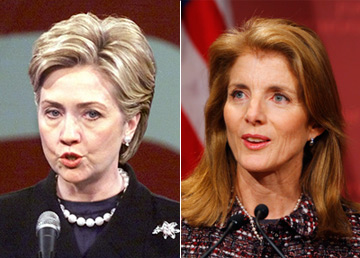
Why Caroline Kennedy's aborted attempt to replace Hillary Clinton in the Senate may have done permanent harm to her image.
By Mark Schone and Rebecca TraisterEd. note: Even some people close to the Kennedy family are now saying Caroline Kennedy’s bid to replace Hillary Clinton in the Senate has hurt her image. “Everything that was special about her got stripped away,” one unnamed associate of the political clan told Time magazine. Below, Salon’s Mark Schone and Rebecca Traister discuss, via instant message, the implications for Kennedy’s future.
RT: this was such a stupid gambit
that it hurt the thing she always had going for herMS: yes
RT: which was her reputation for class and general likability
MS: the image is gone
if she was going to do thisRT: which was perhaps fostered by the fact that she never opened her mouth
MS: she had to do it
RT: right
this just looks weakMS: and then become someone new
now she is neither the old or the new
she was a memory, all gauzy
then a disappointing reality
but maybe a senator
now only a disappointing realityRT: exactly
Page 2 of 7 in Mark Schone