

Michael T. Klare

Energy wars heat up

From Africa to South America, conflicts over waning resources are becoming more tense -- and dangerous

  • more
    • All Share Services

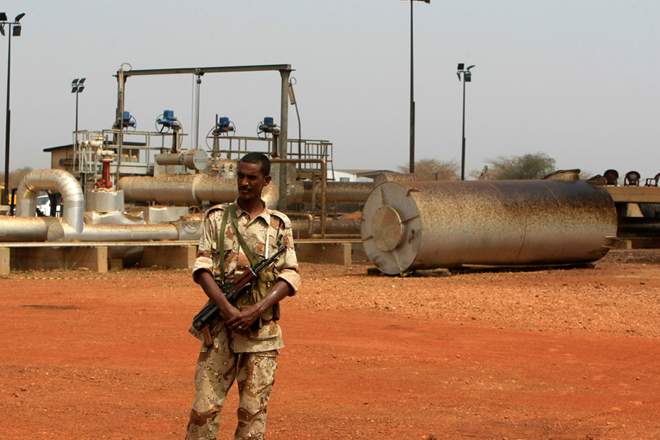
Energy wars heat upA member of the military stands guard near pump stations before a ceremony in which oil operations at Heglig oilfield will resume in Heglig, Sudan, May 2, 2012. (Credit: Reuters/Mohamed Nureldin Abdallah)
This piece originally appeared on TomDispatch.

Conflict and intrigue over valuable energy supplies have been features of the international landscape for a long time.  Major wars over oil have been fought every decade or so since World War I, and smaller engagements have erupted every few years; a flare-up or two in 2012, then, would be part of the normal scheme of things.  Instead, what we are now seeing is a whole cluster of oil-related clashes stretching across the globe, involving a dozen or so countries, with more popping up all the time.  Consider these flash-points as signals that we are entering an era of intensified conflict over energy.

From the Atlantic to the Pacific, Argentina to the Philippines, here are the six areas of conflict — all tied to energy supplies — that have made news in just the first few months of 2012:

* A brewing war between Sudan and South Sudan: On April 10th, forces from the newly independent state of South Sudan occupied the oil center of Heglig, a town granted to Sudan as part of a peace settlement that allowed the southerners to secede in 2011.  The northerners, based in Khartoum, then mobilized their own forces and drove the South Sudanese out of Heglig.  Fighting has since erupted all along the contested border between the two countries, accompanied by air strikes on towns in South Sudan.  Although the fighting has not yet reached the level of a full-scale war, international efforts to negotiate a cease-fire and a peaceful resolution to the dispute have yet to meet with success.

This conflict is being fueled by many factors, including economic disparities between the two Sudans and an abiding animosity between the southerners (who are mostly black Africans and Christians or animists) and the northerners (mostly Arabs and Muslims).  But oil — and the revenues produced by oil — remains at the heart of the matter.  When Sudan was divided in 2011, the most prolific oil fields wound up in the south, while the only pipeline capable of transporting the south’s oil to international markets (and thus generating revenue) remained in the hands of the northerners.  They have been demanding exceptionally high “transit fees” — $32-$36 per barrel compared to the common rate of $1 per barrel — for the privilege of bringing the South’s oil to market.  When the southerners refused to accept such rates, the northerners confiscated money they had already collected from the south’s oil exports, its only significant source of funds.  In response, the southerners stopped producing oil altogether and, it appears, launched their military action against the north.  The situation remains explosive.

* Naval clash in the South China Sea: On April 7th, a Philippine naval warship, the 378-foot Gregorio del Pilar, arrived at Scarborough Shoal, a small island in the South China Sea, and detained eight Chinese fishing boats anchored there, accusing them of illegal fishing activities in Filipino sovereign waters.  China promptly sent two naval vessels of its own to the area, claiming that the Gregorio del Pilar was harassing Chinese ships in Chinese, not Filipino waters.  The fishing boats were eventually allowed to depart without further incident and tensions have eased somewhat.  However, neither side has displayed any inclination to surrender its claim to the island, and both sides continue to deploy warships in the contested area.

As in Sudan, multiple factors are driving this clash, but energy is the dominant motive.  The South China Sea is thought to harbor large deposits of oil and natural gas, and all the countries that encircle it, including China and the Philippines, want to exploit these reserves.  Manila claims a 200-nautical mile “exclusive economic zone” stretching into the South China Sea from its western shores, an area it calls the West Philippine Sea; Filipino companies say they have found large natural gas reserves in this area and have announced plans to begin exploiting them.  Claiming the many small islands that dot the South China Sea (including Scarborough Shoal) as its own, Beijing has asserted sovereignty over the entire region, including the waters claimed by Manila; it, too, has announced plans to drill in the area.  Despite years of talks, no solution has yet been found to the dispute and further clashes are likely.

* Egypt cuts off the natural gas flow to Israel: On April 22nd, the Egyptian General Petroleum Corporation and Egyptian Natural Gas Holding Company informed Israeli energy officials that they were “terminating the gas and purchase agreement” under which Egypt had been supplying gas to Israel.  This followed months of demonstrations in Cairo by the youthful protestors who succeeded in deposing autocrat Hosni Mubarak and are now seeking a more independent Egyptian foreign policy — one less beholden to the United States and Israel.  It also followed scores of attacks on the pipelines carrying the gas across the Negev Desert to Israel, which the Egyptian military has seemed powerless to prevent.

Ostensibly, the decision was taken in response to a dispute over Israeli payments for Egyptian gas, but all parties involved have interpreted it as part of a drive by Egypt’s new government to demonstrate greater distance from the ousted Mubarak regime and his (U.S.-encouraged) policy of cooperation with Israel.  The Egyptian-Israeli gas link was one of the most significant outcomes of the 1979 peace treaty between the two countries, and its annulment clearly signals a period of greater discord; it may also cause energy shortages in Israel, especially during peak summer demand periods.  On a larger scale, the cutoff suggests a new inclination to use energy (or its denial) as a form of political warfare and coercion.

* Argentina seizes YPF: On April 16th, Argentina’s president, Cristina Fernández de Kirchner, announced that her government would seize a majority stake in YPF, the nation’s largest oil company.  Under President Kirchner’s plans, which she detailed on national television, the government would take a 51% controlling stake in YPF, which is now majority-owned by Spain’s largest corporation, the energy firm Repsol YPF.  The seizure of its Argentinean subsidiary is seen in Madrid (and other European capitals) as a major threat that must now be combated.  Spain’s foreign minister, José Manuel García Margallo, said that Kirchner’s move “broke the climate of cordiality and friendship that presided over relations between Spain and Argentina.”  Several days later, in what is reported to be only the first of several retaliatory steps, Spain announced that it would stop importing biofuels from Argentina, its principal supplier — a trade worth nearly $1 billion a year to the Argentineans.
As in the other conflicts, this clash is driven by many urges, including a powerful strain of nationalism stretching back to the Peronist era, along with Kirchner’s apparent desire to boost her standing in the polls.  Just as important, however, is Argentina’s urge to derive greater economic and political benefit from its energy reserves, which include the world’s third-largest deposits of shale gas.  While long-term rival Brazil is gaining immense power and prestige from the development of its offshore “pre-salt” petroleum reserves, Argentina has seen its energy production languish.  Repsol may not be to blame for this, but many Argentineans evidently believe that, with YPF under government control, it will now be possible to accelerate development of the country’s energy endowment, possibly in collaboration with a more aggressive foreign partner like BP or ExxonMobil.

* Argentina re-ignites the Falklands crisis: At an April 15th-16th Summit of the Americas in Cartagena, Colombia — the one at which U.S. Secret Service agents were caught fraternizing with prostitutes — Argentina sought fresh hemispheric condemnation of Britain’s continued occupation of the Falkland Islands (called Las Malvinas by the Argentineans).  It won strong support from every country present save (predictably) Canada and the United States.  Argentina, which says the islands are part of its sovereign territory, has been raising this issue ever since it lost a war over the Falklands in 1982, but has recently stepped up its campaign on several fronts — denouncing London in numerous international venues and preventing British cruise ships that visit the Falklands from docking in Argentinean harbors.  The British have responded by beefing up their military forces in the region and warning the Argentineans to avoid any rash moves.

When Argentina and the U.K. fought their war over the Falklands, little was at stake save national pride, the stature of the country’s respective leaders (Prime Minister Margaret Thatcher vs. an unpopular military junta), and a few sparsely populated islands.  Since then, the stakes have risen immeasurably as a result of recent seismic surveys of the waters surrounding the islands that indicated the existence of massive deposits of oil and natural gas.  Several UK-based energy firms, including Desire Petroleum and Rockhopper Exploration, have begun off-shore drilling in the area and have reported promising discoveries.  Desperate to duplicate Brazil’s success in the development of offshore oil and gas, Argentina claims the discoveries lie in its sovereign territory and that the drilling there is illegal; the British, of course, insist that it’s their territory.  No one knows how this simmering potential crisis will unfold, but a replay of the 1982 war — this time over energy — is hardly out of the question.

* U.S. forces mobilize for war with Iran: Throughout the winter and early spring, it appeared that an armed clash of some sort pitting Iran against Israel and/or the United States was almost inevitable.  Neither side seemed prepared to back down on key demands, especially on Iran’s nuclear program, and any talk of a compromise solution was deemed unrealistic.  Today, however, the risk of war has diminished somewhat — at least through this election year in the U.S. — as talks have finally gotten under way between the major powers and Iran, and as both have adopted (slightly) more accommodating stances.  In addition, U.S. officials have been tamping down war talk and figures in the Israeli military and intelligence communities have spoken out against rash military actions.  However, the Iranians continue to enrich uranium, and leaders on all sides say they are fully prepared to employ force if the peace talks fail.

For the Iranians, this means blocking the Strait of Hormuz, the narrow channel through which one-third of the world’s tradable oil passes every day.  The U.S., for its part, has insisted that it will keep the Strait open and, if necessary, eliminate Iranian nuclear capabilities.  Whether to intimidate Iran, prepare for the real thing, or possibly both, the U.S. has been building up its military capabilities in the Persian Gulf area, deploying two aircraft carrier battle groups in the neighborhood along with an assortment of air and amphibious-assault capabilities.

One can debate the extent to which Washington’s long-running feud with Iran is driven by oil, but there is no question that the current crisis bears heavily on global oil supply prospects, both through Iran’s threats to close the Strait of Hormuz in retaliation for forthcoming sanctions on Iranian oil exports, and the likelihood that any air strikes on Iranian nuclear facilities will lead to the same thing.  Either way, the U.S. military would undoubtedly assume the lead role in destroying Iranian military capabilities and restoring oil traffic through the Strait of Hormuz. This is the energy-driven crisis that just won’t go away.

How Energy Drives the World

All of these disputes have one thing in common: the conviction of ruling elites around the world that the possession of energy assets — especially oil and gas deposits — is essential to prop up national wealth, power, and prestige.

This is hardly a new phenomenon.  Early in the last century, Winston Churchill was perhaps the first prominent leader to appreciate the strategic importance of oil.  As First Lord of the Admiralty, he converted British warships from coal to oil and then persuaded the cabinet to nationalize the Anglo-Persian Oil Company, the forerunner of British Petroleum (now BP).  The pursuit of energy supplies for both industry and war-fighting played a major role in the diplomacy of the period between the World Wars, as well as in the strategic planning of the Axis powers during World War II.  It also explains America’s long-term drive to remain the dominant power in the Persian Gulf that culminated in the first Gulf War of 1990-91 and its inevitable sequel, the 2003 invasion of Iraq.

The years since World War II have seen a variety of changes in the energy industry, including a shift in many areas from private to state ownership of oil and natural gas reserves.  By and large, however, the industry has been able to deliver ever-increasing quantities of fuel to satisfy the ever-growing needs of a globalizing economy and an expanding, rapidly urbanizing world population.  So long as supplies were abundant and prices remained relatively affordable, energy consumers around the world, including most governments, were largely content with the existing system of collaboration among private and state-owned energy leviathans.

But that energy equation is changing ominously as the challenge of fueling the planet grows more difficult.  Many of the giant oil and gas fields that quenched the world’s energy thirst in years past are being depleted at a rapid pace.  The new fields being brought on line to take their place are, on average, smaller and harder to exploit.  Many of the most promising new sources of energy — like Brazil’s “pre-salt” petroleum reserves deep beneath the Atlantic Ocean, Canadian tar sands, and American shale gas — require the utilization of sophisticated and costly technologies.  Though global energy supplies are continuing to grow, they are doing so at a slower pace than in the past and are continually falling short of demand.  All this adds to the upward pressure on prices, causing anxiety among countries lacking adequate domestic reserves (and joy among those with an abundance).

The world has long been bifurcated between energy-surplus and energy-deficit states, with the former deriving enormous political and economic advantages from their privileged condition and the latter struggling mightily to escape their subordinate position.  Now, that bifurcation is looking more like a chasm.  In such a global environment, friction and conflict over oil and gas reserves — leading to energy conflicts of all sorts — is only likely to increase.

Looking, again, at April’s six energy disputes, one can see clear evidence of these underlying forces in every case.  South Sudan is desperate to sell its oil in order to acquire the income needed to kick-start its economy; Sudan, on the other hand, resents the loss of oil revenues it controlled when the nation was still united, and appears no less determined to keep as much of the South’s oil money as it can for itself.  China and the Philippines both want the right to develop oil and gas reserves in the South China Sea, and even if the deposits around Scarborough Shoal prove meager, China is unwilling to back down in any localized dispute that might undermine its claim to sovereignty over the entire region.

Egypt, although not a major energy producer, clearly seeks to employ its oil and gas supplies for maximum political and economic advantage — an approach sure to be copied by other small and mid-sized suppliers.  Israel, heavily dependent on imports for its energy, must now turn elsewhere for vital supplies or accelerate the development of disputed, newly discovered offshore gas fields, a move that could provoke fresh conflict with Lebanon, which says they lie in its own territorial waters.  And Argentina, jealous of Brazil’s growing clout, appears determined to extract greater advantage from its own energy resources, even if this means inflaming tensions with Spain and Great Britain.

And these are just some of the countries involved in significant disputes over energy.  Any clash with Iran — whatever the motivation — is bound to jeopardize the petroleum supply of every oil-importing country, sparking a major international crisis with unforeseeable consequences.  China’s determination to control its offshore hydrocarbon reserves has pushed it into conflict with other countries with offshore claims in the South China Sea, and into a similar dispute with Japan in the East China Sea.  Energy-related disputes of this sort can also be found in the Caspian Sea and in globally warming, increasingly ice-free Arctic regions.

The seeds of energy conflicts and war sprouting in so many places simultaneously suggest that we are entering a new period in which key state actors will be more inclined to employ force — or the threat of force — to gain control over valuable deposits of oil and natural gas.  In other words, we’re now on a planet heading into energy overdrive.

To stay on top of important articles like these, sign up to receive the latest updates from TomDispatch.com here.

The collapse of the old oil order

As protesters oust Middle Eastern dictators, the age of cheap and readily available petroleum will come to an end

  • more
    • All Share Services

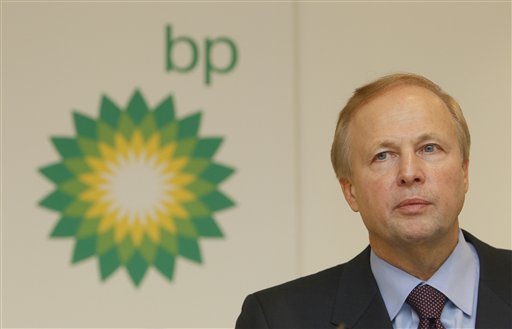
The collapse of the old oil orderBP PLC's CEO Bob Dudley during a results media conference at their headquarters in London, Tuesday, Feb. 1, 2011. BP announced Tuesday it is resuming dividend payouts for the first time since the Gulf of Mexico well disaster, despite suffering its first full-year loss since 1992, and plans to sell off almost half of its U.S. refinery business. BP said a stronger-than-expected end to 2010, in which high oil prices lifted fourth quarter profit by 30 percent, was not enough to avoid a full-year loss of $3.7 billion. It raised to $40.9 billion its estimate for the overall cost of the spill, the charge covering the cost of the explosion aboard the Deepwater Horizon rig, which killed 11 workers in April, as well as plugging the well and cleaning up the southern U.S. coast. (AP Photo/Alastair Grant)(Credit: AP)

This piece originally appeared on TomDispatch.

Whatever the outcome of the protests, uprisings, and rebellions now sweeping the Middle East, one thing is guaranteed: the world of oil will be permanently transformed. Consider everything that’s now happening as just the first tremor of an oilquake that will shake our world to its core.

For a century stretching back to the discovery of oil in southwestern Persia before World War I, Western powers have repeatedly intervened in the Middle East to ensure the survival of authoritarian governments devoted to producing petroleum. Without such interventions, the expansion of Western economies after World War II and the current affluence of industrialized societies would be inconceivable.

Here, however, is the news that should be on the front pages of newspapers everywhere: That old oil order is dying, and with its demise we will see the end of cheap and readily accessible petroleum — forever.

Ending the Petroleum Age

Let’s try to take the measure of what exactly is at risk in the current tumult. As a start, there is almost no way to give full justice to the critical role played by Middle Eastern oil in the world’s energy equation. Although cheap coal fueled the original Industrial Revolution, powering railroads, steamships, and factories, cheap oil has made possible the automobile, the aviation industry, suburbia, mechanized agriculture, and an explosion of economic globalization. And while a handful of major oil-producing areas launched the Petroleum Age — the United States, Mexico, Venezuela, Romania, the area around Baku (in what was then the Czarist Russian empire), and the Dutch East Indies — it’s been the Middle East that has quenched the world’s thirst for oil since World War II.

In 2009, the most recent year for which such data is available, BP reported that suppliers in the Middle East and North Africa jointly produced 29 million barrels per day, or 36% of the world’s total oil supply — and even this doesn’t begin to suggest the region’s importance to the petroleum economy. More than any other area, the Middle East has funneled its production into export markets to satisfy the energy cravings of oil-importing powers like the United States, China, Japan, and the European Union (EU). We’re talking 20 million barrels funneled into export markets every day. Compare that to Russia, the world’s top individual producer, at seven million barrels in exportable oil, the continent of Africa at six million, and South America at a mere one million.

As it happens, Middle Eastern producers will be even more important in the years to come because they possess an estimated two-thirds of remaining untapped petroleum reserves. According to recent projections by the U.S. Department of Energy, the Middle East and North Africa will jointly provide approximately 43% of the world’s crude petroleum supply by 2035 (up from 37% in 2007), and will produce an even greater share of the world’s exportable oil.

To put the matter baldly: The world economy requires an increasing supply of affordable petroleum. The Middle East alone can provide that supply. That’s why Western governments have long supported “stable” authoritarian regimes throughout the region, regularly supplying and training their security forces. Now, this stultifying, petrified order, whose greatest success was producing oil for the world economy, is disintegrating. Don’t count on any new order (or disorder) to deliver enough cheap oil to preserve the Petroleum Age.

To appreciate why this will be so, a little history lesson is in order.

The Iranian Coup

After the Anglo-Persian Oil Company (APOC) discovered oil in Iran (then known as Persia) in 1908, the British government sought to exercise imperial control over the Persian state. A chief architect of this drive was First Lord of the Admiralty Winston Churchill. Having ordered the conversion of British warships from coal to oil before World War I and determined to put a significant source of oil under London’s control, Churchill orchestrated the nationalization of APOC in 1914. On the eve of World War II, then-Prime Minister Churchill oversaw the removal of Persia’s pro-German ruler, Shah Reza Pahlavi, and the ascendancy of his 21-year-old son, Mohammed Reza Pahlavi.

Though prone to extolling his (mythical) ties to past Persian empires, Mohammed Reza Pahlavi was a willing tool of the British. His subjects, however, proved ever less willing to tolerate subservience to imperial overlords in London. In 1951, democratically elected Prime Minister Mohammed Mossadeq won parliamentary support for the nationalization of APOC, by then renamed the Anglo-Iranian Oil Company (AIOC). The move was wildly popular in Iran but caused panic in London. In 1953, to save this great prize, British leaders infamously conspired with President Dwight Eisenhower’s administration in Washington and the CIA to engineer a coup d’ etat that deposed Mossadeq and brought Shah Pahlavi back from exile in Rome, a story recently told with great panache by Stephen Kinzer in All the Shah’s Men.

Until he was overthrown in 1979, the Shah exercised ruthless and dictatorial control over Iranian society, thanks in part to lavish U.S. military and police assistance. First he crushed the secular left, the allies of Mossadeq, and then the religious opposition, headed from exile by the Ayatollah Ruhollah Khomeini. Given their brutal exposure to police and prison gear supplied by the United States, the shah’s opponents came to loathe his monarchy and Washington in equal measure. In 1979, of course, the Iranian people took to the streets, the Shah was overthrown, and Ayatollah Khomeini came to power.

Much can be learned from these events that led to the current impasse in U.S.-Iranian relations. The key point to grasp, however, is that Iranian oil production never recovered from the revolution of 1979-1980.

Between 1973 and 1979, Iran had achieved an output of nearly six million barrels of oil per day, one of the highest in the world. After the revolution, AIOC (rechristened British Petroleum, or later simply BP) was nationalized for a second time, and Iranian managers again took over the company’s operations. To punish Iran’s new leaders, Washington imposed tough trade sanctions, hindering the state oil company’s efforts to obtain foreign technology and assistance. Iranian output plunged to two million barrels per day and, even three decades later, has made it back to only slightly more than four million barrels per day, even though the country possesses the world’s second largest oil reserves after Saudi Arabia.

Dreams of the Invader

Iraq followed an eerily similar trajectory. Under Saddam Hussein, the state-owned Iraq Petroleum Company (IPC) produced up to 2.8 million barrels per day until 1991, when the First Gulf War with the United States and ensuing sanctions dropped output to half a million barrels daily. Though by 2001 production had again risen to almost 2.5 million barrels per day, it never reached earlier heights. As the Pentagon geared up for an invasion of Iraq in late 2002, however, Bush administration insiders and well-connected Iraqi expatriates spoke dreamily of a coming golden age in which foreign oil companies would be invited back into the country, the national oil company would be privatized, and production would reach never before seen levels.

Who can forget the effort the Bush administration and its officials in Baghdad put into making their dream come true? After all, the first American soldiers to reach the Iraqi capital secured the Oil Ministry building, even as they allowed Iraqi looters free rein in the rest of the city. L. Paul Bremer III, the proconsul later chosen by President Bush to oversee the establishment of a new Iraq, brought in a team of American oil executives to supervise the privatization of the country’s oil industry, while the U.S. Department of Energy confidently predicted in May 2003 that Iraqi production would rise to 3.4 million barrels per day in 2005, 4.1 million barrels by 2010, and 5.6 million by 2020.

None of this, of course, came to pass. For many ordinary Iraqis, the U.S. decision to immediately head for the Oil Ministry building was an instantaneous turning point that transformed possible support for the overthrow of a tyrant into anger and hostility. Bremer’s drive to privatize the state oil company similarly produced a fierce nationalist backlash among Iraqi oil engineers, who essentially scuttled the plan. Soon enough, a full-scale Sunni insurgency broke out. Oil output quickly fell, averaging only 2.0 million barrels daily between 2003 and 2009. By 2010, it had finally inched back up to the 2.5 million barrel mark — a far cry from those dreamed of 4.1 million barrels.

One conclusion isn’t hard to draw: Efforts by outsiders to control the political order in the Middle East for the sake of higher oil output will inevitably generate countervailing pressures that result in diminished production. The United States and other powers watching the uprisings, rebellions, and protests blazing through the Middle East should be wary indeed: whatever their political or religious desires, local populations always turn out to harbor a fierce, passionate hostility to foreign domination and, in a crunch, will choose independence and the possibility of freedom over increased oil output.

The experiences of Iran and Iraq may not in the usual sense be comparable to those of Algeria, Bahrain, Egypt, Iraq, Jordan, Libya, Oman, Morocco, Saudi Arabia, Sudan, Tunisia, and Yemen. However, all of them (and other countries likely to get swept up into the tumult) exhibit some elements of the same authoritarian political mold and all are connected to the old oil order. Algeria, Egypt, Iraq, Libya, Oman, and Sudan are oil producers; Egypt and Jordan guard vital oil pipelines and, in Egypt’s case, a crucial canal for the transport of oil; Bahrain and Yemen as well as Oman occupy strategic points along major oil sealanes. All have received substantial U.S. military aid and/or housed important U.S. military bases. And, in all of these countries, the chant is the same: “The people want the regime to fall.”

Two of these regimes have already fallen, three are tottering, and others are at risk. The impact on global oil prices has been swift and merciless: on February 24th, the delivery price for North Brent crude, an industry benchmark, nearly reached $115 per barrel, the highest it’s been since the global economic meltdown of October 2008. West Texas Intermediate, another benchmark crude, briefly and ominously crossed the $100 threshold.

Why the Saudis are Key

So far, the most important Middle Eastern producer of all, Saudi Arabia, has not exhibited obvious signs of vulnerability, or prices would have soared even higher. However, the royal house of neighboring Bahrain is already in deep trouble; tens of thousands of protesters — more than 20% of its half million people — have repeatedly taken to the streets, despite the threat of live fire, in a movement for the abolition of the autocratic government of King Hamad ibn Isa al-Khalifa, and its replacement with genuine democratic rule.

These developments are especially worrisome to the Saudi leadership as the drive for change in Bahrain is being directed by that country’s long-abused Shiite population against an entrenched Sunni ruling elite. Saudi Arabia also contains a large, though not — as in Bahrain — a majority Shiite population that has also suffered discrimination from Sunni rulers. There is anxiety in Riyadh that the explosion in Bahrain could spill into the adjacent oil-rich Eastern Province of Saudi Arabia — the one area of the kingdom where Shiites do form the majority — producing a major challenge to the regime. Partly to forestall any youth rebellion, 87-year-old King Abdullah has just promised $10 billion in grants, part of a $36 billion package of changes, to help young Saudi citizens get married and obtain homes and apartments.

Even if rebellion doesn’t reach Saudi Arabia, the old Middle Eastern oil order cannot be reconstructed. The result is sure to be a long-term decline in the future availability of exportable petroleum.

Three-quarters of the 1.7 million barrels of oil Libya produces daily were quickly taken off the market as turmoil spread in that country. Much of it may remain off-line and out of the market for the indefinite future. Egypt and Tunisia can be expected to restore production, modest in both countries, to pre-rebellion levels soon, but are unlikely to embrace the sorts of major joint ventures with foreign firms that might boost production while diluting local control. Iraq, whose largest oil refinery was badly damaged by insurgents only last week, and Iran exhibit no signs of being able to boost production significantly in the years ahead.

The critical player is Saudi Arabia, which just increased production to compensate for Libyan losses on the global market. But don’t expect this pattern to hold forever. Assuming the royal family survives the current round of upheavals, it will undoubtedly have to divert more of its daily oil output to satisfy rising domestic consumption levels and fuel local petrochemical industries that could provide a fast-growing, restive population with better-paying jobs.

From 2005 to 2009, Saudis used about 2.3 million barrels daily, leaving about 8.3 million barrels for export. Only if Saudi Arabia continues to provide at least this much oil to international markets could the world even meet its anticipated low-end oil needs. This is not likely to occur. The Saudi royals have expressed reluctance to raise output much above 10 million barrels per day, fearing damage to their remaining fields and so a decline in future income for their many progeny. At the same time, rising domestic demand is expected to consume an ever-increasing share of Saudi Arabia’s net output. In April 2010, the chief executive officer of state-owned Saudi Aramco, Khalid al-Falih, predicted that domestic consumption could reach a staggering 8.3 million barrels per day by 2028, leaving only a few million barrels for export and ensuring that, if the world can’t switch to other energy sources, there will be petroleum starvation.

In other words, if one traces a reasonable trajectory from current developments in the Middle East, the handwriting is already on the wall. Since no other area is capable of replacing the Middle East as the world’s premier oil exporter, the oil economy will shrivel — and with it, the global economy as a whole.

Consider the recent rise in the price of oil just a faint and early tremor heralding the oilquake to come. Oil won’t disappear from international markets, but in the coming decades it will never reach the volumes needed to satisfy projected world demand, which means that, sooner rather than later, scarcity will become the dominant market condition. Only the rapid development of alternative sources of energy and a dramatic reduction in oil consumption might spare the world the most severe economic repercussions.

Continue Reading Close

Welcome to the year of living dangerously

Are riots, protests, revolts, mounting oil prices, and mammoth worldwide unemployment the new norm?

  • more
    • All Share Services

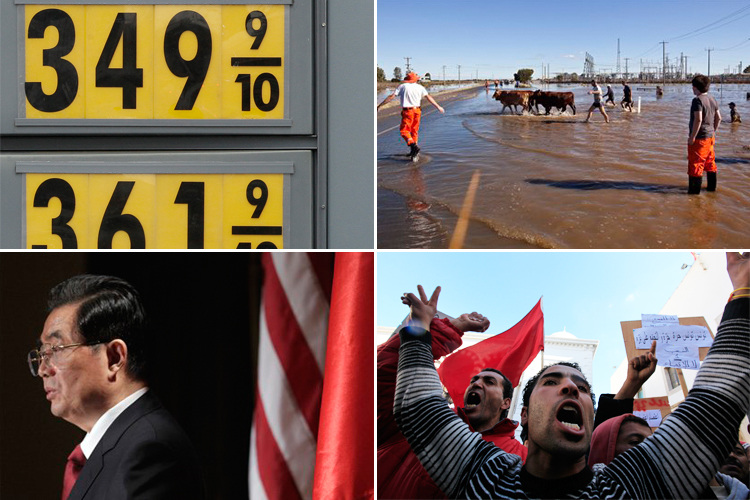
Welcome to the year of living dangerouslyThe perfect set of preconditions for a global tsunami of instability and turmoil may be in place.

This originally appeared on TomDispatch

Get ready for a rocky year. From now on, rising prices, powerful storms, severe droughts and floods, and other unexpected events are likely to play havoc with the fabric of global society, producing chaos and political unrest. Start with a simple fact: the prices of basic food staples are already approaching or exceeding their 2008 peaks, that year when deadly riots erupted in dozens of countries around the world.

It’s not surprising then that food and energy experts are beginning to warn that 2011 could be the year of living dangerously — and so could 2012, 2013, and on into the future. Add to the soaring cost of the grains that keep so many impoverished people alive a comparable rise in oil prices — again nearing levels not seen since the peak months of 2008 — and you can already hear the first rumblings about the tenuous economic recovery being in danger of imminent collapse. Think of those rising energy prices as adding further fuel to global discontent.

Already, combined with staggering levels of youth unemployment and a deep mistrust of autocratic, repressive governments, food prices have sparked riots in Algeria and mass protests in Tunisia that, to the surprise of the world, ousted long-time dictator President Zine al-Abidine Ben Ali and his corrupt extended family. And many of the social stresses evident in those two countries are present across the Middle East and elsewhere. No one can predict where the next explosion will occur, but with food prices still climbing and other economic pressures mounting, more upheavals appear inevitable. These may be the first resource revolts to catch our attention, but they won’t be the last.

Put simply, global consumption patterns are now beginning to challenge the planet’s natural resource limits. Populations are still on the rise, and from Brazil to India, Turkey to China, new powers are rising as well. With them goes an urge for a more American-style life. Not surprisingly, the demand for basic commodities is significantly on the rise, even as supplies in many instances are shrinking. At the same time, climate change, itself a product of unbridled energy use, is adding to the pressure on supplies, and speculators are betting on a situation trending progressively worse. Add these together and the road ahead appears increasingly rocky.

Breadbaskets without Bread

Let’s begin with food, the most important and volatile of these commodities. Food prices declined in October 2008 after the onset of the global financial crisis, but that seems to have been an anomaly. The December 2010 index of global food prices compiled by the U.N.’s Food and Agricultural Organization (FAO) hit a record 215, one point higher than in the spring of 2008. (In that index, based on a “bundle” of food staples, a baseline of 100 represents average prices in 2002-2004.) In fact, some food products, including sugar, cooking oils, and fats, are now trading substantially above their 2008 levels; others, including dairy products, grains, and meat, are inching perilously close to record levels.

As 2011 begins, food experts fear that, within months, prices for key staples will climb above the 2008 threshold and stay there, causing extreme hardship for poor people around the world. “We are at a very high level,” said a worried Abdolreza Abbassian, an economist at the FAO. “These levels in the previous episode led to problems and riots across the world.”

Of particular concern to Abbassian and his colleagues is the rising cost of corn, rice, and wheat, the staple crops of billions in many of the poorest countries. According to the FAO, by the end of 2010 international corn and wheat prices were already approaching their 2008 peak levels (about $260 and $340 per metric ton, respectively).

Analysts attribute the rise in grain prices to growing demand in both developed and developing nations, along with a number of cataclysmic weather-related events and speculation by investors. An extreme drought and fierce fires last summer destroyed a large percentage of the wheat crop in Russia and Ukraine, while heavy flooding in India and the inundation of 20% of Pakistan damaged significant parts of the grain output of those countries. At the same time, unusually hot and dry weather suppressed production in a number of other key farming areas.

What makes the picture look so worrisome today are indications that the severity and frequency of extreme weather events appear to be on the rise. In the past few weeks alone, several such events point the way to serious supply problems ahead. Most significant has been the unprecedented rainfall and flooding in Australia that put an area more than twice the size of California largely underwater, significantly disrupting wheat cultivation there. Australia is one of the world’s leading wheat producers. Unusually dry conditions in the American Midwest and Argentina have also hinted at future problems in grain and corn output. It’s still too early to predict the size of this year’s grain and corn harvests, but many analysts are warning of a shortfall in supplies, along with sky-high prices.

Mainstream analysts and government officials are loathe to attribute this traffic jam of extreme weather events to global warming. Huge variations in rainfall can be normal, especially in places like Australia that are susceptible to El Niño/La Niña ocean-temperature oscillations, and politicians are fearful of assuming responsibility for a problem as massive as climate change. But climate change theory has long suggested that the warming trend — 2010 tied 2005 for the warmest year on record and nine of the 10 warmest years have come in the last decade — will be accompanied by an increase in the frequency and severity of storms. It’s hard to escape the conclusion that recent events, including those Australian floods, are tied to rising global temperatures.

The Energy Crisis Returns

Soaring food prices are being driven as well by speculative investments and the rising price of oil. Partly in response to the diminishing value of the dollar, some investors are sinking their money into food futures (along with gold and silver) as a speculative hedge. At the same time, the price of oil is edging toward the $100 mark, making it increasingly profitable for farmers to switch from growing corn for human consumption to growing it for the manufacture of ethanol, which in turn reduces the amount of farm acreage devoted to staples. Oil would have to fall below $50 per barrel to make the cultivation of corn as a food product competitive with ethanol production — and that’s not likely to happen. So even if more corn is produced this year, less will be available for food purposes and the price of what remains is bound to rise.

The precipitous rise in oil prices has startled the experts. Not so long ago, the U.S. Department of Energy (DoE) was projecting a price range of $70-$80 per barrel in 2011, but as the year began oil was already trading above $90 a barrel and some analysts predict that it will reach $100 before the year is out. A few are even talking about the $150 barrel and gas prices at the pump of $4 or more. If prices climb above $100, global consumer spending could take another nosedive.

“Oil prices are entering a dangerous zone for the global economy,” says Fatih Birol, the chief economist for the International Energy Agency (IEA). “The oil import bills are becoming a threat to the economic recovery.”

As with food, the rising cost of oil is a product of growing demand, insufficient supplies, and speculative investments. According to the most recent projections from the IEA, daily global oil consumption in 2011 will average 87.4 million barrels, an increase of about two million barrels from the first quarter of 2010. Much of the extra demand is coming from China, where a newly-minted middle class is buying automobiles at a record clip, as well as from the United States, where previously cautious consumers are slowly returning to pre-2008 driving habits.

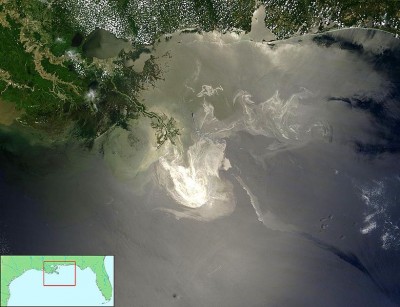
At a time when the oil industry is experiencing declining rates of output at many existing oil fields and finding it ever more difficult to add production, even two million extra barrels per day can be a daunting challenge (and greater demand is expected in the coming years). In the United States, for example, much hope was placed in oil exploration in the deep waters of the Gulf of Mexico and offshore Alaska, but in the wake of the BP disaster, this seems like a forlorn prospect. Production in Mexico and the North Sea, two bright spots of recent years, is facing a sharp decline, while other key producers, including those in the Middle East, are struggling to maintain current output levels at existing fields.

Many energy analysts believe that the world is at (or will soon reach) peak oil — the moment when global petroleum output achieves a maximum sustainable daily rate and begins a long-term, irreversible decline. Others contend that higher levels of output are still possible. Whatever the truth of the matter, at this moment the oil industry is finding it increasingly difficult, and ever more costly, to boost output above current levels. This, combined with insatiable demand, is driving prices skyward.

Under these circumstances, speculators are again being drawn into the oil market as a rare sure bet. Such speculators helped push oil prices to a record $147 per barrel back in 2008, but fled the market when prices crashed as the American economy headed to a meltdown. Now, they’re coming back. “Hedge funds and private investors are buying up financial instruments tied to the price of crude, and thereby helping push up oil prices,” the Wall Street Journal reported in late December.

Most analysts are expecting a price surge this spring or summer when American motorists hit the road. “We will have a spring rally that will take us to between $3.10 and $3.50 a gallon for gasoline at service stations in the United States,” predicted Tom Kloza, chief oil analyst at the Oil Price Information Service.

The rising price of gas will, in turn, hurt consumers just as they show signs of opening their wallets again. No less worrisome, oil-importing countries like the United States, Japan, and many in Europe will face soaring bills for fuel imports, further enfeebling economies already suffering from profound weakness.

According to some calculations, oil prices added another $72 billion to America’s mammoth balance-of-payments deficit last year. Europe had to cough up an additional $70 billion for imported oil and Japan $27 billion. “It is a very telling story,” says the IEA’s Fatih Birol of recent oil-price data. “2010 rang the first alarm bells and 2011 price levels could bring us to the same financial crisis times that we saw in 2008.”

Rising food prices leading to riots, protests, and revolts, mounting oil prices, mammoth worldwide unemployment, and a collapsed recovery — it looks like the perfect set of preconditions for a global tsunami of instability and turmoil. Events in Algeria and Tunisia give us just an inkling of what this maelstrom might look like, but where and how it will next erupt, and in what form, is anyone’s guess. A single guarantee: we haven’t seen the last of resource revolts which, in the coming years, could reach an intensity we scarcely imagine today. 

Continue Reading Close

Who’s the superpower now?

As oil prices drain the U.S. of military power and influence, Russia is rising as a world force again.

  • more
    • All Share Services

Nineteen years ago, the fall of the Berlin Wall effectively eliminated the Soviet Union as the world’s other superpower. Yes, the USSR as a political entity stumbled on for another two years, but it was clearly an ex-superpower from the moment it lost control over its satellites in Eastern Europe.

Less than a month ago, the United States similarly lost its claim to superpower status when a barrel of crude oil roared past $110 on the international market, gasoline prices crossed the $3.50 threshold at American pumps, and diesel fuel topped $4. As was true of the USSR following the dismantling of the Berlin Wall, the USA will no doubt continue to stumble on like the superpower it once was; but as the nation’s economy continues to be eviscerated to pay for its daily oil fix, it, too, will be seen by increasing numbers of savvy observers as an ex-superpower in the making.

That the fall of the Berlin Wall spelled the erasure of the Soviet Union’s superpower status was obvious to international observers at the time. After all, the USSR visibly ceased to exercise dominion over an empire (and an associated military-industrial complex) encompassing nearly half of Europe and much of Central Asia. The relationship between rising oil prices and the obliteration of America’s superpower status is, however, hardly as self-evident. So let’s consider the connection.

The fact is, America’s wealth and power have long rested on the abundance of cheap petroleum. The United States was, for a long time, the world’s leading producer of oil, supplying its own needs while generating a healthy surplus for export.

Oil was the basis for the rise of the first giant multinational corporations in the U.S., notably John D. Rockefeller’s Standard Oil Co. (now reconstituted as Exxon Mobil, the world’s wealthiest publicly traded corporation). Abundant, exceedingly affordable petroleum was also responsible for the emergence of the American automotive and trucking industries, the flourishing of the domestic airline industry, the development of the petrochemical and plastics industries, the suburbanization of America, and the mechanization of its agriculture. Without cheap and abundant oil, the United States would never have experienced the historic economic expansion of the post-World War II era.

No less important was the role of abundant petroleum in fueling the global reach of U.S. military power. For all the talk of America’s growing reliance on computers, advanced sensors, and stealth technology to prevail in warfare, it has been oil above all that gave the U.S. military its capacity to “project power” onto distant battlefields like Iraq and Afghanistan. Every Humvee, tank, helicopter and jet fighter requires its daily ration of petroleum, without which America’s technology-driven military would be forced to abandon the battlefield. No surprise, then, that the U.S. Department of Defense is the world’s single biggest consumer of petroleum, using more of it every day than the entire nation of Sweden.

From the end of World War II through the height of the Cold War, the U.S. claim to superpower status rested on a vast sea of oil. As long as most of our oil came from domestic sources and the price remained reasonably low, the American economy thrived and the annual cost of deploying vast armies abroad was relatively manageable. But that sea has been shrinking since the 1950s. Domestic oil production reached a peak in 1970 and has been in decline ever since — with a growing dependency on imported oil as the result. When it came to reliance on imports, the United States crossed the 50 percent threshold in 1998 and now has passed 65 percent.

Though few fully realized it, this represented a significant erosion of sovereign independence even before the price of a barrel of crude soared above $110. By now, we are transferring such staggering sums yearly to foreign oil producers, who are using it to gobble up valuable American assets, that, whether we know it or not, we have essentially abandoned our claim to superpowerdom.

According to the latest data from the U.S. Department of Energy, the United States is importing 12-14 million barrels of oil per day. At a current price of about $115 per barrel, that’s $1.5 billion per day, or $548 billion per year. This represents the single largest contribution to America’s balance-of-payments deficit, and is a leading cause for the dollar’s ongoing drop in value. If oil prices rise any higher — in response, perhaps, to a new crisis in the Middle East (as might be occasioned by U.S. airstrikes on Iran) — our annual import bill could quickly approach three-quarters of a trillion dollars or more per year.

While our economy is being depleted of these funds, at a moment when credit is scarce and economic growth has screeched to a halt, the oil regimes on which we depend for our daily fix are depositing their mountains of accumulating petrodollars in “sovereign wealth funds” (SWFs) — state-controlled investment accounts that buy up prized foreign assets in order to secure non-oil-dependent sources of wealth. At present, these funds are already believed to hold in excess of several trillion dollars; the richest, the Abu Dhabi Investment Authority (ADIA), alone holds $875 billion.

The ADIA first made headlines in November 2007 when it acquired a $7.5 billion stake in Citigroup, America’s largest bank holding company. The fund has also made substantial investments in Advanced Micro Systems, a major chip maker, and the Carlyle Group, the private equity giant. Another big SWF, the Kuwait Investment Authority, also acquired a multibillion-dollar stake in Citigroup, along with a $6.6 billion chunk of Merrill Lynch. And these are but the first of a series of major SWF moves that will be aimed at acquiring stakes in top American banks and corporations.

The managers of these funds naturally insist that they have no intention of using their ownership of prime American properties to influence U.S. policy. In time, however, a transfer of economic power of this magnitude cannot help but translate into a transfer of political power as well. Indeed, this prospect has already stirred deep misgivings in Congress. “In the short run, that they [the Middle Eastern SWFs] are investing here is good,” Sen. Evan Bayh, D-Ind., recently observed. “But in the long run it is unsustainable. Our power and authority is eroding because of the amounts we are sending abroad for energy.”

Foreign ownership of key nodes of our economy is only one sign of fading American superpower status. Oil’s impact on the military is another.

Every day, the average GI in Iraq uses approximately 27 gallons of petroleum-based fuels. With some 160,000 American troops in Iraq, that amounts to 4.37 million gallons in daily oil usage, including gasoline for vans and light vehicles, diesel for trucks and armored vehicles, and aviation fuel for helicopters, drones and fixed-wing aircraft. With U.S. forces paying, as of late April, an average of $3.23 per gallon for these fuels, the Pentagon is already spending approximately $14 million per day on oil ($98 million per week, $5.1 billion per year) to stay in Iraq. Meanwhile, our Iraqi allies, who are expected to receive a windfall of $70 billion this year from the rising price of their oil exports, charge their citizens $1.36 per gallon for gasoline.

When questioned about why Iraqis are paying almost a third less for oil than American forces in their country, senior Iraqi government officials scoff at any suggestion of impropriety. “America has hardly even begun to repay its debt to Iraq,” said Abdul Basit, the head of Iraq’s Supreme Board of Audit, an independent body that oversees Iraqi governmental expenditures. “This is an immoral request because we didn’t ask them to come to Iraq, and before they came in 2003 we didn’t have all these needs.”

Needless to say, this is not exactly the way grateful clients are supposed to address superpower patrons. “It’s totally unacceptable to me that we are spending tens of billions of dollars on rebuilding Iraq while they are putting tens of billions of dollars in banks around the world from oil revenues,” said Sen. Carl Levin- D.Mich, chairman of the Armed Services Committee. “It doesn’t compute as far as I’m concerned.”

Certainly, however, our allies in the region, especially the Sunni kingdoms of Kuwait, Saudi Arabia and the United Arab Emirates (UAE) that presumably look to Washington to stabilize Iraq and curb the growing power of Shiite Iran, are willing to help the Pentagon out by supplying U.S. troops with free or deeply discounted petroleum. No such luck. Except for some partially subsidized oil supplied by Kuwait, all oil-producing U.S. allies in the region charge us the market rate for petroleum. Take that as a striking reflection of how little credence even countries whose ruling elites have traditionally looked to the U.S. for protection now attach to our supposed superpower status.

Think of this as a strikingly clear-eyed assessment of American power. As far as they’re concerned, we’re now just another of those hopeless oil addicts driving a monster gas-guzzler up to the pump — and they’re perfectly happy to collect our cash which they can then use to cherry-pick our prime assets. So expect no summer tax holidays for the Pentagon, not in the Middle East, anyway.

Worse yet, the U.S. military will need even more oil for the future wars on which the Pentagon is now doing the planning. In this way, the U.S. experience in Iraq has especially worrisome implications. Under the military “transformation” initiated by Secretary of Defense Donald Rumsfeld in 2001, the future U.S. war machine will rely less on “boots on the ground” and ever more on technology. But technology entails an ever-greater requirement for oil, as the newer weapons sought by Rumsfeld (and now Secretary of Defense Robert Gates) all consume many times more fuel than those they will replace. To put this in perspective: The average GI in Iraq now uses about seven times as much oil per day as GIs did in the first Gulf War less than two decades ago. And every sign indicates that the same ratio of increase will apply to coming conflicts; that the daily cost of fighting will skyrocket; and that the Pentagon’s capacity to shoulder multiple foreign military burdens will unravel. Thus are superpowers undone.

If anything demonstrates the critical role of oil in determining the fate of superpowers in the current milieu, it is the spectacular reemergence of Russia as a Great Power on the basis of its superior energy balance. Once derided as the humiliated, enfeebled loser in the U.S.-Soviet rivalry, Russia is again a force to be reckoned with in world affairs. It possesses the fastest-growing economy among the G-8 group of major industrial powers, is the world’s second leading producer of oil (after Saudi Arabia), and is its top producer of natural gas. Because it produces far more energy than it consumes, Russia exports a substantial portion of its oil and gas to neighboring countries, making it the only Great Power not dependent on other states for its energy needs.

As Russia has become an energy-exporting state, it has moved from the list of has-beens to the front rank of major players. When President Bush first occupied the White House, in February 2001, one of his highest priorities was to downgrade U.S. ties with Russia and annul the various arms-control agreements that had been forged between the two countries by his predecessors, agreements that explicitly conferred equal status on the USA and the USSR. As an indication of how contemptuously the Bush team viewed Russia at that time, Condoleezza Rice, while still an advisor to the Bush presidential campaign, wrote, in the January/February 2000 issue of the influential Foreign Affairs, “U.S. policy … must recognize that American security is threatened less by Russia’s strength than by its weakness and incoherence.” Under such circumstances, she continued, there was no need to preserve obsolete relics of the dual superpower past like the Anti-Ballistic Missile (ABM) Treaty; rather, the focus of U.S. efforts should be on preventing the further erosion of Russian nuclear safeguards and the potential escape of nuclear materials.

In line with this outlook, President Bush believed that he could convert an impoverished and compliant Russia into a major source of oil and natural gas for the United States — with American energy companies running the show. This was the evident aim of the U.S.-Russian “energy dialogue” announced by Bush and Russian President Vladimir Putin in May 2002. But if Bush thought Russia was prepared to turn into a northern version of Kuwait, Saudi Arabia or Venezuela prior to the arrival of Hugo Chavez, he was to be sorely disappointed. Putin never permitted American firms to acquire substantial energy assets in Russia. Instead, he presided over a major recentralization of state control when it came to the country’s most valuable oil and gas reserves, putting most of them in the hands of Gazprom, the state-controlled natural gas behemoth.

Once in control of these assets, moreover, Putin has used his renascent energy power to exert influence over states that were once part of the former Soviet Union, as well as those in Western Europe that rely on Russian oil and gas for a substantial share of their energy needs. In the most extreme case, Moscow turned off the flow of natural gas to Ukraine on Jan. 1, 2006, in the midst of an especially cold winter, in what was said to be a dispute over pricing but was widely viewed as punishment for Ukraine’s political drift westwards. (The gas was turned back on four days later when Ukraine agreed to pay a higher price and offered other concessions.) Gazprom has threatened similar action in disputes with Armenia, Belarus and Georgia — in each case forcing those former Soviet SSRs to back down.

When it comes to the U.S.-Russian relationship, just how much the balance of power has shifted was evident at the NATO summit at Bucharest in early April. There, President Bush asked that Georgia and Ukraine both be approved for eventual membership in the alliance, only to find top U.S. allies (and Russian energy users) France and Germany blocking the measure out of concern for straining ties with Russia. “It was a remarkable rejection of American policy in an alliance normally dominated by Washington,” Steven Erlanger and Steven Lee Myers of the New York Times reported, “and it sent a confusing signal to Russia, one that some countries considered close to appeasement of Moscow.”

For Russian officials, however, the restoration of their country’s great power status is not the product of deceit or bullying, but a natural consequence of being the world’s leading energy provider. No one is more aware of this than Dmitri Medvedev, the former chairman of Gazprom and new Russian president. “The attitude toward Russia in the world is different now,” he declared on Dec. 11, 2007. “We are not being lectured like schoolchildren; we are respected and we are deferred to. Russia has reclaimed its proper place in the world community. Russia has become a different country, stronger and more prosperous.”

The same, of course, can be said about the United States — in reverse. As a result of our addiction to increasingly costly imported oil, we have become a different country, weaker and less prosperous. Whether we know it or not, the energy Berlin Wall has already fallen and the United States is an ex-superpower in the making.


This piece originally appeared on TomDispatch.com.

Continue Reading Close

Turn down that thermostat, permanently

In the new world order, energy scarcity will dominate our lives -- determining when we drive, if we travel, and what we eat.

  • more
    • All Share Services

Oil at $110 a barrel. Gasoline at $3.35 (or more) per gallon. Diesel fuel at $4 per gallon. Independent truckers forced off the road. Home heating oil rising to unconscionable price levels. Jet fuel so expensive that three low-cost airlines stopped flying in the past few weeks. This is just a taste of the latest energy news, signaling a profound change in how all of us, in this country and around the world, are going to live — trends that, so far as anyone can predict, will only become more pronounced as energy supplies dwindle and the global struggle over their allocation intensifies.

Energy of all sorts was once hugely abundant, making possible the worldwide economic expansion of the past six decades. This expansion benefited the United States above all — along with its “first-world” allies in Europe and the Pacific. Recently, however, a select group of former “third-world” countries — China and India in particular — have sought to participate in this energy bonanza by industrializing their economies and selling a wide range of goods to international markets. This, in turn, has led to an unprecedented spurt in global energy consumption — a 47 percent rise in the past 20 years alone, according to the U.S. Department of Energy.

An increase of this sort would not be a matter of deep anxiety if the world’s primary energy suppliers were capable of producing the needed additional fuels. Instead, we face a frightening reality: a marked slowdown in the expansion of global energy supplies just as demand rises precipitously. These supplies are not exactly disappearing — though that will occur sooner or later — but they are not growing fast enough to satisfy soaring global demand.

The combination of rising demand, the emergence of powerful new energy consumers and the contraction of the global energy supply is demolishing the energy-abundant world we are familiar with and creating in its place a new world order. Think of it as: rising powers/shrinking planet.

This new world order will be characterized by fierce international competition for dwindling stocks of oil, natural gas, coal and uranium, as well as by a tidal shift in power and wealth from energy-deficit states like China, Japan and the United States to energy-surplus states like Russia, Saudi Arabia and Venezuela. In the process, the lives of everyone will be affected in one way or another — with poor and middle-class consumers in the energy-deficit states experiencing the harshest effects. That’s most of us and our children, in case you hadn’t quite taken it in.

Here, in a nutshell, are five key forces in this new world order that will change our planet:

1. Intense competition between older and newer economic powers for available supplies of energy: Until very recently, the mature industrial powers of Europe, Asia and North America consumed the lion’s share of energy and left the dregs for the developing world. As recently as 1990, the members of the Organization of Economic Cooperation and Development, the club of the world’s richest nations, consumed approximately 57 percent of world energy; the Soviet Union/Warsaw Pact bloc, 14 percent; and only 29 percent was left to the developing world. But that ratio is changing: With strong economic growth in the developing countries, a greater proportion of the world’s energy is being consumed by them. By 2010, the developing world’s share of energy use is expected to reach 40 percent and, if current trends persist, 47 percent by 2030.

China plays a critical role in all this. The Chinese alone are projected to consume 17 percent of world energy by 2015 and 20 percent by 2025 — by which time, if trend lines continue, it will have overtaken the United States as the world’s leading energy consumer. India, which, in 2004, accounted for 3.4 percent of world energy use, is projected to reach 4.4 percent by 2025, while consumption in other rapidly industrializing nations like Brazil, Indonesia, Malaysia, Thailand and Turkey is expected to grow as well.

These rising economic dynamos will have to compete with the mature economic powers for access to remaining untapped reserves of exportable energy — in many cases, bought up long ago by the private energy firms of the mature powers like Exxon Mobil, Chevron, BP, Total of France and Royal Dutch Shell. Of necessity, the new contenders have developed a potent strategy for competing with the Western “majors”: they’ve created state-owned companies of their own and fashioned strategic alliances with the national oil companies that now control oil and gas reserves in many of the major energy-producing nations.

China’s Sinopec, for example, has established a strategic alliance with Saudi Aramco, the nationalized giant once owned by Chevron and Exxon Mobil, to explore for natural gas in Saudi Arabia and market Saudi crude oil in China. Likewise, the China National Petroleum Corp. will collaborate with Gazprom, the massive state-controlled Russian natural gas monopoly, to build pipelines and deliver Russian gas to China. Several of these state-owned firms, including CNPC and India’s Oil and Natural Gas Corp., are now set to collaborate with Petróleos de Venezuela S.A. in developing the extra-heavy crude of the Orinoco belt once controlled by Chevron. In this new stage of energy competition, the advantages long enjoyed by Western energy majors have been eroded by vigorous, state-backed upstarts from the developing world.

2. The insufficiency of primary energy supplies: The capacity of the global energy industry to satisfy demand is shrinking. By all accounts, the global supply of oil will expand for perhaps one half-decade before reaching a peak and beginning to decline, while supplies of natural gas, coal and uranium will probably grow for an additional decade or two before peaking and commencing their own inevitable declines. In the meantime, global supplies of these existing fuels will prove incapable of reaching the elevated levels demanded.

Take oil. The U.S. Department of Energy claims that world oil demand, expected to reach 117.6 million barrels per day in 2030, will be matched by a supply that — miracle of miracles — will hit exactly 117.7 million barrels (including petroleum liquids derived from allied substances like natural gas and Canadian tar sands) at the same time. Most energy professionals, however, consider this estimate highly unrealistic. “One hundred million barrels is now in my view an optimistic case,” the CEO of Total, Christophe de Margerie, typically told a London oil conference in October 2007. “It is not my view; it is the industry view, or the view of those who like to speak clearly, honestly, and [are] not just trying to please people.”

Similarly, the authors of the Medium-Term Oil Market Report, published in July 2007 by the International Energy Agency, an affiliate of the OECD, concluded that world oil output might hit 96 million barrels per day by 2012, but was unlikely to go much beyond that as a dearth of new discoveries made future growth impossible.

Daily business-page headlines point to a vortex of clashing trends: Worldwide demand will continue to grow as hundreds of millions of newly affluent Chinese and Indian consumers line up to purchase their first automobile (some selling for as little as $2,500); key older “elephant” oil fields like Ghawar in Saudi Arabia and Canterell in Mexico are already in decline or expected to be so soon; and the rate of new oil-field discoveries plunges year after year. So expect global energy shortages and high prices to be a constant source of hardship.

3. The painfully slow development of energy alternatives: It has long been evident to policymakers that new sources of energy are desperately needed to compensate for the eventual disappearance of existing fuels as well as to slow the buildup of climate-changing “greenhouse gases” in the atmosphere. In fact, wind and solar power have gained significant footholds in some parts of the world. A number of other innovative energy solutions have already been developed and even tested out in university and corporate laboratories. But these alternatives, which now contribute only a tiny percentage of the world’s net fuel supply, are simply not being developed fast enough to avert the multifaceted energy catastrophe that lies ahead.

According to the U.S. Department of Energy, renewable fuels, including wind, solar and hydropower (along with “traditional” fuels like firewood and dung), supplied but 7.4 percent of global energy in 2004; biofuels added an additional 0.3 percent. Meanwhile, fossil fuels — oil, coal and natural gas — supplied 86 percent of world energy, nuclear power an additional 6 percent. Based on current rates of development and investment, the DOE offers the following dismal projection: In 2030, fossil fuels will still account for exactly the same share of world energy as in 2004. The expected increase in renewables and biofuels is so slight — a mere 8.1 percent — as to be virtually meaningless.

In global warming terms, the implications are nothing short of catastrophic: Rising reliance on coal (especially in China, India and the United States) means that global emissions of carbon dioxide are projected to rise by 59 percent over the next quarter-century, from 26.9 billion metric tons to 42.9 billion tons. The meaning of this is simple. If these figures hold, there is no hope of averting the worst effects of climate change.

When it comes to global energy supplies, the implications are nearly as dire. To meet soaring energy demand, we would need a massive influx of alternative fuels, which would mean equally massive investment — in the trillions of dollars — to ensure that the newest possibilities move rapidly from laboratory to full-scale commercial production; but that, sad to say, is not in the cards. Instead, the major energy firms (backed by lavish U.S. government subsidies and tax breaks) are putting their mega-windfall profits from rising energy prices into vastly expensive (and environmentally questionable) schemes to extract oil and gas from Alaska and the Arctic, or to drill in the deep and difficult waters of the Gulf of Mexico and the Atlantic Ocean. The result? A few more barrels of oil or cubic feet of natural gas at exorbitant prices (with accompanying ecological damage), while nonpetroleum alternatives limp along pitifully.

4. A steady migration of power and wealth from energy-deficit to energy-surplus nations: There are few countries — perhaps a dozen altogether — with enough oil, gas, coal and uranium (or some combination thereof) to meet their own energy needs and provide significant surpluses for export. Not surprisingly, such states will be able to extract increasingly beneficial terms from the much wider pool of energy-deficit nations dependent on them for vital supplies of energy. These terms, primarily of a financial nature, will result in growing mountains of petrodollars being accumulated by the leading oil producers, but will also include political and military concessions.

In the case of oil and natural gas, the major energy-surplus states can be counted on two hands. Ten oil-rich states possess 82.2 percent of the world’s proven reserves. In order of importance, they are: Saudi Arabia, Iran, Iraq, Kuwait, the United Arab Emirates, Venezuela, Russia, Libya, Kazakhstan and Nigeria. The possession of natural gas is even more concentrated. Three countries — Russia, Iran and Qatar — harbor an astonishing 55.8 percent of the world supply. All of these countries are in an enviable position to cash in on the dramatic rise in global energy prices and to extract from potential customers whatever political concessions they deem important.

The transfer of wealth alone is already mind-boggling. The oil-exporting countries collected an estimated $970 billion from the importing countries in 2006, and the take for 2007, when finally calculated, is expected to be far higher. A substantial fraction of these dollars, yen and euros has been deposited in “sovereign-wealth funds” (SWFs), giant investment accounts owned by the oil states and deployed for the acquisition of valuable assets around the world. In recent months, the Persian Gulf SWFs have been taking advantage of the financial crisis in the United States to purchase large stakes in strategic sectors of its economy. In November 2007, for example, the Abu Dhabi Investment Authority acquired a $7.5 billion stake in Citigroup, America’s largest bank holding company; in January, Citigroup sold an even larger share, worth $12.5 billion, to the Kuwait Investment Authority and several other Middle Eastern investors, including Prince Walid bin Talal of Saudi Arabia. The managers of ADIA and KIA insist that they do not intend to use their newly acquired stakes in Citigroup and other U.S. banks and corporations to influence U.S. economic or foreign policy, but it is hard to imagine that a financial shift of this magnitude, which can only gain momentum in the decades ahead, will not translate into some form of political leverage.

In the case of Russia, which has risen from the ashes of the Soviet Union as the world’s first energy superpower, it already has. Russia is now the world’s leading supplier of natural gas, the second largest supplier of oil and a major producer of coal and uranium. Though many of these assets were briefly privatized during the reign of Boris Yeltsin, President Vladimir Putin has brought most of them back under state control — in some cases, by exceedingly questionable legal means. He then used these assets in campaigns to bribe or coerce former Soviet republics on Russia’s periphery reliant on it for the bulk of their oil and gas supplies. European Union countries have sometimes expressed dismay at Putin’s tactics, but they, too, are dependent on Russian energy supplies, so have learned to mute their protests to accommodate growing Russian power in Eurasia. Consider Russia a model for the new energy world order.

5. A growing risk of conflict: Throughout history, major shifts in power have normally been accompanied by violence — in some cases, protracted, tumultuous upheavals. Either states at the pinnacle of power have struggled to prevent the loss of their privileged status, or challengers have fought to topple those at the top of the heap. Will that happen now? Will energy-deficit states launch campaigns to wrest the oil and gas reserves of surplus states from their control — the Bush administration’s war in Iraq might already be thought of as one such attempt — or to eliminate competitors among their deficit-state rivals?

The high costs and risks of modern warfare are well known, and there is a widespread perception that energy problems can best be solved through economic means, not military ones. Nevertheless, the major powers are employing military means in their efforts to gain advantage in the global struggle for energy, and no one should be deluded on the subject. These endeavors could easily enough lead to unintended escalation and conflict.

One conspicuous use of military means in the pursuit of energy is obviously the regular transfer of arms and military-support services by the major energy-importing states to their principal suppliers. Both the United States and China, for example, have stepped up their deliveries of arms and equipment to oil-producing states like Angola, Nigeria and Sudan in Africa and, in the Caspian Sea basin, Azerbaijan, Kazakhstan and Kyrgyzstan. The United States has placed particular emphasis on suppressing the armed insurgency in the vital Niger Delta region of Nigeria, where most of the country’s oil is produced; Beijing has emphasized arms aid to Sudan, where Chinese-led oil operations are threatened by insurgencies in both the South and Darfur.

Russia is also using arms transfers as an instrument in its efforts to gain influence in the major oil- and gas-producing regions of the Caspian Sea basin and the Persian Gulf. Its urge is not to procure energy for its own use but to dominate the flow of energy to others. In particular, Moscow seeks a monopoly on the transportation of Central Asian gas to Europe via Gazprom’s vast pipeline network; it also wants to tap into Iran’s mammoth gas fields, further cementing Russia’s control over the trade in natural gas.

The danger, of course, is that such endeavors, multiplied over time, will provoke regional arms races, exacerbate regional tensions and increase the danger of great-power involvement in any local conflicts that erupt. History has all too many examples of such miscalculations leading to wars that spiral out of control. Think of the years leading up to World War I. In fact, Central Asia and the Caspian today, with their multiple ethnic disorders and great-power rivalries, bear more than a glancing resemblance to the Balkans in the years leading up to 1914.

What this adds up to is simple and sobering: the end of the world as you’ve known it. In the new, energy-centric world we have all now entered, the price of oil will dominate our lives and power will reside in the hands of those who control its global distribution.

In this new world order, energy will govern our lives in new ways and on a daily basis. It will determine when, and for what purposes, we use our cars; how high (or low) we turn our thermostats; when, where or even if we travel; increasingly, what foods we eat (given that the price of producing and distributing many meats and vegetables is profoundly affected by the cost of oil or the allure of growing corn for ethanol); for some of us, where to live; for others, what businesses we engage in; for all of us, when and under what circumstances we go to war or avoid foreign entanglements that could end in war.

This leads to a final observation: The most pressing decision facing the next U.S. president and Congress may be how best to accelerate the transition from a fossil-fuel-based energy system to a system based on climate-friendly energy alternatives.


This piece originally appeared on TomDispatch.com.

Continue Reading Close

Our “black Monday” for oil

The record high price of crude that was hit this month reflects the new reality of global energy consumption -- and may presage dark times for America.

  • more
    • All Share Services

On Monday, March 3, the price of crude oil reached $103.95 per barrel on the New York Mercantile Exchange, surpassing the record set nearly 30 years ago during another moment of chaos in the Middle East. Will that new mark prove distinctive in the annals of world history or will it be forgotten as energy prices drop, just as they did following their April 1980 peak?

When oil costs are plotted over time, the 1980 oil crisis — prompted by Ayatollah Khomeini’s Iranian revolution — stands out as a sharp spike on that price curve. Both before and after that moment, however, oil supplies proved largely sufficient to meet rising global demand, in part because the Saudis and other major producers were capable of compensating for declining Iranian production. They simply increased their output substantially, dumping a surplus of oil onto the global market. Aided by the development of new fields in Alaska and the North Sea, prices dropped precipitously and stayed low through the 1990s (except for a brief spike following the Iraqi invasion of Kuwait in August 1990).

Nothing similar is likely to happen now. For the present surge in prices — crude oil costs have risen by 74 percent over the past year — no easy solution is in sight. To begin with, we face not a sudden spike, but the results of a steady, relentless climb that began in 2002 and shows no signs of abating; nor can this rise be attributed to a single, chaos-causing factor in the energy business or in global politics. It is instead the product of multiple factors endemic to energy production and characteristic of the current era. There is no prospect of their vanishing anytime soon.

Three factors, in particular, are responsible for the current surge: intensifying competition for oil between the older industrial powers and rising economic dynamos like China and India; the inability of the global energy industry to expand supplies to keep pace with growing demand; and intensifying instability in the major oil-producing areas.

The crucial role of the developing economic dynamos in Asia on the global energy market was already evident as this century dawned. With their phenomenal rates of growth, these countries must have more oil (and other forms of energy) to power their expanding industries, fuel their new cars and trucks, and satisfy the aspirations of their burgeoning middle classes. According to the U.S. Department of Energy, combined oil demand from China and India, already at 8.9 million barrels per day in 2004, is expected to hit 12.1 million barrels by 2010 and 15.5 million barrels by 2020. These are staggering rises. If you include anticipated consumption by Brazil, Mexico, South Korea and other rapidly industrializing nations, demand from the developing world is expected truly to soar.

To this tsunami of new energy needs must be added an already high level of consumption by the mature industrial powers led by the United States, the European Union and Japan. This shows little sign of lessening, which means we face an unprecedented surge in the total demand for oil. According to the Department of Energy, combined world oil consumption, which reached 83.7 million barrels per day in 2006, is projected to hit 90.7 million barrels in 2010 and 103.7 million in 2020. We’re talking about an increase of 20 million barrels per day in just 15 years. To achieve this would require a mammoth, unbelievably costly effort on the part of the world’s giant oil companies (and their lenders and government backers) — and even then it might not be possible.

American consumers, facing painful prices at the gas pump, are, at the moment, being further punished by the fact that most global oil transactions are denominated in dollars. Given the declining value of the dollar relative to other currencies, we wind up paying more per barrel than competitors who can convert their euros, yen or other strong currencies into dollars before bidding against us on the international energy market. Global investors, sensing the trend, are dumping the dollar for these other currencies or buying oil futures, only adding to the slide of the U.S. currency and the rising price of crude.

Lurking behind soaring demand is another crisis entirely — a crisis of production. The energy industry is now in the difficult process of transitioning from a world of easily tapped oil supplies to one in which mainly tough-oil options prevail. Those “easy-oil” supplies are the ones we’ve long been familiar with: the giant petroleum reservoirs in friendly, stable countries that provided most of the world’s oil during the formative years of the Petroleum Age, stretching from the late 19th century until the Arab oil embargo of 1973.

These mammoth reservoirs include Ghawar in Saudi Arabia, Burgan in Kuwait, and Cantarell in Mexico — monster fields that produce hundreds of thousands or even millions of barrels of crude per day. In the last quarter-century, however, discoveries of “elephant” fields like these have been almost nonexistent. The world is, as a result, becoming increasingly dependent on smaller fields, often in remote, unwelcoming locations that require far more expense to develop and bring online. This, too, is adding to the price of oil.

As an illustration of this trend, take Kashagan, a giant oil field discovered in 2000 in Kazakhstan’s sector of the Caspian Sea. It represents the single largest discovery worldwide in the past 40 years. Although it does harbor significant reserves of oil and gas, the field poses staggering challenges to the international consortium of energy companies attempting to develop it. It contains, for example, high concentrations of poisonous hydrogen sulfide gas, which makes its development using conventional (and cheaper) production technology impossible. Development costs to bring the field online have already soared from an estimated $57 billion to $135 billion with no end in sight. In the meantime, the projected date for the start-up of production at Kashagan has been continually pushed back. Once expected to come online in 2005, it’s now slated for 2011 at the earliest. This, in turn, has led a frustrated Kazakh government to demand that the state-owned KazMunaiGaz energy company be given a larger stake in the field’s operating consortium.

Most of the other big discoveries of recent years — the “Jack” field in the deep waters of the Gulf of Mexico, the Doba field in Chad, fields off Russia’s Sakhalin Island, and the Tupi field in the deep Atlantic off Brazil — exhibit similar characteristics. They are either far offshore and difficult to develop or entail problematic relationships with unreliable governments — or, worse yet, some combination of the two. You can essentially do the math yourself when it comes to the future cost of oil produced at such sites.

So here’s the really bad news at the pump, so to speak: The inability of the global energy industry to keep pace with rising demand is only likely to become more pronounced as, in the years ahead, the world reaches maximum sustainable daily petroleum output and commences what just about all energy experts now agree will be an irreversible decline. No one can be sure when exactly this will occur, but a growing chorus of specialists believes that we are moving ever closer to that moment of “peak” oil output — with some specialists placing it as soon as 2010-12.

Finally, let’s not forget that the equivalent of the Iranian Revolution of 1980 remains with us. The oil heartlands of the planet are increasingly in crisis and the price of oil is regularly driven up by that as well. Iraq, with the world’s second largest reserves of petroleum, is convulsed by war. Nigeria, a major supplier to the United States and Europe, has experienced a significant reduction in output recently due to ethnic violence in the oil-rich Niger Delta region. Venezuela’s production has fallen because many anti-Chavez oil technocrats have been purged from the state-owned oil monopoly PdVSA. Iran’s output has suffered as a result of the economic sanctions imposed by the United States. Political violence, corruption and state interference in the energy sector have also led to depressed output in Chad, Mexico, Russia and Sudan.

At one time, the world’s major oil producers could compensate for a downturn in output in any area by ramping up production from the “spare” (or reserve) capacity at their disposal. This was critical in 1990, following Iraq’s invasion of Kuwait, and again in 2001, following the terrorist attacks of 9/11. Both times, Saudi Arabia simply upped production, adding hundreds of thousands of barrels per day in spare capacity, thereby averting a catastrophic energy crisis in the United States. But the Saudis and the other members of OPEC no longer possess significant spare capacity. They’re pumping oil for all they’re worth in order to benefit from the current surge in prices. Hence, any sudden loss of production in conflict-torn areas translates quickly into rising prices.

Can we expect the levels of conflict in oil-producing regions to subside sooner or later, bringing prices down? Unfortunately, this is a wholly unrealistic prospect because oil production itself increasingly acts as a goad to conflict. While extracting petroleum generates enormous wealth for privileged elites, it leaves others in many countries, usually of a different ethnic or religious identity, with few benefits from the resource in their midst. Take the Niger Delta area, where ethnic minorities continue to fight to obtain a larger share of oil revenues that historically have been monopolized by elites in the distant national capital, Abuja. The Kurds in Iraq have similarly been struggling to take control over the oil revenues generated by the giant fields in portions of that war-ravaged country they claim. This threatens to turn the oil-producing city of Kirkuk, in particular, into a future battleground.

While no one can predict just where the next conflicts will break out over the allocation of oil revenues or the control of valuable oil fields, it is safe to predict that such conflicts will remain an abiding, price-hiking feature of the global political landscape. Instability is now not only the norm, but spreading in these areas, and high oil prices are an inevitable corollary.

The bottom line: Oil prices are high today, not due to a temporary disruption in the global flow of petroleum as in 1980, but for systemic reasons that are, if anything, becoming more pronounced. This means news headlines with the phrase “record oil price” are likely to be commonplace for a long time to come. The only good news may lie in just how bad the news really is. Sooner or later, ever rising energy costs are likely to push the United States and other oil-consuming nations into deep recession, thus depressing demand and possibly beginning to bring energy prices down. But this is hardly a recipe for lower prices that anyone would voluntarily choose.

What, then, will be the lasting consequences of higher energy costs? For the ordinary American consumer the answer is simple, if grim: A diminished quality of life, as discretionary expenses disappear in the face of higher costs for transportation, home heating, and electricity, not to speak of basics like food (for which, from fertilizers to packaging, oil is a necessity). For the poor and elderly, the implications are dire: In some cases, it will undoubtedly mean choosing among heat in winter, adequate nutrition and medicine.

Finally, there are the implications for the United States as a whole. Because the U.S. relies on petroleum for approximately 40 percent of its total energy supply, and because nearly two-thirds of its crude oil must be imported, this country will be forced to devote an ever-increasing share of its national wealth to energy imports. If oil remains at or above the $100 per barrel mark in 2008, and, as expected, the United States imports some 4.75 billion barrels of the stuff, the net outflow of dollars is likely to be in the range of $475 billion. This will constitute the largest single contribution to America’s balance-of-payments deficit and will surely prove a major factor in the continuing erosion of the dollar.

The principal recipients of petro-dollars — the major oil-producing states of the Persian Gulf, the former Soviet Union and Latin America — will undoubtedly use their accumulating wealth to purchase big chunks of prime American assets or, as in the case of Hugo Chavez of Venezuela or the Saudi princes, pursue political aims inconsistent with American foreign policy objectives. America’s vaunted status as the world’s “sole superpower” will prove increasingly ephemeral as new “petro-superpowers” — a term coined by Sen. Richard Lugar of Indiana — come to dominate the geopolitical landscape.

So, while March 3 may have only briefly made the headlines here, it may well be remembered as the true “black Monday” of our new century, the moment when energy costs became the decisive factor in the balance of global economic power.

This piece originally appeared on TomDispatch.org.

Continue Reading Close

Page 1 of 2 in Michael T. Klare