Ten years ago, it would have been hard to believe that Of Montreal would become the most consistently successful act to emerge from the Elephant 6 collective (aka E6) — a loose group of psychedelic pop-rock bands from Athens, Ga. 1998 was the peak year for E6: Its main bands, like the Apples in Stereo and Olivia Tremor Control, rode a wave of critical acclaim, and Neutral Milk Hotel — led by the charismatic, nasal brooder Jeff Mangum — released their second album, a meditation on childhood, nostalgia and mortality set to Salvation Army Band arrangements, titled “In the Aeroplane Over the Sea.” The album became an instant cult hit, a status that time has only solidified: Customers of the online retailer eMusic recently voted “Aeroplane” the site’s best album, while L.A. writer Kim Cooper’s ode to it is the best-selling title in the “33 1/3″ series of short books on classic rock albums.
By contrast, a decade ago Of Montreal seemed like the runt of the E6 litter. Led by Athens native and super geek Kevin Barnes, Of Montreal’s sound was a variation on E6 front-liners the Apples in Stereo: bright, bouncy, ’60s-rooted candy-pop drowning in debt not just to the Beatles and Beach Boys but also to the Banana Splits and Archies. Within a community of whimsical bands, Of Montreal seemed eager to out-quirk them all, giving its releases ultra-twee titles like “The Bird Who Continues to Eat the Rabbit’s Flower” and “The Bedside Drama: A Petite Tragedy.” It seemed reasonable that if the band didn’t work out, Barnes could always get a job at a children’s theater — or maybe a Renaissance Faire.
Cut to the present day. Of Montreal’s new album, “Skeletal Lamping,” is one of the year’s high-profile indie-rock releases. It follows the release of two Of Montreal albums — 2005′s “The Sunlandic Twins” and 2007′s “Hissing Fauna, Are You the Destroyer?” — that garnered heavy critical acclaim and together sold some 175,000 copies — good numbers for an oddball group on an independent label in the middle of the music biz’s free fall. Neutral Milk Hotel’s Jeff Mangum, who once seemed mere steps away from stardom, quietly quit the music business without recording a follow-up to “Aeroplane.” (This, of course, has only bolstered the album’s canonical standing.) In 2008, meanwhile, Of Montreal’s Kevin Barnes is quite the rock star; he’s even something of a sex symbol. (Approximate number of people who in 1998 would have predicted these developments? Zero.)
What happened? The oldest thing in the world: Of Montreal got a lot better and then a lot bolder. Starting with 1999′s “The Gay Parade,” Barnes began opening his music up beyond the giggly psychedelia he’d mined early on. The music still evoked a Peter Max fever dream, but Barnes’ sardonic lyrics and gleeful choruses indicated something both sillier and sharper-eyed than the band’s beginnings suggested. And after tensions within the group came to a head on a 2002 tour, Barnes went back to square one, recording 2004′s “Satanic Panic in the Attic” by himself, a working method he’s kept to ever since, with increasingly impressive results.
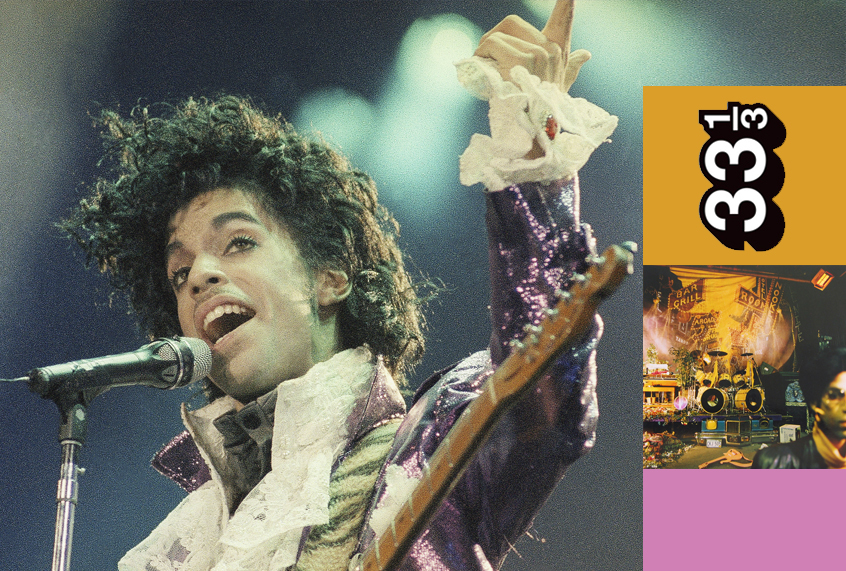
“The Sunlandic Twins” is where Barnes began to stretch out. In musical terms, it’s the album where Barnes discovered rhythm, began to concentrate on the low end as much as the top. Its best song, “Wraith Pinned to the Mist and Other Games,” is held in place by a rolling bass line and a mechanical kick drum inspired by the insistent grooves of Nigerian Afrobeat pioneer Fela Kuti. And just in case it wasn’t obvious that Barnes was looking beyond the psych-pop continuum for fresh inspiration, the album’s credits read, “produced, arranged, composed, performed, engineered, and mixed by,” with “Prince” crossed out and “Kevin Barnes” written in. Like a lot of other indie-label artists, after a decade of riding the margins, Barnes started to think big.
That ambition became even larger with “Hissing Fauna.” Like “Sunlandic,” it skipped styles effortlessly — disco pastiche on “A Sentence of Sorts in Kongsvinger,” dub snares and synths on “Labyrinthian Pomp,” grinding funk strut on “Gronlandic Edit.” Unlike “Sunlandic” (and every prior Of Montreal album), the lyrics dealt explicitly with adult pain — specifically, the separation of Barnes’ marriage (they’ve since gotten back together). “Hissing Fauna’s” centerpiece is “The Past Is a Grotesque Animal,” 12 minutes of what feels like a real-time nervous breakdown, set to a dark, insistent rhythm; at one point Barnes says, “Sometimes I wonder if you’re mythologizing me like I do you.”
Like many performers, Barnes claims not to dwell too long on his work’s meaning as he’s making it. Fair enough, but it’s hard not to hear “Skeletal Lamping” as a continuation of “Hissing Fauna,” both in its richly divergent music and its lyrical preoccupations. Take “Gallery Piece.” Over a splashy new wave rocker, Barnes recites a litany of the things he wants to do to his loved one with a discomfiting intimacy: “I want to hurt your pride/ I want to slap your face/ I want to paint your nails/ I want to make you scream/ I want to braid your hair/ I want to kiss your friends/ I want to make you laugh/ I want to dress the same.” It says something about Barnes’ playfulness that he couches his most wounded lyrics inside his most singsong melody. If I didn’t speak English I might guess that “Gallery Piece” was a nursery rhyme.
That’s the sort of disjunction that feeds “Skeletal Lamping.” The album as a whole is fragmented. Barnes created dozens of short segments that he then sifted the best parts from to piece together the album, and many of the shifts are abrupt. But the lyrics match those dynamics. They’re alternately pained and droll, jumping from the eerie acoustic “Death Is Not a Parallel Move” (“Don’t be afraid, little man, of my troubled mind/ I’m just poisoning you a little”) to the slinky funk sendup “St. Exquisite’s Confessions,” which begins with Barnes singing in his jumpy falsetto, “I’m so sick of sucking the dick/ Of this cruel, cruel city.”
A line like that is part and parcel with the stage persona Barnes has adapted of late. Improbably, he’s shifted from giddy, sardonic nerd to Warholian glam superstar, inspired, he assiduously tells interviewers, by David Bowie and Prince. This persona seems to be making its way into the songs, as on “Wicked Wisdom,” which begins, “I’m a motherfucking headline, but, bitch, you don’t even know it.” And live, he works the persona for all the sexuality he can wring from it — which is plenty. Barnes is lithe and good-looking, and he’s coquettish in concert; last year in Seattle, Barnes ended the show by turning his shirtless back to the audience and turning his head to blow us a kiss on the last song’s final note. Not only is he a geek turned leading man, he’s made himself a leading man by stressing those things (wordy put-downs, loopy tunes, Guy Who Thinks Too Much lyrics) that made him a geek to begin with.
Alas, Barnes will never be Prince. Rather, the band Of Montreal most resemble, at least in long profile, is the Flaming Lips. Both bands are veteran psychedelic bands come up through the post-punk underground; both are known for florid, messy stage extravaganzas; both are late bloomers, careerwise. And both have cults that just keep getting bigger, gathering a kind of critical mass as word spreads about the live show. (That’s especially impressive, given that Of Montreal gave an early-’00s performance so tediously ramshackle it drove a mild-mannered friend of mine to consider violence.) The show I caught last year was a sloppy joy: wigs, men in dresses, and, of course, multiple costume changes for Barnes. He’s earned them.
Listening to the Fiery Furnaces can be like walking down a cobblestone alley that suddenly veers into a sand dune. Since 2003, the band — essentially Chicago-raised siblings Matthew and Eleanor Friedberger — have released six studio albums that are ostentatiously cut-and-pasted together. In Furnaces songs, bridges appear from around corners you didn’t hear coming; words swing from concrete detail to blathering nonsense, never to return. Abrupt segues abound, not only from song to song but also within individual tracks. The Fiery Furnaces have frequently cited the Who as inspiration, and like that band early on, they write chewy little song nuggets; occasionally there’s a sonic resemblance as well. But like few bands of any era, the Furnaces take those nuggets and strew them all over the place — frequently, in seemingly random order.
In practice, this approach is scattershot but frequently brilliant. Matt, who writes most of the songs (and produces, arranges and plays most of the albums’ music), has a gift for tunes as well as production trickery, and he knows his way around both classic-rock guitar riffs and set-piece keyboard parts. Sometimes he gets cutesy: “Clear Signal From Cairo,” a song from last year’s Fiery Furnaces album “Bitter Tea,” features a tinkly melodic tag (“It’s a clear, it’s a clear, it’s a clear“) that’s one of the most annoying earworms I’ve ever encountered. But to listen to “Here Comes the Summer” or “Tropical Ice-Land” (both from 2005′s “EP,” a cheeky title for a work that at 10 songs and 41 minutes has the shape and length of an album, not an EP), or the delicate “I’m Waiting to Know You” (from 2006′s “Bitter Tea”), is to hear a band that can seemingly make perfectly shaped, completely immediate pop records whenever it wants to.
Live albums are usually a way for a band to prove that they rock, and can move an audience without studio magic. But the Fiery Furnaces have no such agenda. “Remember” is 1) a career retrospective and 2) a live double-CD (or triple vinyl LP), featuring 51 tracks that generously represent all of their studio albums. Add to this the fact that in concert, the band obsessively rearranges and distends its own back catalog, frequently jumbling the running order of their songs’ already cobbled-together structures — playing a verse and chorus from Song A, then abruptly shifting to the bridge of Song B, before finishing with one more chorus from Song A. They do so with such searing focus onstage that, seeing them, you might never guess how whimsical their albums sound.
You might figure that recording a couple of recent shows and editing them into a cohesive document of the performances would be easy enough; even using recordings that differ in sound quality isn’t unprecedented — see Nirvana’s posthumous “From the Muddy Banks of the Wishkah.” No, the Fiery Furnaces made their live album the same way they made their studio albums: by taking wildly disparate live versions of songs and stitching them together, within the same track. (The only other live album I’m aware of that’s constructed this way is “Grayfolded,” from 1995, in which sonic trickster John Oswald constructed a two-hour version of the Grateful Dead’s “Dark Star” from concert tapes.) “Blueberry Boat,” which begins “Remember,” is the title track of the Fiery Furnaces’ second album, released in 2004, which introduced Matt’s expanded kitchen-sink songwriting style. That’s the function it serves on “Remember” as well: putting it in pole position seems to be the band’s way of saying, “If you like this, you’ll like it all.”
What there is to like here isn’t too far from what there was to like before. This version of “Blueberry Boat” is listenable (or annoying, if you’re not in the mood) in most of the same ways as the one on the album. Here, it’s eight-and-a-half minutes long and contains nine audible edits. The arrangements veer from a measured duet between Eleanor’s voice and Matt’s electric piano to bony, all-elbows garage rock to what could be a bar-band Zeppelin cover, with Eleanor’s voice under heavy reverb; fidelity ranges from roomy and full to Walkman-condenser-mike. At two different spots in this, the album’s opening song, a new performance is overdubbed onto Eleanor saying good night and the audience cheering.
Yet it sounds like a joke with the band’s fans rather than one at their expense. As much as with the studio albums, there’s a conspiratorial feel, a sense of glee at pushing limits and bringing you along if you’re willing. Even if you’re a fan this can all seem like too much. But too much is what the Fiery Furnaces do best. Because their music is compelling, its fractures become part of the draw; the holes in the narratives invite filling in. The Friedbergers appeal to people as obsessive as themselves: Trekkies, Whovians, comics geeks, people who enjoy stepping into made-up worlds, who like their meanings at least partly buried, who pride themselves on knowing the codes, but don’t mind not getting everything, because it gives them more work to do.
But the Friedbergers aren’t merely prog-rockers in indie rock drag. For one thing, they have no serious pretensions to classical music; for another, it’s the words as much as the music that are the real draw. Matt is one of the most arresting and original lyricists who’s ever worked in pop, and one reason for that is that he grounds his songs in obsessively ordinary detail. If Craig Finn of the Hold Steady makes myth from bored, suburban teenage punk fandom, Friedberger stresses everyday detail so hard it can sound as though the songs are set on Mars. The song “Chris Michaels” (from “Blueberry Boat”) opens, “Later that lunch with the taco-lettuce crunch/ Crunch, she sets herself apart the bunch”; immediately we’re somewhere we recognize, a lunch counter or fast-food joint, but that odd phrase (“taco-lettuce crunch”) serves notice that things are probably going to get weird. Needless to say, they do.
Or try this verse, from “Borneo” (from “Bitter Tea”): “So I gambled on going further afield/ So I flew to Sydney and then to Bali and then to Jakarta/ And called on my stepfather’s ex-business partner, Major Timmy Sastrosatomo/ And he set me up as a silversmith batik dabber/ In a house once owned by the princes of Mataran/ And he told me all his troubles.” Of course he did.
What may be strangest about all this is how naturally those words roll off Eleanor Friedberger’s tongue. Or rather, how easy they sound coming out from between what may be permanently gritted teeth — her phrasing is generally clipped and laser-focused. On “Remember,” the live version of “Single Again” is drenched in Matt’s gurgling analogue-synthesizer effects, but when Eleanor barks the words “My husband he died/ And I laughed till I cried” like they’re being pulled out of her, forcibly, she brings the whole thing back to earth. Her cool tone recalls the young Patti Smith’s, but unlike Smith, Eleanor never explicitly aims for transcendence: She’s singing the words, not the other way around.
Still, a live album is supposed to capture things that you can’t quite get in a studio, and as odd as it may be, that’s true of “Remember” as well. At one point during this version of “Blueberry Boat,” Eleanor hollers an off-mike “yeah!” in response to an audience member doing the same. It’s as surprising as any of the splices, in a way: Eleanor never sounds priggish, but her singing is so no-nonsense it’s easy to forget she’s probably having fun doing it.
That moment (and others, as on “My Little Thatched Hut,” when she introduces “my brother-man on keys” after Matt takes a synth solo) isn’t all that makes “Remember,” for all its trickery, feel like a live album. I’ve seen the Fiery Furnaces twice; neither time did they sound remotely like the other. All their albums are musically distinct. A regular live album might tell one story; “Remember” tells both.
Continue Reading
Close
Indie rock is full of annoying voices. Hell, indie rock was founded on annoying voices, from the low, talky Lou Reed of the Velvet Underground, to the grating likes of the New York Dolls’ David Johansen and the Sex Pistols’ Johnny Rotten, all the way down to Coldplay’s whiny Chris Martin and the screechier works of Conor Oberst (aka Bright Eyes).
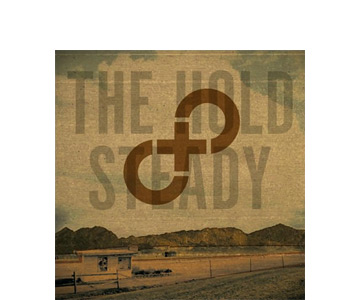
But standing out even in this company is Craig Finn, the lead singer, lyricist and rhythm guitarist in Brooklyn, N.Y., five-piece the Hold Steady. That’s partly because Finn’s voice is both nasal and chesty, a whiny bellow that at times seems like it isn’t aiming for any notes in particular. (Matador Records co-founder Gerard Cosloy once memorably described Finn and his group as “later-period Soul Asylum fronted by Charles Nelson Reilly.”) Still, you can hear on the Hold Steady’s new “Stay Positive” that Finn’s voice has mellowed with age (he’s now 37) and singing lessons. If anything, though, Finn’s lyrics — hyper-detailed, highly allusive, fictional stories about teenage runaways, low-level criminals, copious substance abuse, and the more amusingly desperate edges of the rock lifestyle — are enhanced by his nasal bark.
The Hold Steady identify as an indie band primarily because they’re on Vagrant Records (and before that, the Brooklyn label Frenchkiss). But what they play is closer to ’70s AOR — souped-up and punk-inclusive, but still defined by Tad Kubler’s splashy, muscular guitar leads and Franz Nicolay’s oft-romantic keyboards; bassist Galen Polivka and drummer Bobby Drake form a tough, nimble rhythm section. Bruce Springsteen’s E Street Band is the Hold Steady’s most obvious and direct predecessor (and Bruce loves ‘em back), but others, like Cheap Trick and Boston, are also in clear sonic evidence. And if the Hold Steady evoke the great mid-American summer road trip, Finn’s voice and lyrics expose its dark underbelly.
Finn’s music has long offered a kind of trade-off: Stick around even if you think you can’t stand his glottal bark, because eventually you will be sucked all the way in. Finn has repeatedly told interviewers his favorite fan correspondence is e-mail from dudes around 40 who lost interest in new music a decade or more ago but plan to get stupid drunk and shout along with every word the next time the Hold Steady come to town.
People hear their lives in this band, just the way Finn heard his in his favorite groups growing up. Finn told me in a 2003 interview, “In hardcore circles, there’s a T-shirt that says ‘Straightedge Till Death.’ And there’s another one that says ‘Straightedge Till Prom,’ because most of the people in hardcore are still underage. So I think of [what I write] as post-prom straightedge songs.” Finn’s musical roots in hardcore are especially pronounced on “Stay Positive,” the Hold Steady’s latest album — especially the title track and the album’s opener, “Constructive Summer,” in which Finn raises “a toast to Saint Joe Strummer.” Alternately spieling like an inspired scoutmaster and the one-time 16-year-old in a basement keeping the hardcore faith, Finn declares, “Let this be my annual reminder/ That we could all be something bigger … We are our only saviors/ We’re gonna build something this summer.”
If you go back to Finn and Kubler’s previous band, the Minneapolis quartet Lifter Puller, you can start to see what Finn is building. This earlier band was essentially the Hold Steady in embryo, though there are many differences: Kubler played bass, not guitar, and Lifter Puller’s sound was wiry art-punk, heavy on needling keyboards, rather than widescreen rock. The band was the hub of a thriving arts and music community in late-’90s Minneapolis, scene kings that no one cared about outside the scene. Part of their appeal was the way Finn portrayed his hometown: Most of Lifter Puller’s songs were set there and turned a mostly humdrum city into one crawling with vice, mischief, drugs and action — a squalid, alluring, David Lynchian vision lurking beneath the bland surfaces. Finn’s narrators were the excitable guys insisting they knew where the real action was, and he frequently played their haplessness for laughs. “Fiestas + Fiascos,” Lifter Puller’s 2000 swan song, includes one character yelping, “Woke up in the grass with the assless chaps!”
When the band dissolved in late 2000, Finn and Kubler both made their way to Brooklyn; the Hold Steady began playing in early 2003. Originally a quartet, the Hold Steady deliberately stayed away from the new wave keyboards, brisk tempos, condensed structures and lack of choruses that had characterized Lifter Puller. On “The Hold Steady Almost Killed Me,” the band’s 2004 debut, Finn still set many of his songs in the Twin Cities, but he sounded more amused than bug-eyed, sloshing alongside the ridiculous characters and lost dingbats he was now chronicling, while Kubler set out to re-create the guitar leads from his melted classic-rock car tapes — right enough to catch their essence, wrong enough not to get sued.
Having watched his prior group become a posthumous cult favorite thanks to the Internet, Finn was trying to make something happen. His timing was flawless. When the Hold Steady first appeared, indie rock was the hottest thing going in New York, with the Strokes, Yeah Yeah Yeahs, Interpol and a dozen other bands stirring up excitement even among jaded locals. It was an exciting time for live music in New York; the scene was also very arty and trendy, and as a recently transplanted Midwesterner, those fashiony trappings made Finn bristle. Like a lot of Midwesterners who move east (I speak from experience), Finn began sticking to his traditionalist guns in a way he hadn’t at home — partly ironically, partly out of defensiveness. Take this lyric from “Hostile, Mass.,” on “Almost Killed Me”: “He said, ‘My name’s Corey and I’m really into hardcore/ People call me ‘Hard Corey.’” Sure, cute — but then Finn throws in the twist: “Don’t you hate these clever people and these clever-people parties?” The Strokes spoke to the nonchalantly chic; the Hold Steady spoke for the ex-pats waiting to finish doing their city time and head back to their hometowns. They became the New York rock band for people who hated New York rock bands.
If in Lifter Puller Finn had his tongue at least slightly in cheek when singing about subcultures, in the Hold Steady he began to openly value community — which in turn attracted an audience that was looking for something recognizable with which to connect. Finn’s lyrics were still furiously paced, but with Kubler frequently taking solos you could let the details sink in. And the storytelling style itself was relaxing as well: less brash trash talk, more character study. 2005′s “Separation Sunday” brought to center stage yet another obsession that had occasionally bobbed up in Finn’s work before: Catholic guilt. That album is a loosely plotted suite about a lapsed Catholic girl, Holly (short for Hallelujah), who goes on a sex-drugs-resurrection road trip. “Boys and Girls in America,” from 2006, was baldly romantic and occasionally just wet, with acoustic instruments increasingly prominent. But its discrete songs and Finn’s more melodic approach help put them over to a larger audience — the kind you get from constant touring. It’s hard to think of the Hold Steady as a New York band now: They’ve become festival-happy road dogs who frequently sport beards.
“Stay Positive” is a natural progression — backward and forward. Nothing rhythmically fancy goes on in Hold Steady songs, but their beat hurtles, and Kubler and Nicolay both have a gift for instrumental fills that complement the onslaught of words. While there are a lot of new touches, particularly the brazenly plastic synthesizers of “Navy Sheets” and a handsome array of acoustic instruments on several songs, most of the time they just play basic rock. But they do it well enough that it can feel like you haven’t heard its like in years. No new ground is broken; none needs be.
Still, for all of the vigor of the up-tempo rock songs that dominate, “Stay Positive” is clearly the work of a bunch of guys who are nearing 40 and thinking about what that means. The harder edges of the music seem not so much hemmed in as blurry from use. But musically the Hold Steady are starting to look back too, beyond the hardcore references. The “Navy Sheets” synth line is a clear hat-tip to the Lifter Puller sound. You can always tell a band is “maturing” when the cellos come out, but here the banjo (played by J. Mascis of Dinosaur Jr. on “Both Crosses”), squeezebox (“Lord, I’m Discouraged”) and harpsichord (“One for the Cutters”) add new shades to the well-established sound.
The main thing, though, is the way Finn connects back to his earlier work. He’s repeated lines from, or referring to, older songs as a matter of course, but on “Stay Positive,” there’s a sense of finality when he brings up old characters again. Maybe that’s Finn’s voice, more casually weary than ever, but it’s also logical. That’s why this album’s center feels less like its explicitly punk roots than magisterial ballads like “Lord, I’m Discouraged” and “Both Crosses.” Both songs wrestle with Catholicism again, and Finn begins another song, “Yeah Sapphire,” “If I cross myself when I come would you maybe receive me?” (Bet that works great with the ladies.)
What connects everything is that for all the drugged-out messes he chronicles, Finn is about as far from a nihilist as rock has. What he’ll never expunge from the church is the same thing he can never forget from all those basement shows as a kid: the sense that you can make yourself more powerful by giving in to the collective. He isn’t trying to be anybody’s savior. He just wants to spread the word.
Continue Reading
Close