Myra MacPherson

The private war of Chuck and Tom Hagel

After saving each other's lives in combat, Chuck Hagel, the future Republican senator of Nebraska, and his brother Tom fought about Vietnam and Iraq -- until they finally saw eye to eye.

  • more
    • All Share Services

The private war of Chuck and Tom Hagel

In 1968, through a fluke that remains a mystery, Chuck Hagel and his younger brother Tom became the only known American siblings to serve in the same infantry squad in the Vietnam War. The future Republican senator from Nebraska and anti-Iraq war maverick, then 21, fought side by side with his little brother in the steaming jungles of the Mekong Delta. They walked point together, they watched comrades get ripped in half by land mines, and they sent five Purple Hearts home to their mother. They also saved each other’s lives.

Tom, two years younger than Chuck, saved his older brother first. Normally the Hagel brothers walked point, but one morning in 1968 they had rotated to the rear as their column of soldiers crept through the jungle. The soldier who took their place that day met instant death as he stepped on a huge land mine. Flying shrapnel ripped through the squad. It hit Tom’s arm, but a bigger chunk lodged in Chuck’s chest. Ignoring his own wound, Tom frantically wrapped compression bandages around Chuck’s chest to stop the fountain of blood, praying his older brother would live long enough to make it out of the jungle.

A month later, their roles were reversed. Chuck saved Tom. During fierce combat, Chuck dragged an unconscious Tom out of a burning armored personnel carrier just before it blew up, turning his own face into a mass of bubbling blisters. Blood poured out of Tom’s ears and now it was Chuck’s turn to pray. Later, as he himself lay in a makeshift hospital close to death with severe burns, Chuck Hagel reflected on the horror of combat. “I vowed then to do what I could to stop wars,” he told me years ago. “There is no glory in war.”

When Chuck and Tom returned home to Nebraska, however, their similar experiences did not translate into similar politics. Their divide mirrored the deep ideological split of the nation. Tom thought Vietnam was a horrible waste. Chuck thought Vietnam was a noble cause gone wrong. Their disagreement over Vietnam led to shoving matches and fistfights.

In the years after Vietnam, Tom became a law professor and passionate liberal, Chuck a wealthy entrepreneur and senator and equally committed conservative. It took the brothers decades to reach a rapprochement about Vietnam, as Chuck gradually accepted some of Tom’s arguments about the waste of American lives. When it came to the Iraq war, however, it took only a fraction of that time for their shared experiences to bring the brothers to similar conclusions, and to turn Chuck Hagel, as he proved again on April 26 with his vote for withdrawal, into the most visible Republican opponent of President Bush’s Iraq policy.

Tom and Chuck Hagel were always opposites. In Roman Catholic school in Columbus, Neb., a town of 12,000 an hour and a half west of Omaha, Chuck managed to be both popular and the teacher’s pet. He was a class leader, the homecoming king and a member of the football team. And he was always profoundly ambitious and interested in politics. Friend Dave Kudrow claims that when Hagel ran for student council, he had a campaign staff. “He made the prediction when in high school that he would someday be a senator.” In college Hagel even signed a letter to an aunt “your nephew and United States senator.”

Tom, on the other hand, was the rebel and class clown who did imitations of the nuns until he got kicked out of St. Bonaventure High. But he was so popular that after his expulsion, many of his classmates followed him out the door to public school.

But they both grew up poor. As their father bounced from small job to smaller job, the six-member Hagel clan moved from one little Nebraska town to another. One summer the four Hagel brothers, Chuck, Tom, Mike and Jim, even slept in a chicken dormer with chicks; another time they briefly lived in the furnace room of a hotel.

In that long ago other world, when the Hagels were living in Ainsworth, 7-year-old Chuck would awake in the dark, stuff wire cutters into his pockets and trudge to the nearby railroad station. Few passengers ever disembarked in a Sand Hills cattle town so remote that it proudly called itself “The Middle of Nowhere.” Bundles of the Omaha Herald were tossed onto the platform from the still-moving train. In the winter, Chuck’s hands would grow numb as he took off his mittens to cut the wire bundles, then deliver the paper around town with his sled.

Charles, the elder Hagel, had been a tail gunner in the Pacific during World War II and, on his return to Nebraska, was a hit at the Veterans of Foreign Wars halls. But professionally he was thwarted by his own father, the proprietor of a lumberyard chain. Charles moved from town to town working as a financial troubleshooter at the family stores until he quit. “His dad even told him once, when he had gotten a job someplace else, ‘If you leave, I will disown you,’” recounted Charles’ widow, Betty Hagel Breeding. Disillusioned by life, Charles doted on and transferred all his aspirations to his eldest son and namesake, Chuck. And he went on drinking binges that devastated the family.

Some years ago, sitting in a crimson silk high-back chair in his Senate office, Chuck Hagel told me about the tension that would build when his father did not show up for dinner. “Mom would have to get the car and go to the bar and get him.” There was no money for a baby-sitter and so the whole family went, the three youngest sitting with wide eyes in the back seat. “I remember it as if it was yesterday,” recalled Mike Hagel, the third-oldest brother. “Sitting there. Cold as hell. Waiting for Mom to come out of the bar with Dad. You try to block those things out. When kids in the neighborhood would say, ‘Your dad’s a drunk’ — that would hurt. But when he was sober he was the greatest guy with a great sense of humor.”

With their mother holding up their father in the front seat, Chuck, who could barely see over the steering wheel, would get in the driver’s seat. Said the senator quietly, “I’d have to drive the car home. At 11 years old.”

When he was drunk, Charles took out his anger on his second-oldest son, Tom. “For some reason, the focus of his anger was me,” Tom recalled. It didn’t matter that Tom was the one who looked like Charles. He sought in vain the same approval that Chuck got without trying. “Oh, man, it was not good,” Tom said. “Either something I did would trigger it, or I would be the outlet. I spent my life waiting for the shoe to drop. ‘Is he going to come in, going to be sober, what’s going to happen?’ … I could see it in my mother, right on the edge, very tense.”

As he got older, it became Chuck’s job to defend Tom. When he stepped into the fights, he too started taking blows from his dad.

“How it affects you,” he continued, after a pause, “is that you’re just hoping that tomorrow night is not one of those nights your dad goes on one of those. Because it’s just a terrible thing. To see your brothers crying, to see your mother upset, it’s a terrible thing that families go through.”

Charles was out drinking on the last night of his life, Christmas Eve, 1962.

Tom, who was then 14, remembers that “the last contact I had with him was him beating me up. Jim [the youngest Hagel brother] and I were wrestling around, knocked over the Christmas tree, and we put it back. [Dad] chased me through the house. He was drunk. He said he was going to kill himself.” Tom remembers a bottle of empty sleeping pills and a bottle of whiskey by his father’s bed.

The senator deflects the inference. “He may have taken some sleeping pills, but the death certificate said heart attack,” he said. Their father was only 39, but Hagel says he had health problems, by no means entirely alcohol related. “He’d had rheumatic fever when he was a child and couldn’t play sports and had malaria in the South Pacific, which was a terrible strain on your heart, and then he had polio when he came back, wrecked three cars, which he walked away from, except one, when he broke his back.”

Chuck’s final memory of his father remains haunting. After the fight on Christmas Eve, his father came down to Chuck’s basement bedroom. “And I didn’t want to talk to him. I was so upset with him that he ruined Christmas. I told him to ‘leave me alone.’ And ‘Go back upstairs.’ That’s the last thing I said to him.”

Telling the story decades later brought no emotion to Hagel’s face. “At 16 you’re sailing into rough waters anyway … My dad and I were starting to have some friction. When he drank, it made it worse.”

The Hagels were living in Columbus, where Charles had been a salesman for a concrete company. Their home was a one-story frame bungalow with a basketball hoop above the garage door. Across the street lived Frank Murphy and his wife, known to one and all as Babe. Their house was a second home for the Hagel boys.

“The worst day was that Christmas morning,” Babe recalled, “when Jim [Hagel] came over and said, ‘There’s something wrong with Dad. We can’t wake him up.’ And then Betty and all the kids came over here. Chuck and I went over, stripped the bed, cleaned up. [Chuck] stayed right with me.”

All of the Hagel boys credit their mother, Betty, for the strength they showed after their father’s death. “She was the glue that held us together,” Mike said. “She was 39 and she had four sons to raise.” But Chuck, always the responsible firstborn, grew up instantly when his mother told him, “You have to be the man of the house now.’”

Just over six years later, both Chuck and Tom had been to Vietnam and back. Chuck returned to Nebraska first. His facial wounds, which had become infected with jungle rot, were still raw. They would take a decade to heal fully. “I could never shave with a razor blade, just electric, because I would whack off new layers of skin coming onto my face.” Meanwhile, he says, he “never had a moment’s rest” until his younger brother made it home too. Before his tour was up, Tom got a second Bronze Star for valor when he took out a sniper. He also got a third Purple Heart, but his deeper wounds included bouts of post-traumatic stress disorder.

When her sons made it back from the war alive, their mother’s relief was enormous. Then, as if playing out some horrific Greek tragedy, death came but a few miles from home. One night in 1969, Jim, the baby of the four Hagel brothers, then 16 and a star quarterback, hit a telephone pole with his car after a party. Tom had to identify the body. After all the dead he had seen in Vietnam, Tom took it very hard.

Now ready to begin their adult lives, it was apparent that Tom and Chuck had had very different reactions both to the horror they’d seen in Vietnam and to their hardscrabble upbringing. Tom went to law school and worked as a legal aide for the poor before becoming a law professor at the University of Dayton in Ohio.

Chuck was a conservative. After Vietnam, Chuck graduated from the University of Nebraska at Omaha and moved to Washington to work for Republican Rep. John McCollister of Nebraska from 1971 to 1977. But his combat experience had given him an empathy for the suffering of wounded soldiers. When Ronald Reagan won the presidency, Hagel became the deputy administrator for the Veterans Administration, inspired, as he put it, to work for Vietnam veterans “who were getting a raw deal.” Soon he was embroiled in an effort to oust his boss, V.A. director Robert Nimmo, who had referred to Agent Orange as nothing more than a “little teenage acne.” Hagel took the battle all the way to the White House. In 1982, after Hagel lost the fight, the Los Angeles Times editorialized that the wrong man had been fired.

That’s when Hagel sold a 7-year-old Buick and two insurance bonds to gamble his net worth of $5,000 with two more solvent partners on a then-untested and unknown technology. Friends laughed in derision when he held a loafer to his ear, like the character with the shoe phone in the old TV spy spoof “Get Smart,” and told them, “You just wait, in 10 years people will be walking around holding these little pieces up to their ears.” Hagel’s company, Vanguard International, became, for a time, the second-largest cellular phone operator in the world.

According to Tom, his own experience of doing without, of being on the outside looking in, inspired him to pull for the underdog. His brother’s reaction to being on the outside, Tom says, was to try to get inside. Always ambitious, Chuck wanted access to wealth and power.

Having achieved wealth, Chuck made his bid for power after returning to Nebraska in 1992 to run an investment bank. He began to plan for his political future and for the realization of his childhood dream of being a senator. “He has,” said a former partner, “a Rolodex the size of an oil drum.” In 1996, after Democrat Jim Exon retired from the Senate, Hagel won a landslide victory in the Republican primary and an upset victory in the general election to succeed him.

After fewer than four years in the Senate, Hagel the war hero was on George W. Bush’s short list of potential running mates in 2000. Once Bush was in office, Hagel signed on to his tax cuts and other agenda items. He had already racked up a nearly perfect score for his voting record from conservative watchdog groups. Tom was troubled by how little his brother, despite his own past, seemed interested in the plight of the less fortunate. “When I hear him talk about a legislative agenda, nowhere do I hear any concerns that would have an impact on poor or lower-middle-class people.”

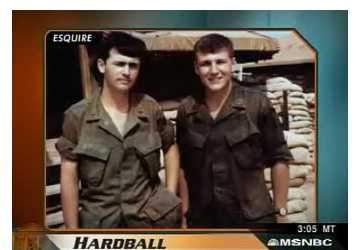
But on the subject of their experience in Vietnam, the brothers were finding common ground. Today on Chuck Hagel’s Senate office wall there is a montage of three pictures of the two brothers — one when they were young soldiers in fatigues and two taken in 1999 when they returned to Vietnam together for the first time.

The pictures were taken at a ceremony in Ho Chi Minh City, once known as Saigon, where the two were part of a delegation that attended the opening of the first American Consulate since the war. During the same trip, Tom and Chuck returned to the war zone, to the riverbank where Tom had saved Chuck. The trip was filmed for a documentary.

In the footage from the trip to the Mekong Delta, you can see in the brothers’ faces a startled sense of being transported in time. Their van drives into the familiar green tangle of the humid jungle, and they roll the windows down. Into the vehicle waft the pungent smells of village coal fires and outdoor privies, and the suffocating heat, all unchanged.

Tom is overcome with emotion standing by the river where friends lay dying so many years ago, a river that flowed red with blood — “like Campbell’s tomato soup,” he says. In one scene, Tom chokes up and has to walk away from the camera. “It was probably one of the most difficult emotional experiences of my life. Overwhelming. I was consciously, physically trying not to cry much of the time,” he says.

Back in the United States, far from the scene, talking about the trip and the making of the documentary, Tom’s face went ashen recounting how a friend died. “Someone had pulled him out and he was leaning up against a tree with just …” He motioned to the knee area where the soldier’s legs had been blown off. He choked back tears, and there was a long pause. “Whew,” he said, clearing his throat.

The senator, meanwhile, said that the return to the jungle “was much harder than I thought it would be.” Yet during the trip, at least on the surface and on camera, he remained characteristically cool. In general, Tom said, even during the period when he and his brother were having fistfights about the politics of the war, Chuck has kept the same equilibrium when he talks about his experiences. “I have never, ever,” Tom said, “seen Chuck express himself about Vietnam emotionally at all.”

What is different now, Tom said, is his brother’s feelings about the meaning of the war: There “has been a sea change for Chuck, and that is about the core of the conflict between us, the Vietnam War, whether it was justified and all of that. He has now come around 180 degrees in his thinking. I never changed my feelings.”

Hagel told Tom the same thing he has told others. What finally opened his eyes and turned him around was listening, in recent years, to tapes of Lyndon Johnson and his advisors, tapes that were made two years before the teenage Hagel brothers went to Vietnam. The tapes, Tom said, “acknowledged that they weren’t going to win the war but kept dragging it on to get the best deal. They sent people to a slaughter just to wait it out to get the best political deal.”

Tom’s sense of having been betrayed, like that of many veterans, was so intense and immediate that, he said, “it used to drive me nuts that Chuck couldn’t see it. It seemed to me so clear that we were used.”

Now, Tom said, without bitterness, “we have just finally laid it to rest.”

In 2007, the brothers are again on the same side about a war. Once again, they got there from very different places. Tom opposed the war in Iraq from the start. As he listened to the 2002 congressional debates about granting the president the authority to go to war, he cheered as his brother the senator expressed serious reservations — “imposing democracy through force is a roll of the dice.” Then Chuck voted with the majority. Said Tom, “He just couldn’t pull the trigger.”

Today, Chuck Hagel, who confirms that he and his brother have “talked about [Iraq] a lot of times,” emphasizes that he had “very significant concerns early on.” He also takes care to note that Democratic presidential hopefuls Hillary Clinton, John Edwards and Joe Biden, like him, voted to authorize the president to go to war. He explains his vote this way: “I believed the president and others who said they would exhaust all diplomatic efforts. Which they did not. They told us they would and they did not.”

He turned against the war as it became a morass. He saw the parallels with the earlier war he’d been slow to condemn, and soured on it far more quickly. When President Bush announced plans for the surge, Hagel called it the “most dangerous foreign policy blunder in this country since Vietnam.” Then in March, Hagel clinched a win for the Democrats by voting with them for a war-funding bill that mandated withdrawal by 2008. On April 26, when the Senate passed the final version of the bill, Hagel again sided with the victorious Democrats. He was one of two Republicans to cross the aisle in a 51-46 vote.

President Bush has vowed to veto the bill, calling withdrawal the prelude to a bloodbath. Hagel is furious at the president for trying to shift blame to Congress and for equating support for withdrawal with not supporting the troops. “I am solidly behind where we are in the Senate, how I voted,” Hagel said. “It is wrong to escalate our military involvement in Iraq. It will end in disaster. You bog down and you bog down and you can’t get out.”

The day after my most recent of many interviews with him, Hagel left Washington for his fifth visit to Iraq. While in Iraq, he took a swipe at surge supporter John McCain during a press conference. “We didn’t go shopping,” said Hagel, archly, referring to McCain’s infamous stroll through an open-air Baghdad market while protected by massive firepower. On his return from Iraq, Hagel gave his younger brother Mike a grim assessment. “Every time I go over,” he said, “it gets worse. It is so bad now it is pathetic.”

In his office, prior to the trip, he was more measured. “An additional 50,000 troops is not going to turn that around. We cannot stay as an occupying force, which is essentially what we are. It is a violent sectarian conflict fully complicated by an intrasectarian conflict. That’s a civil war. To put American troops in the middle of that is wrong, and to further escalate our military involvement is wrong.”

To that, brother Tom would say amen.

“We cannot stay as an occupying force in the Middle East”

Sen. Chuck Hagel talks about his presidential ambitions and why he sided with Democrats on Iraq.

  • more
    • All Share Services

Nebraska Republican Chuck Hagel, who is otherwise a rock-ribbed red state conservative, has been called a “defector” and “defeatist” for clashing with President Bush on the Patriot Act, warrantless wiretaps and the war in Iraq. Most recently, he has inspired GOP ire by siding with Senate Democrats who want to set a timetable for redeploying troops from Iraq. On Thursday, Hagel again voted with Senate Democrats when they passed the final version of a bill that tied funding for the war with bringing soldiers home. Nebraska’s Republican attorney general has said he is seriously considering challenging Hagel in the 2008 Senate primary because many Nebraskans were unhappy with the senator’s criticism of the president.

In March, the decorated Vietnam veteran took abuse from another quarter, the miffed media, when he called a press conference to make his “non-announcement announcement” that he hadn’t made up his mind whether he would run for the White House, seek Senate reelection or just quit politics in ’08. The actions of the leading Republican war critic were called “bizarre” by one pundit and bordering on “flakiness” by another who was clearly unfamiliar with Hagel, who seldom makes a non-calibrated move.

Those who know Hagel best won’t be surprised if he jumps into the 2008 presidential race after all. The people who grew up with him have no doubt that the White House has been his lifelong goal. His brother Tom, who fought alongside Chuck in Vietnam, feels it’s a natural trajectory. “Chuck is one of the most focused human beings I have ever met … It was like he had a game plan from the time he was 15 years old.” Asked if Chuck plans to run, his other brother, Mike, says, “I know he wants to.” According to Mike, Chuck Hagel said, “Why jump in so soon? People are going to be so sick and tired of everyone beating each other up.”

During a recent interview in his Senate office, Salon asked Sen. Hagel about his presidential ambition, or lack of it, his position on the war in Iraq, global warming, and his feelings about the “defector” on the other side of the aisle, Sen. Joe Lieberman.

Why did you vote for the resolution giving the president the authority to use force in Iraq in 2002? Bob Graham [then a Democratic senator from Florida], read all the intelligence available, had doubts about the threat Saddam’s alleged WMD posed and voted against the resolution.

That was not the reason I voted for the resolution. I wasn’t convinced [of WMD] or in any way connected Saddam Hussein with 9/11. Before we even had the vote I said that. Some get the resolution wrong. It wasn’t a resolution to go to war … Ultimately it was giving the president authority to use force if all the diplomatic efforts fail. If there was no other recourse it would allow the president to use force. I believed the president and others who said they would exhaust all diplomatic efforts. Which they did not. They told us they would and they did not.

Do you feel like you were sandbagged?

Let me finish my answer. The president is the commander in chief and I think it’s smart to give him that if all the other pieces add up.

Why did you change your mind and vote for the Democratic-sponsored Senate bill that calls for a withdrawal timetable?

The Senate bill establishes goals for withdrawal. I felt after four years it has gotten worse by every measure. Our reasons for going in — and they depended on the moment — we changed the reasons many times. But we cannot stay as an occupying force in the Middle East, which is essentially what we are. All polls show that that’s what the people of Iraq think … The future of Iraq will be determined by the Iraqi people. It is a violent sectarian conflict fully complicated by an intrasectarian conflict. That’s a civil war. To put American troops in the middle of that is wrong and to further escalate our military involvement is wrong.

What do you say to people who say you’re withholding funds for the troops?

That’s not true. That’s just not true.

Senator Lieberman said that a vote for this measure would be viewed as a vote for defeat.

It cannot be viewed in a simplistic defeat or victory concept. That’s totally irresponsible. There is not one member of Congress who is advocating defeat. We have a war in Afghanistan that’s not going well, we’re undermining our own interests in the Middle East, we’ve destroyed our credibility in the Middle East and around the world. We’ve destroyed military infrastructure that took 30 years to build, and it’s getting worse in Iraq. To question the policy or go in a different direction is anything but unpatriotic. That’s what we must do in a democracy.

I saw your angry verbal tangle with Lieberman on “Meet the Press” in January.

[Laughs] Joe and I are actually good friends. You can never take anything personally up here. I never have … If there is someone up here I don’t like, well, I won’t tell you. You don’t take your colleagues home every night for dinner or go on long vacations, but you take what you have here and make it work because every day is a new day. The person who opposes you today may be your greatest ally tomorrow.

How do you feel about being called “flaky” or a “defector”?

I’ve been called a lot of things in this business. You just do what you think is the right thing to do.

The media took you to task for what it called your “non-announcement announcement” in Omaha in March about whether to seek the presidency.

I don’t see it that way. I made an announcement as to what I was going to do. I was surprised at the response. We didn’t try to get anybody there, my family was not there, we didn’t make calls to the Republican Party. We didn’t tell anyone to come. In fact, there was only one network reporter there … It was an announcement I owed the people of Nebraska — that I would make an announcement of what I was going to do after the first of the year.

But I’ve got to do it my way and on my time frame. I was not ready to make an announcement on what I was going to do about my political future. Now, what expectations were built up was not my problem. I was astounded by some of the network garbage I heard a few days before my announcement. I heard that I was going to be running as an independent for president, that they knew “for sure” I was establishing an exploratory committee … We never misrepresented. That’s all I can do.

You are also taking heat from Republicans for challenging President Bush and for siding with the Democratic Senate supplemental bill that includes a timetable for troop withdrawal from Iraq. How do you see this affecting your future? And what about the future of the Republican Party?

First, as is always the case, when a political party has a president, that president is the leader of the party. And when that president is not doing well, with a very unpopular war — two wars — he drags the party along. The Republican Party is in great disarray. Conservatives are very upset that we built the biggest government in history since FDR … That’s not what most Republicans feel is the philosophy of their party. Deficits, big spending, more regulations, scandals, Libby, Foley — so you’ve got a party in a lot of trouble.

How do you view the campaign for the presidency at this time?

No one is breaking out … Look at how early they started. [Look at the] astounding amount of pressure, the astounding amount of money … You’ve got more than 20 months before the actual election, a little less than a year before the actual primaries start. What’s going to happen in this period is completely unpredictable.

McCain is now being shot down for his statements about Iraq being safer.

That’s what happens when you’re out there. You have all these cable and television shows. It’s all about destruction … It’s all about destroy, destroy, destroy, bring the person down. I don’t care if it’s Hillary, Obama or John McCain. It’s the fodder for the show. Keep bringin’ ‘em down, keep bringin’ ‘em down. Now if you’re the front-runner out there, you’re going to have to sustain all this for a long period of time.

You say, “This is the most fluid, unpredictable time in modern history.” What do you mean?

Well, you’ve got this “Unity 2008,” these independent things that are happening.

Does that interest you?

I don’t know, that’s something that’s out there.

Would you run on a combined Democratic/Republican ticket, which is the Unity ’08 concept?

Well, I haven’t thought about it. I’ve been briefed on what it is … I think that that could end up a very credible effort. It would be a ticket. The American people, whether Democrat or Republican, are so fed up with Washington. They think both parties are in the pockets of big labor, big government or some big entities and the little guy doesn’t have as much of a voice. The lobbyists, the lawyers, the special interests are huge. This place is entangled with the web of special interest in both parties. It’s gotten worse.

If you run you have to have money. How are you going to catch up?

I started raising money again. My focus was on my PAC. I give one of the highest percentages of my PAC money away. I raised over a million for other candidates. I started raising money and raised a quarter of a million in the last quarter for Hagel for Senate … You can move that over to a presidential exploratory committee … I’ll make a decision later — whether to seek a third term, whether to just get out or seek the presidential nomination.

Whom would you most want to run against?

i have admiration for all of them that are out there. Anyone who puts himself in that position deserves credit, whether you agree with them or not.

How and when are you going to decide?

It will have to be a family decision. It’s too tough to do it otherwise … We will make a decision when it’s time to make a decision.

You once told me your manhood was not tied up in this job and it wasn’t your last job.

I hope it’s not my last job … But it is a privilege beyond any I could ever imagine to be a part of our country in this way. Arrogance is part of the business. Power is what drives a great deal of this business … but in all that there are a tremendous number of very committed people, both Republican and Democrat.

Does it bother you when people try to pigeonhole you ideologically?

I’m a conservative, no question about it.

What about the “conflict of interest” innuendoes that continue to surface on blogs about you having a percentage in a company that owns one of the largest voting machine makers in the country, ES&S? ES&S is owned in part by the McCarthy Group, in which you still have a small interest, and the chairman of the McCarthy Group was your campaign finance director in 2002. Do you think you have to justify having an interest in a company that owns a large voting machine company?

I never had anything to do with ES&S. Anyone can say anything about anybody, including dishonest things. All you can do is give the facts, which are this: I had been on the board and at one time was chairman of American Information Systems [AIS, founded by Todd Urosevich. As of the 2004 elections, Todd Urosevich and his brother Bob owned Diebold and ES&S, the nation's biggest electronic voting machine manufacturers]. It was on my bio, my financial disclosure reports, everything. I resigned from that company, from that board, as I did all other boards, more than a year before I ran for office and never had anything to do with that company again. It was an Omaha-owned company that had nothing to do with ES&S. McCarthy & Co. — the company I was president of — owned a percentage of AIS.

Do you believe in global warming?

The question has never been “Is there global warming?” It’s how do you deal with it. Of course we have man-made greenhouse emissions. I — and 95 of us (in the Senate) — didn’t agree with [the] Kyoto [Protocol]. How do you deal with it? Do you cap trade?

Did you read “An Inconvenient Truth”?

I read excerpts.

Did you see the film?

No. But I think Al Gore makes a significant contribution.

Continue Reading Close

McNamara’s “Moron Corps”

HBO's "Path to War" leaves out some of the most shameful brainstorms of the Vietnam War's masterminds -- including a little-known recruitment program that turned the mentally and physically deficient into cannon fodder.

  • more
    • All Share Services

McNamara's

The highly acclaimed HBO movie “Path to War” powerfully details President Lyndon Johnson’s descent into the disastrous quagmire of Vietnam. LBJ is depicted, in part, as a victim of his defense secretary, Robert McNamara’s, intellectual arrogance and duplicity. But the film spares McNamara from the deeper moral condemnation he deserves, entirely overlooking, for instance, one of his most heinous acts as the chief architect of the war — a cynical recruitment gambit aimed at the underclass known as “Project 100,000.”

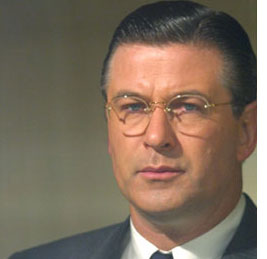
The HBO film premiered on May 18, but it continues to play in heavy rotation — in fact, it can be seen twice on Thursday, at 4 p.m. and midnight EST — which is why the untold story of McNamara’s Vietnam years bears closer review. In the film, Alec Baldwin admirably depicts McNamara’s buttoned-up style and automaton-like self-assurance. The bespectacled “Whiz Kid” was an engineer of death, known for his dispassionate litanies of bomb tonnage and civilian and troop casualties. In one scene, McNamara is shown “grading” various aspects of a planned bombing operation aimed at North Vietnam. When he is told that the number of civilians killed might be high, he says, “Give it a D.”

As the months drag on, his estimates of how much punishment North Vietnam can sustain before it surrenders prove woefully wrong, but the Pentagon chief continues to urge escalation, while in private confiding to friends that the war cannot be won. One of those friends was Johnson’s nemesis, Bobby Kennedy. When LBJ finally eases his defense secretary out (to become president of the World Bank), McNamara is not conscience-stricken about his management of the war; in fact, he wistfully wants to remain at the Pentagon — despite the enormous stress his job has brought to his wife and family, which “Path to War” graphically illustrates.

“Path to War” strives hard to humanize McNamara — there are brief views of him agonizing at the grave of President Kennedy, choking up at his farewell speech and offering a half admission at a congressional hearing that “expectations” of winning might not be realized.

But in doing this, the film overlooks the darkest aspects of his reign as a Vietnam War mastermind, including his shameful brainchild, Project 100,000. By 1966, President Johnson was fearful that calling up the reserves or abolishing student deferments would further inflame war protesters and signal all-out war. And so, even after McNamara began privately declaring the war was unwinnable, the defense secretary devised Project 100,000.

Under his direction, an alternative army was systematically recruited from the ranks of those who had previously been rejected for failing to meet the armed services’ physical and mental requirements. Recruiters swept through urban ghettos and Southern rural back roads, even taking at least one youth with an I.Q. of 62. In all, 354,000 men were rolled up by Project 100,000. Touted as a Great Society program that would provide remedial education and an escape from poverty, the recruitment program offered a one-way ticket to Vietnam, where “the Moron Corps,” as they were pathetically nicknamed by other soldiers, entered combat in disproportionate numbers. Although Johnson was a vociferous civil rights advocate, the program took a heavy toll on young blacks. A 1970 Defense Department study disclosed that 41 percent of Project 100,000 recruits were black, compared with 12 percent in the armed forces as a whole. What’s more, 40 percent of Project 100,000 recruits were trained for combat, compared with 25 percent for the services generally.

Since “Path to War” makes much of Johnson’s civil rights concerns, the filmmakers had a perfect place to introduce the awful irony of Project 100,000 — the scene where LBJ pins a Purple Heart on a wounded black soldier. Unfortunately, few today recall this particularly shameful chapter from the war. Even two decades ago, accounts of Project 100,000 in my book “Long Time Passing: Vietnam and the Haunted Generation” were met with disbelief — even by many who had lived through the era. Soldiers remembered it, however. As Herb DeBose, a former black first lieutenant who was director of a New York City employment program for veterans, said at that time, “I think McNamara should be shot. I saw him when he resigned from the World Bank, crying about the poor children of the world. But if he did not cry at all for any of those men he took in under Project 100,000, then he really doesn’t know what crying is all about. Many weren’t even on a 5th-grade level.”

Do not look to Robert McNamara’s 1995 memoir or his more recent musings for any information on this project. “In Retrospect: The Tragedy and Lessons of Vietnam,” his bloodless account of how he and his colleagues in the Kennedy and Johnson administrations were “wrong, terribly wrong” about Vietnam, conveniently ignores this deplorable brainstorm of his.

Because of his intellectual dishonesty, McNamara remains a figure of contempt among Vietnam veterans. “Every time he writes something, people say, ‘Isn’t it wonderful — he’s making some admissions about how the war was poorly run.’ But he knew it at the time. And yet he becomes a historian of record and is given respect by a whole group of people who have no idea what it was really like,” says Bobby Muller, who helped found Vietnam Veterans of America and was a Nobel prize winner for his international battle to ban land mines. “There were millions of people on the streets saying the war was wrong — as well as academics, clergy, veterans and so on — and he says, ‘We didn’t know’? I find that remarkable.”

McNamara “knew at the time” because not just antiwar protesters were telling him his policies were wrong and doomed to fail, but — as the HBO film forcefully shows — other high-level presidential advisors, such as George Ball and Clark Clifford. If historic calamities like Vietnam seem inevitable in retrospect, they are not while underway. This is “Path to War’s” greatest contribution — it brings home once again how tragedy is a human enterprise and how much suffering can result from the arrogance of power.

Continue Reading Close

Gored in Miami

The Eli

  • more
    • All Share Services

Unfolding like a Greek tragedy, Al Gore’s 11th-hour — or rather, 13th-hour — bid for the White House is not without a horrible irony for the vice president.

The Gore team this week deplored the Miami mob that shouted, screamed and nearly shoved through the door of a government building — thus succeeding by intimidation in halting the Miami-Dade County canvassing board’s recount of crucial votes. Losing that recount in a county where a majority of the votes were expected to be favorable to Gore may well cost him the presidency.

But guess who was among that crowd drummed up by the Republicans? The same Cuban-Americans whom Gore had tried so hard to woo by pandering to them over the fate of a little Cuban boy who washed up on Florida shores a year ago this week.

Remember back that far? Rather than risk Cuban-American animus or votes — a largely Republican vote to begin with — Gore refused to support his own administration’s position on the case. He would not say that the United States had the legal and moral authority to return Elián González to his father and, thus, Cuba, arguing instead that a state family court should make the decision.

His statements backfired — not only did they not attract the anti-Castro Cuban-American community to his banner, they alienated and enraged many members of Gore’s hardcore Democratic base of non-Hispanics in bitterly divided South Florida. Some defected to Nader. Others sat out the campaign or voted halfheartedly rather than working to help elect him.

Was Gore haunted by that waffling past this week when — faster than you could say Elián — Miami’s Cuban-Americans answered the call from the right once more, this time dealing the vice president’s candidacy what could be a mortal blow? They answered the call from the Republican Party, from the staunchly Republican Spanish station Radio Mambi, from U.S. Reps. Ileana Ros-Lehtenin and Lincoln Diaz Balart — the one who gave Elián a puppy, remember? They were asked to do what they do best — protest, shout, raise a ruckus. Perhaps there were some leftover Elián signs they could have dusted off and used in the name of freedom.

Though the counting officials caved, the Democrats didn’t abandon their fight. Former New York Gov. Mario Cuomo went on CNN to say that even though the Republicans can “bring in more thugs … frighten them into submission the way they did in Miami-Dade,” the Democrats would not give up the recount battle. And they have indicated their intention to contest the final vote tally from the county after the statewide election is certified.

This sort of mob rule when it comes to anything related to Cuba is not mystifying to Miamians. They witnessed it well before Elián, when Cuban-American protesters marched, shouted obscenities and threw rocks at concert-goers who were simply trying to attend a performance by musicians visiting from Cuba. They have seen it when a museum exhibiting art from Cuba was threatened by a bomb and one painting was purchased by a Cuban-American for the sole privilege of burning it. They have seen it whenever an attempt has been made to stop the embargo and normalize relations with Cuba.

But to those unfamiliar with the local scene, the situation is hard to understand. “It’s unusual to see Republicans out there screaming and shouting,” burbled one mystified bloviator on TV.

This is not genteel Republicanism but the knock-down kind, borne of a suspicion and hatred of the Democratic Party since the days of JFK and the Bay of Pigs fiasco. Although moderate and even Democratic voices have been heard in the Cuban-American community of late, the majority of the exiles and their families remain, since the days of their cold warrior hero Ronald Reagan, rabidly Republican.

And there are always enough to take to the streets and form an impressive crowd. The television pundit didn’t get it. But then neither did Gore. Until it was too late.

Continue Reading Close

Adiss, Elian

Now that your telenovela is over, perhaps your normal childhood can begin again.

  • more
    • All Share Services

Adiss, Elian

So it’s farewell, Elian, we hardly knew ye. One of the weirdest sagas in recent history comes to an end as you fly off to Cuba with your father. In an era when “news” has the shelf life of fresh shrimp, you had an amazingly long ride in the media. You were paraded like a cute and playful panda in a cage for the TV cameras in Miami’s Little Havana by your temporary “family” in your temporary home of five months. You were known all over the world by your first name. You stopped a lot of things — traffic, as rallies ensued; the flow of important international and national news as the media went into full Elian alert, day and night.

You were also instrumental in stopping something major — the benighted thinking that has kept the embargo against Cuba alive in Congress. The antics of the most rabid of Cuban-Americans in Miami, who screamed and sobbed and marched and picketed and vowed to the death to keep you from going back to Cuba, finally shined the spotlight on our political relationship with Cuba and the kind of people who defended it. And our policy was found wanting. Just as the polls overwhelmingly said you should be able to return to Cuba with your father, so did they show a growing majority of people who felt that an arcane Cold War economic policy was wrong. Now conservative Midwestern farmers and congressmen are adding their voices to the push for an end to the embargo. Now there is a beginning — the lifting of the 38-year-long ban on food and medicine to Cuba will come to pass.

Early on, a faithful follower who had camped outside the Little Havana home ecstatically told a reporter that all of the attendant publicity “would show the world how bad Castro was.” Instead, it was almost as if Castro had orchestrated this whole sad affair. The furor only introduced the rest of the world to an out of step band of extremists in Miami.

The jokes on Letterman and Leno — indicators always of what is safe to ridicule in American politics — were leveled at the Miami family and their exploitation of you. And then there was the satiric fable of the boy named Eliat Ginsburg, the creation of Internet jokesters that spread across the country like fire in a dry forest. Eliat was found floating at sea “after being set adrift from Israel on a giant matzoh … Headlines read “Little boy plays outside without a sweater.” And, “the boy’s cousin, M’Shugena, became his primary caretaker, because she had no job, no kids, no husband and no skills. The situation took a toll on her; Neiman Marcus and Loehmann’s called to see why she hadn’t been in … ”

Now your Miami caretakers, with their own special problems, have moved from the tiny house in Little Havana and are seldom seen on television. As you leave the country, their 15 minutes of fame will end after one last round of publicity, of course.

How would these veterans of the television docudrama now passed fair in the country’s latest television addiction? As Elian returns to Cuba, one wonders what would have happened to his Miami relatives had they been contestants on “Survivor.”

Who would have been the first to be voted off the island? Marisleysis, your 21-year-old “surrogate mother” who found a revolving door to Miami’s emergency rooms eight times for nervous problems after you came into her life and three times before that? Her father, your great uncle Lazaro, the unemployed car mechanic whose fondness for the bottle earned him two DUI convictions? The two cousins/felons who used to play with you who had long rap sheets? The two ex-cons who acted as lookouts next door when the raid went down? Perhaps the Wall Street Journal editorial board, which implied you were drugged by the American government and that “Congress should establish what drugs [you] may have been given while in U.S. government custody?” El Pescador, Donato Dalrymple, the bombastic buffoon who helped fish you from the sea, basked in the golden glow of television, all but moved into Lazaro’s home and wound up fighting with your relatives lawyers?

He vowed to be your buddy for life, implying that this would mean visits to his world, perhaps meet the family. That would include his brother, who was convicted of manslaughter in the beating death of his own toddler son and served seven years of a 15-year term. And his sister, a convicted prostitute and drug addict who had five children by three different men and is doing time for selling drugs. Add to the mix Dalrymple’s three failed marriages, which included two arrests for mutual moments of domestic violence with his second wife.

This is the stellar collection you would have been surrounded by, the very same people who fear for the brainwashing life you will know in Cuba with your father.

Today, the Miami family and protesters are acting in predictable fashion. A handful of people in front of the houses, faces contorted in ugly, shouting grimaces decry the Supreme Court decision to send you home. Your great uncle Lazaro, coming out of a church, shouts down a reporter and appears ready to punch him out until Marisleysis restrains Lazaro and leads him away. Meanwhile you are shown with your father shielding you from the cameras as you get into the plane. We see just a glimpse of you. No one is telling you to put your little hand up in a V for victory sign anymore. No one is telling you to smile for the cameras anymore. Your responses now belong to you alone.

A tearful but stoic supporter of the Miami side of the story vowed Tuesday night on television to keep up the vigil against Castro’s Cuba, to make sure that there would be no more Elians.

Ironically, the majority of Cuban-Americans in Miami have opposed one way to ensure that there would be no more children to meet your fate, to remove a major reason why mothers risk their lives and the lives of their children to cross the 90 miles in makeshift rafts and unseaworthy boats. The compelling factor for fleeing Cuba has far more to do with hunger and economics than it does with political asylum. By acting to end the embargo, the Cuban-American leaders in Miami could have helped make conditions on the island palatable enough that such desperate voyages would be a thing of the past.

As for you, sweet Elian, you taught us all a lot about cheerful resilience. And made us think about international struggles as well as the very human drama of your young life. May you return to the business of being a little boy, instead of a political pawn, with all our blessings and hopes for your future.

Continue Reading Close

The last supper

Recounting the negotiators' shocking final hours before the Elian Gonzalez raid.

  • more
    • All Share Services

To hear the huffers and puffers on
Capitol Hill and TV news, you would
think that Janet Reno’s raid on the
Gonzalez home to reunite Elian with his
father was the biggest betrayal since
Benedict Arnold. And all those agitated
Miami negotiators, piling up outrage
upon outrage, made it seem as if Reno had
left them in the dark while they were
just minutes away from brokering a rosy
diplomatic ending.

The congressional Republicans bellowed
their rage and cited the shabbily
treated negotiators as one of the reasons
for calling hearings about the raid. Not since Pearl
Harbor had such an attack been
perpetrated, they assured the world.
The hearings were aborted when it
finally dawned on them that they had
learned nothing from the impeachment
fiasco.

And now, as the true story of the
so-called negotiations that took place
in the final hours leading up to the
raid emerges, it’s time to take a closer
look and ask the important question:
Which was the gang that couldn’t shoot
straight?

Aaron Podhurst, the chief negotiator for
the Miami family, went out to dinner at
a crucial point in the exchange — 10:58
p.m. — just as Janet Reno was faxing a
tough ultimatum that needed to be
discussed, pronto.

It must have been the longest dinner
since the Last Supper. Podhurst didn’t
bother to look at the fax, which sat in
his machine in his exercise room, until
2:59 a.m. What was he doing for four
hours besides eating? Push-ups? When the
lawyer finally looked at the page, he
mistook it for another that Reno had
sent at 2:59 a.m., thinking it was
merely a duplicate. By the time
Podhurst finally got around to calling
Reno, she told him the family had only
an hour to meet her offer.

The naiveti of Podhurst,
University of Miami president Edward
Foote and other civic leaders who came
in at the last minute to help the
family, was most apparent the day before
the raid. At 4:52 p.m. that Friday, the
negotiators faxed the Justice Department
a six-point face-saving proposal for the
Miami relatives, which included a
provision for reuniting the Cuban and
Miami arms of the Gonzalez family in one
cozy hideaway. You can almost picture
it: Elian getting yanked apart from his
father by Marisleysis, who often
gets the vapors, and Lazaro, who has
a history of trouble with
the bottle. Juan Miguel would,
presumably, just sit quietly drinking
tea in the kitchen.

Problem is, there was absolutely no
agreement for transferring custody of
Elian to his father. And again they were
dictating demands that a psychiatrist
and a spiritual advisor “help decide
what is in the best interest of the
child.” The negotiators, it seemed,
were the only people on the planet who
had never heard Lazaro’s mantra,
“They will have to rip Elian from my
arms.”

When Reno didn’t answer promptly, they
took it as a good omen, but Reno never
wavered in her demand that Elian be
immediately turned over to his father.
Still, the negotiators didn’t seem to
get it. Did they actually think they
were making progress when they were
cutting deals worse than anything the
Gonzalez crew had promised to obey and
then backed down from before? As one
Justice Department official reportedly
said, “What the hell is this?”

As for lawyers crossing t’s and dotting
i’s, their vague wording, “We understand
that you have transferred temporary
custody of Elian to his father,” was
supposed to mean the Miami family
agreed to this. I can just see a lawyer
for the family tearing this up and
saying, “Gotcha.” It would be as binding
as one party in a divorce saying, “I
understand that you are temporarily
taking custody of the Lexus.”

Kendall Coffey, a family lawyer who had to resign as South Florida’s top federal prosecutor after a scandal involving a $900 bottle of champagne and an erotic dancer, seemed stunned by the raid.

Minutes before the raid, Coffey said he
thought “that a good and fair agreement
was going to get done.”

But some of the other negotiators were
expressing a little less resolve and
were either already asleep or yearning
to sleep — as we all have in the course
of the past five months — in the
lead-up to the fateful INS mission.

“Let’s just sleep on it,” they kept
saying as the deadline came and went.
The terms at 4 a.m. were the same as
they were at 2:59 a.m. and in the 10:48
p.m. fax that Podhurst never looked at:
The family must turn the boy over that
morning to his father. In Washington. Or
else. Yawning in Miami. Some were
sleeping in their expensive and cozy
pads far from Little Havana.
They didn’t want to bother Lazaro, who
was also asleep. Where was the concern
over Elian? Why wasn’t someone taking
No-Doz?

“Why can’t we go home,” whined
negotiator Manny Diaz. “Take a shower,
shave, change clothes and come back at
9, 10 in the morning?” Take in a movie,
bowl a few frames. Be there just when
the crowd was big enough to ensure a
catastrophe.

Although duplicity allegedly prevailed,
Podhurst, Diaz, Coffey and others met at
Lazaro’s house around 4 a.m. to tell
everyone that there was trouble. And
everyone inside the Little Havana home
managed to get fully clothed before the
5:15 a.m. raid. As for a display of
excessive force, think again.

Two days before, according to one
source, Lazaro told cheering exile
leaders “they would have to come and get
him so the cameras can catch it all.” So
much for passivity. Also, there were not
one, but two men with felony records
acting as lookouts next door who would
alert the family — and the TV cameras
– that the gringos were coming. The
feds managed to take the ex-cons off the
premises just before the raid. Still,
another neighbor admitted he was “acting
as [a] lookout.”

It took the feds less than three minutes
to complete the raid, which took place
even though Reno had given the
negotiators more than an hour past the
deadline to come up with something
reasonable. Moments later, Podhurst
led the outrage against his friend
Reno.

And then, oops! As we learned last week,
the Justice Department released copies
of the second
fax and the first fax — the one that
was attracting cobwebs in Podhurst’s fax
machine, which bore an incredible
similarity to the final offer faxed four
hours later.

No, this is not fiction. The facts all
came from a very long
article on what went down
before the raid
in Sunday’s Miami
Herald.

Continue Reading Close

Page 1 of 2 in Myra MacPherson