Sara Libby

Is Forever 21 glamorizing teen pregnancy?

The youth-friendly chain stirs up controversy by launching a maternity line

  • more
    • All Share Services

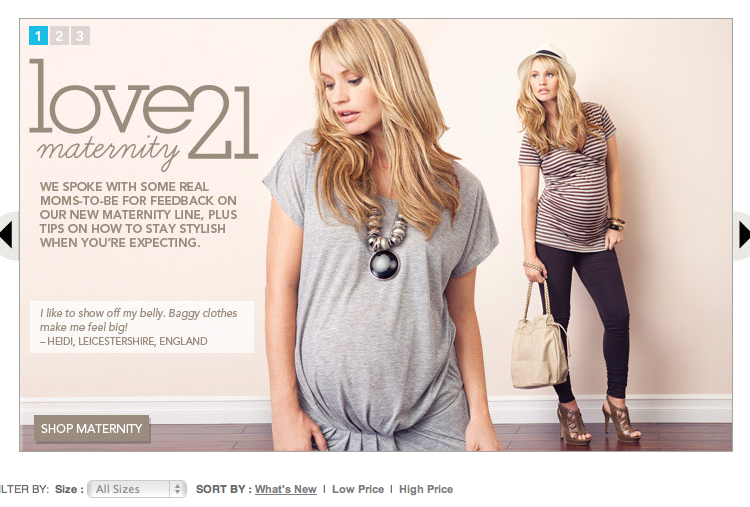
Is Forever 21 glamorizing teen pregnancy?A screenshot of the Forever 21 website

I recently marveled at the sheer ginormousness of the Forever 21 store that opened in downtown Washington D.C. this weekend. Occupying a former multi-level furniture store space, it is a far cry from the tiny mall outposts that used to comprise the chain. But, thanks to Forever 21′s ability to feed teens’ insatiable appetite for “fast fashion” — pieces that replicate the most up-to-the-minute trends at prices (and quality) so low that they’re usually worn only a few times and discarded — the chain has snowballed into a $2 billion brand that legitimately competes with behemoths like H&M.

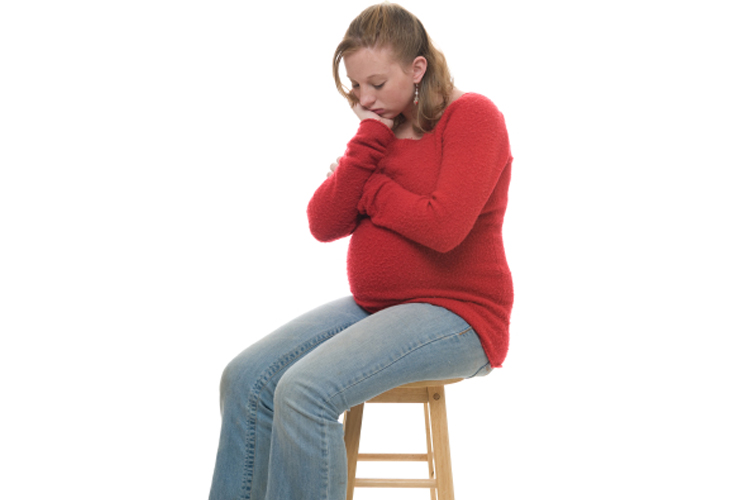
Despite all of that success, Forever 21 is still looking to appeal to even more girls. Having already reached out to plus-sized customers with the launch of its Faith 21 line last year, the chain has unveiled a new effort aimed at the temporarily plus-sized, i.e., expectant mothers. Given that the store as a whole targets tweens and teens, dedicating a portion of the store to maternity clothes is understandably causing a stir. On top of that, there is the fact that the maternity line is premiering in five states, three of which carry the highest teen pregnancy rates in the country.

Over-reactive parents and pundits constantly point a finger of blame at any slice of pop culture that deals with teen pregnancy, saying TV shows and movies like “The Secret Life of the American Teenager,” “The Pregnancy Pact,” “16 and Pregnant,” “Juno,” etc. are encouraging young girls to get knocked up. This, despite declining numbers of teen pregnancies and the fact that the shows often bend over backward to depict the difficult realities of young motherhood.

While those assertions assume an insulting lack of agency on the part of young women, the recent wariness over Forever 21′s maternity line is much more in line with reality. Forever 21′s most recognizable model is Kendall Jenner, the 14-year-old half sister of Khloe, Kourtney and Kim Kardashian — suggesting that the brand makes a concerted effort to court customers who can’t yet drive themselves to the mall. Magazines targeting adolescent girls, like Seventeen, are constantly promoting Forever 21 goods in spreads on affordable fashion finds.

Much has been made of Bristol Palin, who has parlayed her ordeal as a teen mom into lucrative speaking engagements, TV appearances and magazine covers – gigs that carry an underlying message about the possible benefits of teen pregnancy no matter how many abstinence PSAs she phones in. The same is true for Forever 21. Of course they’re not explicitly endorsing teen pregnancy, but by nudging teens and saying “If you do find yourself pregnant, looking fashionable is one less thing you’ll have to worry about!” the chain is going the Bristol route of unwittingly glamorizing teen pregnancy.

The other female victor in Carolina

Elaine Marshall's anti-mama-grizzly win is flying under the radar, but she's worth paying attention to

  • more
    • All Share Services

The other female victor in CarolinaNorth Carolina Democratic U.S. Senate candidate Elaine Marshall at a debate with Cal Cunningham in Raleigh on June 10.

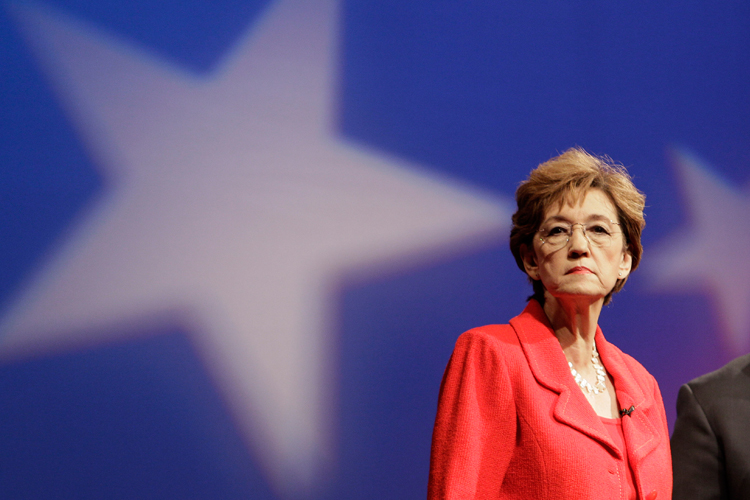
Since South Carolina Republican Nikki Haley’s runoff win last night is splashed across front pages across the country, it might surprise people to learn that another Carolina lady also declared victory Tuesday: North Carolina Senate candidate Elaine Marshall beat Cal Cunningham to become the Democrats’ nominee to take on incumbent Sen. Richard Burr.

Haley’s win fits nicely within the main narrative the media has chosen for this election season: the triumph of the “mama grizzly” candidate — the conservative women, almost all of whom are backed by Sarah Palin, who have triumphed in contests around the country.

But Marshall, currently the North Carolina secretary of state, is no mama grizzly. In fact, she’s more progressive than even Cunningham, the handsome establishment candidate who was hand-picked for the race by the leaders of the national Democratic Party. In this way, Marshall is a sort-of anti-Blanche Lincoln, the moderate Arkansas Democrat who Obama and company supported despite her having thwarted parts of the president’s agenda — particularly the public option in the health care bill.

Whereas Lincoln received the full backing of national Democrats — Bill Clinton came home to stump for her, bashing any wavering liberals who might deign to support Lincoln rival Bill Halter — Marshall took the opposite route, branding herself an outsider, a predictable tactic in a year tinged with anti-establishment sentiments.

Marshall, however, has made her support of health care reform, including a public option, a central tenant of her campaign, along with her opposition to the troop buildup in Afghanistan — a notable stance given that Cunningham played up his Iraq War vet bona fides in the race.

And though she wasn’t anointed by party leadership the way Cunningham was, Marshall certainly followed the Obama playbook in winning the nomination: She took up the mantle of progressive populist and utilized a strong network of grassroots supporters.

While all eyes will be on Senate matchups between Barbara Boxer and Carly Fiorina in California, and Lincoln and John Boozman in Arkansas, Marshall might be a sleeper in an election filled with interesting, capable women.

Continue Reading Close

All (abortion) politics is local

The anti-choice movement successfully, and quietly, advances its agenda on the state level

  • more
    • All Share Services

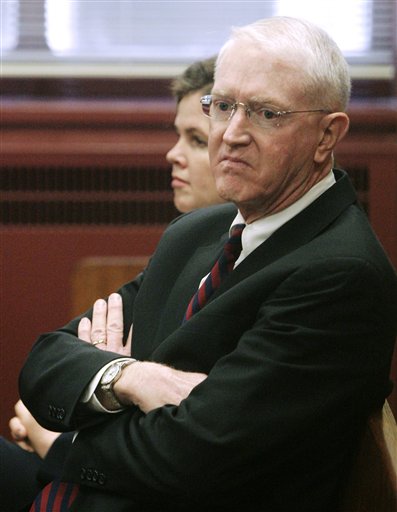
All (abortion) politics is localTony Lauinger, state chairman of the group Oklahomans for Life and vice president of the National Right to Life Committee, waits in Oklahoma County District Court for the start of a hearing on the request for a temporary restraining order requested by the Center for Reproductive Rights, to block enforcement of a new state law, which requires women to get an ultrasound and hear a detailed description of the fetus. (AP Photo/Sue Ogrocki)(Credit: AP)

In the teen pregnancy tale “Juno,” it only took a mention of her baby’s potential fingernails and an oversharing clinic receptionist to turn the title character off of what she admitted was a “hasty abortion.” In the real world, however, several states have recently passed measures making the scare tactics in “Juno” seem as trivial and clinical as a blood-pressure check, as the New York Times points out today.

Nebraska and Oklahoma have laws dueling for perhaps the most invasive and insulting assaults on a woman’s right to exercise agency over her own body, as Broadsheet has previously reported. The Nebraska law criminalizes abortion at 20 weeks — a measure justified by the belief that fetuses can at that point feel pain, an idea without scientific evidence to back it up. A separate provision requires women to get a mental health screening before the procedure. Oklahoma’s recent laws are arguably even worse: One lets doctors willingly withhold information about fetal birth defects, and prevents women from suing providers who conceal such details, and the other requires a woman to view an ultrasound while having various features of the fetus explained to her.

Laws in at least 10 other states, including a Mississippi measure banning abortion coverage under the new insurance exchanges created by the healthcare reform legislation, take aim at virtually every aspect of the abortion process, from doctor-patient discussions to signage at clinics to counseling requirements. Though Arizona has been the subject of worldwide criticism for its recent law targeting immigrants, its measures reining in doctors who perform abortions and restricting insurance coverage for the procedure has gone largely unnoticed.

It’s all part of a groundswell of antiabortion activity taking place at the state level — a nod to the “all politics is local” notion. While marches on Washington make for great photo ops, localized measures can have a much greater impact on people’s daily routines. Most of these measures have been written by legislators, not voted on directly, but some upcoming elections will likely further serve as state referendums on abortion. What you are unlikely to see from the lawmakers pushing these laws is any interest in advancing women’s autonomy — and by extension, reducing unplanned pregnancies and abortions — through expanded support and health services.

Continue Reading Close

From makeovers to makeunders

Women's magazines are embracing two seemingly contradictory beauty transformations

  • more
    • All Share Services

From makeovers to makeunders

Once women’s magazines have found a successful gimmick, count on them to stick with it. Recently, they seem to have found two, albeit ones whose messages completely conflict with each other. 

The first: Girl-zines’ penchant for making over “regular” women who become stars. That includes anyone who doesn’t fit the mold that the publications themselves have created of females who are ultra-thin, creamy-skinned, young and beautiful. Call it the Susan Boyle Treatment. Harper’s Bazaar took the famously frumpy British singer, and bestowed on her many appearance upgrades when it featured her in its pages. Ditto for Precious star Gabourey Sidibe.

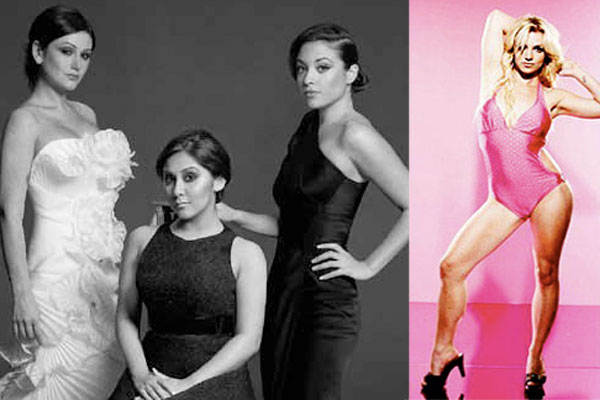
The latest ladies to get sanitized by Harper’s Bazaar are the female castmembers of Jersey Shore, famous for their cheap, shiny outfits and, um, un-ladylike behavior. “As TV’s breakaway stars, the Jersey-ites are finding themselves in surroundings more rarefied than nightclubs,” the magazine rationalizes; hence the need to paternalistically teach these girls a thing or two about style and charm (ignore the irony of having Tinsley Mortimer, herself a castmember of a reality show in which girls similarly behave inappropriately, help scrub the Jersey Shore girls down).

It’s not just Harper’s Bazaar that has gotten in on the act, either. South Africa’s You magazine undertook a similar effort with Caster Semanya, the young track star who was forced to undergo gender testing when her muscular build drew the attention of sports officials. Semanya withdrew from the public spotlight, only to re-emerge on the cover of this glossy, caked in makeup and sporting a tight, girly getup and heels. “Wow, look at Caster now!” blared the headline.

The message seems to be clear: If you’re not conventionally pretty and feminine, you need to find a way to get there right quick if you want to grace the pages of a fashion magazine. But if that’s the case, then how does one explain the other en vogue magazine stunt of the moment: “revealing” those stars who are classically, typically beautiful in all their natural, unretouched glory. French Elle lit the fire for this trend by showing its models sans makeup or computer enhancements in its May 2009 issue; since then French Marie Claire and Harper’s Bazaar have also put out retouching-free issues. Now, celebrities are joining the push, with Jessica Simpson appearing on the cover of Marie Claire without makeup or airbrushing; and Britney Spears releasing unretouched photos of her most recent Candie’s ad campaign.

It just goes to show that the grass is always greener on the other side. If you’re not already the picture of feminine beauty, you need to undergo whatever amount of styling, hosing-down, dolling-up will get you there; and if you are, well, you need to shrug off all that beauty by appearing au natural to make it seem like such attractiveness comes effortlessly.

Continue Reading Close

What about the next great female pundit?

Respected Op-Ed pages may be getting young new blood, but they're still mostly made up of white men

  • more
    • All Share Services

Late last week, Politico’s Michael Calderone fretted over the fact that so many young, wonder-boy pundits were climbing to the top of elite publications like the Washington Post and the New York Times. In parsing whether journalists like Ezra Klein, Andrew Ross Sorkin and Chris Cillizza were “prodigies” or “pipsqueaks,” Calderone spent most of his time fretting over things like Klein, at 25, having his own assistant (how dare someone who writes for the Washington Post and Newsweek, and who makes almost-nightly appearances on shows like “Countdown With Keith Olbermann” and “The Rachel Maddow Show” have an underling!).

What bothered me about Calderone’s ranting wasn’t so much whether any of these young men deserved to break into these famously stodgy, old-school institutions — I find all their work refreshing and valuable; Cillzza, especially, is an incredibly tenacious reporter — but that they were simply younger versions of what has long been an old boys club. Is it really that much of a surprise that pages typically populated with old, white men are now also occasionally featuring young, white men?

In addition to the big three Calderone focuses on, there’s Ross Douthat, the first under-30 writer to nab a regular Op-Ed column at the New York Times; Brian Stelter, also at the Times, who was hired straight out of school at age 21; and Dave Weigel, a blogger recently hired by the Post to cover the conservative movement. In hiring the likes of Klein and Weigel, the Post seems to be actively turning a cold shoulder to the advice of one of its own, former ombudsman Deb Howell (herself one of the few women who managed to climb to a newspaper management position despite the handicap of having two X chromosomes) excoriated her colleagues in a 2008 Op-Ed, in which she wrote: “The Post’s Op-Ed page is too male and too white. And there aren’t a lot of youthful opinions, either. I have nothing against older white men; I’m married to one. And the nation’s power structure, often represented in Post Op-Eds, is white, male and at least middle-aged. But a 21st-century Op-Ed page needs more diversity.”

The Post had a chance to incorporate more diversity into its commentary when it held a gimmicky contest in which it invited people of all stripes to try and become “America’s Next Great Pundit.” Of the 10 finalists picked to compete for a weekly Op-Ed column, five were women — and two or three were even under 30. Ultimately, though, the winner was yet another white guy, Teach for America executive Kevin Huffman.

It’s hard not to be infuriated by this — particularly when I find myself continually blown away by young female reporters like Dana Goldstein at the Daily Beast and Ann Friedman at the American Prospect. Combine that with the fact that journalism schools report overwhelmingly female enrollments, and you do have to wonder why no women are handed the big-time opportunities being doled out to the likes of Klein and Douthat.

Continue Reading Close

Teen pregnancy on the decline?

New figures show a reversal of an uptick in recent years. What gives?

  • more
    • All Share Services

Teen pregnancy on the decline?

New figures from the National Center for Health Statistics indicate that teen birth rates are dropping — welcome news that seemingly reverses the increase in teen pregnancies that took place between 2005 and 2007. The latest numbers, reflecting the period from 2007 to 2008, show a 2 percent drop in births among U.S. girls 15 to 19. Since numbers from 2009 aren’t yet available, it’s too soon to tell which fluctuation is the anomaly — and, regardless, a one- or two-year blip in either direction is not enough to signal a full-blown trend (prior to the 2005-2007 spike, however, teen pregnancy rates had been steadily declining for more than a decade). One thing is certain: This development comes at a tense point in the battle over sex education.

Though President Obama had campaigned on eliminating funding for abstinence-only programs — and indeed pulled money for those endeavors in previous budgets — a little-noticed provision in the healthcare reform bill slipped back in $250 million in federal funds for abstinence-only education. Proponents of such programs point to a recent study showing that they might actually — gasp! — be effective, but most conveniently overlook the part of that same report indicating that the programs in question only emphasize delaying sex until one is ready, not until marriage; and avoid the kind of sex-shaming and proselytizing that is a hallmark of the Bush-era abstinence programs.

Though some might not be getting the crucial information they need in the classroom to make fully-informed, safe decisions about their own bodies, teen girls sure are being barraged with babies from every direction. Whether it’s real-life teen moms like Jamie Lynn Spears and Bristol Palin propping up their babies as examples of “what not to do,” or the endless stream of girls-in-crisis TV shows (“The Pregnancy Pact,” “The Secret Life of the American Teenager,” “16 and Pregnant,” “Teen Mom”), it’s hard for teenagers to avoid at least network-sanitized cautionary tales of what can happen without proper protection. 

Although, the Washington Post’s coverage suggests at one point that such shows might actually be encouraging teens to get pregnant because they unwittingly portray having a baby as “an enhancement of the teen mom’s social life.” That’s hardly giving teens enough credit (it also ignores the fact that these shows all debuted years after the pregnancy uptick); if any shows are to blame for encouraging irresponsible behavior (a sketchy premise in and of itself), it’s ones that don’t put the consequences of such actions front and center.

While we twiddle our thumbs waiting on last year’s numbers, remember that teens are being entertained with incomplete versions of sex education (not to mention outright lies taught in some classrooms) and glossy versions of teen pregnancy on TV that virtually leave discussions of abortion out altogether.

Continue Reading Close