

Hemingway once wrote, “And Barcelona. You should see Barcelona. It is all still comic opera… Barcelona makes you laugh.” He wasn’t wrong. The city has always marched to its own beat, a little louder, a little more irreverent than the rest of Spain he so adored.
When I revisit my one-time hometown, I carry this quote with me. It frames the way I look at the food here—how Catalan chefs toy with tradition, nudging it just far enough to feel fresh but never so far that it becomes unrecognizable. Innovative, but not molecular, still warm-blooded. On a recent return, I ate well.
Morning in Spain welcomes fried pastry. I ducked into Artchur in Eixample, a bright corner shop busy challenging the humble churro.
Yes, they make the sugar-dusted classics you dunk into thick warm chocolate, but here churros cosplay as dinner. Tripe stew, nachos, even “mac” and cheese arrive with ridged, cut-up fried dough standing in for potatoes, tortilla chips, or pasta. “In the end, a churro is like bread,” co-owner Adrià Gracia told me, and once you accept that, the universe tilts. I ordered the “mac” and cheese, molten and sharp, the crunch of the churro cutting through the cream like it had something to prove. One bite and that boxed orange stuff was a distant, shameful memory.
I took a few hours to digest the meaning of mac and cheese for breakfast, then it was time for lunch. At Granja Elena in Zona Franca, I enjoyed a tomato and scallop tartare that could entice even the staunchest carnivore. Diced and seasoned tomato—red, sweet, alive—stacked under finely chopped, lightly cured and anointed scallop and a drizzle of creamy soy dressing. It arrived at the table like a jewel, its colors shimmering as if coy about its own perfection. When I stirred and spread the mixture on bread, the texture echoed beef and I half-expected it to bleed. Patricia Sierra, who owns the place with her brothers Guillermo and Chef Borja, said, “If the tomato isn’t perfect, it’s off the menu. We wait for the tomato.” You could taste the waiting. It made you sit up straighter. Summer itself locked in a bite.
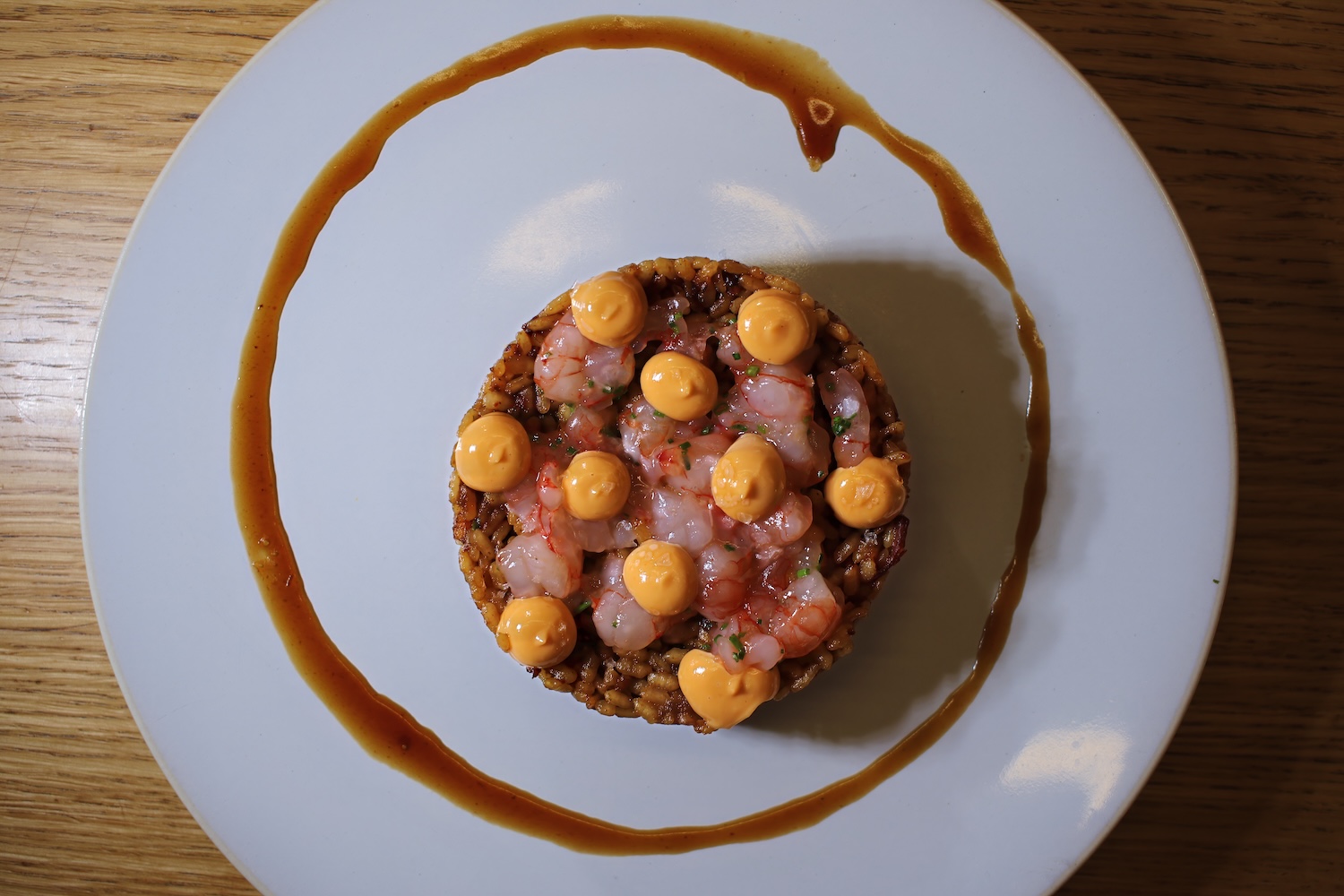
Down a busy street in Sants, Maleducat was rewriting Catalan home cooking with a straight face. Billed as a modern casa de menjars—a house of meals—the restaurant applies precision to Grandma’s recipes without stripping out the soul. Their pequeño arroz seco arrived like a culinary magic trick, a flawless disc of rice, each grain glistening as if individually coached. Sandwiched inside was braised, chilled and improbably thin-sliced “carpaccio” of pig trotters, tender enough to vanish on contact. On top sat red shrimp tartare and some final dollops of shrimp-head emulsion tied the dish together like a well-written ending. “A traditional, understandable dish with a twist,” co-owner Marc Garcia told me. It wasn’t paella, and it wasn’t the surf-and-turf rice you’d find down the block but it carried the same heartbeat. Louder.
Want more great food writing and recipes? Sign up for Salon’s free food newsletter, The Bite.
That same thump carried me back to Eixample and Batea, a sleek bistro where Catalan and Galician food dance until closing time. Chef-owners Carles Ramón and Manu Nuñez reworked the classic Galician dish vieira a la gallega, which usually tosses scallop, jamón, and breadcrumbs into a shell and bakes it all into submission. At Batea, each part was prepared separately then layered—a sofrito base, sea-water-cured then lightly smoked scallop, jamón whipped into a silky mousse. “The cooking points are different, the textures are much better,” Chef Manu explained, “and we respect the ingredients much more.” Respect tasted lush and elemental. The kind of bite you close your eyes for, partly to enjoy a private moment and partly to ignore the envy from the table next to you.
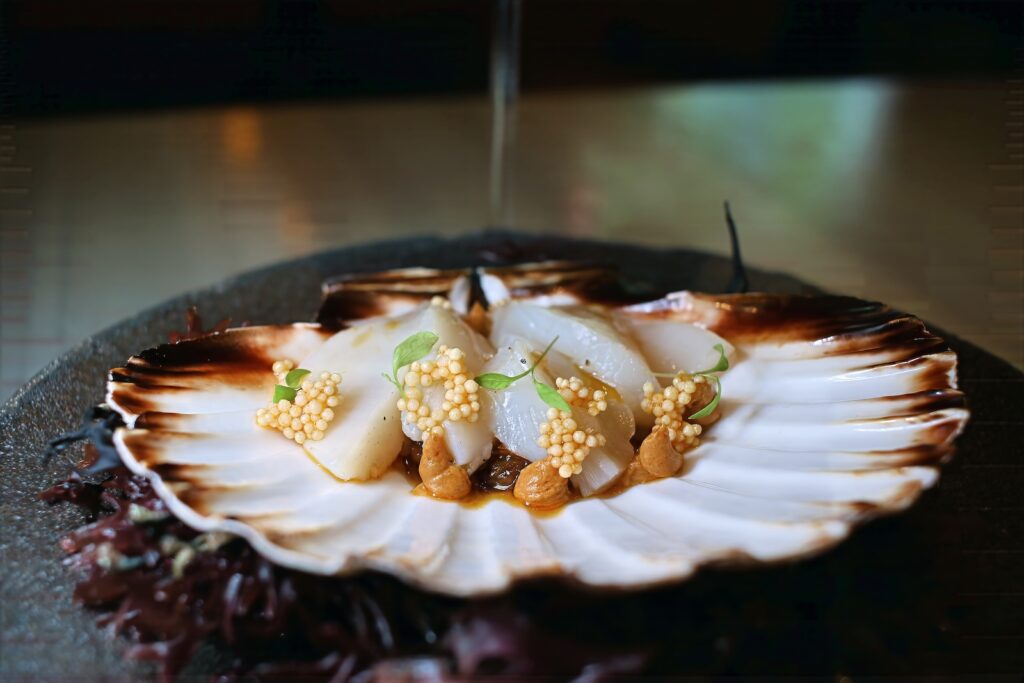
(Howie Southworth) Vieras a la Gallega at Batea
Franca, in the same hood, takes a subtler tack. The dining room glowed like a film set, its gently arched brick and brass softening Barcelona’s usual edge. Fran Baixas, Marco Greci and Chef Josh McCardy, an American import, had taken the beloved and traditional winter stew escudella and turned it into a salad. That last word alone might turn heads, but at Franca it draws you in. Chickpeas, root vegetables, and the stew’s usual cuts of braised meat and offal were cooked to the individual ideal, diced, scattered over greens, and dressed with a mustard vinaigrette blessed by some of the stew’s cooking liquid. “Putting the broth in service of the meats, rather than the other way around,” according to Baixas. A dish that felt like a wink—nostalgic yet completely new.
Not far away, at Pepa Bar a Vins, irreverence was the raison d’être. I couldn’t resist their stacked ensaimada, a coiled Mallorcan pastry enriched with lard, usually powdered with sugar and served for breakfast. Not here. It arrived and as owner Camila Espinoza instructed, “we want you to see the layered colors,” topped with smoky red sobrassada, soft Mallorcan sausage, whipped ricotta, and a drizzle of honey. It was a lot. Sweet, savory, silken—like a food group that shouldn’t exist but somehow does. By all reports, there’s an ensaimada on every table every night. They can’t take it off the menu. I understood why, and ordered a glass of DO Tarragona red to help pass the evening.
We need your help to stay independent
Jordi Brullas, a friend and restaurant guru, once told me, “Chefs in Barcelona are reinterpreting tradition with great respect, but without fear.” Looking back on my stay, the surprise and the indulgence and the whimsy proved him right.
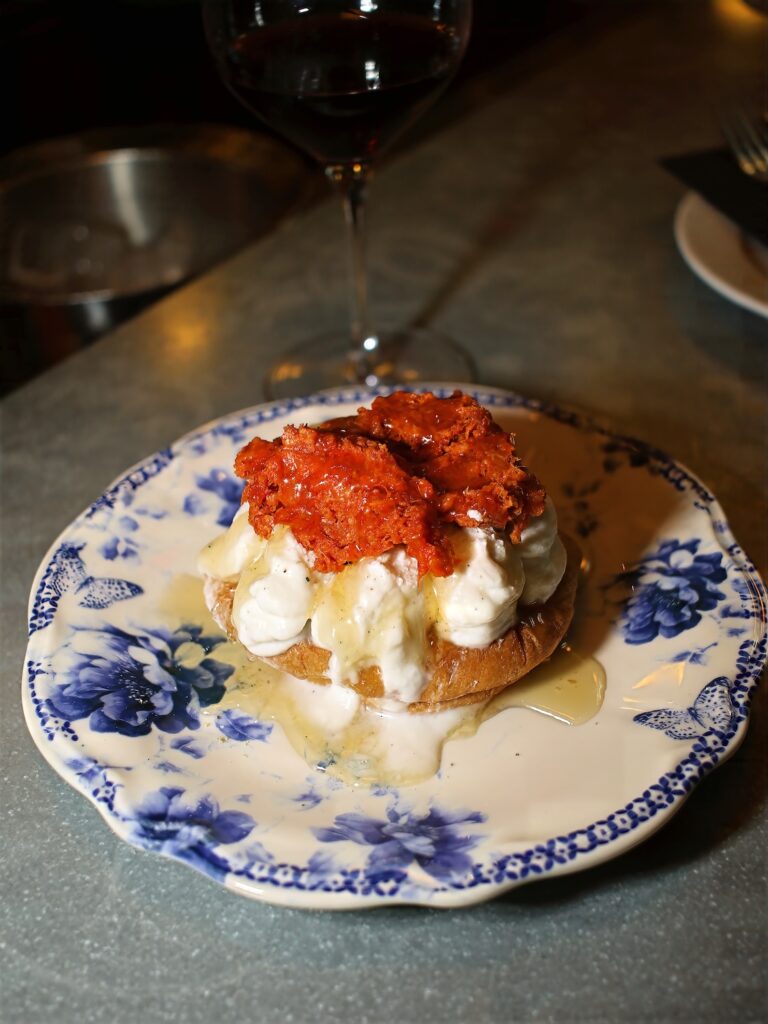
(Howie Southworth) Ensaimada at Pepa Bar a Vins
By nightfall, my table sat above the city at the NH Collection Calderón rooftop over Rambla de Catalunya. Barcelona stretched out in every direction, a mosaic of old stone, glass and spire, Gaudí’s Sagrada Familia standing like an undone sentry among the rest. There’s a Catalan phrase, “seny i rauxa”—reason and impulse. It explains a lot. The city has always been comfortable with contrast—old and new shoulder to shoulder, solemn tradition twisted into something unexpected without apology. I thought of Patricia’s tomato at Granja Elena, how she waits for it to be perfect before letting it sing.
Barcelona is like that, too. It knows when its creative bones are ready for prime time — and when they are, it hands them a mic where nobody expected to hear them yesterday. You’d be a fool not to listen.
Read more
about Spanish food
