

At the start of 2025, finance and business headlines were as optimistic as the person who joins a gym on January 1: It was a new year, and we were going to turn over a new leaf. “Americans Rebel against overconsumption and inflation with ‘no-buy’ challenges in 2025,” announced Fortune magazine back in February 2025, when it predicted that Americans would pump the brakes on spending. In April, Investopedia weighed in with an explainer: “‘No-Buy’ 2025: A paradigm shift in consumer culture?” And The Wall Street Journal noted that searches for the term “no-spend challenge” on Google had “reached an all-time high and [were] up 40% year over year,” and that 20% of Americans participated in such a challenge in 2024, stating, “It’s in part a way to feel some power over the volatile economy.”
That’s a lovely thought. If TikTok is any indication, though, there’s plenty more taking a hard turn in the other direction, competing for eyeballs and affiliate income by way of content glorifying a high-volume consumption that can be hard to look away from. “I watched a few pantry-organization TikToks, and then the algorithm decided I wanted to watch someone set up a purse-restocking station,” a friend ranted several months ago. It’s increasingly hard to ignore acts of extreme acquisition that felt like a retail version of “Jackass” — dozens of silicone kitchen tools spilling from a Temu box, car consoles packed with enough first-aid items to qualify them as rolling infirmaries, a shower wall–turned–grid of colorful disposable razors.
Shawna Ripari, a Toronto content creator who launched her YouTube channel after recovering from her own shopping addiction, says her “eyes were really opened” to overconsumption as entertainment on TikTok in 2024. “The more I watched, the more specific patterns emerged in how people talked about consumption, and the more people [were] duplicating that kind of content because it does well.” Overconsumption as a category of content that users seek out makes sense: Ensuring that everything done online is also an opportunity to shop has succeeded beyond tech companies’ wildest dreams — why would they stop now?
Battle of the Beige
Social-media influencers once built their followings with personal style and unexpected aesthetics, but the May 2025 conclusion of a court case involving two “clean-girl” influencers — each of whom alleged the other was biting her style and siphoning off her Amazon affiliate revenue — highlighted the weirdness of the current influencer economy. A personal aesthetic based on blandness already exists all over the internet. How can one person claim it — and, more to the point, why would they want to?
Glass carafes, white shirts, minimal jewelry: The key to Amazon influencing is to have enough of an individual aesthetic to build a following around, while ensuring that the products pushed to an audience are broadly appealing enough to maximize sales that creators receive a cut of. The “Single White Female” vibes were alarming — but so is competing not to stand out but to blend in. Riley, 39, a high school teacher and home seamstress, finds the beige new world unsettling. “Shilling for Amazon is bad enough. Shilling Amazon’s most generic offerings is dystopian.”
Home sweet store
My friend who got unwittingly sucked into what’s called “restock” content was mystified by their pull. “I get nervous when I have more than two open bottles of shampoo in my shower at one time,” she admitted. “The thought of having 40 or 50 makes me hyperventilate.” Restock videos are part ASMR, part Martha Stewart Living and part “Supermarket Sweep.” In one restock TikTok, manicured fingernails tap along a line of Stanley mugs in a rainbow of colors before choosing one and packing it with color-coordinated dividers, lids and charms; in another, different manicured hands open a closet to reveal shelves packed floor to ceiling with Bath and Body Works products organized by category and scent.
Want more from culture than just the latest trend? The Swell highlights art made to last.
Sign up here
Showing off huge collections of everything from Funko Pops to sneakers to makeup on social media isn’t new; what stands out in restocks is the expense and effort put into turning one’s home into a shopping experience. The point of having 50 different body lotions isn’t to use them all up; it’s the feeling of abundance that comes with having 50 options to choose from. If these weren’t new products pleasingly arranged, we might call this hoarding. But sampling, comparing and contrasting is the normative behavior that we’ve always been told makes for successful, informed buying.
In one of her “de-influencing” videos, Ripari recalls a time when she’d watch overconsumption content and “would laugh and say, like, ‘Yeah, that’s me. That’s relatable.’ . . . [It made] being financially irresponsible a joke.” These days, she worries that influencers, many of whom don’t pay for the products seen in their TikToks, are putting forth an idealized vision of the right way to live that isn’t even realistic for them — yet risks making others feel that they don’t have enough.
The little-treat economy
Young people are feeling pessimistic about their futures. On Reddit, twentysomethings vent about financial insecurity, flagging employment and a general sense that things aren’t getting better anytime soon. “I’m trying to save money, but if I can’t afford a house and I can’t afford to have kids, what am I saving for?” asks Riley, and they’re not alone in wondering.
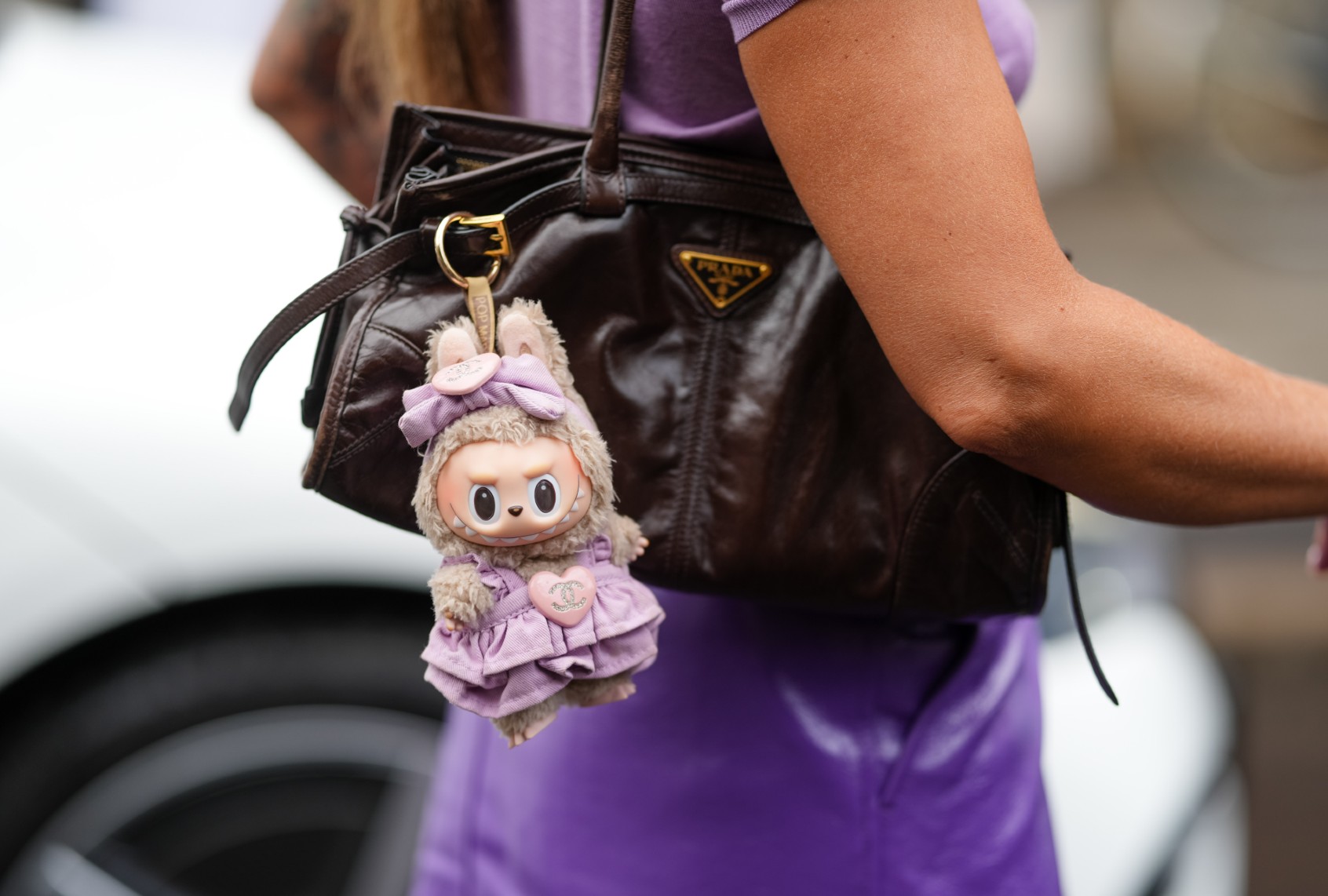
Gens Z and Alpha are on the receiving end of a fearsome tag-team: Social media that urges constant documentation of themselves and their lives, and tech innovations that make online shopping as frictionless and reflexive as possible. The result, as an August New York Times piece suggested, is a generation motivated by little treats, innocuous indulgences that have “become a shared, normalized and celebrated experience.” A cookie, a bag charm or a blind box makes it easier to get through each day — but minor purchases add up and lead to taking on debt, something roughly 40% of Gen Z is reportedly doing.
We need your help to stay independent
Intentional spending resets like no-buys and low-buys help. That said, what good is buying nothing but necessities for a year when the larger forces of commerce are doing everything possible to separate people from their money, one little treat at a time? “I sometimes have conversations with people who are like, ‘Well, I’ve really pulled back on [buying] clothing.’ But then they replace that with home-decor pieces,” says Amanda McCarty, whose “Clotheshorse” podcast interrogates the toll of fast fashion and hyperconsumerism. “But beyond the environmental impacts — because more of that [stuff] is plastic that you want to know — we don’t talk enough about how overconsumption robs us of our financial futures. And I think we need to.”
Secondhand turns suspect
“I thought that I was doing my part by buying almost everything secondhand — clothing and furniture and even kitchen appliances,” says Mari, 36, who discovered online secondhand-fashion destinations like Poshmark and ThredUp during the pandemic and became a booster of pre-owned clothing. “I thought Forever 21 and Shein hauls were wasteful and kind of tacky. But I was buying 10 or 12 pieces at once every couple of months, knowing that if something didn’t work on me, it didn’t matter because the price was so low.”
In other words, buying secondhand became Mari’s version of fast fashion — “better quality, but the same cycle,” as she puts it. It’s a kind of thriftwashing that makes consumers feel virtuous but doesn’t stem a tide of clothing waste that washes up in Ghana, Chile and other countries where textile waste is offshored. A 2025 study published in the journal Scientific Reports titled “Secondhand fashion consumers exhibit fast fashion behaviors despite sustainability narratives,” found that “resale has not slowed activity in primary markets; instead, both have expanded simultaneously . . . This parallel expansion casts doubt on the environmental benefit of resale and suggests that secondhand purchases may often supplement, rather than replace, conventional fashion consumption.” Mari curbed her thrifting, but remains a bit disillusioned by how readily she bought into, as she puts it, “something posed as a solution that’s just another part of the problem.”
The knockout knockoff
Knockoffs of Hermès’ famed Birkin bag have been around for decades, but 2025 might have been the first time a dupe itself became almost as much of a social-media status symbol as the original. In late 2024, the Kamugo Genuine Leather Handbag, sold by a third party on Walmart.com, was dubbed the “Wirkin,” and it took only a small handful of pleasantly surprised TikTokkers showing theirs off to send others scrambling to score their own. But the unexpectedly high profile of the Wirkin also spotlighted Walmart’s ethical lapse in doing business with a third party that infringed on another brand’s IP, and after barely a month, Walmart quietly removed the bags from the site.
Their sudden scarcity, however, soon made the Wirkin a true fashion anomaly: A counterfeit bag that people wanted to carry. Hermés is notoriously protective of its status, and even people who can afford to spend $12,000 on a handbag often have to jump through hoops for Hermés to deem them worthy of one. The Wirkin’s virality had several genuine Birkin owners salty enough to film explainers on the subtle differences between them. But as onetime Real Housewife and longtime Birkin enthusiast Bethenny Frankel suggested, it didn’t actually matter: The fact that the manufactured scarcity of the genuine item led to the Wirkin’s actual scarcity “illustrates how crazy the luxury brand space has gotten.”
Put a pin in it, it’s done
For Elisa, who owns a small home-staging business, Pinterest was once the spot: the place where she assembled mood boards, experimented with color palettes and got inspired by everything from decorative-tile patterns to breathtaking island vistas. In 2025, she says, “It got overtaken by shopping and AI. Everything looked like garbage or was an ad suddenly. It genuinely made me upset to see.”
The image-based social-media platform launched in 2010 with a goal to “inspire and ultimately get people offline,” as founder Ben Silbermann told CNN Business in 2019, and it quickly became a comprehensive source of eye candy for everyone from fashion designers and wedding planners to mom bloggers and travel junkies. Fifteen years later, the platform is a textbook example of ensh**tification, the term coined by tech theorist Cory Doctorow to describe the process by which a formerly user-friendly platform degrades, by design, in service to profit.
Elisa started noticing a decline in search function and rise in sponsored pins a few years back, but wasn’t prepared for the flood of AI slop that’s now part of the Pinterest experience — a development that’s not only aesthetically repellant but also predatory: the tech blog Futurism took note last February of the number of pins “link[ing] back to AI-powered content-farming sites that masquerade as helpful blogs.” On Reddit, longtime users were both angry and betrayed: Pinterest’s pivot “feels like it’s built entirely on exploiting user loyalty while gutting everything that made [the platform] worthwhile,” one post complains, while another sighs “I know there’s a need to turn a profit, but Christ, it’s awful.”
Read more
about overconsumption
