

When I first made the big decision to leave behind my hometown suburb of Washington, D.C., and move to New York City, I never anticipated ever feeling homesick. Purely because of the proximity — traveling between the two cities is never an egregiously long journey. But as of late, that deep, undeniable sense of longing has been hitting hard. Maybe it’s because of the winter blues. Or maybe it’s because I’m still reeling from a recent visit over the holidays, which reminded me of all the little things I used to take for granted growing up. The familiar warmth of my childhood bed. The harmonious commotions at the family dining table. The soothing aromas of my mother’s homecooking.
It’s during these moments of sadness that I seek solace in late-night cafes. I’m a regular at my neighborhood Yemeni coffee shop, where the soft hum and spicy scents of bubbling, fresh chai greet me. That sensory experience feels so reminiscent of home. Wafting through the air is a medley of warm spices I grew up savoring: nutmeg, clove, cinnamon, black pepper and ginger. But the one scent that opens the floodgates of nostalgia is cardamom.
Over the years, I’ve found myself in a rather tumultuous relationship with cardamom. As a child, I loathed the spice. I grew up calling it elaichi with such disdain that those unfamiliar with its English translation would’ve thought it was something utterly derogatory. I dreaded biting into a whole pod, which hid quietly inside store-bought laddus (a spherical Indian sweet) and under layers of rice in homemade biryani (a spiced rice dish complete with chunks of meat and/or vegetables) and pulao (another spiced rice dish cooked in stock). If I were unlucky enough to do so, I’d instantly lose my appetite, spitting out those pungent, peppery seeds with such haste and chugging glasses of water in an attempt to clean my palate.
As I’ve gotten older, that vitriol slowly transformed into acceptance, then adoration. The more I cooked at home and explored South Asian cuisine, the more I realized how important cardamom is. Without it, laddus, biryani and pulao would lose their beautiful depth — floral yet slightly zingy. Even masala chai would lose its signature, sultry kick.
Despite my longtime exposure to it, cardamom remains a quiet, underdog spice across the United States. Much of the spice’s charm is overshadowed by an ever-popular pumpkin spice craze, which peaks like clockwork at the start of autumn. That classic blend of cinnamon, nutmeg, ginger, cloves and allspice, with a touch of sugar, seems to be the extent of most Americans’ familiarity with warm spices. Cardamom sits just outside of that territory. Some people may have tried cardamom, especially with the rise in chai culture and prevalence of cardamom buns, but are unaware of the spice’s potential.
I recently came across a six-year-old post on Reddit, inquiring about cardamom, which the original poster had only heard of after watching “The Great British Bake Off.” They asked if cardamom is “really that good” and what kind of taste it adds to baked goods.
The spice itself is available in two varieties that come from distinct plants that both belong to the ginger family. There’s green or “true” cardamom, which comes from the Elettaria cardamomum plant. Its origin dates back to a mountainous region in the lush rainforests of southern India, better known as the Cardamom Hills. And there’s black cardamom, which comes from Amomum subulatum plant, an herbaceous plant that grows primarily in Nepal, India and China (around the Himalayas).
We need your help to stay independent
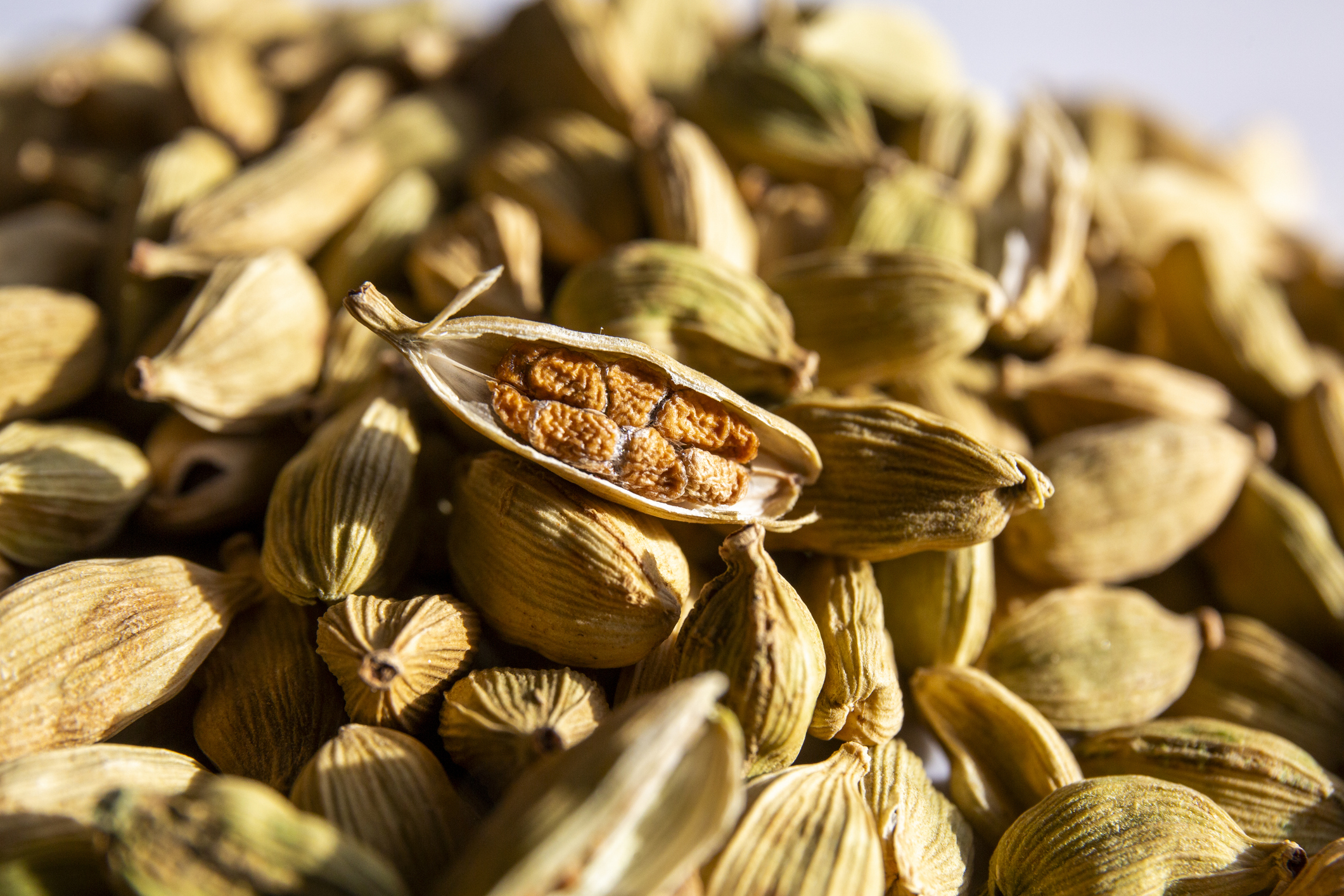
“Green cardamom pods are tough and fibrous on the outside, while holding tiny fragrant black seeds on the inside,” explains recipe developer and online cooking personality Vijaya Selvaraju in her most recent cookbook, “Indian Food Is Easy.” Green cardamom adds perfume to both sweet and savory dishes. It can be used whole “to subtly impart their flavor to dishes,” per Selvaraju, or “finely ground for more intensity.”
Black cardamom, on the other hand, “is almost three times the size of a green cardamom pod and is much more fibrous and tough,” she writes. It’s used exclusively in savory dishes, namely curries, due to its robust, smoky flavor. “It is typically used whole and bloomed in hot oil to help release its flavor,” Selvaraju adds.
Want more great food writing and recipes? Sign up for Salon’s free food newsletter, The Bite.
Of the two, green cardamom is more prevalent worldwide than its black counterpart. Hailed as the “Queen of Spices,” green cardamom is one of the most expensive spices in the world, ranking third after saffron and vanilla. Today, green cardamom is primarily cultivated in Guatemala, which is responsible for two-thirds of global production, along with India and Sri Lanka. Its utilization also transcends both geographical boundaries and cuisines, including South Asian, Arab, Iranian and North African.
“Throughout the Middle East, cardamom scents rice pudding; baklava; and, perhaps most important, qahwah, or cardamom-spiced coffee,” writes Steve Dunn for America’s Test Kitchen. “It’s the predominant spice in harees, a meat and grain dish served at the break of the Ramadan fast, and it’s an element of the iconic spice blends of the region, such as Morocco’s ras el hanout, Syria’s baharat, and Malaysia’s masala.”
In the West, much of green cardamom’s popularity is concentrated in Scandinavia, where the spice is believed to have been introduced either by the Vikings or the Moors in the eighth century, Dunn states. According to the United Nations, “Sweden consumes 18 times more cardamom per capita than the median country, while Norway consumes almost 30 times more.” It’s no surprise, considering that cardamom buns (known as kardemummabulle) are a staple in the daily Swedish coffee break known as fika. Cardamom is also widely used in a handful of other delicacies: spice cake (mjuk pepparkaka), cardamom cookies (kardemummakakor), Christmas rice porridge (risgrynsgröt), mulled wine (glögg), certain brands of beers and more.
That’s all to say that cardamom is simply that spice. Earlier this month, Teen Vogue reported that cardamom is anticipated to make its mark in the perfume world. It’s about time that the spice’s versatility is also appreciated in the culinary scene nationwide.
If you’re looking to expand your knowledge on cardamom, I encourage you to start small. Add a few whole pods to cooked rice. Simmer them in brewed black tea or homemade hot chocolate, alongside cinnamon sticks.
If you’re feeling especially adventurous, try biting into a whole pod. Sit with that pungent taste marinating on your tongue and savor every flavor profile, both the pleasant and unpleasant. Don’t be afraid to dissect your spices. Scoop out the seeds. Toast them, crush them or grind them. Revel in their deep fragrance. Enjoy everything cardamom has to offer.
Read more
about spices:
