

Baba was our resident gardener. He told us tales of big brinjals, bright pumpkin flowers, sprite okra that grew in the farmland in what’s now Bangladesh, where he grew up. In Delhi, in our rented place surrounded by dark, healthy soil, he made our garden flourish with happy peas, bright roses, lauki, bell peppers, chilies and so many varieties of beans we couldn’t keep count. My role as the youngest, was to bring the water hose to water the plants, and my elder sister, Didi’s, was to add soil, and keep the plants happy.
In 2026, Didi still grows the best flowers, shady trees and chases squirrels away from her yard. The only difference is that now she lives in the northeast and thinks fall colors are beautiful where bomb cyclone blizzards are part of life.
In 1977, Delhi is hot, but not as hot as it is now. Even though the raging desert wind blows in every summer, Baba makes the garden grow great vegetables. Ma cooks the greens with mustard oil, onion seeds, a dash of cumin with tons of green chilies.
That is my childhood. I am supposed to be the daughter of my Baba, Mr. Green Thumbs. But I am not.
Old Town, my slightly disheveled neighborhood of churches, Mexican-adjacent tchotchke shops, is where missionaries established their first mission, colonizing the town that belonged to the country south of the US border. Serra palm trees planted by the missionaries in recent centuries, to make the dusty border town ‘civilized and presentable’, remind that I, too don’t belong on native Kumeyaay land.
When the Great Pause hits us, I listen to the Presidio Park parrots flying to Old Town. The parrots, lore tells us, brought by missionaries, stayed even after the city became what it is now. Alternate lore tells us the birds were released by a weed-smoking hippy in Ocean Beach in a fit of peace and love. Regardless, parrots now live in the missions, a good life in San Diego. Every morning, they fly in a flock over my home, and The Dog barks at them in disdain.
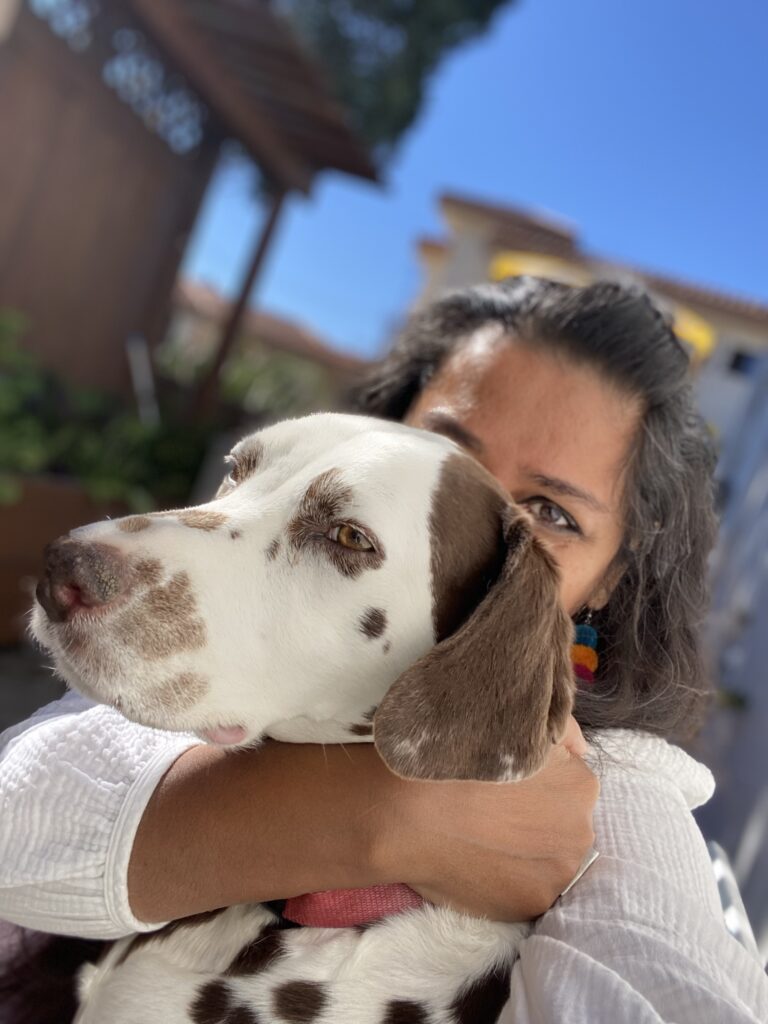
(Madhushree Ghosh) The author and The Dog
When everyone focuses on sourdough starters, The Dog who adopted me over half a decade ago, and I, embark on a journey in my little Spanish house surrounded by San Diego desert soil.
We decide to build ourselves a garden.
I realize this is home, regardless of whether I belong. I decide to work on growing vegetables when everyone I love, and everything that was familiar, is either gone, too far away or dead.
The Dog and I live in The Great Pause with great cheer — there is no travel, there is no one to meet. Just her, and I. I and her. We walk because why not? We head to outdoor restaurants where no one is present and the eager wait staff want to feed her bacon and me, my beet salad. We are left alone, but we aren’t lonely. She is happy I am home, not traveling the world for a paycheck. I am happy I get to be with her.
Want more great food writing and recipes? Sign up for Salon’s free food newsletter, The Bite.
Our favorite walk is to our neighborhood park, an old one with tall eucalyptus trees surrounding what used to be a cemetery, Pioneer Park. Headstones of Irish and Italian immigrants who moved here end of the 19th/early twentieth centuries— worked and died here, trying to stake claim to indigenous and Mexican land. Legend has it that Pioneer Park was part of old town San Diego. The Catholic Church had it. Then the city announced we need it back, there’s a children’s school right next to it. We have to build a park.
Pioneer Park used to be Calvary cemetery once upon a time. Immigrants lived near the mission, and esteemed Spanish Mexican families lived in large mansions around the churches that dot Old Town in the mid-19th century — many came post-Spanish-Mexican wars. Over 4000 are alleged to be buried there. Then the Catholic Church sold the land to the city in the 1960s. The cemetery fell into disrepair.
A couple of decades later, the city builds a primary school next door. Kids need playgrounds. Gravestones are removed, graves moved to Hope cemetery. But not really. The dead people still live under the soil in Pioneer Park. The six-acre land now is a serene park.
The city removes the remaining stones to the edge of the park. This San Diego weirdness only has tall eucalyptus as witnesses in the park. They say pissed off spirits wander in the night looking for their resting place. But during the day, couples picnic on dates, friends play frisbee and neighborhood dogs play-bark at each other.
It is an unsettling feeling when as the youngest in the family, as an Indian, when I used to be surrounded by noise, family, pets, friends, people, suddenly, like in a movie, I am alone in every sense of the word. Don’t get me wrong, I don’t complain, I like to be in my thoughts, but who would have thought that at fifty, suddenly, it’s just me, my dog and our silence?
Within a few months of this new routine, I crave for what is home. I cook everything I can get from the expensive grocer near Hillcrest, but I want to cook something Bengali. From desh. From home. I want to grow that plant, I decide.
When I tell The Dog my gardening ambition, she cocks her head to one side. I think she says, “Really, isn’t that bold?”
I ignore her.
That afternoon I eat my daal with rice, I pull out a box of frozen bitter melon slices to air fry.
We need your help to stay independent.
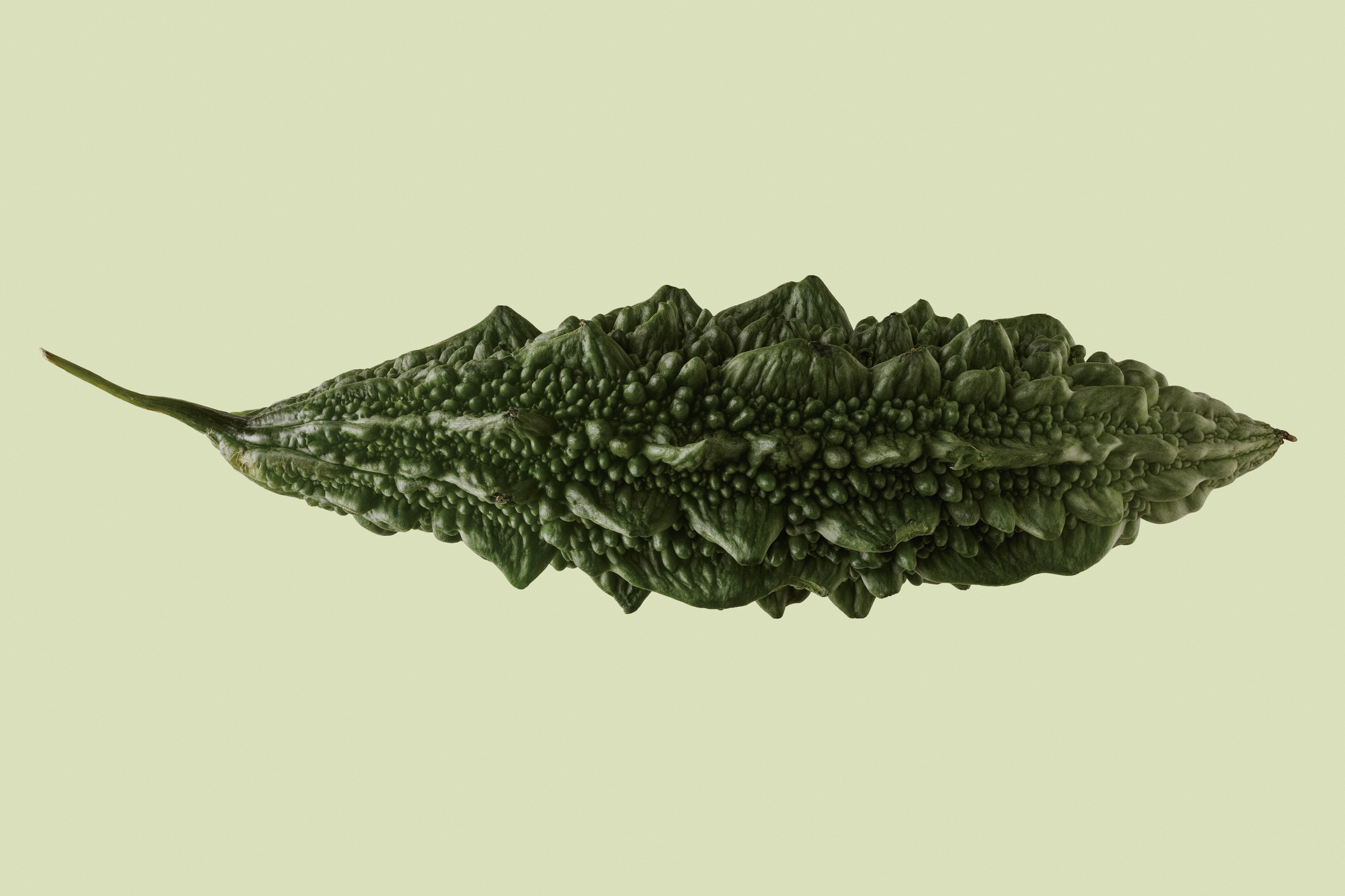
Bitter melon, or uchche in Bengali—a staple in Ma’s cooking. The oblong ugly vegetable with lizard-like ridges is dark green, holding secrets, grows on thin vines. When sliced, each irregular disk holds triterpenoids and p-couramic acid — panacea to reduce inflammation, with potential anti-cancer properties.
As a curious scientist, this is fascinating.
As a Bengali, it’s comfort food.
That evening in 2020, I extract a reddish ripe seed from uchche, and plant it in a pot. I forget about it, given I am not a gardener.
A few weeks later, a wispy tendril starts out, climbing up the wooden support. Soon, tiny yellow flowers peek through, competing for the sun. The Dog and I check the plant daily. In a week or is it two, a mini bitter melon.
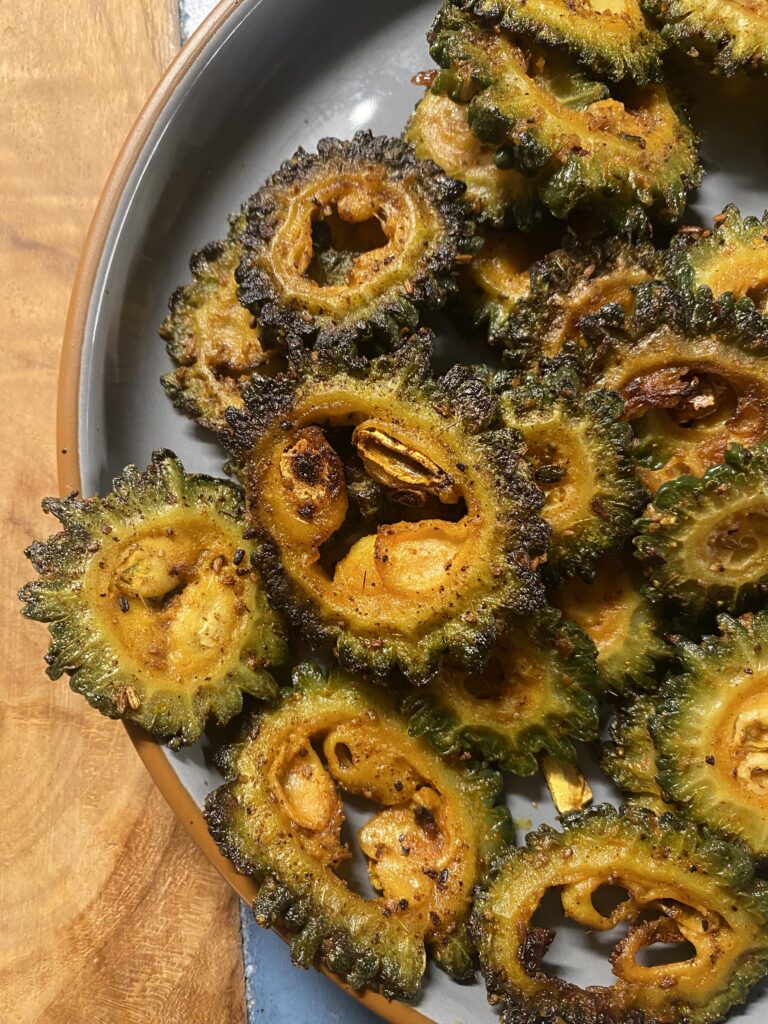
(Madhushree Ghosh) Bitter melon
“Did you see that?”, I ask The Dog.
She wags her tail, unconcerned.
Soon, melons poke their way into existence, plump, swinging on the vine. Then another. Then another. By peak summer, I harvest a karela for lunch daily, slice it into thin discs, smear mustard oil, turmeric, cumin with chili powder. I throw them for ten minutes at 375F in the air fryer and eat with spoonfuls of lentils mixed with rice for lunch.
Three years of The Great Pause, the Dog and I live an unnatural and yet, natural life. The melon’s bitterness, the plant’s resilience, mix with the sun’s relentlessness. I plant papaya, guava, dragon fruit. Then chard, carrots, kale, pomegranate. Even though my sister lives thousands of miles away, and my parents have been gone for nearly two decades, growing my Bengali plants here makes San Diego, home.
The Dog has been gone from my life for nearly three years. The silence that she and I used to crave during The Great Pause now makes me scream. She dies confused, in pain, not ready to go, as am I, confused, in pain, and not ready to let her go. But she does. Here I am, in my house, surrounded by a yard filled with passion fruit, papaya, cucumbers, avocados, chard and yes, uchche. Somehow, the tiny thin tendrils still hold on.
Even though the chief sniffer, The Dog is no longer here, bitter melons still appear like clockwork reminding me that home, and my own, isn’t, aren’t too far away. All who have left me, the parents, The Dog, still remain in their own way with me. Existing in other forms.
This is an excerpt from Madhushree Ghosh’s “Safar: Finding Home, History, and Culture through Punjabi Food in the American West.” If you enjoyed it, consider purchasing the complete book, out from Bloomsbury in June 2026.
Read more
about this topic
