
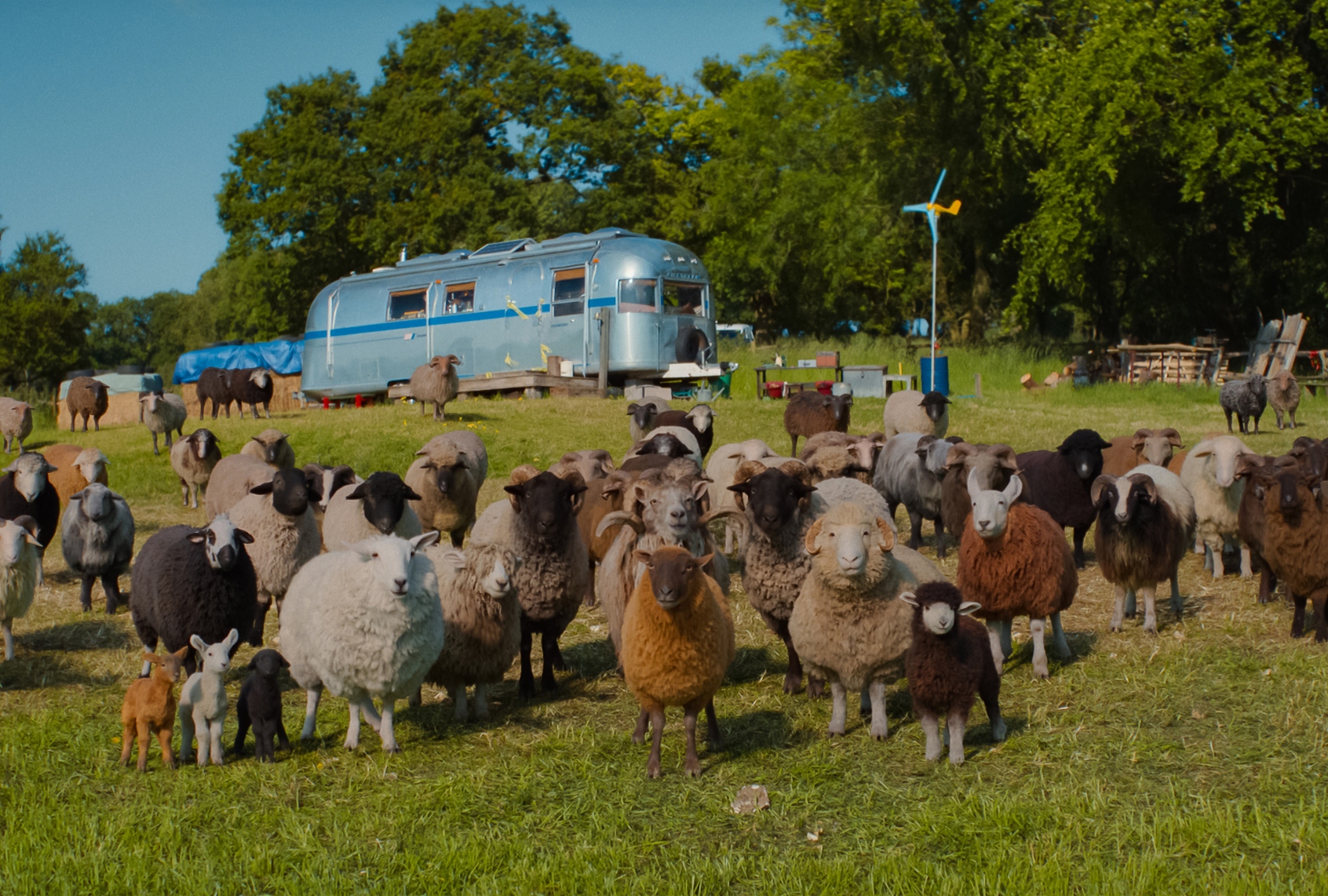

In any coziness competition, if such contests exist, fleece is tough to beat. It offers a fluffy kind of camouflage when you want to hide from the world’s troubles. That should make the allure of “The Sheep Detectives” obvious at first glance. Sheep might as well be harmless, earth-bound clouds. Just about everyone loves them, and just about everybody loves a cozy murder mystery. What could be cozier than a flock of charismatic sheep hunting their shepherd’s killer?
“The Sheep Detectives” is both a powerful story about mourning and a warning against the peril of mindwiping inconvenient histories.
Even if you don’t buy into the notion that sheep, of all creatures great and small, could possibly have the brainpower to crack a murder case, a movie like this is exactly what we need in these ungentle days. Animal heroes? Check. Bumbling humans? There’s a whole English hamlet full of them. The only two legs worth standing beside is George Hardy (Hugh Jackman), who tends to his flock like an attentive father looking after his children.
He grooms them, administers their daily doses of medicine by hand and recognizes their individual personalities. Every night, he reads murder mysteries to them, a ritual he undertakes primarily for his own pleasure. It never occurs to George that his sheep are as invested in finding out whodunit as he is.
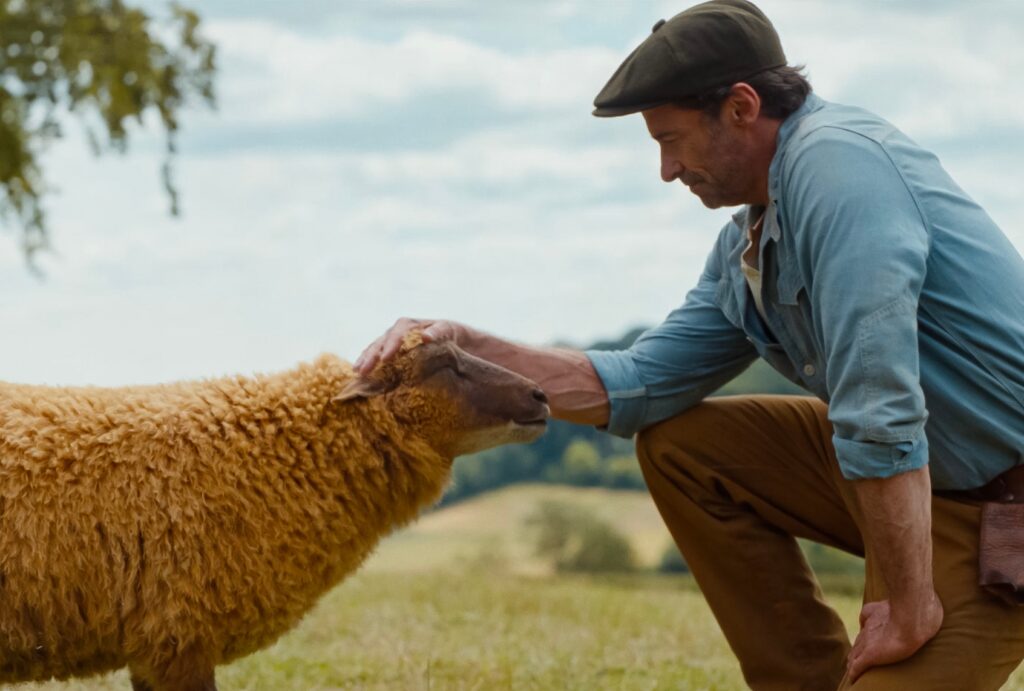
(Courtesy of Amazon MGM Studios) (L to R) Julia Louis-Dreyfus as the voice of Lily, the sheep, and Hugh Jackman as George Hardy in “The Sheep Detectives.”
That also explains why, and how, his devoted rams, lambs and ewes are able to dedicate themselves to solving his murder. Led by Lily, the smartest (voiced by Julia Louis-Dreyfus) and Mopple, the wisest (voiced by Chris O’Dowd), the flock surreptitiously assists the hapless local cop, Officer Tim (Nicholas Braun), in finding George’s killer.
Before that, they must be brave enough not to forget the pain of losing him, a choice that eventually becomes the difference between their salvation and their slaughter.
Leonie Swann’s 2005 novel “Three Bags Full” is a good deal darker than Craig Mazin’s screen adaptation, which he scripted a decade ago. Onscreen, George dies by poisoning, while in the book, he’s impaled by a spade. That’s just one example. This alteration doesn’t make the film’s action less compelling, merely PG-rated and all-ages friendly. Besides, Mazin’s most significant plot tweak is much more striking: he gives George’s flock the power to forget any unpleasant thing they want to as a group, at will.
“The Sheep Detectives” introduces this talent lightheartedly, with Lily suggesting they forget some minor unpleasantness, counting to three, and pausing as a high-pitched whine slices the air. Once that stops, the sheep open their eyes and cavort around happily as if nothing had happened.
One filmgoer’s kindly all-ages fable might become another’s critique of partisan groupthink.
The only sheep unable to join in their sanguine ignorance are Mopple, who’s both burdened with unerring recall and too kind to shatter everyone’s shared illusion, and Sebastian (Bryan Cranston), a black ram for whom memory is a survival tool; he knows too much about how cruel humans can be to pretend otherwise.
Despite cinema’s extensive library of cheerful animal heroes, led by “Babe” and Wilbur of “Charlotte’s Web,” the titular premise of “The Sheep Detectives” apparently strikes many people as bizarre. Many of Swann’s readers admit a similar skepticism until they cracked her book’s spine and discovered they couldn’t put it down.
But where “Babe” is at once a story about respecting all creatures and an allegory for a community’s power to upend oppressive social structures, “The Sheep Detectives” is both a powerful story about mourning and a warning against the peril of mindwiping inconvenient histories.
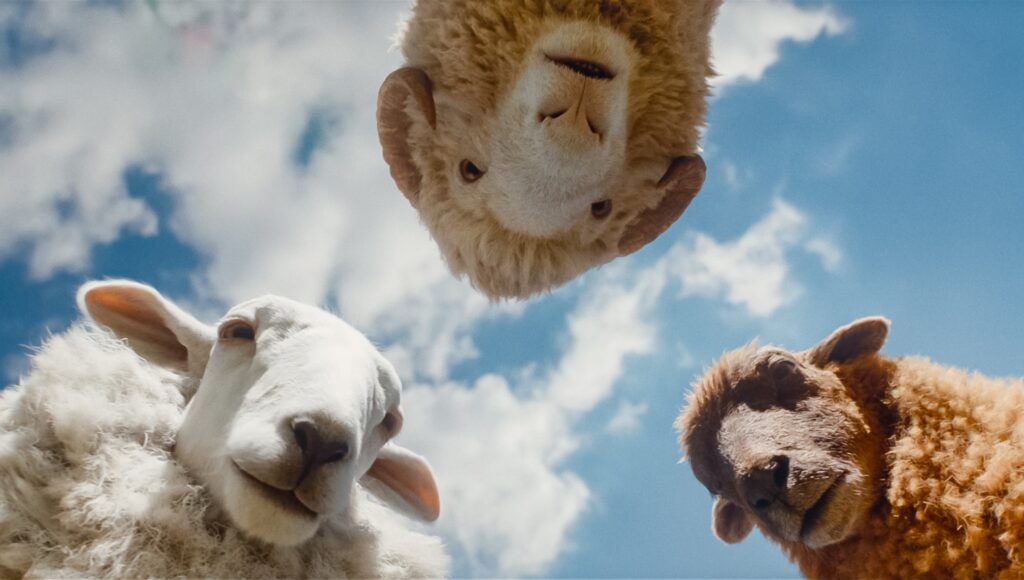
(Courtesy of Amazon MGM Studios © 2026 Amazon Content Services LLC. All Rights Reserved.) (L to R) Regina Hall as the voice of Cloud, Chris O’Dowd as the voice of Mopple and Julia Louis-Dreyfus as the voice of Lily in “The Sheep Detectives.” Courtesy of Amazon MGM Studios
© 2026 Amazon Content Services LLC. All Rights Reserved.
Swann allows her sheep protagonists to express themselves in her book without abandoning their sheep identity. They are concerned with justice, as far as they can comprehend its meaning from the stories George reads to them. They also grasp the finality of death. Lily and the rest are convinced that sheep don’t die; they simply turn into clouds. It’s a nice fantasy.
The most direct reading of this makes “The Sheep Detectives” a parable about denial and eventual acceptance following a great personal loss. But divorcing a film like this from the times in which we’re absorbing it is short of impossible, no matter how much of an escape it provides for 109 minutes. In the light of day, one filmgoer’s kindly all-ages fable might become another’s critique of partisan groupthink.
Sometimes sheep are merely sheep, and sometimes they’re stand-ins for a willfully credulous populace.
George’s sheep may be intelligent, but they are stubbornly ahistoric when confronted with facts they’d rather not acknowledge. Mazin’s expansion of the flock’s willful selective memory coincides with escalating efforts by political leaders seeking to scrub accurate teachings about chattel slavery, the genocide of Indigenous populations and laws that discriminated against immigrants, from educational texts, allegedly to spare the feelings of white children.
And as my colleague Chauncey DeVega spells out in a recent column about such an effort underway in Florida, “A people without history, without context, who lack the means to understand their predicament or the tools to resist it, are easy prey for authoritarians.” Or, figurative sheep for the butcher block.
We need your help to stay independent.
Together, the flock in “The Sheep Detectives” can convince themselves of just about anything — that the shepherd next door, Caleb (Tosin Cole), cares about their welfare as much as George. That his well-trained dogs would love to play with them. That the world is made of green fields carpeted with sweet grass, where nothing bad ever happens. Eventually Lily and Mopple trot across the truth, not only about George’s murder but also the sinister plans other humans have for them.
A sheep who can’t conceive of death, let alone accept that humans would want to murder and eat her entire flock, might as well be fodder. And when Lily decides it’s all too much to bear, she closes her eyes and begins counting to three as Mopple warns her what that will mean. Caleb will come tomorrow, he says, and she will follow him with all the other stupid, frightened sheep, “and we will all die.”
Sometimes sheep are merely sheep, and sometimes they’re stand-ins for a willfully credulous populace. “Forgetting was a tried-and-true way for sheep to get over their sorrows,” Swann observes in her book. “The stranger and more disturbing an incident was, the faster you needed to forget it again.”
Want more from culture than just the latest trend? The Swell highlights art made to last.
Sign up here
“Three Bags Full” doesn’t stop there. Within the flock’s benign day-to-day interactions hides a normalized bigotry and xenophobia (“What do human beings do when they’re afraid . . . they put up fences”) that the movie mainly alludes to through the struggles of a spindly winter lamb that the rest of the flock shuns.
Meanwhile, the black ram called Sebastian in the movie is based on Swann’s version, named Othello. Both survived horrific abuse at the hands of humans, but only Othello’s mind explicitly recalls that experience to formulate a telling definition of justice that he shares with another sheep. “Justice is when you can trot where you like and graze where you want. When you can fight to go your own way,” he says in the book. “When no one steals from you. That’s justice!”
Presumably, these observations were too radical for a major studio’s family film, even one directed by the man who helmed “Minions” and “Despicable Me 3,” Kyle Balda. For Mazin, best known to TV audiences for making “Chernobyl” and co-creating “The Last of Us,” these concepts aren’t especially foreign. But both he and Balda know how much medicine the audience can handle in their fluff before the bitterness overwhelms the sweet.
This is still above all a lovely, soft yarn about crime-solving farm animals, some of them voiced by Regina Hall, Patrick Stewart, and the guy who plays Roy Kent on “Ted Lasso.” But even if we’re meant to view our woolly antagonists as sheeple, after a fashion, “The Sheep Detectives” culminates on an optimistic note for both the four-legged and the two. Sheep are not only intelligent, as someone observes, but they can be inspirational. If Lily, Mopple and the rest can set their part of the world right, there’s no reason we can’t find our way to better pastures, too.
“The Sheep Detectives” is now playing in theaters nationwide.
Read more
about this topic
