
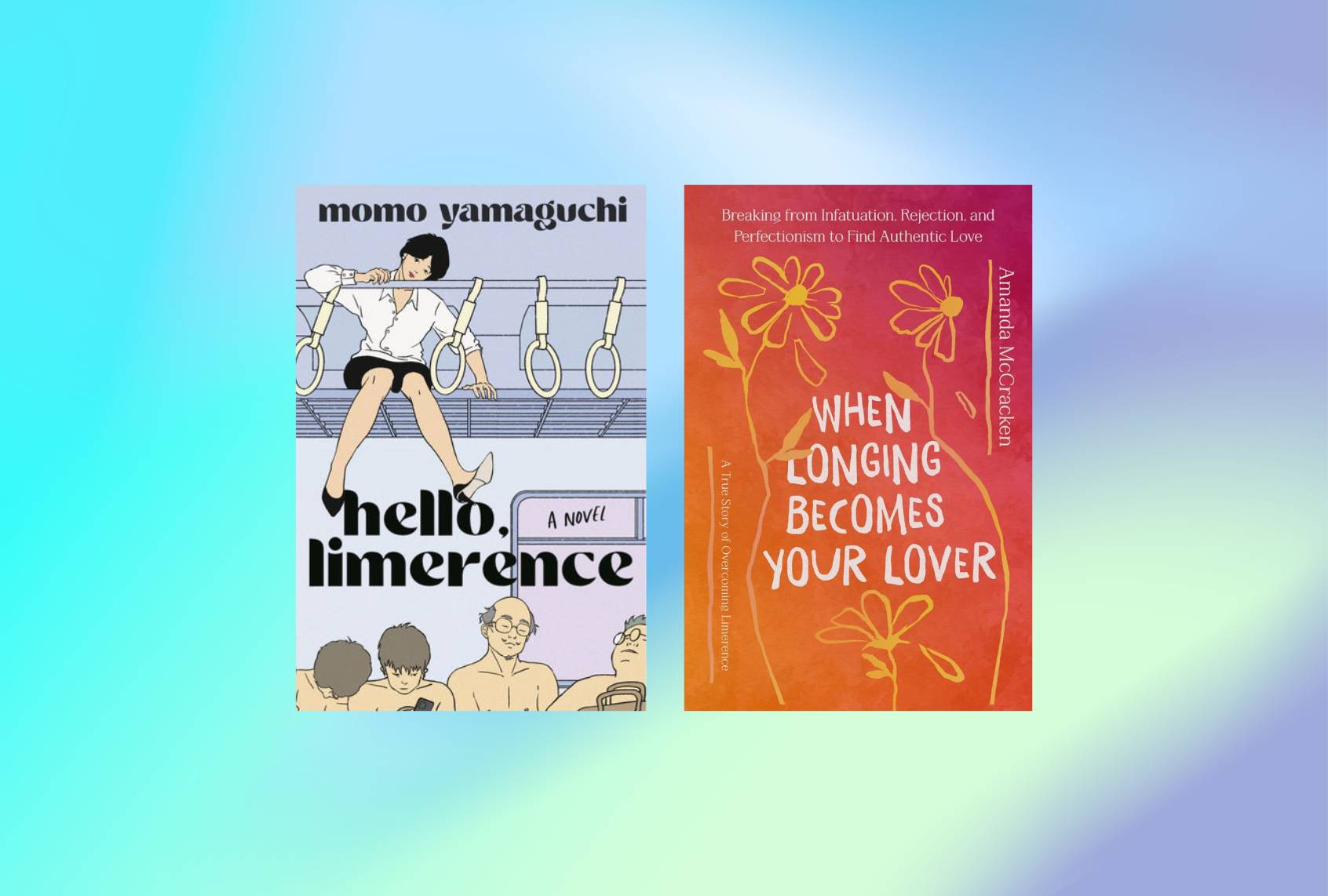

Folks, hot limerence summer is here, and if you don’t know what I’m talking about, congrats on not paying attention to TikTok. Maybe you’ve heard “Heated Rivalry” fans swoon over it, or Lucy Dacus sing about it, but you might want to brush up, because the once-obscure concept has officially broken containment. Google searches for “limerence” are spiking. Elle deemed it the latest buzzword in dating, and Momo Yamaguchi’s first novel, “Hello, Limerence,” is one of the year’s most anticipated books, heralded ahead of its August release in the U.S. as a more virginal “Fleabag.”
Limerence is far from new; it’s one of civilization’s most potent and influential human conditions, invented and reinvented continually over centuries of civilization before arriving here (that is, online) and now (a time of history flattened by algorithms) to be invoked as the invention of Emily Brontë, if not Taylor Swift. The fact that limerence is trending, however, is a mixed blessing for Amanda McCracken, whose first-person chronicles of a life defined by limerence have appeared in the New York Times, in her podcast “The “Longing Lab,” and in a new investigative memoir, “When Longing Becomes Your Lover: Breaking from Infatuation, Rejection, and Perfectionism to Find Authentic Love.”
They are the real person who is simultaneously a figure of fantasy, whose every appearance is destabilizing, whose every utterance must be decoded.
For one thing, she has to deal with skeptical, eye-rolly questions like “Okay, but aren’t you just describing a crush?” from people who hear limerence described as an obsessive longing for the love of an unavailable person and are promptly transported back in time to a purgatory of clammy hands, racing thoughts and stammered words. Who among us has not yearned a little? Or, you know, a lot?
But limerence isn’t a crush. Or rather, it’s a crush on steroids, as McCracken often says. The term was originated by Dorothy Tennov, an experimental psychologist who used it in her 1979 book “Love and Limerence: The Experience of Being in Love” to describe an overwhelming, irrational and attenuated attachment characterized by acute longing, intrusive thoughts and obsession. What Tennov called the “limerant object,” or LO, is an involuntary fixation who might inspire magical thinking and maladaptive daydreaming; they are the real person who is simultaneously a figure of fantasy, whose every appearance is destabilizing, whose every utterance must be decoded.
Tennov deliberately used the word object to emphasize that someone in a limerent state is seeing their loved one as an ideal. A person experiencing limerence, she wrote, has “a remarkable ability to emphasize what is truly admirable in LO and to avoid dwelling on the negative, even to respond with a compassion for the negative and render it, emotionally if not perceptually, into another positive attribute.”
Limerence feels great until it feels terrible. It’s mostly unrequited but also requited enough to keep the limerent person unsteady, endlessly toggling between euphoria and misery. “Limerence can live a long life sustained by crumbs,” Tennov wrote, and “When Longing Becomes Your Lover” is McCracken’s attempt to understand how those crumbs sustained her until she was 40.
There are a number of theories about why limerence exists and what causes it: Some who study it suggest that it’s a symptom of undiagnosed ADHD or obsessive-compulsive disorder; others suspect it might be a byproduct of disordered attachment in early childhood, despite the broad consensus that attachment theory is not the predictor of adult behavior that conventional wisdom and social media would have us believe.
McCracken resists the urge to tie her limerent life to a single factor, and her book makes the case that time, temperament and circumstance were part of what made limerence a pattern behavior. She grew up in a close-knit, churchgoing community in the 1980s and ’90s, with loving parents and a particularly close relationship with her maternal grandmother. George W. Bush’s presidency was in full, regressive swing; abstinence-only sex education and purity-ring ceremonies were, in many places, a normative part of adolescent life. A new evangelical movement was taking shape, and the recentering of virginity as the gift spouses give one another in marriage was one of its most closely-held tenets.
This was ostensibly true for all genders, but female virginity seemed to matter most: Girls were cast not just as sexual gatekeepers but as temptresses who were held responsible for inflaming the loins of both their male peers and any other men by simply existing. Abstinence programs and youth pastors talked about the value of virginity by likening girls who had sex to pieces of chewed gum or Scotch tape that had lost its stickiness. It was, McCracken recalls with some understatement, fertile ground for limerence to thrive.
McCracken’s story reflects the impossible demands purity culture made on girls, but also reflects the larger cultural messages of the era. She was a high-achieving perfectionist who ran long-distance track. She had access to age-appropriate information about sex and reproduction. She found a sense of empowerment in making her virginity pledge, and it also fit her competitive drive: Like long-distance running, virginity was a matter of endurance.
“I definitely grew up being told, you know, ‘Don’t settle. You have plenty of time,’” McCracken says. But limerence, she admits, offered “a safe place to hide” in a culture that urged young women to sexualize themselves even as it shamed them for actually pursuing or engaging in sex. Limerence was McCracken’s opt-out of sex as a morality indicator: She could flirt, hook up, and do everything but without foreclosing on the belief that her one true love was out there.
Tennov posited that limerence existed in a purgatorial realm between requited and unrequited love; and herself experienced it as akin to grief. But as with so much human expression forged in the torment of sustained yearning, McCracken found limerence generative. It scratched her perfectionist, competitive and self-abnegating itches, allowing her to endlessly create and revise fantasy scenarios: “I found it therapeutic to write about them, almost as a way of documenting them to make the emotional energy and time invested count for something. I became obsessed with mentally completing experiences with men that had left me with scraps of an incomplete story.”
In other words, limerence had its upsides: The men she pined after “were my muses,” she writes. “I could live for months, sometimes a year, on imagining the ending to these unresolved relationships.” In many cases, her limerant objects were people she knew and were even intimate with, with whom she played out years of will-they-won’t-they. “He was like the definition of avoidant, mysterious, elusive,” she says of one man, an artist. “So I always felt like I was guessing around him and never quite sure how much he was into me.” What came across to others as a Jack Berger-esque He’s just not that into you registered as mixed signals to her. “He was somebody to work for. I felt like I could never quite win him. But it was enough to be like, ‘Maybe there’s hope.'”
For people who have a pattern of limerence, the uncertainty is the point. “I’ve had some people be, like, ‘Oh, I should read your book, but I really don’t want to’ — because people love swimming in limerence. There’s something that’s addictive [in] the fantasy and the ruminating.” Luxuriating in longing has been identified as distinctly Gen Z, but its occurrence cuts across all demographics. When Dr. Tom Bellamy, a neuroscientist and the author of 2025’s “Smitten: Romantic Obsession, the Neuroscience of Limerence, and How to Make Love Last,” surveyed 1,500 people at random, more than 60% reported experiencing limerence; 50% of that 60% reported that it was intense enough to disrupt their lives.
In a time where everything already feels uncertain, limerence can, paradoxically, make a person feel in control. This is one reason the word has entered the behavioral Thunderdome that is social media, where terms like gaslighting and narcissism and trauma and attachment style are wielded proudly but inexpertly and the battle between linguistic integrity and concept creep never ends. Limerence isn’t a disorder, but that hasn’t stopped it from being broadly diagnosed across TikTok, Instagram and YouTube. Social media’s prevalence of self-diagnosing reflects the desire to categorize and label human behavior and to demand easy answers to problems that don’t have them.
Writing in Psychology Today, Isabelle Morley lamented the emergence of social-media “pop pathology,” noting that the rush to diagnose and label forces “every experience to be a symptom that reflects a disorder’s diagnostic criteria, and [erases] the wide spectrum of ‘normal’ functioning.” Completely apart from the problem of influencers whose audiences far outstrip their professional credibility, applying a clinical lens to every social or behavioral experience, Morley warns, makes “everyone seem or feel like a clinical mess when, in fact, they are probably well within the normal range. In doing so, we leave little to no room for people to mess up.”
We need your help to stay independent.
Limerence is a complex topic; McCracken notes that her own therapist was “helping me untangle myself from my patterns before she even understood what limerence was. There are a lot of therapists out there who don’t know the term, but I think they’re still helping people like me with awareness of their patterns and the realization that they aren’t in control of other people’s emotions.”
The speed with which social media has drained limerence of nuance doesn’t surprise McCracken, but she’s also not a fan. “You have people [with] no idea what they’re talking about using AI to come up with reels that are going to go viral because they’re beautiful. And that in itself is a hindrance to people trying to understand limerence in their own lives.”
The risk of constant diagnosis-seeking is that it posits that feeling things deeply — or irrationally, or contradictorily — is dangerous. “I have heard people ask, like, ‘Can I be medicated for this?’” McCracken says. “Because they’re just exhausted with themselves, exhausted with these thought patterns.” She herself hasn’t been immune to clinging to limerence: McCracken eventually fell in love, married and had a child — and suddenly had to reckon with what a non-limerant relationship would mean for her muses. “I thought, ‘I’m in this healthy, loving, stable relationship — how will I write?”’ she says wryly.
In “Love and Limerence,” Tennov emphasized that limerence is neither static nor permanent. The fixation and focus that once characterized McCracken’s love life didn’t disappear, but it did mellow and become more manageable. Before limerence, she had longing, unpredictable and often thrilling, the drama that humans have always craved. There’s a reason that the Medieval practice of courtly love remains a staple of the romance genre, and that people persist in describing themselves “hopeless romantics.” We long to long and yearn to yearn, and McCracken doesn’t think that should change: “I will always, always be a longer.”
Read more
about love and sex
