
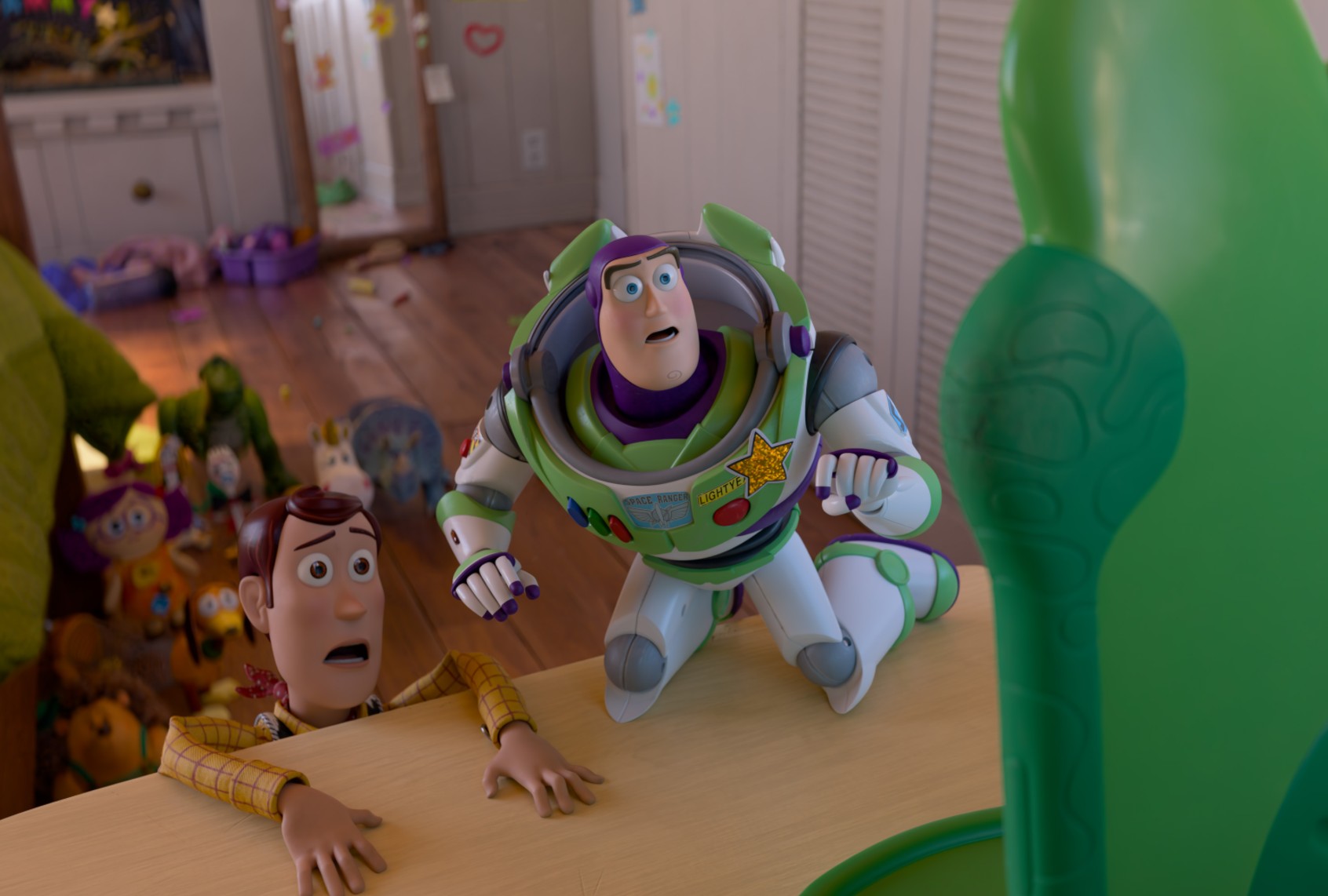

As painful as it may be, there are some aspects of the modern world that we must learn to live with if we want to live at all, and Disney-Pixar’s “Toy Story 5” is steeped in two particularly nagging ones: the prevalence of screens and sequels. Given the historical strength of Pixar’s preeminent franchise, I’m willing to dole out far more grace to a “Toy Story” film — even a whopping fifth entry, which does seem ludicrously excessive, even if the series has spanned 30 years — than I am, say, “Cars” or “Inside Out.” There’s a reason the franchise that kick-started Pixar’s reign has been able to last as long as it has, and it’s because the minds behind “Toy Story” understand that there is no shortage of imaginative ideas to explore when it comes to play.
Or, are there? Though the original 1995 film was about toy sheriff Woody (Tom Hanks) falling out of favor when the battery-operated, light-up space ranger Buzz Lightyear (Tim Allen) hit the scene, the “Toy Story” franchise has never explicitly grappled with the effects technology has on humans. That first saga of Woody versus Buzz was also a story of old versus new, teaching kids that they don’t always have to be wooed by the hottest toy on the market. One could even make an argument that “Toy Story” has anticapitalist undertones; I’m sure I’m not the only person whose parents referenced the film every time I begged for a new toy or plush, pointing out that the others would be sad they weren’t getting enough attention.
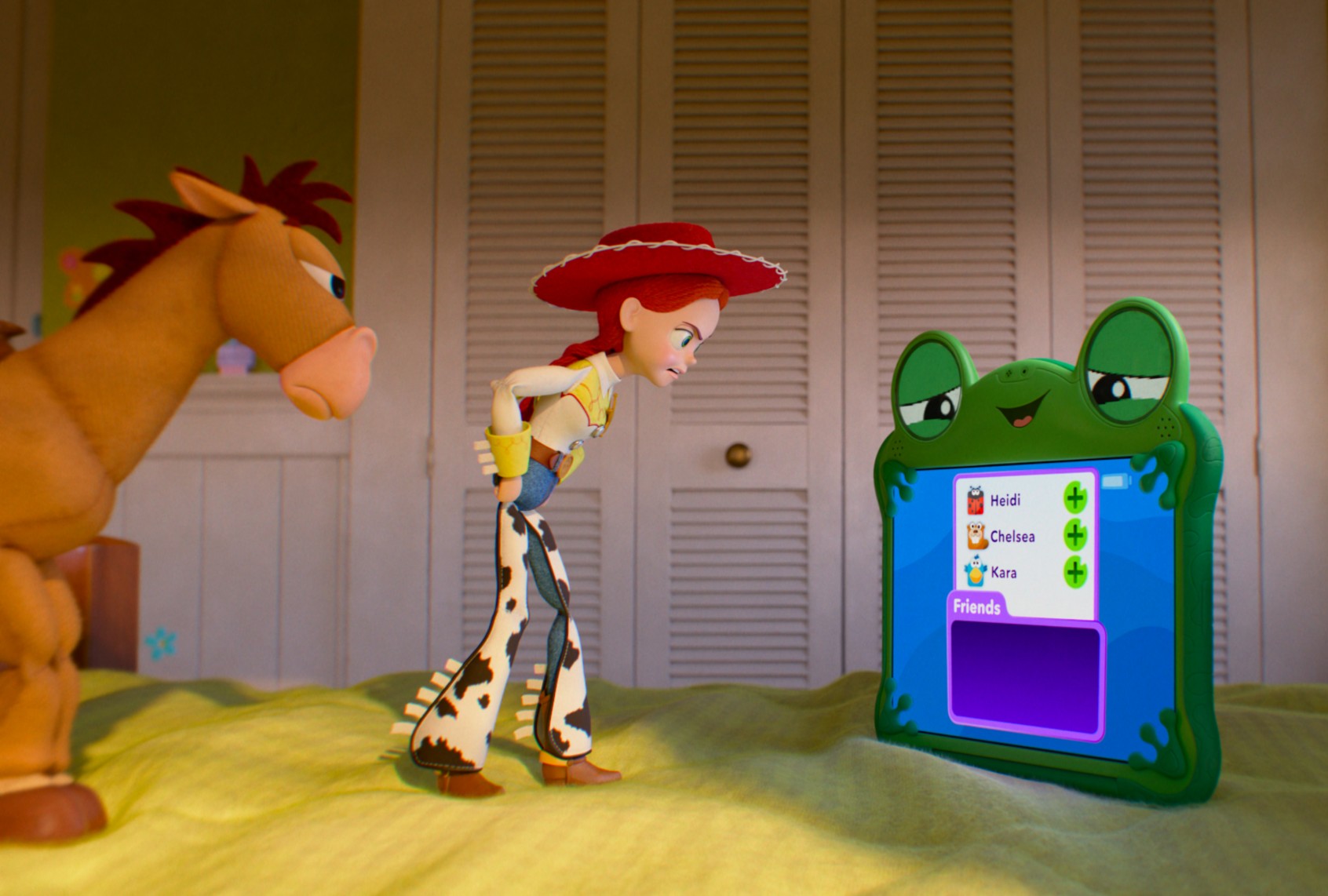
(Pixar) Bullseye, Jessie and Lilypad in “Toy Story 5”
“Toy Story” and its four sequels encouraged imagination and playfulness by giving toys the same kinds of personalities that children pretended the toys already had, sending them on adventures big and small. Even “Toy Story 4” — the first sequel of the official smartphone era, released in 2019 — didn’t have a handheld device in sight, focusing solely on the toys.
Although “Toy Story 5” lands on a sweet and important message for kids and parents, it pulls its punches too often to meet this frightening moment with the urgency it deserves. When children’s mental health and cognitive development are at risk, implying that screens can be good in some circumstances is a slippery slope toward a worse future.
But the world looks much different now than it did in 1995. For many children, screen time eats into playtime. Multiple studies have shown that the COVID-19 pandemic and the proliferation of screens and devices throughout daily life have played a dual role in pulling children away from play when their cognitive development requires it most. Kids under the age of 10 with a high amount of daily screen time face significant developmental repercussions like irritability, a lack of executive functioning, poor sleep, and, critically, poor social and emotional competence. With such frightening possibilities for children, and with screens increasingly adapted into educational curricula, it seems almost noble that Disney-Pixar would return to “Toy Story” to tackle this new era in the franchise’s fifth film, with the villain role going to a tablet named Lily (Greta Lee).
Want more from culture than just the latest trend? The Swell highlights art made to last.
Sign up here
However, it’s hard to believe that a megacorporation like Disney, which now essentially owns and controls all major media marketed to children, would draw a hard line at the smart device. Disney already has a vested interest in device-based entertainment. And with technology growing as rapidly as it is, it behooves the company’s bottom line to avoid damning and disparaging devices outright. The reluctance is felt throughout “Toy Story 5,” as the film tries to find a middle ground between its franchise’s historical love of play and the future’s embrace of screens. Rarely does the movie hit on any salient points that the series hasn’t already made, opting instead to repeat narrative patterns and jerk a few tears here and there.
But there’s no glee in the fact that the first “Toy Story” film to implement a smart device is also the franchise’s weakest installment. Although “Toy Story 5” lands on a sweet and important message for kids and parents — there is no tech-based replacement for unstructured playtime — it pulls its punches too often to meet this frightening moment with the urgency it deserves. “Toy Story 5” plays more like a suggestion than a warning, and when children’s mental health and cognitive development are at risk, implying that screens can be good in some circumstances is a slippery slope toward a worse future. The moment in which “Toy Story 5” opens is already bleak.
The last film left off with Woody departing his beloved group of toys to join Bo Peep (Annie Potts) on the road, helping lost toys find new kids. Jessie (Joan Cusack), Buzz and the rest of the gang have been left to lead the room for their kid, Bonnie (Scarlett Spears), whose effervescent spirit and big imagination are trumped only by the intimidating twins who live next door. Jessie has been trying all summer to help Bonnie make friends, but none of the neighborhood kids seem to take a liking to her. On a reconnaissance mission, Jessie climbs to the roof and discovers the root of this strange standoffishness: Every child, in every window, has their face glued to a screen.
The local toys in yards all around the neighborhood quake. “The age of toys is over!” they cry, hiding in fear. Although Jessie tells the other toys that she’s positive no device can create the wonder she and her friends can for Bonnie, the quake in her voice says otherwise. Desperate to help her socialize, Bonnie’s parents weigh the costs of getting her a tablet, reluctantly adding one to their cart. When her new Lilypad arrives, Bonnie is thrilled, so excited that she can talk to the other girls in her dance class and play games with them online. She, like every other eight-year-old — especially the ones growing up around technology and social media — is already developing a complex over being liked, something no child her age should have to think about.
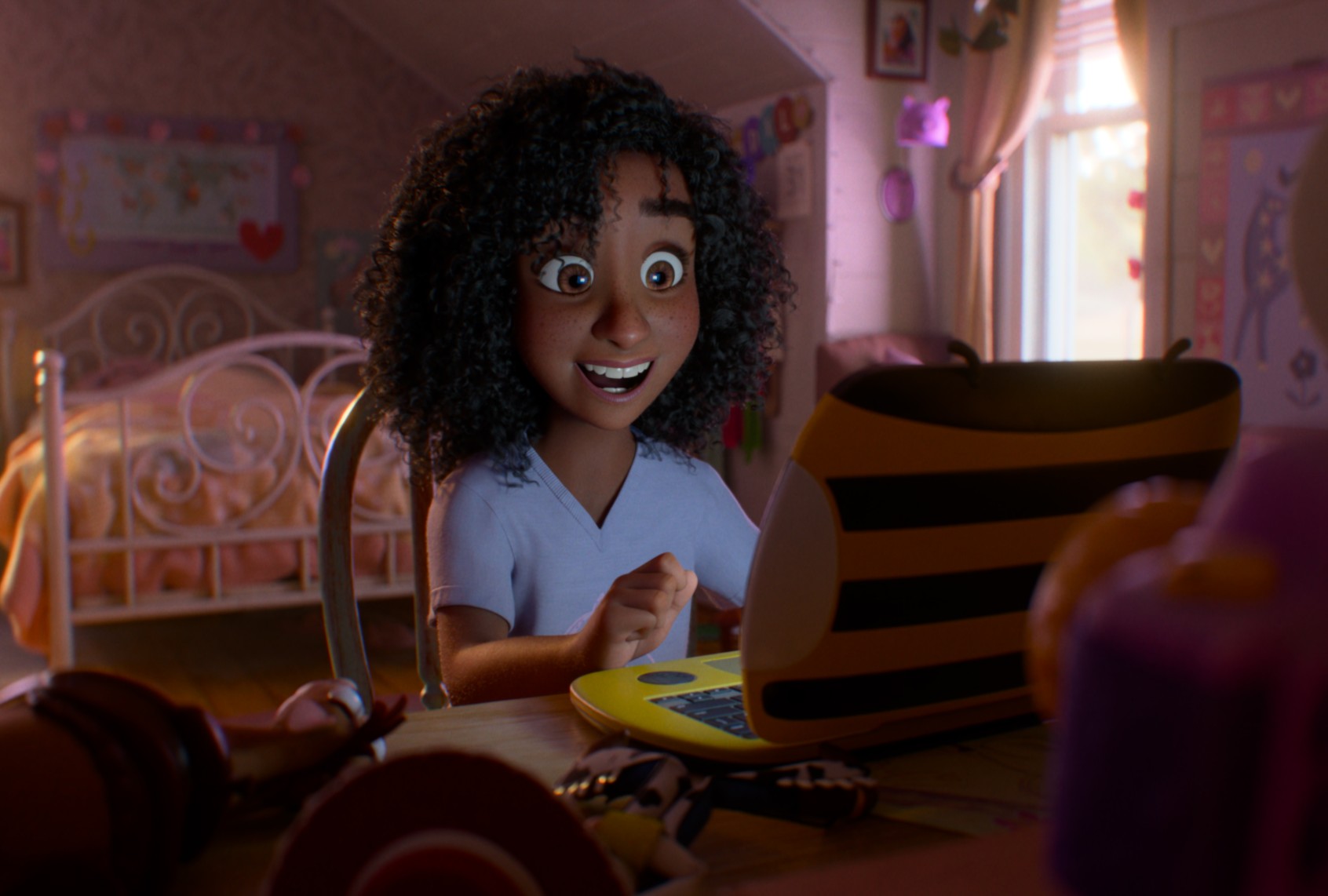
(Pixar) Blaze in “Toy Story 5”
As it turns out, that’s Lily’s primary concern, too. Once she’s plugged in, charged and becomes sentient like the rest of the toys in Bonnie’s room, Lily wastes no time shaking things up. Bonnie will only make friends if she can join the games and group chats with the girls from dance class, Lily argues. That’s where they all are, anyway. It only makes sense that Bonnie needs to adapt to this new style of play. Analog is out, digital is in; devices rule, toys drool. Even worse: Lily’s capabilities allow her to meddle with Bonnie’s life outside of when Bonnie is using the tablet, resulting in Jessie and the rest of the toys being boxed up and put in the garage.
What follows is a mostly formulaic “Toy Story” plot: A small yet drastic change has occurred, the toys are separated and they must all band together to reunite for the good of their kid. Surprisingly, the narrative still has some juice left in it, pulling off a big emotional centerpiece that calls back to the second film, when a single Sarah McLachlan song shattered hearts around the world.
What “Toy Story 5” does exceptionally well is illustrate both the power of play and the effects screens have on kids. Scenes animated in hand-drawn style are designed to bring Bonnie’s imagination to life, recreating the vivid magic of designing entire stories and character arcs for toys during playtime. These scenes are where the film does its best work, conveying the necessity of unstructured play with ease alongside the movie’s funniest jokes. They’re a stark contrast to Bonnie’s dejected demeanor whenever the girls from her dance class make fun of her for still playing with toys when they’ve all moved on to tablets. Bonnie’s heart lies with her toys, but she tries to conform anyway, fearing that she’ll never make a friend otherwise. The film’s message is clear, even spelled out by characters: Devices force kids to grow up too fast.
We need your help to stay independent.
If only “Toy Story 5” could drive that sentiment home when the film needs it the most. Every time the narrative comes close to truly condemning children’s access to devices, the movie pulls back in fear of isolating or angering the audience. “Toy Story 5” does not want to risk coming off as judgmental toward parents who don’t do a good enough job regulating their kids’ screen time, or parents like Bonnie’s, who are trying to figure out a balance and healthy solutions for their child in a rapidly changing world. That apprehension is understandable, but ironically, the film treats adults with kid gloves. If no one besides academic researchers is willing to take a firm stance against device use among kids, the hesitation only serves the companies that stand to profit from manipulating and commodifying children’s attention.
But “Toy Story 5” has one particularly limiting scene, where Bonnie goes to her first-ever sleepover with her new friends from dance class. After being taunted for bringing her toys, Bonnie is embarrassed but determined to get in with the cool group, leaving her toys outside to be returned to the wrong address by a stranger. Just when the writers have a real opportunity to convey the harm and isolation that devices cause, the film cuts back to the A-plot, checking in with Jessie as she tries to figure out how to get back home. The next morning, when Bonnie returns sad and tired, we learn that the other girls played hide-and-seek and left Bonnie all on her own to use their tablets.
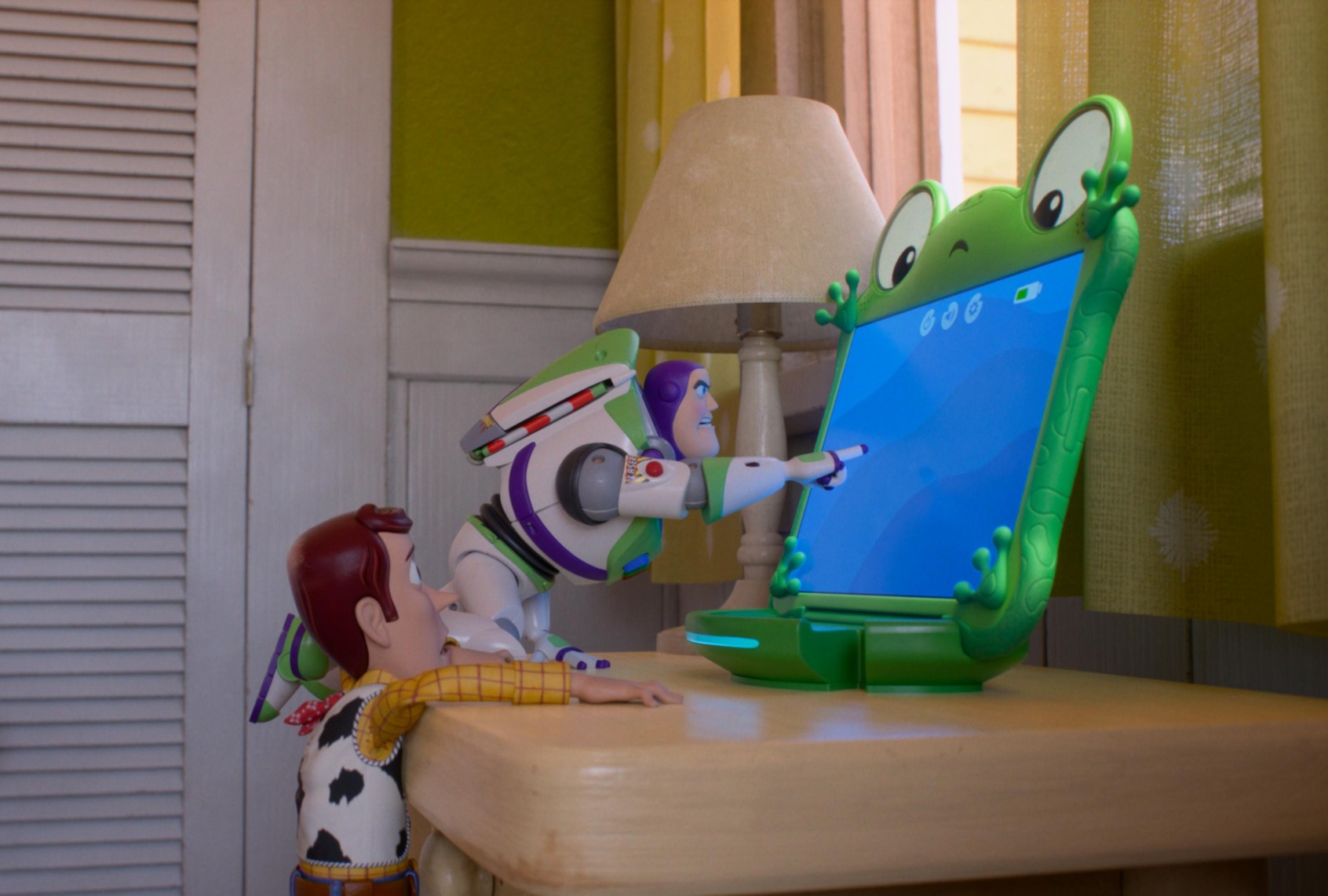
(Pixar) Woody and Buzz Lightyear in “Toy Story 5”
“Toy Story 5” does not want to risk coming off as judgmental toward parents who don’t do a good enough job regulating their kids’ screen time, or parents like Bonnie’s, who are trying to figure out a balance and healthy solutions for their child in a rapidly changing world. That apprehension is understandable, but ironically, the film treats adults with kid gloves.
Actually seeing this heartbreaking event happen would be the perfect chance for the film to touch viewers of all ages, and communicate the harm that devices do, not just in controlling the user’s attention, but in making them colder, crueler and less considerate. But yet again, the emotional stakes are hindered by a lack of gumption. When Bonnie’s “friends” continue to make fun of her in their group chat, Lily finally has a change of heart when she sees just how much the bullying affects Bonnie. Lily decides to ostracize herself before eventually being saved — and redeemed — by the rest of the toys, but by then, it’s too late. The film has wavered too much, and the story’s vacillating opinion on devices starts to point back at Disney.
It’s worth noting that Disney has plenty of apps designed for children of all ages. Some, like Disney Magic Kingdom, are for players four and up, with a title screen suggesting: “Play healthy! It is recommended that you take breaks from time to time during a long play session.” (This recommendation, appearing in tiny font, lasts all of one second before the game’s title screen. I had to restart it three times to copy the whole thing verbatim.) Other apps, like tile-matching game Disney Emoji Blitz — complete with a special “Toy Story” character pack for the new film — are listed for ages nine and up. But nine is still far too young to be playing with devices instead of toys.
None of this is to say that “Toy Story 5” is some evil, pro-iPad conspiracy by Disney, only that there’s a notable correlation between Pixar’s parent company’s reluctance to condemn tablets in their staple summer blockbuster and their increasing digital output. After all, the “Toy Story” franchise has had pure villains before — one of them almost got away with incinerating the toys for good! There’s no reason Lily couldn’t be a straight-up antagonist, and the film’s story could work just as easily written that way. (It would also save audiences from a pretty goofy dramatic climax.) But that wouldn’t move the new LeapFrog “Toy Story 5” interactive Lilypad tablet off shelves, now would it?
While it’s admirable that those behind a franchise like “Toy Story,” which means so much to so many, wanted to stretch the series past its near-perfect fourth installment and into an uncertain, digitally cluttered future, “Toy Story 5” isn’t much more than a reminder of what we already know. Kids need to play. There are copious cognitive benefits and endless possibilities for where their imaginations can run, unbound by the limiting confines of a tablet. It’s only ironic that the film’s story doesn’t have the same inventive, thoughtful scope, only to avoid alienating anyone watching the movie on their iPad.
Read more
about great films for kids
