
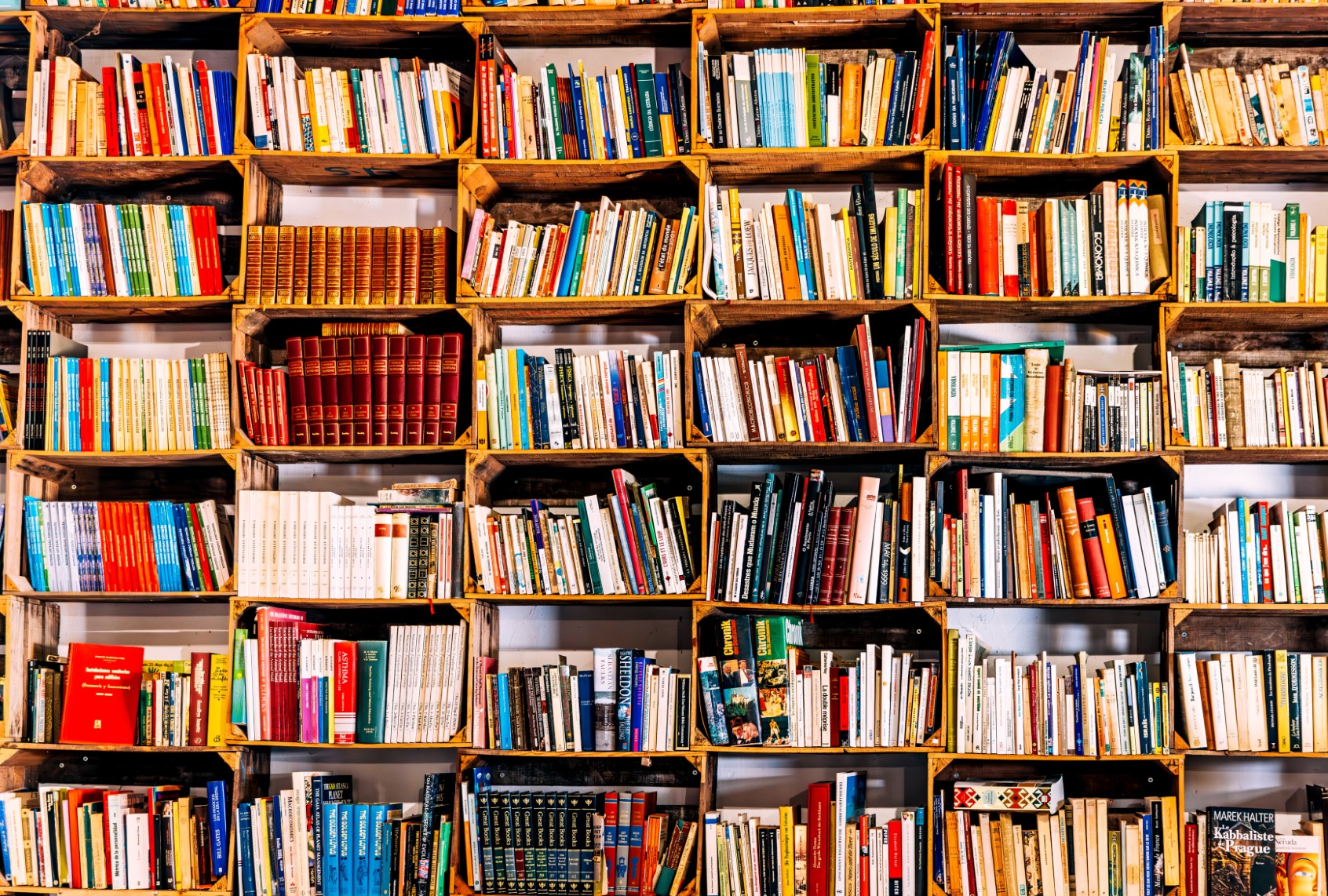

If your home contains more than two bookcases, you probably know the cautionary tale of Homer and Langley Collyer. After the deaths of their parents, the aging bluebloods holed up in their stately Harlem rowhouse, once a picture of Gilded Age polish, and became a public curiosity. Homer, who began losing his vision in the early 1930s, almost never left the house; Langley slipped out at times when he was unlikely to be seen, in search of additions to collections that filled the house: books, newspapers, tin cans, clocks, baby carriages, pianos and more.
The building, filled to its ceilings, grew increasingly dilapidated; Langley’s paranoia about suspected intruders led him to build mazes of detritus to throw them off. In 1947, after reports of strong odors were reported, a huge crowd on the street watched as police and city officials pried their way inside to look for the brothers’ bodies. They found Homer, but it took weeks to uncover Langley, who had been crushed beneath one of his own towering piles.
The question of when having a lot of books becomes having too many books is subjective.
Mendel Uminer, a translator, scholar and literary-journal publisher, did not have a Collyer situation when he received a sternly worded letter from his building’s management company. But he did have 10,000 books in a 600-square-foot studio; the letter stated that this was a fire hazard and delivered an ultimatum: Lose the books or risk eviction. In June, The New York Times documented the 31-year-old’s multi-day process of boxing up and moving his library, along with defending its size: 10,000 books “is not as excessive as people might think,” he told a reporter.
Most of Uminer’s books were shelved and weren’t impeding entrances and exits. If he had amassed the same number of records, skateboard decks or vintage gaming consoles — all fire hazards — would he have gotten the same eviction warning? The question of when having a lot of books becomes having too many books is subjective, but that’s never kept anyone from asking. (Nor has it kept them from saying “There’s no way you’ve read all of those” like it’s some big gotcha.)
Reports of the book’s obsolescence were already exaggerated. Adoption of e-readers like the Kindle and Kobo didn’t replace physical books; and despite the shuttering of mass-market chains like Borders, Waldenbooks and B. Dalton, the last 30 years have seen a reading boom. Continued Interest in reading has driven trends and buoyed an industry. It’s also made collection, storage, and shelving a perennial hot topic: Last winter, when a former Philadelphia attorney died, the news of an estate sale for his collection of more than 100,000 books led to lines around the block.
But actual numbers of books can inspire a kind of intensity (and, sometimes, animosity) that seems absent with other forms of media. During pandemic lockdown, the offices and makeshift Zoom rooms of politicians, pundits and assorted celebrities spawned Twitter accounts like Room Rater and Bookcase Credibility; The New York Times’ celebrity bookshelf detective scanned the bookshelves behind talking heads for notable titles. Long before that, the comments sections of Apartment Therapy and Design Sponge teemed with strong pro and con opinions about libraries arranged by color, vertical vs. horizontal storage, and the brief, almost universally loathed trend of spine-in arrangements.
A preoccupation with what others have on their shelves might be purely aesthetic, but often conveys something more, like a sense of judgment. When Lex, 36, and her now-wife (a college professor and a high-school librarian, respectively) rented their house, combining their libraries into one felt meaningful. Her in-laws had a different reaction: “We were showing them the house, and they got more irritated with every room — like, ‘You have books in here too?’ It was like they saw it as bragging, like ‘Ugh, fine, we get it, you’re educated.’” When a 2019 Vanity Fair profile of Beto O’Rourke made note of the would-be candidate’s floor-to-ceiling wall of books, Brian Kilmeade of “Fox and Friends” reacted peevishly: “They point out he has this huge library — as if it’s a big plus that he reads books.”
Want more from culture than just the latest trend? The Swell highlights art made to last.
Sign up here
Living without books is, for some, equally inexplicable. When Netflix premiered Marie Kondo’s show, “Tidying Up,” in 2018, the decluttering doyenne’s personal decision to have no more than 30 books at a time had people reacting as though Kondo had personally backed a paper-shredding truck into their driveways; in both speed and intensity, the responses confirmed that book ownership, from both sides of the issue, is uniquely charged. One friend has suggested a mathematical equation for determining optimal library size, likening it to the half-your-age-plus-7 standard for dating younger people. Your age, the size of your residence and the number of people living there should all factor in, she theorizes, with some extra leeway for those working in or adjacent to the book trade. For others, experiential assessment is enough: Does anyone in your home regularly trip over books? Do you sometimes buy books that you’ve forgotten you already have? Is your partner threatening to leave you?
A preoccupation with what others have on their shelves might be purely aesthetic, but often conveys something more, like a sense of judgment.
But if it doesn’t affect them, why do Lex’s in-laws care how many books are in their house? What was it about O’Rourke’s bulging bookshelves that got Kilmeade so shirty? Why did book lovers stop just short of challenging Kondo to a duel over something she didn’t actually say? Does a full bookshelf convey intellectual curiosity and open-mindedness, or immodesty and self-importance? And, more to the point, who decides? Mendel Uminer’s plight is rendered with the occasional implied eyeroll — Did this kid just say “Spinozistic”? — but the crux of it is broadly relatable: The things that give our lives meaning will also complicate them.
We need your help to stay independent.
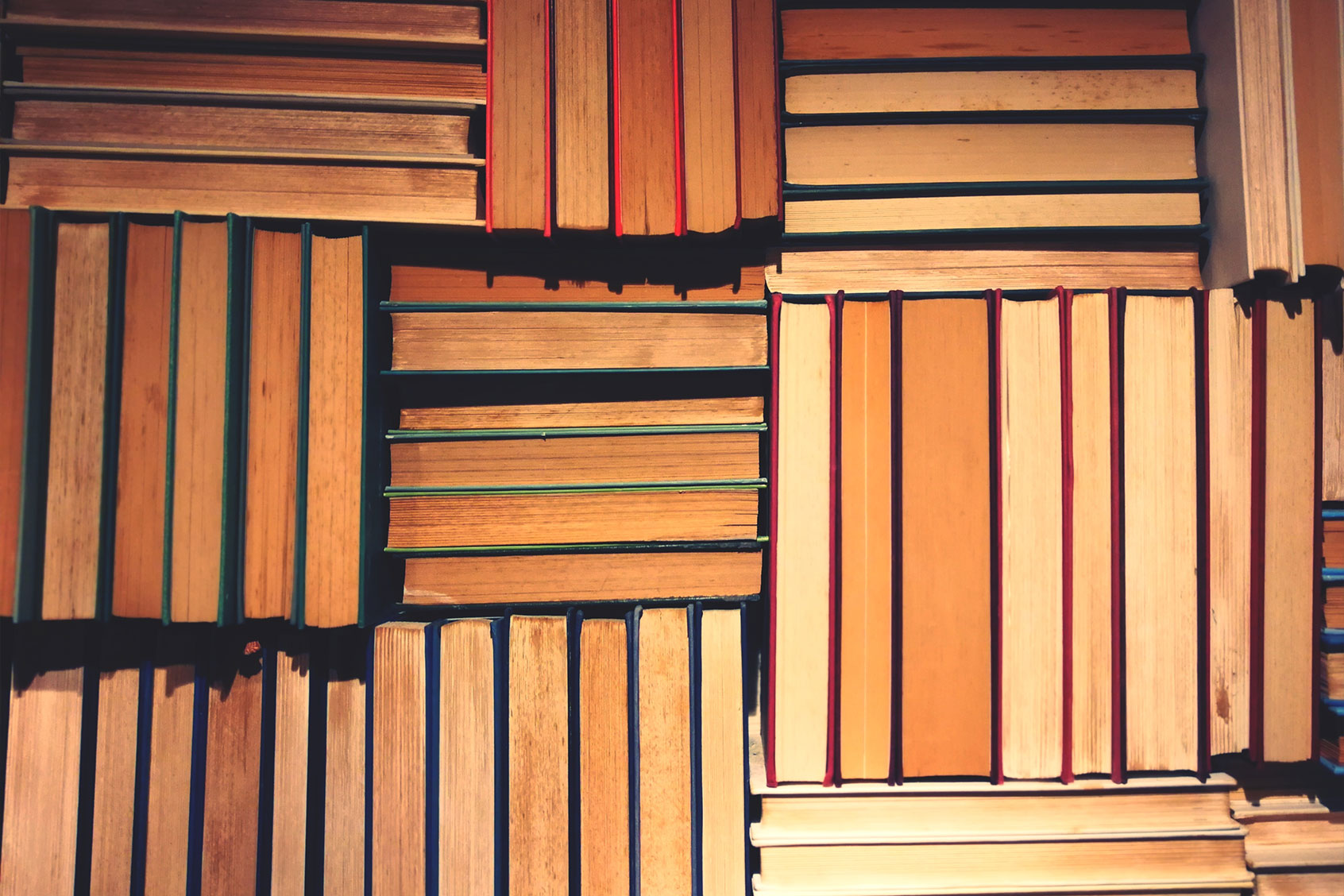
(Getty Images / Jefferson Mendoza / EyeEm) Books shelved spine in
And reading is hardly a niche interest, after all, especially at the moment: Sales of books surged between 2020 and 2022, and despite market corrections since (not to mention slippery sales data), sales of physical books continue to outstrip pre-pandemic figures. Publishers deliberately design jackets and covers that will pop on Instagram and #BookTok. The number of independent shops opened in the last decade marks a stunning turnaround from the early Amazon years, when the online bookseller put an estimated 43% of stores out of business. And though reports that fewer Americans read for fun tend to get a hand-wringing kids-these-days frame, a 2021 Pew survey found that, in fact, it’s Americans ages 50 and older who “are more likely than their younger counterparts to be non-book readers.”
The latter finding makes sense to Lex, given that “most of us just have fewer free hours for leisure.” She’s also noticed that declining emphasis on the Western canon of literature has brought on a new, bookish tribalism. “People like to self-sort! They often gravitate toward hyperspecific genres and market subcategories,” she says, though those are often contested as well (see the polarizing “New Adult” category). “Granularity can be a kind of gatekeeping” that readers actually seek out, she says — but it’s all, ultimately, reading.
Books occupy a unique place within physical media — one of the last forms that does not track, monitor, or encroach on the humans who read them. Their pages don’t flicker with pop-up ads or interrupt one book to tell you about others you might want to read. They’re not surveilling their readers or mining their data. They do not want to know if your experience is satisfactory. And yet they are also as political as they’ve ever been — not just pages, but tools used every day to inform and protect against dogma and control. So maybe we should be glad that people continue to be nosy/judgmental/suspicious about all your books and my books and a stranger on Reddit‘s books. It means that books still matter, still challenge, still threaten, still comfort and still bring us joy.
Read more
about the politics of books
