
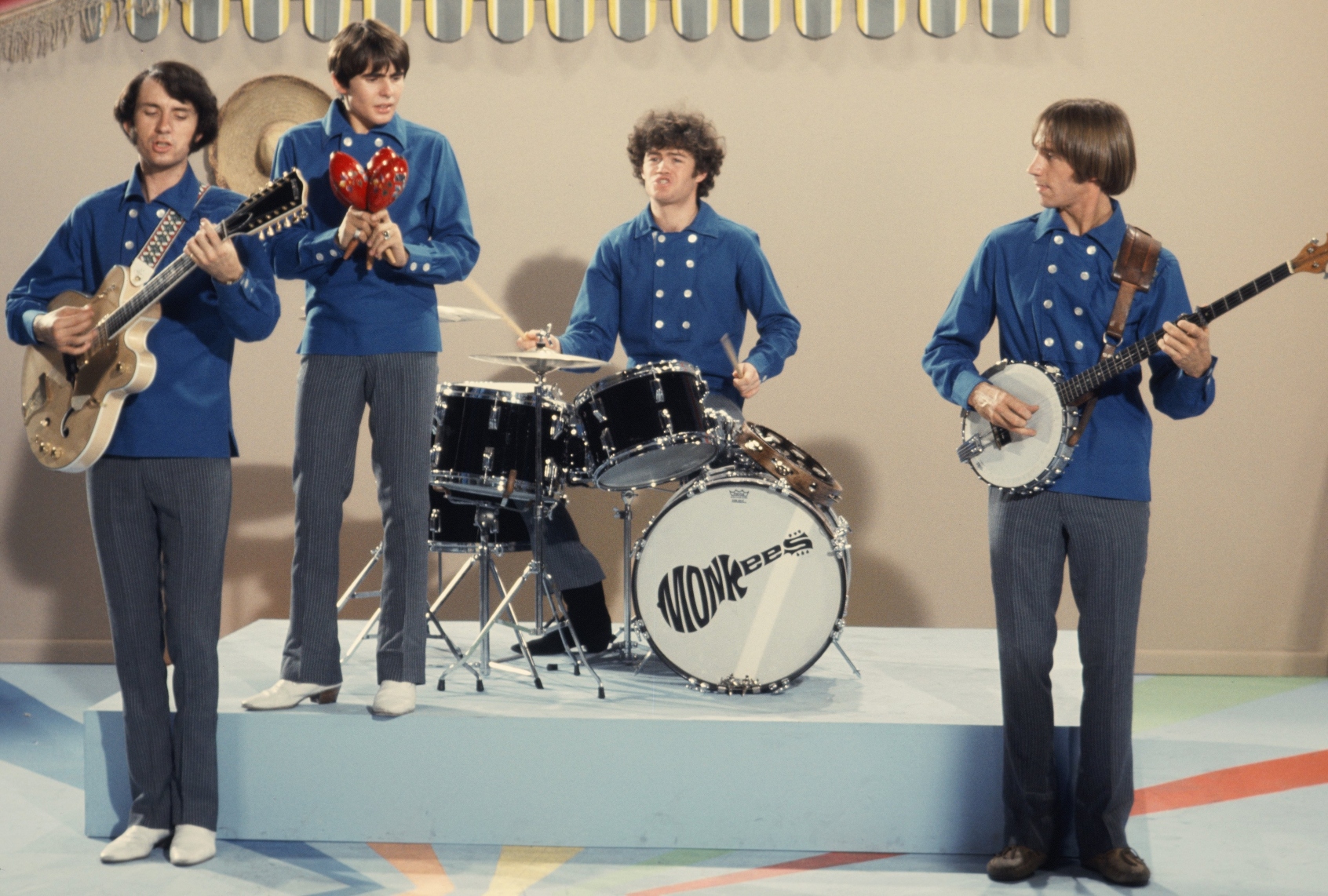

Confession: I was never a Beatles girl. Put away your pitchforks, people – a lack of love doesn’t preclude appreciation. After all, without The Beatles, The Monkees wouldn’t exist. And in one of those head-to-head, “One has to go” challenges the internet is so fond of, I’d tell Ringo and the rest to kick rocks every time.
Not long ago some music purists would have called that sacrilege. Some still would, I’m sure. Bear in mind that I didn’t grow up in a household where a Beatles album ever graced a record or CD player. But we had TVs in the kitchen, the family room, and my parents’ bedroom, and that meant that on any given weekday after school, you could find me in one of those places hanging out with Mike Nesmith, Peter Tork, Micky Dolenz and Davy Jones.
I’ve had The Monkees on my mind recently because yellow buses are rolling through my neighborhood again, and because this month marks the 60th anniversary of their show’s 1966 series premiere. But I was also reminded of their cultural impact all these years later by a Rolling Stone story that came out this week titled “Seven Reasons Why You Should See Harry Styles Right Now.”
Styles is one of the 21st century’s pop supernovas whose musicianship and charisma evolve with the times – “the kind of pop spectacle that leaves feathers all over the floor and hysteria lingering in the air,” gushed the magazine’s Rob Sheffield in his May review of the performer’s tour-launching show in Amsterdam. He’s also the most successful member of One Direction, a boy band created by and for the British edition of “The X Factor.”
That show didn’t magically endow Styles with talent, but it gave him one of the world’s biggest stages to showcase his gifts. That’s similar to the way producers Bert Schneider and Bob Rafelson brought together four unknowns and accidentally formed one of the last century’s most influential pop bands.
Nobody expected that, though. Schneider and Rafelson initially sought to build a show around Jones – the Harry Styles of his generation – and recruited the rest of the band with a Hollywood Reporter ad that read, “Madness!! Auditions. Folk & Roll Musicians-Singers for acting roles in new TV series. Running Parts for 4 insane boys, age 17-21. Want spirited Ben Frank’s types. Have courage to work. Must come down for interview.”
Tork, Nesmith and Dolenz were among the 437 who responded. They also happened to be talented musicians.
The once-in-a-century specialness of The Monkees, a made-for-TV creation that became a pop culture force, cannot be overstated. For example, years after “The Monkees,” NBC tried to capture some of The New Kids on the Block’s audience share with the short-lived sitcom “The Guys Next Door.” It only takes listening to a few of their songs to realize why most people don’t remember they ever existed, which probably suits recording artist Damon Sharpe just fine. Before he became a Grammy- and ASCAP award-winning producer, songwriter and DJ, he paid the rent with this short-lived gig.
That’s nothing to be ashamed of. Many boy bands are created by enterprising producers looking to manufacture stardom using renditions of a well-worn formula of dreamboat archetypes. They are live performers first, though.
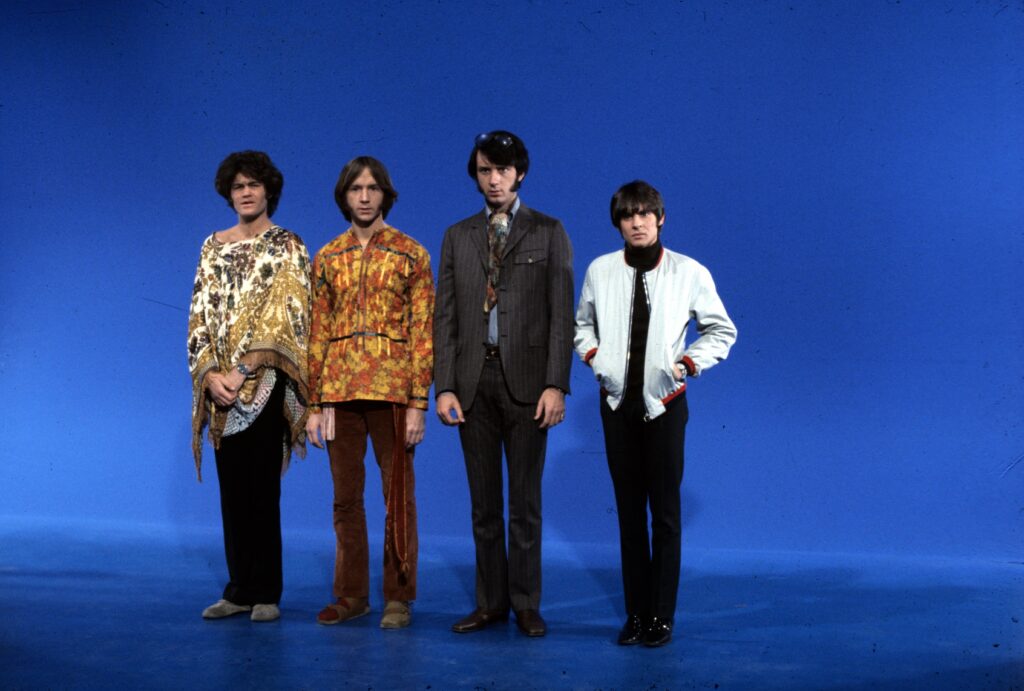
(Michael Ochs Archives via Getty) Micky Dolenz, Peter Tork, Mike Nesmith, Davy Jones
In Schneider and Rafelson’s initial vision, Peter, Mike, Micky and Davy were simply characters living out whimsical two-dimensional adventures built around musical interludes. Ask me to describe any episode’s plot off the top of my head, and I couldn’t. But their music is forever.
“The Monkees” ran for only two seasons, from 1966 to 1968. During that period, the quartet disparagingly nicknamed the Pre-Fab Four made music history, even influencing movies with their post-TV series feature “Head,” the Jack Nicholson-written and produced film that eventually achieved minor cult status.
People still sing along to the Neil Diamond-penned “I’m a Believer,” “The Last Train to Clarksville” and “Daydream Believer,” all of which shot to No. 1 on the charts. Those interludes also foreshadow the music videos that defined the 1980s.
But the musical cuts that earned them cred as stealthy proto-punkers are “(I’m Not Your) Steppin’ Stone” and Dolenz’s “Randy Scouse Git,” thrashers that had grade school kids leaping off their parents’ couches for reasons they may not have understood until many years later.
We need your help to stay independent.
These details are crumbs of the fascinating lore surrounding The Monkees. What impresses me most is their ripple effect on TV and music. Without them, “The Partridge Family” may never have rolled out of their driveway. The Archies and Josie and the Pussycats may never have become American animation classics, with the former snagging a radio hit with 1969’s “Sugar, Sugar.”
Much of the appeal of “The Monkees” was that its live-action stars were as animated as every other show in the after-school TV blocks that programmed it. They were eternal cool kids, which people celebrated and mourned when Jones’ sudden death in 2012 sparked a multitude of ruminations on what he and the band meant to a generation. Tork died in 2019, followed by Nesmith in 2021, leaving Dolenz to carry the band’s legacy to this day. He’s still touring.
Want more from culture than just the latest trend? The Swell highlights art made to last.
Sign up here
However, in a recent interview with AARP, Dolenz emphasized that The Monkees were never a group in the conventional sense. “It was a musical comedy television series about these four guys that wanted to be a band,” he said.
He noted that on the TV show, the band never actually became famous. “It was the struggle for success that was important, and I think helped endear it to all these kids around the world,” he said, “which does, of course, beg the question of how we could afford a Malibu beach house. But that’s Hollywood.”
Pre-Fab, but still fabulous.
Read more
from Salon’s Culture newsletter, The Swell
