
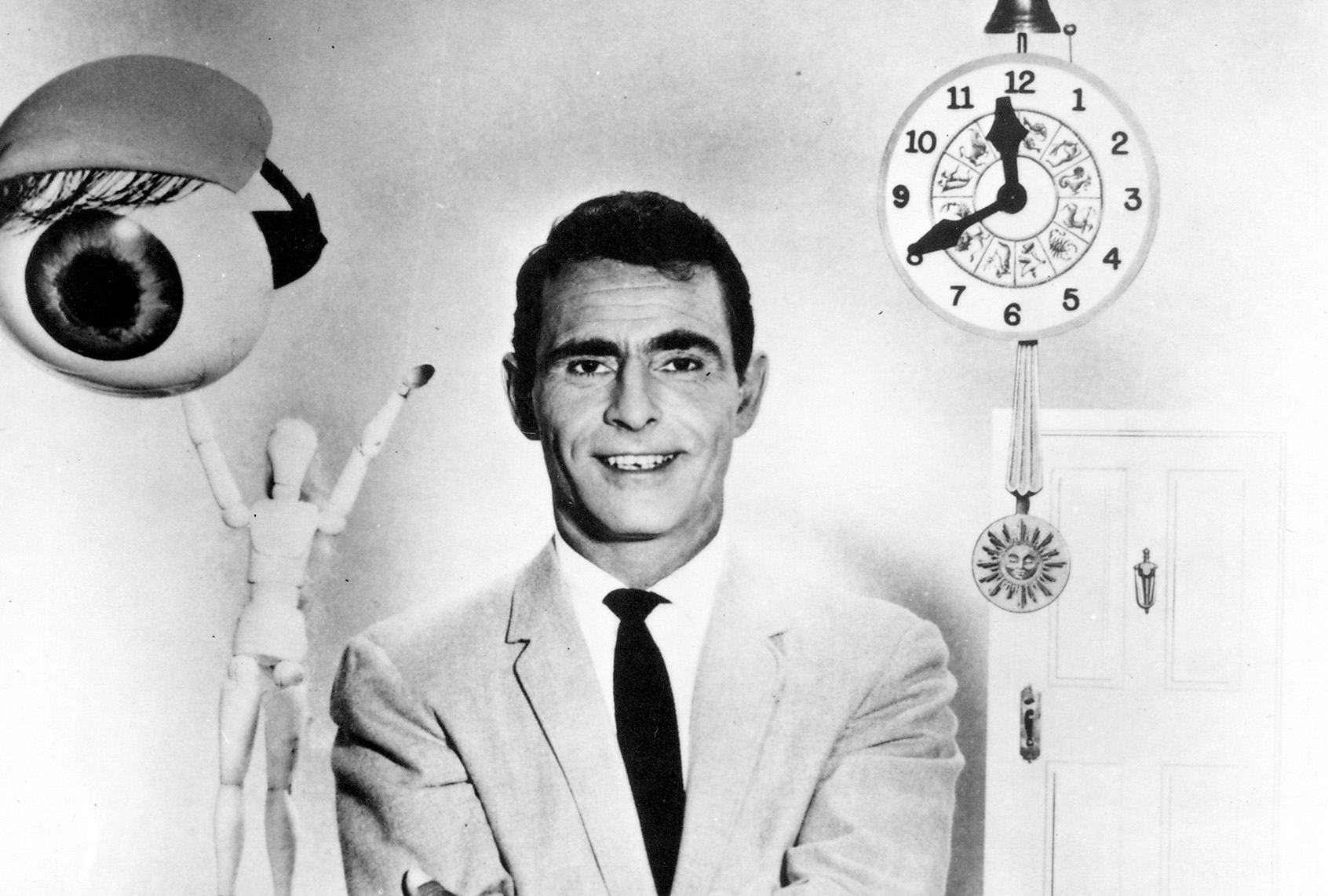

“Serling” author Alan Sepinwall didn’t know it, but he was about to enter another dimension. A dimension not only of sight and sound but of mind and, in his telling, unexpected connections. The scene was Los Angeles, where the veteran TV critic (and, full disclosure, a friend of mine) was set to moderate a 20th anniversary panel for “It’s Always Sunny in Philadelphia.” While making small talk with series star and creator Rob Mac in the event’s green room, Sepinwall casually mentioned he was writing about Rod Serling, creator of “The Twilight Zone.”
Suddenly Mac’s face lit up. “Alan,” he said, “You have to talk to me for this book. Rod Serling is my guy. Rod Serling is a huge influence on me.”
“And thinking in my head, OK. Sure,” Sepinwall recalled. “I was deeply skeptical, but figured, all right, I will indulge him because I like Rob. We’ll see what happens.”
Once they got around to talking, Sepinwall’s doubts dissolved. Instead, he ended up seeing Mac’s shows in a whole new light. “There really is ‘Twilight Zone’ DNA in ‘It’s Always Sunny in Philadelphia’ and ‘Mythic Quest’ and a lot of the other stuff he’s done,” Sepinwall said. “And I kept coming across that more than anything else.”
As long as television exists, “The Twilight Zone,” which premiered on Oct. 2, 1959, is unlikely to disappear completely. Heck, Bernard Herrmann’s eerie theme song alone will outlive humanity.
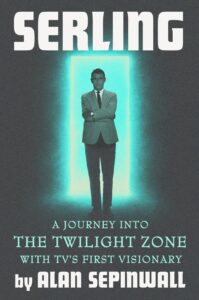
But if some calamity causes the show to fade into the mists of forgetting, Sepinwall argues in his upcoming biography, “Serling: A Journey Into the Twilight Zone with TV’s First Visionary,” that its creator’s influence is forever woven into the medium. From the greatest genre series to less obvious links, like the preposterous shenanigans at Paddy’s Pub, Serling left his mark on screens large and small, and on American audiences.
Since Sepinwall wrote the book on TV – no, really, he co-authored “TV: The Book” with fellow critic Matt Zoller Seitz – who better to break down the essence of Serling’s evergreen appeal? That’s what we did in our recent Zoom conversation about the mythic creator, writer and actor who has haunted us for most of a century by changing TV for the better.
The following interview has been lightly edited for length and clarity.
 (Courtesy of Alan Sepinwall)
After researching your book, what have you found about people’s common understanding of Rod Serling and “The Twilight Zone” that might not be entirely accurate?
I think people assume that the guy who created “The Twilight Zone” and was this really creepy, ominous host must have been this very dark and tormented person. Obviously, and he had some darkness in him; he came back from World War II really scarred, couldn’t really deal with it . . . but he was also a very outgoing guy. A jokester, warm, fun dad, you know, had this idyllic childhood and was just a very popular people-pleaser kind of guy that you would not expect whatsoever from that image of him.
When people think about Rod Serling and his influence on TV, they basically associate him with genre television like “Lost.” But they don’t necessarily think of shows like “Sunny.” What are some others where you were kind of surprised to find DNA of “The Twilight Zone” on a closer look?
Well, this isn’t one I was surprised to find because it’s quoted a few times in the show, but it’s still like a less obvious one: “The Sopranos.” David Chase is obsessed with “The Twilight Zone.” One of the reasons that he wanted to become a writer was that he just thought Rod Serling was the coolest guy on the planet. So I’d say that’s one.
The work of Pamela Adlon, who did “Better Things” and a lot of other stuff. I mainly knew she liked “Twilight Zone,” but I didn’t realize the depth of it to the point where she named one of her kids after a character in a “Twilight Zone” episode.
We need your help to stay independent.
So yeah, it’s all over the place. There are the obvious ones like J.J. Abrams and Damon Lindelof with “Lost,” Charlie Brooker with “Black Mirror.” But you look at, like, “All in the Family” or “Hill Street Blues” or a lot of these other things, and it’s hard to imagine them existing in the form that they did if there hadn’t been Rod Serling in the ‘50s, and especially with “Twilight Zone,” saying that TV can be asking these bigger questions, can be wrestling with thornier moral issues, and can really challenge people to turn their brain back on and not just, you know, have it on in the background while they’re folding laundry.
One of the things you write early in the book is that he really had a jaundiced view of nostalgia.
I mean, his relationship with nostalgia was really complicated because on the one hand, he has this idyllic childhood in Binghamton, New York, you know: doting parents, popular kid, dated all over the place. Binghamton largely resisted the effects of the depression. Then he immediately goes from there to Hell on earth, fighting in the Pacific . . . And the shock of going from one to the other really affected everything he would write about for the rest of his life.
On the one hand, there’s the part of him that wishes he had never left Binghamton and wishes he could go back to this time before the war, before humanity dropped atomic bombs on civilians, before there was this constant fear of the nuclear apocalypse and all of the other things that people were starting to worry about in the ‘50s and ‘60s and the Cold War.
On the other hand, he knew that this was a bad idea. You can’t go backward; you have to move forward. And that, as good as life was for him in those moments, it was not great for other people. And he kept trying to push humanity forward. He would argue on behalf of civil rights and nuclear disarmament, and all these other causes that he cared about. So almost every time you do a “Twilight Zone” episode where somebody goes back in time, either to their own childhood or even further back than that, it doesn’t go well for them. The past is not a place you should be.
What do you think it is about the metaphorical messages within each episode that keep “The Twilight Zone” eternally relevant?
Because people are people, and we keep making the same mistakes and facing the same challenges, even if sometimes we get better about it than at other times. But you watch these episodes, and he’s asking really elemental stuff about humanity. Like being selfish versus trying to think about the world around you, or taking the easy choice versus the hard one. You know, racism, fascism — how easy it is for us to give in to the ideas of conformity, to give in to the ideas of letting someone else do all of the thinking for us.
That’s there again and again. And so you watch those episodes, and it’s like they’re 60-plus years old. They’re in black and white. The fashions are what the fashions are, and yet over and over it feels like, really, he could have written this yesterday.
“Serling: A Journey Into the Twilight Zone with TV’s First Visionary” hits bookshelves on Tuesday, Oct. 13. You can pre-order your copy by clicking here.
All five seasons of “The Twilight Zone” are streaming on Paramount+.
Read more
from Salon’s Culture newsletter, The Swell
