Christopher Hitchens
I knew Christopher Hitchens better than you
Every writer who had a drink with Hitch has now told his story. But even Rushdie and Amis didn't know him like this
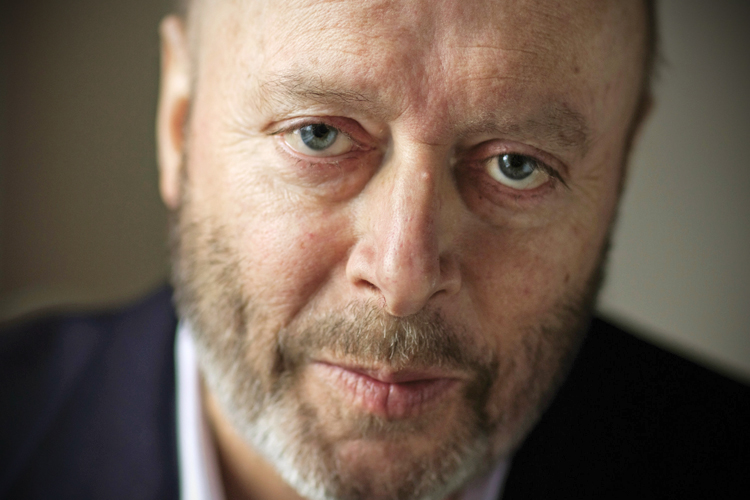
Christopher Hitchens. (Credit: AP/Chad Rachman) Christopher Hitchens and I were friends for 40 years, plus another five when we were enemies. He took ideas so seriously that if he disagreed with you on a matter that he deemed important, he’d literally throw you in a ditch. It was 1972, the height of our mutual virility. He and I went to a pub to celebrate his most recent intellectual victory over the establishment press. I intimated that sometimes women could be funny on purpose. Even back then, the thought enraged him. Hitchens threw a drink in my face, pressed a lit cigarette into my neck, and hit me over the head with a barstool. The next thing I knew, it was two days later and I was lying hogtied and naked beside the M5. Hitch had already severely damaged my reputation in a vicious essay in the Guardian. But that’s how he operated, and that’s why we loved him.
University, as you know, is the only time in one’s life when anything really worthwhile happens. I met Hitch there. The first time I saw him, he had a bird on each arm and a woman by his side. She beamed as he read aloud passages from “Homage to Catalonia.” He looked up.
“Who the hell are you?” he said.
“I’m your housemate,” I said.
“Are you in favor of the war in Vietnam?”
“Of course not.”
Hitch put down the book and took a swig of cheap Scotch.
“Good,” he said. “Because I refuse to fraternize with men who are afraid to be intellectual heroes.”
In the annals of history, only Orwell, Voltaire and maybe a half-dozen other guys could match’s Hitch ideological bravery and breadth of political knowledge. In 1977, after I’d returned to his graces by aiding him in a plot to assassinate Henry Kissinger’s character, Hitch and I visited Borges’ library in Buenos Aires. At the time, Hitch was working for the KGB while pretending to work for the BBC, and I was working for the Mossad while pretending to work for Burger King. But our many identities were merely covers for our lives as political writers at low-paying magazines.
Borges invited Hitch and me into his home, fed us tea and empanadas, and launched into a seamlessly brilliant discourse on surrealism in Latin American history. He talked for 30 minutes without stopping, during which time Hitch smoked six-dozen cigarettes. When Borges finished, Hitchens paused, spat in his ashcan, and said,
“Of course, you know, you’re wrong about everything.”
He then proceeded to refute Borges, point for point, until he reduced the blind scribe of Buenos Aires to tears.
No one loved ideas more than Hitch.
Much ink has been spilled, of course, about the legendary friendships Christopher forged with other writers throughout his life. For a time in the 1980s, he, Martin Amis, Salman Rushdie and I lived together in London. Hitchens rented us a six-story flat so we could swap partners more easily. Many was the time we passed the bottle until dawn, bemoaning Thatcher’s England, Reagan’s America, and also some stuff about the Middle East. Sometimes Hitchens would bring over a dissident writer who was fleeing oppression in his native country, and we’d all make fun of Mother Teresa and Princess Diana, then remove our pants to compare our manhoods. We were so middle-aged and foolish then, so committed to the struggle.
Hitchens spoke out against war, and also for war. In a span of five years, he bore witness to the fall of the Berlin Wall, the explosion of the Eiffel Tower, and the construction of the new holographic Eiffel Tower. He had acid in his pocket, acid in his pen and acid in his veins. Then Darkness fell, on Sept. 11, 2001. We’d all moved to America and gotten totally rich.
Hitchens changed that day. For months, he’d wander the streets at night, looking to drunkenly berate someone who disagreed with him about the evils of Islamofascism. Occasionally he’d attempt to strangle young journalists, who admired him unquestioningly, with their own neckties. But he was right. He was always right. Even when he was wrong.
The night they killed Osama bin Laden, he showed up at my apartment, drunk but lucid, quoting T.S. Eliot, Longfellow and, of course, himself. We stayed up watching CNN, which was actually pretty boring. In the morning, over a breakfast of corn flakes and whiskey, I said, “Well, I guess that’s the end of Islamofascism. Good job!”
Hitchens went into my kitchen, took a cutting board off the counter, and threw it into my forehead, drawing blood.
“Don’t be an imbecile,” he said. “The struggle never ends. Also, you must remember that there is no God.”
I needed four stitches that day. Hitch put them in himself, with his teeth. What a friend he was.
Rest in peace, dear man.
Neal Pollack is the author of the literary satire "The Neal Pollack Anthology of American Literature," among other works of fiction and nonfiction. His latest book, a historical novel called "Jewball," was published in October. More Neal Pollack.
Hitchens, gossip columnist of genius
The famed atheist and Vanity Fair writer was more concerned with self-promotion than actual ideas
(Credit: Reuters/Shannon Stapleton) “In lapidary inscriptions a man is not upon oath,” Samuel Johnson remarked. Even so, claims that the world has lost a major thinker and great writer in the late Christopher Hitchens go beyond the mild flattery that is appropriate in obituaries and call for correction. The rule de mortuis nil nisi bonum does not apply to those who take part in public life or public debate; their deaths provide the most appropriate occasions to evaluate their significance and their legacies.
My assessment of Christopher Hitchens is not colored by any personal conflict with him. On the contrary, my few interactions with Hitchens were friendly. In 1995 he wrote a favorable review of my first book, “The Next American Nation,” in the New York Times Book Review, and thereafter invited me to drinks at a Washington bar several times. Some claim that he was a fascinating conversationalist, but as I recall he showed no interest in ideas and preferred to peddle gossip about politicians and journalists and authors, until I found opportunities to excuse myself. Gossip, like alcohol, is safely consumed only in small quantities.
Continue Reading CloseMichael Lind’s new book, "Land of Promise: An Economic History of the United States", will be published in April and can be pre-ordered at Amazon.com. More Michael Lind.
The virtuoso
Christopher Hitchens was the most gifted rhetorician of his generation. His political judgment was another story
Christopher Hitchens The first time I saw Christopher Hitchens speak was at a forum at U.C. Berkeley in 1989. I remember this somewhat disheveled Brit walking onto the stage and leaning over the lectern. There was something about him, a kind of languid, deliberate menace, that made me think of a boxer. Then he opened his mouth, and the most extraordinarily elegant invective I had ever heard flowed out. It was like watching a magician blowing a smoke ring that turned into a flock of birds – in Hitchens’ case they would be pterodactyls – that flew about in perfect formation for a while, then disappeared through the ceiling. I remember nothing about his speech except one phrase about the Bush I administration, which rolled off his tongue like a bite-size rhetorical bomb: “A Saturnalia of sycophancy and sadism.”
Continue Reading CloseGary Kamiya is a Salon contributing writer. More Gary Kamiya.
When Hitch was wrong
He was disastrously wrong
Christopher Hitchens (Credit: Reuters/Shannon Stapleton) The late Christopher Hitchens had the professional contrarian’s fixation on attacking sacred cows, and rather soon after his cancer diagnosis, he became one himself. I think he would’ve been disgusted to see too much worshipful treacle being written about him upon his untimely death, so let’s remember that in addition to being a zingy writer and masterful debater, he was also a bellicose warmongering misogynist.
Upon the death of the unlamented Earl Butz, Hitchens excoriated editors who published sanitized obituaries of a man remembered solely for a vulgar racist remark made in public. Hitchens leaves a rather more varied legacy, but it’s just as important not to whitewash his role in recent history.
Continue Reading Close
Alex Pareene writes about politics for Salon and is the author of "The Rude Guide to Mitt." Email him at apareene@salon.com and follow him on Twitter @pareene More Alex Pareene.
Hitch the apostate
As my time with the controversial writer showed me, his true religion was the renunciation of prior belief
Christopher Hitchens (Credit: Shannon Stapleton / Reuters) It was Christopher’s idea to start a drinking club. We would call it the Osric Dining Society, he said, in honor of Osric, the unctuous courtier in Hamlet. He helpfully quoted several lines to illustrate the project. Hitch’s purpose (besides a night of drinking on someone else’s tab) was to skewer those in Washington journalism who flattered their way to the top. The year was 1986 and I knew Hitchens as a friend and columnist for the Nation magazine who lobbed corrosive broadsides at the New Republic where I worked. I thought the Osric Dining Society was a swell excuse for merriment. Anybody could attend, Hitch said, as long as they stood up to nominate one Washington journalist who excelled in what Hitch described as “the Osrician principles of flattery, deference and self-serving vacuity.”
Continue Reading Close
Jefferson Morley is a staff writer for Salon in Washington and author of the forthcoming book, Snow-Storm in August: Washington City, Francis Scott Key, and the Forgotten Race Riot of 1835 (Nan Talese/Doubleday). More Jefferson Morley.
God didn’t kill Christopher Hitchens
The Internet decides death is evidence against atheism
(Credit: Antonov Roman via Shutterstock) Christopher Hitchens, the fiery, indomitable, and highly divisive essayist and author, once declared “Vindication — being proved repeatedly and over and over again right, when other people are wrong — does a lot for me.” And with his death Wednesday, he’s proven how popular that sentiment really is. In fact, it turns out there’s nothing like the death of an outspoken atheist to bring out the “told ya so” brigade of believers.
Within hours of the news of Hitchens’s passing at the age of 62, the Internet was hotter than an inner circle of hell with the God squad thundering its own version of vindication. Along with plenty of hope that he “made his peace with God,” there was blowhard-for-Jesus Rick Warren tweeting that “My friend Christopher Hitchens has died. I loved & prayed for him constantly & grieve his loss. He knows the Truth now,” while creepy creationist Ray Comfort declared that the now dead “Christopher Hitchens is no longer an atheist.” LifeWay’s Ed Stetzer, meanwhile, blogged that “When Christopher Hitchens died, he entered into eternity as every man does: as a beggar at the gates of the kingdom,” and Southern Baptist Seminary president Albert Mohler tweeted that “The death tonight of Christopher Hitchens is an excruciating reminder of the consequences of unbelief. We can only pray others will believe.” I’m not a brilliant debater like Hitchens, but let me field this one. Death is not a consequence of disbelief. It’s a consequence of living, you moron.
Continue Reading Close
Mary Elizabeth Williams is a staff writer for Salon and the author of "Gimme Shelter: My Three Years Searching for the American Dream." Follow her on Twitter: @embeedub. More Mary Elizabeth Williams.
Page 1 of 9 in Christopher Hitchens