Gun Control

ALEC: We will stop being gun nuts now

Right-wing legislation drafting house refocuses on business issues following bad press and boycotts

  • more
    • All Share Services

ALEC: We will stop being gun nuts nowGeorge W. Bush speaks to the American Legislative Exchange Council in Philadelphia in 2007. (Credit: Chris Greenberg)

The American Legislative Exchange Council, or ALEC, is a group that helps major industry players write their own legislation that Republicans then pass in state legislatures across the country. Traditionally, ALEC would draw up and promote bills limiting labor organizing rights and weakening workplace safety regulations and environmental protections, because those things anger the Market Gods. Fewer of those things means more money for ALEC’s funders! Recently, though, ALEC also began dabbling in things that wouldn’t make anyone any money but that happened to be right-wing political priorities.

ALEC is now shutting down its “Public Safety and Elections” task force. ALEC’s Public Safety and Elections task force’s goals were twofold: to improve “public safety” by making it easier for citizens to carry guns everywhere they go and to shoot certain people without fear of arrest or prosecution, and to improve elections by making it harder for politically undesirable types to exercise their right to vote. (Why were gun rights and voter disenfranchisement the purview of one task force? Those two issues really have very little in common besides being of supreme importance to paranoid white people.)

What happened is, people suddenly noticed that self-defense laws had recently become much more “robust” (slash-”insane”) in lots of states after this guy in Florida named George Zimmerman shot and killed an unarmed black teenager named Trayvon Martin and then somehow was not arrested. These new self-defense laws were widely blamed for the police reaction, or non-reaction, and while the NRA had predictably lobbied for them in the various states where they passed, it turned out that ALEC had been instrumental in drafting these laws and others like them that had nothing to do with being “pro-business” but everything to do with quietly remaking the nation into a right-wing paradise.

So major corporations began abandoning ALEC, because they hadn’t signed on for the full right-wing culture war. While Coca-Cola has a vested interest in, say, stopping public health initiatives, there’s no compelling profit-based reason for it to support the dismantling of gun control legislation. People do not get thirstier when they are carrying concealed firearms, as far as I know. Kraft does not, as a company, have any interest in making it more difficult for poor people to vote.

So! ALEC is giving up on the items of its agenda not directly related to helping giant corporations make as much money as possible without fear of lawsuits or union agitation. Because those are less “hot-button” issues.

Alex Pareene

Alex Pareene writes about politics for Salon and is the author of "The Rude Guide to Mitt." Email him at apareene@salon.com and follow him on Twitter @pareene

The NRA’s silent motive

Fewer Americans own guns now than in the 1960s. Is that why the lobby wants to make them more accessible?

  • more
    • All Share Services

The NRA's silent motive (Credit: iStockphoto/Sean_Warren)

America has witnessed the proliferation of gun-happy laws in recent years, especially laws making it easy for citizens to carry concealed handguns, and the now widely discussed “stand your ground” laws. The spread of such legislation would lead you to believe that Americans are fonder of guns than ever before, but in fact fewer citizens own firearms now than in the 1960s. Why have America’s gun laws loosened even as guns themselves decline in popularity?

Behold the political power of the National Rifle Association. The gun lobby’s muscle in Washington is famous. But critics often overlook the NRA’s motivations. There are more than Second Amendment principles at stake. The NRA confronts an existential threat to its recruitment base: declining gun ownership and use among Americans.

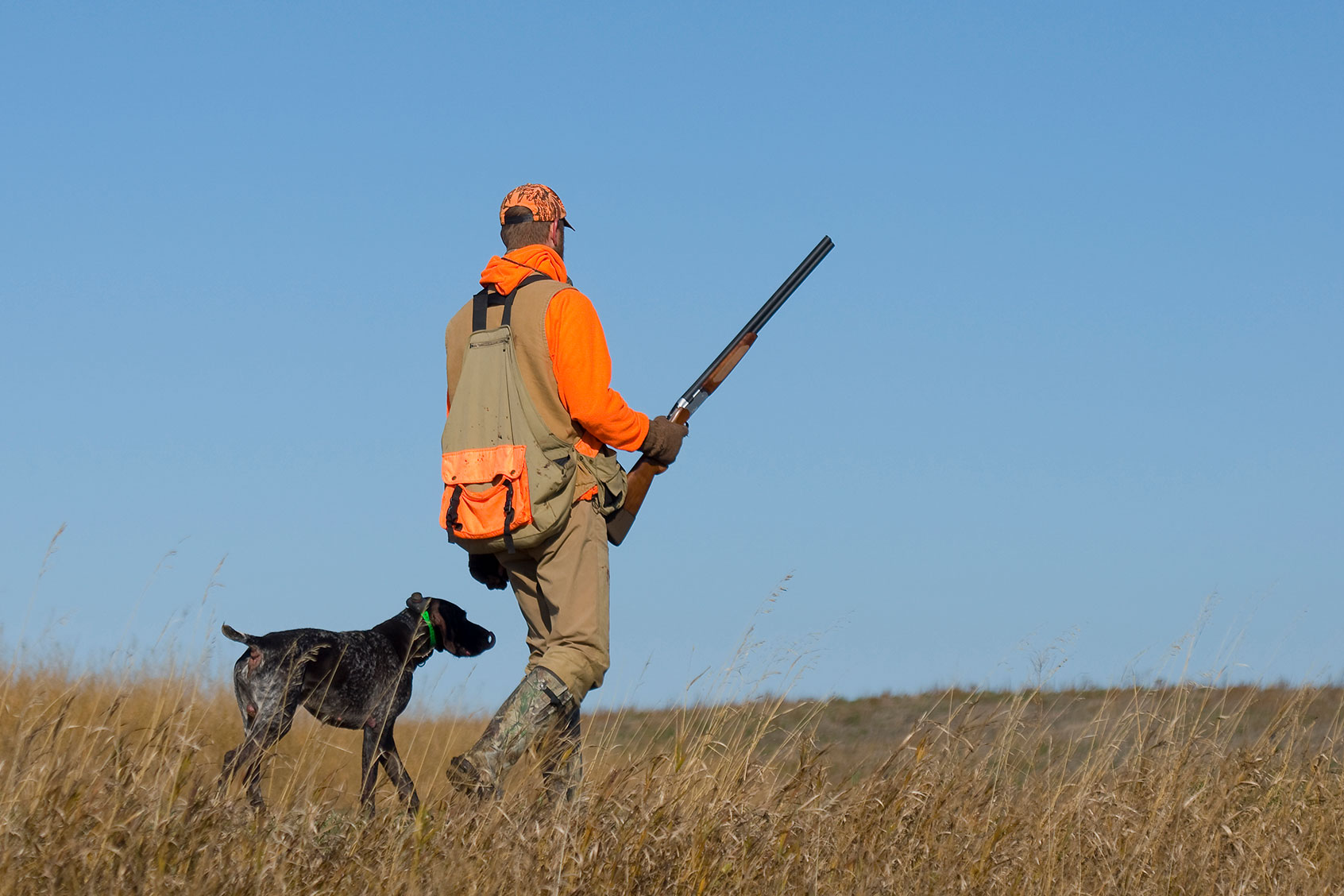
Not only do fewer Americans own guns than before, but fewer Americans engage in traditional hunting and sporting activities. And younger age cohorts take less interest in guns than their parents and grandparents. In a 2008 survey, for example, gun ownership rates were highest among those over the age of 70 (48 percent), and lowest for those ages 18 to 29 (17 percent). Even though roughly 80 million Americans own guns, demographic decline is already in the cards. Gun familiarity comes mostly from family habits, and fewer families are carrying on gun traditions. What better way for the NRA to resupply the gun users pool than to strip the nation’s laws of obstacles to gun purchase, use fear of crime to motivate potential gun buyers, and to desensitize the nation’s majority of non-gun owners to the sight of civilians packing heat?

In the 1970s and early 1980s, pro-gun control forces had the political initiative, and were focusing their primary efforts on an ambitious and contentious national agenda to impose stronger gun laws, aimed especially at restrictions on the possession and use of handguns (about 80 percent of all gun crimes are committed with handguns). Those efforts largely failed, but it spurred NRA strategists to turn their attention to the states, where they have labored for 30 years to dismantle the nation’s gun laws. Why? Because most gun regulations are state and local, not national; because state politics rarely garners significant public attention; and because conservative voices often hold sway in state capitals. Spearheading that effort was the spread of the concealed handgun carry movement.

In 1981, only two states had so-called “shall issue” concealed carry laws, meaning that applicants had little difficulty obtaining a carry permit unless something in their record, like a felony conviction, barred their permit (one state had no permit requirement). Nineteen states barred concealed carry entirely, and 28 states had “may issue” laws, which gave states great discretion over the issuance of carry permits. By 1988, the NRA was pressing ahead full bore, winning the enactment of “shall issue” laws in nine states. By 2011, 36 states were “shall issue,” and four had no permit requirement. Ironically, strict gun carry restrictions were among the earliest gun laws enacted in America, and they were common in the 19th century frontier. In fact, among the states that still barred concealed gun carrying in 1981 were “Wild West” states of Arkansas, Arizona, Kansas, Missouri, Nebraska, New Mexico, Oklahoma, Texas and Wyoming.

The march of “stand your ground” laws has followed a similar pattern. The NRA’s success in Florida in 2005 spurred similar efforts; 24 other states have adopted laws that generally allow people to use deadly force in public places without any duty to retreat. Another seven states have extended this principle to a limited degree outside the home, like motor vehicles or places of employment.

Beyond liberalized concealed-carrying and more legal cover for those who actually use guns, NRA efforts have accelerated the march backward by pressing for gun carrying in churches, bars, state parks, places of business and college campuses. Even President Obama, the gun lobby’s Darth Vader du jour, signed legislation to allow gun carrying in national parks and on trains. Florida has indeed been the gun lobby’s test kitchen: In 2006, state law was changed to exempt from the public records law the revelation of the names of concealed carry permit holders. In 2008, gun owners won the right to bring guns to work if they kept them locked in their cars, and the license period was lengthened from five to seven years. In 2010, adoption agencies were barred from finding out whether prospective adoptive parents owned guns. In 2011, medical professionals were barred from asking patients about whether they had guns at home; a violation could result in the loss of their license to practice medicine.

Not surprisingly, NRA membership has grown since it began pushing its agenda in states, even though gun ownership overall has declined. In the early 1990s, the organization had about 3 million members. Ten years later, it had swelled to 4 million, where it remains today. The point of this furious legislative activity is that it has nothing to do with real criminal threats, or the failure of existing self-defense laws, and everything to do with the NRA’s political muscle. In fact, the recent spread of these laws coincides with record low and declining crime rates, with improved policing, and declining gun ownership. Nor does it have anything to do with “gun rights.” As the Supreme Court ruled in 2008 when it established for the first time in history a personal right to gun ownership under the Second Amendment, the right pertained specifically to personal protection in the home. The Court specifically protected “long-standing prohibitions” pertaining to gun ownership and use – the very laws that the NRA has labored to dismantle.

Legislatures across the country have the power, and right, to help define the good society. Too bad such considerations play no role in the NRA’s political agenda.

Continue Reading Close

Robert J. Spitzer is Distinguished Service Professor and Chair of the Political Science Department at SUNY Cortland. He is the author of four books on gun control, including the recently published fifth edition of "The Politics of Gun Control" (Paradigm Publishers 2012).

Arizona’s very Arizonan armed library guard debate

Do libraries really need to be guarded by private security officers with guns? One county says yes!

  • more
    • All Share Services

Arizona's very Arizonan armed library guard debateMari Morneau, of Gilbert, shoots at Caswells Shooting Range Tuesday, April 6, 2010 in Mesa, Ariz. On Monday, April 5, 2010, Gov. Jan Brewer has signed into law two bills supported by gun-rights activists. One of the bills signed Monday would broaden the state's current restrictions on local governments' ability to regulate or tax guns and ammunition. The other bill declares that guns manufactured entirely in Arizona are exempt from federal oversight and are not subject to federal laws restricting the sale of firearms or requiring them to be registered. (AP Photo/Matt York)(Credit: Matt York)

Do libraries in Maricopa County, Ariz., need to be guarded by private security officers with guns? Yes, probably, because everyone should be armed at all times, especially when they are defending our library books or collecting late fees. Only then will we be free, and safe.

Apparently Maricopa County has guards — private security firm employees, not county employees, with guns — proper guns — at most of its libraries.

“In large buildings with multiple rooms and lots of people, you need to have some feeling among the staff, as well as the public, that it’s a secure place, particularly where it’s used a lot by children,” said library-district director Harry Courtright, who retired Friday.
[...]
In his 12 years with the district, Courtright said there have been no incidents of a guard drawing a gun.

“And they shouldn’t have to, because they have the training. But that gun makes a difference to the people who are coming in the building who might want to do something that could be bad; they see an armed guard, and the reality is they back off and they don’t do things – it’s a preventative thing,” he said.

Right! Which is why all large libraries in big cities have armed private guards in them. Right, Phoenix libraries?

Interviews with officials at city-run libraries in the Valley that don’t belong to the county district indicate that armed guards are uncommon.

In Mesa, library-security guards are unarmed. The topic of arming them has never come up, said city spokeswoman Lily King-Cisneros.

“If there is a problem, they call the police,” she said.

Chandler’s libraries have a simple behavior policy to follow up on negative behavior, Manager Brenda Brown said.

Chandler employs security guards sparingly: Park rangers help during high-traffic times at the Downtown Library, while at Hamilton and Basha branches, both located on school campuses, security guards are present for a few hours following schools’ closing times. None is armed.

“Most of our behavior issues take place downtown, and police are less than a block away. We call them quite often and quite frequently,” Brown said, adding that stolen bikes are a common problem but threats to librarians are rare.

Phoenix, which has 16 libraries, trains its own guards, who are city employees and unarmed.

Incidents are rare even at the Burton Barr Central Library, where the surrounding neighborhood has a high number of homeless people, said Lupita Barron-Rios, acting deputy director for public services.

“For the most part, we don’t have a lot of incidents that require calling the police,” Barron-Rios said.

Barron-Rios said police are called when a patron’s car or bicycle is stolen.

Of course, none of these minor behavioral issues and occasional thefts would happen at all if literally every person in that library, from the children to the librarians to the homeless people, was carrying a clearly displayed handgun. It’s just a fact.

Is this armed guard program controversial? It wasn’t, until one library made a fuss.

Doesn’t Southwest Regional Library in Gilbert, Ariz., look like a lovely place? Looks can be deceiving! This library is suffering from a rash of “hostile encounters with irate patrons over late fees and other issues,” which is why the town decided to reinstate the guards they let go for funding reasons last year. But! “Town officials contend that the library district never told them of the plans to arm the guards once funding was restored …” I feel like town officials should’ve understood that they’re dealing with Maricopa County, here. There were going to be guns involved, no matter what.

[Via Michel Marizco]

Continue Reading Close
Alex Pareene

Alex Pareene writes about politics for Salon and is the author of "The Rude Guide to Mitt." Email him at apareene@salon.com and follow him on Twitter @pareene

Police scour Va. Tech campus after gunman reported

Children say they saw a man with what might have been a gun this morning, though no further sightings were reported

  • more
    • All Share Services

<p>Virginia Tech was locked down Thursday after three children attending a summer camp said they saw a man holding what looked like a gun on the campus where a 2007 massacre left 33 people dead.</p>

<p>The university issued an alert on its website at 9:37 a.m. telling students and employees to stay inside and lock their doors. Text and phone messages were sent to more than 45,000 subscribed to the school’s alert system, along with an email sent to the entire campus, said school spokesman Mark Owczarski. The school’s outdoor sirens also sounded, he said.</p>

<p>The school posted an update on its website around 1 p.m., saying authorities were combing through buildings on campus. Classes were canceled for the day, and the school said searching the buildings would be a long process. Police had received no other reports nor found anyone fitting the description the children gave. A composite sketch was posted on the school’s website.</p>

<p>Officials told students, employees and others on campus to stay indoors.</p>

<p>Several thousand students attending summer classes, as well as the school’s 6,500 employees, were on campus when the alert was issued, said University spokesman Larry Hincker. Many of the school’s 30,000 students are on summer break and will return when the fall semester begins Aug. 22.</p>

<p>Maddie Potter, a 19-year-old rising sophomore from Virginia Beach, said she was working on a class project inside Burchard Hall when a friend received a text message from the school at 9:41 a.m. Soon after, staff locked the doors and turned off the lights.</p>

<p>Potter, an interior design major, said she was still holed up in a wood shop inside the building Thursday afternoon. She said things had calmed down since the alert went out.</p>

<p>”I was pretty anxious. We had family friends who were up here when the shooting took place in 2007, so it was kind of surreal,” she said. “I had my phone with me and I called both my parents.”</p>

<p>Hincker said he was not certain when the lockdown might be lifted.</p>

<p>”That’s the $64,000 question,” he said. “You get this report of a sighting that someone might have had a weapon. Then you’ve got this one-square-mile campus, 150 major buildings with several million square feet of space to search.”</p>

<p>The school’s website was inundated throughout the morning, and school officials said they were bringing additional servers online to deal with the traffic.</p>

<p>The children told police they saw the man quickly walking toward the volleyball courts, carrying what might have been a handgun covered by some type of cloth.</p>

<p>The children who made the report were visiting the campus as part of a summer academic program for middle schoolers in Washington, Richard Tagle, CEO of the group Higher Achievement, said in an emailed statement. All the students who were with the group are safe, he said.</p>

<p>An alert on the school’s website said the gunman was reported near Dietrick Hall, a three-story dining facility steps away from the dorm where the first shootings took place in the 2007 rampage.</p>

<p>”We’re in a new era. Obviously this campus experienced something pretty terrible four years ago … regardless of what your intuition and your experience as a public safety officer tells you, you are really forced to issue an alert, and that’s where we believe we are right now,” said Hincker, the Virginia Tech spokesman.</p>

<p>S. Daniel Carter, director of public policy for Security On Campus, a nonprofit organization that monitors how colleges react to emergencies, said it appeared Virginia Tech responded appropriately. Carter’s organization had pressed for an investigation into the school’s handling of the 2007 shootings.</p>

<p>”You have to take all of the reports seriously because you cannot take the risk that there’s something serious going on and you failed to act,” Carter said. “The key is the community was informed so they were able to take steps to protect themselves.”</p>

<p>Carter said having various forms of notification — sirens and message boards in addition to text messages and e-mails — are important in instances like Thursday’s, when many on campus are there for summer camps or otherwise not registered to receive alerts individually.</p>

<p>Virginia Secretary of Public Safety Marla Decker said the lockdown would have to remain in effect until the entire area is searched. She said she was glad the children reported what they saw.</p>

<p>”We’d rather have a report come to us, investigate it and later in the day say there was nothing to it,” she said.</p>

<p>Rachel Larson, a 22-year-old English and communications student from Winchester, Va., got a text message alert at her off-campus apartment.</p>

<p>”At first I was a little confused because Virginia Tech — ever since 4/16 — we’ve been so paranoid. We hear about everything that goes on on campus, which is good, but sometimes people freak out when it’s a false alarm,” she said. “Then I realized my boyfriend was on campus and I started to freak out a little bit.”</p>

<p>Larson said her boyfriend was locked down in the student union for several hours but eventually was allowed to leave.</p>

<p>”In the morning everyone was kind of concerned, but as the day went on we kind of realized it’s not anything. No one is really that worried anymore,” she said.</p>

<p>Last month, Virginia Attorney General Ken Cuccinelli issued a legal opinion that said public university policies generally can prohibit people from openly carrying firearms in campus buildings and at events. However, such a policy would not apply to someone who had a valid concealed carry permit and carried a concealed firearm.</p>

<p>Federal authorities fined the school in March after ruling that administrators violated campus safety law by waiting too long to notify staff and students about a potential threat after two students were shot to death April 16, 2007, in West Ambler Johnston Hall, a dorm near the dining facility.</p>

<p>An email alert went out more than two hours later that day, about the time student Seung-Hui Cho was chaining shut the doors to a classroom building where he killed 30 more students and faculty and himself. It was the deadliest mass shooting in modern U.S. history.</p>

<p>The school’s alert system also was activated in 2008, when an exploded cartridge from a nail gun produced sounds similar to gunfire near a campus dormitory. It was the first time the system was activated after the 2007 massacre. After the shootings, Virginia Tech started using text messages and other methods besides emails to warn students of danger.</p>

<p>In 2009, a woman was decapitated while having coffee with a fellow student in a campus cafe. Police said at the time that officers detained the suspect within minutes of being called. The school said it sent some 30,000 notifications by voicemail, email and text message, though they were not sent as emergency alerts because the suspect was already in custody.</p>

<p>On Thursday, officials said they were looking for a 6-foot-tall white man with light brown hair. Officials said the person was clean-shaven and wearing a blue and white striped shirt, gray shorts and brown sandals.</p>

Continue Reading Close

Rick Perry bans guns! (From prayer festival)

The Texas governor denies the rights of Christians to protect themselves while worshiping

  • more
    • All Share Services

Rick Perry bans guns! (From prayer festival)Texas Gov. Rick Perry speaks during the 28th annual National Association of Latino Elected and Appointed Officials conference, Thursday, June 23, 2011, in San Antonio. Perry is considering a run for president. But he received a tepid reception Thursday following speeches by Democratic Hispanic leaders. They denounced some of Perry's most prized policies as openly hostile to Hispanics. Among those issues is a requirement for tougher enforcement of immigration laws. (AP Photo/Darren Abate)(Credit: Darren Abate)

Why doesn’t Rick Perry respect the Second Amendment rights of his constituents? The Texas governor and possible 2012 candidate is having a huge prayer-and-fasting party at Reliant Stadium in Houston, and despite the governor’s avowed support for the right of law-abiding citizens to protect themselves with firearms, guns will not be allowed at “The Response.”

Reliant Stadium apparently has a blanket ban on “weapons,” as if a handgun were a common cigarette or outside beverage.

A Perry constituent asked about bringing his licensed concealed weapon to the prayer festival, and received this response from event organizers:

Thank you for your question. According to the Reliant Stadium, weapons are prohibited. The following text can be found on our website: http://theresponseusa.com/faq.php

“What should I bring?

The Response is encouraging people to fast during the event, however there will be limited food vendors and water for sale. Bring a Bible and a notebook.

Stadium regulations prohibit: signs, flags, soliciting/promotion material, noise makers/instruments, coolers, tobacco, illegal substances, weapons or pets.”

Will a Bible and a notebook protect your family from a terrorist? Only if your family keeps those objects in their shirt pockets and the terrorist fires small-caliber bullets directly at their chests!

Our tipster then emailed the governor’s office directly to ask permission to bring his gun, and received this response, which totally dodges the issue:

As you can see the governor’s office is assigning blame for this travesty to the event organizers, who are passing the buck to the operators of the stadium. What ever happened to personal responsibility? If guns are banned at Reliant Stadium (which is owned by Harris County, making it basically a public park), why not hold the event somewhere that respects the wishes of our Founders?

If Rick Perry won’t even allow guns at his prayer festival, which will be attended by Good Christian Texans, what will he do with our guns if elected president?

Continue Reading Close
Alex Pareene

Alex Pareene writes about politics for Salon and is the author of "The Rude Guide to Mitt." Email him at apareene@salon.com and follow him on Twitter @pareene

6-year-old brings gun to Texas school, 3 hurt

Gun accidentally discharged after falling out of child's pocket

  • more
    • All Share Services

Officials say three students have been injured after a 6-year-old brought a loaded gun to his Houston elementary school that accidentally discharged when it fell out of the child’s pocket.

Houston Independent School District Public Information Officer Norm Uhl tells Fox News that none of the injuries appears to be life-threatening.

Officials say Ross Elementary school was placed on lockdown Tuesday.

Images taken from Houston television KPRC’s news helicopter show three children being wheeled to ambulances on stretchers.

Page 1 of 19 in Gun Control