Planned Parenthood

Jay-Z’s daughter will be the worst

Blue Ivy's dad admits that parents fail -- and offers a reality check for the rest of us

  • more
    • All Share Services

Jay-Z's daughter will be the worstBeyonce and Jay-Z (Credit: AP/Bill Kostroun)

Jay-Z’s daughter is going to be insufferable. Just ask Jay-Z. In an episode of “Oprah’s Master Class” that aired on her OWN network Sunday, the Grammy winner, entrepreneur, ball and chain to Beyoncé and new dad to Blue Ivy Carter admitted, “I imagine I’ll take things I learned from my mom and things I’ve learned from raising my nephews and apply that — then at the end of the day, I just know I’ll probably have the worst, spoiled little kid ever.”

For a man who’s built a career on his swagger, there’s something very different – and adorably humble about Z’s acknowledgment that “Everyone imagines they’ll be a great dad — until their teenager’s saying, ‘Get away from me, Dad. You’re embarrassing me!’” And it’s a refreshingly clear-eyed view of the complicated reality of parenting.

Blue Ivy will not have a hard-knock life. She was born in a hospital suite bigger and nicer than your apartment.  She will know her way around red carpets before she can walk on them, and she will fall asleep to lullabies from Mary J. Blige.

But having a childhood that may include getting horsey rides from Kanye West is no assurance of happiness or fulfillment or future success. Z is, with his characteristic savvy, aware of that. He knows there’s a vast difference between the high-minded intentions of parenthood and the visceral, practical realities of it. You set out with goals for a perfect baby who will eat only organic vegetables and watch nothing but PBS episodes of “Live From Lincoln Center,” who will grow into the academic superstar/Oscar winner/beloved humanitarian who cures cancer.

And then they turn into people. People who are sometimes difficult and downright unlikable and who make mistakes, just like their parents. By being willing to laugh about that now, and acknowledge that sometimes your kids can be jerks, Jay-Z is sensibly keeping the hard work of parenting right-sized. He’s reminding us that you can give your kid everything and have her not turn out well. Sometimes, it’s because you give her everything she doesn’t turn out well. We all just do our best. And strange as it may sound, Blue Ivy’s dad is off to a fine start by saying she might be the worst. If someday he’s having girl problems, I’ll feel bad for him. But I have a feeling Z – and Ivy — will turn out just fine.

Mary Elizabeth Williams

Mary Elizabeth Williams is a staff writer for Salon and the author of "Gimme Shelter: My Three Years Searching for the American Dream." Follow her on Twitter: @embeedub.

Why Planned Parenthood matters

The Tea Party tried to turn the group into the New Black Panther Party, and instead inspired an ongoing backlash

  • more
    • All Share Services

Why Planned Parenthood matters (Credit: Reuters)

On Thursday I’ll be speaking at Planned Parenthood of Illinois’ annual gala, and I’m honored. (Tickets are available here.) I’ve always supported Planned Parenthood, but I think the group has helped change the political debate in this country in tangible ways over the last year or so, and I’m excited to talk about where we go from here.

We also have to thank the Tea Party, of course. My MSNBC colleague Chris Hayes joked on Monday that Tea Party extremists “thought they could turn Planned Parenthood into the New Black Panthers” – that Fox News boogeyman – but they were wrong. When they pushed to defund Planned Parenthood, they touched off a grass-roots uprising to defend not only the organization, but women’s health and freedom. It flared up again when Susan G. Komen defunded Planned Parenthood, and Komen had to reverse itself.

I think the attacks on Planned Parenthood are part of what is widening the gender gap behind President Obama. Reading David Corn’s absorbing “Showdown: The Inside Story of How Obama Fought Back Against Boehner, Cantor and the Tea Party” (I’ll write more on it soon), I was bewildered all over again that House Speaker John Boehner tried to force President Obama to cut federal funding to Planned Parenthood in their negotiations to avert a government shutdown last April. Obama wisely refused.

I’m not going to be partisan in my talk, because there are still Republicans out there who support Planned Parenthood and what it stands for. As Rebecca Traister and I wrote after the Komen debacle, Planned Parenthood was traditionally the staid, bipartisan women’s health organization, supported by Republicans like Peggy Goldwater, Prescott Bush and his son George H.W. Bush, Barbara Bush, Betty Ford – and of course, at one time, Ann Romney, and Mitt Romney’s extended family. I think it would be good for the country, not just for Planned Parenthood, if believing that women (and men) should be able to plan their families went back to being a bipartisan point of view. Actually, it is still a bipartisan point of view, it’s just that Tea Party extremists are trying to hijack the Republican Party and impose a fringe view on the rest of us.

But the double-barrel assault on Planned Parenthood, first by the Tea Party, then by Komen, woke women up to that new radicalism, one that put even contraception access back on the table. (Thanks, Rick Santorum!) I think it also woke up the women’s movement to the importance of placing contraception and abortion services in a full spectrum of women’s healthcare – as well as in the larger context of the kind of society we want.  In the ’70s, the right grabbed the language of morality, love and family as its own. We’re taking it back. The assault on Planned Parenthood, and the spontaneous public backlash, reminded a lot of feminists that we’re the mainstream — the Tea Party radicals are not.

I’ll be talking about what we do with all that energy in my speech on Thursday. Hope to see some of you there.

Continue Reading Close
Joan Walsh

Joan Walsh is Salon's editor at large.

Tucker Max’s failed stunt

Planned Parenthood turns down the bad boy's $500,000. Here's why, and what he should really do

  • more
    • All Share Services

Tucker Max's failed stunt Tucker Max (Credit: tuckermax.com)

At first, I wasn’t sure what I thought of the news today that Planned Parenthood had turned down a half-million-dollar donation from Tucker Max. Sure, it was a transparent bid to burnish the reputation of a man who appears to have made millions on douchery, but hey, Michael Bloomberg did it too, and the money was going to a good cause — especially in Texas, which just punished low-income women by defunding Planned Parenthood.

But as Jill Filipovic persuasively pointed out at Feministe, Planned Parenthood made the right call in (eventually, and somewhat clumsily) turning down Max, who wanted a clinic named after him in exchange for the donation. “In order to accomplish their mission, Planned Parenthood needs to not open themselves up to further politicization and marginalization,” she wrote. “They’re already under attack from the GOP for doing nothing other than providing health care to women… [Taking] unnecessary risks can mean that the organization ceases to exist. That impedes their mission a hell of a lot more than not having an additional $500,000.” And that was before Max’s charming tweets about Planned Parenthood resurfaced: “Planned Parenthood would be cooler if it was a giant flight of stairs, w/someone pushing girls down, like a water park slide #FF @PPact” from last July, and just a month ago, “In South Florida. This place is awful. Shitty design, slutty whores & no culture, like a giant Planned Parenthood waiting room.” Today, after his media strategist Ryan Holiday blogged about the Planned Parenthood rejection at Forbes, Max hastily deleted the tweets. (Update: Max appears to have deleted the recent South Florida tweet, but not the one from last summer.)

When I tweeted a link to Filipovic’s piece and suggested Max donate anonymously, Holiday, whom I met recently at a party in Austin, emailed me in response, “You know they didn’t even suggest doing an anonymous donation instead. It was a complete rejection. Not to say that’s an option we would have gone with, donors often have conditions for their donations and naming rights is pretty standard. The money went elsewhere (Wounded Warrior foundation, etc).” He copied Max, whom I’d met at the same party.

I responded, “Hi guys! You already know I don’t think Tucker should be shunned and stoned. (Although that may because I haven’t read his books.) I just think you shouldn’t be surprised when what is transparently a publicity stunt in at-best-mixed-faith is met as such. As Jill point out, Planned Parenthood has enough to deal with — I would add that they already get tarred as enabling bad male behavior and even abuse (which I think is ridiculous for all sorts of reasons, but I don’t have to do their jobs). Of course donors have conditions for their donations, but I think this particular set of conditions would have benefited Tucker more than it would, in the long term, benefit women who need health care.” I was referring to the fact that one of the right’s favorite smears of Planned Parenthood is that it allegedly providing cover to boorish and/or abusive men who don’t have to suffer the “consequences” of their behavior — that was the entire point of the James O’Keefe fake pimp sting. ”Also,” I added, “What’s up with deleting Tucker’s PP tweet, while we’re chatting?”

Holiday replied, “That’s all well and good, but real clinics in Texas (3 I think) shut down between the time of this offer and the article. Does anyone really believe that a CLOSED clinic is better for women than one named after Tucker Max? Don’t know about Tucker’s tweet though. Is that true?” I sent him some links, and that was the last I heard. Max will presumably go back to his cozy life and Planned Parenthood will get back to fighting for its existence and ability to provide care for low-income women.

There is something nostalgic about rage at Max, to be honest. Misogyny is misogyny whether in pop culture or politics, and yet in this age of emboldened Republican attacks on women for just using birth control, so-called “fratire” seems like small fish to fry, and also like feeding the trolls. And even Max seems tired of his own shtick, according to a New Yorker article last month, suggesting that Max had reformed his ways and was no longer interested in living out the “dick lit” fantasies that made him rich. Meanwhile, feminist discussions about sex and “hookup culture,” which was the subject of my brief encounter with Max at a party in Austin a few weeks ago, are ever more complicated.

In the years Max’s books were prominent in the culture, I had no interest in reading them nor any professional obligation to do so. But I had read a blog post he wrote about Karen Owen, the Duke student and author of a PowerPoint presentation about the male athletes she’d slept with; while at Jezebel, I’d published her PowerPoint (names and faces blurred) along with an interview with her, shortly before she essentially went into hiding. Owen was swiftly called the female Tucker Max, and Max’s own agent eagerly wrote to me agreeing. Eventually, the actual Tucker Max weighed in — for some reason, the link to it on his site isn’t working, so I can’t revisit it, but I remember it being a curiously compassionate defense of her, if full of ungracious asides and stereotyping. (Update: Here it is.) I knew I was supposed to dislike what he stood for, but compared to Megyn Kelly’s mean-girl concern trolling, a more typical response, it was downright refreshing. And at least it was honest.

Everyone had claimed we’d set Owen up as a feminist hero, I told hm, and others saw her as a cautionary tale of girls trying to act like boys and getting bruised in the process. I’d thought she was neither; she was a young woman entitled to experiment and make her own mistakes on her terms, and she was only bruised by the publicity. (Unlike Max, who courted fame, she refused all further promotional offers.)

Not long afterward, “The Joy Behar Show” asked if someone at Jezebel would “debate” Max about this photo of college kids having sex on a roof in public view. Since they apparently wanted someone to righteously oppose “hookup culture” as being automatically bad for women and girls, which none of us believed, the request was declined. Probably a good thing, since it would have made very dull television if there’d been general agreement on this Max statement on the show: “Young men do stupid things and young women do stupid things. It’s part of how you learn.” When I brought this up to Max at the party, he lamented that we had missed the chance to gang up on the faux-concerned anchor, something I suddenly felt relieved to have missed.

After yet another round of hand-wringing, this time purportedly liberal, over whether young women are being fooled by feminism into giving away bad sex with feckless men in denial of their true nurturing natures, acknowledging that both men and women are human beings who have a range of feelings about sex and can fuck up (with sometimes painful, sometimes accidentally wonderful results) on their way to learning how to be better human beings also seemed pretty important. As it happens, Planned Parenthood’s basic philosophy is respecting the sexual choices made by its patients and giving them a range of care without judgment and coercion.

Maybe Max regrets his own mistakes, and has learned from them. It still doesn’t mean Planned Parenthood should name a clinic after him. Especially since it sounds like he still has a lot to learn.

Continue Reading Close
Irin Carmon

Irin Carmon is a staff writer for Salon. Follow her on Twitter at @irincarmon or email her at icarmon@salon.com.

Joan Walsh on “The Ed Show”

Joan Walsh talks to Ed Shultz about how GOP attacks on women's health are hurting the party's electoral chances VIDEO

  • more
    • All Share Services

Joan Walsh on

On Monday, Salon editor-at-large Joan Walsh joined Ed Shultz to discuss the GOP’s continued denigration of Planned Parenthood. She argued that the organization “enjoys esteem and respect from most Americans… [ its employees and volunteers] have a health mission, and they carry it out well.”

Continue Reading Close

“I don’t think Mr. Issa has ever taken birth control”

Planned Parenthood’s president, Cecile Richards, talks about the new politics of contraception

  • more
    • All Share Services

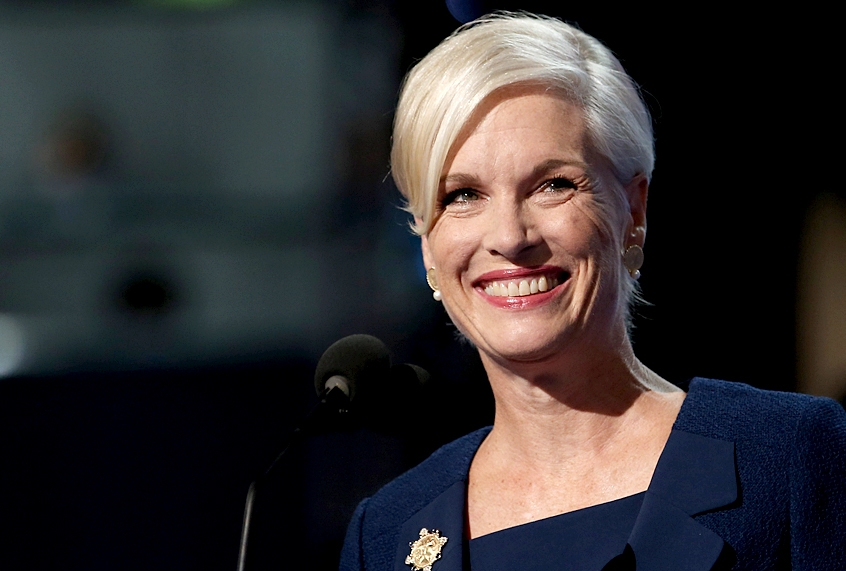
Cecile Richards, president of Planned Parenthood (Credit: Carl Daniel Cox)

The assault on women’s healthcare in the effort to legally limit women’s reproductive rights is fast becoming the defining element of election 2012. Republican presidential candidates have been racing to see who can support the most regressive idea.  Congressional leaders like Darrell Issa are holding all-male hearings on contraception, and the state of Virginia just passed, then rescinded, a law forcing women seeking abortions to undergo invasive tests.

In the cross hairs: Planned Parenthood, the 91-year-old organization that provides birth control, cancer screening, STD testing and abortions to 3 million women a year, from 750 clinics in 49 states. In  the last month, Planned Parenthood was again in the headlines when the Susan G. Komen Foundation announced it wouldn’t fund Planned Parenthood anymore, then reversed itself.

Salon sat down with Planned Parenthood’s president, Cecile Richards, to talk about how American politics reached the point where access to not just abortion, but to birth control, suddenly became a priority in the national political debate.

Women’s reproductive health issues seem to be defining issues this election year. Did you see this coming?

No. Somehow the Republican primary has become this race to the bottom on women’s issues. They have been trying to outdo themselves. And they are going to wake up in November and realize that the majority of voters are women.

Why do you think this is happening?

After the 2010 elections we saw this total realignment of  Congress and legislatures, based on reproductive issues.  People had been elected on the basis of anger about this enormous economic dislocation. But what we saw was that the House of Representatives was then two-thirds anti-choice. This was not a topic at all in the election. Yet, as soon as they were sworn in, they didn’t focus on jobs, the economy or foreclosures, but the first legislation they introduced was about abortion and healthcare. One of the first bills the House passed was to completely eliminate Planned Parenthood funding.

As a former Democratic strategist, what do you make of this phenomenon?

I think the other issues really take some thought and energy to solve. And it’s a cheap shot to go after women. We are seeing this enormous overreach that the government should be in every part of women’s lives. And we are seeing people across the country saying, “OK, enough is enough. How do you put politics in front of breast cancer screening?”

Did the Komen funding controversy change the way you do business?

The great news for us is that millions of people now know we are a major provider of preventive care including breast and cervical cancer screenings for 700,000 women a year. We heard from men and women across the country, that they they couldn’t believe groups were putting politics ahead of healthcare. We were very pleased to get support from Lance Armstrong’s Livestrong, for example.

Do you expect to get more Komen funding going forward?

That happens at the local level. We are very pleased to be working with them again. Their money goes to our local doctors and screeners. I am quite encouraged. It opens some doors.

Since the 2010 elections lawmakers have introduced more than 1,000 reproductive health bills. Why? And what is Planned Parenthood doing?

I think there was a feeling that women would never object, that we would just take what was dished out. Unfortunately, women are not represented equally in these legislatures.

But, I think we are seeing a real backlash against these efforts against women’s health. We saw the U.S. Senate reject the House’s efforts to end funding for Planned Parenthood. And we gained more than a million new supporters during those months.

Then you see in Mississippi, the most conservative state in the country by practically any measure, that this Personhood measure, which every major Republican presidential candidate has endorsed, was overwhelmingly rejected. People in this country don’t want government intruding into personal and family decisions.

How many of the 1,000 anti-choice measures are becoming law? 

A lot of them. I was just in my home state of Texas. The Legislature had just ended family planning and basic preventive care for 300,000 women in Texas. And Gov. Perry was out bragging that he closed 11 Planned Parenthood centers. These were  all along the Rio Grande and they only provided preventive care, no abortions at all. Here he is out bragging and women in the state are paying the price.

Do you have Republicans on your board or supporting Planned Parenthood?

We have tons of  Republicans. The great irony is a lot of our Planned Parenthoods were started by Republicans. Mrs. Barry Goldwater in Arizona. Richard Nixon signed the first family planning law into effect: the one that Mr. Romney has pledged to eradicate, the one that serves 5 million American women a year. That was signed into law by Nixon. Among Republicans, there is a history of support for access to healthcare and rejection of the intrusive laws being passed by the more extreme members of the party now. The sad thing is, traditional Republicans are being threatened and bullied by the folks in their own party.

You just handed me a Planned Parenthood candidate questionnaire that Mitt Romney signed in 2002, answering “yes” to the questions of whether he supported Roe v. Wade and access for poor women to abortion. What has happened to him?

It’s very tough to be a moderate Republican and stay in office. Ten years ago Mitt Romney was trying to get the Planned Parenthood endorsement. Today, as a leading candidate for president, he has pledged to completely eliminate Planned Parenthood, to end the family planning program, and he has endorsed the Personhood amendment. He is unrecognizable from when he was governor. That is a very good example of how extreme the Republican primary system has gotten. The thought we would have a major candidate running for president in America that wants to end family planning is just extraordinary.

Romney is the moderate. Santorum leans a bit farther over the edge.  

It is extraordinary that someone wants to be president of the United States who has absolutely no regard for women and women’s ability to make any decisions about personal healthcare. What’s disheartening is every time he moves to the right, Mitt Romney moves with him. What’s really of concern for women is that these guys can’t be trusted.

What did you make of Darrell Issa’s all-male panel on contraceptives and the Affordable Care Act, saying the issue is about liberty, not women.   

Well, I don’t think Mr. Issa has ever taken birth control. Where they are totally missing the boat is that women in America don’t see birth control as a social issue. It’s a health care issue.  The average American woman spends five years getting pregnant and having kids and then she spends an average of 30 years trying not to get pregnant. So trying to prevent an unintended pregnancy is a lifelong pursuit for women. Birth control is a basic healthcare issue and it’s an economic issue. Many women will save $600 a year from this [Affordable Care] benefit alone. I can’t say it enough: 99 percent of women in America, if they have ever been sexually active, use birth control. And 98 percent of Catholic women use birth control. This is  just not a controversial topic!

Did you predict that they would go after this benefit?

We worked for the passage because we knew it would be good for women. But I have been stunned to see that the Republican Party has taken up as the issue they want to be working on in Congress:  ending birth control. I look around me and see all the things this country needs. And the thought that they make that their priority is astounding,. This is why people have so little regard for Congress now. People ask: What are they doing to help me in my daily life? And for women who don’t have time for politics, who are raising their kids, trying to put dinner on the table, working two jobs, that’s money I can use for groceries? And now, men are talking to other men about how they can get rid of this benefit for women.

Are we living in regressive times for women in the U.S. right now?

I do think in the last 12 months it is literally a tale of two cities. On one hand, there are enormous opportunities for women, getting preventive care covered. On the other hand, there are political forces trying to take us back to the 1950s.

 When you arrived in 2006 , you said, “I feel like we need to go into the 21st century. Clearly, we are going to get there kicking and screaming.” Still, 87 percent of U.S. counties have no abortion provider.  That’s not progress, is it?

We’ve made a lot of progress. We are really seeing change in the coming generation. I hear from a lot of people saying, oh we fought so hard in the 1960s and young people don’t appreciate how far we have come. But I think in the last year we have seen young people engage in a way they never have before. When the House voted to end our funding,  we saw young people, including young men, all across the country on college campuses, get involved. We signed up more than a million new activists and supporters. During the Komen thing, we had literally 1.3 million tweets — an explosion!  These are young people.  And we are seeing young men take these issues on, they are not just women’s issues. They can’t imagine going back to a time when birth control was an issue.

But PP will always be a target for the pro-lifers.

Yes. They want to end all access to safe and legal abortion. Planned Parenthood does more to prevent unintended pregnancy than any organization. It’s unconscionable that the U.S. has the highest rate of unintended and teen pregnancy in the industrial world. There is so much we can do in this country to prevent that. I have been so disturbed to read the things that Mr Romney is saying, because I feel surely he must know better, this is a country where there is a lot we can do to improve people’s lives, instead of making women’s healthcare a political issue.

Do you foresee a time when women won’t be fighting to protect basic reproductive rights?

I think there is always going to be a part of society that is trying to keep women back, but I think we are making progress. Ninety-five years ago Margaret Sanger was arrested for handing out not birth control, but information about birth control. Last year we saw 30 million people online looking for information about birth control. We are making progress.

Continue Reading Close

Nina Burleigh (www.ninaburleigh.com) is author of “The Fatal Gift of Beauty: The Trials of Amanda Knox.”

The deep roots of the war on contraception

The uproar over Obama's decision stems from tensions between Democrats and Catholics that date back to FDR and LBJ

  • more
    • All Share Services

The deep roots of the war on contraception (Credit: Library of Congress/The White House)
This piece originally appeared on New Deal 2.0.

Republicans for Planned Parenthood last week issued a call for nominations for the 2012 Barry Goldwater award, an annual prize awarded to a Republican legislator who has acted to protect women’s health and rights. Past recipients include Maine Senator Olympia Snowe, who this week endorsed President Obama’s solution for insuring full coverage of the cost of contraception without exceptions, even for employees of religiously affiliated institutions. And that may tell us all we need to know about why President Obama has the upper hand in a debate over insurance that congressional Tea Partiers have now widened to include anyone who seeks an exemption.

It’s a long time ago, but it is worth remembering that conservative avatar Goldwater was in his day an outspoken supporter of women’s reproductive freedom — a freethinker who voted his conscience over the protests of Catholic bishops and all others who tried to claim these matters as questions of conscientious liberty and not sensible social policy. With Goldwater on his side, Obama sees a clear opening for skeptics wary of the extremism that has captured Republican hopefuls in thrall to the fundamentalist base that controls the GOP presidential primary today. Holding firm on family planning — even if it means taking on the Catholic hierarchy and other naysayers by offering a technical fix that would have insurers cover costs instead of the churches themselves — is a calculated political strategy by the Obama campaign, not a blunder as it has been characterized by many high powered pundits, including progressives like Mark Shields of PBS and E.J. Dionne of the Washington Post.

Recent public opinion polling on the subject is worth reconsidering. For years, it has been perfectly clear that a substantial majority of Americans see the value of expanding access to contraception and reliable sex education as essential tools to prevent unwanted pregnancy and abortion and to help women balance the competing demands of work and family. But unlike a zealous minority on the other side, these moderates have not necessarily privileged these social concerns over important questions of economics or national security that mattered more to them at election time.

That’s what seems to be changing. With his now-famous “nope, zero” response last spring, President Obama simply shut down Republicans in Congress who wanted to defund family planning as part of a deal to reduce the federal deficit. The action elicited a sudden surge in his popularity, especially in the highly contested demographic of women voters between the ages of 30 and 49 who voted for him in 2008 but wound up frustrated by failed promises and disappointing economic policies. Campaign polling has since uncovered a big opening for Obama with this group because they are furious over Republican social extremism. An astonishing 80 percent of them disapproved of congressional efforts to defund Planned Parenthood last spring. Polling among Catholics in response to last week’s controversy shows identical patterns, with 57 percent overall supporting the Obama “compromise” to ensure full coverage of contraception, according to reporting by Joe Conason in The National Memo, and cross-tabs demonstrating much higher margins of support from Catholic women, Latinos, and independent Catholic voters — all prime Obama election targets.

If the numbers are so persuasive, why then have Republican conservatives strayed so far from the greater tolerance of the Goldwater age? Why have they allowed the family planning issue to tie their candidates up in knots in 2012? The answer is in just how outsized the influence of a minority viewpoint can be on a political party, so long as it represents the base of that party’s support.

A bit of history going all the way back to Franklin Roosevelt’s New Deal is instructive. Back then, birth control was still illegal in this country, still defined as obscene under federal statutes that remained as a legacy of the Victorian era, even though many states had reformed local laws and were allowing physicians to prescribe contraception to married women with broadly defined “medical” reasons to plan and space their childbearing.

The movement’s pioneer, Margaret Sanger, went to Washington during the Great Depression, anticipating that Franklin Roosevelt, whose wife Eleanor was her friend and neighbor in New York, would address the problem and incorporate a public subsidy of contraception for poor women into the safety net the New Deal was constructing. What Sanger failed to anticipate, however, was the force of the opposition this idea would continue to generate from the coalition of religious conservatives, including urban Catholics and rural fundamentalist Protestants who held Roosevelt Democrats captive, much as they have today captured the GOP. It was Catholic priests, and not the still slightly scandalous friend of the First Lady, who wound up having tea at the Roosevelt White House.

The U.S. government would not overcome moral and religious objections until the Supreme Court protected contraceptive use under the privacy doctrine created in 1965 under Griswold v. Connecticut. That freed President Lyndon Johnson to incorporate family planning programs into the country’s international development programs and into anti-poverty efforts at home. As a Democrat still especially dependent on Catholic votes, however, Johnson only agreed to act once he had the strong bipartisan support of his arch rival Barry Goldwater’s endorsement and also the intense loyalty and deft maneuvering of Republican moderates like Robert Packwood of Oregon in the Senate. Packwood, in turn, worked alongside Ohio’s Robert Taft, Jr. in the House and a newcomer from Texas by the name of George H. W. Bush. Bush would remain a staunch advocate of reproductive freedom for women until political considerations during the 1980 presidential elections, when he was on the ticket with Ronald Reagan, accounted for one of the most dramatic and cynical public policy reversals in modern American politics.

Reagan had supported California’s liberal policies on contraception and abortion as governor, and Bush as Richard Nixon’s Ambassador to the United Nations had helped shape the UN’s population programs. But Republican operatives in 1980 saw a potential fissure in the traditional New Deal coalition among Catholics uncomfortable with the new legitimacy given to abortion after Roe v. Wade and white southern Christians being lured away from the Democrats around the issue of affirmative action and other racial preferences. Opposition to abortion instantly became a GOP litmus test, and both presidential hopefuls officially changed stripes.

Fast forward to 1992 and the election of Bill Clinton as America’s first pro-choice president, coupled with the Supreme Court’s crafting of a compromise decision in Planned Parenthood v. Casey that put some limits on access to abortion but essentially preserved the core privacy doctrine of Roe v. Wade. The perceived double threat of these political and judicial developments unleashed a new and even more powerful conservative backlash that took aim not only at abortion, but at contraception and sex education as well.

Exploiting inevitable tensions in the wake of profound social and economic changes occurring across the country as the result of altered gender roles and expectations — changes symbolized and made all the more palpable by Hillary Clinton’s activist role as First Lady — conservatives, with the support of powerful right-wing foundations and think tanks, poured millions of dollars into research and propaganda promoting family values and demonizing reproductive freedom, including emotional television ads that ran for years on major media outlets. A relentless stigmatizing of abortion, along with campaigns of intimidation and outright violence against Planned Parenthood and other providers, had a chilling effect on politicians generally shy of social controversy. And Bill Clinton’s vulnerability to charges of sexual misconduct left his administration and his party all the more defensive.

Since the welfare reform legislation of 1996, aptly labeled a “Personal Responsibility Act,” not only has access to abortion been curtailed, but funds for family planning programs at home and abroad have been capped. Hundreds of millions of dollars have been allocated to the teaching of sexual abstinence, rather than more comprehensive approaches to sex education. Just as tragically, U.S. programs addressing the crisis of HIV/AIDS — admirably expanded during the presidency of George W. Bush — were nonetheless made to counsel abstinence and oppose the use of condoms and other safe sex strategies, leaving women and young people all the more vulnerable to the ravages of the epidemic.

Empirically grounded studies over and over again undermined the efficacy of these approaches, which also flew in the face of mainstream American viewpoints and basic common sense. With Barack Obama’s election they have largely been revoked, enflaming the conservative base that put them in place and has lived off the salaries supported by government funding for faith-based social policy.

Even more disheartening to conservative true believers is the promise that the Affordable Care Act will vastly expand access to contraception by providing insurance coverage for oral contraceptives. This guarantee, endorsed by all mainstream health advocates, also includes emergency contraception, popularly known as the morning-after pill, that holds the promise of further reducing unwanted pregnancy and abortion and was meant to offer common ground in an abortion debate long defined by a clash of absolutes. The strong dose of ordinary hormones in emergency contraception act primarily by preventing fertilization, just like daily contraceptive pills, but in rare instances may also disable a fertilized egg from implanting by weakening the uterine lining that it needs for sustenance, causing opponents to vilify it as an abortifacient.

Supporting the Obama policy changes, on the other hand, is a new generation of progressive activists in reproductive health and rights organizations, energized by the intensity of the assaults against them, and now well-armed to educate and activate their own supporters by using traditional grassroots strategies and more sophisticated social networking. No institution has been more important in this effort than Planned Parenthood, with its vast networks of affiliates and supporters in every state, millions more supporters online, and a powerful national political and advocacy operation based in Washington D.C. that has been put to use to great effect in recent months.

The strength of the Planned Parenthood brand, coupled with the organization’s demonstrated ability to rally hundreds of thousands of supporters when it is attacked, has helped overcome traditional political reticence on reproductive justice issues. The Planned Parenthood Action Fund is already out with a strong new appeal warning politicians that women are watching. “Enough is enough. Back off on birth control,” is the new advocacy mantra.

Mindful of the numbers — and with the added ballast of what now amounts to a daily drumbeat of progressive television talk and comedy that delights in pillorying Republican prudery — Democrats are intensifying their resolve to take on this fight. Two things we can be sure of: Whoever emerges from the bloodbath of the GOP contest will try and backtrack from the birth control extremism of the primary. And Obama supporters, backed up by the advocacy community, will in turn stand ready to pounce on this inevitable flip-flopping.

Both sides may well summon the spirit and words of Barry Goldwater, who cautioned against allowing faith-based extremism to gain control of the Republican Party. “Politics and governing demand compromise,” he told John Dean, who reports on the conversation in his 2006 book, “Conservatives Without Conscience.”But these Christians believe they are acting in the name of God, so they can’t and won’t compromise. I know. I’ve tried to deal with them.”

Continue Reading Close

Ellen Chesler is a Senior Fellow at the Roosevelt Institute and author of "Woman of Valor: Margaret Sanger and the Birth Control Movement in America."

Page 1 of 3 in Planned Parenthood