Joyce Millman

Rock ‘n’ roll rebellion, redux

At a Green Day concert, shouting and smiling next to my 13-year-old son, I watched the generation gap disappear.

  • more
    • All Share Services

Rock 'n' roll rebellion, redux

Rock ‘n’ roll was not a language spoken in my parents’ house. But that wasn’t unusual in the ’70s; the generation gap wasn’t just a demographic term, it was a living, breathing beast. When I was 14, I won tickets to see my favorite band, the Rolling Stones, at the Boston Garden but, because of some Keith-related snafu (a fight and an arrest, if I remember correctly), the concert was going to be delayed until midnight. I called my parents from a pay phone at the Garden to tell them I’d be late, only to find my father in an uproar. He demanded that I forget about the Rolling Stones and come home that minute. I stayed. Although my parents were in their early 20s when they had me (10 years younger than I was when I gave birth to my son), there was no common cultural ground between us.

The Stones Incident came to symbolize everything that I feared about becoming a parent. Would the generation gap yawn as wide for me and my kid? Would I become a well-meaning but clueless authority figure? But I need not have worried. There are many things I could never have imagined about parenthood: that a dewy baby boy could grow into a slouchy, unkempt, 6-foot-tall 13-year-old in what seemed like the space of a breath, for instance, or that he would become a teenager in a country that’s divided over a dubious war, just as it was when I was a teenager. But the thing that was most unimaginable to me on the night of that Stones concert has turned out to be the thing that has, so far, surprised me the most about being a parent: My son and I go to rock concerts together.

When I was 13, there was no freakin’ way my parents would have taken me to a rock concert. Now here I was, 34 years later, with my husband and (slouchy, unkempt) 13-year-old on a clear, crisp September night, at what was, for my son, the equivalent of that Rolling Stones concert: Green Day at SBC Park in San Francisco. The East Bay trio was celebrating the biggest album of their career, the ferociously anti-Bush cannonade “American Idiot,” and this show was their triumphal homecoming. When I first heard Green Day on the radio 11 years earlier, I nearly wept at how much they echoed the Clash, my defunct heroes, the greatest band, ever. The musical revolution that the Clash promised had only been delayed, blooming again in Billie Joe Armstrong’s fractious singing and the band’s exhilarating three-chord thrash.

When my son discovered my Green Day CDs, I quietly rejoiced. He had previously resisted my musical suggestions and was content listening to his lightweight Smash Mouth CDs and (ick) the Dave Matthews Band. But Green Day lighted a fuse and he was soon riffling through my collection to sample the Clash, the Sex Pistols and the Ramones, as well as the Who and the Kinks, all of them Green Day’s spiritual fathers. Billie Joe, Tre Cool and Mike Dirnt are much cooler teachers than I am, and I thank them for it.

I also thank them for the unvarnished anger of the “American Idiot” album, which has become the soundtrack for my son and his friends’ nascent liberalism. I wasn’t sure how to talk about the war or about the erosion of civil liberties to my son without seeming like a ranting old lady. But “American Idiot” gave me an opening. Note to politicians: The 13- and 14-year-olds of today get their news from “The Daily Show” and their attitude from Green Day and the cool-again ’70s punks. Their hair is long or color-streaked, they think the president is a bozo, they know we’re in Iraq for the oil and they aspire to own Priuses, not Hummers. Fear them. They are the old antiwar movement redux.

“This song is not anti-American, it’s anti-waaaaaaaaaaar!” screamed Billie Joe at SBC Park, kicking into “Holiday” (“I beg to dream and differ from the hollow lies/ This is the dawning of the rest of our lives”), and 45,000 fists pumped the air. I looked around at all the families like us, and felt a curious sense of time shrinking and falling away. I was as happy as I had been at that Stones show at 14, and at Clash shows at 22. Earlier that night, we had sat in the golden San Francisco dusk waiting for the show to begin. We watched the people wandering around the stadium: Parents and kids, lone adults wrangling four or five preteens, pierced, plaid-skirted girls and waifish, T-shirted boys taking pictures of each other with their camera phones. An Irish punk band called Flogging Molly ambled onstage while the sky was still light and blew us away. They dedicated a song to the Clash’s Joe Strummer, my poor, dead idol, and my son and I clapped loudly. Two girls on the edges of left field danced a jig to the music and one suddenly turned a running cartwheel. The night was full of joy and release.

Between bands, we listened to the music mix on the P.A. system — “God Save the Queen,” “I Fought the Law,” “Blitzkrieg Bop” — and my son exclaimed, “They’ve been raiding my CD collection!” We were happy and close the way a family should be and I marveled at the weirdness of it all, that rock ‘n’ roll, the music of rebellion — of my rebellion against my parents — should be our bond. I could never have imagined this that night at the Stones concert, listening to my dad screaming at me through the phone. How fortunate I am to be able to speak the same language as my son, to know that his rebellion will be against something that really matters, a rebellion we can share.

Over the sound system, Cheap Trick were singing “Mommy’s alright, Daddy’s alright, they just seem a little weird,” and I thought, OK, this is all OK.

The right man for the job

His county -- and his country -- cried out for him. And Bruce Springsteen came through.

  • more
    • All Share Services

The right man for the job

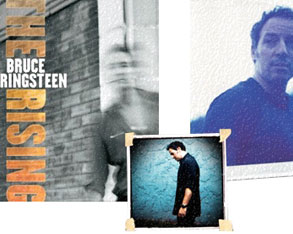
On July 30, Bruce Springsteen released “The Rising” (Columbia), his first studio album with the E Street Band in 18 years. And, for the rest of that week, from the “Today” show to Ted Koppel to the cover of Time magazine, the Boss — who has been virtually ignored, except by his fans, for years — was everywhere.

The media hadn’t gone this Springsteen-happy since Ronald Reagan misappropriated the lyrics to “Born in the USA.” This time, of course, the theme of “The Rising” was the news hook; it’s the first full-length Sept. 11-themed work by a rock artist of Springsteen’s stature, featuring songs sung from the perspective of the dead, the grieving and the walking wounded. As Time reported, Springsteen found inspiration in part from the New York Times’ “Portraits of Grief” section, the thumbnail sketches of lives in full swing that were stopped short that day.

On “Today,” Matt Lauer delicately suggested that some people might take a cynical view of “The Rising” as a commercialization of the national catastrophe. But imagine for a moment that you’re Bruce Springsteen reading “Portraits of Grief” and you keep coming across your own name. Your music was one victim’s passion, your songs were played at another victim’s memorial service. Imagine being so much a part of these people’s lives that you’re included in their obituaries. How do you respond to that? Isn’t it more cynical not to respond?

Springsteen makes rock ‘n’ roll with a folkie’s conscience and a soul singer’s need to testify. He began his career writing cinematic songs about the fierce dreams of blue-collar kids like himself, hungry for something beyond the pinched ambitions and dead-end lives of their parents. Over the years he has remained true to those kids, and himself, by continuing the story into middle age: The characters in his songs made bad choices and lucked out, drifted and found their way, ran from adult responsibility and finally embraced it.

One hundred and fifty-eight residents of Monmouth County, N.J., where Springsteen lives, died in the Sept. 11 attacks; this was the largest concentration of victims in the state. Overall, the casualties of the attacks, in terms of age, social class and geography, were disproportionately Springsteen’s people — aging boomers who used to be wild and innocent and now got up every morning and went to work each day. People with wives and husbands and kids and mortgages and to-do lists and dreams and maybe an old guitar and boxes of vinyl albums in the attic. Any of them could have been any of us.

There are no anthems on “The Rising,” no politics to be misconstrued, no Toby Keith jingoism. These are songs on a human scale; it’s a work of great empathy about the attacks’ effects on individual lives, and about love and security previously taken for granted. But it’s also, more often than you might expect, a spirit-soaring, hip-shaking, roll-up-the-rug-and-dance record that reinforces (though in a very different context) what Springsteen sang almost 25 years ago on “Badlands” — “It ain’t no sin to be glad you’re alive.”

During the E Street Band reunion tour three years ago, Springsteen began closing shows with the gorgeous “Land of Hope and Dreams,” a new song that swayed and bumped like a big old engine rumbling through the night. Springsteen and his longtime band mates, arrayed in a line across the edge of the stage, were a vision of lasting friendship as they sang of a forgiving train that carried “saints and sinners, losers and winners, whores and gamblers, lost souls” to a future where “dreams will not be thwarted” and “faith will be rewarded.” Without “Land of Hope and Dreams,” or the E Street Band reunion, I’m not sure that Springsteen’s response to Sept. 11 would have been so thoughtful and sure-footed.

“The Rising” continues the chugging vision of “Land of Hope and Dreams”; the train is rock ‘n’ roll, and rock ‘n’ roll holds within it the essential American ideas: community, reconciliation, redemption, the assurance that you are not alone. “The Rising” needed to be an E Street Band record — when the world is falling apart, you turn to familiar faces and voices. These songs performed solo by Springsteen in his “Ghost of Tom Joad” mode would have been too depressing to bear. Instead, much of “The Rising” is loud and joyous. In spirit, it reminds me of the Four Tops’ “Reach Out, I’ll Be There,” that emphatic declaration of loyalty and compassion made during a different war, a long time ago.

Atlanta-based Brendan O’Brien (Pearl Jam, Rage Against the Machine) is the first outside producer Springsteen has ever used. And O’Brien gives “The Rising” an enormous sound that captures both the E Street Band’s power and its subtlety. Although the guitars (played by Springsteen, Steve Van Zandt and Nils Lofgren) and Max Weinberg’s drums are pushed forward, you can still hear each complex layer of the band in the deep, clean mix.

O’Brien’s task was to make Springsteen sound “modern.” But, sometimes, as on the overproduced “The Fuse” (a song that juxtaposes images of death and dread with the life force of sex), the sound is so modern — tape-looped drumbeat and all — it becomes generic. (Anybody who thinks a modern Boss is a swell idea is invited to dust off the disco mix of “Dancing in the Dark.”) “The Rising” is not a perfect record — it’s a little schizo, in fact. The beach-ball bounce of “Waitin’ on a Sunny Day” seems out of place (although I’m not sorry it’s here as a mood elevator), and “Let’s Be Friends (Skin to Skin)” sounds less like Springsteen than it does John Mellencamp. What’s up with that?

Most of the time, though, Springsteen and O’Brien get it right: “The Rising” is emotionally open and haunted by recurring images of fire and dust, faith and strength, the sky and the void, love and loss. It has the soul of a country-gospel record; the lyrics bear witness to pain and trials, but the music — buoyed by cello, mandolin, dobro, slide guitar, church organ and, especially, Soozie Tyrell’s violin — uplifts.

On the opening track, “Lonesome Day,” for instance, Springsteen makes ominous allusions to vipers in the grass and a dark sun on the rise, but the song is a vivacious rocker with a soaring cello and violin hook; listening to Patti Scialfa and Tyrell swing through their gospel shouts of “It’s all right, it’s all right, it’s all right” on the chorus, you almost believe it will be. Springsteen also makes an adventurous attempt at Middle Eastern folk music with “Worlds Apart,” which gracefully blends Pakistani qawwali singers, buzzing guitars, Scialfa’s sirenic ululations and a surprisingly light, almost ethereal, vocal from Springsteen.

Some of Springsteen’s lyrics, like “Lonesome Day” and even the aching “You’re Missing,” are vague enough to address loss and tragedy in general. Others are wrenchingly specific to the Sept. 11 attacks (although Springsteen never refers to the World Trade Center, New York City, terrorism or Sept. 11). On the steel-guitar driven blues “Into the Fire,” Springsteen sings in the persona of a firefighter’s widow: “I need your kiss, but love and duty called you someplace higher/ Somewhere up the stairs, into the fire.” And on the cathartic title track, the narrator is a dead firefighter or rescue worker whose soul transcends the carnage to receive a heavenly reward — a “dream of life” that comes to him “like a catfish dancin’ on the end of my line.” In both songs, the heroes are nameless, which prevents “The Rising” from duplicating the creepy eyewitness literalism of Neil Young’s Flight 93 tribute, “Let’s Roll.”

Springsteen doesn’t shy away from the messier emotions and impulses called up by Sept. 11. On “Empty Sky” (a title that could refer to the broken Manhattan skyline or the planeless skies in the week after the attacks), the narrator mourns his loved one and sings, “I want a kiss from your lips/ I want an eye for an eye.” On the lovely “Nothing Man,” which recalls “My Hometown” in its hushed organ and rockabye lilt, a shell-shocked rescue worker can’t fit back into everyday life. And on the ghostly blues “Paradise,” a man considers suicide in order to be reunited with his dead wife, a terror victim.

But on “Paradise,” the grieving spouse experiences a vision of paradise as a lie, a void, and he chooses to live. That urge, that dream of life, drives the album’s best songs, “The Rising,” “Mary’s Place” and the closing track, the stirring gospel hymn “My City of Ruins.” “The Rising” and “My City of Ruins” (which was actually written before Sept. 11, about the decay of Asbury Park, N.J.) are built around similar images of resurrection, ascension and hands clasped in unity. And those images — “Rise up, come on, rise up,” commands the choir on “My City of Ruins” — are a powerful contrast to the vision of the twin towers falling down, a refusal to let hate, chaos and death prevail.

The song that has so far stirred up the most disagreement among critics is “Mary’s Place,” which has been dismissed as a nostalgic throwback to E Street barn-burners like “Rosalita.” For me, it’s the heart of the record. On “Mary’s Place,” a woman mourns her partner, who died in the attacks (“From that black hole on the horizon/ I hear your voice calling me”); she tries to will his spirit back to her through the music they used to listen to together. “Seven days, seven candles in my window/ lighting your way/ Your favorite record’s on the turntable/ I drop the needle and pray,” Springsteen sings.

Yes, “Mary’s Place” is an old-fashioned, honking E Street party that brings back memories of “The Wild, the Innocent and the E Street Shuffle.” But that’s the point — this is a song about a couple whose relationship goes so far back, their favorite album is on vinyl. Ordering the band to “turn it up,” Springsteen sends his narrator — and us, too — back to a place of comfort and innocence, where the music liberates and heals and the Big Man blows all night.

Of course, Springsteen isn’t suggesting that rock ‘n’ roll can put everything back the way it was. There’s an undercurrent of irretrievable loss on “Mary’s Place” — the woman takes to the dance floor with her arms around a memory — that cleanses the song of nostalgia. And in the song immediately following “Mary’s Place,” “You’re Missing,” the narrator recites a litany of all that’s not right, while a sighing cello and a trudging rhythm measure out the hard work of surviving: “Coffee cups on the counter, jackets on the chair/ Papers on the doorstep, but you’re not there/ Everything is everything/ But you’re missing.”

Those small details of emptiness sound lived-in, and maybe they are: The Time article revealed that Springsteen telephoned the survivors of some of those Boss-fanatic victims he read about in “Portraits of Grief.” One firefighter’s widow told Time, “After I got off the phone with him, the world just felt a little smaller. I got through Joe’s memorial and a good month and a half on that phone call.” You can regard Springsteen’s (unpublicized, until Time uncovered it) gesture as opportunistic if you want to. But I think those phone calls, and the way “The Rising” tends to our needs of the moment — putting us in the company of old friends, giving voice to our sorrow and gratefulness — feel just about right. This is Springsteen being a good neighbor in the community of rock ‘n’ roll. We reached out, and he was there.

Continue Reading Close

“Dark Shadows”

Years before Buffy, Angel and Anne Rice, this ultra-cheapo Gothic soap opera entranced a generation with soulful vampires, werewolves and lost love.

  • more
    • All Share Services

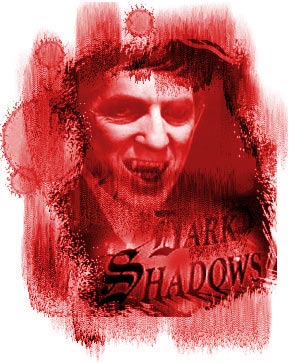
Before Buffy, the vampire slayer, before Angel, the remorseful neck-biter with a soul, there was ABC’s “Dark Shadows,” an afternoon soap opera that bewitched a generation of viewers — ask your mom — with vampires, werewolves, ghosts, Gothic romance and the Cheez-Doodliest special effects this side of Ed Wood Jr.

“Dark Shadows” took the soap genre beyond hospitals and Peyton Places into the wiggy, more youth-friendly realm of the serial thriller. From 1966 to 1971, kids (well, girls, mostly) avoided after-school activities in order to be home by 4 p.m., when the spooky, Theremin-laced theme song would strike up and big, Gothic lettering spelling out “Dark Shadows” would float over footage of a storm-tossed surf. For 30 minutes, these future fans of Anne Rice, “Buffy” and “Angel” were held rapt by the continuing adventures of Barnabas Collins — the original vampire with a soul — and his occult-bedeviled descendants, the wealthy Collins family of Collinsport, Maine.

To watch “Dark Shadows” today (the Sci Fi Channel airs back-to-back episodes weekdays at 10 a.m.) is to feast on camp-a-licious flubbed lines, awkward silences, wandering boom mikes, misfiring props and special effects along the lines of dime-store vampire teeth and rubber bats on a string. But never mind that — “Dark Shadows” addicts were (and still are) a forgiving bunch. What matters is that the show’s crazed inventiveness compelled you to suspend disbelief, even as you giggled like mad.

The dense, spooky story lines of “Dark Shadows” time-traveled from the then-present (the 1960s and early ’70s) to, among other periods, 1692, 1795, 1897 and 1949, with the heroic cast playing several incarnations of their characters. (Both twists were regular features of later sci-fi/fantasy series like “Angel” and “Xena: Warrior Princess.”) The swift metamorphosis of “Dark Shadows” from TV cult to genuine pop cultural phenomenon was a premonition of the niche-marketed TV landscape to come, when off-network, off-hours and offbeat shows could still become household names. And “Dark Shadows” was TV’s first supernatural daytime soap — remember that the next time Tabitha and Timmy do their dark magic on “Passions.”

Most of all, “Dark Shadows” broke the stereotype of the evil vampire, by making Barnabas Collins a spiritual descendant of the Brontë sisters’ mysterious, savage antiheroes. The 175-year-old Barnabas was originally supposed to be the bad guy. But classically trained Canadian actor Jonathan Frid played him as a sad, cursed being who yearned to be human again. Frid often looked mournfully lost in thought — in truth, he was struggling to read the cue cards without his glasses — and his sensitive mien elicited fans’ sympathy for the devil. The writers obliged the burgeoning Barnabas cult with a back story recasting Barnabas as a victim of a vengeful witch, making him a lonely soul carrying a torch for his long-lost love.

Frid’s Master Thespian delivery and silent-movie horror get-up — outré black cape, wolf’s-head walking stick, hair plastered in spidery bangs over his brow, eyes rimmed in black eyeliner — made him look like a male Norma Desmond waiting for his close-up. Nonetheless, Barnabas-mania took hold. Soon, Frid’s fanged visage adorned lunchboxes, bubble-gum cards and, most improbably, given that Frid wasn’t exactly in the bloom of youth, the swoony pages of teenage-girl tastemakers 16 Magazine and Tiger Beat. (The modern equivalent would be “Harry Potter” co-star Alan Rickman, in full Severus Snape Goth get-up, splashed on the cover of YM.)

“Dark Shadows” creator Dan Curtis has always insisted that the show came to him in a dream, with an image of a girl on a train reading a letter and a voice-over explaining that she was journeying to a seaside town to work as a governess. The show’s head writer, Art Wallace, begged to differ; according to Wallace, the premise for “Dark Shadows” arose from a script he wrote for the TV anthology series “Studio One.” In a compromise, the show’s credits read “Series Created by Dan Curtis, Story Created and Developed by Art Wallace.”

“Dark Shadows” premiered on ABC on June 27, 1966. Billed as a “Gothic soap opera,” the show opened with a narration by actress Alexandra Moltke as the governess: “My name is Victoria Winters. I am going on a journey that will bring me to a strange dark house on the edge of the sea at Widow’s Hill … ” (Fun fact: Moltke resurfaced several years later amid scandal as Alexandra Isles, a New York documentary filmmaker alleged to have been Claus von Bülow’s mistress.)

For the first few months of its run, “Dark Shadows” stuck to melodrama and mystery. Victoria Winters — who had no memory of her past — felt oddly at home in gloomy Collinwood mansion, the centuries-old estate of widow Elizabeth Collins Stoddard (Hollywood veteran Joan Bennett), her rebellious teenage daughter Carolyn (Nancy Barrett, the daytime TV It Girl of her day) and assorted relatives, children and servants. Initially, the ratings were so lackluster that the show was in danger of cancellation. Viewers started to perk up when Wallace and his writers introduced ghosts into the story line, but it wasn’t until April 1967, when the show made a last-ditch attempt to woo viewers by delving deeper into the supernatural, that Barnabas Collins first appeared.

Barnabas was released from his centuries of sleep by grave-robbing caretaker Willie Loomis (John Karlen, who later played Tyne Daly’s pajama-clad husband on “Cagney & Lacey”), who discovered his coffin in a hidden room of the Collins mausoleum. Barnabas showed up at Collinwood claiming to be a long-lost relative and prevailed upon Elizabeth to let him move into another house on the property. At night, Barnabas sneaked out to snack on nubile townies, one of whom, waitress Maggie Evans (Kathryn Leigh Scott), bore an uncanny resemblance to his long-ago love Josette du Pres. The softer side of Barnabas emerged in a flashback to 1795, in which Barnabas was cursed into vampiredom by Josette’s maid, Angelique (Lara Parker), who loved Barnabas. Josette met a tragic end, setting Barnabas’ desire for vengeance in motion.

The 1795 flashback was the show’s first foray into time travel, with the story line precipitated by Victoria Winters’ disappearance during a present-day séance. She woke up in the 18th century and was accused of witchcraft by repressed biddy Abigail Collins (Clarice Blackburn) and the ambitious Rev. Trask (played with chilling charisma by Humphrey Bogart look-alike Jerry Lacy). Later story lines got more impressively weird, with characters caught up in “parallel time,” a sort of Bizarro Planet concept of alternate universes.

Throughout all of these time periods, one constant remained: Barnabas was willing to try anything, from exorcism to a Frankenstein plan of grafting his head onto a nonvampire’s body, in order to be human again. Aiding him in this quest was his secret ally, Dr. Julia Hoffman, a specialist in blood disorders. Played by the elegant Grayson Hall, the solitary Julia was dignified and brainy. She had the chin-forward resolve of Katharine Hepburn. She also had a bad case of the hots for Barnabas.

The dawn of the Barnabas era coincided with a time slot change; the show was pushed back a half-hour to 3:30 p.m. (between “General Hospital” and “The Dating Game”). But as this souped-up new “Dark Shadows” caught on with schoolkids, ABC was deluged with letters pleading for the show to return to 4 o’clock. ABC granted the request in July 1968 — not a moment too soon, because hunky David Selby (later of “Falcon Crest”) had joined the cast as Quentin Collins, the Heathcliffian werewolf, propelling “Dark Shadows” into full-fledged teen fandom. In 1969, an eight-month-long 1897 flashback featuring Quentin brought the show its highest ratings ever; a recurring piece of music from those episodes, “Quentin’s Theme,” made Billboard’s Top 20 singles chart and was nominated for a Grammy.

But, as any Backstreet Boy will tell you, the love of teenage girls is a capricious thing, and by 1971 “Dark Shadows” was in a ratings slide. ABC pulled the plug on the show on April 2, 1971, after 1,225 episodes and two feature films (the second, “Night of Dark Shadows,” was released after the show went off the air). Hardcore fans continued holding conventions and badgering TV stations to air the show in rerun; finally, in 1975, “Dark Shadows” went into syndication (minus the early non-Barnabas episodes). It even aired on PBS stations during the ’80s, before the Sci Fi Channel acquired the entire archive of episodes.

Exhaustive collections of episodes have long been available on videocassette, and MPI Home Video recently released the first “Dark Shadows” DVD set, 40 episodes on four discs, beginning with the first appearance of Barnabas. A pointless 1991 NBC prime-time remake starring Ben Cross as Barnabas lasted only 12 episodes, and rightfully so — “Dark Shadows” just wasn’t the same with a big budget and state-of-the-art production values.

And that’s because its limitations made “Dark Shadows” the intimate spook show it was. The flat look of the videotape, especially in the early black-and-white episodes, contributed to the foreboding mood. The lack of realistic exterior scenes and the soap opera necessity of setting most of the action indoors (usually with a raging storm outside) gave the show a heart-thumping sense of claustrophobia and entrapment, of horror burrowing into confined spaces. “Dark Shadows” may not have been a masterpiece of sleek special effects, but it was a masterpiece of haunted house lore, a campfire story that tricked us into imagining gore that wasn’t there. “Dark Shadows” scared the living daylights out of us, in the lengthening shadows of the afternoon.

Continue Reading Close

Blue Glow

Salon's TV picks for Weekend, Oct. 26-28, 2001

  • more
    • All Share Services

Series

E! True Hollywood Story (8 p.m. Sun., E!) shines a two-hour spotlight on “L.A. Law.” American Masters (9 p.m. Sun., PBS, check local listings) chronicles the history of vaudeville. Larry gets a massage, and trouble follows, on Curb Your Enthusiasm (10 p.m. Sun., HBO).

Specials

Radio’s most played artists (and you know what that means) are honored on the Radio Music Awards (9 p.m. Fri., ABC). Try to contain your excitement. Allison Janney hosts Women Rock! Girls & Guitars (9 p.m. Fri., Lifetime), a breast cancer benefit concert featuring Mary J. Blige, the Dixie Chicks, Emmylou Harris, Nelly Furtado, Sheryl Crow and more. The Blair Witch Project (8 p.m. Sun., FX) gets a pre-Halloween airing. The new TV movie The Wedding Dress (9 p.m. Sun., CBS) charts the course of one vintage dress as it changes the lives of several people, one of whom is Doogie Howser.

Sports

World Series:
Yankees at Diamondbacks (7:30 Sat., Sun., Fox)

Football:
Jaguars at Ravens, Jets at Panthers or Bengals at Lions (1 p.m. Sun., CBS)
Saints at Rams, Vikings at Buccaneers or 49ers at Bears (1 p.m. Sun., Fox)
Patriots at Broncos, Raiders at Eagles, Bills at Chargers or Dolphins at Seahawks (4 p.m. Sun., CBS)
Giants at Redskins or Cardinals at Cowboys (4 p.m. Sun., Fox)

Talk

Rosie O’Donnell (syndicated) Star Jones, Don Imus
David Letterman (CBS) Nicole Kidman, Iggy Pop (rerun)
Politically Incorrect (ABC) Anne Robinson, A.J. Benza
Conan O’Brien (NBC) Kelsey Grammer (rerun)
Craig Kilborn (CBS) Will Ferrell, Ben Harper (rerun)

All times Eastern unless noted.

- – - – - – - – - – - -

If you liked this feature, please take a minute to click here to read a note from the Arts & Entertainment staff about Salon Premium.

Continue Reading Close

Blue Glow

Salon's TV picks for Thursday, Oct. 25, 2001

  • more
    • All Share Services

Series

The fact that she’s pregnant doesn’t stop Rachel from going out with a soap opera hunk on Friends (8 p.m., NBC). The tribes get eaten by lions — or maybe not — on Survivor: Africa (8 p.m., CBS). Did you hear the one about the dead scuba diver in the tree? Catherine and Nick do, on CSI (9 p.m., CBS). Susan has a run-in with Weaver on her first day back on ER (10 p.m., NBC) Frontline (10 p.m., PBS, check local listings) presents “Trail of a Terrorist,” a Canadian TV report about the foiling of the December 1999 “millennium” terrorist plot to blow up American targets on New Year’s Eve.

Sports

Hockey:
Rangers at Blues (7:30 p.m., ESPN2)
Canucks at Avalanche (10 p.m., ESPN2

Talk

Rosie O’Donnell (syndicated) Tia Carrere, Matthew Lillard
David Letterman (CBS) Farrah Fawcett, Tina Fey, Garbage (rerun)
Jay Leno (NBC) Michael Douglas, Jessica Alba (rerun)
Politically Incorrect (ABC) Alec Baldwin, Malcolm McDowell
Conan O’Brien (NBC) Rosie O’Donnell, Breckin Meyer (rerun)
Craig Kilborn (CBS) David Boreanaz, Dave Grohl (rerun)

All times Eastern unless noted.

Continue Reading Close

Blue Glow

Salon's TV picks for Wednesday, Oct. 24, 2001

  • more
    • All Share Services

Series

Shoe enthusiast Imelda Marcos is profiled on a new Biography (8 p.m., A&E). On Dawson’s Creek (8 p.m., WB), Joey discovers Pacey’s whereabouts and Dawson reconsiders his choice of college. The subpoenas fly as hearings into Bartlet’s health deception begin on The West Wing (9 p.m., NBC). If O.J. Simpson’s road rage trial is making you nostalgic for old times, check out the E! True Hollywood story (9 p.m., E!) on Juice’s double-murder trial. Undeclared (9:30 p.m., Fox) reruns the one where Will Ferrell guests as a speed-freak term paper purveyor.

Sports

Hockey:
Stars at Penguins (8 p.m., ESPN)

Talk

Rosie O’Donnell (syndicated) Carole King
David Letterman (CBS) Brooke Shields, Joe Henry (rerun)
Jay Leno (NBC) Denzel Washington (rerun)
Politically Incorrect (ABC) Leeza Gibbons, Simon Shaheen
Conan O’Brien (NBC) Rob Schneider, George Stephanopolous (rerun)
Craig Kilborn (CBS) Terry Bradshaw (rerun)

All times Eastern unless noted.

Page 1 of 121 in Joyce Millman