


Arun Gupta

Occupy’s other big test

Corrected: In order to survive past May Day, the movement will have to fend off attempts at co-optation

(Credit: the99spring.com)
This story has been corrected since it was originally published.

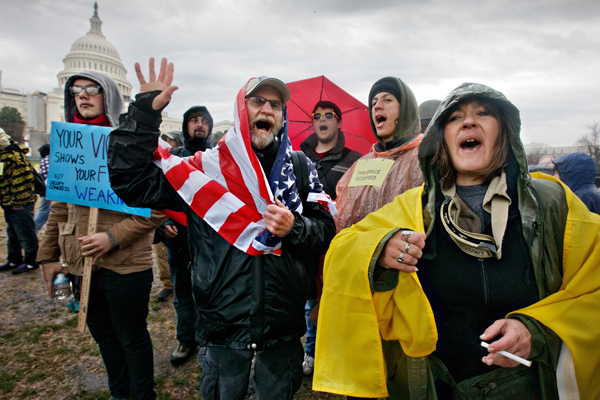
Occupy Wall Street hopes for a national resurgence Tuesday with its plans for a May Day general strike. Equally important, however, to the movement’s future will be the result of a debate that’s been roiling the encampments for the past month. “Co-optation” is the word you hear activists whisper, whether you’re in New York, Atlanta or Albuquerque. Are unions and liberal groups like MoveOn valuable allies? Or do they pose a threat, seeing the Occupy movement as nothing more than a “brand” whose language can be slipped on and deployed to their own ends – namely, a Democratic triumph in November?

The source of these fears is the “99 Percent Spring” and similar campaigns, as Natasha Lennard recently explained in Salon. It sounds like something any Occupier could get behind: to train 100,000 people for “sustained nonviolent direct action” against targets like Verizon, Bank of America and Wal-Mart. However, it arose not in the encampments, but in high-level discussions among groups like MoveOn and Rebuild the Dream. AdBusters, the magazine that helped spark Occupy Wall Street, attacked the 99 Percent Spring as the product of “the same cabal of old world thinkers who have blunted the possibility of revolution for decades.”

“There is a real concern about what MoveOn is doing and if it is co-optation,” says Sayrah Namaste, an activist with (Un)Occupy Albuquerque. “People from (Un)Occupy see MoveOn as heavily part of Democratic Party politics and question what their motives are and how they operate.” Some of the 99 Percent Spring organizers are quick to dismiss Occupy’s critique: “Maybe Occupy is worried about its own viability,” said one core organizer who asked to remain anonymous.

This distrust stems in part from the campaign to end the Iraq War, which left-wing activists say MoveOn abandoned in 2007 after it became clear that newly elected Democrats wouldn’t fight to end it. There is also, however, a structural tension. “MoveOn is very top down,” says Leslie Cagan, co-founder and former national coordinator of United for Peace and Justice. “As best I can tell, they have never developed a democratic structure that allows the members to vote on who the leadership will be or how decisions are made, let alone have serious input into the positions that MoveOn takes.” What this top-down structure means, says Bill Dobbs, a member of the Occupy Wall Street press team and longtime antiwar activist, is that “Groups like MoveOn can walk into any Occupy movement and engage in the discussions, but we can’t participate in their strategy discussions.”

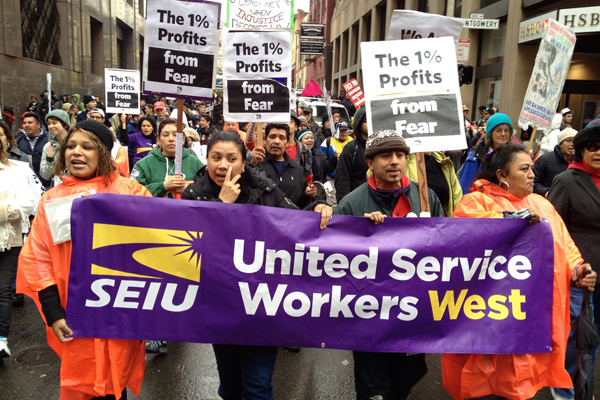
The 99 Percent Movement, which includes the 99 Percent Spring, appears to be a case of top-down decision making. To a large extent, MoveOn and other liberal organizations have simply used Occupy ideas and rhetoric to rebrand existing projects. “Occupy Wall Street happened and crystallized a lot of the frustration,” says Justin Ruben, the executive director of MoveOn. “It engaged millions more people and captured the imagination of the whole world. It had this 99 Percent frame that did something that nobody else had managed to do yet, which was to tell this whole story through characters and unify these twin problems of political and economic inequality. It was just an amazingly powerful frame. We said, OK, this is the name for it because people were walking around with signs saying ‘I am the 99 Percent.’”

In particular, the 99 Percent Movement builds on MoveOn and Rebuild the Dream’s American Dream campaign from last year. Some of the new campaigns are simply repackaged American Dream campaigns. “99% Candidates” were originally “American Dream candidates”; the 99% Voter Pledge  “has been based in part on the Contract for the American Dream,” according to Ruben (though the 99% Voter Pledge was not actually written by MoveOn). He says some actions are new, but he acknowledges to Salon there’s a lot of old wine in a new bottle. “There is a bunch of groups that have been actively involved in putting the 99 Percent Spring together and these are the actions that they … have been planning since the summer before Occupy.”

While MoveOn and other organizations praise Occupy Wall Street for shifting the political terrain to the left, they are forging ahead with creating a movement that presents itself as Occupy’s successor. Writing in the Nation, Ilyse Hogue, who serves on the board of Rebuild the Dream and is the former Director of Political Advocacy and Communications for MoveOn, describes occupying public space as nothing more than a “tactic” that is now “dead.” Hogue wants to “make way for the new,” namely the 99 Percent Spring and the 99 Percent brand. Also writing in the Nation around the same time, Van Jones, the former Obama administration official who co-founded the Democratic Party-allied Rebuild the Dream, stated, “This spring 2012 will mark the long-awaited re-emergence of the 99 Percent movement.”

“The 99 Percent Movement is the broad wave of folks who’ve been coming together over the last 14 or 15 months in increasing numbers to fight for economic justice and against inequality,” Ruben adds. “Within that, Occupy is one powerful, amazing and important part of that movement, but it is not limited to Occupy.”

Ruben insists that the 99 Percent Movement is “not a rebranding strategy.” He also says, however, “No one organization controls the 99 Percent brand.” MoveOn has also been eager to sponsor all sorts of campaigns, helping to create a meta-brand known as the “99 Percent Movement” that encompasses a product line including 99% Power99% Candidates99% Unitinga 99% Voter Pledge, and events like “All in for the 99%” and “99% Spring Bank Protests.” MoveOn also employs a P.R. firm, BerlinRosen, to help promote its campaigns. Like inside-the-Beltway power brokers who play both sides of the aisle, BerlinRosen’s client roster includes Brookfield Properties – the “owner” of Zuccotti Park.

This type of double dealing is what led to the Occupy Wall Street movement to begin with. And its effects can be seen in the 99 Percent Voter Pledge, which is so watered down from the original OWS Declaration (and even the Rebuild the Dream Contract) – “Make the wealthiest one percent pay their fair share”; “Create good jobs now”; “Stop cuts to vital services”; and “Represent people, not corporations” – that Obama could endorse them, which, again, is probably the point.

“We are the 800-pound gorilla, and we work very actively on elections, including supporting Barack Obama and other Democratic candidates,” Ruben says. “If you think that is a terrible idea and you’re worried about energy from the movement that you love going into elections then MoveOn is an obvious target.”

Ruben continues, “There are real elections happening where people are choosing between candidates who want to cut taxes for billionaires and candidates who want billionaires to pay their fair share. And that’s a real choice.” Many Occupiers beg to differ. Sure, plenty say they will hold their nose and vote for Obama, but few think it will make a real difference. Bill Dobbs says, “If Obama is fighting for the 99 Percent, I’m Greta Garbo. He’s running around the country selling the presidency to raise $700 million.”

The Occupy movement has created an opening in which millions of people in unions and organizations like MoveOn are receptive to the idea that only radical changes can solve America’s social and economic crisis. But Dobbs cautions, “We need a resistance movement, not more Democratic Party-aligned advocacy. This kind of relationship needs to be approached with healthy skepticism. There are benefits but also perils because … social movements often wind up in the Democratic Party junkyard. That’s where contemporary feminist organizing has ended up. That’s where civil rights struggles have ended up.” For the Occupy Movement, the question is where it ends up this November.

Shaima Alawadi’s murder: Hate crime or honor killing?

The murder of an Iraqi immigrant in California has stirred rumors of both a hate crime and an honor killing

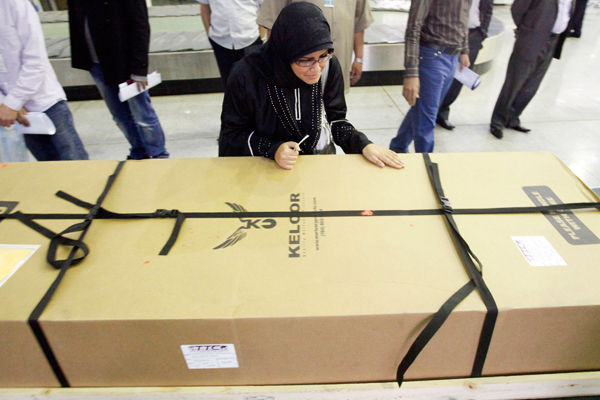
Fatima Alhimidi weeps over her mother Shaima Alawadi's coffin as it arrives in Najaf, Iraq. (Credit: AP/Alaa al-Marjani)

EL CAJON, Calif. – On March 21, an unknown assailant shattered Shaima Alawadi’s skull with a tire-iron-like weapon in the living room of her home. An Iraqi immigrant and mother of five, Alawadi was found by her 17-year-old daughter, Fatima, who said she was “drowned in her own blood.” Alawadi was rushed to the hospital, still alive, but she was soon taken off life support and died March 24. It was, by all accounts, a heinous crime. But was it a hate crime?

After her mother’s death, Fatima said she found “a letter next to her head saying, ‘Go back to your country, you terrorist.’” The accusation sparked outrage and brought national media attention to the murder. And yet, within days, publicity-craving Islamophobes Pamela Geller and Robert Spencer were pushing an alternative motive: that Alawadi’s death was, in fact, an “honor killing.” Geller crowed, “I surmised that the murder of Shaima Alawadi appeared to be Islamic, rooted in Islamic teachings and culture …”

I journeyed to Alawadi’s adopted hometown of El Cajon in Southern California to find out more about her death. El Cajon is a microcosm of Iraq, but an Iraq that no longer exists. More than 40,000 Iraqis are struggling to build a new life there, having fled persecution in their homeland. One local described to me a community where “There’s Chaldeans, Yazidis, Mandaeans. There’s Shi’a, Sunni, Kurds. There’s Assyrian and Armenian.”

The first wave of immigration came in the late 1970s on the eve of the devastating Iran-Iraq War. Others, including Alawadi and her family, fled after the 1991 Persian Gulf War, mainly Shi’a who unsuccessfully tried to overthrow a wounded Saddam Hussein at the urging of the senior Bush administration. The third wave was courtesy of the junior Bush’s 2003 invasion, which spawned Islamist militias that have decimated Iraq’s Chaldean Christians, Mandaeans (followers of John the Baptist) and Yazidis (a 4,000-year-old syncretic religion). Out of the millions of Iraqi refugees from the most recent U.S. war, 59,000 have landed on American soil.

Many have found their way to El Cajon. They tell of harrowing escapes from kidnappings, bombings and death squads, years in refugee camps and life savings spent to hopscotch from country to country. Recent arrivals come bearing deep traumas and have landed in a depressed economy where they often sink into joblessness, squalor and depression. They have also discovered not everyone is welcoming.

“There is a hate crime problem in El Cajon,” says Basma Coda, an Iraqi-American who works at the Chaldean-Middle Eastern Social Services. “We have documented six physical attacks since 2007 in which Iraqi refugees were beat up and had broken bones. All had to go the hospital. They were all over 50, and one was a 75-year-old man with Parkinson’s disease.” (The El Cajon police department did not return calls about the alleged crimes.)

“There are a lot of anti-Islamic groups and know-nothings here,” says California State University professor Brian Levin, director of the Center for the Study of Hate and Extremism in San Bernardino. Nonetheless, he and other hate-crime monitors are skeptical of some of the alleged details of Alawadi’s death. “Why are the police so quick to say it is an isolated incident? That suggests to me they are looking at other motives. There is the possibility this could be some sort of personal attack or revenge attack.” Mark Potok, senior fellow at the Southern Poverty Law Center, which monitors hate groups nationwide, says that when he first heard about the threatening notes, “I raised an eyebrow. It’s too perfect. It’s highly unusual to have notes that spell out the motive on paper.” As for the crime itself, Potok says, “It is quite unusual to invade someone’s home, especially a woman, and violently beat her to death in the dining room.”

Indeed, in the days after her death several revelations called the hate-crime allegation into question. On April 4, an affidavit for a search warrant about the murder was “accidentally released,” according to the New York Times. The San Diego Union-Tribune, which first received the document, claimed it shows a “family in turmoil and cast doubt on the likelihood that her slaying was a hate crime.” Alawadi was said to be planning on leaving her husband, based on blank divorce papers found in her vehicle. Last November, police investigating reports of two people possibly having sex in a car found Fatima with a 21-year-old man. After her mother was called to pick her up, Fatima allegedly jumped out of the moving car at 35 mph. While being treated at a hospital for her injuries the court records state, “Police were informed by paramedics and hospital staff that Fatima Alhimidi said she was being forced to marry her cousin and did not want to do so she jumped out of the vehicle.”

The document also mentions “a neighbor reported seeing a skinny dark-skinned male running west from the area of Alawadi’s house” on the morning of the murder. According to the affidavit, as of March 27, the police had not confirmed the whereabouts of Kassim Alhimidi, Alawadi’s husband, at the time of the murder. And curiously, “a handwritten note was located at the scene that the family denied seeing before.”

Yet some in the community are still skeptical because there is no suspect, motive or murder weapon. Hanif Mohebi, director of the San Diego chapter of the Council on American-Islamic Relations, says, “There are definitely questions that are brought up by the article, but we should not jump to a conclusion unless there is a real fact provided. Our community is not immune to these issues.”

Some observers worry that the new information in the Alawadi case will be misused. Hanif Mohebi says, “From the beginning we were very cautious about the murder because we are all human beings, and this could go any way. The Islamophobes will exploit this. If there is something that advances their agenda, they will most definitely use it.” Right on cue, Geller and Spencer began their postulations about “honor killings.”

Potok also stresses that, whoever murdered Alawadi, the rise in Islamophobia is genuine. The Southern Poverty Law Center has tracked a 200 percent increase in anti-Muslim hate groups nationwide from 10 such groups in 2010 to 30 in 2011. Potok attributes the spread to “the so-called Ground Zero Mosque controversy in 2010 that was really ginned up by opportunistic activists and politicians … This is a classic case of words having consequences.”

The rumors of notes, in particular, have unsettled Iraqi immigrants to El Cajon. The notes have hurled them back to wartime horrors they seem unable to escape. After the United States occupied Iraq, a favored tactic of extremist militias was to deliver a note to intended victims warning them to leave or be killed. Families would receive letters because a child or husband was collaborating with U.S. forces, or perhaps they were the wrong ethnicity or religion in the wrong part of town. Religious minorities were sometimes given the “option” of converting to Islam.

Basma Coda says, “We have threatening notes in our office that people brought from Iraq.” The notes say things like, “You are an infidel. You are a sinner. You deserve to die. If you don’t leave by a certain time, you and children will die.” Often they would be given a specific day or time to leave. Coda says, “The Iraqi refugees in El Cajon every day they live their fear. They live their trauma. The future is unknown for these refugees.” She says her social service organization is trying to help them, “but one incident like Alawadi’s murder takes them back to the trauma they experienced.”

On March 30, I attended an outdoor prayer service and candlelight vigil for Alawadi. I met one of her neighbors from Iraq. Abbas Almeali, 42, clad in traditional Iraqi garb and headdress, said he knew Shaima and her family from Samawa, the closest city in southern Iraq to the Saudi Arabian border. He fled in March 1991 after the revolt failed, but “was proud to be part of the uprising.” He said Alawadi’s father was tortured by Saddam Hussein’s regime and her uncle was hung during the uprising. “She was a nice girl, she had no problems with anyone,” Almaeli said.

Kamyar Hedayat, a medical doctor of Iranian heritage, spoke at the vigil. Hedayat said as he has practiced critical care for children, “I’ve watched children die, and I know how death affects families.” Hedayat said, “It is ironic that a woman who escaped the murderous regime of Saddam Hussein and the bombs of George Bush, Sr., lost her life in San Diego seeking safety and civility.”

Michelle Fawcett contributed to this report.

Continue Reading Close

Occupy invades “America’s storage shed”

Faced with protest, Walmart unilaterally shuts down three warehouses in Southern California

Southern California's Inland Empire occupied.

Spilling out below the snow-dusted San Bernardino Mountains, California’s Inland Empire in Southern California is America’s storage shed. Its economy is a key link in the global supply chain. Goods from Asia funnel through the Los Angeles and Long Beach ports that handle more than one-quarter of all the imports pouring into the United States every year, and much of it is warehoused here before finding its way into homes and businesses across the nation. If all the storage space was gathered under one roof, more than 700 million square feet, it would make a warehouse larger than Manhattan.

With manufacturing scant in the Inland Empire, an estimated 118,000 workers are employed hustling through cavernous warehouses to stack and fetch goods or hauling them in rigs. The area is infested with banal exurbs that clump in towns such as Mira Loma, which has been tagged the “diesel death zone” for the lung-searing truck pollution that envelops it. It was in Mira Loma that a few hundred members of various Southern California Occupy movements converged at sunrise  on Feb. 29 with the goal of shutting down a Walmart distribution center.

They were joining in the one-day “Shut Down the Corporations” action staged nationwide against Fortune 500 companies like Walmart, Monsanto, Pfizer, Citibank, Koch Industries, BP, Bank of America, AT&T, Altria and Peabody Energy. According to “F29” organizers, these corporations are all big-money backers of the American Legislative Executive Council (ALEC), which critics say “rewrite state laws that … often directly benefit huge corporations.”

On a chilly, smoggy morning in front of the Walmart complex, Jared Iorio, a 33-year-old photographer and stalwart with Occupy Los Angeles, told me that the protest was the workers’ idea. Iorio says an organizing project called the Warehouse Workers United “came to the Occupy movement for support. The shutdown was our idea.”  Michael Novick, a retired Los Angeles teacher, explained that workers in the Walmart facility “called for a one-day strike today in an attempt to get union recognition and called for community support. Occupy Riverside put out a call to support their action and to have a community picket.” As for why the strike failed to materialize, Iorio speculates that was “because of pressure from Change to Win and those more entrenched in the union structure.”

The battle going on at the Walmart center in Mira Loma is an exemplary case of the chess match between capital and labor, as long as you realize labor is starting the game with virtually no pieces. On one side, Walmart’s center is run by Schneider National, a $3.7 billion logistics giant that provides services to two-thirds of the Fortune 500 companies. Schneider in turn subcontracts for workers to Rogers Premier, one of more than 400 temp agencies in the area. The workers are “permanent temps” as they may toil on the same site for years. Walmart uses the layers of subcontracting to insulate itself from legal and ethical liability for the inevitable abuses in the low-wage warehouse industry.

In an open letter to the Occupy movement, workers employed by Rogers in a Schneider-run warehouse handling Walmart’s goods told of “working up to 72 hours straight [and] not receiving even minimum wage after working 16 hour days consistently for years.” On Oct. 17 six workers initiated a class-action lawsuit against Schneider, Rogers and others for “systematic wage theft” by deliberately underpaying them and denying overtime. The state of California was investigating the warehouses at the time and hit Rogers with a fine of more than $600,000 for labor law violations. A few days after the workers filed suit, Schneider dumped Rogers and dropped the ax on more than 100 warehouse workers. The firings were set for Feb. 24, but a federal judge blocked them because she found it was likely they violated “anti-retaliation law.”

Organized labor has been trying for decades to crack Walmart, which has perfected an anti-union strategy. In the very rare instance where an organizing campaign succeeded, Walmart excised the offending limb, whether it was closing down a store in Quebec after workers there unionized in 2005 or getting rid of all in-store meat cutting after 11 butchers in a Texas store voted to join a union in 2000.

So unions have been pursuing a new strategy with Walmart, particularly with the warehouse workers in Mira Loma. The Warehouse Workers United is a project of  Change to Win, which was set up in 2005, mainly by the Teamsters and Service Employees International Union, as an alternative to the AFL-CIO (and has since foundered). The organizing model hearkens back to the labor militancy of the 1930s before employers gained an enduring advantage after the Taft-Hartley Act passed in 1947. Warehouse Workers United has engaged in door-knocking campaigns in the Inland Empire’s poor communities as well as establishing a workers center. It is trying to use the model of a corporate campaign, which moves beyond the workplace, to mobilize community support to pressure corporations. The goal is to force Walmart to the table, make it accept responsibility for workers in its warehouses, and improve their pay and conditions.

One of those other means is the Occupy movement. The sight of muscular unions (compared to other social movements) dialing 911 for raggedy anarchist-inspired occupiers is a telling sign of the power of the Occupy brand. Lending support to the Walmart workers on Feb. 29 were occupiers from Los Angeles, Fullerton, Riverside and San Bernardino. We arrived to find an overwhelmingly youthful crowd with a band of black bearing homemade plastic shields, gas masks and bandannas across their faces, adding color to the soul-crushing sprawl of the Inland Empire. We followed demonstrators as they wandered to and fro, discovering that all three Walmart distribution centers there had been preemptively shut down.

Lacking targets, the protest fell back to chants of “Whose streets? Our streets” and sauntered down the roadway. Vehicles began to stack up, and one hyped-up participant pounded his shield on cars, frightening some of the unfortunate passengers. Cooler heads surrounded him, and a few minutes later a cheering gantlet opened to let what were probably low-wage workers go on their way. The cops arrived and blocked off the main intersection, aiding the goal of stopping business for the day, and a police chopper started circling above.

As the sun climbed the group split up, taking positions at two side streets leading to other warehouses. At one post a car bearing amps was deployed and dance music lightened the mood as the group hunkered down for the day. Novick said “it was a victory” even though it was Schneider that had shut down the three warehouses. “They know there is community support for the workers.”

He wasn’t blowing smoke. For an event that was heavily promoted both regionally and nationally, the only surprise early on was the lack of police and private security. It’s not hard to guess why. Novick said so many police were deployed during the Dec. 12 port actions they caused far more disruption of business than the 700 or so protesters who engaged in the blockade. Plus, Walmart has been trying to curry – some say buy – favor with community groups and food activists. Images of a pitched street battle with tear gas and hundreds of arrests would not have burnished Walmart’s image.

I queried Novick as to why there were not more protesters there. Where was labor? Novick responded with evidence of a troubling trend for the Occupy movement – how fractures are appearing. He said in Los Angeles the big unions and faith-based groups have separated from Occupy and set up the “99 percent table.” Novick says he thinks the move is a retreat.

“I think labor has been committing slow suicide for a long time, and I think Occupy actually reversed that in a very positive way,” he said. “You saw a lot more dynamism and an attempt to do community organizing and relate it to workplace organizing.” Novick adds that there are some valid reasons for the retreat, mainly because the strength of organized labor in Los Angeles is the immigrants rights movement, which is at far greater risk from the repression than the average young white occupier in the center of the organizing.

A short while later the languid atmosphere vaporized the instant a trucker came toward us from one of the warehouses. About a dozen occupiers, including a woman in a wheelchair, flocked together and blocked the truck. Masks were pulled up and shields readied. The driver was Hispanic, as is much of the community and work force in the region, came to a halt, turned off his engine and exited his cab. Protesters engaged him in Spanish and English, others debated what to do, with one of the first speakers declaring that even if everyone else wanted to let the truck pass he alone would hold the line. The main point of contention was the effect of their blockade on this one worker versus the broader goal of stopping business as usual.

This type of maximalism bubbled up, with another youth proclaiming to all within earshot, “If we can’t stop the flow of commerce, why are we here?” Another suggested, “If he loses his job he can join Occupy.” Less strident voices weighed in with more sophisticated analysis, asking if the driver was a union worker or not. One woman reminded everyone of the context, “Our goal today was to stop Schneider.” Another protester noted, “The first thing he said to us was, ‘I’m afraid I’m going to lose my job.’ We’re not from this community and he has to live with the consequences of our actions.”

Jared Iorio explained how they approached the issue.

“There were more rowdy elements who were callous and that needs to be addressed,” he said. “We did talk to as many people as possible who were stopped in their vehicles. We handed them a bottle of water and a granola bar and talked to them that we were doing this action on behalf of unorganized workers who were trying to better their lives. We explained we were not trying to inconvenience them, but inconvenience the CEOS who were profiting from them. The outreach was pretty organized, and once we explained what we were doing there were a lot of truckers who supported us.”

The same debate broke out at the other blockade, Iorio explained, pitting the anti-capitalists who wanted to stop all commerce against those who favored a more calibrated approach.

“We do our best to mitigate the economic impact on individuals,” he went on. “We stopped a Walmart and a Micro truck, as well as two other drivers who were paid hourly so they were not really upset, but we let through a truck with an empty load for a company we were not targeting.” He says that the protest included “people who had family members who were truckers. They explained how being an independent contractor works as a trucker and multiple times a week they often are unable to get a load, so stopping it one day is not going to make them lose their homes or families.”

It was a fascinating experiment in crowd sourcing. The Achilles’ heel of the movement was out in the open, with a number of people pleading with the maximalists to consider different perspectives, while noting, “I can’t make you do anything.” But so was Occupy’s strength and idealism. Through collective debate and discussion the crowd can arrive at the correct decision through reason, not force.

The scene also brought to mind something Ruth Fowler of Occupy Los Angles had just told me: “Occupy is very odd right now. The people who have stayed are the cream of the crap, and the brilliant. The rank and file in between are at home … It’s an interesting dynamic. Not entirely comfortable. Lots of loonies floating around.”

As for the driver, who said he was hauling toilets, he was not interested in the finer points of solidarity and community organizing. He got into his cab and backed up as if he was returning to the warehouse. The protesters cheered their surprise victory. Instead, he slipped into a nearby parking lot and sped away. A few ran after his truck, but it was too late.

A handful of masked avengers spontaneously upped the ante by uprooting street signs and took revenge by barricading their nemesis, the parking lot entrance. I walked over to take pictures of their handiwork, and upset one of them. I find this perspective odd. Everyone there knows this is a public event. It’s occurring out in the open. They are desperate for media coverage. But this one fellow was indignant I was not granting him a sphere of privacy for his very public acts. He had remembered to bring his mask, but left his thinking cap at home. He accused me of being a cop. I shot back, “How do I know you’re not a cop?” and thought, why bother with the mask if you think you can be identified by my amateur digital camera? The area was probably festooned with high-tech surveillance devices by corporations and police that had already mapped every hair and pimple on his face.

Things calmed down, and it seemed a good time for a coffee break. We walked back to our car, and two occupiers passed by. One commented, “We were expecting riot cops and tear gas, not Lady Gaga.” The other responded, “I’d prefer the riot cops and tear gas.”

We returned an hour later and the storm had broken. At the north end of the facility were a line of riot police who blocked our path south. We went around the back end, parked and walked north. We could see 100 or more tan-shirted cops in the distance confronting a similar number of protesters and at least two police choppers. I counted 45 cop cars alone on the South end from agencies including the Riverside County Sheriff, Ontario Police, Moreno Valley Police and California Highway Patrol. One could have easily recorded the license plate of every unmarked police car within a 10-mile radius. We were again prevented from getting closer than perhaps a quarter mile. We watched with a group of protesters as demonstrators were moving in and out of a facility.

Desperate for information we started talking to anyone and everyone and noticed trickles of protesters casually walking to safety. It turns out many had entered the grounds of a food company and had made their way through a hole in the fence. Others who remained on the line opposing the police said the cops charged a few times, swinging batons but the demonstrators stuck together with the shield bearers protecting them. Iorio says he was aware of only two arrests, with one person “beat up by seven or eight cops.” He added that there were numerous “instances where protesters unarrested someone who had been grabbed by the cops.”

About half a dozen protesters came toward us wearily and plopped down under a shade tree on the manicured lawn. One supporter popped a pharmaceutical vial labeled “Executor,” fingered a neon-green bud and packed a bowl for a victory toke as cops at a checkpoint nearby warily observed.

Ultimately, says Iorio, “The police did what Walmart wanted. I also don’t think Riverside County had the capacity to arrest more than 200 people. They like to make a few examples, rough them up and arrest them but not prosecute them so they can frighten people away from direct action for a year until the charges expire.”

As the day wound down we talked with workers at other facilities. All were wary. We explained the conditions at Schneider, the allegations of wage theft and why the protesters said they were out there today. Not one worker knew what was going on, either with the protest or with Schneider, which was literally next door. A few workers had nothing but praise for conditions in their own warehouse. But none would give up information about how long they have worked there, their pay or what their jobs actually entailed. One said his company “was great. I don’t have any complaints.” He slyly added, “At least not today.” He said he had heard of Occupy, “I support it. They are for human rights, for workers’ rights.”

The story was the same outside a Lennox warehouse facility. Silence or praise of the workplace from a half-dozen workers in green safety vests chowing on pepperoni pizza. As we told of the conditions at Schneider, the anxiety seemed to increase. The workers shifted around uncomfortably, hunched over their food, averting their gaze. At the main entrance a woman in professional attire conferred with a man with a walkie-talkie. She turned quickly and went inside as he came up to us. We politely explained we were just having an informal chat. He had the bearing of someone who knows his place in the corporate ecosystem. With his green vest and walkie-talkie he was probably a line supervisor. Not one worker at the table would look him in the eye. But he appeared to share their fear, delicately choosing his words like someone who could be canned in an instant if he said the wrong thing. He said he wanted everyone to have good wages and working conditions.

Doesn’t everyone? Not even the most callous CEO will ever say they want Americans to juggle multiple part-time jobs for a lifetime of poverty as long as their health holds up, after which they can be tossed on the scrap heap. People like 22-year-old Alberto Hernandez, who came to protest with his brother. Alberto described factory life in the Inland Empire. He worked 70-hour weeks in an aluminum factory with shoddy safety equipment. At age 18 he was ecstatic at his wages.  “I made $545 a week,” he exclaimed. But the job came with panic attacks, having to move 12,000 pounds of aluminum a day, bloody noses and headaches from the aluminum dust. He realized that there could be a better life, and haltingly spoke of wanting to educate himself.

For half of America the reality is similar: poverty or one paycheck away from it. And that’s what Wall Street cheers every second of the day. Drive down wages, fire workers, bulldoze regulation. They all fatten the bottom line. The isolated workers with their lack of rights are precisely whom the occupiers were fighting for. Some of the workers know it, but they can’t see beyond the gulf of fear to risk for something better. Many of the occupiers are willing to take great risks, sometimes to their own detriment, but have difficultly connecting to people who aren’t looking to wage revolution. It’s not a new story, but the two sides are closer than they have been in decades. And that is what really frightens the 1 percent.

Continue Reading Close

To camp or not to camp? That is Occupy’s question

After a wave of shutdowns, about 20 Occupy camps still stand. What do they tell us about the state of the movement?

Occupy Tampa has had a rough life. Born on a “Day of Rage” that drew 1,000 people to Tampa, Fla.’s downtown on Oct. 6, it put down roots three days later on a public sidewalk bordering Curtis Hixon Park. It soon blossomed into a community of more than 100 residents adorned with tents, medics, media, kitchen and library on a concrete patch less than 10 feet wide.

From day one, the Tampa police were a fixture in their lives. “They would come by at 6 a.m. to wake us up, and again in the afternoon to make us move our belongings off the sidewalk,”  says Samantha Bowden, a 23-year-old senior at the University of South Florida. The occupiers taped off a 6-foot section of the sidewalk for egress and say the city conceded it had the right to a 24-hour presence, but the police were intent on retarding the occupation’s development by wielding a code against leaving articles on the sidewalk. Occupy Tampa occupiers adapted by placing their belongings on carts so they could be wheeled away whenever the police descended.

Bowden claims the police stepped up harassment by riding motorcycles on the sidewalk next to sleeping occupiers and dispatching a helicopter every night to hover above the camp. Starting in November, she says, “The police would show up every day and throw people’s goods into their vehicles or city trucks and haul them away.” At night, when the park was closed, the police “would grab boxes or carts and toss them into the park to bait the protesters. If they tried to retrieve their belongings they would be trespassed or arrested.” Under Florida state law, police can issue a trespass warning that effectively bars a person from public parks for up to six months, which has happened to numerous Occupy Tampa members.

Worn down by the harassment, arrests and negative publicity that resulted, the occupation at Curtis Hixon Park dwindled to a lone protester much of the time. That’s when a guardian angel arrived in the form of strip club king Joe Redner. A self-made member of the 1 percent – Redner told us he “thinks” he’s worth about $14 million – he opened up a private plot of land in West Tampa called the Voice of Freedom Park to occupiers. Safe from police harassment, and equipped with electricity and running water, Occupy Tampa began life anew on Dec. 30 and is now nearly five months old overall.

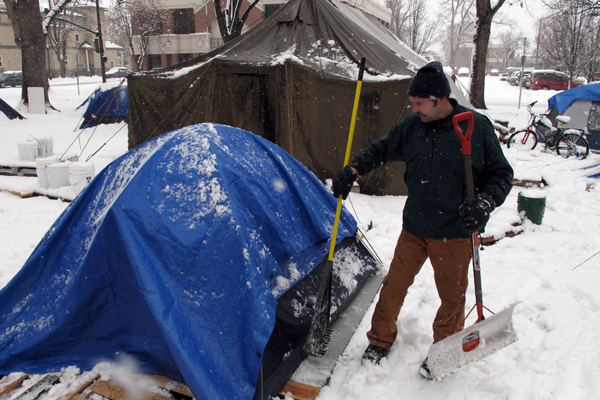
After a third wave of Occupy shutdowns (Lexington, Ky.; Charlotte, N.C.; Miami; Honolulu; Buffalo, N.Y.; Austin, Texas; D.C.; Pittsburgh, Pa.; Portland, Maine; Houston; Asheville, N.C.; and Newark) that swept the country with little publicity in late January and early February, a couple of dozen encampments still remain across the country. A few are persisting on private property (Tampa Bay). Some survived by the grace of friendly relations with city administrations (Kansas City, Mo.; Little Rock, Ark.; Orange County, Calif.). Others are locked in legal battles that may have inadvertently prolonged their stays (Boise, Idaho; Nashville). Yet all are experiencing growing pains and an existential crisis or two. Organizers can sound like a new parent, worried one week and pleased the next. And as the public fatigues at the sight of the raggedy outposts — and as new forms of action populate the Occupy calendar this year — the question of the political relevance of the surviving encampments comes into sharp relief. As the scrappy survivors wear on, they are grappling with a new dilemma: Why continue to camp?

“A social experiment”

West Tampa is a blue-collar enclave that is African-American on one side and Cuban, Puerto Rican and Central American on the other. Kelly Benjamin, a Tampa journalist and history buff, says it was founded in the late 19thcentury by Cuban and Spanish cigar rollers, leading to Tampa’s moniker “Cigar City.”

With external pressures relieved, internal pressures have percolated to the surface in Occupy Tampa. The problems are standard for the course, dealing with “people who are homeless, have mental illness or alcohol problems,” says Benjamin.

A public space with free food, shelter and medical care creates a triple challenge: caring for all who come to camp, with limited resources, while trying to change the system that produces the downtrodden in the first place. As across the country, there is a split in Tampa between those who think the camp is the point of the Occupy movement and those who feel the camp detracts from the movement’s goals.

“Some people feel that the Occupation space is not a healthy space to get organizing done,” says Benjamin. “There is so much personal drama that goes on there and the difficulties of living with more than 20 roommates, securing the food, electricity, water. These types of personal conflicts have absolutely sapped energy. It’s turned some people off because they didn’t get involved with Occupy to deal with these difficult dramas for hours and days.”

The conflict between the organizing and the camp has cropped up in many occupations. Activists at Occupy Portland say of the hundreds of people living at the downtown park, that few were present at general assembly meetings where decisions were made about the camp. In Austin, the general assembly repeatedly tried to end the occupation on City Hall steps before police evicted it in early February, but it limped along because occupiers pleaded they had no other safe place to live. At Occupy Wall Street organizing was crowded out by the low-rise tent city that consumed Zuccotti Park in the final weeks (though plans were in the works to erect a large canopy that could hold the general assembly and other political activities).

Occupy Tampa has weathered these difficulties for months, but Benjamin sees an upside to that. He describes the West Tampa occupation as a “social experiment” that has to be seen in relation to “a sprawled-out city” like Tampa. “A lot of people don’t have a sense of community and don’t have to interact with people who are much different than themselves,” explains Benjamin. “It teaches people lessons about how to communicate better, to be sensitive, to learn how to live together, and the benefits of sharing and community. These are all skills that many people have lost and forgotten. There are aspects that are frustrating … but it serves a valuable purpose.”

Occupy Little Rock: Apply within 

“Since we don’t have to fight for our existence, we have the opportunity to fight for greater things,” says 28-year-old Adam Lansky, a music producer and head of public relations for Occupy Little Rock. Those greater things include working to curb corporate influence in politics, restrict development near the Lake Maumelle watershed, and build its weekly FM radio program. Occupy Little Rock members informed the city of their intention to camp, and on Oct. 21 availed themselves of a 27-acre city park containing the William J. Clinton Presidential Library. Lansky says the Little Rock police chief invoked a no-camping ordinance, but acknowledged that “what you’re doing is within your First Amendment rights, and we want to give you a space to do it.” So Occupy Little Rock received an open-ended permit to a parking lot a few blocks away, as well as a dumpster and port-a-potties paid for by the city for the first two months.

The space serves as a “24/7 billboard for the movement and a portal for anyone who walks by to get involved,” says Lansky. But “anyone who walks by” is a mixed blessing. “The physical space is awesome, but that has really been the most problematic element of the whole movement,” Lansky explains. “A lot of good people ran out of patience and vanished and slowly started to get replaced over the last month by transients. We need more people that are motivated, with a high level of intellect, who aren’t just looking for handouts because that was creating dissonance on the site. What is going to bring down the movement? The easiest thing that’s going to bring it down is internal conflict.”

So Lansky proposed a process to filter out unproductive campers. Prospective members need to show a photo ID (one would be provided if necessary), fill out an application that asks for personal references, relevant skills and “medical/psychological conditions.” Successful applicants must then undergo a one-week probationary period with monitoring. If the applicant is not approved, they are asked to leave the camp. And if they don’t leave? “Refusal to leave peacefully will result in removal by the police with possible criminal trespass charges.” Even if “inducted,” members are subject to a “three-strike rule.” The proposal met resistance but eventually passed.

Occupy Little Rock’s choices will make some people squirm. Not only does it appear to have the first means-tested occupation, it looks to be replicating a criminal justice system that is opposed by the many occupiers who organized a “National Occupy Day in Support of Prisoners” on Feb. 20. The process of monitoring, review, a three-strike rule, and threats to call the police and press charges will likely alienate those caught in an incarceration industry that one writer terms “The New Jim Crow.” Given the anti-immigrant sentiment in much of the country, asking for identification, references and other personal information may turn away other groups too. In a city like Little Rock, which is 49 percent African-American and Latino, it’s unlikely that the application process will help the face of the movement resemble the 99 percent who live there.

In response, Lansky says the application process has successfully filtered out the people “with serious psychological issues, people marginalized by society who need rehabilitation services we cannot provide. We are not throwing them out because of their issues but because their issues manifest in very socially disruptive ways.” He says those disruptive people are mostly white, as is the rest of Occupy Little Rock, so they don’t know how communities of color will react to the application.

“The truth is,” says Lansky, “we have been trying to create an Occupy site with racial and ethnic diversity, but we’ve had a hard time reaching those communities, even before the application process. I understand it might put them off, but I really hope it doesn’t.” In the meantime, adds Lansky, the process has “protected the integrity of the organization” and allowed the camp to thrive.

Occupy Providence cuts a deal

Until late January, Occupy Providence’s camp was located in Burnside Park, across the Providence River from the Rhode Island State House. Robert Malin, a 59-year-old writer and documentary filmmaker, says the park was the kind of place “you could see the crack pipes lighting up at night.” That changed when the Occupy movement came to town. Group members approached each park resident, explaining what the movement was about and encouraging them to join. Drug users or homeless people who did not want to join were asked to move on. Malin says, “It was pretty much universally felt by local police force that we cleaned up the park for all practical purposes.”

The city issued multiple eviction warnings in the fall, but never took action. Soon it began citing health and safety concerns as winter rolled in. Malin says Providence wanted to avoid the “if it bleeds it leads” headlines and began opting for a legal course of action. Lawyers told occupiers, “There is a long case history [in Rhode Island] where health and safety have trumped free speech rights.”

Paul Hubbard, a 60-year-old multimedia producer, says early on “we could have mobilized 500 to 1,000 people to defend camp, but as time went on, realistically, that wasn’t going to happen.” Plus, Hubbard adds, “two different visions began tugging at each other within the camp,” between those who prioritized the camp and those who wanted to focus more on protest actions.  At the same time, Occupy Providence has organized more than 40 direct actions since its founding.

Faced with looming eviction by the city, dwindling supplies, falling public support and cold weather, Occupy Providence needed options. According to Malin, a poll of occupiers found widespread concern about the fate of the homeless in the camp, many of whom had recently lost jobs and homes, should eviction occur. At the same time, they discovered that the Rhode Island Coalition for the Homeless had been working for six years to get a day shelter, as the homeless were forced to wander the streets with their belongings until shelters opened in the evening.

So Occupy Providence cut a deal. Members offered to break camp for the rest of the winter in exchange for a temporary homeless day center. The city “was dragged to this kicking and screaming all the way,” said Malin. “They didn’t want to set a precedent that we could occupy to get them to do something that they didn’t want to do.” The city relented, but claiming they lacked the resources reached an agreement with the Roman Catholic Diocese of Providence to open and pay for the shelter.

“We saw an opportunity to make a concrete demand of the city in exchange for an orderly transition out of the park and we took advantage of that,” said Hubbard. “This was a tactical maneuver that allowed Occupy Providence to regroup but also to win something very important. It seems like a small victory, but the larger context is that for weeks the question of homelessness was driven by Occupy Providence and it was a huge discussion and debate in corporate media that previously social justice movements didn’t have. We were on the front page above the fold for three days in a row.”

But, Hubbard acknowledges, the goal of the Occupy Movement is not to gain a temporary day shelter, something the city should already be providing for its citizens, but to change the system that produces homelessness to begin with. To what extent, then, was the arrangement a victory or a retreat?

“It was a tremendous victory for Occupy Providence,” says Hubbard. “Running a tent city takes a lot of energy and resources and at some point beating an organized retreat is more useful than a disorganized one. The national repression of the Occupy movement has been extremely disruptive.” Malin is more guarded. “Whether we outsmarted ourselves or whether we were outsmarted by the city or whether we did something that is a model for other cities … is not entirely clear, but the occupying part is just a strategy,” he says, not the only method for achieving the movement’s goals.

And the sense of victory is important in itself. A movement cannot grow on soaring visions, idealism and outrage alone. It needs tangible victories, that it is delivering the goods. The daily bread of the Occupy movement is successes, even partial ones, like Oakland’s Nov. 2 general strike, the Nov. 5 “move your money campaign,” the Dec. 12 West Coast port shutdowns and dozens of successful eviction and foreclosure defenses. It shows participants they are making a difference, that power is conceding something, and provides an elegant comeback to the “Get a job and take a bath” vitriol oozing from online trolls and stumping politicians alike.

Kansas City: No tension, no impact?

Occupiers in Kansas City, Mo., marvel at the ease with which their camp has functioned. Nearing the 150-day mark, it may be the longest-running occupation, having planted its feet under the shadow of the Kansas City Federal Reserve Bank on Sept. 30. Its announcement to the city of the intention to camp was well-received, says Occupy member Richard Sauvé. He says the camp enjoys the support of the mayor, the police, who donated tents to the cause, local unions, University of Missouri professors, churches and passersby. A strict code of conduct is honored in the camp. Whatever restrictions on camping or permanent structures in public that may exist on the books, none of Occupy Kansas City’s activities has raised the ire of what Sauvé calls a “big small town” and not a single arrest has occurred in nearly five months.

Despite the lack of inside tension and outside opponents, Kansas City occupiers have also contemplated the purpose of the encampment. “No one is fighting for the right to live in a tent,” says the 41-year-old Sauvé, a print designer and veteran organizer. “People are fighting to get back into their homes, to make a better life.” While the camp can act as a visible magnet to draw in new members, Sauvé ironically notes, “maybe our biggest struggle is reminding people that we’re still here.” As core activists burn out, the group needs to refresh its blood by attracting new people who can continue the political work while keeping the camp stocked with gas and food and other survival basics. But without the drama and publicity of more confrontational direct action, the camp can be overlooked as it becomes part of the landscape.

As other occupations move on to what Sauvé calls the “second or third phase” of the movement, such as home foreclosure defenses and coordinated national protests, he admits Occupy Kansas City has debated whether continue the occupation. “But I think it’s necessary to have it there,” Sauvé says, “at least until the country as a whole has really understood the movement.” While he appears proud of how long the camp has run, Sauvé adds, “I don’t feel any occupation is any more or less successful as the occupation is as a collective. In short, we all won. Any advances or setbacks that any occupation has, we share entirely.”

Forming a new society

After 30 years of the fracturing of the left, the unifying message of the 99 percent and the highly visible reclamation of the commons through the act of camping everywhere gave the Occupy Movement its strength. The flimsy tent villages clinging to public street corners and plazas, calling attention to systematic inequality and attempting to build a more just and democratic society, burned deep into the imagination and changed the public debate.

Without the camps, the movement could fragment into a thousand other worthy causes and lose its centralizing force. And while the camps mirror the conflicts in society, they also provide the space to deal with those conflicts in order to grow the movement. For it is the very practice of forming a new society, with all its attendant difficulties, that inspires hope. Anthony Dwayne Hudson, a 51-year-old poet and former prisoner, said of Occupy Denver, “It’s my therapy, man. It’s fulfilling. And it’s given me courage. It’s boosted my self-esteem. To where I’m now ready to go out and engage this world. When I walk out of here, my walk is different. My whole mind-set is different. So I always want to be connected to this.”

But there is also danger in an unwieldy camp sapping energy. And even when functioning smoothly, there is a risk of becoming normalized and less relevant over time. The occupations succeeded because they rejected all politics as usual, including the same old marches, rallies and protests, which had become ineffectual.  “I don’t think you can keep doing the same thing and expect different results.  I think you have to surprise people,” says Lansky of Occupy Little Rock. “When the media and the public at large are forced to adapt to a whole new mechanism by which a revolution is operating, it gets more attention, it’s a way of fostering more support. We need to begin exploiting these outside opportunities rather than hammering the same nail.”

Whether spring will bring fresh shoots of camps out of the fields of concrete is unknown. For the element of surprise that characterizes this movement has already helped to seal its place in the history of American grass-roots activism.


Continue Reading Close

Occupy’s challenge: Reinventing democracy

Behind the scenes with rogue drummers, homeless, liberals and the black bloc as OWS grapples with self-government

Occupy Wall Street protesters demonstrate on Capitol Hill in Washington on Jan. 17. (Credit: AP/J. Scott Applewhite)

The panicked emails and texts sounded like a prank worthy of the Yes Men. Occupy Wall Street — which like some comic book character only grew stronger after each attack by nefarious forces, whether pepper spray, mass arrests or New York mayor Michael Bloomberg’s threat to close the park for cleaning – had finally been brought to its knees.

What was about to kill the most successful American activist movement in decades? The drum circle.

Drummers possessed with a Dionysian fervor were demanding that they be allowed to pound their bongos and congas late into the night because they were the “heartbeat of this movement.” In response, a letter circulated with the dramatic warning that “OWS is over after Tuesday.” With equal doses of Middle East diplomacy and Burning Man theatrics, the writer explained that weeks of negotiations between a drummers’ working group called Pulse, the OWS General Assembly and the local community board had collapsed.

The rogue drummers did not recognize the GA as a legitimate body whose decisions they had to obey. In fact, some drummers turned Occupy Wall Street’s rhetoric against itself, claiming that the GA “suppressed people’s opinions” and were “becoming the government we’re trying to protest.” A compromise was eventually reached to allow two hours of drumming in the middle of the day, but everyone I spoke to afterward confirmed that one of the most powerful American social movements in years was nearly undone, not by its political message, but by its rhythm section.

“That was an important test of whether the General Assembly actually had authority over people, or whether it was more like a suggestion box for a collection of autonomous individuals,” observes Nathan Schneider, a writer who has been chronicling Occupy Wall Street since its beginnings last summer.

Occupy’s authority

The drummers actually did the movement a favor. For nearly every Occupy movement in the United States, the General Assembly is seen as the legitimate decision-making body. But when it comes time to enforce a decision that some disagree with, its authority is often called into question. Nearly every significant conflict that has cropped up in Occupy movements around the country rests on the bedrock issues of authority, accountability, representation and legitimacy.

The issue is central to the movement’s future because authority rests on the notion of legitimacy. In a leaderless movement, who – if anyone – gets to call the shots, initiate actions, represent the group, and perhaps most important, hold people accountable by enforcing authority, order and discipline? Exactly how democratic must a people’s movement be?

These questions of legitimacy and leadership will return in the next several weeks, as the weather warms and brings possible new outside Occupations, and as a presidential campaign heats up in which both major parties, in different ways, will attempt to lay claim to Occupy’s rhetoric and message. The Occupy movement has grappled with these questions in very different ways over the last six months, and lessons learned over that time could be key to the movement’s success in 2012.

For example, an attempt by a group calling itself The 99% Declaration to convene a “National General Assembly” in Philadelphia on July 4 was rejected by both the Occupy Philly General Assembly and Occupy Wall Street as the event smacked of co-optation by an outside group that allegedly included a former Goldman Sachs executive. The call received some media attention, but suspicions about the organizers, their plan to replicate conventional politics by electing U.S. citizen-only delegates according to congressional districts and an unhinged tirade by a group member, declaring “OWS is a failure and … a fraud,” drained the idea of any meaningful support.

Meanwhile, Adbusters, which sparked Occupy Wall Street, issued a “tactical briefing” in late January with #OccupyChicago and the line “May 1 – Bring Tent” superimposed over a photo of Chicago police pummeling protesters in 1968. Adbusters is promoting an occupation of the city during the NATO and G8 summits in May. But Adbusters didn’t consult with OccupyChicago or the Coalition Against NATO/G8 War & Poverty Agenda, and that incensed many people.

Serena Himmelfarb of OccupyChicago told one reporter, “I am excited that Adbusters continues to support OWS, but they acted irresponsibly … They acted alone, without regard to what’s already being planned here for the summer.” Another organizer wrote, “If you want to pick a fight with [the police], you should consult those whose name you are using.” In a nod to Adbusters’ prominence, Chicago activists swallowed their grumbling because they knew the call could help generate the publicity and crowds they wanted.

Unlike the people behind the unsuccessful 99% Declaration, Adbusters drew from a deep pool of media attention and activist goodwill to create its own source of legitimacy. It went around the Occupy Chicago General Assembly and put it in the position of having to endorse the call or make it appear that the movement was split – which the media would have played up.

A third challenge of Occupy’s belief in democracy is whether or not homeless people are a legitimate part of the movement. The instant any occupation set down stakes in an American city or town, it attracted society’s dispossessed in search of food, shelter, medical care and counseling. Many perceived, often unfairly, that the Occupy demonstrators had introduced the drug abuse, violence and mental illness that bedeviled many camps. The occupiers insisted, often correctly, that these social maladies had existed all along, studiously ignored by news organizations and right-wing bloggers. (In fact, as Rebecca Solnit reported, crime in Oakland actually went down 19 percent during Occupy Oakland.)

Nonetheless, the challenge of the homeless for the movement was profound. So-called street people are consummate members of the 99 percent. Their troubled lives are the outcome of decades of public policies calculated to deindustrialize the economy, emaciate cities, ghettoize the poor and minorities, and shred the safety net. But in Occupy camps all across the country the same split emerged between those who felt that the homeless, runaways, train hoppers and itinerants were central to the movement versus those who felt that they drained resources and diverted energy from the task at hand.

This divide played out at Occupy Los Angeles at City Hall, mere blocks from thousands of homeless who bed down every night in the largest skid row in the country. Ruth Fowler, a journalist, screenwriter and member of facilitation team at Occupy Los Angeles, told me via email that “Skid row residents were extremely vigilant in self policing the encampment, and running out the inevitable dealers, thieves and violent individuals who made their way over there.” Of the seven U.S.-based occupations she visited, Fowler said “Occupy L.A. didn’t have any more incidences of drug and alcohol use than other encampments.”

But tensions still surfaced. Fowler saw a conflict between “radicals who believe the worst thing you can ever do to anyone is call the cops on them, given the brutality and corruption of the police and the prison industrial complex, and liberals who would rather call the cops, sweep an issue under the carpet, and focus on legislation reform.”

Fowler also offers a dose of perspective: “People smoked weed in Occupy L.A. Big deal. In London they got shitfaced drunk and punched the crap out of each other in the middle of the GA.”

 ”Diversity of tactics”

The debate about homeless people is a microcosm of the movement’s continuing debate about the legitimacy of the broader U.S. society: Can we change the existing political structures, or is the system so rotten we need to build a new society from scratch? This conversation pits the reformists, such as those who believe the goal is to overturn the Supreme Court’s Citizens United decision, which means working through the established order, against revolutionaries who want to transform society, which means putting the most marginalized sectors at the center of the struggle.

Jesse Kudler, a 32-year-old arts administrator with Occupy Philly, sums up the dilemma: “A lot of people in the movement think they know exactly what Occupy Wall Street is about. One group thinks it’s about the Volcker Rule [which seeks to curb Wall Street speculation], another thinks it’s about ending the Fed and another thinks it’s about insurrectionary revolution. They all have a sense of ownership over the movement — that it is about their specific philosophy or position. But the positions are often contradictory.”

This brings up the fourth case: the movement’s faction known as the black bloc. This debate has been going on since black-clad anarchists smashed the windows of chain stores in Seattle in November 1999. This was a sideshow to the huge protests that nonviolently shut down the World Trade Organization ministerial and launched the anti-globalization movement. Black bloc proponents argue that legal protest is so neutered of effectiveness that illegal actions like disruptive street confrontations and property destruction are necessary but still within the bounds of nonviolence as they will not hurt another living being. To no one’s surprise, the conflicting positions on the black bloc are more about one’s views about changing the system from within than specific tactics.

Enter Chris Hedges, who fanned the smoldering debate into a conflagration with his essay “The Cancer in Occupy.” He took the black bloc to task after a disastrous attempt to occupy an unused convention center in Oakland on Jan. 28 ended in petty vandalism inside City Hall and 400 arrests. Hedges depicts the black bloc as a disease that would consume the movement if left unchecked. Hence, it must be excised down to the last black-hoodie wearing, circle-A flag-waving masked cell.

As a prominent journalist, Hedges positions himself as the representative of the movement by decreeing who should be excluded. He illustrated how the media has been the best friend and worst enemy of Occupy. A movement can’t live on Facebook, Twitter and Google alone. It’s the despised corporate media that made OWS a star, and this attention comes with a price. While there is no reason for the Occupy movement to embrace messaging, polls, talking points, focus groups and the other marketing tools of the heavyweight but feeble liberal groups, all sectors need to be aware that those who act in its name have the power to damage it. An idea that sounds great in a General Assembly and looks justified from the vantage point of protesters may appear absurd, chaotic and violent when refracted through the camera eye. That’s precisely what happened in Oakland on that fateful day where representation and accountability were as much part of the street battle as tear-gas projectiles and plastic shields.

Hedges essay spawned hundreds of responses, with many skewering him for shoddy reporting. In a thoughtful response that spares no side criticism, Susie Cagle demolished Hedges, reporting that the sole black bloc action as part of Occupy Oakland was during the Nov. 2 general strike, not the Jan. 28 attempt to take over the empty building. Cagle also observed that the “peaceful but militant blockade of the Port of Oakland on December 12 … garnered Occupy Oakland more criticism than the black bloc actions on November 2.”

David Graeber justifiably dressed down Hedges for failing to explain that as the black bloc is a tactic, not an anarchist grouping, it crosses the left’s rambling spectrum. Moreover, Graeber corrected the former New York Times correspondent’s record by noting that far from being a destructive fringe, proponents of black bloc tactics have been elbow deep in organizing Occupy Wall Street from the beginning.

Nathan Schneider chides Hedges as well for being “indicative of what happens when someone who is not involved in the movement weighs in on internal questions.” As evidence for what a black bloc is capable of, Schneider recounts the role it played in an Occupy Oakland march on Nov. 19. During “an amazing action,” says Schneider, a “black bloc-like group led thousands of people through the streets of Oakland. They went to this park surrounded by a chain-link fence they were going to take for a new encampment. They went to the fence, opened it up, and led the march into a giant party inside. Within 10 minutes they took down the whole fence and neatly rolled it up. A black bloc can be problematic and authoritarian, but it also can be a disciplined force capable of tactical victories.”

The critiques boil down to a few points. One is that when black bloc actions are successful, such as the November park reoccupation, there is little debate about tactics. Two, nonviolent actions, such as the port blockade, often provoke far more criticism than a smashed window. And three, the black bloc is a legitimate part of the Occupy movement. The issue is not the tactics per se – Hedges wrote approvingly two years ago of rioting in Greece – it is whether the movement has space for proponents of “diversity of tactics.”

Making the 99% more than a slogan  

However, even if the legitimacy question is solved, it leaves unaddressed issues of representation and accountability. A former black blocker who lives in Portland, Ore., explained it’s a predicament when any group organizes in secret, and takes actions in the name of the movement but without any transparent mechanism for accountability. Self-selecting “affinity groups” take actions under the Occupy umbrella, but accountability is largely based on informal social networks, moral suasion and pressure.

This is not only Occupy’s current organizing model – for better and for worse – it’s how the movement began. Schneider says the original Occupy Wall Street action “involved a tactical committee composed of a small group of people working partly in secret.” He explains that the announced target for the Sept. 17 occupation was Chase Manhattan Plaza in the heart of Wall Street, but the committee “knew that it probably wasn’t going to work, so it was more of a decoy.”

“Now, there are a lot more power dynamics in the movement that are kind of shadowy,” Schneider adds. “You might be able to see who is in what working group, but you don’t always know what affinity group they are in and who is hatching what ideas. There aren’t the traditional forms of accountability in which responsibilities are clear and someone can be removed.”

Peter Bratsis, a professor of political theory at the University of Salford and author of ”Everyday Life and the State,” asks, “How do you create authority within the movement, how is that authority going to act, do we have groups working in affinity with each other or one disciplined group recognizing the authority of the GA to make strategic decisions?”

The problem, according to Bratsis, is “how to find macro-level coordination but recognize the autonomy of all the individual left groupings. Should the radical feminists have to go to the GA to make a particular decision? No, they have their own structures and can make their own decisions.”

In a movement like Occupy, which is more like a cosmic haze of subatomic particles than a luminous celestial body, democracy is fuzzy. Democracy is not “everyone does what everyone wants to,” says Bratsis. And that is the heart of the matter. Some people want to drum. Others want to toke up or shoot up. Some want to work within the system. Others want to fight the state. And these actions all impinge on other people’s rights or visions of the movement.

Consensus – the lifeblood of the General Assembly which is the beating heart of the Occupy movement – is about getting everyone to agree. This sidelines legitimacy. Referencing the philosopher Max Weber, Bratsis says “legitimacy refers to seeking a probability that a command will be obeyed.” In consensus, however, if everyone agrees, there is no need to issue a command. In the few instances where a crisis must be resolved, it is exceedingly laborious to issue a command, which promptly gets ignored as proved by rogue drummers and pot smokers. The state has riot police, jails, courts and armies. The Occupy movement has downward twinkling fingers, and so it ends up using other social and psychological methods to elicit compliance.

Perhaps a few dozen active encampments remain around the United States. Freed from the burden of maintaining a daily society, hundreds of active Occupy movements still have to wrestle with the philosophical issues of democracy and legitimacy even as they strategize for what comes next. For now, the source of legitimacy is the General Assembly operating by consensus based on “We are the 99 percent.”

The 99 percent is a great slogan, but even in a best-case scenario, there will be winners and losers whenever a decision is made. Progress requires democratic mechanisms of legitimacy and accountability and an awareness of who represents the movement and how to represent it. But that can be easier said than done, as the fragmented history of the American left shows.

It would be easy for radicals and reformers to part ways, which is already happening from Philadelphia to Southern California. The tougher part is making the 99 percent more than a slogan and creating new systems of democratic power in which everyone is invested. This will determine if the Occupy movement is a flash in the pan or the dawn of a new era.

Continue Reading Close

Occupy fights the law: Will the law win?

From Boise to Nashvile, the movement faces an unconstitutional legal siege

Occupy Boise is under legal and meteorological siege. (Credit: AP/John Miller)

The Occupy movement is an exercise in the workings of power whether it is social, financial, policing or political. The occupations that began in September spread with an infectious passion in part because the police violence and mass arrests, the tried-and-true methods of state power employed to suppress radical movements, backfired and the movement grew more. By October hundreds of encampments had popped up nationwide with the tacit cooperation and sometimes explicit approval of local officials. For a few heady weeks Occupy Wall Street had the glow of popular legitimacy – social power – trumping whatever fusty laws prohibited camping or a continuous presence in a public space.

The inevitable counteroffensive was launched in November. Using the mass media, politicians hyped the movements as imminent threats to public health and safety, justifying aggressive evictions of prominent occupations in Oakland, Calif., Portland, Ore., and New York City. Within weeks other major encampments in Los Angeles, Seattle, Boston and New Orleans were scattered with hundreds of arrests. A third wave of closures has been underway since late January with occupations shut down from Hawaii to Miami and Austin, Texas, to Buffalo, N.Y.

Nonetheless, some encampments survive. In Houston a small contingent is legally maintaining a presence in downtown Tranquility Park, though a ban on tents and tarps has kept all but the hardy or desperate away. In Tampa Bay, after months of police harassment, occupiers found a safe haven in a privately owned public space donated by a wealthy supporter.

Now, a new strategy is being deployed to yank the rug from under occupations in four cities: legal power. Politicians have recently passed laws in Honolulu and Charlotte, N.C., that with a stroke of the pen made the occupations illegal, enabling police to sweep them away. Two more occupations, in Boise, Idaho, and Nashville, may be nearing the end as their respective state legislatures are on the verge of outlawing the democratic villages that for months have been thriving next to edifices of power. Critics charge that the anti-Occupy laws reveal how the law is not an objective code that treats everyone equally, but an arbitrary weapon wielded by the powerful.

In a separate case, the Hamilton County Commission in Tennessee gets the award for the most innovative and dicey use of the law. After passing a law on Jan. 4 that bans various activities that Occupy Chattanooga is engaged in, the commission filed suit in federal court against nine alleged occupiers, asking for a determination that the law is constitutional as well as payment for legal fees. Lawyers for the group have filed a motion to dismiss, and the suit does appear to be on shaky legal ground because “the county is trying to impose a monetary penalty on a group of innocent people for their political activity.”

Heidi Boghosian, executive director of the National Lawyers Guild, a progressive bar association founded in 1937, says, “Clearly the law is used politically. Occupy has shed a spotlight on that fact. Laws are enacted arbitrarily and interpreted as to how the status quo wants to interpret them.” She points to how camping in public space – the main rationale for shutting down occupations – is routinely allowed and even assisted by police when thousands of consumers camp overnight for Black Friday sales, the latest iPhone model or concert tickets.

On Dec. 9, the city of Honolulu approved a sweeping anti-homeless ordinance that the local ACLU testified against as being “a particularly egregious attack on the homeless.” The new law was used to arrest Occupy Honolulu members in late December and to clear out their encampment in early February, though organizers report that they are still camping in a park overnight and putting away their tents every morning.

In Charlotte, as a welcoming gift for this year’s Democratic National Convention, the City Council passed an ordinance on Jan. 24 banning camping on city property, prohibiting items such as glass bottles, sparklers, police scanners, scarves, backpacks, duffel bags and coolers within the boundaries of an “extraordinary event,” and criminalizing the use as a “projectile” of “animal parts or fluids, manure, urine, feces or other organic waste by-products.” Less than a week after the anti-camping ordinance passed, police busted up the Occupy Charlotte encampment on the Old City Hall grounds. (No word if the police have nabbed any feces flingers yet.)

As for Boise and Nashville, both the Idaho and Tennessee legislatures are set to enact their anti-Occupy bills by wide margins, but occupiers are hoping they can convince a court to block or overturn the laws because they are arbitrary. In Idaho’s case the punishment for camping only amounts to an infraction, a non-arrestable offense, while in Tennessee those in violation could be jailed for up to 364 days and fined $2,500.

Boghosian says these laws will likely be challenged in court as unconstitutional. “It’s one thing to say people can’t sleep in the parks after midnight, but it’s another to create that law after they have already camped for an extended period of time. That is a political act … In several jurisdictions we have seen laws created targeting specific people who have a political message. As well, existing laws are frequently being enforced arbitrarily based on the political content of the message and that violates the First Amendment.”

There is another troubling legal trend impacting the Occupy movement, according to Boghosian. She says that since protesters nonviolently shut down the 1999 World Trade Organization ministerial in Seattle, the National Lawyers Guild has observed how police work with municipalities to create ordinances in advance of “national special security events” such as the Charlotte law. Boghosian says the “event-specific ordinances are often found to be unconstitutional. They ask for prohibitive insurance. They ask for restrictive permits. They tie protesters up in court and this distracts them from the message. It becomes another way the government chills free speech.”

In Chicago, where occupiers deride mayor and former Obama chief of staff Rahm Emanuel as “Mayor 1%,” the city has enacted its own questionable event-specific ordinance for the planned NATO and G-8 summits this May.  Chicago activists call it the “sit down and shut up” law because of the onerous restrictions it places on freedom of speech and public assembly. Boghosian says this is another arbitrary use of the law as it is designed to go after political messages of specific groups.

The battle of Boise

Occupy Boise strategically choose to plunk down on the grounds of the old Ada County Courthouse next to the Idaho Capitol, says Bryan Walker, a 47-year-old practicing attorney active with the group. “We selected the site because there was no statute on the books prohibiting Occupy Boise from camping there.” Walker says the occupiers informed Idaho’s Department of Administration they were going to use the courthouse grounds, and presented “operational plans” but did not ask permission. “The state acknowledged they did not have legal authority to prevent us from occupying the spot,” he added.

 The camp was set up on Nov. 5, and when I visited weeks later the organization was impressive and the lack of police surprising. It included tents serving as a kitchen, dining area, a free clothing store, arts and crafts, childcare, medical care, psychological and spiritual counseling and even a workers center.

One factor in Occupy Boise’s careful planning, explains Walker, is the presence of older members such as himself and his wife, Cyndi Tiferet. “We tend to have more patience,” he says. “There are a myriad of tools at our disposal, and we’ve been waiting for a movement like this for a long time, so we are ready to do it for the long haul.” Occupy Boise has been careful to stay within the legal boundaries and has had only a handful of problems with substance abuse or violence that have marred other occupations. When I spoke to Tiferet on the courthouse grounds, she said their legal status kept relations cordial with the police who were maintaining a low-key presence.

As evidence for Occupy Boise’s neighborly presence, Walker pointed me to a letter from Boise Chief of Police Michael Masterson, dated Jan. 31, commending the occupiers for conducting “themselves in a civically responsible (law abiding) and peaceful manner. We have found our ongoing dialogue to be helpful, constructive and respectful.”

He wasn’t just delivering warm tidings, however. Masterson wrote that because “the State of Idaho may very soon enact legislation that prohibits camping on state property … we anticipate that it may ultimately impact our future relationship.” What he wanted was for the occupiers to clean up the site and skedaddle “prior to any enforcement action.”

Masterson was referring to a bill introduced at the beginning of the 2012 Idaho legislative session with the sole purpose of banning camping on state property. The bill’s legislative intent is “to regulate the use of the grounds of the Capitol Mall and other state-owned and leased grounds and facilities in order to prevent the unauthorized use of these grounds and facilities as a temporary or permanent place for camping, lodging or living accommodations.”

The superfluous nature of the bill is not lost on observers. It’s a case, as the Idaho Statesman puts it, of “trying to solve a problem that doesn’t exist. … As a response to Occupy Boise, this bill makes its sponsors look like they are out to quash public protest.”

Because the bill singles out one group, it may backfire. Walker asserts, “The legislation is weak on due process grounds. The intention is to put an end to our vigil, which is protected freedom of speech. It is an abridgement of our first amendment rights.” The bill is designated as an emergency, meaning it will go into effect once it is signed into law instead of the state’s normal process of enacting new laws on July 1.

Ironically, the bill has been a boon to Occupy Boise. Walker says, “If this legislation had not cropped up we may have ended the camp already. But it gave us precisely what we wanted, the political expression.” Rather than diverting their energy, says Walker, “It’s been a huge favor because the media attention has been incredible. It has given us the bully pulpit … The letters to the editor and comments on articles about the proposed legislation have shifted markedly in our favor. It’s gone from people griping about damage to the grass to saying you need to listen to these people.”

Occupy Boise has mobilized up to 60 people to attend various legislative committee hearings on the bill, which Walker says has been an empowering experience. “I had never testified before the legislature and here I am doing it. People from the camp are showing up and testifying in House and Senate Committee hearings. People who are homeless or who have come out of prison with no training or resources are coming into the Capitol, standing before their senator or sepresentative and having their say.”

Even though the anti-camping bill passed the Idaho House by a 53 to 16 margin (and is now before the state Senate), the occupiers’ regular and, by all accounts, respectful presence in the legislature won them the support of the entire Democratic caucus plus three Republicans. Not all legislators see it that way. The House speaker has ordered the building to be locked down, which is designed to be open to the public. The body has been prohibiting signs and placards in the chambers, and on one occasion asked a dozen occupiers to remove American flags pinned to their clothing.

Walker says, “In more than 120 years in the state of Idaho the Legislature has never felt a need to do that before. Plus the high level of security they are pouring into the statehouse has provoked comments to the legislators like, ‘What are you afraid of? They are doing exactly what you want them to do.’”

As for next steps, if the bill passes as an emergency measure then Occupy Boise will almost certainly fight it in court. Walker says, “If we don’t have to decamp until July, then it’s up to the general assembly to decide if we should stay or not. My opinion is we need to go with what’s effective and focus on our goals.”

 Safety in Nashville

Occupiers in Nashville have traveled a similar, if bumpier, road. On Oct. 7 they descended on the Legislative Plaza within sight of the state Capitol, Supreme Court and Legislature. Michael Custer, a 46-year-old line cook, musician and father of four, calls it “the place to address the state of Tennessee,” adding that “it’s always been used for that.”

Gov. Bill Haslam’s administration wasn’t too happy about that. So it secretly drafted a nighttime curfew on the plaza, and hours after unveiling it on Oct. 27 began hauling away members of Occupy Nashville and their gear. The problem was, in trying to criminalize Occupy Nashville Haslam was acting illegally. The state arrested more occupiers the following night, but night court Judge Tom Nelson refused both times to keep the protesters jailed because “I can find no authority anywhere for anyone to authorize a curfew anywhere on Legislative Plaza.”

Days later Federal District Court Judge Aleta Trauger issued a temporary restraining order on the new policy and observed, “I can’t think of any more quintessential public forum than the Legislative Plaza.” Trauger added that the state was at fault for exercising “clear prior restraint of free speech,” and two weeks later issued a preliminary injunction on the policy.

Notching a victory against governmental abuse of power was a shot in the arm for the Nashville group. But the preliminary injunction noted the state could still enact new laws regarding the use of the public area, while Occupy Nashville and others could likewise challenge those rules.

According to Michael Custer, the occupation has stabilized at a few dozen regulars while the state has pursued an underhanded strategy to chip away at its support while preparing to legislate it away. As in Boise, police have been largely absent from the Legislative Plaza, but in Nashville’s case that’s a problem.

Custer explains that “unsavory vagrants” are the issue. “We have a pretty small group and, well, we’re easily intimidated.  So we had to call the city police many times to get violent people removed from the camp.” Calling the police was a difficult decision for occupiers, says Custer. “We do band together and try to chase off the violent people. We will call the police when violence is happening on the plaza, and it hurts to do it, but we’re not going to let the violence happen.”

Now, says Custer, the police are “using the injunction that we have against them to justify why they’re not there.” When they call to file a complaint the police retort, “Yeah, well, we can’t tell you apart. Y’all look the same to us!” He adds that they have informed the state “many times” of their code of conduct against drinking on the plaza, possession of drugs, sexual assault or harassment or violence.

The Nashville media have reported on the protesters’ “pleas for improved security,” to which one official responded that the state cannot “go out and, in effect, baby-sit protesters 24/7.” The concern about manpower did not stop the state from reportedly deploying more than 70 state troopers and other law enforcement personnel to enforce the now defunct curfew two nights in a row. And both the city and state had enough resources to infiltrate undercover police into the Occupy Nashville movement from the beginning.

At this point the damage is done. Custer says some media stake out the site looking for footage of public urination or drug use that then shows up on the nightly news as the face of the movement. Over the last few months, Custer says, polling has shown public approval of Occupy Nashville drop from 70 percent to 30 percent.

This loss of social power has opened the door to wild claims about Occupy Nashville that are used to legitimize the legal attack. Rep. Eric Watson, who introduced the anti-camping bill, seems obsessed with the genitals of occupiers. In October Watson said he saw some members engage in a sex act outside his office, which allegedly triggered the police infiltration. (An unnamed legislative aide also claimed witnessing an “orgy going on out on the plaza.”)

During recent hearings before the House Judiciary Committee, which Watson chairs, he bellowed indignantly that an occupier “peed on” a secretary taking a cigarette break. His solution: “If you approve of that and you think that’s peaceable assembly, you need to be peed on.”

Custer responds, “We know that Homeland Security is out there and we have been told by state police that they are photographing and recording us. If someone was breaking the law so blatantly then they should have been arrested.”

It was during those judiciary committee hearings that the one-year jail time was added for anyone maintaining “living quarters on publicly owned property” where residency is not allowed. To get rid of the Occupy movement, the state is taking a sledgehammer approach by also effectively criminalizing homelessness.

Occupy Nashville is almost certain to challenge the law in court once it passes. Like their compatriots in Boise, they hope to block implementation of the law or even have it overturned. In a perverse manner, the laws are a sign of success of the Occupy movement. Novelist Arundhati Roy told me that she doesn’t think “the state will allow people to occupy a particular space unless it feels that allowing that will end up in a kind of complacency, and the effectiveness and urgency of the protest will be lost.”

That urgency will be on display repeatedly this year. On May Day. In Chicago during the G-8 and NATO summits. In Tampa Bay, Fla., for the Republican National Convention and Charlotte for the Democrats. And in ways no one can predict. In each instance the confrontation will come down to a question of power. The government will deploy all the ideological, policing and legal power at its disposal. On the other side, the Occupy movement has the power of a unifying idea and social legitimacy. It’s a lopsided battle, but no one could have ever imagined that the Occupy Wall Street movement could have come this far already.

Continue Reading Close

Page 1 of 3 in Arun Gupta

www.salon.com/writer/arun_gupta/index.html