Grace Hwang Lynch

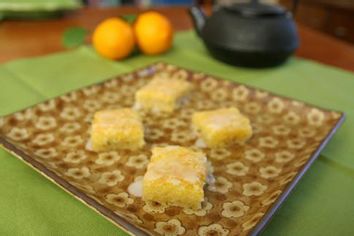
Jasmine-scented Meyer lemon bars

Sweet, tart, crumbly and creamy

  • more
    • All Share Services

Jasmine-scented Meyer lemon bars

Early February has been unseasonably warm in the Silicon Valley; the sun is shining, and kids wear shorts and T-shirts to school. It’s hard to believe that just a few weeks ago, temperatures were dipping below freezing at night and front lawns were crunchy with frost in the mornings. Even when winter is cold and gray in the Bay Area, there are little drops of sunshine in the form of citrus trees in yards, decorated with grapefruits you could pitch in a softball game or kumquats no bigger than a thumbnail. When the sun does pierce through the Northern California gray skies, it is often blindingly low on the horizon. Likewise, these homegrown citrus fruits can often come with a tang that will scare off all but the scurviest of sailors.

Enter the Meyer lemon. Native to China, this petite, thin-skinned variety is actually a cross between a lemon and a mandarin orange, giving it the perfect blend of acid and sugar. However, the delicate rind and high sugar content make for poor shipping and storage, and the Meyer has never caught on as a supermarket item. Pricey in gourmet stores and farmer’s markets, the best way to obtain them is by knowing someone.

It’s not too hard in the Bay Area, as just about anyone with a yard owns a citrus tree, and when the harvest comes in full and fast, owners can’t give them away quickly enough. I’ve found baskets of Meyers next to the coffee and doughnuts at church, and I’ve been handed bags of them at school pickup.

But not all Meyer lemons are created equal. Some have the lighter coloring of the standard Eureka lemon, or the thicker pith of a monstrous Ponderosa lemon. And they are not easy to grow. At least my tree hasn’t been. Planted three years ago, it is still shorter than I. Newer branches sprout inch-long thorns making it hard to check for fruit. Not that there’s been any — until this winter. For the first time, my Meyer lemon tree bore fruit: three of them, in fact.

As I asked around, I learned that other people had difficulties getting new Meyer lemon trees to grow. They are sort of hothouse flowers. During the 1960s, nearly all of California’s commercial Meyer lemon crop was wiped out by a Tristeza virus, and the remaining orchards were destroyed to avoid contaminating other trees. Growers at Four Winds Nursery found a disease-free strain, and in 1975 released the improved Meyer lemon tree for sale.

My friend Mary has a giant Meyer lemon tree in her backyard. The canopy towers over both of us and is filled with more yellow fruit than she can ever pick. Given the size of the tree and the fact that the house dates to the 1930s, it’s safe to assume that this Meyer lemon is a survivor of the original strain. These “heirloom” Meyers appeal to me greatly. Their color is deeper, the rind thinner, the juice sweeter.

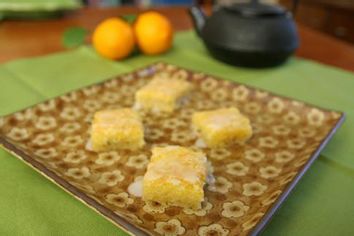
While I may doubt the improvements to the Meyer lemon tree, I have found a way to put a new spin on one of my favorite baked goods: the lemon bar. The Meyer lemon’s fruit is not its only appeal. When the trees are in bloom, during late fall and early winter, its purple-tinged white flowers give off a heady fragrance reminiscent of jasmine on a summer evening. I’ve upped the lemon juice and zest content of the filling and incorporated jasmine green tea into the shortbread crust of the traditional recipe, to create the new  and improved Meyer Lemon Bar!

Jasmine Tea and Meyer Lemon Bars

Ingredients

Crust

  • 1 cup flour
  • ¼ cup powdered sugar
  • ½ cup unsalted butter
  • ½ teaspoon jasmine tea

Filling:

  • 2 tablespoons flour
  • ¾ cup sugar
  • ½ teaspoon baking powder
  • 2 eggs
  • 3 tablespoons Meyer lemon juice
  • 2-3 teaspoons grated Meyer lemon zest (or more, if your lemon yields it)

Glaze:

  • 1 teaspoon jasmine tea
  • 4 tablespoons powdered sugar

Directions

  1. Butter a 9-inch square baking pan.
  2. Using a chef’s knife and a rocking motion, mince the jasmine tea leaves.
  3. Cut the butter into small pieces. Add flour, sugar. When the mixture looks like coarse crumbs, mix in jasmine tea.
  4. Press the crust mixture into the baking pan.
  5. Bake in 350-degree oven for about 15 minutes.
  6. While crust is baking, make the filling: mix the dry ingredients in a bowl.
  7. Lightly beat the eggs, adding lemon juice and lemon zest.
  8. Add dry ingredients from Step 6.
  9. As soon as the crust is golden brown, pour the filling over it and return to oven. Bake 25 minutes longer, or until the top is mostly set.
  10. Make the glaze: steep the jasmine tea in one cup hot water. Strain the leaves, and add the brewed tea one spoonful at a time into the powdered sugar, stirring to make a glaze consistency.
  11. Run a thin, sharp knife around the outer rim of the pan as lemon bars are cooling. Drizzle with glaze and cut into 16 squares.

Jasmine-scented Meyer lemon bars recipe

  • more
    • All Share Services

Jasmine-scented Meyer lemon bars recipe

Ingredients

Crust

  • 1 cup flour
  • ¼ cup powdered sugar
  • ½ cup unsalted butter
  • ½ teaspoon jasmine tea

Filling:

  • 2 tablespoons flour
  • ¾ cup sugar
  • ½ teaspoon baking powder
  • 2 eggs
  • 3 tablespoons Meyer lemon juice
  • 2-3 teaspoons grated Meyer lemon zest (or more, if your lemon yields it)

Glaze:

  • 1 teaspoon jasmine tea
  • 4 tablespoons powdered sugar

Directions

  1. Butter a 9-inch square baking pan.
  2. Using a chef’s knife and a rocking motion, mince the jasmine tea leaves.
  3. Cut the butter into small pieces. Add flour, sugar. When the mixture looks like coarse crumbs, mix in jasmine tea.
  4. Press the crust mixture into the baking pan.
  5. Bake in 350-degree oven for about 15 minutes.
  6. While crust is baking, make the filling: mix the dry ingredients in a bowl.
  7. Lightly beat the eggs, adding lemon juice and lemon zest.
  8. Add dry ingredients from Step 6.
  9. As soon as the crust is golden brown, pour the filling over it and return to oven. Bake 25 minutes longer, or until the top is mostly set.
  10. Make the glaze: steep the jasmine tea in one cup hot water. Strain the leaves, and add the brewed tea one spoonful at a time into the powdered sugar, stirring to make a glaze consistency.
  11. Run a thin, sharp knife around the outer rim of the pan as lemon bars are cooling. Drizzle with glaze and cut into 16 squares.
Continue Reading Close

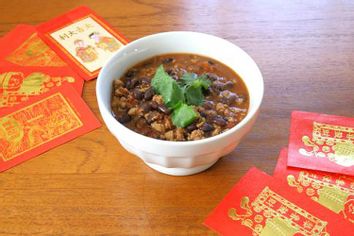
Chili for Chinese New Year

Celebrate Chinese New Year and Super Bowl Sunday at the same time with this Asian-style chili

  • more
    • All Share Services

Chili for Chinese New Year

Early in my marriage, my husband and I were trying to make plans for a certain weekend at the end of January. It was Chinese New Year, and I wanted to visit my family several hours to the north of where we lived. My husband, however, had other ideas.

“My parents are having a big party. All the relatives will be there,” he explained.

“But it’s tradition to spend this weekend with my side of the family,” I countered.

“Why? They don’t even watch the Super Bowl!”

Count it as one of the joys of a mixed-race marriage. We bring some really different cultural perspectives into our lives. One spouse’s important cultural tradition is … well, the same day as the other person’s important cultural tradition. Fortunately, Chinese New Year is determined by the lunar calendar, meaning it’s a moving target — in mid-January one year, late February other years.

This year, Chinese New Year begins on Feb. 3, meaning the Packers and the Steelers will have to face another contender: the Rabbit. As in, Year of the Rabbit.

I set out to create a dish that would spice up the standard Super Bowl chili with some Asian flavors. Chili, with its ground meat and spicy red sauce, has always reminded me of a couple homegrown Chinese dishes: ma pa tofu (with its ground pork, cubes of bean curd, and hot bean sauce) and lo ba bung. What is lo ba bung? It’s a dish rarely served in restaurants, but commonly made at home — Taiwanese comfort food. Minced or ground pork is simmered with soy sauce, rice wine and five-spice, making a simple, hearty meal. Sort of like chili.

Chinese New Year Chili

Serves 4-6

Ingredients

  • 2 cloves shallots, diced
  • 1 clove garlic, diced
  • 2 slices fresh ginger
  • 1 pound ground pork
  • 1 teaspoon Five spice powder*
  • 1 teaspoon white pepper
  • 1 teaspoon bean paste with chili**
  • ¼ cup soy sauce
  • 1 tablespoon Shao Xing Jiu (Chinese rice wine; you can substitute Johnny Walker or a splash of lager)
  • 1 tablespoon sugar
  • 3-4 inch strip orange peel
  • 1 14.5-ounce can diced tomatoes, with green chile is a nice touch
  • 2 cans black beans

Directions

  1. Heat a small amount of oil in a Dutch oven or stockpot.
  2. Saute shallots, garlic and ginger until softened.
  3. Add ground pork, cook until browned.
  4. Add five-spice powder, white pepper and bean paste (if using). Sauté these spices until they are fragrant.
  5. Add soy sauce and wine, then tomatoes and beans.
  6. Simmer for at least 30 minutes, or as long as you have time.
  7. Serve in bowls, garnished with cilantro or sliced green onions. You can also serve it over rice, like lo ba bung, or simmer it down until it’s thickened and make sloppy joes with sweet white rolls, like Hawaiian bread.

Notes:

* Five-spice powder is made of fennel, anise, ginger, cinnamon and cloves. You can also substitute 1-2 pieces of star anise, a cinnamon stick and a dash of the other spices.

** Bean paste is found in Chinese specialty markets. It lends a nice, earthy touch to the dish. But if you can’t find it, use some regular Chinese chili sauce (the kind found in glass jars at restaurants) or Sriracha. They won’t add the complexity of the hot bean paste, but they will add heat.

Continue Reading Close

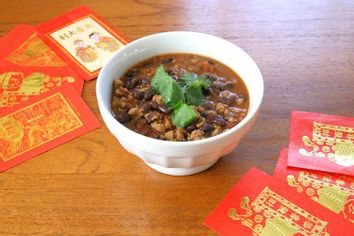
Chinese New Year chili

  • more
    • All Share Services

Chinese New Year chili

Serves 4-6

Ingredients

  • 2 cloves shallots, diced
  • 1 clove garlic, diced
  • 2 slices fresh ginger
  • 1 pound ground pork
  • 1 teaspoon Five spice powder*
  • 1 teaspoon white pepper
  • 1 teaspoon bean paste with chili**
  • ¼ cup soy sauce
  • 1 tablespoon Shao Xing Jiu (Chinese rice wine; you can substitute Johnny Walker or a splash of lager)
  • 1 tablespoon sugar
  • 3-4 inch strip orange peel
  • 1 14.5-ounce can diced tomatoes, with green chile is a nice touch
  • 2 cans black beans

Directions

  1. Heat a small amount of oil in a Dutch oven or stockpot.
  2. Saute shallots, garlic and ginger until softened.
  3. Add ground pork, cook until browned.
  4. Add five-spice powder, white pepper and bean paste (if using). Sauté these spices until they are fragrant.
  5. Add soy sauce and wine, then tomatoes and beans.
  6. Simmer for at least 30 minutes, or as long as you have time.
  7. Serve in bowls, garnished with cilantro or sliced green onions. You can also serve it over rice, like lo ba bung, or simmer it down until it’s thickened and make sloppy joes with sweet white rolls, like Hawaiian bread.

Notes:

* Five-spice powder is made of fennel, anise, ginger, cinnamon and cloves. You can also substitute 1-2 pieces of star anise, a cinnamon stick and a dash of the other spices.

** Bean paste is found in Chinese specialty markets. It lends a nice, earthy touch to the dish. But if you can’t find it, use some regular Chinese chili sauce (the kind found in glass jars at restaurants) or Sriracha. They won’t add the complexity of the hot bean paste, but they will add heat.

Continue Reading Close

The real problem with “Tiger Mother”

As an Asian American mom, I'm sympathetic to Chua's tough love parenting. What bugs me is her blind adherence to it

  • more
    • All Share Services

The real problem with Amy Chua, author of "Battle Hymn of the Tiger Mother"

Amy Chua’s “Battle Hymn of the Tiger Mother” kicked up instant controversy when an excerpt ran in the Wall Street Journal. Chua, a professor of law at Yale, strives to shape her two daughters into Julliard-trained, Carnegie Hall-worthy classical pianists and violinists. Her story casts light on the gut-wrenching dilemmas faced by parents who want to reconcile their own strict, achievement-oriented upbringings with the current “child led” philosophies espoused by many Americans. But readers were quick to express horror at Chua’s means: One child’s hand-made birthday card is rejected as “not good enough”; she calls one daughter “garbage.”

Having read the book in its entirety now, I can say those acts are not the disturbing part to me. Some of my Asian American peers tell similar stories of immigrant tough-love. And to be honest, that straight-talking philosophy is something I value, and struggle with daily in raising my own young children. Do I say “Good job!” when my son hastily scrawls his third-grade report, or do I insist that he re-copy his sentences in the neat handwriting he is capable of? Do I high-five my son after a soccer match he daydreamed through, or do I tell him he needs focus on the game? Do I let my kids drop out of Chinese school because it is boring? My own Taiwanese-born mother always told me that people who say “just trying your best is good enough” don’t care to help you succeed to your true potential. Like Chua, my mother started me on classical piano before I was in kindergarten. (Unlike Chua’s daughters, I only lasted a few months with the exclusive instructor I was sent to at age 10.)

No, what disturbs me most is that Chua — who was raised in America, amongst the professors at Berkeley, during the Marlo Thomas “Free to Be You and Me” years — would so earnestly believe in this parenting style, and continue to cling to it for nearly the entirety of her daughters’ childhoods. Even when her own immigrant parents beg her to stop. Consider this snippet:

“You can’t do what Daddy and I did,” my mother replied. “Things are different now. Lulu’s not you — and she’s not Sophia. She has a different personality, and you can’t force her.”

Throughout the entire book, Chua seems to reiterate the stubborn sentiment that “If it worked for me — and look how successful I turned out — it’s good enough for my daughters.” There is little ambivalence or introspection about her ways until very late in the story (and her daughters’ childhoods). After her willful daughter Lulu, 13, throws a public fit during a family vacation to Russia, Chua finally backs down, letting her quit the violin. She purports to have a new hybrid philosophy that blends the best of both worlds, but in the closing pages, she is unyielding and back to her old ways: “I refuse to buckle to politically correct Western social norms that are obviously stupid,” she writes.

The book is engaging and a quick read, but I’m saddened that it has been blown up into a symbol of the East-West culture clash. Although it touches on parenting struggles important to second-generation Asian Americans raising the third generation, it does little to further a sincere discussion.

Just remember, as the book cover reads: “This is a story about a mother, two daughter, and two dogs.”

Continue Reading Close

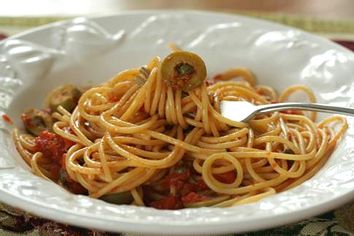
Pasta puttanesca: No need to get dressed or go out

"Whore's spaghetti" is called that because you can make it with things in the pantry, but it's also tart and salty

  • more
    • All Share Services

Pasta puttanesca: No need to get dressed or go out

If you need advice on how to survive a snowstorm on the contents of your cupboards, ask someone who lives in the Sierras — namely, the Eastern Sierra ski town of Mammoth Lakes, Calif. A ski town is at the mercy of Mother Nature. No snow, no tourists, no business. Luckily, Mammoth Mountain’s geography ensures no shortage of precipitation. It was not uncommon for a foot to fall overnight. But there is such a thing as too much of a good thing.

A serious weather system could drop 4 to 5 feet of snow in a day, shutting down Highway 395, the only route in or out of the town — and the only route for the delivery trucks carrying food from a Southern California warehouse to the only grocery store in Mammoth. On the evening before a big storm, the supermarket shelves would be bare. I don’t mean “Oh no, they’re out of canned pumpkin!” I mean looted — as if Thanksgiving, Christmas, the Rodney King riots and the apocalypse were all rolled into one.

Luckily, the scarcity of grocery stores was balanced by an overabundance of restaurants. I happened to wait tables at one of them, a new Italian eatery owned by a well-known jazz musician. But sometimes, a large crowd coincided with a large snowfall, stranding lots of (hungry) people and depleting the restaurant’s cold storage.

“Carpaccio? Sorry we’re out of that.”

“Veal? We ran out of that, too.”

On a particularly busy night, the manager sent someone to the aforementioned grocery store to buy supplies, only to come back with about half of what was needed. A customer asked me for Parmesan cheese, and when I went to retrieve it from the kitchen, a frazzled cook thrust a ramekin of mozzarella in my hands.

Shouting over the kitchen din, I clarified, “Parmesan cheese!” The cook just shrugged.

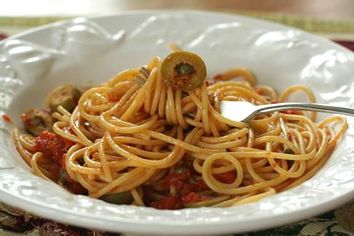
There was one dish the restaurant never ran out of: pasta puttanesca. With a sauce made from tomatoes, garlic, anchovies, capers and olives, the recipe was rumored to have originated from Italian ladies of the night, who could prepare it easily from provisions in a typical cupboard.

Although the San Francisco Bay Area has not in recorded history been snowed under, I can still easily cook up a pot of spaghetti puttanesca from the items already in my cabinet.

Spaghetti Puttanesca

Ingredients

  • 1 28-ounce can of tomatoes
  • 2 cloves garlic, minced
  • 4 fillets of anchovies (drained canned tuna can be substituted, but the sauce will take on a different character), cut in ½-inch pieces
  • 1 tablespoon capers, or to taste
  • ½ cup sliced olives
  • 3 tablespoons olive oil, as needed
  • 1 pound dry spaghetti
  • chopped fresh parsley, if available, to taste

Directions

  1. Heat olive oil in a large skillet, add garlic. When garlic is golden and aromatic, add anchovies, then olives and capers.
  2. Add canned tomatoes, breaking up large pieces by squeezing them through your fingers, if necessary. Reduce heat to simmer.
  3. Meanwhile, boil spaghetti in plenty of salted water.
  4. Add cooked, drained spaghetti to the skillet and toss to coat. Garnish with parsley and serve.
  5. Be thankful that you have food to eat and a warm place to sleep.
Continue Reading Close

Page 1 of 3 in Grace Hwang Lynch