Julia Scott

Pesticides indicted in bee deaths

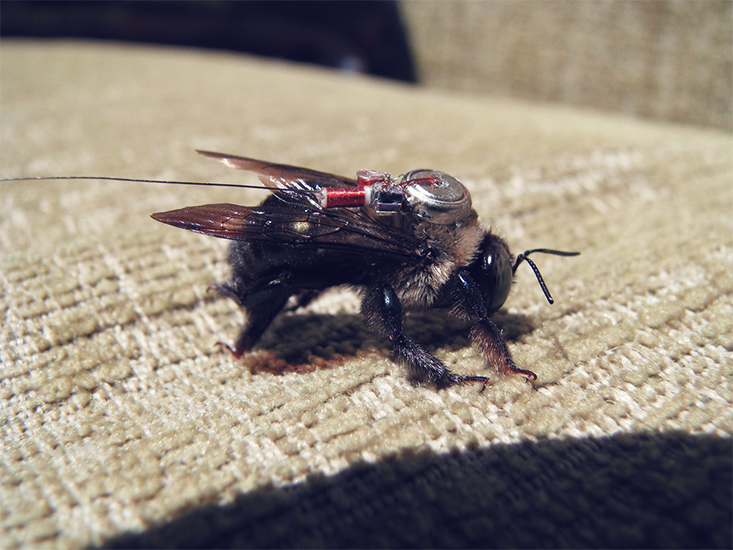
Agriculture officials have renewed their scrutiny of the world's best-selling pest-killer as they try to solve the mysterious collapse of the nation's hives.

Gene Brandi will always rue the summer of 2007. That’s when the California beekeeper rented half his honeybees, or 1,000 hives, to a watermelon farmer in the San Joaquin Valley at pollination time. The following winter, 50 percent of Brandi’s bees were dead. “They pretty much disappeared,” says Brandi, who’s been keeping bees for 35 years.

Since the advent in 2006 of colony collapse disorder, the mysterious ailment that continues to decimate hives across the country, Brandi has grown accustomed to seeing up to 40 percent of his bees vanish each year, simply leave the hive in search of food and never come back. But this was different. Instead of losing bees from all his colonies, Brandi watched the ones that skipped watermelon duty continue to thrive.

Brandi discovered the watermelon farmer had irrigated his plants with imidacloprid, the world’s best-selling insecticide created by Bayer CropScience Inc., one of the world’s leading producers of pesticides and genetically modified vegetable seeds, with annual sales of $8.6 billion. Blended with water and applied to the soil, imidacloprid creates a moist mixture the bees likely drank from on a hot day.

Stories like Brandi’s have become so common that the National Honeybee Advisory Board, which represents the two biggest beekeeper associations in the U.S., recently asked the U.S. Environmental Protection Agency to ban the product. “We believe imidacloprid kills bees — specifically, that it causes bee colonies to collapse,” says Clint Walker, co-chairman of the board.

Beekeepers have singled out imidacloprid and its chemical cousin clothianidin, also produced by Bayer CropScience, as a cause of bee die-offs around the world for over a decade. More recently, the same products have been blamed by American beekeepers, who claim the product is a cause of colony collapse disorder, which has cost many commercial U.S. beekeepers at least a third of their bees since 2006, and threatens the reliability of the world’s food supply.

Scientists have started to turn their attention to both products, which are receiving new scrutiny in the U.S., due to a disclosure in December 2007 by Bayer CropScience itself. Bayer scientists found imidacloprid in the nectar and pollen of flowering trees and shrubs at concentrations high enough to kill a honeybee in minutes. The disclosure recently set in motion product reviews by the California Department of Pesticide Regulation and the EPA. The tests are scheduled to wrap up in 2014, though environmentalists, including the Sierra Club, are petitioning the EPA to speed up the work.

For over a decade, Bayer CropScience has been forced to defend the family of insecticides against calls for a ban by beekeepers and environmentalists. French beekeepers succeeded in having imidacloprid banned for use on several crops after a third of the country’s bees died following its use in 1999 — although the French bee population never quite rebounded, as Bayer is quick to point out. Germany banned the use of clothianidin and seven other insecticides in 2008 after tests implicated them in killing up to 60 percent of honeybees in southwest Germany.

Imidacloprid and clothianidin are chloronicotinoids, a synthetic compound that combines nicotine, a powerful toxin, with chlorine to attack an insect’s nervous system. The chemical is applied to the seed of a plant, added to soil, or sprayed on a crop and spreads to every corner of the plant’s tissue, killing the pests that feed on it.

Pennsylvania beekeeper John Macdonald has been keeping bees for over 30 years and recently became convinced that imidacloprid is linked to colony collapse disorder. It’s the only explanation he can find for why his bees, whose hives border farmland that uses the pesticide, started dropping dead a few years ago.

“There’s the pernicious toxic effect — it does everything nicotine does to our nervous system,” says Macdonald. “There’s the pathological effect, the interference with basic functions. They get lost, they get disoriented. They fall to the ground. They get paralyzed and their wings stick out. I can’t think of anything in the environment that’s changed other than farming, and virtually every farmer is using treated seeds now.”

Bayer CropScience spokesman Jack Boyne says his company’s pesticides are not to blame. “We do a lot of research on our products and we feel like we have a very good body of evidence to suggest that pesticides, including insecticides, are not the cause of colony collapse disorder,” he says. “Pesticides have been around for a lot of years now and honeybee collapse has only been a factor for the last few years.” (Imidacloprid has been approved for use in the U.S. since 1994 and clothianidin has been used since 2003.)

Scientists continue to investigate the causes of colony collapse disorder. Leading theories suggest a combination of factors that include parasitic mites, disease, malnutrition and environmental contaminants like pesticides, insecticides and fungicides. The current EPA review will provide further insight into the role of pesticides, as it will uncover whether honeybees sickened by exposure to imidacloprid spread it around by bringing contaminated nectar and pollen back to the hive.

EPA critics suggest that the agency allowed economic considerations to take precedence over the well-being of honeybees when it approved imidacloprid for sale in the U.S. 15 years ago. “I think the EPA and USDA [U.S. Department of Agriculture] have been covering up for Bayer, and now they’re scrambling to do something about it,” says Neil Carman, a plant biologist who advises the Sierra Club on pesticides and other issues. “This review should have been done 10 years ago. It’s been found to be more persistent in the environment than was reported by Bayer.”

Imidacloprid was approved with knowledge that the product, marketed as Gaucho, Confidor, Admire and others, was lethal to honeybees under certain circumstances. Today the EPA’s own literature calls it “very highly toxic” to honeybees and other beneficial insects. Its workaround was to slap a label on the product, warning farmers not to spray it on a plant when bees were foraging in the neighborhood.

In its 2007 studies, Bayer applied standard doses of imidacloprid to test trees, including apple, lime and dogwood. Its scientists found imidacloprid in nectar at concentrations of up to 4,000 parts per billion, a dose high enough to kill several bees at once. (Honeybees can withstand a dose of up to 185 ppb, the standard amount it would take to kill 50 percent of a test population.) What caught the attention of California agricultural officials was that the test trees contained the same amount of deadly imidacloprid as the citrus and almond groves regularly sprayed by farmers, and pollinated by bees. (California’s almond industry has increased its use of imidacloprid by a factor of 300 in the past five years.) Agricultural officials were also surprised to learn that the imidacloprid can persist in the leaves and blossoms of a plant for more than a year.

The Bayer results don’t surprise University of California at Davis professor Eric Mussen, a well-known entomologist and one of the country’s leading experts on colony collapse disorder. Mussen has seen a variety of unpublished studies with similar results, including one at U.C. Riverside that found imidacloprid in the nectar of a eucalyptus tree bloom at concentrations of 550 ppb a full year after it was applied.

“From some of the data on the trees, it appears as though there are situations where honeybees can get into truly toxic doses of the material,” says Mussen, who avoids spraying imidacloprid on his own demonstration fields at U.C. Davis. “This the first time that we’ve had something you put in a tree that could stay there for a long time.”

But Mussen isn’t convinced imidacloprid is a primary cause of the honeybee die-off. He explains that some bees settle on fields of sunflowers and canola treated with the chemical and then “fly right through to next year.” So imidacloprid is not the only story. “Could it be part of the story?” he asks. “I’m sure. I think any of the pesticides the bees bring back to the beehive is hurting the bees.”

Mussen adds that ongoing research into chronic exposure to insecticides will be crucial. It’s likely, he says, that exposure to even low doses acts like a one-two punch: It can weaken the bees until a parasite or pathogen moves in to finish them off.

As the EPA begins its pesticide studies this year, skeptics wonder whether the agency can conduct an unbiased review. Back in 2003, they point out, the EPA reported that clothianidin was “highly toxic to honeybees on an acute contact basis,” and suggested that chronic exposure could lead to effects on the larvae and reproductive effects on the queen. Although the EPA asked Bayer for further studies of its effects on honeybees, it nevertheless authorized the chemical for market.

“If the EPA had sufficient concern about harm to bees that they would insist on other studies, it seemed unwise to approve it anyway and ask for research after the fact,” says Aaron Colangelo, an attorney with the Natural Resources Defense Council. “The EPA’s job is to make a decision about whether a chemical is safe or not.”

Colangelo envisions a similar scenario in coming years. The EPA has announced it will review clothianidin and other chemicals in the same family, but not until 2012. In the meantime, there’s nothing stopping the agency from approving the insecticides for use on new crops based on existing policies. In the end, Colangelo has little confidence the federal agency will bring a hammer down on the agribusiness giant. The EPA, he explains, often keeps its test results confidential for proprietary reasons at a company’s request. As a consequence, it’s unclear where gaps or discrepancies occur until a company makes a disclosure similar to Bayer’s.

“They’re not making decisions about whether the pesticide can be put on the market based on impacts to bees, no matter how much evidence of harm there is,” Colangelo says. “The EPA will just approve it anyway and put a warning label on the product.”

Halting the sale of pesticides, though, would be no mean task. Over 120 countries use imidacloprid under the Bayer label on more than 140 crop varieties, as well as on termites, flea collars and home garden landscaping. And the product’s patent expired a few years ago, paving the way for it to be sold as a generic insecticide by dozens of smaller corporations. In California alone, imidacloprid is the central ingredient in 247 separate products sold by 50 different companies.

In a statement, the EPA says that before banning a pesticide, it “must find that an ‘imminent hazard’ exists. The federal courts have ruled that to make this finding, EPA must conclude, among other things, that there is a substantial likelihood that imminent, serious harm will be experienced from use of the pesticide.” The EPA did not clarify what is meant by “imminent hazard” and why the death of honeybees does not qualify.

As Mussen points out, though, a few million dead honeybees may be the cost of doing business. “If they didn’t register products that were toxic to honeybees, there wouldn’t be a lot of products on the market that were available for pest control.”

All the more reason to start taking the world’s most ubiquitous insecticide off the market and invent a safer one, argues Walker, of the National Honeybee Advisory Board. “It’s on every golf course, it’s on every lawn. It’s not just an agricultural product. There’s really not one part of our lives it’s not touching.”

“The world just fell out from under me”

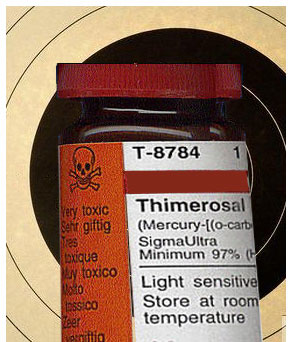
Eight-year-old Devon Clark developed Asperger's syndrome after repeated exposure to mercury-based preservative thimerosal -- and his mom became an activist.

Early in 2003, Lujene Clark noticed that her 8-year-old son, Devon, was acting up more than he ever had. He had emotional outbursts, stopped responding to simple commands, and became extremely sensitive to noises and smells. When the family shopped at Wal-Mart, Devon would throw a tantrum, or race around, slapping his hands together. “He used to be the best-behaved child in a restaurant, but now we couldn’t take him inside one — the clattering of dishes was too much for him,” Clark says. “He would start to scream. It was like a nightmare we couldn’t wake up from.”

That September, a neurophysiologist diagnosed Devon with Asperger’s syndrome, a mental disorder related to autism, which affects children’s social and communication development. But when Clark researched Asperger’s on the Internet, she was shocked to learn something she hadn’t heard in the physician’s office. Some studies had found a correlation between Asperger’s, autism and vaccinations containing the mercury-based preservative thimerosal.

Recalling Devon’s childhood vaccines and flu shots, Clark says, “It was as if my world just fell out from under me. There was page after page on the potential connection between mercury in vaccines and autism in children.” Clark is a retired nurse and her husband, Alan, is a physician. “I had vaccinated hundreds of children and so had Alan,” she says. “I thought, My God, not only did I hold my child down for his vaccines, what if I played some part in doing this to someone else’s child? It was almost too horrible for me to believe.”

Determined to help her son and affected children, Clark became an activist in the battle against thimerosal. “I can’t change the fact that this happened to my child, but I can certainly try to move heaven and earth to see that it doesn’t happen to another child,” she says. “If mercury is the problem, and there are alternatives to putting it into vaccines, there just needs to be a law against it.”

Clark frequently travels to Washington to lobby legislators for a ban on vaccines containing mercury. She meets with state senators to help prepare anti-thimerosal legislation and works with other parents to enact bans across the country. Her campaign has brought her head-to-head with big-name legislators like Senate Majority Leader Bill Frist and Pennsylvania Sen. Rick Santorum. Clark describes herself as a lifelong Republican, but after 2002, when the GOP added the Eli Lilly provision to the homeland security bill to protect the company from lawsuits regarding thimerosal cases (it was repealed), she couldn’t bring herself to vote for George W. Bush in November.

Clark spoke to Salon on a cellphone in her car. She, Alan and Devon were driving down the Ohio Turnpike to meet a state representative in New York.

What have your interactions with Washington lawmakers been like?

In Washington, we are placed with interns who are so young they can’t fathom what we’re talking about. They don’t have kids. You can predict what’s going to happen: They nod, take copious notes, and tell you, “Senator so-and-so cares very much about this issue.”

Although we met with Senator Rick Santorum briefly, his staff was condescending and patronizing, and made statements that were simply untrue, like there was no scientific evidence that linked mercury in vaccines to autism. And without telling us, they invited Senator Bill Frist’s people into the meeting. They were observing the interaction very closely. Senators Frist and Santorum are co-sponsors of a new bill that, under the guise of protecting America in the war against terror, would go so far as to say that states cannot regulate vaccines or warn people of their potential dangers. It would shield vaccine makers from lawsuits.

Why do you think Senators Frist and Santorum inserted the vaccine provision into the Senate bill, officially called Protecting America in the War on Terror Act of 2005?

The pharmaceutical industry has a hold over many in Congress because of its extensive campaign contributions and lobbying. That explains why we’re meeting a lot of roadblocks in Washington. Their influence on the Federal Drug Administration, the Centers for Disease Control and the National Institutes of Health is very strong. It’s a David and Goliath fight — there’s no way I can walk into Washington and have the access that many of these pharmaceutical lobbyists have. I can’t write a check that large.

A lot of the people in key decision-making positions have conflicts of interest, and connections to the pharmaceutical companies. But I don’t believe every person in government is corrupt. I don’t believe there’s been some sort of conspiracy at work. I think there are some high-ranking officials at the FDA, CDC and in Congress who probably, for the sake of protecting the immunization program, made some very bad decisions. It’s made me angry, but I’m determined to keep taking the evidence around until I find that person in a position of power who says, “This has to be corrected.”

How do you stay motivated when you’re stonewalled by legislators?

When they were studying Martin Luther King Jr. in school a few months ago, Devon’s class did an art project called “I have a dream.” Alan and I were walking down the hall at school one day and saw the project on the wall. The children had written, “I want to be a soldier” or “I want to be an actress” — all the dreams children have. Then we came to the last drawing and it was Devon’s. Do you want to guess what my son’s dream is? His dream is to end mercury poisoning. That is not a dream that a 10-year-old should have. I sent it to several lawmakers and I wrote, “I don’t have the ability to make my son’s dream come true, but you do.”

Do you have doubts that you can convince lawmakers to ban mercury in vaccines?

Well, are there times when I feel like screaming at them? Of course, especially when they’re being obtuse. I shouldn’t have to go to Washington and beg people not to put poison in a lifesaving vaccine. It’s such a no-brainer to me. But I have seen the political process work. I may be naive, but I still believe we have the best system in the world. It has its flaws, but if we are determined enough and angry enough, those lawmakers are one election away from not having any influence.

Continue Reading Close

Americans: Do something about Darfur

Contrary to Bush administration policy, Americans overwhelmingly support U.S. action to stop the genocide.

Since terming the ongoing scorched-earth campaign against civilians in Darfur genocide several years ago, the Bush administration has done everything it can to avoid committing to substantial intervention in the region, even downplaying the number of dead. But a new poll by the International Crisis Group/Zogby International indicates that Americans overwhelmingly support U.S. action in Darfur to stop the genocide.

Over 80 percent of respondents said the U.S. should use its military assets to bolster African Union troops on the ground in Darfur, should impose tough sanctions on the leaders who control the Janjaweed, and establish a no-fly zone over Darfur (air bombings on Darfuri villages continue unabated, according to reports). 80 percent also believed the war against civilians constitutes genocide.

Only 38 percent of respondents supported deployment of U.S. troops in Darfur — though that’s a number the ICG considered surprisingly high given a strained U.S. military and the intractable situation in Iraq. And ninety-one percent of people polled disagreed with the Bush administration’s policy of non-cooperation with the International Criminal Court, which works to bring genocidaires to justice.

John Norris, chief of staff of the Crisis Group in Washington, said the survey proved that the Bush administration had underestimated Americans’ willingness to support concrete actions to stop the killing.

“This level of support comes at a time when the Bush administration has never used its bully pulpit to issue much of a real call to action on Darfur,” said Norris, in a phone conference with reporters on Wednesday. “This is one of those issue areas where [they've] said there’s little public support, but when you open [it] up, you see that’s not the case.”

Continue Reading Close

This is what democracy looks like?

President and Mrs. Bush miss an opportunity to promote democratic reform in Egypt.

The Bush administration is likely to portray Wednesday’s referendum in Egypt, in which voters officially approved President Hosni Mubarak’s plans to hold the first competitive presidential elections later this year, as a victory for democracy. But several opposition groups boycotted the vote, since the only candidates allowed to compete in the election will be handpicked by the government.

Outside polling stations Wednesday in Cairo, pro-democracy demonstrators were attacked by policemen and hired government thugs. “Women were surrounded, groped and had their clothes torn,” wrote a Los Angeles Times reporter on the scene. “Some demonstrators were thrown down flights of concrete stairs, dragged by their hair and kicked by swarms of young men.”

President Bush denounced the attacks on Thursday. “The idea of people expressing themselves in opposition to the government, then getting beaten, is not our view of how a democracy ought to work,” he said. But the administration squandered a chance to make its case for real democratic reform during a recent visit to Egypt by Laura Bush, who strongly endorsed Mubarak. The First Lady said Mubarak had taken “a bold step,” with this week’s referendum, but emphasized that “each step is a small step, [and] you can’t be quick.”

President Bush and many of his supporters have suggested that the U.S. war on Saddam Hussein’s Iraq, culminating in the country’s first elections this January, set off a wave of democratic reform in the Middle East. But Egypt and Saudi Arabia haven’t exactly proven model examples — and the administration continues to act as if it can have it both ways. At a recent meeting with Saudi Crown Prince Abdullah at Bush’s Texas ranch, the president wooed the Saudi leader to get some help on soaring oil prices, but didn’t bother even to bring up the country’s continuing human rights abuses.

Continue Reading Close

In the polls

New numbers today on Americans' attitudes about abortion, the judicial filibuster, and Bush -- and they don't look great for the right wing or the president.

Connecticut’s Quinnipiac University released a new poll this morning surveying Americans’ attitudes on abortion, the filibuster fight, and the Bush presidency. The numbers don’t look great for the right wing or the White House.

By 63 to 33 percent, Americans support the Supreme Court’s 1973 Roe v. Wade decision, with men supporting it at a higher rate (68 to 28 percent) than women (58 to 37 percent).

For all the rhetoric from the religious right about “outrage” over the filibuster compromise, the poll revealed that opinions about the nuclear option divided along party lines, with Republicans against the filibuster 48 to 39 percent, and Democrats supporting its use by 70 to 23 percent. Independent voters, meanwhile, backed the use of the filibuster by a margin of 54 to 39 percent.

“While the filibuster fight ended in a truce, most American voters were backing the Democrats on this one,” said Maurice Carroll, Director of the Quinnipiac University Polling Institute, in a statement. “If this fight were really about Roe v. Wade, Quinnipiac University polls have shown a consistent 2 -1 support for this historic ruling, with more support from men.”

The poll saves its worst news for the president, with 50 percent of Americans disapproving of Bush’s job performance. This confirms other recent polls that found the president’s job approval at an all-time low.

Continue Reading Close

Shunning the science-based community

Contrary to popular wisdom, the Bush White House continues to dispute the promise of embryonic stem-cell research.

The House is likely to defy President Bush’s wishes and pass a hotly debated bill that would reverse the president’s ban on embryonic stem cells harvested after 2001. If the legislation also passes in the Senate in the coming weeks, Bush has threatened to veto it, which would be the first veto of his tenure.

The bill has set off another round of inflammatory rhetoric from the far right. Republican House Majority Leader Tom DeLay of Texas said a vote for the bill would be a “vote to fund with taxpayer dollars the dismemberment of living, distinct human beings for the purposes of medical experimentation.”

There’s the far-right religious view, and there’s the more mainstream scientific one. After last week’s announcement that South Korean researchers had succeeded in cloning human embryos to create patient-specific lines of stem cells, many lawmakers believe that the U.S. is failing to pursue crucial new technology in the race to cure devastating diseases such as Alzheimer’s and Parkinson’s. “How many more lives must be ended or ravaged?” asked Democratic Rep. Carolyn Maloney of New York, according to the New York Times. “How much more unimaginable suffering must be endured until government gives researchers the wherewithal to simply do their jobs?”

The Bush White House continues to dispute the promise of current embryonic stem-cell research; a statement from the administration issued ahead of the House vote said the research “relies on unsupported scientific assertions.” Few people outside the anti-abortion right would agree, and Bush’s threat of a veto appears aimed at placating his far-right base. The president supports an alternative bill that the House will also vote on shortly, which would allocate $79 million in federal funds to back the use of non-embryonic stem cells from umbilical cord blood remaining in the placenta after separation from a newborn baby — a practice with which the “right to life” presumably isn’t an issue.

Continue Reading Close

Page 1 of 13 in Julia Scott

www.salon.com/writer/julia_scott/index.html