Michael Alvear

Do the Clintons have an open marriage?

The Bill and Hillary saga could be a catalyst for a mature discussion of sexuality and love instead of a rehash of the tired woman-scorned melodrama.

  • more
    • All Share Services

If letters to my sex advice column are any indication, gay people perceive Hillary Clinton’s struggle with her husband’s infidelities much differently than straight people do.

Gay men have the same questions as heterosexuals: What did Hillary know and when did she know it? Did she throw a hissy fit or was she calm, cool and collected? Was Bill Clinton sufficiently apologetic? Did she forgive him? Did she stick by him because she’s a “feminist doormat” or a forgiving Christian? Is their marriage a monument to political expediency or a testament to the resiliency of love?

But gay men also came up with a question that seems to have escaped most heterosexuals: Do Hillary and Bill have an open marriage?

The press has no problem writing about thongs in the Oval Office and cigars in oval orifices, but they get oddly uptight at the thought of unconventional marriage.

That’s because their readers — mainstream America — do not believe it’s possible to be in a deeply loving, committed relationship and still have sex with other people.

But many gay people do. And that’s a fundamental difference between gay and straight perceptions of the Clinton scandals.

That’s not to say that gay men aspire to relationships as porous as cheesecloth, but a good portion of them have been in relationships that allowed them, with certain rules, to wander. Many know it’s possible to be emotionally committed and sexually unfaithful.

Most of the letters I’ve gotten since the blitzkrieg around Hillary’s book, “Living History,” have come from men who caught their partners cheating. Like Hillary’s critics and fans, they think they only have two choices: break up or learn to forgive.

But there’s a third choice, a choice that Bill and Hillary may have exercised, but to survive politically, could never admit: allowing sex outside the marriage.

Is it possible to have a successful marriage with that kind of framework? Yes. But first you have to ask yourself this question: Can you look into the eyes of your lover and whisper, “I love you; I want us to be together for the rest of our lives,” and then bang the new person at the gym without diminishing the love for your partner?

It is here, in this question, where you’ll get the full explosion of contradictory human responses. It is here where you’ll see the delicate tendrils of social custom mix with indestructible biological imperatives and plutonium-grade hypocrisy. A more vivid comedy, a more anguished drama, you could not create.

Compare the public uproar over Bill Clinton’s affairs and this indelicate fact: Kinsey’s study showed that adultery occurs in 50 percent to 80 percent of all marriages. That was in the 1950s. Imagine what it is now.

The almost universal inability to stay sexually faithful proves that monogamy is as unnatural for heterosexuals as it is for homosexuals. It’s even unnatural in nature. Recent studies show that among primates (the animal order we belong to), only two species of monkeys are monogamous. Birds are worse. Only 10 percent are monogamous. Even bluebirds, long admired for their instinct to mate forever, sometimes like to do a little wife swapping. They are monogamous except for one unexplained phenomenon: The male did not father 20 percent of chicks parented by bonded bluebirds.

“True monogamy [in nature] is rare,” said Dr. Stephen T. Emlen of Cornell University, an expert on evolutionary behavior, in an interview with the New York Times.

So why do we attempt something that nature itself deems so unnatural? Because it can often lead to the attainment of something unique, a level of love, commitment and unity that may not be achievable otherwise.

I say “may” because I’m an agnostic on the answer. I don’t believe monogamy is an immutable moral law precisely because society says it is. Society has been wrong on almost everything when it comes to sex and love. Much of what society has said is fake, dangerous and sick (homosexuality, interracial love come to mind) I experience as genuine, safe and healthy.

Society says monogamy is a moral imperative, but my own experiences leave me questioning it.

I “wandered” in my last long-term relationship. Not that sexual liaisons happened often. My insistence on decorum prevented the frequency of my “himbo” eruptions from reaching Clintonesque proportions.

Shame and guilt followed me like shadows after every encounter. Were they the consequences of violating a moral law? Or a holdover from antiquated thinking? More likely the answer is found in my roots — Jewish by birth, Catholic by upbringing. Meaning, I was going to feel guilt and shame whether I violated a moral law or not.

Either way, I was left with an unanswered question: How could I so deeply and profoundly love my partner and still have sex with other guys?

At first, the answers seemed obvious, at least by society’s measure: Because I didn’t really love him. If I really loved him I wouldn’t be fooling around on the side. Society’s second answer is that I truly did love him, but that there was something wrong with the relationship and I was trying to make up for it with other people.

What society refuses to see is a third possibility — the possibility that human beings are capable of experiencing two contradictory feelings at the same time and that one does not negate the other. Maybe true love doesn’t prevent you from wanting casual sex. And maybe casual sex doesn’t diminish profound love.

Is monogamy a core moral value we violate at our own peril? Or simply a cultural imperative, designed to keep families from breaking up and allowing parents to distinguish their children from their neighbors’?

There’s not much empirical or anecdotal evidence proving that monogamy is possible or even necessary for a relationship to thrive. Ask any long-term couple the top five reasons why they’re still together and none, I mean none, will say, “Because he’s sexually faithful to me.”

If sexual commitment is so unimportant in keeping couples together, why is fidelity considered so moral?

I’m not sure. All I know is that I struggle with the eternal question facing every man: How do you build a meaningful life when your inner pig snorts like there’s a trough around every corner?

The Clinton saga has always had the potential to open up honest — and sometimes painful — discussions about the nature of relationships. With Hillary Clinton’s book, pundits have squandered yet another opportunity to explore the endless configurations of love. Instead, all we’ve gotten is the same tired diatribe of a woman wronged by a womanizing man.

Killing with kindness

Could Southern politeness be hindering efforts to stop the spread of AIDS?

  • more
    • All Share Services

Killing with kindness

When the Centers for Disease Control announced last November that the American South has more people living with HIV and AIDS than New York or San Francisco, it came as a shock to people who’ve always associated AIDS with urban centers.

According to the CDC, the 17-state Southern region, from Texas to Washington, D.C., not only has more residents with HIV and AIDS, it also has the ugly distinction of being the only area in the country with a significant increase in infections (9 percent). And worse, the CDC says the South accounts for 40 percent of people estimated to be living with AIDS and 46 percent of the estimated number of new cases.

Why did the South get this most unwanted distinction? There are a lot of demographic reasons. We have the highest concentration of the group most likely to be infected: African-Americans. We have the highest concentration of another group most likely to be infected: poor people. We also have the highest concentration of the group most likely to stop effective AIDS prevention efforts: Bible Belters. But there’s something more. A context that amplifies these demographic factors: the southern culture of politeness and indirectness.

Why would the South’s emphasis on civility and genteelness contribute to the rise of infection? Because one of the most effective ways to stop the spread of HIV is to know if your potential sex partner has it. Sexual behavior changes dramatically with that knowledge. It’ll either prevent you from having sex with him or her in the first place, or severely limit what risks you’re willing to take.

But unless your potential sex partner volunteers the information, the only way to know if he has HIV is to ask. Imagine what Southerners, some of whom still refer to the Civil War as “the recent unpleasantness,” think of the propriety of asking whether you have a virus coursing through your body.

To test my hunch I conducted an unscientific poll of readers to my sex advice column (which runs in all regions of the country). I asked one simple question: “Who is the least likely to ask if you have HIV?” “Southerners,” was the unanimous answer.

Dr. Brad Thomason is a psychologist and one of the main advisors to my column. He is a clinical supervisor for the Center for HIV Educational Studies and Training in the Chelsea area of New York City. Born in Kentucky, schooled in Louisiana and a resident of Georgia, Thomason agrees that the Southern tradition of avoiding “difficult” conversations has contributed to the rise of HIV and AIDS here.

When Thomason moved from Atlanta to New York he noticed a vivid difference: Southerners almost never ask or volunteer their HIV status while New Yorkers won’t shut up about it. “I always ask my partners,” Thomason says. “I know too much not to. But what I notice is that in New York I don’t often get a chance to ask because my partners beat me to it.”

Unlike Dr. Thomason, I do not have the privilege of saying I’m from the South, only the honor of saying I live in it. I’ve had plenty of chances to move but I’ve stayed for 17 years. I’m too enamored of the Southern trait of minding your manners.

I remember my first experience with Southern “indirectness.” I was in a hot stuffy class waiting for the teacher. I was about to blurt out, “I’m hot, somebody open up a window,” when I heard a guy say, “Is anyone else warm? A breeze would certainly be a welcome addition.”

The charm of the euphemism is everywhere in the South. Where a Northerner might ask you why you’re so freakin’ angry, a Southerner would say, “Who licked the red out of your candy?”

Last month a girlfriend of mine came over with her dog, Millie. I blurted out, “God, Millie’s gotten fat!” Now, that’s not what a true Southerner would say. When my girlfriend’s Georgia-born neighbor saw Millie he said, “Gosh, she hasn’t missed any meals, has she?”

Sometimes the habit of indirectness goes beyond charm into the absurd. Take my friend Durrett. He and his two brothers are gay. Every year they take their boyfriends to Mississippi and have Christmas dinner with their mom. They’ve never come out to her and she’s never asked why they keep bringing guys home instead of girls. Six men, a mom, a meal, and no mention of the obvious. It perfectly captures the paradox of the South: love, warmth and silence.

Unfortunately, silence is the shortest distance between social grease and spreading disease. Southern propriety doesn’t just prevent Southerners from asking a question that might save their lives (“What’s your HIV status?”), it — along with school policies — also prevents AIDS workers from communicating in ways to save those lives. According to Chris Parsons, director of community relations for the South’s largest AIDS prevention organization, AID Atlanta, the South’s reticence to speak about uncomfortable subjects effectively shuts down any meaningful dialogue about ways to keep people safe.

For instance, AID Atlanta does a lot of education in middle schools and high schools. They bring their message to classrooms, but according to Parsons, “We can’t talk about HIV in the way we want because all sex education in the South is abstinence-based.”

Never mind that according to studies from the nonprofit Alan Guttmacher Institute, 25 percent of 15-year-olds have sex. Never mind that more than 50 percent of 17-year-olds have sex. Southerners will not allow AIDS prevention organizations to talk about sex to kids who are having sex.

“We have strict guidelines as to what we can present, and it has to fit into an abstinence mode of thinking,” says Parsons. “Our only saving grace is during the question and answer period, when the kids are allowed to ask anything they want and we’re allowed to answer with a good deal of frankness.”

When I ask him why I never see AIDS prevention messages in the South, even as paid public service announcements, he says it would be a waste of money. “What’s the point of running ads if we can’t use the words we know are going to be effective?” he asks.

What’s not effective? “Saying ‘anal intercourse’ instead of ‘fucking,’” says Parsons. “Saying ‘oral sex’ instead of ‘eating pussy’ or ‘sucking dick.’” Parsons believes, as do most AIDS educators across the country, that terms like ‘intercourse’ are too vague. It isn’t unusual for some people to think that “intercourse,” even in a sexual context, means talking to somebody. “‘Intercourse’ means different things to different people,” he said. “But everyone knows what ‘fucking’ means.”

Try using the F-word in the Bible Belt and see how fast you get the buckle against your hide. Or how fast government and private donations dry up. Some of the biggest donors to AIDS charities across the South are old money with even older views on abstinence and the use of four-letter words. Yes, they want the disease eradicated but not at the cost of being impolite.

Things are going to get worse before they get better as the disease shifts to African-Americans. They now account for 42 percent of all HIV/AIDS cases nationally and 53 percent of all cases in the South.

Anecdotally, black churches (the nerve center of much of African-American life) are far more likely to see AIDS as a homosexual disease (even though 33 percent of new infections are heterosexual) and far more likely to kick members out if they’re perceived to be gay.

You’d think you couldn’t get any more direct than asking a guy if he’s gay. But that’s actually considered an indirect question by AIDS scientists, especially when asked of minorities. Dr. Alvin Novick, Yale professor of biology and founder of the scholarly journal AIDS & Public Policy, knows firsthand how asking for somebody’s sexual identity misleads prevention experts and misses opportunities to educate minorities.

“This big African-American came into the free clinic where I was conducting studies,” said Novick. “And I asked him the standard questions, one of which is ‘Are you gay?’ His response was so menacing it actually scared me. ‘I’m no faggot,’ he snapped. ‘You calling me a faggot?’!

“After he calmed down, once I established some trust, I asked him nonchalantly if he had sex with men. ‘All the time,’ he said. And that’s when I knew my whole approach had to change with minorities.”

Novick’s experience also helps explain why CDC studies have a category labeled “heterosexual” but not “homosexual.” Instead, the category is “MSM,” men who have sex with men.

Novick says doctors, Southerners or not, have to be trained to ask impertinent questions if they’re going to be effective. He remembers teaching a seminar on HIV when a doctor from North Carolina raised his hand. “I have a husband and wife I think are at risk for HIV,” he said. “But I don’t really know how to ask him if he’s, you know, having back-door sex with his wife. What would you say to him?”

Novick told him, “I’d say, ‘How often are you fucking your wife up the ass?’” The intern was so flabbergasted he actually left the room. “I wasn’t there to teach politeness,” Novick told me. “I was there to teach doctors how to stop the spread of HIV. And you can only do that by asking blunt questions.”

Novick remembers one of the first arguments he had with a prudish supervising clinician who insisted that their HIV questionnaire use the words “vaginal secretions” when asking women if their partners performed oral sex on them. Novick thought the word choice was preposterous because the clinic served a low-income area with a heavily Latino population. He fought and eventually won over the supervisor when he showed that half the participants didn’t know what vaginal secretions were. But when they were asked if they knew what Novick’s term meant, there was 100 percent comprehension. His choice of words? “Cunt juice.”

Dr. Novick wasn’t always this blunt. He remembers shrinking back in horror at having to be so, um, undiplomatic. But he learned that patients will not be offended as long as you look them in the eye and ask the questions with sincerity and concern. And most important, “without judgment.”

Southerners are indirect because they place great value on kindness. They do not believe in offending people and they see being explicit as offensive. There’s a tradition here — if you can’t be kind, be vague. Problem is, you can’t be vague with a plague. You have to be what Southerners find abhorrent: blunt and direct.

In “Gone With the Wind,” when Aunt Pittypat is informed the Northern army had entered Georgia, she practically had to be carried into her house. “Yankees in Georgia!” she exclaimed. “However did they get in?”

Now as the realization sets in that HIV has invaded the South, its inhabitants are asking the same question. And true to form, they’re being too polite to stop the rising infection rates. The very thing that makes the South worth living in is what’s making so many of its people die in it. The South, ever mindful of its manners, is killing itself with its own kindness.

Continue Reading Close

Gender-bending

Patrick Califia used to be a woman who liked women. Now he's a man who likes men -- with a lot to say about sexual politics.

  • more
    • All Share Services

Gender-bending

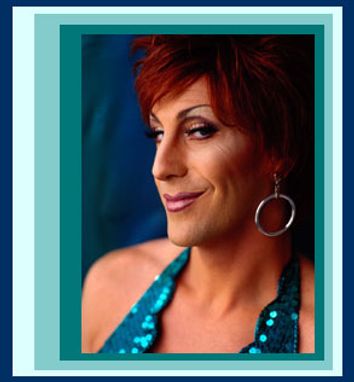
If you think drag queens give you a gender-bending, hocus-pocus, out-of-focus look at she-male chic, you haven’t met Patty. Or rather Pat. I mean, Patrick.

Patrick Califia used to be a woman. The kind of woman that liked other women. But now she’s a man. The kind that likes other men. Basically, what we have here is a carpet-licking lesbian who turned into a cock-sucking queer. It just doesn’t get any weirder than that.

Actually, it does. See, Califia has a son, Blake, of whom he shares custody with his ex-girlfriend, Matt, who also used to be a woman, but is now a man. He stopped taking male hormones so he could give birth. They have no plans to write “Heather Has Two Daddies That Used to be Mommies.”

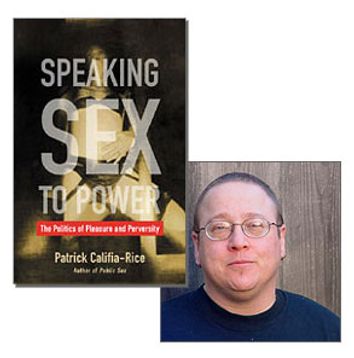
Instead, Califia wrote “Speaking Sex to Power, the Politics of Queer Sex.” The book is a collection of essays spanning the last six years, include those written when she was a woman wishing she was a man doing a woman, and those written when he became a man wishing he had a dick to diddle other men while wondering if women found him attractive.

“I wish it were that easy to declare my allegiance to one gender paradigm,” Califia writes. “… And to climb up on only one soapbox in the orator’s park of sexuality … There are days when it seems to me that I am tortured by my own perversity and willfulness, that if I had the right sort of subtle knife, I could sever the carping parts of my soul that will not shut up and could quit setting off the security alarms of normal people.”

Califia has a lot to say about gender identity that’s worth hearing. Like his idea that identity is not “just a matter of who believe yourself to be. It is also affected by how others perceive you … Identity has a public sphere.”

Yet there’s something a little annoying about Califia’s demand to be called whatever he feels like being called, regardless of his anatomy. He’s like a bush resenting the grass for not calling it a tree. Well, if you’ve got a bush and no trunk are you really a tree?

Califia argues yes — that gender is a state of mind more than it’s an observation of fact. And he does an admirable job of putting forth unique theories of identity. For instance, his contention that “Socially conditioned behaviors that signal gender are even more crucial than physical traits.” In other words, the way a woman is conditioned to dress, walk and behave is often seen by society as a better marker of her femaleness than her sex chromosomes, secondary sex characteristics or genitalia.

Unfortunately, Califia has a way of tossing out verbal bombs that diminish his credibility, and credibility is something he needs desperately if his more cogent observations of gender identity are to gain credence. Califia writes, “Like camp, promiscuity is the pink badge of queer courage, our defiant way of whistling past all the graveyards that, for us, dot the heterosexual landscape.” Oh, please. Promiscuity as a badge of courage? My sex advice column has generated countless letters from gay men; I’ve never been asked how they can change their political viewpoint so it could lead to a more monogamous sex life. Only an activist can ascribe political motivation to plain old dog-yard scrumping.

Or take this gem: “Every cocksucker is well aware that the same man who puts on a badge to arrest him probably just gets his blowjobs at a different truck stop.” Typical loudmouthed gay activism: Everyone’s gay; they’re just closet cases.

Califia’s writing is infected with “activistitis,” the idea that your political spouting is more interesting than your personal story. And his propensity for picking a fight instead of revealing his character can be exasperating. For example, he writes, “Does the fact that I am taking testosterone now and asking everyone to refer to me as ‘he’ invalidate the years of my life from age 17 until 45 when I was out of the closet, first as a dyke, and then as a bisexual woman?” Then after striking a pose as a lesbian, bisexual, transgendered, S/M dominatrix, she strikes one as victim: “I am to be hissed at as a deceiver, a traitor. Everything I have ever said or published about feminism or lesbianism must now be tossed on the bonfire. Every woman-identified woman I ever had sex with must move the memory of that liaison into a dubious category, and purge herself of possible heterosexual contamination. Well, it’s no less than what I expected.”

Another disappointing part of the book is the absence of pictures. This undercuts Califia’s claim to be a sexual outlaw. Since when are radicals afraid to show their faces?

It’s understandable to think that pictures might lend a circus atmosphere to the sober tone of his subject, but by not providing pictures Califia lets the rhetoric float in an intellectual surface without ever descending into the emotional realm, where understanding and acceptance take place.

Yes, it would be shocking to see a busty leather dyke morph into a flat-chested, hairy gay man, but shock is always the initial reaction to the different. Would “Will and Grace” have broken down barriers if it had been a radio show? Califia, the audacious fire-breathing dragon-activist is a closet-encrusted prude. Come out, come out, Patrick, wherever you are.

Califia is at his best when he bares his soul instead of his fangs. It’s hard to ignore his humanity when he writes, “Compassion for myself has been at least as healing as daily application of testosterone gel to my fuzzy belly, chest, and face. I know that I deserve to have pleasure in my life even if my body puzzles and thwarts me.”

And his love for his son, Blake, is palpable: “Love for a child may be the most all-encompassing emotion that I have ever experienced. You cannot break up with your child or divorce him. When adult lovers have left (or, more typically, been sent away), I usually experience more relief than sorrow. But the love I feel for Blake is not susceptible to alteration, no matter what he might do in the future or whom he might become. I could not escape from it if I tried. And in truth I do not want to, because the weight and scent of his little body in my arms has made me his happy possession.”

Although it’s heavy on the irritation factor, this book is a must-read for anyone who has ever experienced the torture of being different, of not belonging. Califia has a deft way of both eulogizing and celebrating otherness. “The only consolation for this sense of alienation,” he writes, “is the fact that there’s no place where I don’t belong. Having shed most of the strictures of identity politics, I can take what I like from the entire spectrum of sexual minority cultures.”

Continue Reading Close

Speaking of tongues (and other body parts)

Steve Almond's daring collection of short stories about sex, "My Life in Heavy Metal," brings a fresh and vivid eye to a clich

  • more
    • All Share Services

Speaking of tongues (and other body parts)

Writing about sex is like writing about food. How many ways can you say the fruit was ripe and juicy?

You either end up with overwrought clichés (“It was a Dark and Stormy Vagina”), inaccessible literary metaphors or laugh-out-loud porn lines (“Help, my skirt keeps coming off”).

But every once in a while somebody comes up with the ability to describe the mechanics, the emotions, the raw energy of sex in such a way that you get a soaring — and sometimes searing — experience of it.

Steve Almond is the latest somebody. The Boston College teacher’s collection of short stories, “My Life in Heavy Metal,” will leave you gasping, gulping and guffawing from beginning to end. Each of the 12 stories has sex as the destination, the vehicle or the journey.

The beauty of the book isn’t just that he managed to write about sex in a daring, fresh and provocative way, but that he writes it within every conceivable context. Some of Almond’s most enjoyable descriptions are of tongues, and where they are put; here he is describing a session with a plain-Jane lifeguard:

“We moved to the couch, where we leaned and leaned and finally fell against one another sloppily. I slid my chin down her belly … when her knees slipped behind my head they clamped me so hard my bottom row of teeth bit into the underside of my tongue. I could taste my own blood and this mixed with the slightly acrid taste of her. Gradually, her legs sagged to the bed. Her pelvis vaulted into the air. I followed her up, pressed harder and suddenly there was a warm liquid coming out of her, a great gout of something sheeting across my cheeks, down my chin, splashing onto the comforter.

“I figured, at first, she had urinated. But there was simply too much fluid coming out of her. By the time Claudia had regained her wits, and lowered herself to the bed, the puddle on my comforter was two feet across … My second theory was that, as a lifeguard, pool water had somehow accumulated inside her and been released when her internal muscles relaxed, but the liquid was as tasteless and odorless as rain.

“And you know what? I was goddamn thrilled. It was such a freakish thing she’d done. Claudia, this quiet little mermaid, with her spectacles and her lisp, with her dull brown eyes, who never so much as touched herself so far as I could tell, had not only surrendered her body to me but expelled, spumed, ejaculated some mysterious orgasmic juice all over my face. I felt like doing a victory lap around the puddle.”

The tongue-lashings continue in “How to Love a Republican,” the story of how a leftie fell for a rightie. This is Almond at his subversive best — managing to inject not just his tongue into his obsession but also his politics:

“What Darcy enjoyed most was a good lathering between the thighs. As a lifelong liberal, this was one of my specialties. In some obscure but plausible fashion, I viewed the general neglect of the region as a bedrock of conservatism. The female sex was, in political terms, the equivalent of the inner city: a dark and mysterious zone, vilified by the powerful, derided as incapable of self-improvement, entrenched and smelly. Going down on a woman was a dirty business, humiliating, potentially infectious, best delegated to the sensitivos of the Left.

“I relished the act, which I considered to be what Joe Lieberman would have termed, in his phlegmy rabbinical tone, a mitzvah. It required certain sacrifices. The deprivation of oxygen, to begin with. A certain ridiculousness of posture; cramping in the lower extremities …

“One evening, as we lay flushed on gin, she announced that she had a surprise for me and rose up on her haunches and slipped off her panties and knelt back. All that remained of her pubic hair was a single delicate stripe.

“I felt touched to the point of tears. Here was this miraculous creature, tuckered beyond words, right here in my apartment on the eve of the election, flashing me her vaginal mohawk. She vamped gamely even as her eyelids drooped, and licked her lovely incisor and urged me forward. How could it matter that she opposed gun control?”

Not all the women in Almond’s stories are purely interested in having their men go down under. Take Basha in his story “Run Away, My Pale Love”:

“Basha wanted nothing to do with clitoral stimulation, tricky positioning, languorous gazes. Put it in, was her agenda. Let the flesh speak. Her face went rubbery. She took on the aspect of a madwoman plucked from one of Hogarth’s Bedlam prints, ready to tear her hair, throw shit, which pleased me, as did her internal muscles, which yielded in rings of contraction …”

When they are done, Almond’s character surveys Basha on his bed and thinks, “Her body looked like something tossed ashore.”

Women’s bodies aren’t the only things Almond likes to toss ashore. He also likes to toss metaphors. Throughout his stories, the descriptions of his women are as interesting as the description of the sex his characters have with them.

Ling in “The Body in Extremis” is a perfect example:

“Her features were broad and sort of gummy. Her nose looked like a lump of clay that had been flattened by someone’s thumb.” Or this: “Her lips were fat but nicely shaped. They sat on her face like rain-puffed blossoms.” And: “Her nipples budded out from a chest that was nearly flat. They were keenly sensitive, and slightly larger at the tip than the base, like Frankenstein’s bolts.”

But my favorite metaphor occurs in a story called “Valentino.” Here’s how a senior in high school refers to a schoolmate who’s saving herself for the right guy: “The whole time she’s waiting, see, she’s getting more and more lathered up. She’s like a bottle of Dom Perignon that’s been shaken for months, right? So when she finally gets popped — kaboom.”

Almond’s characters range from adolescents to seniors, but the truth about sex never seems to change no matter what generation’s voice he speaks with. In his story “Valentino,” one of the characters, Holden, does an unforgettable (if a bit Salingeresque) rant on the tyranny of beauty, its lottery-like fraternity:

“You can’t get out of your depth aesthetically. You do that and you’re done for … All men and women are divided along aesthetic lines, see. That’s just the way it is. There’s maybe twenty, twenty-two such strata. At the top you’ve got the movie stars and models, okay? Tom Cruise and that skinny bitch he’s married to, all those fuckers. Then the soap stars and TV anchors. Then commercial actors, then actual nontelevised attractive people, down to the average, sort of ugly and at the bottom the real sad cases, cleft palates and the like …

“The trick here is that every person recognizes intuitively where they belong on the beauty gradient. This is the first thing you gauge when you walk into a room. Right? It’s like: ‘Okay, better than him, worse than him, way better than him.’ That’s how people know who they’re supposed to end up with.”

When Holden’s friend points out the success of a young woman in the middle of the “beauty gradient” hitting on a guy at the top of it, Holden points out that the guy is drunk and the most the woman will get is a one-nighter with him: “He’s got a few beers in him … Beer can blur the picture, but it can’t repaint the lines.”

Ouch! The truth hurts, babe, as one of Almond’s characters might say. And hurt his characters do. Despite the pyrotechnical writing about bedroom gymnastics, each of Almond’s stories is suffused with love invited and denied, betrayal inflicted or endured, tenderness given or withheld, and the whole palette smeared with a charcoal of longing that just makes you ache.

There’s so little description of sex — explicit sex — in literature today. I think that’s partly because we’re still a little puritanical about it, partly because no writer with artistic ambition wants critics to rub their chins and ask, “Yes, but is it porn?” But also because it’s so hard to do without falling into clichés. Like I said, how many ways can you say the fruit was ripe and juicy? Fortunately, in Almond we’ve found a new linguist.

Continue Reading Close

Thanks, but no thanks

Why I wouldn't take part in the AIDS vaccine studies announced at the Barcelona conference.

  • more
    • All Share Services

Thanks, but no thanks

The big news coming out of the 14th international AIDS conference in Barcelona last week was the announcement of the largest AIDS vaccine trial in history. In the $36 million, five-year project, 16,000 subjects in Thailand’s general population will be vaccinated. (The 15th international AIDS conference will be held in Bangkok in 2004.)

The hope and hoopla are understandable. In America, 850,000 people are infected with HIV, according to the Centers for Disease Control and Prevention. While AIDS is considered a “manageable” condition, 17,000 Americans still die of it every year.

But there’s nothing manageable about AIDS in Africa, where 40 percent of the population in many regions is infected with HIV. Experts believe that nearly 6.5 million Africans will die annually by 2020, when they expect the epidemic to peak.

The fight against AIDS is branching from treatment toward vaccination. In 1996 the entire NIH budget for AIDS vaccine research was $111 million. President George W. Bush’s budget proposal for 2002 is $357 million.

In addition, 17 different vaccines have reached small clinical trials, and dozens more are in various stages of research in monkeys and other animals.

The fury and the frenzy of AIDS vaccination efforts are strictly about the technology, the medicine, the efficacy, the possible results. But nobody talks about the more personal side of being a test subject — the psychological, physical and sexual implications.

I would not want to participate in any AIDS vaccine study. First, I’m afraid it would actually encourage me to have unsafe sex, and second, I don’t want scientists secretly hoping that I’ll expose myself to the virus to see if the vaccine works.

Educated as I am about HIV intellectually, I play dumb about it in bed. There is a disconnect between what I know and what I should do to protect myself. I’m safe, but not safe enough to stop me from sweating every time I take the HIV test.

For instance, I will justify not wearing a rubber by saying, “Well, as long as I’m penetrating and not receiving it’s not that bad.” Even my doctor gasped at that line of thinking. It’s true that playing “pitcher” is safer than playing “catcher,” but it’s still high-risk behavior.

Even when I went home with guys I knew to be HIV positive I still managed to convince myself that there were things I could do other than simply shaking their, um, hands.

Why do I put myself in situations I know are dangerous? Because logic flies out the window when emotions walk in the door. Sex is not a logical act. Only in laboratories is there an arithmetic to chemistry. In bed, facts and figures, trends and data, get Cuisinarted in the mix of longing, needs, drives and mood.

If you’re not in a high-risk group it’s hard to understand why practicing safe sex seems so hard for people who are. On a rational level it’s such a no-brainer: Don’t do XYZ and you won’t get HIV. But trying to operate your love life according to scientific guidelines is like trying to paint a landscape with the help of a lawn maintenance manual. Weeds and pesticides are at odds with beauty and passion.

It’s hard to keep yourself from doing what you’re physically, emotionally and spiritually hungering for in bed. If your sense of worth, your sense of being fully alive, of feeling deeply connected to another person hinges on certain sexual acts, then what does it mean to deprive yourself of them? That you can only go so far in communing with another person? That you’ll never experience the true meaning of love and its attendant requirement to surrender?

That’s why when it comes to sex, people lie to themselves all the time. How many times has a woman said “Oh, I won’t get pregnant if I do it just this one time without a condom”? How many times has a man said, “Oh, I won’t get HIV if I do it just this one time without a condom”?

We look for excuses, loopholes, exemptions from our own responsibility. And that’s what I’d be afraid of if I participated in an AIDS vaccine trial — that I’d use the vaccination as a false sense of security, a way of giving myself permission to engage in unsafe acts.

The irony is that participating in an AIDS vaccine trial doesn’t even guarantee someone of getting the vaccine. Half the test subjects will get a placebo. But my capacity for denial is boundless. I’d end up convincing myself I was in the test group, not the control group, and take refuge in the connotations of the word “vaccination” — safety, protection, invulnerability.

Participating in a vaccine study wouldn’t make me fling all caution to the wind. But it would ratchet up, bit by bit, my willingness to take more and more measured risks.

And if I do that, I’m increasing my chances of getting the very thing I’m being vaccinated against. Not only that, but I’m also increasing the chances of getting other sexually transmitted diseases like gonorrhea, herpes or syphilis, because the less you use condoms, the more likely you’ll catch other STDs.

The other reason I wouldn’t participate in a vaccine study is a grisly vision I have of scientists secretly cheering me on to have unsafe sex.

Certainly no scientist with a shred of decency wants to see people become infected, get hurt or die in an experiment. And certainly the protocol for the test involves the encouragement of safe sex practices. But come on, the only way to prove whether the vaccine works is for people to repeatedly expose themselves to the virus. It’s like testing an air bag on human beings. The car has to crash if you want any data, and I don’t like to think of myself as a crash-test dummy.

Imagine if everyone participating in the vaccine study practiced safe sex. Impolite as it would be to say, there’d be a lot of disappointed scientists. It’s understandable but grotesque.

I would imagine that scientists are in a kind of denial about the ethical dilemma of AIDS vaccines. And who could blame them? There’s never been an immunization program for a disease whose transmission is almost completely dependent on the victim’s behavior.

You can’t catch HIV from contaminated food, as you can catch hepatitis or polio. You can’t catch HIV from another person’s cough or sneeze, as you can catch the flu. You catch HIV from consciously performing an unsafe sex act or willfully injecting drugs with a contaminated needle. There are exceptions, of course (rape, blood transfusions, medical workers accidentally sticking themselves with infected needles), but the vast majority of infections occur because of personal behavior, not impersonal circumstance.

This is not an argument to stop AIDS vaccine trials. Every 10 seconds someone in the world dies of AIDS. To stop the trial because some people like me will increase their chances of infection would be nothing less than obscene.

Still, the impact on test subjects and the ethical unease that scientists must feel need to be discussed. Otherwise, when the U.S. trials begin, a lot of potential test recruits — people like me — are likely to think “vaccine” is just another word for sexual complacency and will end up doing what health experts were trying to prevent in the first place.

Continue Reading Close

Nellies need not apply

Gay culture celebrates effeminacy as a social ideal. Why does it ridicule it as a sexual one?

  • more
    • All Share Services

Nellies need not apply

“Effeminate gay man seeking other nelly queens for hot times. If a purse doesn’t fall out of your mouth when you speak then keep moving. But if you’re effeminate, have more dresses than shirts, and say “girl” every other sentence, then let’s hook up. No butch guys please.”

It’s a pretty safe bet you’re not going to see this kind of classified ad in the personals sections of gay newspapers and Web sites.

Even screaming queens don’t want to torch their beds with the flames of other queens. And this sets up an interesting contradiction about gay life: The culture that celebrates effeminacy as a social ideal ridicules it as a sexual ideal.

Gay men encourage effeminacy by venerating drag and calling each other “girl.” They love bitchy humor and consider camp an art form. But you’ll never see effeminate men idealized as sexual partners.

Nobody has a more fascinating take on the subject than Tim Bergling in his new book, “Sissyphobia: Gay Men and Effeminate Behavior.” Bergling analyzed the personals section of dozens of gay newspapers across the country. He looked at code words like “straight-acting/straight-looking,” “military,” “frat boy,” “blue jeans and sweatshirt” and counted up all the ads.

“If I wanted a woman I’d be straight” was a typical phrase in the masculine-themed ads. So was “Femmes need not apply.”

Then he did the opposite, counting ads that sought an effeminate partner or described the writer as effeminate. The results? Forty percent of all ads were masculine-themed while only 2 percent were feminine-themed. (The rest were neither.)

That masculine gay men prefer other masculine gay men as partners isn’t a shock. What is surprising is how few effeminate men wanted other effeminate men as sexual partners. Bergling quotes a study published by the American Psychological Association showing that a substantial number of effeminate-identified men prefer masculine men as sexual partners.

Of all the questions Bergling raises about “sissyphobia” (and he raises many good ones), the most fascinating is the one he leaves unanswered: Why do so many effeminate men prefer in their partners the very masculinity they’ve bleached out of themselves?

The obvious answer is that they’re attracted to their opposites. But that’s only a partial answer, because the opposites they prefer do not like their opposites. In other words, effeminate men may lust for their opposites (masculine men), but masculine men don’t lust for their opposites (effeminate men). Talk about painting yourself into a corner and throwing away the lube.

Effeminate men get hoisted on their own petards. The more they take on effeminate characteristics, the less able they are to attract the kind of guys they want to sleep with. This process of being (or becoming) that which drives away what you’re trying to attract is a mating absurdity. Imagine birds trying to attract mates with red and white plumage when the suitors are attracted to yellow and green.

The absurdity brings up a great question. Even though effeminacy is counterproductive to attracting the kind of sexual partners they want, do “nelly” men act that way because they can’t help it? In other words, is effeminacy a choice? Few gay men believe they’re gay by choice. But what about effeminacy?

Nobody knows what fuels the gay flame, whether it’s a function of nature or nurture. Some believe gay guys turn sissy because they’re naturally nelly, and some think they do so because they’re conforming to a culture that expects it.

If nelliness is natural, then why don’t the nelly find the nelly sexually attractive? And if nelliness is learned, then why would you take on characteristics guaranteed to alienate the very people you want to seduce?

I’ve always maintained that effeminacy is like obesity. Sometimes it’s glandular, but mostly it’s cultural. There’s an undeniable pansy vortex in gay life. You fall into it with baggy jeans and climb out of it with spandex up the crack of your ass.

How else can one explain my ex-boyfriend “Larry”? Closeted when I met him, he was popular, gorgeous, smart and athletic. He was the “be” to everyone’s bop. Then he came out. Everybody he hung out with liked to do drag and camp it up. Suddenly, Larry started shaving his legs, wearing tight shorts and calling everyone “girl.” He ripened into a fruit before my very eyes.

Larry slid into the pansy vortex and I couldn’t do anything about it. I was 400 miles away and saw him maybe every couple of weekends. One day he made me close my eyes and sit at the foot of his bed for a surprise. He pulled out a long black wig and a slinky Bob Mackie knockoff. And that was the end of that.

Was Larry born with the desire to dress like Cher or did he just adapt to a culture that demanded it?

I’m not the only one who has lost boyfriends to the culture’s pansy vortex. My friend Gary dated this really cool guy who spoke four languages. He got sucked into the vortex and never came out. Now he lisps in four languages.

On the one hand, there really are guys who come out of the womb complaining about the backlighting. But my feeling is that just as many learn to complain. Either way, nature or nurture, it’s a puzzlement that nelly guys don’t find other nelly guys sexy.

Why don’t we have pornographic magazines and videos showing two hot nelly queens going at it? Is it even grammatically correct to describe “nelly queens” as “hot”?

This is an absurd cruelty that gay culture plays on itself. We encourage effeminacy with one bejeweled, manicured hand but slap it down with the callused, unjeweled other. Few of us want to have sex with guys in dresses. Especially the guys in the dresses.

Many gay men have either heard of or taken the “Straight Acting Guy Quiz” on StraightActing.com. The subtext of the “test” is that the higher you score, the more desirable you’ll be.

If effeminate men found other effeminate men attractive, wouldn’t there be a Nelly-acting.com? Why don’t we have an “Effeminacy Quiz” on which nelly guys could boast about their scores like the butch ones do on StraightActing.com?

It’s a shame that even a nelly doesn’t equate nelliness with sexiness, because there’s something self-negating about taking on characteristics you don’t want your partners to have. There are lots of ironies in gay life, but perhaps none greater than this: Sissies are often the biggest sissyphobes of all.

Continue Reading Close

Page 1 of 4 in Michael Alvear