Sean Elder
Tucker the Terrible vs. the Ragin’ Cajun
Making dueling-pundit shows more civil is a ticket to nowhere. What we need to see is Bob Novak in leopard-skin tights and a well-oiled Paul Begala.
In what was no doubt intended as a modest proposal, Los Angeles Times Op-Ed page editor Michael Kinsley last week suggested a bit of kinder, gentler political TV to salve the wounds of our fractious times. After tweaking Jon Stewart for taking himself too seriously when he appeared on CNN’s “Crossfire,” Kinsley, a former “Crossfire” commentator himself, made his pitch (one he claims that CNN and others have declined).
“The idea, in a word, ‘Cease-Fire,’” wrote Kinsley, who edited Slate and the New Republic before joining the Times. “You get your politicians or your experts or your interest-group representatives, and instead of poking them with a stick to widen their disagreement, you nudge and bully and cajole them toward some kind of common ground. It sounds goody-goody, I know, but the intention would be more Judge Judy than Bill Moyers.”
In television, alas, the road to ratings hell is paved with goody-goody intentions (imagine Judge Judy Woodruff). While Stewart was probably right when he said that the right-left, Jib-Jab formula of “Crossfire” was “hurting America,” he is probably mistaken if he thinks its viewers hunger for a more elevated level of discourse. While record numbers of viewers tuned into the generally substance-laden presidential debates, with the third one beating the baseball playoffs nationwide, fans of shows like “Crossfire” seem every bit as partisan as the show’s hosts. They’re guys (mostly) who find C-SPAN too wonky but Fox News too one-sided. They aren’t interested in elevating the level of discourse. On “Crossfire,” it’s all about the level of discord — and audiences want to turn it up to 11.
Let’s go to the tape for a show that aired Nov. 5.
Tucker Carlson: “Three days after the presidential election, it is clear that it was not the war on terror, but the issue of what we’re calling moral values that drove President Bush and other Republicans to victory this week. In the end, in other words, most Democrats just don’t want Barbra Streisand in charge of their lives. [Laughter] Democrats had no idea.”
Paul Begala: “Well, Democrats do need to do a better job of talking about their values. But shouldn’t Republicans do a better job of actually living by theirs?” [Cheering and applause] “If I hear one more, one more, sanctimonious Republican working on his third divorce lecture me about my values, I’m going to smack him.”
Yeah, baby! And that was from one of our guys. While “Crossfire” was mildly annoying back in Kinsley’s day (when he locked lances with such neocon Orcs as Morton Kondracke), it now resembles nothing more than World Wrestling Entertainment’s popular “Smackdown.” Heroes and villains are invoked by both sides to predictable audience reaction: Hillary gets hisses on the right, Ashcroft guarantees catcalls from the left (I doubt Alberto Gonzales will garner the same sort of reaction, but give him time). Bad guys and good guys alike commit blatant fouls — mentioning Viagra whenever Bob Dole comes up; reminding viewers why Bush had the Oval Office cleaned so thoroughly after Clinton. It’s all the equivalent of hitting your opponent with a metal folding chair, and the audience loves it.
The guys on the right even have their own costumes: Robert Novak has been sporting that black suit and grisly demeanor for so long his nickname should be The Undertaker. (If only the name weren’t already taken by a longtime wrestling villain, “the innovator of Inferno Matches, Casket Matches, and, of course, the famed Hell in the Cell,” according to the WWE site.) Kid Carlson, with his bowtie and mop-top, plays youthful ward to Novak’s dark prince, trying hard to do the unflappable thing that Silent Bob learned from Darth Vader, though The Kid too often seems to get his suspenders in a bunch.
As pure theater, the Democratic side doesn’t fare as well. Sure, James Carville has an irascible persona familiar to voters and viewers alike (dyslexic, dyspeptic and sometimes quite funny) and he even comes with a handle, The Ragin’ Cajun, which CNN employed in a lame attempt to hype the show in the manner of a boxing card this summer. But he doesn’t have an outfit. And he’s married to a Republican, a high priestess in the church of Cheney at that, which to me would be like learning that Eliot Ness played cards with Frank Nitti. And poor Paul Begala doesn’t seem to have anything going for him. He looks exactly like what he is, a Democratic apparatchik (both he and Carville worked for Clinton and later advised the Kerry campaign — and look where that got the senator), and has no nickname that I know of. Plus he lets Tucker get under his skin, acting more peevish than his old boss on the South Beach diet.
But if “Crossfire” and its ilk are becoming more like professional wrestling in terms of temperament if not entertainment value, they offer no threat in the audience department. “Smackdown” and its sibling, “Raw,” regularly draw 4 to 5 million cable viewers, while Jon Stewart’s visit to “Crossfire” garnered 867,000 viewers — the biggest episode of the show’s season. (Web downloads of video of the “Daily Show” host’s 2-on-1 with Carlson and Begala were close to a million.) Of course, it doesn’t help that “Crossfire” is aired at 4:30 p.m. EST, guaranteeing an audience of the marginally employed. In order to ratchet up the excitement, the show is now taped before a live audience at George Washington University — though a glimpse of the audience reveals a lot of them to be a little old for school. And they’re certainly not learning anything.
Aficionados of political theater may be tempted to look to William F. Buckley Jr.’s weekly political program, “Firing Line” (1966-2000), in which the archconservative parried with a host of largely left-wing guests, for an antecedent. But Buckley, who played John the Baptist to Reagan and much of the neocon movement, had a certain oily charm. A Psychology Today poll taken in the early ’70s found a huge sampling of women had fantasies about Buckley while having sex with their husbands (I think it was his tongue).
But the God-man of Yale generally engaged in something we would recognize as debate. He would ask his guests questions about their positions and usually had the decency of letting them answer. He seldom lost it with his guests (Gore Vidal being the most famous exception) and one could come away from the program feeling they had heard an issue argued from at least two sides.
In sheer bellicosity, “Crossfire” now owes more to the long-running syndicated gab fest “The McLaughlin Group,” which many still associate with the “Saturday Night Live” parody in which Dana Carvey, as host John McLaughlin, would ask guests questions like “What did I have for breakfast?” only to shout over their reply: “Wrong!” But compared to “Crossfire,” the real “McLaughlin Group” seems positively genteel as regular panelists such as the Democratic Lawrence O’Donnell and the Republican Tony Blankley politely wait for each other to finish before disagreeing.
The trend to turn up the decibels is an obvious nod to the ratings success of Fox shouter (and after-hours phone monologist) Bill O’Reilly. On “Crossfire,” hosts and guests alike are forced to smile while calling each other naove Pollyannas and fascist bootjacks. They step on each other’s lines and shake their heads at their opponent’s inability to grasp even simple facts. For all the ways it resembles pro wrestling, though, “Crossfire” is still no “Smackdown.”
Fans of “Smackdown” know that each character has a back story, a mentor, a finishing move. Most intriguingly, they can cross over to the other side at will. Take “Raw” superstar Triple H (Hunter Hearst Helmsley) aka The Game aka the Cerebral Assassin. After a brief period in which he fought on the side of niceness, “The Game’s true colors came shining through and he has once again found himself listening to the fans’ jeers,” according to his WWE bio. “To further solidify the fact that he doesn’t care about the fans, Triple H aligned himself with ‘the dirtiest player in the game,’ Ric Flair, Randy Orton and Batista. Together, they called themselves Evolution.”
Are you listening, Begala? You know how those red-state hicks feel about evolution; I think you could steal this one wholesale and no one would be the wiser. Imagine Tucker’s mashed-in face when you deliver a pump-handle slam on his supine person. Of course his bow tie could start spinning in a defensive maneuver, blowing pixie dust into your eyes while the Undertaker sneaks up behind you and throws you into a coffin, cackling, “How do you feel about the right to die now?” That’s when a trap door could open and the Ragin’ Cajun could appear to the strains of “Gris-Gris Gumbo Ya-Ya,” carrying a flaming skull.
Alas, “Crossfire” will never be so entertaining. But that’s not because its audience wouldn’t get it or the network wouldn’t allow it. With those kinds of numbers (the show averages a little over 600,000 viewers without Stewart) they could afford to play with the format. Holding down that spot between “Inside Politics” and “Wolf Blitzer” doesn’t exactly make them the linchpin in CNN’s afternoon schedule. So why not go all the way? Don the tights and jump into the ring.
Folks in Georgia (CNN’s ancestral home) understand the message behind the admonishment “eat a peach,” even if they are referring to the Allman Brothers. Get messy and chomp on the pit. Audiences of “Crossfire” and its ilk don’t want reason. They want to whoop and holler at the red-meat lines, like the yahoos who threw rotten vegetables at the figure of Abraham Lincoln that appeared in the stage version of “Uncle Tom’s Cabin” in “The Gangs of New York.” They don’t want tuna with good taste. They want the taste of blood when “Crossfire” offers cherry soda. The show may be hurting America, but trust me, Jon, America wants the hurt.
Oops, they went goth!
My daughter and her friends are suddenly wearing plaid miniskirts and carting around Living Dead Dolls. What do black lipstick and snap-on dog collars mean to a 10-year-old?
It all began when my daughter’s friend Catherine moved to the Midwest. Catherine and Franny, my 10-year-old, had been friends since they were babies, and the decision of Catherine’s parents to leave New York — brought about in part by Sept. 11 — was traumatic for both girls. Besides, Catherine was a New York kid. What would they make of her in Minnesota?
Catherine had her own answer to that. When she came to visit us a few months into the school year, her look had completely changed. Gone was the generic Gap and Old Navy garb of before. Though only 11, she was now wearing a plaid miniskirt, striped stockings and a little black shirt adorned with a tragic looking kewpie doll — imagine a bobble-head with a Laura Petrie do — called Oopsy Daisy and the message “Oops, I Went Goth!”
Continue Reading CloseFrom street thug to dharma punk
Noah Levine rejected the spiritual path of his father, Stephen, and then, many tattoos later, joined him.
It’s Friday night in San Francisco and a crowd has gathered at the Justice League, a cavern on a dirty stretch of Divisadero Street, for an evening of punk rock, old (Slaughter and the Dogs) and new (the Belltones). The local scene, always less violent than L.A.’s and less arty than New York’s, wins points for endurance. Looking out over the river of mohawks, porkpies and D.A.s, you could swear it was 1977.
Among the faithful tonight are the Dharma Punx, a loose affiliation of friends who share a love of punk rock and a penchant for spiritual practice. In S.F., home to gay conservatives and pacifist policemen, spiritual punks hardly raise a pierced eyebrow. The Justice League doorman waves them in like the regulars they are. There’s Mike Haber, who was the leader of a rockabilly motorcycle gang in Santa Cruz, Calif., before sobering up and discovering meditation; and Lars Frederiksen, the clean-and-sober member of the stalwart S.F. punk band Rancid, as well as a new group called the Bastards; and Lars’ roommate, Noah Levine, a former drunk, drug addict and jailbird who now brings Buddhist teaching into jails and juvenile halls, when he’s not out seeing shows.
Continue Reading CloseThe shadow president
People say I look like you know who. Why me, lord?
The first time it happened I didn’t pay it any mind. I was having lunch with a couple of young women in Manhattan about a year and a half ago; one was an editor at a magazine I was doing some work for, the other was a writer who had just done a nice story for us. The writer had already made some waves with a novel of the I-was-a-teenage-nymphomaniac sort so popular a few years back. For a middle-aged man such as myself, lunches don’t get much more promising.
We were just past the introductions, opening the menus and ordering drinks, when the young nympho fixed me with a frank gaze.
Continue Reading CloseThe death of Rolling Stone
The magazine that invented rock journalism lost its reason to exist years ago. Now, with a British lad-mag editor taking the helm, it's time to pull the plug.
When Jann Wenner finally announced a few weeks ago that he had hired the British editor of a laddie mag to be the new managing editor of Rolling Stone, media critics heralded it as a sea change in American publishing. “The U.S. music industry bible is about to be re-written,” brayed the Guardian, a left-leaning British daily, “and its purist followers already sense the whiff of betrayal.”
Continue Reading CloseAppreciation: Ken Kesey
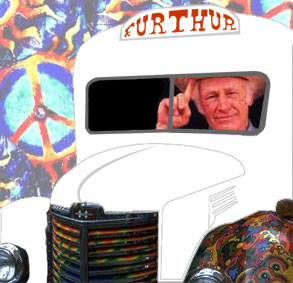
Captain Flag of the good ship Furthur didn't just create great literature, he was great literature -- and a quintessentially American character.
Word of Ken Kesey’s death came in under the radar last weekend, which is surprising considering the way the ebullient author rode into the American circus.
It’s easy to imagine him playing his own best-known character, Randall P. McMurphy, the bull-goose loony in “One Flew Over the Cuckoo’s Nest,” or see him as Hank Stamper in the 1971 film version of “Sometimes a Great Notion,” just by squinting a little at Paul Newman. But when I think of Kesey, I think of him on top of that bus, the same old International Harvester he left to the weeds outside his Oregon farm instead of the Smithsonian Institute.
Continue Reading ClosePage 1 of 18 in Sean Elder