Sean Elder

Bill Murray

The funniest graduate of "Saturday Night Live" has made an art form (and a career) out of insincerity and a blank stare.

  • more
    • All Share Services

Bill Murray

Bertolt Brecht would have loved Bill Murray. OK, maybe not “Meatballs.” But the revolutionary dramatist, who sometimes asked his actors to speak directly to the audience, believed in “the distancing effect” — any device that prevents the audience from being caught up in the illusion of theater and allows them to maintain a critical distance. “Whereas identification reduces extraordinary events to the level of the commonplace,” Brecht wrote, “distancing makes commonplace events rare and astonishing.”

“When Bill Murray says, ‘I love you,’ he’s in character, sincerely saying ‘I love you,’” says a theater director I know. “But he’s also acknowledging the audience, and his character, and the absurdity of both.”

Murray’s province, of course, is comedy. He is arguably the funniest comedian to have passed through the cast of “Saturday Night Live,” and his droll delivery — part smarm, part Novocain — has been aped by a thousand lesser comics since. He starred in the highest-grossing comedy of all time (1984′s “Ghostbusters,” $239 million) and has brought the irreverent, improv style of Chicago’s Second City and “SNL” to a wider audience than any of his contemporaries have. But his recent departures from comedy into … well, not necessarily straight dramatic fare but certainly less comic roles (the school benefactor having a midlife crisis in “Rushmore,” the alcoholic ventriloquist in “Cradle Will Rock,” an unctuous Polonius in “Hamlet”) put him in a whole new ballgame. He may never get that Oscar nod Jim Carrey seems to have his heart set on, but Murray probably wouldn’t want to go to the Academy Awards anyway. Might interfere with his golf.

Murray grew up in a large Irish Catholic family (eight brothers and one sister) in the Chicago suburb of Wilmette, Ill. The chaos of his family life was mirrored in the opening scenes of “Caddyshack,” the 1980 golf comedy written by his brother Brian Doyle-Murray. “Our house was a wreck,” Murray recalled, “a constant claustrophobic mess.”

As in many large families, Mom and Dad were the cause of much mirth, as both audience and inspiration. “My father was a very difficult laugh,” Murray recalled in “Cinderella Story: My Life in Golf” (written with George Peper). “Adults found him very funny. But his children had a tough time cracking him up. One of my strongest childhood impressions is falling off my dinner table while doing a Jimmy Cagney impression. I hit my head very hard on the metal foot of the table leg, and it hurt terribly. But when I saw my father laughing, I laughed while crying at the same time. I guess that was some kind of beginning.”

If Dad prepared the kids for tough crowds to come, it was Mom who offered some shtick they could steal. “All of us kids ended up ‘doing Mom,’” Murray writes. “There are four of us who’ve tried show business. Five if you insist on counting my sister the nun, who does liturgical dance.”

When they weren’t trying to make their parents laugh, Bill and his brothers followed the Cubs, played a lot of baseball and caddied at the local course. Like his brothers Ed and Brian before him (he was first known around the course as “the new Murray”), Bill used the money he made to pay his tuition at Loyola Academy, a Jesuit high school. He attempted premed only to be thrown out of college when he was busted for possession of marijuana. Suddenly comedy didn’t look so bad. By the end of the ’60s, Chicago’s Second City was one of the country’s best-known improv groups. (The San Francisco group the Committee, co-founded by Second City alum and Murray mentor Del Close, was another.) In a recent history of the troupe, “The Second City: Backstage at the World’s Greatest Comedy Theater,” founding director Sheldon Patinkin described the improvisational games that became a staple of Second City’s nightly revue: “The improvisational games aren’t games in the sense of winning and losing, and they aren’t about being funny. They’re about being in the moment; they’re about being totally present to each other onstage — being ‘in play.’”

Murray, who had been performing around Chicago before joining Second City in 1973, made an immediate sensation, Patinkin recalls. “You couldn’t keep your eyes off Bill on stage because there was so much going on inside the guy that you knew something would come popping out sooner rather than later. He emitted a true sense of danger.” It was more than a mere sense: Legend has it he jumped a heckler in the audience one night, screaming, “Fuck you and your date!”

“I was here for about 400 or 500 of those shows and I only remember about six,” Murray told a crowd at Second City ‘s 20th anniversary show. It was here that the prototype for Nick the lounge singer first trod the boards, appalling people with his voice and taste, and in a mock political show titled “Issues and Alibis” you can hear an early version of his “SNL” newscaster. Introducing China’s Chairman Deng as “one in a billion,” he was perfecting a character most Americans could identify with, a cheerful idiot at the table of world politics.

Murray joined his brother Brian and fellow Chicagoan John Belushi on “The National Lampoon Radio Hour,” and then went on to do the magazine’s off-Broadway show in New York. In 1976, he was hired to take the place of the departing Chevy Chase on “SNL.” As formulaic (and unfunny) as the show often is now, it is difficult to remember what a stir those early seasons caused. The lines between what was acceptable in prime time and what was not were clearer then, and at 11:30 p.m. on NBC, it really looked like the inmates had taken over the asylum. The style of humor was sloppy and irreverent, equally influenced by Second City and the dark sensibilities of Michael O’Donoghue and the National Lampoon crowd.

Chase, whose popularity dwarfed that of the rest of the troupe then, left for a Hollywood career, and Murray had some big shoes to fill. He rose to the occasion with the introduction of Celebrity Corner, Todd the nerd and, of course, Nick, stuck singing at happy hour at the Zephyr at Lake Minnehonka’s Breezy Point Lodge (“This is my seventh summer up here …”). Soon, at water coolers all around the country, people were calling each other “knucklehead” and “maniac,” all thanks to Murray.

“I went to Second City, where you learned to make the other actor look good so you looked good,” he said in 1999, “and National Lampoon, where you had to create everything out of nothing, and ‘SNL,’ where you couldn’t make any mistakes, and you learned what collaboration was.”

His experience in making something out of nothing prepared him for Hollywood. Murray’s early forays into film weren’t terribly inspired, though he generally tried to do more than cash in on his “SNL” personae. In “Caddyshack” (1980) he played Carl, a demented groundskeeper and Vietnam vet who equates the gopher eating up the green with the Viet Cong and finally destroys the course to save it. Carl had his spiritual side, too. He recalled caddying for the Dalai Lama, who stiffed him: “‘There won’t be any money, but when you die, you will receive total consciousness,’” the Dalai Lama told him. “So I’ve got that going for me, which is nice.”

In collaboration with Harold Ramis, another Second City graduate, Murray made affable comedies such as “Stripes” and “Meatballs,” no-brainers in which the casts seem preoccupied with getting through the shoot. (“I noticed that you’re always last,” Murray’s Army sergeant, played by Warren Oates, tells dogface Murray in “Stripes.” He answers, “I’m pacing myself, Sarge.”) More noteworthy was his turn as Hunter S. Thompson in the seldom-seen 1980 oddity “Where the Buffalo Roam.” Murray studied under the good doctor — a dangerous practice in the best of circumstances — perfecting the slurred speech and paranoid delivery of America’s most notorious journalist. His efforts were largely wasted in this aimless, nearly plotless film, but the sendup and delivery are right on the money. Wheeling through San Francisco, typing as he drives, he seems like some beat fusion, Jack Kerouac and Neal Cassady combined. When asked about his story by a Jann Wenner-like editor (Bruno Kirby), Murray delivers a reply every writer has longed to utter: “I think it’s the best thing I’ve ever done. Now all I have to do is write it up.”

Murray’s collaboration with Ramis hit pay dirt when he teamed with fellow “SNL” survivor Dan Aykroyd for the phenomenally popular “Ghostbusters” (directed by Ivan Reitman). Buoyed by slime-dripping special effects, a clever script and that infernal theme song, “Ghostbusters” spawned a sequel and a cartoon show and helped to make Murray a bankable star. Steeled by that bankability, Murray stunned nearly everyone when he announced that, for his next trick, he would produce, co-write and star in a new version of W. Somerset Maugham’s “The Razor’s Edge.”

In Hollywood, I’m certain, you could have heard a pin drop. (“He’s gonna do what?”) An Oscar nominee for best picture when it was made for Tyrone Power in 1946, “The Razor’s Edge” tells the story of Larry Darrell, an archetypal Lost Generation hero who is changed by what he sees in World War I and sets out in search of answers. His travels take him to India, where he dons orange robes and bows to the lama (without carrying his clubs), but audiences were waiting for the laughs, which were never to come. Murray wasn’t yet the actor who could pull off such a complex (and slightly incredible) character — but give him points for trying. He could have more easily made “Meatballs II,” instead of clowning his way toward satori, an enlightened wiseacre, a holy fool.

As Murray’s celebrity grew in the ’80s and ’90s, so did his aversion to the trappings of celebrity. He seemed to fear becoming one of the people he parodied. “Whenever I hear a star say, ‘My fans,’ I go right for the shotgun,” he told the New York Times in a rare interview. Without blowing off his fans (the actor is famous for tipping large and signing autographs), Murray has kept his private life private (he has been married twice and has five children), and in his work he has always been professional. (His much-publicized dust-up with Lucy Liu on the set of “Charlie’s Angels” may have had something to do with the fact that the script stunk.)

His attempts at career management have improved over time as well, if only in increments. (“Baby steps,” the needy analysand he played in “What About Bob?” would say.) In the produced-and-abandoned “Mad Dog and Glory,” he held his own with Robert De Niro, playing a psycho gangster with a budding career in stand-up. The 1990 “Quick Change,” which he co-produced and co-wrote (with director Howard Franklin) was an ideal vehicle for him. A Vietnam vet (again) robs a bank in a clown costume — and then spends most of the film trying to get out of New York. (“What the hell kind of clown are you?” the security guard demands when he sees the dynamite taped to his body. “The ‘crying on the inside’ kind, I guess,” he replies.) The film fizzled, however, and formulaic fare like “The Man Who Knew Too Little” (1997) didn’t do much better. (He was perfecting his Mister Magoo quality, though, what Lisa Schwarzbaum in Entertainment Weekly called his “assertive obliviousness.”) Murray found his perfect role as the conceited weatherman in 1993′s “Groundhog Day.” Murray’s doomed to relive the same day in Punxsutawney, Pa., forever, and his trademark insincerity and seeming asides take on a greater meaning as he repeats each scene.

Movies seemed to matter less to Murray as his presence at golf tournaments increased. There, in a sense, he has found his true stage, clowning before an audience grateful for any levity. “Walking around the course that day,” he recalls of his first foray into what he calls “golf entertainment,” “I saw how starved galleries are to be set free. It’s not just the quiet, but also the golfer’s tensions are mimicked. By physicalizing or simply acknowledging those tensions, you could effect crowd relaxation, warmth and sometimes laughter.”

And of course he gives the money to charities.

But for people of Murray’s generation, golf was always the game one’s father played. Golf was plaid pants and martinis and Bob Hope. Starting with “Caddyshack’s” Carl, who cultivated turf you could smoke (“It’s a little harsh”), Murray pioneered the idea of golf as something liberating, even cool. Maximum Golf and Tiger Woods owe him a doff of the cap.

When he’s not golfing or hanging out with his kids, Murray finds time to make a few movies. He condescended to appear in last year’s camp hit “Charlie’s Angels” after Drew Barrymore set her cap at him. “But every time we phone Bill’s agent to check on the status of the offer,” producer Leonard Goldberg recalled of preproduction, “we’re told that they can’t find him. On the plus side, there have been various sightings of Bill.”

Moviegoers will be seeing Murray in a variety of roles this year: as a sex therapist in the farcical “Speaking of Sex,” as a game show contestant in Harold Franklin’s “Press Your Luck” and in Steven Soderbergh’s much-anticipated remake of the Vegas classic “Ocean’s 11,” in which he’ll play a lounge singer, naturally. He has also reteamed with “Rushmore” director Wes Anderson to star in the upcoming “Royal Tannenbaums.” Anderson courted the comic relentlessly for his previous film and Murray delivered the performance of his career. Standing at the edge of the diving board, bourbon in hand and cigarette in mouth, with his gut hanging out of his shorts, Murray’s Blume was the picture of middle-aged despair. His rivalry with a 15-year-old prep school student (Jason Schwartzman) was all the more affecting for the vehemence he brought to it. His loneliness trumped that of an adolescent and his desperation to feel love was authentically moving. And if he can bring half the joy and passion to his acting that he does to his game, the rest of his career should be something to behold.

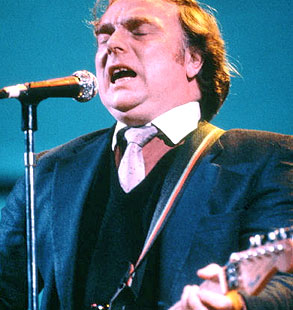
Van Morrison

The Irish singer-songwriter has identified himself with poets from Blake to Yeats, and like those "poetic champions," he has searched for the right words, the right feeling, as if for the Holy Grail.

  • more
    • All Share Services

Van Morrison

Van Morrison opened his 1999 album, “Back on Top,” with a song called “Goin’ Down Geneva.” Sung as a straight blues in the style of one of Morrison’s heroes, Bobby “Blue” Bland, “Goin’ Down Geneva” is in the tradition of road-weary blues tunes, a milepost on the endless highway of touring performers who don’t know which hat rack to call home. “It’s not easy, baby,” Morrison sang in his gruff voice, “living on the exile plan.”

But this Irishman’s exile has always been self-imposed. He has wandered through Europe and the United States, sometimes in the footsteps of his idols, then back to Ireland and Great Britain. The soul stops on this number aren’t Memphis and Mobile, though, but Salzburg and Montreux. Of Geneva he sings, “Vince Taylor used to live here, nobody’s ever heard of him.”

You may never have heard of him either, but as lovers of rock arcana know, Vince Taylor was an American rockabilly singer who came to Europe to make it big. His “Brand New Cadillac” (covered to great effect by the Clash on “London Calling”) was a couple of minutes of hiccuping hysteria and remains his chief claim to fame. David Bowie has acknowledged Taylor as one of the models for his fictional rock messiah, Ziggy Stardust; Taylor met Bowie in London and showed him on a map where the flying saucers were going to land. He made his last appearance on stage dressed as Jesus, saying, “I won’t be needing this band anymore. In fact, I won’t be needing any of you. ‘Cause I have places to go, and, and a father to return to.”

Taylor died about 10 years ago, and Van Morrison is one of the few who has stopped to wonder “just who he was, just where he fits in.” Maybe he sees the singer’s tale as a cautionary one, a there but for the grace of God thing. Sure, Morrison’s recordings with Them in the ’60s were greater successes than “Brand New Cadillac,” but there was no guarantee he would go anywhere solo. Indeed, much of the singer-songwriter’s output seemed designed to thwart success. From the brooding deathbed scene drawn in “T.B. Sheets” (1967), to the obscure song cycle of “Astral Weeks” (1968) and all the oblique and ethereal lyrics that came later — not to mention his forays into jazz, Irish and country music — Morrison has placed unwelcome mats before his house. He has been contemptuous of journalists, difficult with his collaborators and, at times, barely tolerant of his fans. Like some musical Andy Kaufman, he does not seem to care what people think of what he’s doing. And woe unto his imitators.

But for every counterintuitive move he has made, Morrison has played the savvy entertainer as well. He began recording 35 years ago, an eternity in any branch of popular music, and through each stage has managed to hit the charts here and abroad with an impressive array of hits, including “Gloria,” “Brown Eyed Girl,” “Domino,” “Wild Night” and “Wavelength.” He has recorded almost 30 albums as a solo performer (not including his collaborations with artists as diverse as the Chieftains and Georgie Fame) and as he has gone through labels he has kept a sharp eye on each album’s marketing and reception.

Morrison defends most of his work with a poet’s pride, but can crank out an instant standard like “Have I Told You Lately (That I Love You)” He has walked out on audiences without warning, but can still hold them in his thrall. He sometimes wanders through his own lyrics like a man looking for his keys, picking up this, discarding that, but knows a good phrase when he coins it: “I want to rock your gypsy soul,” “Torn down ` la Rimbaud,” “You don’t pull no punches, but you don’t push the river,” et al. And like Bob Dylan, to whom he owes such a debt and with whom he shares so many characteristics (paranoia, inarticulateness, divine inspiration and maddening inconsistency), he found out “when you reach the top you’re on the bottom.”

The “top” that Morrison sings of in the title track of “Back on Top” is a sort of personal Golgotha: “Saw me climbing to the top of the hill/You saw me meeting with the fools on the hill …” Looking at the legend of a nut gone flake like Vince Taylor, the sometime-Christian Morrison might just count his blessings. He’s played the angry young man, the wandering mystic and sometimes the mad hatter, but nobody has nailed him down yet.

- – - – - – - – - – - -

When I was a young boy
Back in Orangefield
I used to gaze out
My classroom window and dream
And then go home and listen to Ray sing
“I believe to my soul” after school
— “Got to Go Back,” 1986

George Ivan Morrison was born Aug. 31, 1945, in a working-class neighborhood in Belfast, Northern Ireland. His parents were Protestants, though his mother, Violet, briefly became a Jehovah’s Witness. (Van’s memories of those revival-like meetings were recalled in the 1978 song “Kingdom Hall.”) An only child, Morrison had his father’s record collection to keep him company. George Sr., a shipyard electrician, had a passion for American music and the 78s to prove it. As a boy, Van fell under the spell of Hank Williams, Woody Guthrie, Muddy Waters, the Carter Family, Mahalia Jackson and his perpetual favorite, Leadbelly (“He was my guru,” Morrison once remarked).

“He struck me as a talented kid from the very earliest days,” childhood friend George Jones (not that George Jones) recalled in John Collis’ biography, “Van Morrison: Inarticulate Speech of the Heart,” “but he was very shy, left to his own devices at home a lot while his parents were at work. But his father had these blues records. They were his friends. With the common denominator of music he could get on with people.”

Thanks to this tutelage, Morrison was way ahead of the pack when the skiffle craze swept the United Kingdom in the mid-’50s: He’d been listening to Leadbelly sing “Rock Island Line” long before Lonnie Donegan covered it. An amalgam of American folk, blues and jug band music, skiffle was a precursor to rock ‘n’ roll in the U.K., the original do-it-yourself sound. “Anyone could form a skiffle group simply by stealing his mother’s washboard and fixing a broom handle to a tea chest, then stringing it with wire to make a rudimentary double bass,” wrote Philip Norman in his Beatles biography, “Shout.” Morrison — like John Lennon, Jimmy Page and countless others — supplied the guitar and formed his own skiffle band. (Morrison returned to those roots this year with “The Skiffle Sessions,” recorded live in Belfast with Donegan and fellow-skiffle pioneer Chris Barber.)

At the age of 15 he dropped out of school to play saxophone with the Monarchs Showband, touring Ireland, the U.K. and Germany, where black GIs dug his Ray Charles impression. In 1964, Morrison returned. “Van appeared in Belfast, saying we all had to grow our hair long like the Rolling Stones, the Yardbirds, all the London bands,” Jones recalled. “He reckoned you had to walk around looking that way.” Morrison quickly joined the newly formed Them, adding his R&B repertoire to their rock base. With the help of savvy management (a trio of local entrepreneurs who billed themselves as the Three J’s), Them was soon the house band at Belfast’s Maritime Club. Like the Beatles at Liverpool’s Cavern a few years earlier, the Maritime shows became legendary. “Them gigs became the event,” said keyboardist Eric Wrixon, “something people could nail their colors to.”

“My first memory was entering the Maritime and seeing Van sliding across the stage,” said Mervyn Solomon, son of Decca Records co-founder Morris Solomon, who was there scouting the act for his dad. “The kids really ate out of his hands.” So it seems did Decca, since in short order Them was in the label’s London studios, cranking out hits. Those records were “for the commercial market,” according to Morrison. “In fact, the whole point of the club was the opposite of that. That was the ironic thing. The most obscure pieces of music we could find on blues albums, that’s what we were playing.”

Though not currently in fashion, Them cut a handful of hits that still blow holes in the oldies formats to which they’ve been consigned. Their cover of “Baby Please Don’t Go,” with its hot-rod bass line and snakey guitar riff courtesy of session man Jimmy Page, became the signature song on British pop show “Ready Steady Go” and still ranks as the best rock version of the song extant. As Dylan covers go, Them’s version of “It’s All Over Now Baby Blue” ranks with Hendrix’s appropriation of “All Along the Watchtower.” (Give him the keys, Bob; that’s Van’s song now.) And “Gloria” belongs in the Monument Valley of rock, right beside “Satisfaction.” From its try-this-at-home-kids guitar riff (there’s a reason why the song has been a staple of garage bands ever since) to its pagan, singalong chorus — “Gloooor-i-a!” — the song still goes off like a two-minute, 35-second bottle rocket. Though most Americans came to know the paler Shadows of Knight cover, Them’s was the real deal: Morrison’s vocal belied his age and set a new standard for dirty rock singing. If Van Morrison had recorded nothing else we’d still be singing his praise.

Them broke up in 1966, almost as quickly as they assembled, the victim of mismanagement and personnel changes. Morrison was at loose ends: He’d toured the U.S., met a woman he really dug in San Francisco who called herself Janet Planet, tasted fame and adulation (the band played L.A.’s Whiskey A Go Go 17 days straight, with local legends in the making the Doors and Captain Beefheart opening for them), and now he was back in Belfast, as if he’d never gone anywhere.

Fate interceded in the person of Bert Berns, a songwriter and producer in the Lieber and Stoller vein who had started a new label called Bang for Atlantic Records. Berns had worked with Morrison before (he penned and produced “Here Comes the Night,” Them’s No. 2 U.K. hit) and had already made a reputation as the hitmeister behind “Twist and Shout” and “Hang On Sloopy.” He recognized Morrison’s talent and invited the singer to New York in 1967. The sessions that arose from their collaboration (originally released under the unlikely title “Blowin’ Your Mind,” and available now as Bang Masters) yielded the hit Berns desired and revealed Morrison to be a stubborn and purposeful artist, born to confound the system that supported him.

“Brown Eyed Girl” went to No. 10 on the U.S. charts that year, powered largely by the “sha-la-la” chorus. What seems more remarkable now is the mournful quality of the singer’s voice as he invokes a lost love — a lost youth — at the ripe old age of 21. “So hard to find my way,” sang Morrison, “now that I’m all on my own” (followed by the randier couplet, “Saw you walking just the other day/My, how you have grown!”). Morrison was an old soul before they called them that.

The sessions themselves were, as Bill Flanagan wrote in the Bang Master liner notes, “a stormy three-day recording date in which a brilliant, difficult, hungry 21-year-old musician attempted to record with a bunch of studio pros who didn’t know what this crazy Irish kid was up to and for a producer with a great ear for Tin Pan Alley pop at a time when Tin Pan Alley pop was becoming an anachronism.” Berns kept telling the band to keep it upbeat — he loved the slightly Mexicali feel the Isley Brothers brought to “Twist and Shout” — even as Morrison incoherently directed the band toward … something else.

“I think we should be freer,” he is heard telling the musicians at one point. “We should have a freer thing going. At the moment we have a choked thing, you know?”

No, the tracks tell us, they didn’t. Sure, they played a smooth Slim Harpo riff to the claustrophobic “T.B. Sheets,” but what the hell was he going on about? “The sunlight shining through the crack in the window pane/Numbs my brain” — what the fuck? The singer was addressing a woman dying of tuberculosis (called Julie in the song but inspired by an Irish friend of his named Dee, who had died of T.B.); he was stuck inside, guilty and alive when he’d rather be anywhere else. “Open up the window and let me breathe,” he cried, and many listeners felt the same way. “Who wanted to listen to an endless song about tuberculosis when the air was filled with the sounds of the summer of love?” Greil Marcus wondered.

As the sessions moved toward their chaotic end, with Morrison introducing two of the impressionistic songs that would help complete “Astral Weeks,” it was clear he was tuned into another frequency. On a fairly straight-ahead pop ditty called “The Smile You Smile” he sang of “roaming in the gloaming” and critics have used the line as an apt description of the singer’s meandering, sometimes meditative style. He would search until he found what he was looking for — which in this case was “Astral Weeks.”

And I shall drive my chariot
Down your street and cry,
“Hey, it’s me, I’m dynamite
And I don’t know why”
— “Sweet Thing,” 1968

The winter of 1968 saw the release of some remarkable records: the Beatles’ “White Album,” the Rolling Stones’ “Beggars Banquet,” Jimi Hendrix’s “Electric Ladyland.” In the midst of all that noise and fury it was easy to miss the true debut of Van Morrison, and many did. But many critics swooned, and the album developed a cult status; at a time when listening to rock albums and taking acid was as common as watching the game and drinking a beer, “Astral Weeks” became a classic come-down album. Jazzy and meditative, partly cloudy and entirely unexpected, the record still stands as Morrison’s greatest accomplishment.

Morrison was blessed with a pair of new managers (Bob Schwaid and Lewis Merenstein) who hired jazz musicians (Richard Davis, bass; Connie Kay, drums; Warren Smith Jr., vibes; Jay Berliner, guitar) to complement the songwriter’s musical odyssey. He did not have to explain to them the sound he wanted (and from the evidence in his interviews, a good thing, too). He just played the songs and told them to improvise, finding the feel of “Astral Weeks” as they went. (The album was recorded in two days.) Filled with memories of youthful longing and precise references to places in his past (“Cyprus Avenue”), peopled by strange characters like the sad drag queen of “Madame George,” and leaning toward mysticism, with its images of light, rain and rebirth, “Astral Weeks” filled a void no one knew existed.

Lester Bangs picked “Astral Weeks” as his desert island companion for Greil Marcus’ collection “Stranded” (1979), recalling the sense of identification and solace he felt listening to it in ’68. “It sounded like the man who made ‘Astral Weeks’ was in terrible pain,” he wrote, “pain most of Van Morrison’s previous work had only suggested; but like the later albums by the Velvet Underground, there was a redemptive element in the blackness, ultimate compassion for the suffering of others, and a swath of pure beauty and mystical awe that cut right through the heart of the work.”

But pure beauty and mystical awe don’t sell any T-shirts, and after getting over his outrage when the album was judged in a rock context (“It’s obvious to anyone with two ears that there’s no rock ‘n’ roll on that album at all”), he went back to writing stuff that would sell. “Moondance” (1970) was as soulful as “Astral Weeks” had been jazzy, and there were hooks aplenty. With his new reliance on horns and backup singers, Morrison was fulfilling the soul-revue fantasies of his youth. It was a formula — hooks, horns, a wee bit of roaming-in-the-gloaming — that he followed over his next few Warner Bros. albums, “His Band and the Street Choir” (1970) and “Tupelo Honey” (1971).

Morrison’s personal life stabilized then as well. He married Janet Planet, who wrote hippie-dippy poetry for the liner notes of “Moondance,” and posed for countless starry-eyed photos with her: Van and Janet holding hands, trading flowers, riding horses. The dark shadows of “Astral Weeks” seemed mostly banished, occasionally ruining the wedding photos with such plaintive lines as “Why did you leave America?/Why did you let me down?”

The couple moved from Woodstock, N.Y., to Northern California’s Marin County as Morrison cultivated his reputation as a recluse and a temperamental artist. In California in the early ’70s, he and his band stood in marked contrast to the wasted remnants of San Francisco’s summer-of-love scene. “Van controlled everything with hand signals,” a member of his vaunted Caledonia Soul Orchestra recalled — a real anomaly in an age in which most bands still ended their sets with 20-minute free-form ragas. But as tight as the band always was, the singer was often just uptight. He walked off more than one stage when the sound or the lights or the audience wasn’t right, and even on the good nights he seemed remote, still and hidden behind his acoustic guitar.

According to Planet, life at home was no hootenanny either. “He really doesn’t like a lot of people around,” she said at the time. “We never go out anywhere, we don’t go to parties.” The tensions in Morrison’s personal life colored the slightly unsettled “St. Dominic’s Preview” (1972), with songs that captured the downside of the California dream. Marin County was then the petri dish of what was often referred to as “the human potential movement,” as programs like est, Actualizations and Lifespring created a lexicon of psychobabble that has yet to be fully eradicated. Morrison captured the moment in the album’s title track with some of his most accessible poetry to date:

All the orange boxes are completely scattered
Against the Safeway supermarket in the rain
And everybody feels so determined
Not to feel anyone else’s pain
No one making no commitments
To anybody but themselves
Talking behind closed doorways
Trying to get outside
Get outside of their shells.

Planet filed for divorce in 1973 and fought her husband for custody of their daughter, Shana. (Morrison has sung with his grown daughter of late, most movingly on the Ray Charles chestnut “You Don’t Know Me.”) Planet went public with her problems with her husband (which must have goaded the recluse to no end), and she wasn’t alone. Ted Templeman, producer of “Tupelo Honey,” “St. Dominic’s Preview” and “It’s Too Late to Stop Now” (1974), said, “I’d never work with Van Morrison again as long as I live, even if he offered me $2 million in cash. I aged 10 years producing three of his albums.”

Though the rest of Morrison’s ’70s records were more inconsistent (and none yielded a hit single until 1978′s “Wavelength”), he was definitely finding his groove — following his bliss, as they might have said back in Marin. On 1974′s “Veedon Fleece,” Irish and new age interests started to collide and by the end of the year he stopped recording and touring, getting deeper into Gestalt therapy and more and more private. While the albums took on term-paper titles (“Inarticulate Speech of the Heart,” “A Period of Transition”), his method became more meandering, harder to pinpoint.

“It’s all based on spontaneity,” he said at the time, “and that’s my trip from beginning to end, whether it’s writing a song or playing a guitar or a particular chord sequence, or blowing a horn, or whatever it is, it’s based on improvisation and spontaneity, right? And that’s what I keep trying to get across in interviews and it’s very hard because the process is beyond words!”

- – - – - – - – - – - -

And if you get it right this time
You don’t have to come back again
And if you get it right this time
There’s no reason to explain
— “Foreign Window,” 1986

In the past two decades, Van Morrison has released an album almost every year. There have been studio albums of new material, covers of songs by mentors like Mose Allison, collaborations like his current album of country standards with Linda Gail Lewis (Jerry Lee’s sister) and lots of live recordings. He continues to tour (you can catch him in Europe this fall), usually with a large band. He’s even added a second lead vocalist, Brian Kennedy, to help him handle the weight of all that material.

Morrison is not terribly in vogue these days. Critics are kind to each release but no one sees him breaking any new ground. And while new bands still bite his style (Counting Crows being the most obvious), it’s a far cry from the late ’70s when any number of singer-songwriters — Bruce Springsteen, Elvis Costello, Graham Parker — were paying homage. Morrison handled this sincere flattery with typical good grace. “Springsteen’s definitely ripped me off,” he said in an interview, while in a song entitled “A Town Called Paradise” he complained that “Copycats ripped off my words/Copycats ripped off my songs,” etc. Like Joni Mitchell, he sees ripples in pop’s water from the stones he once threw, and it burns him up.

Still, his fans remain loyal, even a bit obsessive. The Van Morrison Web site is the best of many that catalog his every move, while his unofficial fanzine, Wavelength, captures the dyspeptic spirit of the man. (“Even More Bullshit for Sale,” reads the link to the e-commerce page.) He remains intensely private and resents all intrusions into his personal life. (He is engaged to and lives with a former Miss Ireland named Michelle Rocca, and settled in England.) None of which stops the critics and biographers from attempting to explain him.

In last year’s “New Biography,” he questions the motives of former friends who have told tales about him to the press. “How come they’ve got such good memories,” he wonders, “and I can’t even remember last week?” A spate of Christian songs (“Give Me My Rapture,” “Did Ye Get Healed?”) led many to believe he had converted, just as dedicating a 1983 album to L. Ron Hubbard got him labeled a Scientologist. The title of his 1986 album “No Guru, No Method, No Teacher” was meant to quash the speculation. “There have been so many lies told about me,” he told an interviewer, “and this finally states my position.” The 1995 song “No Religion” went that album one further as Morrison sang, “I can’t bleed for you/You have to do it your own way.”

It has been said that in Morrison’s music one finds questions rather than answers. Searching, seemingly unsatisfied, he has identified himself with poets from Blake to Yeats — often to an embarrassing extent. (When Yeats’ estate initially refused to let Morrison record the poem “Crazy Jane on God,” the singer sulked, “My songs are better than Yeats!”) But like those “poetic champions” he drops the names of, he has searched for the right words, the right feeling, as if for the Holy Grail. Even his return to Ireland, and then Great Britain, follows the primal path he laid out for himself in the 1972 song “Listen to the Lion.” In 11 minutes of scatting and primal growling Morrison recounts how “we sailed and we sailed and we sailed/Away from Denmark/Way up to Caledonia. .. All around the world … Looking for a brand new start.” The lion that he seeks — and that he flees — is inside of him.

Cliff Richard, the durable British pop singer who dueted with Morrison on the 1989 U.K hit “Whenever God Shines His Light on Me,” said he thought Morrison was “filled with self-loathing.” Certainly no one would call him a happy chappy, and photos of Morrison smiling are as rare as hen’s teeth. But as his prodigious musical output reminds us, his restlessness is one with his nature. Nothing, especially him, is good enough.

There’s a song on “No Guru” called “Foreign Window” in which the singer watches a pilgrim’s progress, “bearing down the sufferin’ road.” No telling who the wayfarer is — it might be him, it might be you — but the burden sounds familiar. “I saw you from a foreign window,” Morrison sings,

You were trying to find your way back home
You were carrying your defects
Sleeping on a pallet on the floor
In the palace of the Lord.

Rest easy now.

Continue Reading Close

All O.J., all the time

Promoting his Web site and his innocence, America's best-known acquitted murder suspect isn't just for breakfast anymore.

  • more
    • All Share Services

Try as I did to enjoy a media-free vacation, the news has a way of slipping under whatever shield I devise. The big stories found me on a tiny island off Maine — Bush’s choice of Dick Cheney, the failure of the Mideast peace talks, the return of O.J.

Acquitted in September 1995 of murdering Nicole Brown Simpson and Ronald Goldman, O.J. Simpson was supposed to walk into the sunset with his children at his side, vowing all the while to scour the earth in search of his wife’s true killer.

But then came the civil trial (in which the Juice was ordered to pay $33 million to the families of Nicole and Goldman). And that little trip to Panama. And the British documentary with his imitation of the shower scene from “Psycho.” And the phone calls to the police in Florida. And the fight with Nicole’s sister, Denise, on Fox News. Not to mention the book and the video …

In the words of Dan Hicks, “How can I miss you when you won’t go away?”

The occasion of O.J.’s latest return to the public eye is, as you probably know by now, the launch of a Web site: AskOJ, where for only $9.95 you can ask Simpson questions, and maybe even have him answer. As sports fans are well aware, many athletes — even retired athletes — have home pages where you can query your hero. It’s doubtful that anyone ponying up $9.95 is going to ask O.J. about his days at USC, or the Buffalo Bills, or even his short stint with the San Francisco 49ers. (I missed the live chat on July 27, and the promised archive of the event was not working when I visited.)

The questions posed to Simpson by those who paid for the privilege of visiting his new site, were, like those posed by people interviewing him on television in the last week, of a more legal nature. But the tenor of his recent promotional responses has been simple and heartfelt.

The media did it!

From his visit with Katie Couric on the “Today” show July 25 to his appearance on Court TV’s “Crier Today” the following day, Simpson is still adamant in proclaiming his innocence, of course. He also insists he is the victim of a celebrity feeding frenzy.

“I hope I get more questions,” a defensive and occasionally incoherent Simpson told Catherine Crier, “so that I can give examples of how unfairly the media has reported this, and how inaccurately big people in the media — Barbara Walters, Katie Couric, Larry King — undisputed, I mean they cannot dispute the stories I’m going to tell about what they did. One phone call would have corrected what they are reporting in public, and they just lied to the public.”

It would be tempting to greet this accusation with that old saw about the pot calling the kettle black — were it not for the incendiary racial implications. Pressed on the question of race and its role in the criminal trial by Crier, Simpson again accused the media of making this a black-white thing.

“I have a lot of white friends,” said the Juice. “I’m not a racist. Unfortunately, Hertz hired me, not Afro-Sheen, so you see me publicly more in a white environment because that’s who I was working for.”

The spectacle of Simpson — who in the pre-Michael Jordan days was probably America’s most visible African-American pitchman — blaming the companies that made him rich for putting him in a “white environment” was certainly odd. But so was the spectacle of Barbara Walters telling her audience on “The View” that she had disinvited the Juice from joining her and the gals on the couch.

Pot, meet kettle. No name-calling, please.

If anything, O.J.’s appearances last week were a pertinent reminder of the man’s media savvy — or what’s left of it. He parried with Couric wearing a rictal smile that she (no small smirker herself) could not dislodge. On Crier the next day he was hoarse and gravelly voiced (due, perhaps, to more bouts with the press) but he looked awful, too. Puffy and unfocused, Simpson looked like Dorian Gray in reverse: Somewhere a portrait must hang of him, pristine.

But beneath that flaccid exterior (a sort of Jabba-the-Hut in the making) a wily mind still ticks. During the civil trial, he told Crier, he had a distinct advantage over his previously incarcerated self. “I could see all the reports of the lawyers and the media and they all said [his testimony] was there and there was nothing of significance that came out of it,” he told her. And when asked to discuss those “ugly ass” Bruno Magli shoes — you know, the ones he never had which he was photographed wearing long before the murders — the Juice turned to the newsstand for example.

“The Bruno Magli shoes were totally a fraud and I think we’re gonna prove that in the not-too-distant future,” Simpson told Crier, reverting to his cryptic style of yore. “I can’t talk about it now but I think it will be proved, proven in the not-too-distant future. It’s like I saw Redbook the other day, and I saw Michelle Pfeiffer say, ‘Those aren’t my lips,’ and they weren’t, evidently. They can do just about anything.”

See? Michelle Pfeiffer’s lips (apparently doctored and added by some unscrupulous magazine) and those “ugly ass” shoes that appeared to be on Simpson’s feet are but two examples of what The Media can do when they want to distort the truth. Imagine the lies they’ve told us about the Kennedys!

It’s hard to gauge what appetite the general public will have for O.J.’s paranoid conspiracy theories — though that episode of “Crier Today” garnered a .5 rating (estimated 211,000 viewers), the show’s highest rating to date.

As the episode drew to a close, David Marshlack, president of Entertainment Networks Inc., sponsor of AskOJ.com, joined the Juice to promote and explain the site. (None of the money goes to Simpson, the two insisted; O.J. just wanted a venue to tell his tale. Even the sale of O.J. memorabilia would benefit the retailer — and a number of charities that seemed eager to disassociate themselves from the site.)

It was there that Crier issued the challenge — accepted, conditionally, by Simpson and Marshlack — to debate his old nemesis Mark Fuhrman in an event that will be simulcast on Court TV and AskOJ. Promoting the event, which should take place in the next week or two, Crier and Marshlack sounded like nothing more than a couple of competing promoters — Don King and Vince McMahon perhaps — hyping an event in which everybody wins.

Fuhrman himself has made something of an unwanted return to the public spotlight of late. His book on the Martha Moxley murder made him a regular commentator during the trial of Kennedy relation Michael Skakel, and he pops up on TV discussions of unsolved murder cases: Moxley, JonBenet and of course, Simpson.

But short of an actual duel in the sun, or at the very least a real-life “Smack Down” (complete with folding metal chairs), I can’t imagine anyone would have much of a stomach to watch the two adversaries harangue each other. Even as Crier and Marshlack promoted the event, Simpson cried out in protest.

“What am I gonna say to Mark that I haven’t already said?” he asked rhetorically. “What’s he gonna say to me that he hasn’t already said?”

For once the man was making sense.

Continue Reading Close

The sappiest generation

My cantankerous father and my own better judgment won't let me get sentimental about WWII veterans.

  • more
    • All Share Services

The sappiest generation

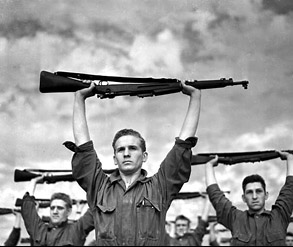
The weekend before July Fourth found World War II being fought all over again on the New York Times bestsellers list. Tom Brokaw’s book “The Greatest Generation” and its sequel, “The Greatest Generation Speaks,” held the No. 2 and No. 3 spots, respectively, flanked by James Bradley’s “Flags of Our Fathers” at No. 1 and Bob Greene’s “Duty” at No. 9. While the preponderance of titles relating to the war and its veterans constitutes an obvious trend (sales doubtless reflected a recent spate of Father’s Day gift giving), “The Greatest Generation” is the real phenomenon. The book has been on the New York Times bestsellers list for more than 80 weeks now and shows no signs of flagging.

If you are recovering from severe head trauma, or have been overseas for the past year and a half, you may not know that Brokaw’s book is a celebration of the generation of Americans who survived the Depression and fought the Second World War — my parents’ generation. As the title implies, “The Greatest Generation” is a straightforward, largely unironic appreciation of the (mostly) men and women who served. The NBC anchor interviewed scores of veterans and their kin to come up with the 50-odd sketches that make up the book. (The sequel is drawn from the voluminous responses he first received.) There are famous people and unknowns chronicled here, men who escaped the conflict unscathed and others who paid dearly.

To Brokaw, all are united by a certain stoicism and bravery. “They faced great odds and a late start, but they did not protest,” reads a typical quote, and they didn’t quit when they made the world safe for democracy, either. “They helped convert a wartime economy into the most powerful peacetime economy in history,” Brokaw writes. “They made breakthroughs in medicine and other sciences. They gave the world new art and literature. They came to understand the need for federal civil rights legislation. They gave America Medicare.”

All of which sounds too good to be true.

“I keep saying, ‘They weren’t perfect, they made mistakes, there were failures,’” Brokaw told me in April. “There are even accounts of those failures in the books.”

But the fact that those shortcomings don’t register with readers says a lot about who is buying the book: veterans of the war — now in their 70s and 80s, many of whom have formed Greatest Generation clubs and held Greatest Generation reunions — and their children, some of whom are finally ready to listen to their parents’ war stories.

Mortality certainly has something to do with it: Approximately 32,000 WWII vets die every month, according to the Department of Veterans Affairs — a little over a thousand per day. For many men of that generation, war was the defining experience of their young lives, just as the absence of war and, in some cases, resistance to the war in Vietnam were the defining experience of many young men of my generation. Those are a lot of the people buying Brokaw’s book, trying to make peace with their fathers before they die and, perhaps, close what newsmen like Brokaw used to call the generation gap.

But closure is one of those overrated concepts in American culture today. It’s as if our recent history were an episode of “Oprah” and everyone is supposed to cry and hug before the credits roll. There is a reason there are so few rough edges in Brokaw’s books: It is considered almost as much in bad form to speak ill of the dying as it is to speak ill of the dead, and the same sort of sentimentality we mocked and loathed in the ’60s is making a comeback now, at least when it comes to our own parents. “The Greatest Generation,” as the title implies, is a valentine and, for some of those grown children buying it for their parents, a peace offering. But peace is not always so easy.

Growing up, my brothers and sisters and I heard plenty about my father’s war experiences in the Marines. He enlisted just after his 17th birthday, in May 1942, and served as a gunner in a torpedo bomber in the Solomon Islands. As kids we marveled at his stories of close calls in combat and out (he told us a sniper’s bullet grazed his hair when he stuck his head out of his pup tent once), and wondered at the photos of him from that time. There was one in particular that caught our fancy: young Dad, dressed in khaki pants and a T-shirt, cradling a machine gun and smiling like he’d just won the lottery. Upon receiving the picture in the mail his mother was said to have cried, “They’ve made a killer of my baby!”

Killing was not much on the mind of most of the veterans represented in Brokaw’s books. Congressional Medal of Honor winner Bob Bush, who served as a Navy medic in Okinawa, is representative of the men the reporter profiles. After enlisting he told his mother, “Mom, I’m going into the service to help people, not to kill them.” Not so my dad.

“We were all hot for action in those days,” he says when I ask him why he chose the Marines. “I wanted adventure — they were having a big war out there and I was missing it.” Life on a small farm (near Ellwood City, Pa.) seemed awfully tame compared to the stories that filled the papers every day. Though the Marines sent him to aviation mechanics school (over his heated protests), they later relented and allowed him to attend gunnery school.

“There had previously been a height limit of 5-10,” recalls my 6-foot-tall father, but the battles of Midway and Guadalcanal nearly wiped out their supply of right-height gunners. “Now they’d take anybody.

“I was a turret gunner in the Avenger. They started off the war, at Midway, with the Douglas Devastator. The only thing it devastated was themselves. You’d just fire on them and shoot ‘em down. They were slow and clumsy and the torpedoes weren’t any good, which didn’t help any. That’s why we were wiped out so badly at Midway. Torpedo Squadron Eight was annihilated completely; I think one pilot came back. Another squadron, they sent out 10 and I think two came back. The torpedo squadrons were considered to be sudden death.”

The appeal of a job universally referred to as “sudden death” is hard for many people to fathom today. The relentlessly romantic recruitment campaign launched by the U.S. government — as blatantly nationalistic as any propaganda commissioned by Stalin or Mao — fed the gallant fantasies of many young men at the time. The age was closer to the chivalry of Kipling than the chaos of the Korean War, and Europe had been at war for years when the U.S. finally joined in.

“I was a romanticist but a lot of other people certainly weren’t,” my father says now. “At 17 I forgive myself, but I’d never do it again.”

Never do it again? For many of the veterans in “The Greatest Generation,” the experience of the war is sacrosanct, and the vows of the military more important even than those of marriage. Joe Foss, another recipient of the Congressional Medal of Honor, told Brokaw, “Folks now just don’t have an appreciation for what an oath means. When we took the oath when we were sworn into the Marines, it was a contract. That’s what we went out there to defend.”

At a time when most WWII veterans are taking their victory laps, reminding anyone who will listen that they saved civilization, my father takes a somewhat contrary position. Of the First World War (which his father tried to join by lying about his age) he says, “We went off to war and we didn’t get anything. They could have given us Canada, at least. I think the motto after World War I should have been, ‘How about Canada this time?’”

Of the European conflict, he says the Germans weren’t that bad, and we had no business fighting other people’s fights, be they in defense of England or China. And yes, he is one of those revisionists who think FDR not only knew about the attack on Pearl Harbor in advance but may have been somehow complicit in it.

“We were hopped up because we believed that they had attacked us,” he wrote me after a telephone conversation about the war. “I’m sure plenty of old vets today would beat me to death with their crutches for even suggesting we were suckered. You may live to see the tide of opinion change — when all the people who were personally involved are dead.”

My mother served in the Marines as well, teaching in a gunnery school. The women of the United States Marine Corps were not as famous as their sisters in the WAVES or the WACS, and didn’t even get a decent acronym. “They used to call us a very unflattering thing among themselves,” she recalls of the men in the corps: “the BAMs, the broad-assed Marines.”

Hers was a hard-knock life — her mother died when she was a teenager and she cared for her father and siblings until she left home — and when the war broke out, it offered the opportunity of escape, mixed in with a higher calling. “Something was going on and you weren’t part of it,” she says when I ask her why she joined. “There was no fear or gallantry; I just wanted to be part of it.”

It was while teaching at a gunnery school in California (she instructed Marines in firing at planes on a movie screen, using what was essentially a toy gun) that she had what she calls “my only claim to fame.” Tyrone Power was in her class one day — something the other women she worked with had to point out to her. “He was a handsome, dark-haired young man — as most of them were,” she says. “They were very clean and neat-looking in their uniforms.”

Here my mother taps into one of the less-discussed aspects of women in the service: “For me it was a job,” she admits. “It was something to do and it was exciting. And besides, there were men around.” The pickings among civilian men were slim, remember — and not altogether choice.

One of the soldiers she met was my father, who had returned from his first tour of duty with a bad case of jungle rot. “He had already been and thought he was awfully salty,” says my mom. “In fact, they called him Salty for a while because he got up and said nobody had to tell him how to shoot that goddamned gun.”

By the time his jungle rot was cured and he was ready to go back to the South Pacific, the Japanese had surrendered and the war was over. My parents married and continued to live on the barracks until my father mustered out in May 1946.

- – - – - – - – - – - -

Tom Brokaw was born in 1940, a “niche,” as he calls himself. A proud native of South Dakota, Brokaw is the archetype of the Good Son. He sees himself as a bridge between the two generations he stands between — the boomers and their parents — and is amazed at the ignorance many veterans’ children have of their folks’ wartime lives.

As recounted in many speeches and editorials, Brokaw’s interest in the war generation manifested itself in 1984 when he was doing a documentary on the 40th anniversary of D-Day for NBC News. Ten years later, during a ceremony honoring the veterans of the same conflict on its 50th anniversary, he said, “I think this is the greatest generation any society has produced.”

“That’s my story and I’m sticking to it,” Brokaw tells me, nearly six years later, and he’s certainly found a lot of people to go along with him. (It’s worth noting that some of Brokaw’s colleagues who are among the “Greatest Generation,” such as professional curmudgeon Andy Rooney, protest the appellation.) Aside from the first book and its sequel, his conceit has yielded an NBC documentary (available on videotape) and he is now considering a third book on the subject. In this one, he says, he may accentuate the negative a bit more, tell a few more tales fraught with postwar failure and disappointment.

“It might be helpful to kind of underscore that a little more and give it just a little more context,” he says. “Because I think there’s a lesson in that, as well. With their own failures came successes and understanding — even insights.”

“You kind of get the laurel pressed down upon your brow whether you like it or not,” my father says when I ask him how he likes being part of The Greatest Generation. When I ask him if he thinks men were more selfless then, his response is equally jaded.

“I don’t buy it,” he says with a laugh. “I was just reading about the Mexican War here and how they were saying, ‘What we need are more selfless men!’ That’s fine for the guy who’s not going. Everybody’s for himself, to a certain extent.”

He attended the University of California at Santa Barbara and then UC-Berkeley while my mother began to have children, five in all. He majored in English and ended up teaching but not, as I learned, because he thought it was some great calling.

“I thought I’d be a writer but I could never get going on it,” he says now, with a candor that surprises me. “I thought, well I can teach, anyway. I should have tried something else. Your mother had her first baby by then and I was really pushed for time, I was out of school and I had to get a job right away.”

That sense of desperation plagued a lot of men after the war — more than Brokaw’s books suggest, certainly. At the time it was only occasionally acknowledged, as it was in the classic film “The Best Years of Our Lives.” “The veterans hospitals were very full of returnees,” my mother recalls. “Suicides, people who had lost everything. Their jobs were gone. Their skills, whatever they were, weren’t suitable to the civilian world. Who takes guns apart and puts them together, like we did then?”

For some men, military experience fed directly into their work lives. “The Greatest Generation” is filled with countless stories of struggles in business — almost all of which, inevitably, led to success. Bob Bush bought a small lumberyard in Washington that he and a fellow vet turned into a juggernaut. “They had learned in their military training how long they could go without sleep and still function,” writes Brokaw, “so they developed a plan. Every other week, one of the partners would work a full 24-hour day, driving through the night to Portland [Ore.] to pick up an extra truckload of lumber. That demanding schedule went on for seven years.”

By the same token, the regimentation of military life — not to mention the mindless, by-the-book bureaucracy of its day-to-day operation — prepared many vets for corporate life. “They were the We generation, not the Me generation,” says Brokaw. “They really did believe in collective effort and the big corporation. They thought that’s how you got things done … They came back and went to work for General Motors, or GE or RCA, and lived the corporate life. Now there was the downside to that, but that’s kind of how they were raised, in big institutions.”

This is Brokaw in classic Good Son mode. There is a photo of him as a young man in his first book; he is wearing a jacket and tie and sporting a crew cut. Bell-bottom pants and a little hair on the collar were about as far out as he got in the ’60s, he tells me. And philosophically as well as sartorially, he seems uncomfortable with the condemnation of corporate culture that most of us embraced. It’s easy to see what such pull-together, can-do thinking did for IBM or GM — especially if you were the president of the company or a shareholder.

As a teacher in California’s public schools, my father did not so much join a corporate structure as follow the jobs (albeit within a considerable bureaucracy). In the early ’60s, we moved to Crescent City, a rather beleaguered fishing and logging village near the northernmost part of the California coast, where my father taught high school English. It was there that my parents’ marriage fell apart, and by 1966 they had divorced and divided the family, with my father taking custody of my older brother and sister while my younger brother and sister and I stayed with Mom.

My parents separately moved closer to the Bay Area (my father remarried), and my brothers and I took our cultural and political cues from whatever was going down there. I remember having a knock-down, drag-out fight with my mother over whether I would dodge the draft or fight in Vietnam. We had this fight when I was 14, a good four years before it would even be an issue. (I had been playing Army just a few years before.) But my attitude, even at that tender age, struck my mother the ex-Marine as downright treasonous.

“I do remember when you kids were all doing the peace march thing,” she says. “I thought, ‘We never did that.’”

My father was of two minds during the Vietnam War. “I felt that we should go and fight and at the same time I felt we got in the wrong goddamn war at the wrong place,” he says. “They weren’t fighting it properly. I still think the old military axiom is, Go for the throat, for the king. We should have made it a flat-out, all-out attack on North Vietnam. Instead they pissed around in the jungle, and the longer they did it, the madder I got.”

His anger was not confined to the Pentagon, or the Viet Cong, for that matter. I remember a blistering conversation we had about People’s Park in Berkeley, a few blocks of real estate the university wanted for housing and the people wanted for, like, the people, man. Gov. Reagan sent the National Guard in, a protester was killed and I ended up screaming at my father about it.

I’d never been to People’s Park, mind you; Berkeley was a good three hours from where I lived and meant almost nothing to me personally, but the stakes were higher then. Everything was personal. My father had been back to his beloved Berkeley and found the place overrun by freaks. Soon his van was sporting a “Democrats for Nixon” bumper sticker and he was carrying a .45 with him when he drove. “This is in case the revolution starts,” he told me once, racking the pistol before my startled eyes. What the insurgents would want with Rio Vista, Calif., was something he never explained.

But beneath the reactionary front, he was starting to have his doubts. “I remember driving across the Bay Bridge and being behind a military truck full of stuff, headed for Travis Air Force Base, and I looked at all these things piled up in the back and realized they were caskets,” he recalls. “Jesus, that gave me a terrible turn. Thinking Brian [his oldest son] could have been in one of those.”

I never heard my father talk about seeing those caskets that day, and I doubt my brother Brian has, either. My father is a remote figure, emotionally and physically. (He’s retired, living in a double-wide in a trailer park in Barstow, Calif.) I did not know that he had ever thought of us in the context of war. I did not know that he had ever had his doubts — about that or much of anything.

My mother remained true to her liberal roots. It was with her blessing that I picketed a Safeway with the United Farm Workers, and I still remember her getting me out of bed to watch the news of Robert Kennedy’s assassination. She came around on the subject of the Vietnam War as well. She also believes my generation would rise to the occasion if our nation was truly threatened. “If something momentous happened,” she says, “if we went to a war with a major equal of some kind, I think people would scurry around like crazy.” My father goes her one further:

“I think this generation, if there was what they thought was a just war, would do just as well as we did,” he says. “Probably better. You guys don’t smoke as much.”

Gym-fit boomers, spoiling for a fight! The Gulf War saw millions of same watching CNN and cheering as Norman Schwartzkopf showed film of “smart bombs” taking out enemy installations. Game over! It seemed too easy — and as Saddam Hussein continues to remind us, it was.

In the documentary made from “The Greatest Generation,” Frank Kilmer, the son of a former prisoner in a Nazi POW camp, admits to Brokaw that he envies his father his war experience — not the danger of the bombing runs or the fight for survival in the camp but the sheer certitude of his actions. For his father, he said, going to war “was a clear road to virtuous activity. I think in our day and age, it’s a lot harder to find.”

But as writers from Homer to Remarque have reminded us, it is a “virtuous activity” that involves the death of many young men. By 1945 the Germans were sending pie-faced boys just a few years past childhood to serve as cannon fodder. The justness of the cause certainly served to ameliorate many of the horrific memories veterans of that war brought home with them. (Vietnam vets had no such solace.) But it does not erase the stain of the memory, as the emotion many of Brokaw’s subjects conjure up bears witness. It does not wash away the blood.

And as truly noble as I believe the author’s intentions were, as much as Brokaw wants to honor the experience and memories of those whose lives he chronicled, the Greatest Generation phenomenon is only reducing it to a clichi. Like Steven Spielberg’s “Saving Private Ryan” — which began so well, conveying a sense of claustrophobia and fear as sharp as the taste of metal on the tongue — it fades to sepia as an old duffer asks his wife if he’s been a good man.

There isn’t much that’s sepia-toned about my dad. As a teacher I think he must have been a tyrant, and as a father — well, suffice it to say his phone isn’t ringing off the hook on Father’s Day. Some of my siblings have no desire to speak to him and those of us who do sometimes wonder why we bother. I know he sometimes wonders about his own life and its purpose, if not whether he has been a good man. But he is not going all that quietly into his dotage, and the last thing I expect him to accept is the accolade of greatness as they close the coffin lid.

Continue Reading Close

Brill’s folly

What if you launched a Web site and nobody came?

  • more
    • All Share Services

It may be early to pronounce Contentville, Steven Brill’s megasite for readers — “the Web’s first store run for and by people who love content” — a nonstarter. But the shocking lack of press generated by its arrival on July 5 certainly seems to be a bad sign.

Timing is everything, and in the wake of some well-publicized layoffs at content sites (including this one) media watchers may simply be too overcome with skepticism to sample Contentville’s wares. A pure content site in this day and age? their silence says. You must be dreaming. Oh, and you’re going to charge people for it? (More silence, rolling of eyes.)

“Skepticism is a virtue,” declares the cover of Brill’s Content, but as with most virtues, a little of it goes a long way.

To be sure, the knives have been out for Contentville ever since Brill announced his intention to join with such heavy hitters as CBS, the Ingram Book Group and the New York Times. Since its launch two years ago, Content, the magazine, has presented itself as the voice of morality in media, calling newspapers, networks, magazines and Web sites on their perceived shortcomings. (Fact-checking is a particular bjte noire of Mr. Brill’s.) And the magazine has continuously viewed merger mania in the media world with alarm, proscribing the control of information by the few.

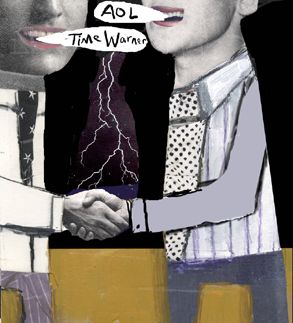
But the cavils of Brill’s critics seem naive to me. First off, the very existence of entities like AOL Time Warner have made the urge to partner almost a self-preservation instinct. (Have Feed and Suck, which announced this week they were forming something called Automatic Media, sold out? And am I the only one who thinks they should call their new site “Fuck” rather than “Seed”?)

Second, Brill is not hampered by personal relationships. As a former Content staffer told me, “Steve will go after his friends.” In the inaugural issue, chairman and CEO Brill lambasted the press for its coverage of the Kenneth Starr investigation; Brill’s broad brush tainted many whom he calls friends. It’s not likely he’s going to cut the New York Times slack in his magazine because it’s supplying archived stories to Contentville.

For despite the confusion of names (and Contentville — which comes to you from the branding minds of Olgilvy and Mather — is one of the cooler Web site names I’ve heard in a while), the sites have damned little to do with each other. Yes, Contentville will borrow from Brill’s Content when appropriate, but by and large they are separate entities.

The magazine is perking up as new editor David Kuhn breathes some life into its rather humorless bones. (Now it’s time for my full disclosure close-up: I have talked to Kuhn and company about writing something for the magazine.) As staff writers were redirected to the Brill’s Content site, many chose to brave the New York magazine market instead.

Kuhn’s emphasis on more freelance writers (and, so far at least, less “gotcha” stories than the old BC) certainly flies in the face of the original blueprint. From its inception, Content boasted that all food was prepared on the premises. Its staff writers were supposed to be like Eliot Ness’ Untouchables: incorruptible, because they served only one master. (Writers were discouraged, and sometimes forbidden, from writing for other publications.)

All of which is interesting, in an academic kind of way, but has little to do with Contentville. The site stands on its own, ready to supply all manner of, well, content to a hungry readership — at a price.

And there, as the fellow said, is the rub.

According to Brill’s publicist, Cindy Rosenthal, last week’s launch of Contentville was a “soft launch,” as they say in the business. This always seemed to me to be cheating, an attempt to have it both ways with critics, especially when the site’s proposed launch has already been delayed several times. But the work-in-progress nature of Web sites is one of the distinct advantages of this medium: What you don’t like today may look different tomorrow.

So let’s look at Contentville today. A legend atop the front page trumpets: “Where honest expert advice and the Cross Content Search combine to bring you the best stuff — magazines, books, article archives, speeches, screenplays, doctoral dissertations, legal documents, TV transcripts, rare books and e-books — on any subject, at great prices. Readers rejoice.”

I don’t know about you, but when I read that list of “stuff,” I think of that old Sesame Street song: “One of these things is not like the others …” Or more than one, in this case. Because of its niche nature, there may be more of a market for doctoral dissertations (for example) than you would think. (The site boasts that you can search over 1.5 million, published since 1871.)

But books and magazines are pretty well represented online. The best-known book sites are having their own much-publicized problems right now. And though Contentville says of its magazine subscriptions, “Subscribe now and we’ll rush you your first copy within 24 hours,” how many people need a copy of Dog World (one of the titles offered), or any magazine, within 24 hours?

Contentville has received good press for banding together independent booksellers (many of whom serve as on-site experts in various disciplines) to sell their books online (more wagon circling). The site’s Chapter One feature (which presents the first chapters of current titles) is winning. But can Contentville compete with established sellers like Amazon and Barnes & Noble? What force, save bankruptcy, would sway millions from going with what they know?

Searching screenplays, I found none by Alan Smithee (the fictional name some writers put on scripts they don’t want credit for) — but none by Michael Tolkin (“The Player,” “The Rapture,” etc.) either. A search for “Quentin Tarantino” yielded only the Miramax book of the “Pulp Fiction” script, $8.96 ($8.37 for members) — $1 less than Amazon. But it’s the only Tarantino title here, compared with Amazon’s six (two scripts and four books about the auteur, God forbid — and those are just the ones on hand).

In New York and Los Angeles, you can buy scripts on the street (literally), sold by vendors downtown, right beside the incense and sunglasses. And on the Web you can find them at sites like the Daily Script, for free, no less. (OK, they link to slow-loading pages in all kinds of formats, but they’re free.)

In my experience, the Web is haunted by a hungry pack of bargain shoppers. They want convenience, yeah, but they also want value, and when you can download music, pictures and games (you know, fun stuff) for free the wisdom of charging for Nixon’s Checkers speech, or William Jennings Bryan’s “Cross of Gold” crowd-pleaser seems specious. With a little patience I found both online. For free, of course.

Not that I don’t wish Contentville well. It did my heart good to find two dissertations on a book that I had not heard word of in decades (Tom Kromer’s “Waiting for Nothing”), and I’m pleased to think young people still turn to forgotten writers of the Great Depression for a dose of nihilism. Though not pleased enough to spend $29.95 to find out what they think about it.

A final word of caution: A colleague wrote me to complain that he had thrown away the card on his last subscription copy of Content thinking the subscription would lapse, and that he wouldn’t receive the magazine anymore. Much to his surprise, he kept receiving Brill’s Content — and the bills. Sure enough, I received my “last” copy of Content with a cover card that says (in not particularly conspicuous type), “I don’t want to lose Brill’s Content. Please renew my subscription, and continue it each year, unless I tell you otherwise” (emphasis mine).

Nowhere on this card is a box marked NO that you can check and return; neither is there an 800 number listed, where a reader might call and cancel his subscription. Most magazines assume no reply means you don’t want the magazine, and in fact will bug you mercilessly, like some scorned suitor. (“Was it something we said?”) Though there is nothing illegal about such chicanery, and magazines play all kinds of games with their circulation numbers (Content claims a circulation of 325,000, but after two years has still not registered with the Audit Bureau of Circulations), the practice smells.

Thank God there are no blow-in cards on the Web.

Continue Reading Close

Can’t anyone around here edit?

As long-form narrative pieces go the way of Diogenes, magazines search for that rarity: An editor who knows how to edit.

  • more
    • All Share Services

When I went for my first interview at a national magazine I was told they were looking for a “text editor.” I remember thinking, “Isn’t text what editors edit?” I don’t mean the people in art or production who carry titles like “photo editor.” This particular magazine had at least a dozen editors on the masthead, and to hear the fellow who hired me tell it, not one of them could line-edit a piece, let alone take a story apart and put it back together.

Not one of these editors, in other words, could edit.

Then I moved to New York, hay sticking out from under my hat, and went to work for women’s fashion magazines. There it was a given that the fashion editors weren’t generally editors in the green-visor sense, and weren’t supposed to be. The titular head of one magazine where I worked seemed to do nothing but attend parties and chase girls: It was like working for a French Harpo.

At Vogue, where my wife worked, the division was more straight-ahead. They broke the editors down into two categories, the Show Ponies and the Work Horses. The Show Ponies did just that: They showed up at swank events, went to the collections, got their name in the gossip columns and in general represented. The Work Horses, well, they put the magazine out.

Bo-ring.

Now, one recession later and post-Internet, there are more magazines than ever (not to mention Web sites) and fewer editors to go around. And, not surprisingly, a lot of these editors can’t edit. Text, that is.

Sure, they can write and probably edit (in Quark, preferably) little bits and blurbs of copy. They can make a reference to ‘N Sync or “Survivor” in the wink of an eye. But they can’t sit down and edit a long story. In some cases they may have never read one. But there is certainly no sense that the art of editing a long narrative piece is much valued in these hypertext times.

“I don’t think it’s being lost,” says Esquire editor David Granger. “I think it’s being devalued somewhat. When magazine companies look at what earns money, there’s no tangible way to make the case that great stories earn magazines money. You can point very directly to cover lines about sex or women with large breasts or even service as things that bring readers, and by extension advertisers, to the magazine. But I think it’s a little bit more of a leap to say that great writing is one of those things that should be treasured in a business sense.”

That lack of respect on the business side often filters down to the peons toiling below (the work horses, if you will). And Granger is in the fortunate position of editing a magazine that still makes its bones with long pieces, at a company (Hearst) that has been extraordinarily patient with him as he has helped the venerable title find its way. (All of that patience seemed to have paid off when Esquire was nominated for five National Magazine Awards this year.) Most editors don’t have that luxury. The company generally wants results and wants them now and the Condi Nast habit of sacking its editors in a nanosecond has spilled over to places like Time Inc., which dumped Real Simple editor Susan Wyland after only two issues.)

“Magazines used to have three to five years,” says veteran magazine editor Lisa Chase. “Now it’s one. And a good magazine doesn’t often find its legs right away; it’s tricky.”

Chase was last an editor at Talk, a magazine that, it could be argued, is still finding its legs. She left rather famously when she and editor Tina Brown disagreed over the treatment of a story on Unabomber Ted Kaczynski. (The story, by writer Stephen J. Dubner, was later published in Time.) But she liked Brown’s approach to other aspects of the magazine.

“Talk was extremely entrepreneurial, which is one of the reasons I went,” says Chase. “I also wanted to work with Tina. But afterwards I got the idea in my head that it would be nice to have my own business.”

Making the rounds of the magazines in New York, Chase found some common complaints. “A lot of people are desperate for someone to help them with pieces, help fix pieces, edit pieces, do triage on pieces.” Many editors she spoke to were keen to hire her, but she was determined to be her own boss. As she found herself offered more work than she could possibly handle, she realized that she held the solution to the many editors’ problems.

“There was this sort of simultaneous problem: more magazines, fewer editors,” says Chase, who worked on Outside magazine in its Chicago locale. “And, having not spent a lot of time in New York, I know a lot of people who have chosen not to come here for various personal reasons. I’m in my mid-30s and a lot of my contemporaries are having children. But they want to work.”

From this supply-and-demand situation the Editor’s Room was born. She was driving past Lenox Hill Hospital with a friend when he said to her, “That’s what you should do.”

“What,” she replied, “I should go work in a hospital?”

No, he said: emergency room. Editors’ room. You should have an ER for stories.

True, much of the language of editing is borrowed from medicine. A bad story needs CPR, triage, is going into the ICU. With fellow Outside alum Laura Hohnhold she started the Editors’ Room, which now features a floating staff of six editors and is taking on more work than it can handle. Early clients have included Offspring, Wired, Us Weekly and Men’s Journal — and the offers keep on coming.

Which is not necessarily to imply that the magazines engaging the ER’s services don’t have capable editors on hand. In many cases they just don’t have enough.

“Ideally you’ve got all those skills and then some on your own magazine staff,” says Men’s Journal editor Mark Bryant, who worked with Chase before at Outside. “You’ve got a lot of people who can edit at that level. And they all have time to do that. But it’s very labor-intensive and it’s far from a perfect world and I do find there are times that a piece needs an enormous amount of attention that you know will be worth the effort. But it’s attention that no one on the staff has time for.”

Complicated stories are not the mitier of most magazines, obviously, and the skills required for dealing with them are not in as much demand as they may once have been. “Let’s face it,” says Bryant, “there are not very many magazines, and not very many magazine editors, who still care about storytelling. The emphasis at most magazines is not on great reporting and writing.”

Indeed, says Chase, many editors — and writers — are frightened by the very prospect of reporting. “I can’t tell you how many editors entice writers by saying, ‘You won’t have to do any reporting.’ I thought reporting was the building block of journalism.”

Clearly she hasn’t been looking at the lean, mean, thinner-thighs versions of magazines out there now. Condi Nast’s Lucky has all but done away with meddlesome stories by making a magazine all about shopping (it’s the shoes, stupid), while a new magazine called List will feature nothing but, well, lists. Try editing your way out of that.

Chase is quick to point out that there are a number of great line editors still out there doing the thankless task of editing difficult stories, line by line. She mentions Pat Towers at Elle, Susan Morrison at the New Yorker and Ilena Silverman at the New York Times Magazine.

Silverman, who recently arrived at the Times after years of working for Art Cooper at GQ, says she is no triage artist: She can’t make a sick story dance. “My skill is not taking a piece by a so-so writer and making it great,” she says. “What I can do is try to help a writer who is really good, and push them and push them.”

And how do you push a writer without making him angry? (There’s a joke there involving drink but we’ll let it go.) Often, according to Silverman, it’s just a matter of talk. “Sometimes writers have a more interesting story in them than what they sent in. A lot of it is talking. I do a fair amount of talking to people before they start writing.”

And when the piece is closing and she is still fussing and finessing the last little word choice, she often finds her writers gratified by the attention. “They can’t believe someone cares as much as they do.”

For Chase, a lot of what she sees missing is that sense of care — care for the writers and care for the business. “We have a real love of writers,” she says of her nascent shop. “It sounds like a corny thing to say but it really is what we’re about, that relationship, that editor-writer relationship. I think it’s been lost in a lot of the business in the last 10 to 20 years.”

She credits much of her love of stories and writers to mentors like Bryant and former Outside and Men’s Journal editor John Rasmus. (The idea of a mentor seems itself passi, she says, and impossible to find when you leave your job every nine months.) They gave her stories by Gay Talese and Hunter Thompson, long pieces that broke the mold and redefined the magazine feature, stories that grabbed the reader by the collar or took him by the hand, saying, Get a load of this. Not much need for those at a magazine like List.

“I think the emphasis has moved to pop, heat, buzz,” she says, invoking the modern magazine equivalent of snap, crackle and pop. “The problem with all three of those is that they are all fleeting; by definition they’re not going to last long. Something can be hot but eventually it’s going to become cold.”

Continue Reading Close

Page 2 of 18 in Sean Elder