Thomas Bartlett

Hit Mann

Aimee Mann explains her eagerly awaited new concept album, her distrust of major labels and why she's spoiling for a good fight.

  • more
    • All Share Services

Hit Mann

After dissolving her ’80s band, ‘Til Tuesday, and pursuing a solo career, Aimee Mann drew as much attention for her consistently troubled, often outright antagonistic relationship with labels in the mid-1990s as for her music. Then director P.T. Anderson released “Magnolia” in 1999, a film he said was inspired by Mann’s songs, and which also featured some of her best work. It managed to focus attention back on her music and expose her to a wider audience than ever before.

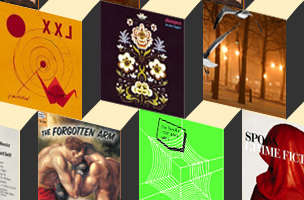
After that career boost, Mann steadfastly continued an independent career, releasing her last two records (“Bachelor No. 2″ in 2000 and “Lost in Space” in 2002) and her upcoming, much-anticipated concept album, “The Forgotten Arm” (available May 3), on her own Superego label. “The Forgotten Arm,” she says, is set in the early ’70s, and recounts the shaky relationship between John, a Vietnam vet and boxer, and Caroline as they meet, fall in love and set out on a cross-country road trip (go here to listen to a few sample tracks). Produced by Joe Henry and recorded over just nine days, it’s her most straight-ahead rock record to date, but the songwriting is as crafted and subtle as ever, a series of first-person accounts that delve into the psychological subtleties of the two characters with Mann’s customary grace.

That won’t surprise her fans; Mann is one of the best songwriters of her generation, unfailingly articulate and rarely abstract, but never overly wordy or self-consciously clever — which is quite a feat. She writes lovingly sculpted melodies that duck and weave and pirouette and double back on themselves with serpentine grace. She then pairs them with lyrics that offer richly detailed psychological portraits of broken lives. She clearly has a fascination with chronicling the lives of people who are falling apart, and her music often treads a delicate emotional line: Melancholy bordering on desperation, but simultaneously conveying a kind, motherly compassion and sense of comfort. She manages to be victim and savior at the same time, and the trick, I think, is in her voice, warm with intimacy but always somewhat detached from the stories she tells, touched with a chill of cynicism, unimpressed with her own emotional vulnerability. It sounds like a paradox, and it is, but that’s what makes her music so unusual and so moving. In her Grammy-nominated song “Save Me” (a rare instance of the Grammys singling out an artist’s best work), Mann is calling out for help, but she also sounds so wise and in control that you can’t imagine a better person to help her than herself.

I met with Mann on a Sunday afternoon, a day after she’d performed much of the new record to an appreciative crowd at the South by Southwest Festival in Austin, Texas. She was hungry, and rejected in no uncertain terms the TGI Friday’s in her hotel, so we talked over barbecued brisket at local Austin restaurant Threadgill’s.

Did you start “The Forgotten Arm” with a story, or with the desire to make a concept album?

As I started writing I just liked more and more the idea of having a story, and I think writing songs for movies put this idea in my head — it was almost like writing songs for a nonexistent movie. I had some scenes from movies like “Two-Lane Blacktop,” or a scene from P.T. Anderson’s first movie, “Hard Eight,” when Gwyneth Paltrow and John C. Reilly run off together, in my head. Because I’d written this song “King of the Jailhouse,” which is about these two people running off together, and that’s just such a classic thing, to feel like you can leave all of your problems behind.

Was that the first song you wrote for the record?

No, not the first one. I had a couple others, but once I wrote that one and realized that I wanted the record to be about those two people I went back and rewrote other ones a little bit to make them fit. Having it be a concept album makes it more interesting for me, and it gives me permission to not have to make all the songs different. I had a couple of songs like “King of the Jailhouse” and “Goodbye Caroline,” and thought, What the hell is this about? It just seems to be such a specific scenario, but I didn’t know the back story. So it was interesting for me to say, What would the circumstances be? Who would these characters be?

Does the record unfold chronologically?

Loosely. They meet at the Virginia State Fair in the early ’70s. He’s a boxer and she’s dying to get out of town because she thinks she’ll be a different person if she’s in a different place. So they set off together, and he’s got a drug problem, which starts to get more apparent.

What drug?

I don’t really have a specific one in mind. You know, alcohol and whatever else is around. The great thing about a concept album is that you can be as specific or unspecific as you want, choose which details you want to cover.

Why did you set it in the ’70s?

I had the image of these people meeting at the fair in the early ’70s because it’s this really perfectly white-trash image for me.

You have a thing for white trash?

Oh, I have a real weakness for white trash, a certain kind of rednecky thing.

You have become very interested in boxing. How did you get into it?

I don’t know. I just got interested in it and I had a friend who boxed and he gave me a couple of lessons. I really like fighting, sparring, that’s my favorite part. The fitness part doesn’t really appeal to me. I like competing but I’m not really about winning, necessarily. I like fighting with someone when we’re both doing our best, and when I get caught with a punch I’m just like, Good shot, way to go. It’s funny sparring with girls because we always apologize. I mean, yes, I’m trying to hit you in the head, but I’m sorry for succeeding. Sometimes we spar with guys, because if they’re bigger and more skilled they can work on defense while we throw punches at them. It’s very funny to see the girls smacking these guys around and apologizing for every punch.

The character of John is based on this friend of mine who is a drug addict, a semi-recovering drug addict, and he’s a boxer, and so that’s how I got interested in boxing. But my personal interaction with him was also my real education in real hardcore drug addiction.

Was he the source of the forgotten arm image?

Yeah, he’s a real character. That was his name for a move he made up. He just came up with it on the spot when he was explaining the move to me.

You also wrote quite a bit about drug addiction on your last record, “Lost in Space.”

But that was drug addiction more as a metaphor for other kinds of internal problems. Everybody knows what it’s like to be obsessed or preoccupied, and have behavior where you always think, Why do I do that? Every day I vow not to eat a doughnut in the morning and yet I can’t seem to stop. Everyone has their vices like that. But the thing with drug addiction is that it’s this sort of secret world. If you’re not a drug addict nobody else understands. On “Lost in Space,” it was a metaphor for those kinds of ideas, that kind of secret shame and alienation. I don’t think I really talk about addiction as much on this record, even though in a more serious direct way it is about it.

Why are you so intrigued with people whose lives are falling apart?

Well, there’s the question of why. How does this happen? How does it get so out of hand? It’s funny, the answer with drug addiction is the same as the answer for recovery: one step at a time. You keep taking steps further and further away from sanity, and you can wind up in a really, really fucking dark place. And I always think the more information you have the better, like maybe you can protect yourself from such bad choices.

Can you take me through a personal history of you as a music appreciator, what your tastes have been and how they developed?

There were always just a very, very few things that I liked when I was a kid. My parents had a couple of records I really liked. Peter, Paul and Mary, Glenn Campbell singing all those great Jimmy Webb songs, a couple of Beatles records. [A friend stops by our table and Mann says, "We're talking about my musical history of hating almost everything."] So there were a couple of Beatles records, and my baby sitter had Neil Young’s “Harvest.” It was almost always more singer-songwriter-y kind of people. Just real classic early ’70s, late ’60s pop rock.

Has that changed?

Not at all, it’s still the same.

And you still hate mostly everything?

Yeah. I always get asked what I’m listening to now. Nothing, really. In the ’60s and ’70s there weren’t a ton of people who had put records out, because people hadn’t yet figured out that you could make tons and tons of money. There weren’t so many people chasing after that the way there are now. I don’t know how people find music they really like! There aren’t any music magazines I really trust. And also I have a very, very specific taste in songwriting, because that’s what I do, and I try to write the kinds of songs that I really like. And I probably wouldn’t even care about doing that if there were a number of people writing songs that were exactly the kind of songs that I like.

How would you describe that specific kind of songwriting that you really like?

There’s a certain kind of melodic sense and a more old-school approach to songwriting, like a more crafted song. I’m not so excited about bands that are more about vibe than about good songwriting. But then again, the vibe has to be there too. And lyrics that are written to a certain standard, with the music married to the lyrics in a particular kind of way. When I write, I never write words first. I listen to the music and think, What does this sound like it’s about to me?

So who are some of the prime influences on your songwriting?

I spent a lot of time listening to Elvis Costello. At this point, though, I just need a little more emotional connection than Elvis often delivers. The wordplay is delicious and the love of language is fantastic, but I really need the emotional connection. What’s going on with you? What do you care about? What’s bothering you? It feels ungenerous to me otherwise. I want to know. I want to know what you’re thinking about. I definitely learned a lot of songwriting craft from him, though.

Burt Bacharach?

Yeah, I love Bacharach. Probably in “Bachelor No. 2″ that was really prevalent, and is a little bit less so right now.

Dylan? I hear his influence much less in your music than with most singer-songwriters.

I can’t say that I’m a Dylan fan, but I listened to “Blood on the Tracks” like 50 million times when I was a kid. There’s usually just one or two albums that I’ll get almost autistically attached to. You can’t pry it out of my fingers.

So “Blood on the Tracks” was your Dylan record; which was your Elvis Costello record?

“Imperial Bedroom” and “Get Happy.” Although really, I did listen to many of his records. More so than Dylan. You’d think I’d buy more Dylan, but I was happy with “Blood on the Tracks.”

Randy Newman?

Yeah, but he’s a little emotionally detached to me. I do like the way he writes from inside a character’s head. But I almost get the vibe of the kind of guy who can only be emotional when he’s really hammered. But yeah, he was a big influence. Especially with all the Southern stuff. I love that.

What about the super-literary types like Tom Waits, Leonard Cohen, Nick Cave?

Tom Waits is a great lyricist, but that kind of back-alley, whiskey-soaked thing is a bit too much for me. I like more melody than that. And that Leonard Cohen, bless his heart. Bless his little heart. I don’t really know Nick Cave’s stuff.

You don’t really reference the Bible or old blues lyrics enough to belong to that crowd.

I’ve got to start. You know what, that’ll be my next project. Or maybe I’ll just reference the A.A. Big Book instead.

Harry Nilsson?

Yeah, I think for earlier albums I listened to a lot of Nilsson. But he’s maybe a touch precious to be optimal. See! You see what a snob I am. If it’s not exactly what I do I’m not into it. Because I try to do exactly what I like.

Do the Beatles remain the gold standard for you?

You know, I think it’s just the state of mind I’m in now, but I can’t listen to the Beatles records anymore, I’ve just heard them too many times. I’m going to stay away from them for a few decades so I can hear them fresh again.

Are there any songwriters currently working whom you really admire, who write songs in the way that you like them to be written?

Well, Elliott [Smith], poor thing, until he died. I don’t know.

Were you ever concerned about becoming just a poster child for major label injustice?

Yeah, I got asked about that a lot. And the reality is, once I was off I just didn’t care, I just didn’t give it a second thought. It’s OK to complain for a bit but then you have to do something about it. And I felt like I’d done something about it, so I didn’t need to keep complaining.

If a label like Nonesuch or ANTI — one of the big labels that seems to be genuinely artist friendly — wanted to put out your next record, would you consider it?

No. I’d consider it if New West wanted to, but only because the owner is a friend of mine. I’d love to do a project with him, he’s awesome.

The press for your new record compares it repeatedly to a novella. Have you ever written fiction?

No, I’m a terrible, terrible writer.

Who are some of your favorite authors?

Fitzgerald short stories, that’s my favorite stuff. Edith Wharton, Hemingway, J.D. Salinger. The old classics.

Unless there’s something else interesting you want to talk about I think we’re done.

The things that are interesting to me wouldn’t be interesting to anyone else. I could talk for another half-hour about boxing. There’s nothing more boring than someone who’s got a hobby and just keeps going on and on about it. Dylan boxes! I’d love to spar with Dylan.

I think he’d be mean.

I bet he wouldn’t be so mean in the ring, though. That’s a really interesting thing about boxing. You can’t be mad. You can’t be mad at someone if they hit you. You can’t bring anger into it. When we all spar, you have such respect for each other, and you know how hard everybody’s working. It’s a lot of camaraderie. Like emotionally you’re more careful with each other because physically you’re less careful.

Last question, other than music, what are the things you love most in the world?

Just boxing. Right now, that’s it. Music and boxing.

Buh-bye, WMD. Hello …?

The demise of one column, the birth of another. Plus, an exclusive free download of a strange and beautiful song by a soon-to-be star.

  • more
    • All Share Services

Thanks to all the loyal readers who have written in to ask where Wednesday Morning Download has been these past few weeks. Here’s the deal: Wednesday Morning Download is no more. It has ceased to be. It is an ex-column.

But … I’ll be back in two weeks with a new real-time music column, updated daily. In addition to daily free downloads, there will be concert reviews, interviews, music news (and gossip), free downloadable mix tapes, and assorted musings on music. If you have any ideas for column features — or, as always, if you have a great download to recommend — drop me a line.

In the meantime, here’s a really stunning song, one of the most affecting, gutsy pieces of music I’ve heard in an age — and, I’m pleased to say, a Salon Exclusive Free Download (thanks to Secretly Canadian Records).

“Hope There’s Someone,” Antony and the Johnsons, from “I Am a Bird Now”
“Hope There’s Someone” completely flipped my perspective on Antony, New York chamber-pop cabaret performer and budding gay icon. I’ve known his music for a while now, and always appreciated the songwriting, but I’ve been unable to get past the gratuitous vibrato in his voice, his sticky, overflowing, campy shtick. Then I heard this song, and all my reservations were overwhelmed by the power of it. This is the work of a profound and fully formed performer, and what I had heard as lazy eccentricity I now hear as part of a perfectly realized, sometimes uncomfortably intimate artistic vision. He sings like Bryan Ferry with the warble taken past affectation to the level of confrontational, punk defiance; he sings like Little Jimmy Scott, the most angelic of vocalists; he sings, most daringly, like Mahalia Jackson, with a rich gospel contralto that should be laughable, but hits you in the gut with pain, not laughter.

Antony has loaded his upcoming record, “I Am a Bird Now,” with big-name cameos, including appearances by Lou Reed, Boy George and fellow warbler Devendra Banhart. But with the exception of the lovely “What Can I Do?” sung by Rufus Wainwright, the guest spots barely register: The stars aren’t here to add anything musically; they’re here to, by dint of their fame, help leverage Antony into the stardom he deserves. Here’s hoping it works.
Salon Exclusive Free Download: “Hope There’s Someone”

Continue Reading Close

Turn da music up!

A brilliant remix of 2004's best hip-hop album, drunken elation from a Macedonian brass band and an intriguing tune from a latter-day U2 -- free.

  • more
    • All Share Services

There are a few new R&B singles that are well worth the dollar apiece it takes to download them from your favorite digital music store. Tweet is a Missy Elliott protégé who was introduced to the world through one of Timabaland’s best-ever productions, 2002′s “Oops, Oh My.” The rest of her debut record, “Southern Hummingbird,” was pretty forgettable, but now she’s back was another great lead single, “Turn Da Lights Off,” this time produced by Kwame.

I can’t find much information about Tori Alamaze, except that she used to be a makeup artist. Her strange, sad and astonishingly good debut single, “Don’t Cha,” was produced by the consistently brilliant Cee-lo.

“Hills/Mulqueen’s,” Nightingale, from “Three”
Nightingale are a trio from Vermont who play a smooth, stealthily modernized kind of folk music, borrowing ideas and repertoire from Ireland, Quebec, New England, France and more, and weaving them seamlessly and cleverly together with an extraordinary blend of poise and passion. This song, the words of 1940s Vermont poet laureate Arthur Guiterman set to music by Pete Sutherland, is the opening track of Nightingale’s third and latest record, “Three.” The arrangement is simple, economical and delicately executed, with violin and accordion winding sinuously, seductively around Keith Murphy’s lonely tenor. Salon Exclusive Free Download: “Hills/Mulqueen’s”

“Dream Awake,” The Frames, from “Burn the Maps”
I first experienced the Frames live last month, and left intrigued and impressed but far from wowed. Since then, their upcoming “Burn the Maps” has steadily insinuated itself into my consciousness. The Irish band plays overtly dramatic, emotionally over-the-top music that often seems to be reaching for the grandeur and sweep of U2. But frontman Glen Hansard doesn’t have a Bono superman voice, he has the voice of a normal person and knows it, and he keeps the music on a very human, intimate scale. The band’s new record’s opening track, “Happy,” might be my favorite song of this young year (and I’ll be reminding you to download it as soon as it’s made available on iTunes), but “Dream Awake,” which moves from whisper to wail and back to whisper again, will work just fine as an introduction to the Frames. Free Download: “Dream Awake”

“Cudna Zena,” Kocani Orkestar, from “Alone at My Wedding”
The chaotic music made by Macedonian brass band Kocani Orkestar and other similar Gypsy Balkan brass bands, largely exposed to the world through the astonishing films of Emir Kusturica, is, for me, some of the most viscerally emotional in the world — from frantic, crazed, drunken elation to tearful, almost inexpressibly deep (drunken) sadness. I’ve found three tracks of theirs for download, through the excellent Belgian label Crammed. “Usti Usti Baba” (free download) and “Mi Bori Sar Korani” (free download) include vocals. I prefer the unadulterated brass experience of “Cudna Zena.” Free Download: “Cudna Zena”

“Home,” Six Organs of Admittance, from “School of the Flower”
Six Organs of Admittance are a California band led by repetition-obsessed John Fahey acolyte Ben Chasny. Their droning, neopsychedelic raga-rock, with lots of sincere strumming and eyes-closed improv, is entrancing if you’re in the mood, snoozy if you’re not. This track is made by the painfully expressive, beautifully degraded, disintegrating electric guitar sound. Free Download: “Home”

“Figaro (Stones Throw 101 Remix),” Madvillain, from “Stones Throw 101 Mix CD”
This is a brilliant remix of one of the best tracks on “Madvillain,” 2004′s best hip-hop record. An odd-meter African (Malian?) sample is tweaked just enough to fit in with a super-square beat, but not so much that the interplay among sample, beat and MF Doom’s wayward drift isn’t fascinating. Free Download: “Figaro (Stones Throw 101 Remix)”

Continue Reading Close

Don’t blame Ashlee

People are shocked -- shocked! -- when pop stars like Ashlee Simpson and Lindsay Lohan are caught lip-syncing. But why?

  • more
    • All Share Services

The recent, much-hyped lip-sync travails of Ashlee Simpson and Lindsay Lohan, both caught belting away with their mouths closed, and then, again, Ashlee’s possibly worse recent mishap (when she was caught with her mouth wide open at the Orange Bowl and a truly horrendous sound came out), prompt a basic question: Who cares so much about the actual vocal talents of a couple of teen queens?

The resounding, unavoidable answer: A whole lot of people. And they care for a whole lot of different reasons. There are the disillusioned fans who feel betrayed and the more loyal fans who rush to the defense of their beleaguered idols. (“Everybody lip-syncs!”) There are the people who heap scorn on those same fans for having been “duped” by these “frauds,” and suggest that the hapless tweens seek out some “real” music (usually Wilco). And there are the people, thousands upon thousands of them, who eagerly watch the embarrassing clips and soak up the delicious schadenfreude of it all.

All of those responses are, to varying degrees, silly, but none of them is as hard to take as the combination of self-righteousness, condescension and misplaced activist zeal displayed by those who feel that just laughing and moving on aren’t good enough. Take H.O.P.E. (Horrified Observers of Pedestrian Entertainment), which has gone so far as to set up an Ashlee Simpson CD Exchange, “offering the good people of America who have been duped into buying Ashlee Simpson’s CD” an opportunity to trade it in for “one of higher entertainment quality,” by artists like Elvis Costello, Neil Hamburger and Mr. Bungle. (The group’s Web site also includes this gem: “When one looks at the actual sales figures, Ashlee Simpson’s triple platinum-selling debut album sold to — at best — 1 percent of the population. No matter how much the publicists spin it, the fact is that 99% of the population is not particularly interested in Ashlee.”) These people need a sense of humor, a sense of perspective and, perhaps most important, a better name.

They should also check out Simpson’s CD, which isn’t half bad. Can she sing? Of course not! But only a fool would listen to her (or Britney, Lindsay, Hilary, etc.) for vocal prowess. We’re talking about glossy Top-40 pop music, at a time in its history when nearly all recorded vocals are so thoroughly sonically airbrushed and autotuned as to bear almost no relation to the original performance. A bad singer just means more work for the engineer (and, mercifully, fewer of the obnoxious melismatic flourishes compulsively used by “good” singers like Christina Aguilera; Ashlee’s big sis, Jessica Simpson; and assorted “American Idol” contestants).

It’s hard to feel as if it’s worth spending too much time defending Simpson and Lohan, who have handled their respective fiascoes so gracelessly and arrogantly — Lohan by publicly vowing never to lip-sync and then denying that she had even after she was caught; Simpson, classy as always, by blaming it on her drummer and then on acid reflux. But it’s also hard to feel as if they’ve done anything all that bad or shameful, or that the furor of the response they’ve received is in any way commensurate with the gravity of their crimes.

In the end, the whole thing strikes me as very much like — but even more trivial than — baseball’s recent doping scandals. It seems clear that a significant percentage of top athletes use performance-enhancing drugs, just as it’s obvious that most pop stars lip-sync, or at the very least use prerecorded vocals to bolster their live performances. But whenever an athlete or musician is caught in the act, he or she is met with reactions of shock, outrage and betrayal.

Even if this were all that important, even if it were a major artistic travesty worthy of our attention and outrage, it seems to me that the focus of that outrage is being seriously misplaced. Ashlee, Britney, Christina, etc. are not artists, they are just faces being used to sell these products, these songs. The products can be good (Ashlee’s “Pieces of Me,” Christina’s “Beautiful”) or even great (Britney’s “Toxic”), but the “artists” have very little to do with how they turn out. Any scorn or appreciation you feel for them should rightfully be distributed among the teams of producers, songwriters and managers who have steered these women to stardom. Whether you love or hate Linda Perry, Joe Simpson and production team the Matrix, don’t waste any adoration or loathing on Ashlee or Britney.

Why do people care so much? Jealousy might seem like too easy an answer, but in this case I think it’s the right one. We want our celebrities to be famous for a reason, to be especially beautiful, especially talented, especially special, and it rankles when they’re not. That’s why Ashlee Simpson and Paris Hilton, two unattractive, untalented women who happen to have become very, very famous, are so widely loathed.

It is, of course, absurd to think that fame is based on merit any more often than it is based on ambition, connections and dumb luck. But it would be nice to be able to pretend.

Continue Reading Close

Flash-forward 2005

The year ahead promises records from Beck, Kanye West, Stevie Wonder, even Paris Hilton. Plus: Free music from Marianne Faithfull, Iggy Pop and more.

  • more
    • All Share Services

Welcome to Wednesday Morning Download v.2005. There’s plenty of music to look forward to this year: a hotly anticipated rock album from Beck; a new record from 2004′s MVP, Kanye West, with a guest appearance from the much maligned but often brilliant John Mayer; welcome returns from Stevie Wonder and Scott Walker; near surefire genius from Outkast; near surefire comic relief from Paris Hilton; and the solo debut by hit-making production team the Matrix, which promises to be a work of evil genius.

And then there’s all the free music, which is what I’ll be tracking down for you. I’ve got a bunch of exciting tracks lined up already, but as always, I’d like suggestions. So if you know of a free and legal download that you think would be right for this column, post it on the Wednesday Morning Download Table Talk thread, or e-mail me.

“My Friends Have,” Marianne Faithfull, from “Before the Poison”
The majority of Marianne Faithfull’s new album, and ANTI records debut, was written by either PJ Harvey or Nick Cave (five and three tracks, respectively). Faithfull’s decision to have the two not just write songs but also produce them and provide instrumental accompaniment was both gutsy and canny. Gutsy because she’s inviting direct comparison with two such forceful, unmistakable artists; canny because it pays off so well. The Harvey tracks, performed with her longtime drummer, the brilliant Rob Ellis, and Portishead’s Adrian Utley, are especially effective, her guttural, punky songs suited perfectly to Faithfull’s cragged, desperately sad voice. Free Download: “My Friends Have”

Jens Lekman, Department of Forgotten Songs
This is a real treasure trove, a biweekly updated collection of unreleased demos, rarities and b-sides from Swedish wunderkind (and WMD reader favorite) Jens Lekman. His precocious baritone and ambitious lyrics can sometimes come off as a tad too self-conscious, but Lekman’s home-studio genius is astounding. Track after track combines samples, sequencing and a variety of live instruments in such unexpected but delightful ways that I think the young man has already surpassed the production skills (if not the songwriting) of his musical father, Stephin Merritt. My favorites from the current batch of songs include “Pretty Shoes,” “Bois-bis-o-boisa,” “Pocketful of Money” and “At the Department of Forgotten Songs,” but everything here is worth a listen. Free Download: “Department of Forgotten Songs”

“Ditshe Tshiekutala,” Konono No. 1, from “Lubuaka” In order to achieve success in the lucrative world-music market, it helps to be either slick and Westernized or rustically, sloppily traditional and “authentic.” That’s a shame, because it’s so often music that falls somewhere in the middle — rooted in tradition, but not dogmatically so — that is the most exciting. Konono No. 1 is a Congolese group that is driven by three thumb pianos, or likembes, amplified to the point of distortion and playing trancey, repetitive loops, surrounded by a cacophony of junkyard percussion and shouting voices. I fear they’re neither smooth enough for Starbucks nor primitive enough for trad-music fetishists, but they sure are fun to listen to. This link comes via Fat Planet. Free Download: “Ditshe Tshiekutala”

“The Matter (of Our Discussion),” Boom Bip, featuring Nina Nastasia, from “Blue Eyed in the Red Room”
Although it’s not going to be released until mid-February, there are already two mp3s available from hip-hop producer/electronic music composer Boom Bip’s upcoming “Blue-Eyed in the Red Room.” “The Move” (click here for free download) is a hugely satisfying feel-good mélange of analog burbles, digital clicks and woozy synth string sounds. In “The Matter (of Our Discussion),” Nina Nastasia gives a typically clear-voiced, understated performance over drifting, slow-moving clouds of harmony. Free Download: “The Matter (of Our Discussion)”

“You Better Run,” Iggy and the Stooges, from “Sunday Nights: The Songs of Junior Kimbrough”
Junior Kimbrough, who died in 1998, was one of the great modern bluesmen — but to call him a “modern bluesman” feels wrong, as Kimbrough, with his haunted, modal blues and obvious but apparently unconscious ties to African music, seems so much the product of a shadowy, mysterious past, keeping the enigmatic air that surrounded early bluesmen like Skip James alive well into the ’90s. Now Fat Possum records is preparing to release a tribute record, with versions of Kimbrough’s songs performed by artists like the Black Keys, Spiritualized, Mark Lanegan, Jim White, and the Fiery Furnaces. Although Kimbrough certainly deserves wider recognition, the idea of a tribute album is, in this case, a questionable one, because his greatness was so completely in performance rather than composition. Iggy and the Stooges’ punkified version of “You Better Run” is fun, though, especially with Iggy substituting his own name for Kimbrough’s in spoken sections: “On the way home I said, ‘Baby! You might still get raped.’ She said, ‘Oh, Mr. Pop!’” Free Download: “You Better Run”

Continue Reading Close

Holiday cheer

Christmas music that doesn't stink from the Silent League and Rickie Lee Jones. Plus: The best source for free, legal mp3s.

  • more
    • All Share Services

Holiday cheer

This is the last Wednesday Morning Download until 2005, so I have a handful of assorted bests, worsts and notables of 2004:

Best source of free, legal mp3s:
Better Propaganda

Best online music magazine:
Stylus

Best music-related blog:
Alex Ross’ the Rest Is Noise

Best album title:
McLusky’s “The Difference Between You and Me Is That I’m Not on Fire”
Honorable mention: The Silent League’s “The Orchestra, Sadly, Has Refused”

Most overpraised record of the year:
Brian Wilson’s “Smile”

Musical innovation I’m most eagerly awaiting:
An intimate, voice-inside-your-head, talking-to-himself rapper, the Cat Power of hip-hop. It’s the logical next step.

Most astounding gap in quality between two records from a single artist:
From the thumb-twiddlingly boring, hubristic depths of Elvis Costello’s maiden orchestral voyage “Il Sogno” to his pretty damn good rock record “The Delivery Man.”

Most embarrassing live TV moment:
No, not Ashlee Simpson on “SNL,” poor girl. It was Hoobastank butchering their already horrible hit single “The Reason” on the MTV Music Awards. At least Simpson knows she can’t sing, and had the good sense to use pre-recorded backing tracks.

“Christmas Time Is Here,” the Silent League, single
Wow, Christmas music that’s actually really good! And not just in an “Oh well, that’s pretty good for Christmas music” kind of a way, which is usually all I can muster. The original Vince Guaraldi song, written for “Peanuts,” is a classic, of course. But this cover, by WMD favorites the Silent League, is astonishingly beautiful, reverently faithful to the original, but wrapped in a blanket of diaphanous, pellucid sonic fabric. Free Download: “Christmas Time Is Here”

“Have a Merry Christmas, Rickie Lee Jones, Internet-only single
Free Christmas music from Rickie Lee Jones: “Oh Holy Night” (free download here) is all goofy and Celtic/baroque, with a harp, a harpsichord and a bagpipe, and “God Rest You Merry Gentleman” (free download here) is a bit too much in the finger-snapping smooth-jazz/soft-rock direction that Jones has fallen into in recent years. But even, or perhaps especially, as she becomes more and more mannered, now sounding like she has a permanent head cold and stuffy nose, Jones remains a captivating singer. She has developed into a brilliant interpreter of standards, and her “Have a Merry Christmas” is a sweet, simple rendition of the song, accompanied by just guitar and bass. Free Download: “Have a Merry Christmas”

“A Singular Christmas,” Brian Whitman
This is, at least conceptually, the ultimate Christmas music. Brian Whitman has written a computer program called Eigenradio, which, as best as I understand it, processes large amounts of music, isolates the essential elements, and spits back out tracks that synthesize them. He fed it a huge amount of Christmas music, and out came this 16-track record, which in theory should contain the essence of Christmas music, but in reality sounds like an only mildly diverting experimental electronic/ambient record. The whole record is available for free download here.

“Windows,” CMA, “All Over”
CMA (Cool Man Association) is Grouch and PSC, two MCs from the Living Legends, the Southern California crew that also includes Murs. Like all Living Legends releases, CMA’s new “All Over” is self-released — one of the most impressive things about this crew is the level of success they’ve had while remaining completely independent from the label system. The record’s first single, “Windows,” is a sweet, slightly sentimental retelling of childhood pains and triumphs, with touches of surreal wit: “I remember the rainy days/ Mom used to drop me off at school in a bucket.” Free Download: “Windows”

“Birthday,” Junior Boys, “Last Exit”
Plenty of people (a number of them featured in this column) have tried out the idea of wimpy indie-style vocals over electronic beats. The Ontario-based trio the Junior Boys have executed it better than anyone else yet — partly because they’ve absorbed and sublimated (sans big booty bass) some of the skeletal rhythmic ingenuity of recent mainstream hip-hop. These guys have lit the blogs and Internet zines on fire, eliciting rapturous reviews that try to explain how perfectly the Junior Boys combine fragility and funk. (“Talk Talk produced by Timabaland” is my favorite formulation.) “Birthday” was originally released last year on an EP of the same name, but it also appears on Junior Boys’ recent full-length debut, “Last Exit.” Free Download: “Birthday”

- – - – - – - – - – - -

Have an opinion about this week’s downloads? Check out the Wednesday Morning Download thread on Table Talk.

Continue Reading Close

Page 2 of 11 in Thomas Bartlett