Salon Home

Tim Shorrock

Wednesday, Jul 23, 2008 12:00 PM UTC2008-07-23T12:00:00Zl, M j, Y g:i A T

Exposing Bush’s historic abuse of power

Salon has uncovered new evidence of post-9/11 spying on Americans. Obtained documents point to a potential investigation of the White House that could rival Watergate.

News

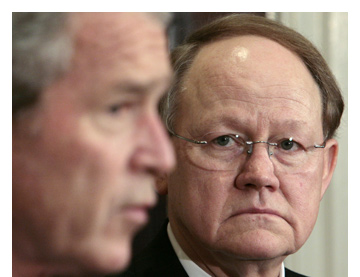
The last several years have brought a parade of dark revelations about the George W. Bush administration, from the manipulation of intelligence to torture to extrajudicial spying inside the United States. But there are growing indications that these known abuses of power may only be the tip of the iceberg. Now, in the twilight of the Bush presidency, a movement is stirring in Washington for a sweeping new inquiry into White House malfeasance that would be modeled after the famous Church Committee congressional investigation of the 1970s.

While reporting on domestic surveillance under Bush, Salon obtained a detailed memo proposing such an inquiry, and spoke with several sources involved in recent discussions around it on Capitol Hill. The memo was written by a former senior member of the original Church Committee; the discussions have included aides to top House Democrats, including Speaker Nancy Pelosi and Judiciary Committee chairman John Conyers, and until now have not been disclosed publicly.

Continue Reading
Thursday, May 29, 2008 7:02 PM UTC2008-05-29T19:02:00Zl, M j, Y g:i A T

Former high-ranking Bush officials enjoy war profits

Now working inside America's "shadow" spy industry, George Tenet, Richard Armitage, Cofer Black and others are cashing in big on Iraq and the war on terror.

Former high-ranking Bush officials enjoy war profits

Richard L. Armitage, who served from 2001 to 2005 as Deputy Secretary of State, was a rarity in the Bush administration: an official who delighted in talking to the press. Reporters loved him for his withering criticism of the neoconservative zealots around President George W. Bush and in part because he fed them tidbits about the White House they could obtain nowhere else. His accidental disclosure to conservative columnist Robert Novak that Valerie Plame, the wife of Iraq war critic Joseph Wilson, was working undercover for the Central Intelligence Agency remains one of the most notorious leaks of the Bush era.

Continue Reading
Monday, May 19, 2008 11:24 AM UTC2008-05-19T11:24:00Zl, M j, Y g:i A T

Blacklisted by the Bush government

Spying on Americans without warrants, charges based on secret evidence, a small town divided by fear. Welcome to the world of Bush's "specially designated global terrorists."

Blacklisted by the Bush government

One day in March 2004, Soliman Hamd Al-Buthe, a former member of Saudi Arabia’s national basketball team and a government official in the city of Riyadh, picked up his phone for an urgent call with two American lawyers in Washington, D.C. Most of the call concerned a growing confrontation between the U.S. government and the Al-Haramain Islamic Foundation in Ashland, Ore., the U.S. branch of a global Saudi Arabian charity organization under investigation for possible links to terrorism. Al-Buthe had been an advisor to Al-Haramain from 1995 to 2002 and was a member of the Oregon foundation’s board of directors. Just weeks prior to the call, the foundation — a respected fixture in the Ashland community run for years by an Iranian-American Muslim named Pete Seda — had been raided by U.S. law enforcement agents.

Continue Reading
Wednesday, Aug 29, 2007 11:05 AM UTC2007-08-29T11:05:00Zl, M j, Y g:i A T

Hurricane recovery, Republican-style

Many are still struggling on the Gulf Coast. But casino and real estate investors are living large -- thanks to Republican officials.

Hurricane recovery, Republican-style

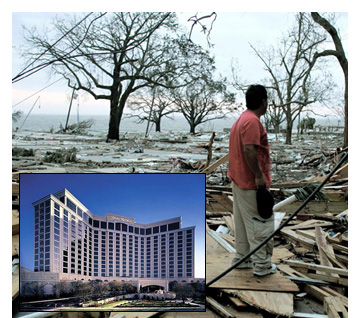
As residents of Mississippi’s Gulf Coast gather today to commemorate the second anniversary of Hurricane Katrina, they will recall a cataclysmic storm that spared no one, rich or poor, from its destruction. Virtually every structure along the 90-mile stretch of coastline was either wrecked or swept away after Katrina’s 140-mile-an-hour winds and 40-foot storm surge came ashore like a steamroller from hell. Yet, while the national media has focused its attention on New Orleans, it has given relatively little coverage to the hurricane’s impact elsewhere, even though the destruction to coastal Mississippi, which bore the full brunt of the storm, was as bad as, and in some places worse than, the calamity that struck New Orleans when the levees there broke.

Continue Reading
Thursday, Aug 9, 2007 12:45 PM UTC2007-08-09T12:45:00Zl, M j, Y g:i A T

America under surveillance

Granted new power to spy inside the U.S., the Bush administration may be doing more than eavesdropping on phone calls -- it could be watching suspects' every move.

America under surveillance

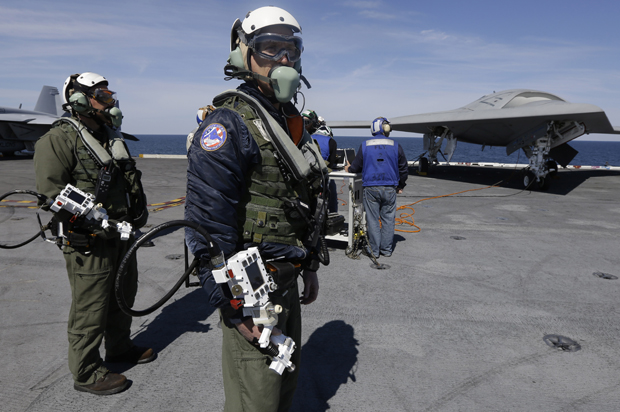
In the pre-dawn hours of Sept. 1, 2005, a U-2 surveillance aircraft known as the Dragon Lady lifted off the runway at Beale Air Force Base in California, the home of the U.S. Air Force 9th Reconnaissance Wing and one of the most important outposts in the U.S. intelligence world. Originally built in secret by Lockheed Corp. for the Central Intelligence Agency, the U-2 has provided some of the most sensitive intelligence available to the U.S. government, including thousands of photographs of Soviet and Chinese military bases, North Korean nuclear sites, and war zones from Afghanistan to Iraq.

Continue Reading
Friday, Jun 1, 2007 11:33 AM UTC2007-06-01T11:33:00Zl, M j, Y g:i A T

The corporate takeover of U.S. intelligence

The U.S. government now outsources a vast portion of its spying operations to private firms -- with zero public accountability.

The corporate takeover of U.S. intelligence

More than five years into the global “war on terror,” spying has become one of the fastest-growing private industries in the United States. The federal government relies more than ever on outsourcing for some of its most sensitive work, though it has kept details about its use of private contractors a closely guarded secret. Intelligence experts, and even the government itself, have warned of a critical lack of oversight for the booming intelligence business.

On May 14, at an industry conference in Colorado sponsored by the Defense Intelligence Agency, the U.S. government revealed for the first time how much of its classified intelligence budget is spent on private contracts: a whopping 70 percent.

Continue Reading

Page 1 of 2 in Tim Shorrock

Other News