Tom Bissell

Destination: Central Asia

Secrets of "the 'stans," lands of raw beauty and uninspiring governments, revealed with help from a Kyrgyz novelist and an expert on militant Islam.

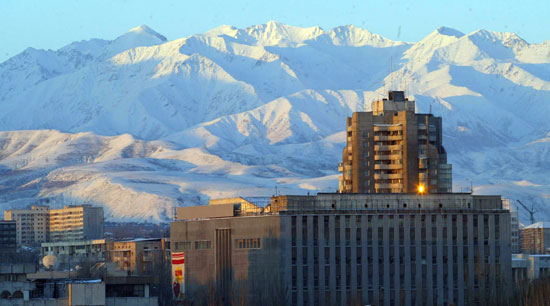
Within the nations collectively known as “the ‘stans” one can sense the still-cooling results of numerous historical collisions, not all of them figurative, seeing that an active fault line runs straight through the region. (Uzbekistan’s capital, Tashkent, was earthquake-flattened as recently as 1966.) Central Asia is where Europe abuts Asia and Christianity smashes against Islam, where Alexander the Great was stopped dead in his tracks and Genghis Khan and Tamerlane staged their conquests of the known world. The region received one of its first known English visitors in the 1500s, and his subsequent report was measured in its enthusiasm: “These merchants are so beggarly and poor, and bring so little quantity of wares … that there is no hope of any good trade there to be had.”

Variously ruled by Arab conquistadors, Mongol horsemen, Persian meddlers, a series of cruel but sometimes enlightened despots, czarist Russia and, finally — and most disastrously — by the Soviet Union, Central Asia is the geographical equivalent of an oft-forwarded parcel bearing the traces of each of its temporary holder’s stamps. It is home to despairingly vast deserts, several large inland seas, endless steppes, beautiful mountainous valleys, and some of the world’s least inspiring governments. Its religion is predominantly Islam, but a softer, less ideological incarnation than that which is typically encountered in Arab states, and its culture is a curious agglutination of Soviet, Turkic, Persian and Mongol influences.

A fine place to begin one’s encounter with the diverse and often disquieting literature of Central Asia would be Chingiz Aitmatov’s “The Day Lasts More Than a Hundred Years.” An ethnic Kyrgyz who writes in Russian, Aitmatov is the only Central Asian fiction writer to have been widely translated in the West. After years of working as an apparatchik in the Soviet government and achieving small prominence as a story writer and playwright, Aitmatov came to world renown with the publication of his first novel in 1980, which broke the gait of lockstep Soviet literary circles to a degree not seen since Alexander Solzhenitsyn’s “One Day in the Life of Ivan Denisovich” in 1963. Aitmatov’s father was executed during Stalin’s purges, and Aitmatov’s greatest book is simultaneously a cautious but devastating critique of Stalinism, a fable of a Kazakh man attempting to bury a friend according to Muslim etiquette, and a deeply weird sci-fi novel replete with space stations and what Russian speakers refer to as inoplanetyane (that is, extraterrestrials).

Solzhenitsyn’s “Cancer Ward” (1968) is partially based on its author’s own doubly ill-fated experience of recovering from skin cancer at the tail end of his eight-year sentence to the gulag. (Solzhenitsyn’s crime was criticizing Stalin in a letter to a friend during World War II, when he was an officer in the Red Army.) Primarily the story of an unjustly exiled man named Oleg Kostoglotov, “Cancer Ward” is a multicharacter and often bitterly funny study of the lives of exiled Soviets, from still-proud Stalinists to confused men and women unsure of their actual crime to the nurses and doctors who do their best (which is not much) to help “cure” them. It reads as if “M*A*S*H*” had been crossbred with “Darkness at Noon.” The unnamed setting of “Cancer Ward” is Tashkent, long considered one of the region’s more cosmopolitan cities, but currently an open sore of dictatorial policies and suppurating unrest. “Cancer Ward’s” unforgettably bleak final scene takes place in Tashkent’s zoo, which was apparently as upsetting in the 1950s as it remains today.

A more recent novel about Central Asia is Robert Rosenberg’s “This Is Not Civilization,” published in 2004, which contains what is surely one of contemporary fiction’s most beguiling opening lines: “The idea of using porn films to encourage dairy cows to breed was a poor one.” Rosenberg is a former Peace Corps volunteer who served in Kyrgyzstan, which reminds us that the Peace Corps, if nothing else, has midwifed some first-rate American literature with an internationalist bent. While Rosenberg’s novel roams widely (from Arizona to Kyrgyzstan to Istanbul), its non-Western characters are frequently the most interesting. The novel’s central Kyrgyz character, Anarbek, must cope with his daughter’s culturally sanctioned “wife-napping” (whereby a young girl is literally stolen from her home and forced to marry) as well as the ruination of his cheese factory. The delights of this novel are primarily its sense of humor and humanely old-fashioned empathy for all. By its final page, one cannot be at all sure which civilization it is that the novel’s title piquantly condemns. All of them, probably.

There are many fine histories detailing the 19th century clash of Russia and Great Britain’s imperial ambitions in Central Asia, but the best remains Peter Hopkirk’s 1992 book “The Great Game: The Struggle for Empire in Central Asia” (2002). The title refers to what has been called a “Victorian-era Cold War” that, despite both parties’ best efforts, never resulted in a direct military confrontation. “Great Game” was coined by one of its central players, an intransigently Christian British officer named Arthur Connolly, whose ghastly fate is one of many that Hopkirk details. While the agents of Europe’s two most powerful nations vexed and stymied one another from Kandahar to Khiva, the region’s local people watched and waited and occasionally acted, such as during the British retreat from Kabul in 1841. The result was the single largest military disaster in Great Britain’s history and, in Hopkirk’s retelling, a story as hypnotically monstrous as 9/11 footage. This book is required reading for a general understanding of how modern Central Asia took uncertain shape.

Fears of militant Islam in the former Soviet republics of Central Asia are, in the popular media, almost always overstated. Seven decades of Soviet atheism have left their mark, and state-appointed religious leaders are still widely derided as “red mullahs.” That said, Central Asia has pockets of religious unrest, which ruthless governmental crackdowns, especially in Uzbekistan, have predictably made worse. Ahmed Rashid’s “Jihad: The Rise of Militant Islam in Central Asia” is the best primer on this troubling aspect of contemporary Central Asia, and is worth reading if only for a brief story Rashid describes in his preface. While in Dushanbe, Tajikistan, one year into its 5-year-long civil war, Rashid enjoys “a leisurely Sunday lunch” with a Tajik poet, a novelist and a journalist — “the cream of Tajikistan’s liberal intelligentsia.” Suddenly Rashid is startled by the sound of nearby gunfire. The poet, the novelist and the journalist, to Rashid’s shock, “suddenly pulled concealed pistols out of their pockets and fired back.” To draw too many conclusions from an anecdote mired in such direly specific circumstances would be unwise, but it does suggest the heat packed by the best of Central Asia’s literature — not all of it figurative.

Destination: Vietnam

Untangle this jungly nation with the best histories of its war-torn past, a terrifying novel about a North Vietnamese soldier, and an affecting memoir of contemporary Hanoi.

“Vietnam Vietnam Vietnam, we’ve all been there.” So ends Michael Herr’s 1977 memoir “Dispatches,” a nearly perfect synthesis of war reportage and lysergic impressionism. If one understands Herr as referring to a frantic state of mind in which nothing is as it seems, then yes, we have all been there. If, however, one understands Herr’s incantatory triad as an actual place filled with real people, then no, most of us have not been there. The war has thus obliterated Vietnam twice, the first obliteration resulting in so many books that, for many, Vietnam is less a country than an autopsy.

Average Vietnamese today are not much interested in what they call the “American War,” and many Westerners have traveled to Vietnam to discover the ancient, jungly, beach-edged and, above all, shatteringly beautiful nation that the war’s tangled legacy continues to obscure. (In the early 1970s South Vietnam’s Ministry of Tourism, a sodality of optimism if ever there was one, was already anticipating such souls: “Vietnam,” one of its come-on slogans read. “You’ve heard about it. Now come see it.”) Yet Vietnam’s wars are many. The people of ancient Vietnam, for instance, resisted and defeated all three of their Mongol invasions at a time when literally half of the world had fallen to Mongol occupiers. Vietnam has additionally suffered 11 invasions by China, the most recent of which was in 1979. In 1954 the Communist-nationalist mélange known as the Viet Minh defeated the French after a brutal nine-year war. And, of course, the forces of North Vietnam and the Viet Cong stalemated the United States and then toppled the American client government of South Vietnam in 1975. This makes Vietnam the only nation on earth that can claim to have militarily defeated three of the five permanent sitting members of the United Nations Security Council. A study of the wars that shaped Vietnam may not provide the roundest lens through which to view it, but there is no question that modern Vietnamese culture has formed around a violent, molten core.

Published a little over a decade ago, when relations between the United States and Vietnam were finally normalizing, Neil L. Jamieson’s “Understanding Vietnam” is the rare book that seemingly everyone who cares about Vietnam recommends without reservation. Jamieson argues that any understanding of Vietnam must start with the fractious cultural debate that began in the first half of the 20th century over the benefits of “old” and “new” ways of Vietnamese life. From the 1930s on, Vietnam’s enterprising, tireless and often despotic communists hijacked this intracultural argument, making it a debate between Marxism and feudalism. In doing so they inadvertently guaranteed themselves and their countrymen 40 years of civil and proxy war. Jamieson’s most enlightening chapters, however, concern the traditional Vietnamese man or woman’s expected — and unquestioning — obedience to his or her parents and village. These tendencies remain strongly in place among rural Vietnamese. While Vietnam’s cities are producing a generation of young people less spellbound by conservative village mentality, it is a rare home indeed that lacks an altar, and requisite incense sticks, for the proper worship of one’s forebears, the rituals of which Jamieson thoroughly explains. Above all, Jamieson is admirably fair, refusing to regard Vietnam’s communists as somehow more authentically Vietnamese than its non-communists, which alone makes “Understanding Vietnam” a rare buoy of reasonableness.

The best book to read about the American side of the Vietnam War is without question Neil Sheehan’s “A Bright Shining Lie”(1988). Its hero, who gradually becomes its antihero, is a U.S. Army advisor named John Paul Vann. Sheehan takes us from the war’s early days, when Vann’s prescient advice on how to fight a guerrilla war is completely ignored, to the various miscalculations of deepening American involvement, when Vann’s moral character unravels. Not only does Vann drive himself to something approaching madness pursuing teenage Vietnamese girls, he eventually comes to endorse all the misguided tactics he once rejected. The book’s longest and greatest set piece — so beautifully told it becomes something like Homer with M-14s — is a minute-by-minute account of the Battle of Ap Bac in 1963, where, for the first time, the Viet Cong stood their ground against an American-supported South Vietnamese force 10 times their size and won.

Bao Ninh’s “The Sorrow of War,” a dreamlike and terrifying novel about a North Vietnamese soldier, was originally published in Vietnamese in 1991 under the less plangent title “The Fate of Love.” This was at the tail end of Vietnam’s own version of perestroika, which is known as Doi Moi, or “renovation.” The Vietnamese authorities congratulated themselves on their openness in allowing Ninh’s defiantly non-ideological novel to be published — until people began reading it, and Ninh began winning international literary prizes. The effect of Ninh’s novel was revelatory for many within and without Vietnam. A common portrayal of the typical American soldier in Vietnam is of a dope-smoking straggler too bewildered by the war’s supposed justifications to fight. His Vietnamese enemy, on the other hand, is a brainwashed myrmidon who would gladly leap onto a bed of bayonets to drive out the foreign invader. What Ninh’s novel suggested was that the typical North Vietnamese soldier was a dope-smoking straggler too bewildered by the war’s supposed justifications to fight. As one passage goes, “Everyone drank heavily and they all seemed to be drunk, half-laughing, half-crying. Some were yelling like madmen.”

There are several excellent books about modern Vietnam, from Andrew X. Pham’s 1999 travel narrative “Catfish and Mandala” (which recounts how Pham, who fled Vietnam as a child, bicycles from one tip of the country to the other) to Robert Templer’s more analytic “Shadows and Wind” (a happily opinionated and frequently striking survey of contemporary Vietnam’s cultural, political and artistic situation, published in 1999). But none are quite as affecting as Dana Sachs’ 2000 memoir “The House on Dream Street.” Sachs originally traveled to Vietnam in the early 1990s on a whim and, like many visitors, found herself entranced by its scooter-filled streets and admirably forward-looking people. She soon relocated to Hanoi, worked various oddball jobs, and learned fluent Vietnamese. The radiant hub of her memoir is a profoundly satisfying gender reversal of the usual Yankee-Vietnamese love affair: Sachs falls for a working-class Hanoi man, whose heart she breaks. Sachs’ portrait of a rapidly changing Vietnam is as gorgeously homely as pond-dotted and tree-filled Hanoi itself, and while she rarely addresses the war’s legacy, this does not at all feel evasive. There is more to a culture than the worst thing that has ever happened to it, and more to a people that has suffered than the fact of its suffering. Sachs respects the Vietnamese enough to pay them the ultimate compliment: She refuses to allow the war to define them.

Continue Reading Close

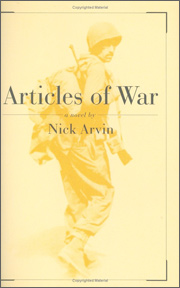
“Articles of War” by Nick Arvin

This gripping WWII novel follows a stunningly average young soldier from Iowa to Europe -- and forces us to rethink the glory of the Greatest Generation.

War has devastated most human endeavors, but it has been good to literature. If, that is, one can forget all the potential novelists and poets (not to mention the potential accountants, musicians and fathers) floating in the bloody surf at Omaha Beach, lying facedown in the jungles of Indochina, or blown in two along the highways of Mesopotamia. What we write about when we write about war is … well, which war? Readerly expectation differs from war to war. It took the World War II novel 15 years to travel from the realism of James Jones and Norman Mailer to the surreal bedlam of Joseph Heller. Vietnam and the Gulf War, on the other hand, underwent absurdist dissection relatively quickly. For the soldiers who fought, however, one doubts that Vietnam and the Gulf War felt any more morally bizarre than World War II. The Greatest Generation massacred more than its share of civilians on the way to global salvation. Nevertheless, recent years have seen collective sainthood bestowed upon American soldiers in general and the dogfaces of World War II in particular.

In this light, it would be a good idea to read “Articles of War,” Nick Arvin’s bleak and harrowing World War II novel, in one sitting. To do otherwise runs the risk of dampening its tremendous power. One might also wish to have a loved one nearby when one finishes it, if only to hold for a few moments. Yet Nick Arvin is not to be envied. For one, his publisher is comparing him to Hemingway, a comparison not even Hemingway could in the end survive. For two, he has written with searing honesty of a war so reputedly uncomplicated that many look back on it with a kind of sick longing. For three, he did not experience this war. Indeed, he has never experienced any war. Criticism is inevitable.

Nick Arvin may not have experienced war but he has obviously pondered its human results deeply. If it is true that, as Ryszard Kapuscinski says, those who have lived through war and those who have not “are two different species of human beings,” it would seem just as likely that for every writer savagely enriched by war hundreds of others have seen their minds put through its shredder. Another way of saying this: Experience does not necessarily make one an expert, and empathy can take writers to higher places than expertise.

“Articles of War” is a novel whose hero is a coward. Our coward, Heck (so named for his refusal to swear), is an amazement of averageness. He is not particularly intelligent, nor is he that interesting. He is 18 years old. He is from Iowa, prematurely balding and a virgin. The thoughts and reflections Arvin typically gives Heck meander in and out of a DMZ of sentimentality. In fact, the only thing that makes Heck interesting is his heartbreaking survival amid conditions no human being should be asked to endure.

But that word: “coward.” In David Maraniss’ “They Marched Into Sunlight,” a nonfiction account of an ambush that nearly wiped out an entire Army battalion during Vietnam, one of the assault’s few survivors writes his wife afterward addressing this notion of cowardice: “There were men that ran, and men that shot themselves but I just feel sorry for them. They were just normal men that reacted normally.” The available literature indicates that the battlefields of World War II were jampacked with supposed “cowards.” Roughly 80 percent of all U.S. infantrymen did not — could not — fire their rifles during combat, and the initial encounter between the German and U.S. armies during World War II, in Tunisia in 1943, resulted in an American retreat.

One’s first human response to terrifying events is usually to be terrified. This is what Arvin is showing us, and he does so in such a moving way that no compassionate person who reads this novel will feel able to speak freely of “cowards” in combat again. Heck arrives in France scared and confused (his strong, taciturn father had cried seeing him off) and wanders dreamily from one encounter to another — some confusing, some peaceful, most horrifically violent. He falls for a French girl and deludes himself into believing they are in love. He sees one man get impaled by an icicle, another transformed into a bloody mist by a booby trap that Heck himself nearly triggered. He deserts on one occasion, intentionally gets himself wounded on another, and in between sees his dead lieutenant being eaten by a dog he has grown attached to. (Heck’s response results in one of the two times he fires his M-1 during the novel.) And in the novel’s finale Heck is forced to do something that, like World War II itself, is both necessary and dreadful. The action that is not pathetic (in its true sense) is awful (in its true sense), yet always Arvin’s prose remains unhurried, often lovely, and imbued with a muted, almost judgeless quality. This quiet relentlessness allows the novel some wrenching moments. Indeed, when one of Heck’s fellow soldiers tells him, “Don’t get too attached to anyone. Not me, not anyone,” Arvin may as well be addressing the reader. Above all, one is left with the feeling that, whatever any conflict’s particular geopolitical merits, war on the ground tends to become a perpetual motion machine powered by human error.

“Articles of War” is not a perfect novel (one could argue that it should end a chapter earlier) but it is a “war novel” that in a better country than ours would be assigned to high-school students across the land. Unlike Kurt Vonnegut’s “Slaughterhouse-Five” it will not make anyone a premature existentialist, and unlike Tim O’Brien’s “The Things They Carried” it will not increase enrollment in MFA programs. What it will do is make one sick at the idea of oneself or anyone else fighting in a war. That war is hell is, of course, not the most unexpected supposition. It is obvious, it is familiar, and yet, once again, here we all are in hell.

Read more of our reviews of this month’s best fiction

Continue Reading Close

Gameboys

"Hitman: Contracts" lets you kick major bad-guy butt -- but dealing with all the blood-oozing dead bodies isn't so easy.

HITMAN: CONTRACTS (Eidos Interactive)

Jeff: Agent 47, how do we love thee?

Tom: Let us count the ways. Actually, let us not. But he kicks more ass than any other video game antihero, that’s for certain. I think he may even be better than Max Payne.

Jeff: I love Max, but he wouldn’t stand a chance against 47. Agent 47 could kill Max with a rusty lock-pick. “Hitman 2″: the greatest game we’ve ever played?

Tom: Man, I don’t know, but it’s up there. Why don’t you clue everyone in on old 47?

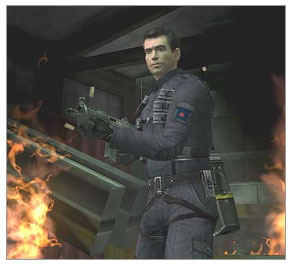
Jeff: He’s a trained killer with the sense of duty of a British soldier circa 1841 and the sense of mercy of Lucifer. He’s bald, wears a black suit, and has a bar code on the back of his head.

Tom: This is because 47 is a clone.

Jeff: Yes. But most of his line is dead now. He’s one of the last cloned hitmen left. The last game saw him trying to abandon his assassin past and living as the groundskeeper for a quiet church in Italy. That didn’t work out too well for our 47, or ultimately for the fools who kidnapped his church’s priest.

Tom: The last game took 47 from Afghanistan to Kuala Lumpur to St. Petersburg to India on assassin missions, all of which were just phenomenal. The graphics! The action! The options!

Jeff: That’s the great thing about the “Hitman” games. There’s never any one way to do a mission. You can go stealth and try to poison your targets, or strangle them in dark corners, or stab them silently with a knife, or poison their sushi, and not hurt any innocents in the process, or you can be, well, less subtle about it — neither of which the game implicitly rewards. It lets you listen to your dark, sclerotic heart.

Tom: I love how the “Hitman” games rank your performance. “Professional” if you do it really quietly, for instance, and “Psychopath” or “Mass Murderer” if you go guns-blazingly nuts.

Jeff: We should point out that we always try to go for the stealth option…

Tom: But, you know, things fall apart. It’s damned hard! Which brings us to the singular aspect of the “Hitman” games: the dead bodies and costume changes.

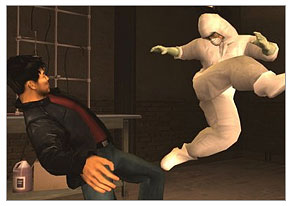
Jeff: Unlike most video games, the dead people in “Hitman” don’t simply disappear. You kill someone, and the body just lies there. So you have to hide the bodies — in closets, behind boxes, in shadowy corners. And the bodies are so realistically rendered that while you’re dragging them they flop around unsettlingly and leave a big bloody smear.

Tom: After you knock someone off, you can take his clothes and disguise yourself and walk around. Unless you do something stupid like strangle someone in full view of the guards, your disguise allows you to pass through levels more or less unimpeded. And there’s this awesome little “suspicion monitor” that keeps track of how suspicious you look. How your heart starts pounding when you’re out of ammo, just finished stashing a body in an elevator, and are strolling past a heavily armed guard would be hard to describe for someone who hasn’t played the “Hitman” games.

Jeff: The weapons you can use! Kitchen knives, meat cleavers, pool cues, poison, strangulation cord, sniper rifles, Kalashnikovs. A game for the whole family.

Tom: You know, we should talk about this, since we’re on the record despising a game of similarly violent amorality.

Jeff: Yeah. I know. But the bad guys in “Hitman” really have it coming to them. They kidnap priests! “Hitman: Contracts” opens with Agent 47 waking up in a Romanian bedlam. There are dead bodies and lakes of blood everywhere, people are hung up on cables, and wandering the halls are all these utterly insane guys in asylum-style nightgowns. And then the Romanian SWAT team breaks in looking for you. Speaking Romanian, I hasten to add.

Tom: In the Afghanistan levels of “Hitman 2,” they were actually speaking Dari. The “Hitman” games may be unbelievably brutal, but they’re culturally aware.

Jeff: Are you noticing how much bloodier “Contracts” is compared to “Hitman 2″?

Tom: I am. The programmers have paid unseemly attention to the physics of gunshot wounds in this one. Blood sprays in mists, squirts from wounds, splatters walls and doors. It’s kind of sickening.

Jeff: And notice how differently people react when you shoot them in the leg as opposed to the shoulder or head.

Tom: They must have consulted a trauma surgeon or something. That’s how goddamned creepy it is.

Jeff: Another great thing about “Hitman” is the innovative option menu, which allows you to do multiple things at once, like drag a body, open a door, and open fire on innocent bystanders all at the same time.

Tom: You’re going for the “Mass Murderer” ranking, I see.

Jeff: Might as well. My cover’s already blown.

Tom: I like the way 47 moves. Whether he’s leaning around a corner, sneaking around, garroting someone, reloading his weapon, or running backwards, he looks cooler than any action star.

Jeff: Do you have a thing for 47?

Tom: I think 47 could use a guy like me as a moderating influence in his life. Maybe he wouldn’t be so angry if he had someone to love.

Jeff: I don’t know if I’m disappointed or relieved that they didn’t mess with the “Hitman” formula too much here. It’s not a major leap forward for the franchise in any discernible way, though “Contracts” is much, much, much darker than anything we saw in the previous game.

Tom: Considering that the previous game allowed you to chop up a fat guy in a whirlpool with a bunch of bikini-clad models, that’s saying something.

Jeff: On this second mission, you have to find a kidnapped girl. I just found her. My mission handler, the ever-trusty Diana, just asked, “Can you get her out?”

Tom: And 47 answers, “Some of her.” She’s hanging upside down by a meat hook! There’s blood everywhere. It looks like Leatherface’s kitchen in here.

Jeff: I’ll be executing my mission with extreme prejudice from here on out.

Continue Reading Close

Gameboys

Join us, as we pick up a "Long Staff of Impairing," dodge "dire badgers" and make friends with Omnoselaakk during our return visit to the world of Dungeons & Dragons.

CHAMPIONS OF NORRATH: REALMS OF EVERQUEST (Sony)

Tom: Our first foray into the world of video game D&D-style role-playing. Ominously, the instruction booklet for “Champions of Norrath” is about as thick as a Chuck Palahniuk novel.

Jeff: Only better written.

Tom: Jeff, I honestly don’t know if I’m up for this. It’s been a long time. I associate D&D with too many unpleasant things: acne, chronic masturbation, Renaissance fairs, the lute. You know I once had a woman almost not sleep with me because I admitted I dabbled some in Dungeons & Dragons when I was a kid?

Jeff: I can think of much better reasons not to sleep with you than that. You should calm down. Role-playing is not evil devil-worship. It’s a small, pleasant escape nook for social rejects and the overly imaginative the world over. And really, who are we to judge?

Tom: You’ve reformed quite well, you know. I’ve always admired that.

Jeff: What do you mean?

Tom: I mean I can barely tell you’re a recovering role-player. The only thing that gave it away was how your eyes sparkled when I suggested we review “Champions of Norrath.”

Jeff: They didn’t … sparkle.

Tom: A little. They did a little bit.

Jeff: We’ve taken two hours to read the instruction booklet and here we go: The difficulty levels you can select from are Adventurous, Courageous and Champion.

Tom: I’m definitely feeling only Adventurous. Hey. You know what I always like about Dungeons & Dragons?

Jeff: What’s that?

Tom: The complicated gradations of good and evil. You could make your character good, neutral or evil, but then you could shade it with “chaotic good” or “neutral evil” or “lawful evil.”

Jeff: If only our leaders recognized such careful gradations. The Axis of Chaotic Evil is a much better way of looking at things.

Tom: Bin Laden is very much a chaotic evil figure. Lots of charisma points, though.

Jeff: How about Donald Rumsfeld?

Tom: I’m going to say lawful evil. How about John Kerry?

Jeff: Neutral good.

Tom: Ralph Nader?

Jeff: Definitely chaotic good. The bastard.

Tom: What’s the plot of “Champions of Norrath”?

Jeff: I quote from the instruction booklet: “Kelethin, the treetop city of the Faydwer wood elves, is under siege! … Your auspicious arrival in Kelethin during its darkest hour gives the wood king elf himself, Liethkorias, the glimmer of hope he’s been seeking.” We’re fighting orcs and picking up treasure, in other words.

Tom: OK. I have to say here that the needle of my inner seventh-grader’s gay-o-meter just went crazy.

Jeff: You can play as a Barbarian, a Wood Elf Ranger, a High Elf Cleric, an Erudite Wizard or a Dark Elf Shadowknight.

Tom: Erudite wizard?

Jeff: That’s what it says.

Tom: Huh. They went a little heavy on the elves, didn’t they?

Jeff: That’s the funny thing about the fantasy genre. It promises unlimited imaginative scope, but it’s always the same gallery of elves and rangers fighting some pointy-eared, blue-skinned humanoids by torchlight for gold and funny-named weapons.

Tom: It’s sub-Tolkien humbuggery, I say. Although I do love how when you name your character they give you all these asinine runic letters. Just in case you want your character to be called Ömñösêláákk. Hey, come to think of it, that’s not a bad name.

Jeff: So now we’re walking around. We’ve got a nice God’s-eye view of the action, we’ve armed and armored ourselves, and we’re out in a forest fighting whatever goblins or monsters that come along. Make sure to use your spells.

Tom: I’m not at a high-enough level to use any spells yet.

Jeff: So we kill monsters for a while, garner experience points, then head back to Kelethin to buy better weapons and armor.

Tom: So it’s mostly just hacking monsters and then shopping.

Jeff: They used to call these games “hack-and-slash.” It’s more like “chopping-and-shopping.”

Tom: We’re basically Candace Bushnell with broadswords.

Jeff: I’ll give this to “Champions of Norrath”: Each time you play, the maps are randomly generated. So you never visit the same dungeon twice. And the music is pretty good, too, if a little “Peter and the Wolf”-y.

Tom: We’ve now spent 45 minutes killing things and finding gold and gone back to Kelethin, the shopkeeper of which is called Nenmar.

Jeff: We don’t like Nenmar.

Tom: No. Because the brother gives you jack for your old stuff and charges you up to your eyes for new stuff. Ömñösêláákk has been risking life and limb for this kingdom, and he’s ripping us off. There’s no way these “well built padded leggings” of Nenmar’s are worth 3,000 gold pieces. Though they would go awfully well with my helmet.

Jeff: I see you’re getting into the shopping.

Tom: The fighting is so tedious that the shopping is all I have to look forward to.

Jeff: Look at the names of some of this stuff: “Choker of Embers,” “Masterwork Circlet,” “Earrings of Warding,” “Reinforced Short Pick.” I just picked up “The Ring of Tainting.”

Tom: Sorry about that. I think antibiotics clears it right up. I myself just purchased the “Long Staff of Impairing.” That must be what you get when you hang out with someone with “The Ring of Tainting.”

Jeff: Let’s go fight some more monsters.

Tom: I like walking around talking to people, if only to hear lines such as, “Tunare willing, things will get back to normal before too long.” Tunare willing, whoever wrote that will be hit by a bread truck.

Jeff: We’re back in the forest of Lesser Faydark now.

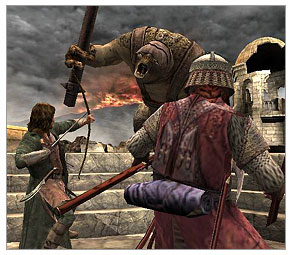
Tom: Jesus Christ. This game is perilously underfunded imagination-wise. These orcs we’re fighting have wargs!

Jeff: They’re not wargs. They’re called “dire badgers.”

Tom: “Champions of Norrath” is “Beowulf” meets “Lord of the Rings” gets a lobotomy.

Jeff: How’s your gay-o-meter doing now?

Tom: Off the charts. But I want to keep playing if only to get that “Summon Skeleton” spell.

Continue Reading Close

Gameboys

Atari is back! And so are "Transformers"! But is either any fun if you're no longer 15?

Jeff: Atari is back!

Tom: Yeah, it’s pretty great to see that good old distinctive Atari logo on a game again. Especially when that game is “Transformers.”

Jeff: So you were a big Transformers fan?

Tom: Hell, yes. I loved Transformers. I used to pit my hapless Go-Bots against them in these massive cross-genre robot holocausts.

Jeff: Uh huh.

Tom: I loved toy miscegenation. The best for me was G.I. Joe versus the Transformers. The Joes and Cobra had to make an emergency pact to fight off the invading Transformers. My god, I used to go on epically playing for days. It was like my own little David Lean film.

Jeff: G.I. Joe fought against Cobra, right?

Tom: Yeah. And what the heck was the deal with Cobra’s command structure? You had a supreme neo-pagan king in Serpentor, and in Cobra Commander you had a commander-in-chief-type figure who may or may not have had authority over Serpentor, but then you had all these secondary leaders like Destro and Major Blood and the Baroness and Zartan and Storm Shadow.

Jeff: Zartan was…?

Tom: Zartan was the swamp guy. He changed colors in the sun.

Jeff: Right.

Tom: I mean, can you figure out, logistically speaking, how Cobra managed to accomplish anything? How did they delegate power? It’s no wonder an army with only one pilot always managed to beat them. May I ask who was your favorite Joe? Mine was Mutt. Followed by Wild Bill.

Jeff: Actually, I didn’t have G.I. Joe. We were more of a Lincoln Log kind of family. And this Gen X nostalgia is pretty insidious, you know. For one, we’re not that old, and for two, imagine what your little flowchart of Cobra’s command structure has displaced in your brain.

Tom: I used to have Wallace Stevens’ “A Rabbit as King of the Ghosts” memorized. Yeats’ “Easter 1916,” too. Not anymore. But I can tell you the original names of the whole introductory line of Transformers Hasbro introduced in 1984 — and what they transformed into.

Jeff: Maybe we should get to the game “Transformers.”

Tom: You’re just jealous because you can’t name very many original Transformers.

Jeff: No, I can’t. I didn’t have Transformers either.

Tom: Were you home-schooled?

Jeff: No. But could you please answer a question for me?

Tom: Proceed.

Jeff: Why, if the Transformers are from planet Cybertron in another galaxy, do they transform into things found on this planet? Why would robot aliens even know what semitrucks and helicopters look like? And why would Megatron, leader of the evil Decepticons, transform into a pistol perfectly sized for a 10-year-old’s hand? I would think it’s kind of hard to justify that if you’re attempting to stage a realistic Autobot-Decepticon battle.

Tom: You know, it’s not like I have an MFA in transforming or anything.

Jeff: And why do some Decepticons transform into a giant cassette recorder and complementary cassette?

Tom: You mean Frenzy and Lazerbeak.

Jeff: What use is a boombox in robot battle? Was that for psy-op warfare against the Autobots?

Tom: Another good question. I don’t have answers, unfortunately. Neither does Atari’s “Transformers.” This game has one of the most skeletal plots we’ve ever come across in a contemporary video game.

Jeff: It’s true. I’ll try to sum up: Autobots and Decepticons, locked in unending battle. Both want something called “minibots.” These minibots go to Earth. Autobots have to find them before Decepticons. Bang, you’re in the Amazon basin looking for minibots.

Tom: Nota bene: Minibots give you weapons upgrades such as shields, sensors, heat-seeking missiles, and so on. So what’s the game like?

Jeff: I’m told it’s reminiscent of “Halo,” which we haven’t played. Frankly, I’m not so into the whole robots-in-combat thing, a genre whose pleasures seem to me pretty demographically specific.

Tom: You’re suggesting that mostly 10-year-olds like this kind of game.

Jeff: Ten-year-olds, and perhaps those weirdos who build robots for that absolutely bizarre robot-demolition-derby show on USA.

Tom: A message to the world’s Islamists here: Gentlemen, sometimes even we hate our way of life.

Jeff: It’s superfluous to say, really, because these PS2 games are backed by so much graphical firepower, but “Transformers” looks spectacular.

Tom: We’re in the Amazon, driving around as Optimus Prime. It’s big and green and stunning.

Jeff: It’s really disappointing that you can only be three Autobots: Optimus Prime, Red Alert and Hot Shot.

Tom: Optimus Prime, who was once given voice by Orson Welles in the animated “Transformers” movie.

Jeff: Ouch. [Editor's note: Actually, Welles was the voice of Unicron.]

Tom: No, he was really good. After “Citizen Kane,” “A Touch of Evil,” “The Magnificent Ambersons” and that Nostradamus special, I think it was his best project.

Jeff: The really cool thing about “Transformers” is how it’s a really ambitious driving game when you’re transformed and a decent first-person shooter when you’re untransformed. And both are done with an impressive amount of detail, the driving especially. The terrain is so varied that you actually have to do things like find the highest ground so you can look around and figure out where to go next. There are rivers and caves and mountains and they’re all there for you to explore. Plus, when you’re running around as a robot, you leave big robot footprints.

Tom: I like the fighting. When you blow up a Decepticon, the smoking parts go flying everywhere, and a tire from its annihilated body will go bouncing past you. I also like how the load boards are this “warp screen,” which makes waiting for the levels to come up less irritating. They’ve made it seem like you’re actually doing something — that is, traveling through a warp — while you wait.

Jeff: You’re very gullible, then. What is most interesting to me in “Transformers” is how good the enemy’s artificial intelligence is. Look at this: they see you, encircle you, hide, dive for cover … they fight like Viet Cong! But this game’s amazing three-dimensionality gives you plenty of options too.

Tom: Problems for me: Too much of “Transformers” relies on jumping puzzles. Like trying to get across this frozen river in Antarctica. If you don’t perfectly time your jumps from one island of ice to the other, you fall in the water and have to go back to the beginning. I hate this stuff. It drives me crazy. I’m not a laboratory rat. I’m just a guy who wants to blow up Decepticons and find some minibots.

Jeff: The boards are also way too big. It’s a weird complaint to make, because the game gives you so much to do, but the fact is, I’ve got a life to lead, and “Transformers” looks like one of those games you could spend days playing making little to no headway.

Tom: Take a game like “Desert Storm II,” or “Return of the King.” They both seem like they have big worlds, but they don’t in actuality. You’re very subtly guided as to where you need to go. Their hugeness is an illusion, a beautiful one. Games like “Transformers” or those new “Legend of Zelda” games … well, I travel quite a lot in real life. Tell me: Why do I find the prospect of taking Optimus Prime across the unknown tundra more disheartening than actually doing so in real life?

Jeff: I don’t know. But if you were 15 I bet you would love this game.

Tom: That’s quite possible.

Jeff: Maybe if Atari did a “Voltron” game…

Continue Reading Close

Page 1 of 3 in Tom Bissell

www.salon.com/writer/tom_bissell/index.html