
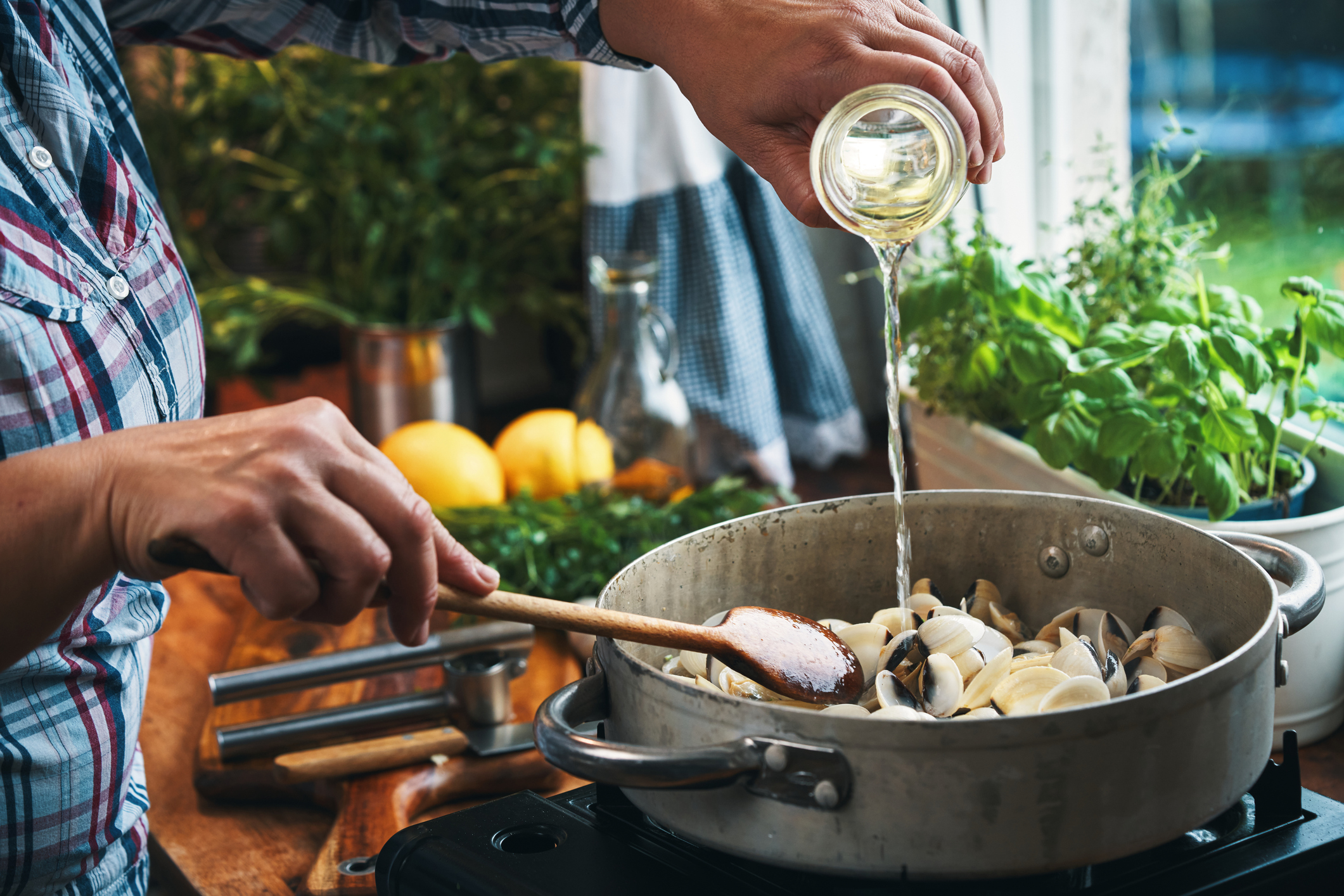

If 2026 is the year you want to feel more confident, more curious and more quietly triumphant in the kitchen, these are the little interventions that will get you there. Not a manifesto, not a rigid curriculum — just 26 tiny habits, discoveries and delights that accumulate into a richer cooking life.
Some are practical: sharpening knives, roasting fruit, keeping a tasting journal. Some are sensory: noticing textures, nailing a bread-crust crackle, assembling a playlist that carries you through chopping and stirring. Others are the kind of small, almost imperceptible gestures that change the way you think about food — growing a single herb, refreshing a nostalgic recipe or finding a tool that sparks a new rhythm in the kitchen.
Taken together, these tips aren’t about perfection. They’re about presence: paying attention, trying, tasting, adjusting, and letting yourself quietly fall in love with cooking all over again. Think of this as your 2026 kitchen companion: a series of invitations to slow down, play and savor what it means to feed yourself, and maybe others, really well.
Learn to really read recipes
Most cooking mishaps don’t happen because a recipe is bad or a cook is incompetent. They happen because the recipe was never read as a whole. Many of us encounter a recipe in fragments: first as a photograph that plants a craving, then as a grocery list, and finally as a set of instructions consulted in frantic glances while something already sizzles. It’s no wonder the experience can feel oddly flat or stop-start, punctuated by small panics over whether it was two teaspoons or two tablespoons of red pepper flakes.
Some of this clumsiness is simply the endearing choreography of learning something new. But it also reflects the way recipes are often treated as modular — headnote, ingredients, directions — rather than as a single narrative with a beginning, middle and end. Before you cook, it’s worth taking an extra minute to read the recipe all the way through, not as a checklist but as a story. You don’t need to close your eyes and visualize a gold-medal performance. Just notice the timing, the pauses, the equipment, the moments when one step quietly sets up the next.
This small act of attention helps prevent the classic mid-recipe surprise: the unannounced overnight rest, the last-minute need for a tool you don’t own, the technique you wish you’d Googled earlier. More importantly, it lets you cook with a sense of rhythm instead of interruption — which, as it turns out, is where much of the pleasure lives.
Slow down
Many cooking problems can be traced not to a lack of skill, but to impatience. In a culture trained to move quickly — and rewarded for doing so — it can feel almost perverse to slow down in the kitchen. And yet, some of the most reliable improvements in cooking come not from doing more, but from waiting.
Slowing down looks mundane in practice: giving eggs and butter time to lose their chill before baking; letting meat rest instead of slicing into it triumphantly too soon. But it’s also where flavor quietly gathers. It’s the patience required for onions to soften and deepen rather than merely sweat, for tomato paste to transform from fire-engine red to something darker and more resonant, for chicken skin to crisp into a golden, faintly crackling shell.
Time, in cooking, is not an inconvenience but an ingredient. A gentle simmer produces something entirely different from a frantic boil; a pan left alone rewards you more than one constantly fussed over. When you allow food the time it asks for — rather than the time you wish you had — the meal tends to meet you halfway.
Want more great food writing and recipes? Sign up for Salon’s free food newsletter, The Bite.
Mise en place
“Mise en place,” French for everything in its place, sounds austere, but the practice itself is anything but. It simply means getting your bearings before you turn on the heat: chopping vegetables and herbs, measuring ingredients, rereading the recipe once more with a clear head. Fifteen minutes of prep can buy you an hour of ease.
Think of it less as culinary dogma and more as a small act of self-kindness. It’s the reason meal kits feel so soothing — everything ready, nothing frantic, no mid-recipe scavenger hunt for a missing clove of garlic. Mise en place gives you that same sense of calm, without the box or the markup. Once you start cooking, you’re free to really cook.
Clean as you go
(Getty Images/kittijaroon) Clean as you go
I understood the appeal of mise en place long before I ever embraced cleaning as I cooked. For years, I left a trail behind me: stacked dishes, smeared counters, a fine dusting of flour like evidence. The result was predictable. By the time dinner was over, the last thing I wanted to do was return to the kitchen — which meant greeting the wreckage the next morning, bleary-eyed, just trying to make coffee.
Eventually, the tension between wanting to cook and not wanting to look at dirty dishes became unbearable. I snapped, picked up a sponge and became — somewhat to my surprise — a clean-as-you-go convert. Like mise en place, it doesn’t require rigor so much as a few simple habits: wipe spills as they happen; keep a bowl nearby for scraps; let a sink of warm, soapy water quietly do its work; put tools away the moment they’re finished earning their keep.
The reward isn’t virtue. It’s waking up to a kitchen that feels neutral — even welcoming — instead of accusatory. Which makes it far more likely you’ll want to cook again.
Budget better
When I say “budget better,” I don’t mean becoming stricter or joyless about food. I mean becoming more intentional. Groceries are expensive, and if you’re reading this, you likely care about eating — and cooking — well. Treating food budgeting as a skill, rather than a constraint, is part of learning how to cook with confidence.
Start with the basics: know what you actually spend, what you want to spend and where there’s room to flex. Build recipes that can stretch or shine depending on the week: welcoming beans instead of meat, dried herbs instead of fresh, a pared-back version on a Tuesday or something more generous when you can. Over time, this attention clarifies your priorities. You learn where splurging matters to you — good olive oil and great bread, perhaps — and where frugality feels easy rather than punitive.
We need your help to stay independent
Check your spice cabinet — replace what has gone off
And one of the most effective places to spend a little money in the kitchen is your spice cabinet. As you reset for a new year of cooking, take a slow, honest inventory. While old spices aren’t likely to harm you, a jar of dusty cinnamon or five-year-old coriander isn’t doing your food any favors.
One new oil, one new vinegar
But if you’re going to treat yourself to just two pantry upgrades, make them an olive oil and a vinegar. Buy an olive oil that’s a notch nicer than what you usually allow yourself — something grassy and golden, maybe lightly infused, luxe enough to feel special but not so precious you hesitate to use it. You can find a good one at the supermarket, but there’s a particular pleasure in buying oil from an old-school Italian, Greek or Middle Eastern market, or a charming culinary shop where the bottles seem to glow a little on the shelf.
Then choose a vinegar that makes you smile. Look beyond the basics: fruity vinegars like raspberry or yuzu; deeply savory options like Chinese black or umeboshi plum; something aged, herbal, or faintly mysterious, ideally with a good label. These are small, joyful upgrades that earn their keep quickly — lifting vinaigrettes, sharpening stews, finishing roasted vegetables or fruit with a final, confident note. Two bottles, countless quiet improvements.
Upgrade (and sharpen) your knife roll
One of the fastest ways to feel more competent in the kitchen is to own the right knives and to keep them sharp. A sharp knife is, counterintuitively, a safer one, and it turns everyday prep from a chore into something closer to pleasure.
You don’t need many. A good 8-inch chef’s knife, a paring knife for finer work, a serrated knife, and a pair of kitchen shears will cover nearly everything (the shears, in particular, earn their keep). You can maintain your knives at home with a whetstone and a little patience, but many cities also have excellent sharpening options — from specialty shops to culinary stores to hardware counters. A quick search is usually all it takes.
Knife skills
Once you’ve upgraded your knives, it’s worth doing the same for your knife skills. I didn’t go to culinary school and spent years feeling oddly ungainly with a blade — especially when it came to tasks that seemed like they should be simple, like supreming a grapefruit or turning carrots into tidy matchsticks. The gap between how effortless these motions looked and how they felt in my hands was humbling.
So I decided to learn the basics properly. Dice, julienne, brunoise, chiffonade — not to impress anyone, but to move with more ease and less hesitation. A few months of focused practice made an outsized difference. If you’re a visual learner, YouTube is an excellent place to start; if you’d rather not practice alone, many cities offer knife-skills classes through cooking schools, cookware stores and community centers.
Confidence, it turns out, is often just repetition in disguise.
Learn the core spices of a cuisine you already love
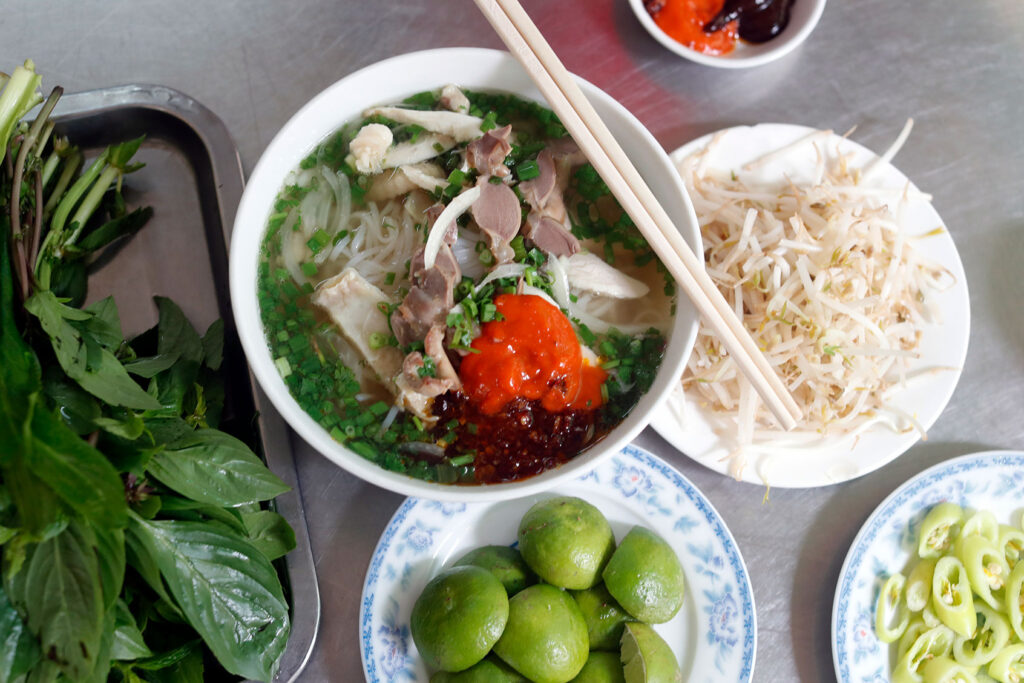
(Godong/Universal Images Group via Getty Images) Bowl of Vietnamese Pho.
One of the most sensually satisfying things a home cook can do is learn what makes the food they crave taste like itself. Not the recipe, exactly, but the underlying structure. Mexican food’s familiar warmth often rests on a spine of chili powder, cumin and paprika; Italian cooking leans into the grassy depth of oregano and rosemary; pho announces itself through a heady constellation of star anise, cinnamon, cloves, coriander seed, and fennel.
Understanding how these spices work together serves a practical purpose. If you know what makes a dish taste right, you can more easily diagnose what’s missing when it tastes wrong. But there’s also something more quietly revealing at play. Learning a cuisine’s core spices sharpens your palate and reminds you that flavor, like culture, is cumulative — built from small, deliberate choices that add up to something unmistakable.
Experiment with a signature spice blend
Once you understand the underlying logic of a cuisine, you’re free to start bending it. This is where your preferences get a vote. Make a pumpkin spice blend that leans heavily on ginger instead of cinnamon, with a flicker of cardamom for warmth. Build a taco seasoning that goes bold on garlic powder and smoked paprika, finished with a discreet pinch of MSG.
These blends don’t need to be perfected or even written down. They’re meant to reflect how you like things to taste. You have opinions about food; this is one of the simplest, most satisfying ways to let them show.
Master a new protein
There is something faintly supernatural about mastering a protein. When I learned to cook salmon well at home, I felt briefly omnipotent. When I finally nailed a roast chicken — buttered and oiled, stuffed with lemon wedges and hunks of onion and fennel — I felt like a goddess. Adding a new protein to your comfortable rotation has that effect: it expands what you believe you can feed yourself, and others, without stress.
The goal isn’t novelty for its own sake, but fluency. This year, I’m trying to think beyond meat and get truly comfortable with a tofu cutlet and an old-school black bean burger.
Your ambition might look different. Maybe it’s flaky white fish for tacos or beer-battered fish and chips; a cola- and honey-glazed ham that carries you through Sunday lunch and the week’s best sandwiches; impossibly crisp chicken thighs. Choose one thing and learn it well. Mastery has a way of changing the mood of a kitchen.
Learn a new sauce or two
I have a deep appreciation for a good purse. Not necessarily a designer one, but a handbag with a strong sense of itself — an acid-green baguette bag, a wicker orb with a padlock, a cheetah-print apothecary satchel. The right one can quietly transform an entire outfit. A great sauce does the same for dinner.
A solid sauce can take something as humble as chicken and rice from merely comforting to something memorable. Think of a bright, herby zhough or chimichurri; a balanced romesco or a well-made pesto; a glossy salsa negra or an umami-packed XO sauce. Learn a few that suit your tastes and keep them in rotation. When the rest of the meal is simple, a confident sauce can do most of the talking.
Go wild with texture
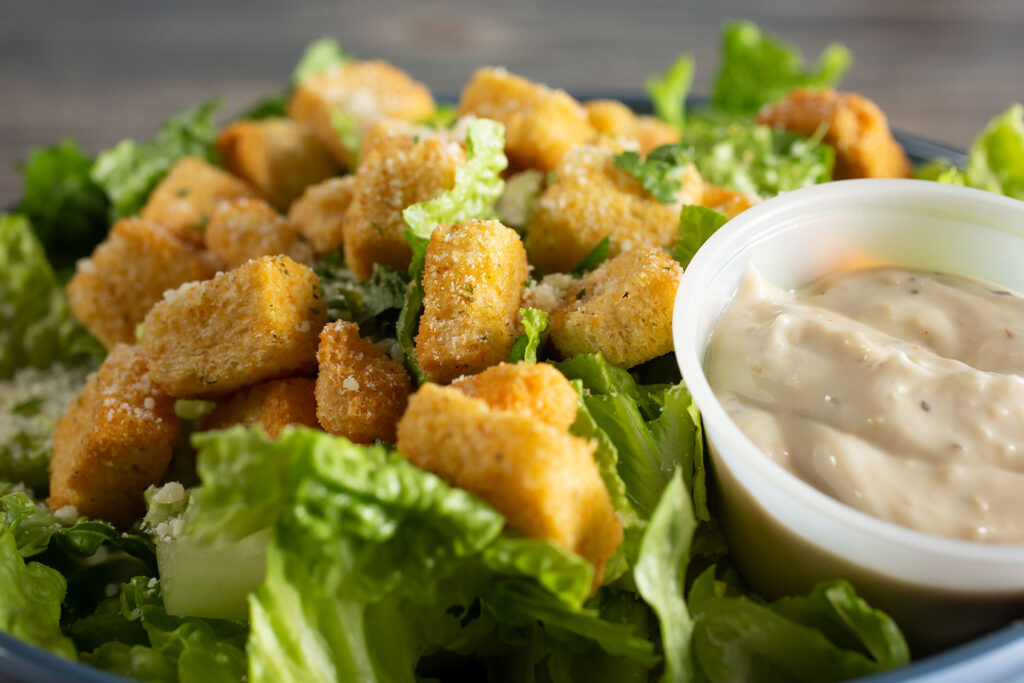
(Getty Images/Photography By Tonelson) Close-up of a Caesar salad
Once you start thinking beyond flavor and temperature — and begin paying attention to texture — cooking opens up dramatically. Soft, crisp, chewy, dense, shattering, pully: the way these sensations play against one another is often what makes a dish feel complete. It’s the difference between something that tastes good and something you can’t stop thinking about.
The easiest way to practice is to look at meals already in your rotation and ask what they might be missing. That lemon pasta you make? It would love a scattering of crisp breadcrumbs. Roasted sweet potatoes perk up instantly with toasted pistachios. A bowl of soup becomes more interesting with a crunchy finish. Learn to make your own croutons. Discover the quiet joy of crispy rice. Keep raw vegetables and a good dip on hand for swiping through dukkah or seeds. Texture, once you notice it, becomes a habit
Keep a tasting journal
Pull out a notebook and start paying attention. You don’t need a big project, and no one else needs to see it, but noting what works — and why — trains both curiosity and taste. Record restaurant dishes that impress you, recipes you want to try, sketches for dinner-party menus, even failures alongside triumphs. Over time, the journal becomes more than notes: it’s a map of your palate and a small artifact of your growth in the kitchen.
For weekly prep: Roast fruit, pickle vegetables
I’ve moved away from a lot of weekly meal prep in favor of a big quarterly prep day — more on that in just a moment — but I do engage in a few small rituals most every Sunday that can elevate almost every meal. Roasting fruit — berries, peaches, even cranberries tossed with a little honey and citrus zest until jammy — turns smoothies, oatmeal and salads into something celebratory. Once roasted, the fruit can live in deli tubs for the week, but it’s also charming atop yogurt or ice cream, or stirred into a vinaigrette for a quietly sweet note.
Pickled vegetables add a bright, briny snap to otherwise familiar dishes: carrots and jicama, scallions or classic cucumbers become unexpected stars. A small batch can find its way into grain bowls, sandwiches, or just a bowl on the counter for impromptu snacking. Both roasted fruit and pickles are deceptively easy but endlessly rewarding: little interventions that keep your meals feeling fresh, seasonal, and full of layered flavor.
Try a Big Prep Day once a quarter
I’ve never been able to make weekly meal prep stick without feeling like it was a slog, so I shifted to a quarterly Big Prep Day instead — a single, full-day cooking marathon that feels more like a holiday than a chore. The appeal is rhythm and momentum: one big mise en place, one big protein cook-off, one big batch of baked goods. Groceries arrive, coffee is strong, music is queued, and the kitchen hums as you chop, roast, stir, and stack. By the end of the day, your freezer is a shrine of ready-to-go meals, and you’ve done something concrete to care for your future self.
The beauty of the Big Prep Day is flexibility. You still cook lightly during the week — fresh vegetables, quick grains, small touches — but the heavy lifting is done. Meals from your stash can be lifted, layered, or transformed, keeping weeknight dinners interesting and stress-free. It’s a system built for people who already feel reasonably comfortable in the kitchen, who want to reclaim evenings, simplify feeding themselves, and experience the quiet, cumulative joy of cooking once and enjoying for weeks.
Master a go-to bread, and a go-to salad
There’s something quietly magical about a meal that feels complete, like you’ve walked into a restaurant you love without leaving your kitchen. You don’t need complexity; you need a couple of reliable anchors. A go-to homemade bread — crusty sourdough, pillow-soft naan, classic Parker House rolls — paired with a go-to salad (perhaps an elegant carrot salad with tahini, a classic Caesar, or a little gem lettuce with a bright vinaigrette) instantly elevates a weeknight dinner into something satisfying, cohesive and a little celebratory. These are the building blocks of a meal that feels finished
Grow one fresh fruit, herb or vegetable
In a world of increasingly complex supply chains that ferry climactically and seasonally inappropriate produce into fluorescent-lit supermarkets, there is something quietly radical and deeply satisfying about watching an ingredient go from seed to sprout to plate. You don’t need to become a homesteader or memorize the Farmer’s Almanac. Start small. A pot of basil on a windowsill. A scallion you keep alive in a glass of water. A cherry tomato plant that you fuss over like a pet.
Depending on your space and temperament, this might mean a modest herb garden, a few raised beds in the backyard, a plot at the community garden, or simply keeping an eye on the lemon tree out back as it does its mysterious thing. However you do it, growing even one thing connects you back to the physical reality of food — its patience, its fragility, its joy. It changes the way you cook. It changes the way you notice. And yes, it’s worth it.
Thrift a new-to-you cooking tool
This summer, we rescued a panini press from our apartment building’s free table — one of those liminal spaces where abandoned houseplants and half-burned candles go to live out their second lives. That panini press ended up quietly transforming the way we cooked through a hot, sticky summer, when turning on the oven felt borderline punitive and a perfectly browned stack of sourdough, oozing with provolone, felt like salvation.
I challenge you to find your panini press.
Not literally — unless you, too, are vulnerable to the siren song of pressed bread — but by staying open to a new-to-you tool that might gently reroute how you cook, even in a small way.
Thrift stores, estate sales, Buy Nothing groups, and yes, the occasional free table are full of these low-stakes invitations. A sturdy hand-held juicer. A bench scraper. A digital scale. A bamboo steamer. Sometimes all it takes is one unexpected object to nudge you into a new rhythm in the kitchen and make dinner feel fun again.
Upgrade a retro or family favorite
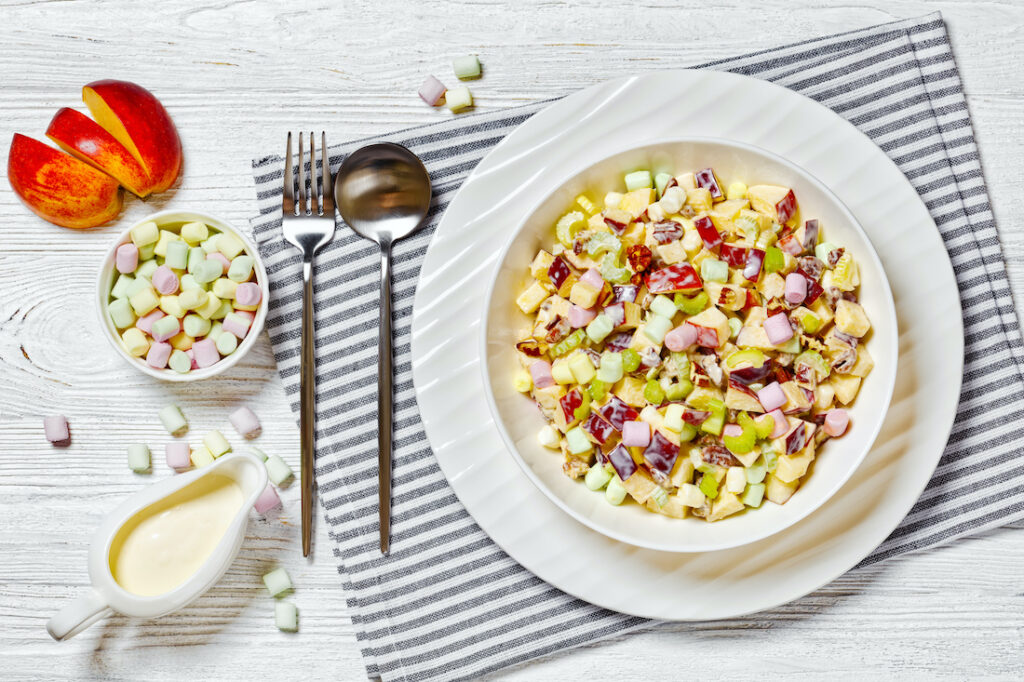
(Getty Images / from-my-point-of-view) A sweet apple salad with marshmallows, crushed nuts and a yogurt dressing
There’s a special kind of satisfaction in taking a recipe that carries a little nostalgia and bringing it back to the table with fresh life. At Salon, we’ve revisited sweet salads, icebox cakes, tuna melts, baked spaghetti and the classic holiday cheese ball — all familiar flavors, reimagined just enough to feel new. In your own kitchen, leaf through old family cookbooks or memory-laden recipes and see which ones could use a gentle refresh. It doesn’t have to be a total makeover; sometimes a few simple homemade swaps — hand-whipped cream for Cool Whip, a fresher seasoning mix, a better-quality cheese — are all it takes to make a beloved classic feel vibrant again.
Raid your local library for unique cookbooks
Every December, my inbox overflows with cookbook news: what was a hit this year, what’s coming next. And while I love the industry buzz, nothing delights me more than the cookbook section of my local library. There, I stumble on titles I’ve never seen, by authors I’ve never heard of, alongside out-of-print classics I don’t own. In an era when bookstores can feel dominated by celebrity chefs (and celebrities pretending to be chefs), it’s a quiet thrill to find free inspiration, support your local library, and discover books that feel like secret treasures waiting just for you.
Dedicate yourself to learning a new cuisine
While browsing the library, you might stumble on a book from a cuisine you’ve never explored: Nepalese, Swedish, Kenyan, Cuban. If it sparks your curiosity, check it out — and consider pairing it with a guidebook, history, or photography collection from the same place. Order takeout from a local restaurant that specializes in the cuisine. Explore a grocery that stocks the ingredients. Talk to a home cook or two.
Learning a new cuisine is less about being academic or performing cultural tourism than it is about expanding the edges of your palate and perspective. Get curious, get in the kitchen with intention, and let the flavors, techniques, and rhythms of a new culinary world quietly reshape the way you cook and think about food.
Learn to make your favorite restaurant dish at home
Perhaps a little shameful to admit in a year of culinary achievements, but one of my proudest was perfecting the soup-salad-breadstick combo from Olive Garden at home. I’ve mastered the pillowy, garlic-butter drenched breadsticks. I’ve painstakingly reconstructed the big salad — tomatoes, red onion, black olives, tangy pepperoncini — and the house dressing (the secret: a touch of good mayonnaise, blended, not mixed, with Parmesan). I now make a mean chicken and gnocchi soup.
As a lifelong dancer, I’ve always appreciated the value of learning choreography before improvising. The same applies to cooking. Deconstructing and reconstructing a dish you know intimately teaches you not just theory, but execution — how flavors layer, how textures shift, how balance is achieved. And, at least for me, dialing a copycat recipe toward perfection is mildly addictive. Start with chain favorites on food blogs or Pinterest, or branch out to local restaurant classics.
Either way, the exercise deepens your palate, technique and appreciation for the craft.
Create a cooking playlist or two
Sometimes, the fastest route to becoming a better cook is just enjoying yourself more while you’re at it. Playlists are a deceptively powerful tool for that. Build mixes that carry you through your typical cooking flow — chopping, stirring, tasting, cleaning — with rhythm, momentum, and, yes, a little joy. There are no rules. I’ve spent time in professional kitchens fueled by heavy metal, indie college-radio jams, and in the case of one catering shop, an hourslong loop of Enya. Whatever keeps you moving, smiling and in the groove is fair game
Master a signature cocktail (or mocktail) and simple snack
Over on “The Bite,” I’ve written about returning to “ambient hospitality” — the idea of having a home that’s ready for company without weeks of planning, a small fortune, or a hired brigade of cleaners. One simple solution: a signature cocktail or mocktail and a reliable snack.
Think of it as a small flourish you can produce in seconds that still feels intentional. A house drink — sparkling water with a curl of citrus peel, a quick batch of punch — a bowl of spiced nuts, a tiny tray of chocolate squares — whatever feels unmistakably yours. The magic isn’t complexity; it’s familiarity. Guests might forget the exact ingredients, but they’ll remember the gesture.
Read more
about this topic
